Hydrofluoric acid-free titanium etching for rare-event searches
Pith reviewed 2026-06-25 22:02 UTC · model grok-4.3
The pith
Sulphuric acid can etch titanium as a safer alternative to hydrofluoric acid for rare-event search materials.
A machine-rendered reading of the paper's core claim, the machinery that carries it, and where it could break.
Core claim
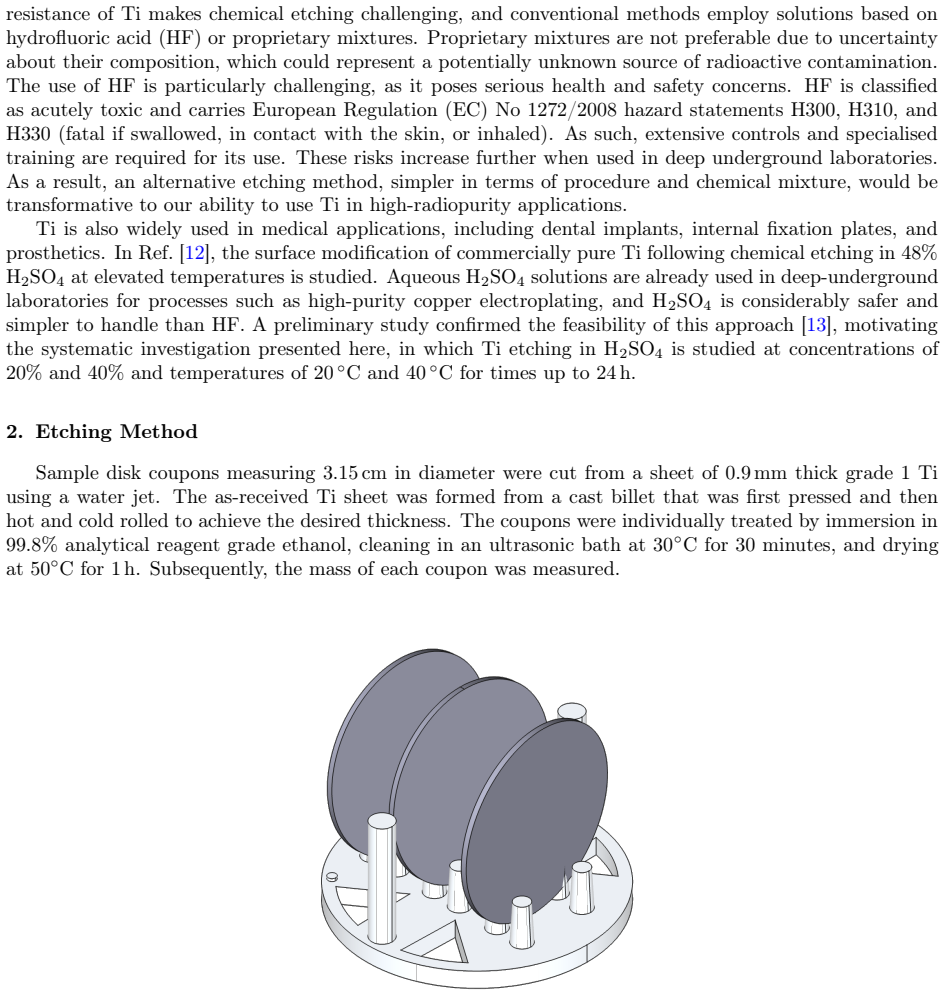
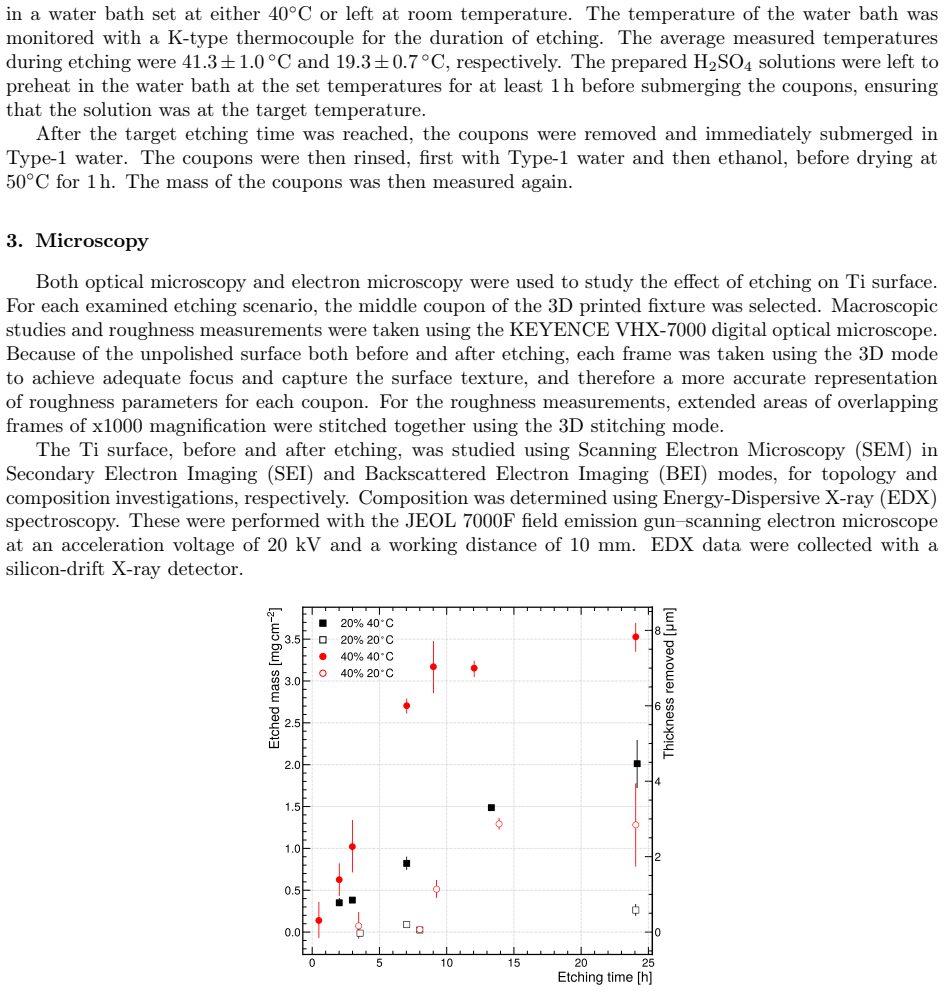
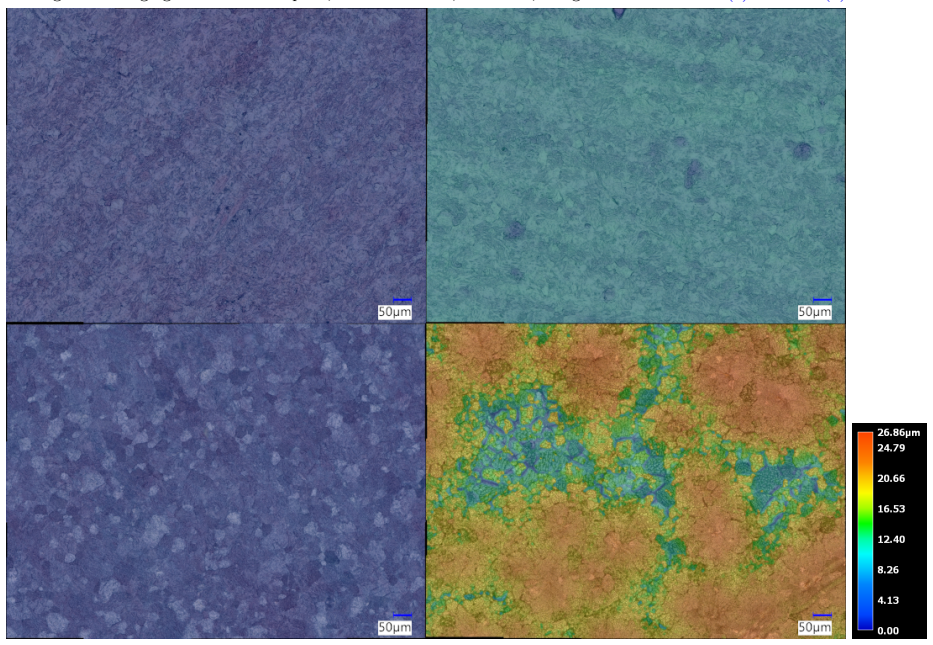
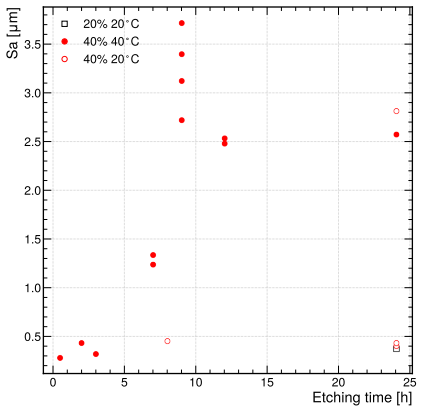
Sulphuric acid effectively etches titanium, removing up to 3.5 ± 0.3 mg/cm² for an unagitated 40% solution at 40°C over 24 hours. It remains effective at lower concentrations and temperatures. The formation of a passivation layer during etching may allow control of the total mass removed. These results were obtained through mass change measurements, surface roughness analysis, and scanning electron microscopy on grade 1 titanium samples.
What carries the argument
Sulphuric acid etching process for titanium, with mass removal quantified under controlled conditions of concentration, temperature, and time.
If this is right
- Titanium structural elements can be prepared for use in rare-event searches using only sulphuric acid.
- Etching is possible without heating or high concentrations, simplifying the process.
- The passivation layer offers a potential way to limit or regulate the amount of material removed.
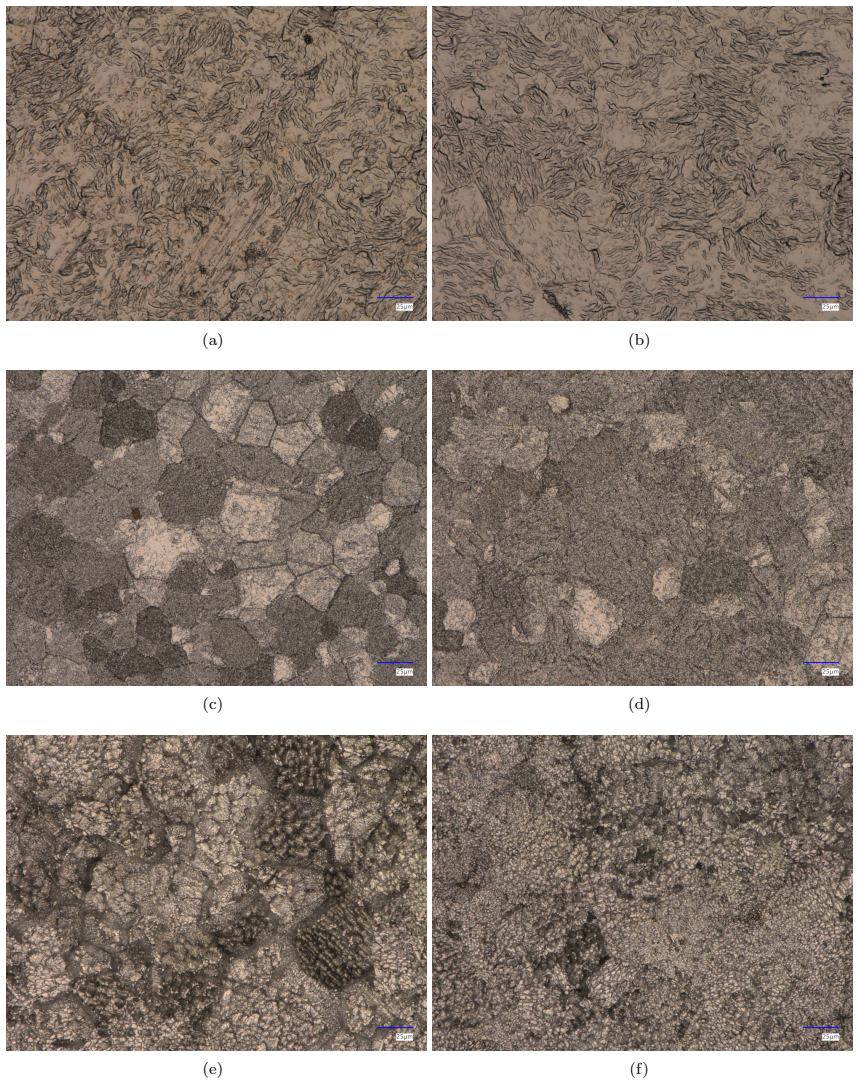
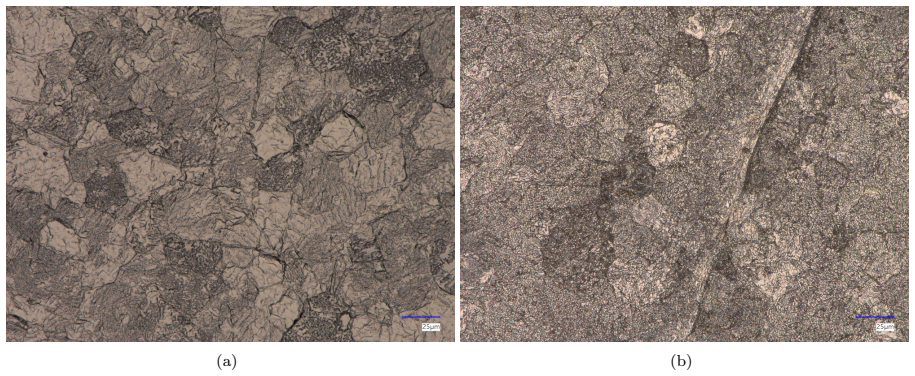
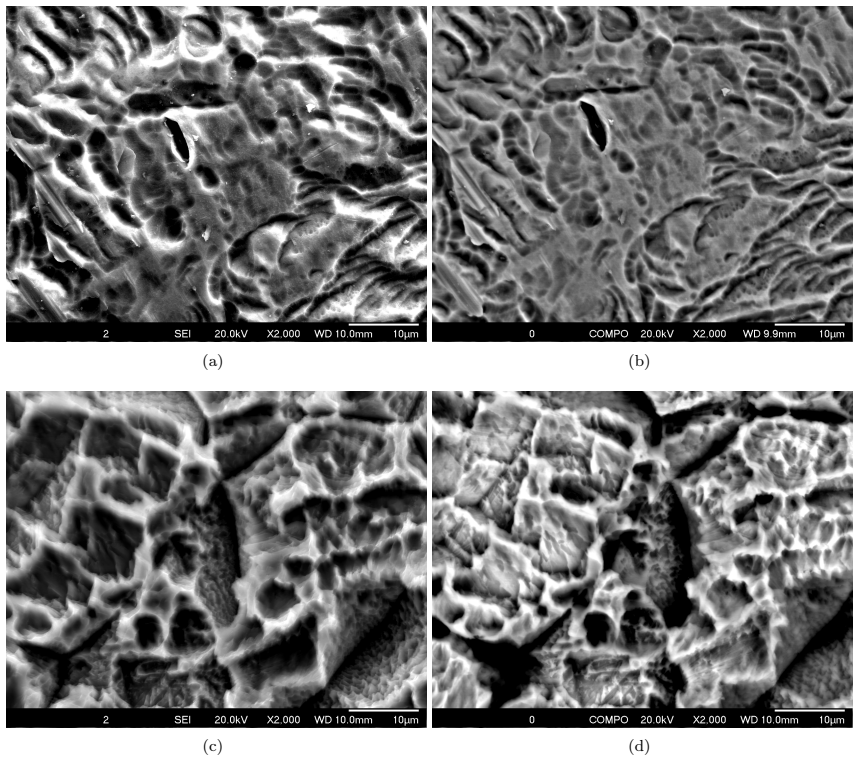
- Surface analysis shows the etching modifies the titanium surface in measurable ways.
Where Pith is reading between the lines
- This method could reduce the need for specialized safety equipment in underground laboratories.
- Similar acid-based etching might be tested on other metals used in low-background detectors.
- Long-term stability of the etched surfaces in experimental conditions would need verification beyond initial imaging.
Load-bearing premise
Measurements of mass removal and surface appearance alone are enough to verify that the sulphuric acid etching does not add radioactive contaminants or harm the material's performance in rare-event searches.
What would settle it
Finding higher levels of radioactive background in titanium samples etched with sulphuric acid than in those etched with hydrofluoric acid or left unetched would show the method is unsuitable.
Figures
read the original abstract
Rare-event search experiments require construction materials with high radiopurity to minimise background contributions. Thanks to its high mechanical strength, low density, machinability, and commercial availability in relatively radiopure forms, titanium is a suitable material for structural elements in rare-event searches. In such applications, a chemical etching stage is typically performed to remove surface contamination or to prepare the surface for further treatment. However, due to its chemical resistance, the etching of titanium conventionally requires hydrofluoric acid, posing serious health and safety concerns that are further exacerbated in deep underground laboratory settings. An alternative approach is proposed, which uses sulphuric acid. Grade 1 titanium samples were etched in 20\% and 40\% sulphuric acid solutions at 20$^\circ$C and 40$^\circ$C for up to 24\,h. The effects of etching were quantified through mass change measurements, surface roughness analysis, and scanning electron microscopy. Sulphuric acid effectively etches titanium, with up to $3.5\,\pm\,0.3$ mg/cm$^2$ of titanium removed for an unagitated solution of 40\% sulphuric acid at $40^\circ$C for 24\,h. Furthermore, sulphuric acid is shown to be effective at etching at lower concentration and temperature. The formation of a passivation layer during the etching may enable control of the total mass removed.
Editorial analysis
A structured set of objections, weighed in public.
Referee Report
Summary. The manuscript claims that sulphuric acid offers a viable HF-free alternative for etching Grade 1 titanium components in rare-event search experiments. It reports that 40% H2SO4 at 40°C for 24 h removes up to 3.5 ± 0.3 mg/cm² of titanium (with lower concentrations and temperatures also effective), quantified via mass-loss measurements, surface roughness analysis, and SEM imaging that indicate formation of a passivation layer allowing control of total mass removed.
Significance. If the process can be shown not to compromise radiopurity, the result would provide a meaningful safety improvement for underground laboratories by removing the need for HF handling. The reported mass-loss values with uncertainties and the multi-technique surface characterization constitute concrete, reproducible experimental evidence for the etching efficacy itself.
major comments (2)
- [Abstract] Abstract and introduction: the work is explicitly motivated by the need for high radiopurity in rare-event searches, yet no post-etch radiopurity assays (gamma spectroscopy, ICP-MS, or alpha counting) or comparison to HF-etched controls are presented; mass removal and SEM data alone do not establish that the etched surfaces meet the radiopurity requirements that justify the study.
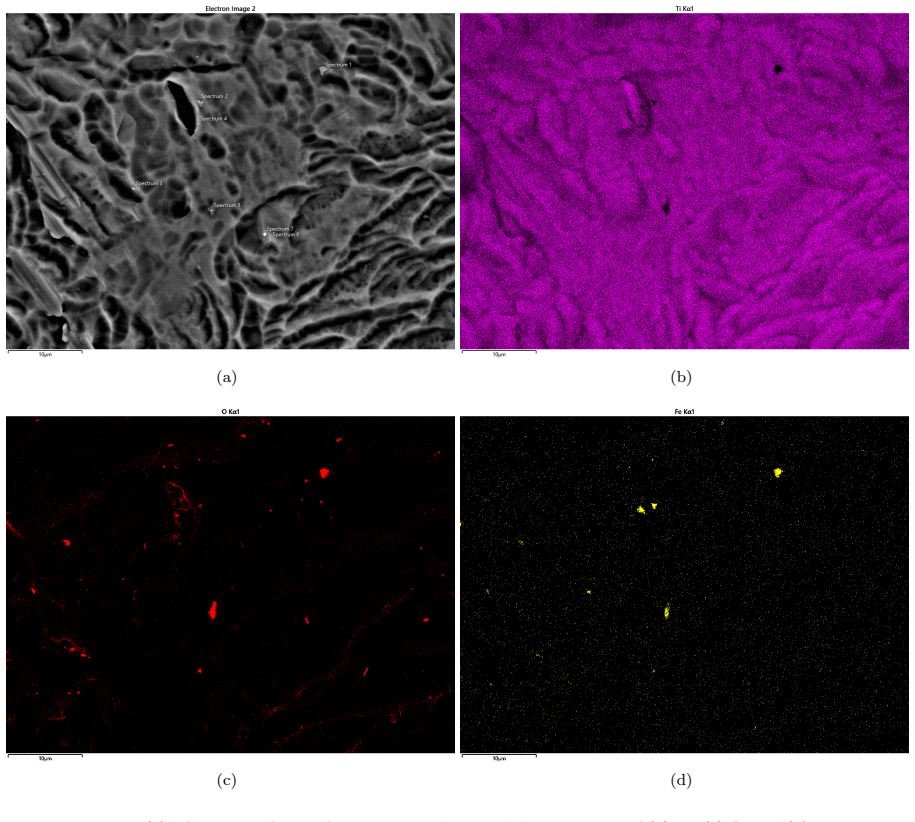
- [Results] Results section (mass-loss and SEM data): the passivation layer is invoked to explain control of total mass removed, but no compositional analysis or leaching tests are reported to rule out incorporation or retention of U/Th/K contaminants from the sulphuric acid, which is load-bearing for the claimed application to low-background detectors.
minor comments (2)
- [Abstract] The abstract reports the 3.5 ± 0.3 mg/cm² value for the 40% / 40°C / 24 h condition but does not tabulate the full matrix of concentration-temperature-time results; a summary table would improve clarity.
- Notation for temperature (20$^ ext{ extdegree}$C) is inconsistent with standard °C usage in the provided text; standardize throughout.
Simulated Author's Rebuttal
We thank the referee for the constructive comments on our manuscript. We address each major comment below, acknowledging the limitations of the current study while clarifying its scope as a demonstration of the etching process.
read point-by-point responses
-
Referee: [Abstract] Abstract and introduction: the work is explicitly motivated by the need for high radiopurity in rare-event searches, yet no post-etch radiopurity assays (gamma spectroscopy, ICP-MS, or alpha counting) or comparison to HF-etched controls are presented; mass removal and SEM data alone do not establish that the etched surfaces meet the radiopurity requirements that justify the study.
Authors: We agree that the manuscript is motivated by radiopurity considerations for rare-event searches but does not present post-etch radiopurity assays or comparisons to HF-etched samples. The study focuses on establishing the efficacy of sulphuric acid as an HF alternative through mass-loss, roughness, and SEM characterization. We will revise the abstract and introduction to explicitly note that radiopurity validation via gamma spectroscopy, ICP-MS, or alpha counting is required for application in low-background detectors and lies beyond the scope of this work. revision: yes
-
Referee: [Results] Results section (mass-loss and SEM data): the passivation layer is invoked to explain control of total mass removed, but no compositional analysis or leaching tests are reported to rule out incorporation or retention of U/Th/K contaminants from the sulphuric acid, which is load-bearing for the claimed application to low-background detectors.
Authors: The passivation layer is inferred from the mass-loss plateau and SEM-observed surface morphology changes. No compositional analysis or leaching tests for U/Th/K were performed. We acknowledge this limitation for the radiopure application. We will add a clarifying statement in the results or discussion section noting that further tests are needed to confirm absence of contaminant incorporation from the sulphuric acid before use in low-background experiments. revision: yes
Circularity Check
No circularity: purely experimental measurements with no derivations or equations
full rationale
The paper reports direct experimental results on sulphuric acid etching of titanium samples, quantified via mass change (e.g., up to 3.5 ± 0.3 mg/cm²), surface roughness, and SEM imaging. No equations, models, fitted parameters, predictions, or derivations are present that could reduce to inputs by construction. No self-citations, uniqueness theorems, or ansatzes are invoked. The work is self-contained against external benchmarks as a set of controlled laboratory measurements.
Axiom & Free-Parameter Ledger
axioms (1)
- domain assumption Mass change, surface roughness, and SEM imaging are sufficient proxies for etching effectiveness and surface suitability in radiopurity applications.
Reference graph
Works this paper leans on
-
[2]
E. W. Hoppe, et al., Reduction of radioactive backgrounds in electroformed copper for ultra-sensitive radiation detectors, Nucl. Instrum. Meth. A 764 (2014) 116–121.doi:10.1016/j.nima.2014.06.082
-
[3]
A. Vitale, et al., A preliminary investigation into the electrodeposition and synthesis of radiopure Copper-Chromium Copper–Chromium alloys for rare-event physics detector systems, Nucl. Instrum. Meth. A 1003 (2021) 165291.doi:10.1016/j.nima.2021.165291
-
[4]
P. Knights, K. Nikolopoulos, Searches for light Dark Matter with Spherical Proportional Counters, J. Adv. Instrum. Sci. 2025 (2025) 548.doi:10.31526/JAIS.2025.548
-
[5]
Spathara, P
D. Spathara, P. Knights, K. Nikolopoulos, Materials design for the synthesis of high strength ra- diopure copper alloys for rare event detection, Commun. Phys. 8 (1) (2025) 464.doi:10.1038/ s42005-025-02363-z
2025
-
[6]
D. Spathara, Design of high-strength, radiopure copper–chromium alloys for rare-event searches assisted by computational thermodynamics, Nucl. Instrum. Meth. A 1082 (2026) 170970.doi:10.1016/j.nima. 2025.170970
-
[7]
LZ Collaboration, LUX-ZEPLIN (LZ) Conceptual Design Report (9 2015).arXiv:1509.02910
Pith/arXiv arXiv 2015
-
[8]
LZ Collaboration, Dark Matter Search Results from 4.2 Tonne-Years of Exposure of the LUX-ZEPLIN (LZ) Experiment, Phys. Rev. Lett. 135 (1) (2025) 011802.doi:10.1103/4dyc-z8zf
-
[9]
nEXO Collaboration, Sensitivity and Discovery Potential of nEXO to Neutrinoless Double Beta Decay, Phys. Rev. C 97 (6) (2018) 065503.doi:10.1103/PhysRevC.97.065503
-
[10]
XLZD Collaboration, The XLZD Design Book: towards the next-generation liquid xenon observatory for dark matter and neutrino physics, Eur. Phys. J. C 85 (10) (2025) 1192.doi:10.1140/epjc/ s10052-025-14810-w
-
[11]
NEWS-G Collaboration, Copper electroplating for background suppression in the NEWS-G experiment, Nucl. Instrum. Meth. A 988 (2021) 164844.doi:10.1016/j.nima.2020.164844
-
[12]
S. Ban, Y. Iwaya, H. Kono, H. Sato, Surface modification of titanium by etching in concentrated sulfuric acid, Dental Materials 22 (12) (2006) 1115–1120.doi:https://doi.org/10.1016/j.dental. 2005.09.007
-
[13]
P. Knights, et al., Titanium for rare-event searches: Hydrofluoric acid-free etching (8 2025).arXiv: 2508.21029
arXiv 2025
-
[14]
L. Na, et al., Microstructure and textural evolution during cold rolling and annealing of commercially pure titanium sheet, Transactions of Nonferrous Metals Society of China 28 (6) (2018) 1123–1131. doi:10.1016/S1003-6326(18)64748-X
-
[15]
Z. Shuai, et al., Effect of annealing temperature on microstructure and mechanical properties of cold- rolled commercially pure titanium sheets, Transactions of Nonferrous Metals Society of China 32 (8) (2022) 2587–2597.doi:10.1016/S1003-6326(22)65968-5. 10
-
[16]
X. Y. Sun, et al., Microstructure evolution and mechanical properties of commercially pure titanium sheets after thermomechanical treatment with cold rolling and annealing, Advanced Engineering Ma- terials 27 (21) (2025) 2500920.doi:10.1002/adem.202500920. 11
discussion (0)
Sign in with ORCID, Apple, or X to comment. Anyone can read and Pith papers without signing in.