REVIEW 3 major objections 5 minor 13 references
Excluding a rectangular grid
T0 review · 3 major / 5 minor · reviewed 2026-08-10 · deepseek-v4-flash
Pith's one-line read A class of graphs has bounded k-treedepth iff it excludes every tree-times-path T□Pℓ minor for some ℓ.
desk verdict A genuinely new excluded-minor characterization for k-treedepth, carefully proved; the stress-test worry about Claim 30.1 does not land on close reading. read the letter →
The pith
A machine-rendered reading of the paper's core claim, the machinery that carries it, and where it could break.
The reading
What carries the argument
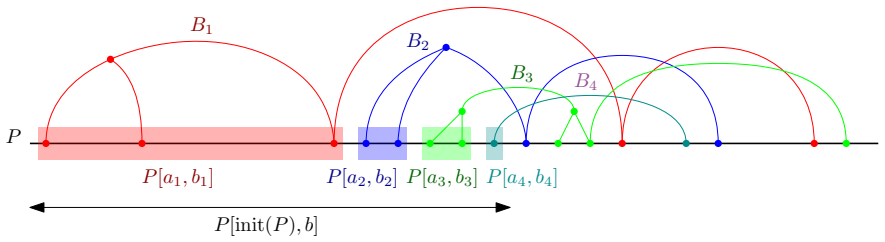
The load-bearing objects are: $k$-dismantable tree decompositions, defined by repeatedly deleting a vertex that belongs to every bag or splitting along an adhesion of size $<k$, with $k$-treedepth equal to one plus the minimum width; $k$-ladders, graphs on $[k] \times [\ell]$ whose rows are paths and whose columns are connected, because a pigeonhole argument over the $k^{k-2}$ labelled trees on $k$ vertices converts a long enough $k$-ladder into a $T \square P_\ell$ minor; and nice pairs $(U,B)$, star-shaped decompositions of a torso in which the connectivity between subsets of $U$ inside the torso is the same as inside the original graph. The proof manufactures nice pairs from lean tree decompositions with bounded adhesion and combines them by $(<k)$-clique-sums. The Grid-Minor Theorem enters once, as a black box, to guarantee that graphs with no large $k$-ladder minor have bounded treewidth.
What would settle it
For $k=3$, the only tree on three vertices is the path $P_3$; a concrete falsifier would be an infinite family of graphs with unbounded $3$-treedepth in which $P_3 \square P_2$ is never a minor. More generally, for any fixed $k$, one may search for graphs of unbounded $k$-treedepth that avoid every $T \square P_\ell$ minor for all trees $T$ on $k$ vertices at a single fixed $\ell$; such a family would refute Theorem 1.
Extended reading notes
Core claim
Let $\mathrm{td}_k$ be the largest graph invariant satisfying: $\mathrm{td}_k(\emptyset)=0$; deleting a vertex reduces the invariant by at most one; and a $(<k)$-clique-sum (gluing two graphs along a clique of fewer than $k$ vertices) has invariant at most the maximum of the two summands. This invariant agrees with treedepth for $k=1$, with the known $2$-treedepth for $k=2$, and with treewidth plus one for $k \ge |V(G)|$. The paper's central claim is that bounded $k$-treedepth is equivalent to excluding $T \square P_\ell$ as a minor for every tree $T$ on $k$ vertices, for some fixed $\ell$. The easy direction shows that $T \square P_\ell$ itself has unbounded $k$-treedepth as $\ell$ grows. The hard direction proves that any graph avoiding all $k$-ladders of length $\ell$ (graphs whose vertex set is $[k] \times [\ell]$, with each row a path and each column connected) has $k$-treedepth bounded by a function of $k$ and $\ell$: it decomposes the graph into nice pairs using well-connected tree decompositions with adhesions below $k$, and bounds each piece recursively. Since a sufficiently long $k$-ladder contains $T \square P_\ell$ as a minor by a pigeonhole argument on labelled trees, the ladder-free hypothesis is exactly the right obstruction. Consequently, forbidding the $k \times \ell$ grid forces $(2k-1)$-treedepth to be bounded by $f(k,\ell)$, which is the paper's strengthening of the Grid-Minor Theorem for bounded-height grids.
Load-bearing premise
The hard direction of Theorem 1 takes the Grid-Minor Theorem as a black box, so the proof of bounded $k$-treedepth would collapse if that theorem were removed, and the bounds it produces inherit that theorem's non-explicit estimates.
Editorial extensions
If this is right
- For $k=1$, Theorem 1 recovers the classical characterization: a minor-closed class has bounded treedepth exactly when it excludes some path $P_\ell$.
- For $k=2$, it recovers the ladder theorem: bounded $2$-treedepth exactly when some $2 \times \ell$ grid is excluded.
- For $k$ at least $|V(G)|$, $k$-treedepth equals treewidth plus one, so the same theorem contains the Grid-Minor Theorem.
- For all $k,\ell$, graphs excluding the $k \times \ell$ grid have $(2k-1)$-treedepth at most a function of $k$ and $\ell$; this is a bounded-height strengthening of the Grid-Minor Theorem.
- Bounded $k$-pathdepth is equivalent to bounded pathwidth together with bounded $k$-treedepth (Theorem 4), giving a path-decomposition analogue.
Reading between the lines
- The proof only guarantees existence of $f(k,\ell)$ by importing the Grid-Minor Theorem; converting this into an explicit or polynomial bound is a natural follow-up that the paper does not attempt.
- The $k$-treedepth hierarchy is likely to be a tool for other minor-monotone parameters: in particular, it should bound weak coloring numbers in minor-closed classes, extending the known role of $2$-treedepth that the paper mentions.
- The Section 9 framework suggests a broader program: for any parameter built from vertex additions and $(<k)$-clique-sums, the universal obstructions should again be finitely many tree-times-path graphs; testing this on elimination distance to a forest is a concrete next experiment.
Editorial analysis
A structured set of objections, weighed in public.
Referee Report
Summary. The paper introduces k-treedepth td_k, a parameter interpolating between treedepth (k=1) and treewidth plus one (large k), defined as the largest graph parameter satisfying vertex deletion and (<k)-clique-sum axioms. The main result, Theorem 1, characterizes classes of bounded k-treedepth as exactly those excluding, for some ℓ, all minors of the form T □ P_ℓ where T ranges over trees on k vertices. This unifies the known path/treedepth and ladder/2-treedepth results and recovers the Grid-Minor Theorem in the large-k limit. The proof builds a theory of 'nice pairs' and torsos, proves a ladder-extraction lemma, constructs well-connected tree decompositions via a Bellenbaum-Diestel style potential argument, and then proves the main structural theorem by induction on adhesion. A corollary gives a qualitative strengthening of the Grid-Minor Theorem for bounded-height grids, and a companion theorem characterizes bounded k-pathdepth via bounded pathwidth plus bounded k-treedepth.
Significance. If the proof is correct, this is a substantial unification: it gives the first excluded-minor characterization for all k, interpolating between three central graph parameters, and it provides a new structural statement for graphs excluding rectangular grids. The paper is honest about its imported ingredients: the Grid-Minor Theorem is used as a black box, and the path decomposition lemma of Robertson-Seymour is cited with a published proof in [Erd18]. The presentation is detailed and most lemmas are proved in full. However, the current version contains a load-bearing gap in Lemma 30, where an undefined quantity t is used in the main bound, and some connectivity assertions in Claim 30.1 are only sketched. These issues are localized and likely repairable, but they prevent the central proof from being accepted as written.
major comments (3)
- [Lemma 30] The statement of Lemma 30 quantifies only over k, ℓ, c, but the proof defines f30(k, ℓ, c) using an undefined positive integer t, writing '2(k-1) + t · (f16(k, ℓ) · f9(max{k, ℓ}) + 2k)'. Later the proof asserts 'for every vertex u of G, |Π_G(W_y, u)| ≤ t since t ≥ 1 and for every connected component C of G - U, N_G(V(C)) induces a clique in torso_G(U, B), and so has size at most t'. No hypothesis in Lemma 30 bounds the size of such cliques in the torso, and the torso can have arbitrarily large cliques even when G excludes a fixed k-ladder (for instance, a star with many leaves can be turned into a torso with a large clique on U ∩ B, though that particular pair may fail niceness; the point is that no such bound is proved). This t is load-bearing: the bound in part (b) of Lemma 30 depends on it, and Lemma 30 is invoked in Claim 30.1, which is then used in the proof of Theorem 29. The lemma needs an additional parameter bounding the relevant clique/projection sizes, or a proof that such a bound follows from the exclusion of k-ladders together with niceness. Without this, the main induction of Theorem 29 does not close.
- [Claim 30.1] In the case ℓ' ≥ 2L, after obtaining k disjoint (V_0, V_{2L})-paths Q_1, ..., Q_k in G via Lemma 24, the proof defines C_i as the vertex set of a connected component of the torso-induced subgraph and then asserts that N_torso(V_i) ∩ V_{i-1} is connected in G[C_i ∪ ⋃ C_i], where C_i is the family of bags B intersecting C_i. This is not immediate from the definitions: a path in the torso may use an edge of the clique on U ∩ B for some B, and while niceness gives a path in G[B] between the two endpoints, one must show that all U-vertices used by that path lie in C_i and that distinct C'_i remain vertex-disjoint. The disjointness can be justified from the path-partition property together with the fact that U ∩ B is a clique in the torso, and the connectivity can be repaired using property (g3), but neither argument appears in the manuscript. Since this step is what produces the f16(k, ℓ) pairwise disjoint connected subgraphs needed to contradict the exclusion of a k-ladder, it should be proved explicitly.
- [Lemma 24] In the proof of Lemma 24, the text defines G′ = torso_G(V(G) \ B, {B}). This is not the correct object: removing the whole set B also removes U ∩ B, so (U, B \ {B}) is not a good pair in that torso. The intended definition is almost certainly G′ = torso_G(V(G) \(B \ U), {B}), as used in Lemma 22 and Lemma 25. The proof of Lemma 24 should be corrected accordingly.
minor comments (5)
- [Lemma 17] In the induction step of Lemma 17, the expressions 'f17(k, ℓ)' inside the proof should be 'f17(t, ℓ)' to match the function parameter t.
- [Theorem 7] The sentence 'This implies that one the the paths in {Q_1, ..., Q_k} is disjoint from V(C)' contains a typo ('one the the' should be 'one of the').
- [Lemma 26] The threshold 'i > 3 2 (k − 1)' is a typographical artifact and should read 'i > (3/2)(k − 1)' (and similarly elsewhere). The same applies to the occurrences of '3 2 (k − 1)' in Lemma 28 and Theorem 29.
- [Lemma 33] In the proof of Lemma 33, 'for every every vertex i' is a typo, and the notation φ_i(z) in the final sequence should be checked: the indices of the moving token sequences are not always consistent with the earlier definition.
- [Section 7] The sentence 'Not that S C_i and S C_j are disjoint...' should read 'Note that ...'.
Circularity Check
No circularity: the characterization of bounded k-treedepth is derived from internal lemmas and external theorems, not from its own conclusion.
full rationale
The paper's central Theorem 1 is established by proving the easy direction (Proposition 14) and the hard direction (Theorem 29 via Lemma 30 and Claim 30.1). The parameter tdk is defined as the largest parameter satisfying explicit axioms, and Observation 11 proves the equivalence with k-dismantable tree decompositions directly from those axioms; no part of the theorem is assumed in the definition. The hard direction is an induction on the adhesion of a tree decomposition, using nice pairs to transfer connectivity between torso and graph (Lemma 24) and Lemma 16 to forbid long k-ladders. Lemma 16 is a self-contained combinatorial extraction argument using Cayley's formula, Erdős-Szekeres, and the Robertson–Seymour Grid-Minor Theorem as an external black box. The suspected step in Claim 30.1, lifting connectivity of the sets C_i from torso to G, is exactly what the nice-pair condition (g3) and Lemma 24 provide, so it is not circular. Corollary 2 follows from Lemma 31 (a long T□P_L contains the k×ℓ grid) combined with Theorem 1, again by contraposition. The only self-citations are [HLMR24a] as inspiration for the partial tree decomposition technique, which is defined and proved in the paper, and [HLMR24b]/[DHH+24] as contextual references; none is load-bearing. Heavy reliance on the Grid-Minor Theorem is a correctness/bound concern, not circularity. No step in the derivation reduces by construction to its own input.
Assumptions & free parameters
assumptions (6)
- domain assumption Grid-Minor Theorem (Robertson-Seymour, Theorem 9): every graph excluding the l×l grid has treewidth < f9(l).
- standard math Menger's theorem (vertex version) equating minimum cut size with maximum number of disjoint paths.
- standard math Erdős-Szekeres theorem (Theorem 20) on monotone subsequences of permutations.
- standard math Cayley's formula: there are k^{k-2} labeled trees on k vertices.
- standard math Helly property for subtrees of a tree (Lemma 10, attributed to Robertson-Seymour).
- domain assumption Existence of a lean path decomposition (Lemma 6, unpublished Robertson-Seymour, proof in Erde).
invented entities (4)
-
k-treedepth (td_k)
-
k-pathdepth (pd_k)
-
k-ladder
-
nice pairs (U,B) and torsos
Cite this review
Pith. "Pith review of Excluding a rectangular grid." pith.science (2026). https://pith.science/paper/IZHRP25T
@misc{pith2026250111617,
  author       = {Pith},
  title        = {Pith review of: Excluding a rectangular grid},
  year         = {2026},
  howpublished = {\url{https://pith.science/paper/IZHRP25T}},
  note         = {Machine review of arXiv:2501.11617}
}
abstract
For every positive integer $k$, we define the $k$-treedepth as the largest graph parameter $\mathrm{td}_k$ satisfying (i) $\mathrm{td}_k(\emptyset)=0$; (ii) $\mathrm{td}_k(G) \leq 1+ \mathrm{td}_k(G-u)$ for every graph $G$ and every vertex $u \in V(G)$; and (iii) if $G$ is a $(<k)$-clique-sum of $G_1$ and $G_2$, then $\mathrm{td}_k(G) \leq \max \{\mathrm{td}_k(G_1),\mathrm{td}_k(G_2)\}$, for all graphs $G_1,G_2$. This parameter coincides with treedepth if $k=1$, and with treewidth plus $1$ if $k \geq |V(G)|$. We prove that for every positive integer $k$, a class of graphs $\mathcal{C}$ has bounded $k$-treedepth if and only if there is a positive integer $\ell$ such that for every tree $T$ on $k$ vertices, no graph in $\mathcal{C}$ contains $T \square P_\ell$ as a minor. This implies for $k=1$ that a minor-closed class of graphs has bounded treedepth if and only if it excludes a path, for $k=2$ that a minor-closed class of graphs has bounded $2$-treedepth if and only if it excludes as a minor a ladder (Huynh, Joret, Micek, Seweryn, and Wollan; Combinatorica, 2021), and for large values of $k$ that a minor-closed class of graphs has bounded treewidth if and only if it excludes a grid (Grid-Minor Theorem, Robertson and Seymour; JCTB, 1986). As a corollary, we obtain the following qualitative strengthening of the Grid-Minor Theorem in the case of bounded-height grids. For all positive integers $k, \ell$, every graph that does not contain the $k \times \ell$ grid as a minor has $(2k-1)$-treedepth at most a function of $k$ and $\ell$.
Figures


Figures from the paper (12 more)




Reference graph
Works this paper leans on
-
[6]
Kernelization for Feedback Vertex Set via Elimination Distance to a Forest
arXiv:2206.04387. [Erd18] Joshua Erde. A unified treatment of linked and lean tree-decompositions. Journal of Combinatorial Theory, Series B , 130:114–143,
-
[8]
arXiv:1609.09098. [Hig52] Graham Higman. Ordering by divisibility in abstract algebras. Proceedings of the London Mathematical Society, s3-2(1):326–336,
-
[9]
arXiv:2002.00496. [HLMR24a] Jędrzej Hodor, Hoang La, Piotr Micek, and Clément Rambaud. Quickly excluding an apex-forest. arXiv preprint,
work page Pith review arXiv 2002
-
[10]
[HLMR24b] Jędrzej Hodor, Hoang La, Piotr Micek, and Clément Rambaud
arXiv:2404.17306. [HLMR24b] Jędrzej Hodor, Hoang La, Piotr Micek, and Clément Rambaud. Weak coloring numbers of minor-closed graph classes.arXiv preprint,
-
[11]
Weak coloring numbers of minor-closed graph classes
arXiv:2407.04588. [NOdM12] Jaroslav Nešetřil and Patrice Ossona de Mendez.Sparsity: Graphs, Structures, and Algorithms. Springer Berlin Heidelberg,
-
[13]
[Ram97] Siddharthan Ramachandramurthi
arXiv:2304.14121. [Ram97] Siddharthan Ramachandramurthi. The structure and number of obstructions to treewidth. SIAM Journal on Discrete Mathematics , 10(1):146–157,
-
[2016]
Polynomial Bounds for the Grid-Minor Theorem
arXiv:1305.6577. [CKL+20] Marek Cygan, Paweł Komosa, Daniel Lokshtanov, Marcin Pilipczuk, Michał Pilipczuk, Saket Saurabh, and Magnus Wahlström. Randomized contractions meet lean decompositions. ACM Transactions on Algorithms , 17(1):1–30,
-
[2018]
A unified treatment of linked and lean tree-decompositions
arXiv:1703.03756. [ES35] Paul Erdős and George Szekeres. A combinatorial problem in geometry. Compositio Mathematica, 2:463–470,
Show all 13 references
-
[2019]
[BD02] Patrick Bellenbaum and Reinhard Diestel
arXiv:1908.05706. [BD02] Patrick Bellenbaum and Reinhard Diestel. Two short proofs concerning tree- decompositions. Combinatorics, Probability and Computing , 11(6):541–547,
1908 arXiv
-
[2020]
[CT21] Julia Chuzhoy and Zihan Tan
arXiv:1810.06864. [CT21] Julia Chuzhoy and Zihan Tan. Towards tight(er) bounds for the excluded grid theorem. Journal of Combinatorial Theory, Series B , 146:219–265,
-
[2021]
[DHH+24] Vida Dujmović, Robert Hickingbotham, Jędrzej Hodor, Gwenaël Joret, Hoang La, Piotr Micek, Pat Morin, Clément Rambaud, and David R
arXiv:1901.07944. [DHH+24] Vida Dujmović, Robert Hickingbotham, Jędrzej Hodor, Gwenaël Joret, Hoang La, Piotr Micek, Pat Morin, Clément Rambaud, and David R. Wood. The Grid-Minor Theorem revisited. In Proceedings of the 2024 Annual ACM-SIAM Symposium on Discrete Algorithms (SO...
1901 arXiv
-
[2023]
[PPT23b] Christophe Paul, Evangelos Protopapas, and Dimitrios M
arXiv:2304.03688. [PPT23b] Christophe Paul, Evangelos Protopapas, and Dimitrios M. Thilikos. An overview of universal obstructions for graph parameters. arXiv preprint ,
-
[2024]
[Die17] Reinhard Diestel
arXiv:2307.02816. [Die17] Reinhard Diestel. Graph Theory. Springer Berlin Heidelberg,
Reviewed August 10, 2026 · model on record in the stance chip above.
Discussion (0). Continue with ORCID to comment.