Plausibility: Exact inference in R
Pith reviewed 2026-07-03 08:01 UTC · model grok-4.3
The pith
Plausibility is a framework for exact inference in general parametric families, implemented as an R package for regression models.
A machine-rendered reading of the paper's core claim, the machinery that carries it, and where it could break.
Core claim
Plausibility is a theoretical framework that allows to conduct exact inference in general parametric families. The R package plausibility implements this framework for a wide class of regression models and can be used to test penalized regression models.
What carries the argument
The Plausibility framework, which provides exact inference for parametric families through its implementation in regression models.
If this is right
- Exact inference becomes feasible for regression models where only approximate methods were available before.
- Penalized regression models can be tested exactly within the same framework.
- The class-based design permits extension to new model families without altering the core implementation.
- Computational trade-offs determine which analyses can be completed in practice with exact methods.
Where Pith is reading between the lines
- The approach could support exact testing in user-defined parametric families outside standard regression.
- Wider use might shift practice away from asymptotic approximations toward exact results in moderate-sized data.
- Integration patterns from the R implementation suggest similar packages could be built for other statistical environments.
Load-bearing premise
The theoretical framework can be correctly implemented in software to deliver exact inference for a wide class of regression models including penalized ones.
What would settle it
A simulation or real-data check where the package outputs p-values or intervals that deviate from independently computed exact values under the null.
Figures
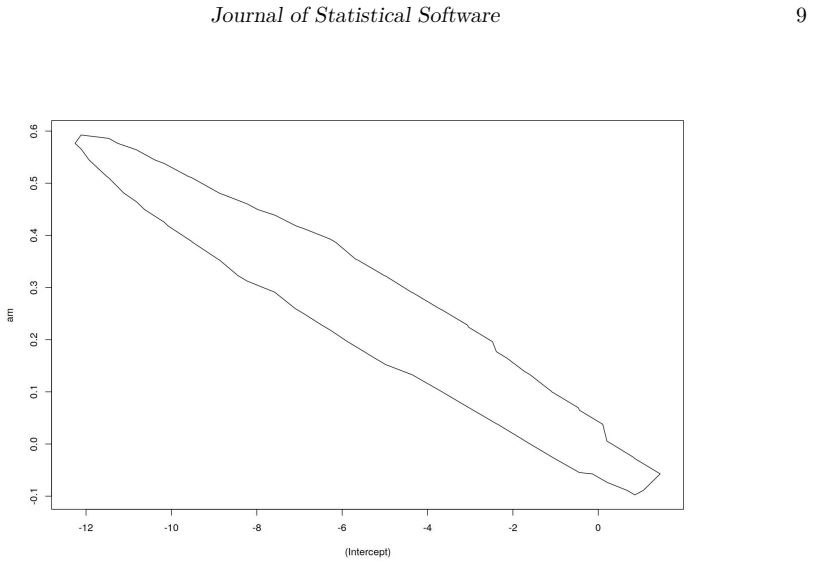
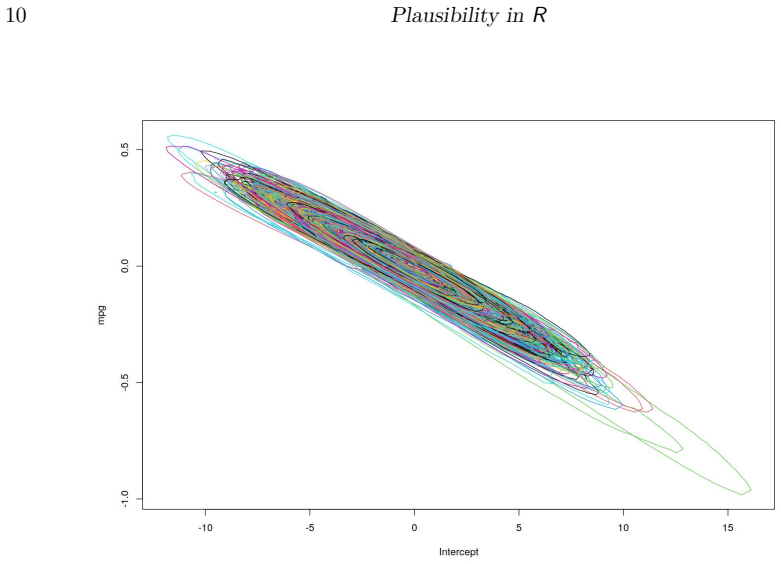
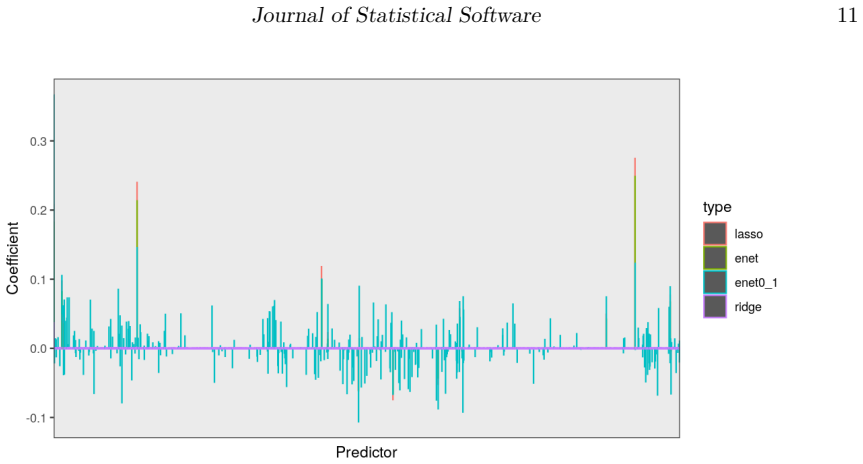
read the original abstract
Plausbility is a theoretical framework that allows to conduct exact inference in general parametric families. We introduce R-packages {\em plausibility} that implements this framework for a wide class of regression models. Plausibility can also be used to test penalized regression models such as estimated by package {\em glmnet}. We illustrate the package using a number of R data sets Through a class-based mechanism, the package can be easily extended. We illustrate and discuss computation aspects of the implementation and their impact on real-data analysis.
Editorial analysis
A structured set of objections, weighed in public.
Referee Report
Summary. The manuscript presents 'Plausibility' as a theoretical framework for exact inference in general parametric families. It describes an R package of the same name that implements the framework for a wide class of regression models. The package is claimed to enable exact inference for penalized regression models such as those produced by the glmnet package. Illustrations are provided using several R datasets, the package is designed to be extensible via a class-based mechanism, and computational aspects of the implementation are discussed along with their implications for real-data analysis.
Significance. Should the plausibility framework deliver exact, non-asymptotic inference that properly accounts for penalization effects in regularized regression, the work would be significant for the field of statistical methodology. It would offer a practical tool for obtaining exact p-values and confidence intervals in settings where asymptotic approximations or bootstrap methods are currently the norm, particularly for high-dimensional data analysis.
major comments (2)
- [Abstract] The assertion that plausibility allows exact inference for glmnet output lacks any derivation or description of the exact pivot or how the regularization is incorporated to maintain exact type I error control. This is load-bearing for the central claim, as penalized estimators generally produce biased estimates and non-pivotal distributions.
- [Computation aspects section] No explicit verification or proof is given that the implementation achieves exact (rather than approximate) inference for the highlighted class of penalized models.
minor comments (1)
- [Abstract] Typo or formatting issue in 'We illustrate the package using a number of R data sets Through a class-based mechanism,' which appears to be missing punctuation.
Simulated Author's Rebuttal
We thank the referee for the detailed report and the opportunity to respond. The comments correctly identify that the current manuscript does not supply a derivation or verification for the exact-inference claim on penalized models. We address each point below and will revise the manuscript to include the requested material.
read point-by-point responses
-
Referee: [Abstract] The assertion that plausibility allows exact inference for glmnet output lacks any derivation or description of the exact pivot or how the regularization is incorporated to maintain exact type I error control. This is load-bearing for the central claim, as penalized estimators generally produce biased estimates and non-pivotal distributions.
Authors: We agree that the abstract statement is not supported by a derivation in the present text. The plausibility framework is defined for general parametric families; the claim for glmnet models rests on treating the fixed penalty as part of the model specification, but no explicit pivot or type-I-error argument is given. We will add a dedicated subsection deriving the pivot and showing exact control under the penalized likelihood. revision: yes
-
Referee: [Computation aspects section] No explicit verification or proof is given that the implementation achieves exact (rather than approximate) inference for the highlighted class of penalized models.
Authors: The computation section discusses algorithmic complexity and numerical stability but contains no formal verification that the implemented procedure yields exact (non-asymptotic) inference for the penalized case. We will insert a short proof sketch or reference to the theoretical guarantee together with a small simulation check confirming exact type-I-error control. revision: yes
Circularity Check
No significant circularity; framework introduced as independent theoretical contribution
full rationale
The paper defines Plausibility as a new theoretical framework for exact inference in general parametric families and describes its R implementation for regression models including penalized ones. No derivation chain, equations, or self-citations are exhibited in the provided text that reduce a claimed prediction or result to fitted inputs or prior self-work by construction. The central claim is the existence and applicability of the framework itself, which stands as a self-contained proposal rather than a reduction of outputs to inputs. Standard software-paper risks around implementation fidelity are noted by the skeptic but do not constitute circularity under the specified rules, as no load-bearing step is quoted that collapses by definition.
Axiom & Free-Parameter Ledger
Reference graph
Works this paper leans on
-
[1]
Journal of the Royal Statistical Society
Regression shrinkage and selection via the lasso , volume =. Journal of the Royal Statistical Society. Series B (Methodological) , author =. 1996 , pages =
1996
-
[2]
Journal of statistical software , author =
Regularization. Journal of statistical software , author =. 2010 , pmid =
2010
-
[3]
The R Journal , author =
Dynamic parallelization of. The R Journal , author =. 2013 , pages =
2013
-
[4]
Proceedings of the National Academy of Sciences , author =
Mutation and. Proceedings of the National Academy of Sciences , author =. 1971 , pmid =. doi:10.1073/pnas.68.4.820 , abstract =
-
[5]
Journal of the American Statistical Association , author =
Plausibility functions and exact frequentist inference , volume =. Journal of the American Statistical Association , author =. 2015 , pages =
2015
-
[6]
Journal of the Royal Statistical Society , author =
On the. Journal of the Royal Statistical Society , author =. 1922 , pages =. doi:10.2307/2340521 , number =
-
[7]
Statistical Science , author =
A. Statistical Science , author =. 1992 , mrnumber =. doi:10.1214/ss/1177011454 , abstract =
-
[8]
Statistical inference , isbn =
Casella, George , year =. Statistical inference , isbn =
-
[9]
Phil. Trans. R. Soc. Lond. A , author =. 1933 , pages =. doi:10.1098/rsta.1933.0009 , abstract =
-
[10]
The American Journal of Human Genetics , author =
A. The American Journal of Human Genetics , author =. 2005 , pages =. doi:10.1086/429864 , abstract =
-
[11]
Image and vision computing , author =
Automatic face identification system using flexible appearance models , volume =. Image and vision computing , author =. 1995 , pages =
1995
-
[12]
Mathematics Stack Exchange , file =
polar coordinates -. Mathematics Stack Exchange , file =
-
[13]
Mathematics Stack Exchange , file =
Polar transformation of a probability distribution function , url =. Mathematics Stack Exchange , file =
-
[14]
The American Statistician , author =
Approximate. The American Statistician , author =. 1998 , pages =. doi:10.2307/2685469 , abstract =
-
[15]
Biometrika , author =
The use of confidence or fiducial limits illustrated in the case of the binomial , volume =. Biometrika , author =. 1934 , pages =
1934
-
[16]
Journal of the American Statistical Association , author =
p-. Journal of the American Statistical Association , author =. 2009 , keywords =. doi:10.1198/jasa.2009.tm08647 , abstract =
-
[17]
Annals of statistics , author =
High dimensional variable selection , volume =. Annals of statistics , author =. 2009 , pages =
2009
-
[18]
Yuan, Yinyin , year =. lol:
-
[19]
Journal of the Royal Statistical Society: Series B (Statistical Methodology) , author =
Regularization and variable selection via the elastic net , issn =. Journal of the Royal Statistical Society: Series B (Statistical Methodology) , author =. 2017 , keywords =. doi:10.1111/j.1467-9868.2005.00503.x@10.1111/(ISSN)1467-9868.TOP_SERIES_B_RESEARCH , abstract =
-
[20]
Technometrics , author =
Ridge regression:. Technometrics , author =. 1970 , pages =
1970
-
[21]
Ahdesmaki, Miika and Zuber, Verena and Gibb, Sebastian and Strimmer, Korbinian , year =. sda:
-
[22]
Cancer cell , author =
Gene expression correlates of clinical prostate cancer behavior , volume =. Cancer cell , author =. 2002 , pages =
2002
-
[23]
and Rose, Sherri , year =
Van der Laan, Mark J. and Rose, Sherri , year =. Targeted learning: causal inference for observational and experimental data , shorttitle =
-
[24]
Asymptotic. U.C. Berkeley Division of Biostatistics Working Paper Series , author =. 2010 , file =
2010
-
[25]
, year =
Efron, Bradley and Tibshirani, Robert J. , year =. An introduction to the bootstrap , publisher =
-
[26]
Hierarchical testing of variable importance , volume =. Biometrika , author =. 2008 , pages =. doi:10.1093/biomet/asn007 , abstract =
-
[27]
Multiple testing on the directed acyclic graph of gene ontology , volume =. Bioinformatics , author =. 2008 , pages =. doi:10.1093/bioinformatics/btm628 , abstract =
-
[28]
The Annals of Statistics , author =
The. The Annals of Statistics , author =. 2002 , pages =
2002
-
[29]
On closed testing procedures with special reference to ordered analysis of variance , volume =. Biometrika , author =. 1976 , pages =. doi:10.1093/biomet/63.3.655 , abstract =
-
[30]
The elements of statistical learning , volume =
Friedman, Jerome and Hastie, Trevor and Tibshirani, Robert , year =. The elements of statistical learning , volume =
-
[31]
Cancer:. Nature , author =. 2014 , pages =. doi:10.1038/nature13748 , abstract =
-
[32]
Statistics in medicine , author =
A boundary-optimized rejection region test for the two-sample binomial problem , volume =. Statistics in medicine , author =. 2018 , pages =
2018
-
[33]
Statistics in medicine , author =
Confidence intervals for difference in proportions for matched pairs compatible with exact. Statistics in medicine , author =. 2021 , pages =
2021
-
[34]
Biometrics , author =
Combining one-sample confidence procedures for inference in the two-sample case , volume =. Biometrics , author =. 2015 , pages =
2015
-
[35]
Calhoun, Peter , year =. Exact:
-
[36]
Canadian Journal of Statistics , author =
Confidence curves and improved exact confidence intervals for discrete distributions , volume =. Canadian Journal of Statistics , author =. 2000 , pages =
2000
-
[37]
Nature , author =
A new test for 2x2 tables , volume =. Nature , author =. 1945 , pages =
1945
-
[38]
Journal of Statistical Planning and Inference , author =
Exact model comparisons in the plausibility framework , volume =. Journal of Statistical Planning and Inference , author =. 2022 , keywords =. doi:10.1016/j.jspi.2021.07.013 , abstract =
-
[39]
Practical valid inferences for the two-sample binomial problem , volume =. Statistics Surveys , author =. 2021 , note =. doi:10.1214/21-SS131 , abstract =
-
[40]
Statistical Methods in Medical Research , author =
Exact unconditional tests for a 2 × 2 matched-pairs design , volume =. Statistical Methods in Medical Research , author =. 2003 , pages =. doi:10.1191/0962280203sm312ra , abstract =
-
[41]
Journal of the Royal Statistical Society
Exact. Journal of the Royal Statistical Society. Series A (General) , author =. 1985 , note =. doi:10.2307/2981892 , abstract =
-
[42]
Statistica Neerlandica , author =
Raised conditional level of significance for the 2 × 2-table when testing the equality of two probabilities , volume =. Statistica Neerlandica , author =. 1970 , note =. doi:10.1111/j.1467-9574.1970.tb00104.x , abstract =
-
[43]
Significance. Biometrika , author =. 1947 , note =. doi:10.2307/2332517 , number =
discussion (0)
Sign in with ORCID, Apple, or X to comment. Anyone can read and Pith papers without signing in.