REVIEW 2 minor 20 references
The regular n-flake dust in $\mathbb{R}^2$ is not Minkowski measurable
T0 review · 0 major / 2 minor · reviewed 2026-07-02 · grok-4.3
Pith's one-line read Regular n-flake dusts in the plane are not Minkowski measurable.
desk verdict This paper supplies the first explicit families of lattice-type self-similar sets in R^2 shown to lack Minkowski measurability. read the letter →
The pith
A machine-rendered reading of the paper's core claim, the machinery that carries it, and where it could break.
The reading
What carries the argument
The regular n-flake dust, an iteratively constructed lattice-type self-similar set in the plane whose tubular neighborhoods exhibit periodic oscillations in logarithmic scale that block existence of the Minkowski content.
What would settle it
An explicit computation showing that the limit of the rescaled volume of the epsilon-neighborhood of a regular n-flake dust exists and is finite and positive would falsify the claim.
Extended reading notes
Core claim
The regular n-flake dust in R^2 is not Minkowski measurable. Under the precise lattice-type self-similarity conditions that the Lapidus conjecture associates with non-measurability, the authors prove that the Minkowski content does not exist for these plane sets by showing that the rescaled volume of epsilon-neighborhoods fails to converge.
Load-bearing premise
The regular n-flake dusts satisfy the exact lattice-type self-similarity conditions under which non-Minkowski measurability is expected.
Editorial extensions
If this is right
- Lattice-type self-similar sets in R^2 need not be Minkowski measurable.
- The Lapidus conjecture holds for the family of regular n-flake dusts.
- Oscillatory behavior of tubular volumes is the mechanism preventing measurability.
- The same lattice-type construction yields non-measurable sets for every n greater than or equal to 3.
Reading between the lines
- The result suggests that checking lattice-type conditions may suffice to decide measurability for many other self-similar sets in the plane.
- Analogous constructions could be tested in higher dimensions to probe the conjecture further.
- The oscillatory mechanism identified here may appear in other fractal sets whose scaling ratios generate a lattice.
Signed reviews
Editorial analysis
A structured set of objections, weighed in public.
Referee Report
Summary. The paper claims that regular n-flake dusts in R^2, constructed as attractors of iterated function systems, are lattice-type self-similar sets whose tube-volume functions exhibit persistent logarithmic oscillations (due to non-real complex dimensions on the critical line), and therefore fail to be Minkowski measurable; this supplies explicit examples supporting the Lapidus conjecture in dimension two.
Significance. If the constructions and calculations hold, the work supplies concrete lattice-type examples in R^2 that are not Minkowski measurable, extending the settled one-dimensional case and furnishing direct evidence for the conjecture in higher dimensions. The explicit verification of the lattice condition on the scaling ratios and the identification of the non-real pole constitute a clear strength.
minor comments (2)
- [Introduction] The definition of the regular n-flake dust and the precise IFS maps should be stated explicitly at the outset so that the lattice-type verification can be followed without external references.
- A brief numerical check or plot of the oscillatory term in the tube volume for one or two concrete values of n would help the reader confirm the claimed non-existence of the limit.
Simulated Author's Rebuttal
We thank the referee for the positive assessment of our work and the recommendation of minor revision. The report provides no specific major comments to address point by point.
Circularity Check
No significant circularity
full rationale
The derivation constructs explicit regular n-flake dusts as lattice-type IFS attractors in R^2, verifies the lattice condition on the scaling ratios directly from the IFS, computes the associated complex dimensions, and exhibits a non-real pole on the critical line to show that lim ε→0 V(ε)ε^{D-2} fails to exist. All steps rest on standard external definitions of self-similar sets, lattice-type structure, and complex dimensions; no parameter is fitted and then renamed as a prediction, no load-bearing uniqueness theorem is imported from the authors' prior work, and the central non-measurability claim is obtained by explicit verification rather than by construction or self-citation chain. The Lapidus conjecture is cited only as motivation, not as an unverified premise that the proof reduces to.
Assumptions & free parameters
Cite this review
Pith. "Pith review of The regular n-flake dust in $\mathbb{R}^2$ is not Minkowski measurable." pith.science (2026). https://pith.science/paper/NSELNAZJ
@misc{pith2026260700690,
  author       = {Pith},
  title        = {Pith review of: The regular n-flake dust in $\mathbbR^2$ is not Minkowski measurable},
  year         = {2026},
  howpublished = {\url{https://pith.science/paper/NSELNAZJ}},
  note         = {Machine review of arXiv:2607.00690}
}
abstract
A long-standing conjecture of Lapidus asserts that under certain conditions a self-similar fractal set is not Minkowski measurable if and only if it is of lattice-type. For self-similar sets in $\mathbb{R}$, the Lapidus conjecture has been confirmed. However, in higher dimensions, it remains unclear whether all lattice-type self-similar sets are not Minkowski measurable. This work presents families of lattice-type subsets in $\mathbb{R}^2$ that are not Minkowski measurable, hence providing further support for the conjecture.
Figures


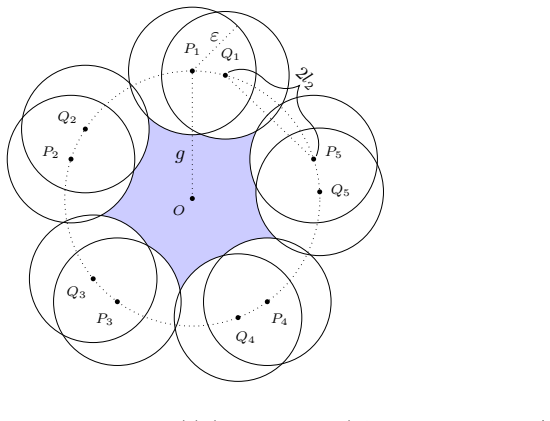
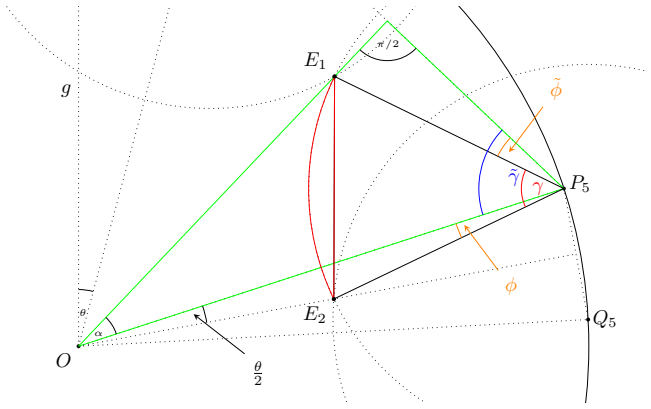
Figures from the paper (5 more)



Reference graph
Works this paper leans on
-
[1]
Frank H. Clarke. Generalized gradients and applications.Trans. Amer. Math. Soc., 205:247–262, 1975
work page 1975
-
[2]
Clarke.Optimization and nonsmooth analysis
Frank H. Clarke.Optimization and nonsmooth analysis. Canadian Mathematical Society Series of Monographs and Advanced Texts. John Wiley & Sons, Inc., New York, 1983. A Wiley-Interscience Publication
work page 1983
-
[3]
K. Falconer.Fractal geometry. John Wiley & Sons, Inc., Hoboken, NJ, second edition,
-
[4]
Mathematical foundations and applications
-
[5]
K. J. Falconer. On the Minkowski measurability of fractals.Proc. Amer. Math. Soc., 123(4):1115–1124, 1995
work page 1995
-
[6]
Family of non-Minkowski measurable fractals inR 2
Uta Freiberg and Jonas Lippold. Family of non-Minkowski measurable fractals inR 2. Geometry, 3(1):1–13, 2026
work page 2026
-
[7]
Tubular neighborhoods in Euclidean spaces.Duke Math
Joseph Howland Guthrie Fu. Tubular neighborhoods in Euclidean spaces.Duke Math. J., 52(4):1025–1046, 1985
work page 1985
-
[8]
Lacunarity of self-similar and stochastically self-similar sets.Trans
Dimitris Gatzouras. Lacunarity of self-similar and stochastically self-similar sets.Trans. Amer. Math. Soc., 352(5):1953–1983, 2000
work page 1953
Show all 20 references
-
[9]
A local Steiner-type formula for general closed sets and applications.Math
Daniel Hug, Günter Last, and Wolfgang Weil. A local Steiner-type formula for general closed sets and applications.Math. Z., 246(1-2):237–272, 2004
2004
-
[10]
Fractals and self-similarity.Indiana Univ
John Hutchinson. Fractals and self-similarity.Indiana Univ. Math. J., 30:713–747, 1981
1981
-
[11]
A survey on Minkowski measurability of self-similar and self-conformal fractalsinR d
Sabrina Kombrink. A survey on Minkowski measurability of self-similar and self-conformal fractalsinR d. InFractal geometry and dynamical systems in pure and applied mathematics. I. Fractals in pure mathematics, volume 600 ofContemp. Math., pages 135–159. Amer. Math. Soc., Prov...
2013
-
[12]
Sabrina Kombrink, Erin P. J. Pearse, and Steffen Winter. Lattice-type self-similar sets with pluriphase generators fail to be Minkowski measurable.Math. Z., 283(3-4):1049–1070, 2016
2016
-
[13]
Lattice self-similar sets on the real line are not Minkowski measurable.Ergodic Theory Dynam
Sabrina Kombrink and Steffen Winter. Lattice self-similar sets on the real line are not Minkowski measurable.Ergodic Theory Dynam. Systems, 40(1):221–232, 2020
2020
-
[14]
M. L. Lapidus. Vibrations of fractal drums, the Riemann hypothesis, waves in fractal media and the Weyl-Berry conjecture. InOrdinary and partial differential equations, Vol. IV (Dundee, 1992), volume 289 ofPitman Res. Notes Math. Ser., pages 126–209. Longman Sci. Tech., Harlow, 1993
1992
-
[15]
Erin P. J. Pearse and Steffen Winter. Geometry of canonical self-similar tilings.Rocky Mountain J. Math., 42(4):1327–1357, 2012
2012
-
[16]
On volume and surface area of parallel sets.Indiana Univ
Jan Rataj and Steffen Winter. On volume and surface area of parallel sets.Indiana Univ. Math. J., 59(5):1661–1685, 2010
2010
-
[17]
Separation properties for self-similar sets.Proc
Andreas Schief. Separation properties for self-similar sets.Proc. Amer. Math. Soc., 122(1):111–115, 1994. 14
1994
-
[18]
Sierpinski n-gons.Pi Mu Epsilon Journal, 10(2):81–89, 1995
Steven Schlicker and Kevin Dennis. Sierpinski n-gons.Pi Mu Epsilon Journal, 10(2):81–89, 1995
1995
-
[19]
L. L. Stachó. On the volume function of parallel sets.Acta Sci. Math. (Szeged), 38(3- 4):365–374, 1976
1976
-
[20]
Minkowski content and fractal curvatures of self-similar tilings and gen- erator formulas for self-similar sets.Adv
Steffen Winter. Minkowski content and fractal curvatures of self-similar tilings and gen- erator formulas for self-similar sets.Adv. Math., 274:285–322, 2015. 15
2015
Reviewed July 2, 2026 · model on record in the stance chip above.
Discussion (0). Continue with ORCID to comment.