A Calculus of Apartness over Separoids: Effective Convex Representation, Stratified Conservativity, and the Complexity of Entailment
Pith reviewed 2026-06-27 07:43 UTC · model grok-4.3
The pith
Every finite apartness separoid is realized exactly by rational polytopes whose coordinates are indexed by maximal separations.
A machine-rendered reading of the paper's core claim, the machinery that carries it, and where it could break.
Core claim
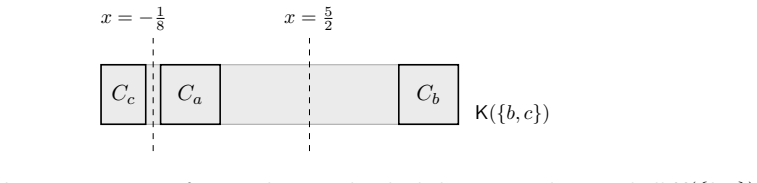
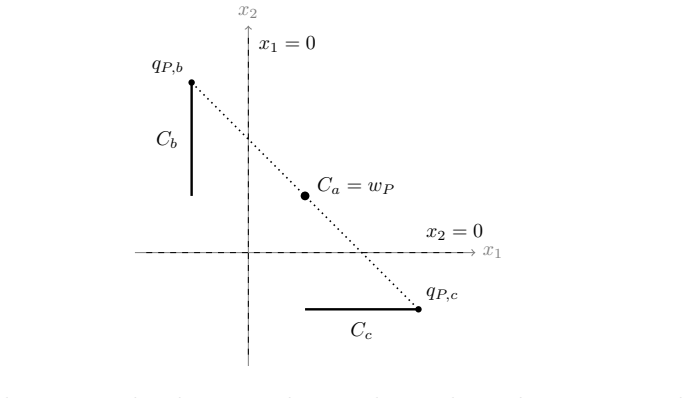
Every finite apartness separoid admits a rational polytope realization in which each coordinate is indexed by a maximal separation, every apart pair is separated by clearance at least 2, the realization remains valid under outer parallel enlargement by radius less than 1, and the bodies become full-dimensional after thickening. The construction is effective from a full table, generators, or membership oracle, and the distance layer satisfies Lipschitz comparison and monotonicity. Positive entailment is exactly one-premise subsumption; Boolean consequence is sound and complete; satisfiability is NP-complete and validity is coNP-complete; a stratification theorem shows Boolean reasoning adds n
What carries the argument
Rational polytope realization indexed by maximal separations, which supplies one coordinate per maximal separation that simultaneously certifies all required clearances and remains stable under controlled enlargement.
If this is right
- Positive entailment reduces exactly to checking one-premise subsumption and is therefore linear-time for sorted encodings.
- Satisfiability of Boolean formulas over apartness atoms is NP-complete while validity is coNP-complete.
- Any Boolean consequence relation over a Euclidean scene is conservative: it never introduces new atomic apartness facts beyond those already required by separoid closure.
- The hierarchy of fixed-dimensional consequence relations is strictly decreasing and stabilizes once dimension reaches n-1 for an n-site instance.
Where Pith is reading between the lines
- The explicit coordinate indexing by maximal separations suggests that geometric certificates can be read directly from the logical entailment table without solving auxiliary optimization problems.
- Because the realization remains valid under small enlargements, the same polytopes can serve as robust models for noisy or approximate sensor data that only approximately respects the apartness facts.
- The stabilization of the dimension hierarchy at n-1 implies that logical reasoning about n sites never requires more than n-1 dimensions once the separoid axioms are satisfied.
Load-bearing premise
The apartness relation must be exactly the one induced by disjointness of convex hulls of compact convex bodies in Euclidean space and must satisfy the separation-polarity axioms of acyclic separoids.
What would settle it
Exhibit a small finite apartness table obeying symmetry, bilateral subsumption and vacuity for which no assignment of rational polytopes indexed by its maximal separations achieves clearance at least 2 while remaining correct under enlargement by radius 0.9.
Figures
read the original abstract
Every finite family of compact convex bodies in Euclidean space induces an apartness relation between disjoint index sets: two sets are apart when the convex hulls of the corresponding unions are disjoint. This paper studies the finite theory obtained by taking apartness as the primitive relation. Its basic laws are symmetry, bilateral subsumption, and vacuity, equivalently the separation-polarity form of acyclic separoids. The main contribution is an effective rational realization theorem with uniform margins and the exact consequence theory it supports. Every finite apartness separoid is realized by rational polytopes whose coordinates are indexed by maximal separations. Maximal separations and minimal Radon partitions can be enumerated from a full table, generators, or a membership oracle; the coordinate values have controlled bit height; and each coordinate records a readable certificate of one maximal separation. The realization separates every apart pair with clearance at least 2, remains correct under outer parallel enlargement by any radius below 1, and yields full-dimensional convex bodies after thickening. The distance-function layer records standard convex-analytic stability through Lipschitz comparison, monotonicity under inclusion, and outer parallel bodies. On the logical side, positive entailment is exactly one-premise subsumption. Boolean consequence over Euclidean scenes is sound, complete, and decidable; satisfiability is NP-complete, validity is coNP-complete, and positive entailment is linear for sorted encodings. A stratification theorem shows that Boolean reasoning introduces no new atomic apartness beyond separoid closure. Fixed-dimensional consequence relations form a strictly decreasing hierarchy that stabilizes in dimension n minus 1 for n sites.
Editorial analysis
A structured set of objections, weighed in public.
Referee Report
Summary. The paper develops a calculus of apartness over separoids induced by compact convex bodies, with axioms of symmetry, bilateral subsumption, and vacuity. Its central contribution is an effective rational realization theorem: every finite apartness separoid is realized by rational polytopes whose coordinates are indexed by maximal separations, with each apart pair separated by clearance at least 2, stability under outer parallel enlargement of radius below 1, and full-dimensional bodies after thickening. It derives that positive entailment equals one-premise subsumption, that Boolean consequence is sound/complete/decidable, with satisfiability NP-complete, validity coNP-complete, and positive entailment linear; a stratification theorem shows Boolean reasoning adds no new atomic apartness beyond separoid closure, and fixed-dimensional consequence relations form a decreasing hierarchy stabilizing at dimension n-1.
Significance. If the realization holds, the work supplies an explicit, certificate-producing construction that connects abstract separoid axioms to concrete Euclidean geometry with uniform margins and controlled bit height, which is valuable for qualitative spatial reasoning and convex optimization. The complexity classification and conservativity result clarify the computational profile of apartness reasoning. Credit is due for the effective enumeration of maximal separations and minimal Radon partitions from tables, generators, or oracles, and for the parameter-free character of the core geometric construction.
minor comments (3)
- [Abstract / Realization theorem] The abstract states that coordinates 'have controlled bit height'; a minor comment in §3 or the realization theorem statement should give an explicit bound (e.g., O(log n) or similar) to make the claim fully quantitative.
- [Distance-function layer] The distance-function layer is invoked for Lipschitz comparison and monotonicity; a short paragraph or reference to standard convex-analytic facts (e.g., support functions) would aid readers outside geometry.
- [Stratification theorem] The stratification theorem is stated for Boolean consequence; a brief remark on whether the same conservativity holds for the positive fragment alone would clarify the logical landscape.
Simulated Author's Rebuttal
We thank the referee for the positive summary, significance assessment, and recommendation of minor revision. No specific major comments were raised in the report.
Circularity Check
No significant circularity identified
full rationale
The paper presents an effective rational realization theorem for every finite apartness separoid by polytopes whose coordinates are indexed by maximal separations, with clearance >=2 and stability under outer parallel bodies of radius <1. This is derived from the standard axioms of symmetry, bilateral subsumption, and vacuity (separation-polarity form of acyclic separoids). Positive entailment is shown to be exactly one-premise subsumption, with Boolean consequence sound/complete/decidable and complexity results following directly. No steps reduce by construction to fitted inputs, self-definitions, or load-bearing self-citations; the derivation chain is self-contained against the stated axioms and convex-analytic properties.
Axiom & Free-Parameter Ledger
Reference graph
Works this paper leans on
-
[1]
Aiello, I
M. Aiello, I. Pratt-Hartmann, J. van Benthem (eds.),Handbook of Spatial Logics, Springer, Dordrecht, 2007
2007
-
[2]
K. R. Apt, H. A. Blair, A. Walker, Towards a theory of declarative knowledge, in: J. Minker (ed.),Foundations of Deductive Databases and Logic Programming, Morgan Kaufmann, 1988, pp. 89–148
1988
-
[3]
J. L. Arocha, J. Bracho, L. Montejano, D. Oliveros, R. Strausz, Separoids, their categories and a Hadwiger-type theorem for transversals,Discrete Comput. Geom.27 (2002) 377–385
2002
-
[4]
Bardi, I
M. Bardi, I. Capuzzo-Dolcetta,Optimal Control and Viscosity Solutions of Hamilton– Jacobi–Bellman Equations, Birkhäuser, Boston, 1997. 20
1997
-
[5]
Björner, M
A. Björner, M. Las Vergnas, B. Sturmfels, N. White, G. M. Ziegler,Oriented Matroids, Encyclopedia of Mathematics and its Applications 46, Cambridge University Press, 1993
1993
-
[6]
Bracho, R
J. Bracho, R. Strausz, Two geometric representation theorems for separoids,Period. Math. Hungar.53 (2006) 115–120
2006
-
[7]
D. S. Bridges, L. S. Vîţă,Apartness and Uniformity: A Constructive Development, Theory and Applications of Computability, Springer, Berlin–Heidelberg, 2011
2011
-
[8]
M. G. Crandall, P.-L. Lions, Viscosity solutions of Hamilton–Jacobi equations,Trans. Amer. Math. Soc.277 (1983) 1–42
1983
-
[9]
P. H. Edelman, R. E. Jamison, The theory of convex geometries,Geom. Dedicata19 (1985) 247–270
1985
-
[10]
Federer, Curvature measures,Trans
H. Federer, Curvature measures,Trans. Amer. Math. Soc.93 (1959) 418–491
1959
-
[11]
F. W. Levi, On Helly’s theorem and the axioms of convexity,J. Indian Math. Soc.(N.S.) 15 (1951) 65–76
1951
-
[12]
N. E. Mnëv, The universality theorems on the classification problem of configuration varieties and convex polytopes varieties, in:Topology and Geometry—Rohlin Seminar, Lecture Notes in Mathematics 1346, Springer, 1988, pp. 527–543
1988
-
[13]
J. J. Montellano-Ballesteros, A. Pór, R. Strausz, Tverberg-type theorems for separoids, Discrete Comput. Geom.35 (2006) 513–523
2006
-
[14]
J. J. Montellano-Ballesteros, R. Strausz, Counting polytopes via the Radon complex,J. Combin. Theory Ser. A106 (2004) 109–121
2004
-
[15]
S. A. Naimpally, B. D. Warrack,Proximity Spaces, Cambridge Tracts in Mathematics and Mathematical Physics 59, Cambridge University Press, 1970
1970
-
[16]
Nešetřil, R
J. Nešetřil, R. Strausz, Universality of separoids,Arch. Math. (Brno)42 (2006) 85–101
2006
-
[17]
Radon, Mengen konvexer Körper, die einen gemeinsamen Punkt enthalten,Math
J. Radon, Mengen konvexer Körper, die einen gemeinsamen Punkt enthalten,Math. Ann.83 (1921) 113–115
1921
-
[18]
D. A. Randell, Z. Cui, A. G. Cohn, A spatial logic based on regions and connection, in: Proc. 3rd Int. Conf. on Principles of Knowledge Representation and Reasoning (KR’92), Morgan Kaufmann, 1992, pp. 165–176
1992
-
[19]
Schneider,Convex Bodies: The Brunn–Minkowski Theory, 2nd expanded ed., Ency- clopedia of Mathematics and its Applications 151, Cambridge University Press, 2014
R. Schneider,Convex Bodies: The Brunn–Minkowski Theory, 2nd expanded ed., Ency- clopedia of Mathematics and its Applications 151, Cambridge University Press, 2014
2014
-
[20]
Strausz, On Radon’s theorem and representations of separoids, ITI Series 2003–118, Charles University, Prague, 2003
R. Strausz, On Radon’s theorem and representations of separoids, ITI Series 2003–118, Charles University, Prague, 2003
2003
-
[21]
Strausz, Homomorphisms of separoids,Electron
R. Strausz, Homomorphisms of separoids,Electron. Notes Discrete Math.28 (2007) 461–468
2007
-
[22]
M. L. J. van de Vel,Theory of Convex Structures, North-Holland Mathematical Library 50, North-Holland, Amsterdam, 1993. 21
1993
discussion (0)
Sign in with ORCID, Apple, or X to comment. Anyone can read and Pith papers without signing in.