Leveraging the Learning Curve: Reusing Existing Architectural Patterns to Design and Implement MAS
Pith reviewed 2026-06-28 19:28 UTC · model grok-4.3
The pith
Introducing a minimal set of agent concepts into distributed systems improves the engineering of multi-agent systems.
A machine-rendered reading of the paper's core claim, the machinery that carries it, and where it could break.
Core claim
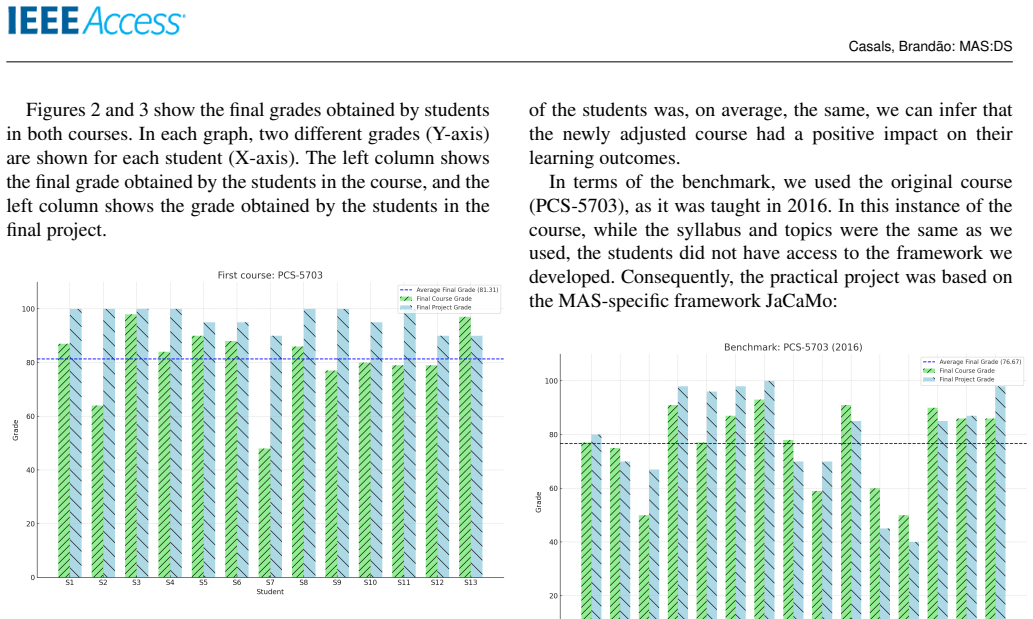
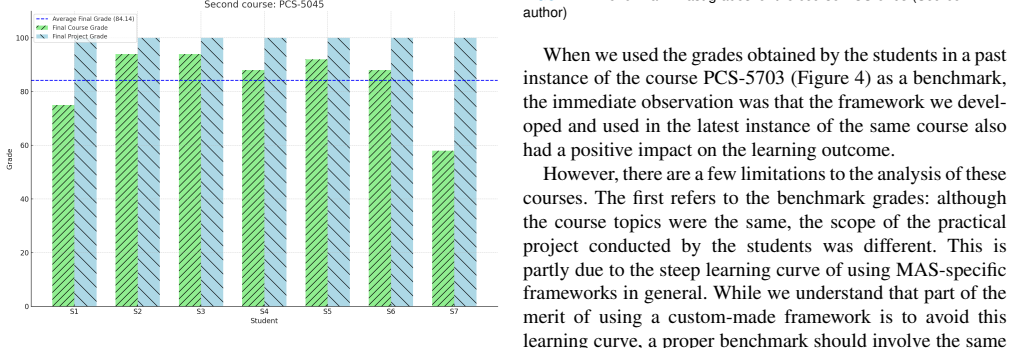
We propose that introducing a minimal set of agent-related concepts into the Distributed Systems domain can improve the engineering of modern MAS by leveraging techniques from DS engineering with established agent theory. This is validated by incorporating the concepts into a DS architectural pattern for design and by successful student implementations in courses with high average grades.
What carries the argument
A minimal set of agent-related concepts added to distributed systems architectural patterns.
If this is right
- DS patterns can be reused for MAS design and implementation.
- MAS can be taught effectively to students without prior knowledge using DS tools.
- Modern AI systems benefit from consistent use of agent research and DS techniques.
- The collaborative nature of agents aligns with distributed systems characteristics.
Where Pith is reading between the lines
- This approach may lower the barrier for developing MAS in industry settings.
- The minimal concepts could be formalized into new design methodologies.
- Similar minimal sets might bridge other AI subfields with established engineering domains.
Load-bearing premise
The student success and high grades result from the minimal agent concepts rather than course structure or chosen tools.
What would settle it
Conducting the same courses without introducing the minimal agent concepts and observing if grades and implementation success remain above 80 percent on average.
Figures
read the original abstract
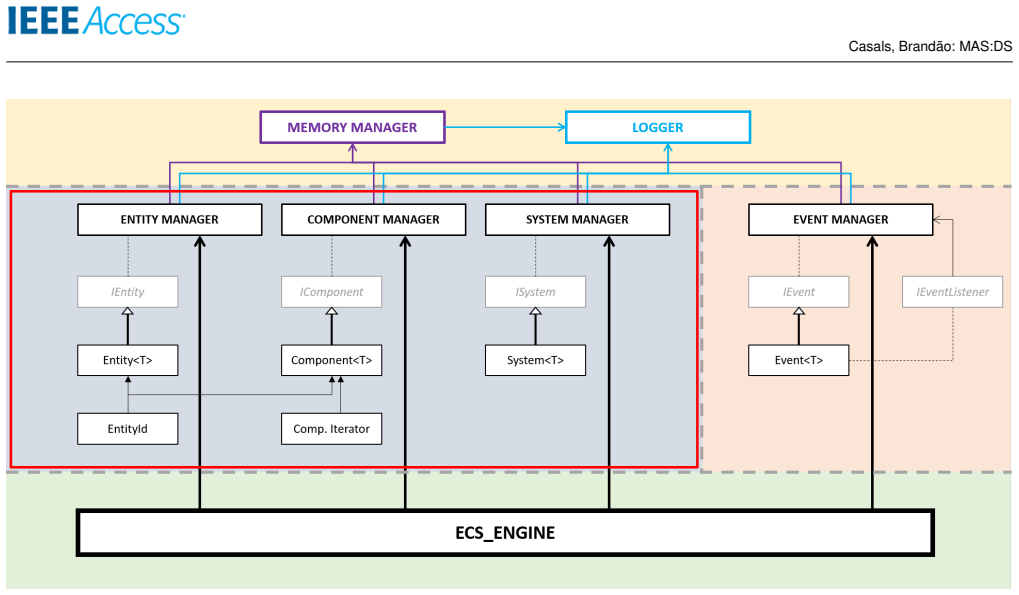
Recent advancements in AI have led to the development of specialized systems related to multi-agent systems (MAS). However, the inherently collaborative nature of agents is often overlooked, and many of these specialized systems are used as components by other AI systems. From a software engineering perspective, this context can benefit from aligning the architectural characteristics of distributed systems with the inherently distributed nature of MAS. We propose that introducing a minimal set of agent-related concepts into the Distributed Systems (DS) domain can improve the engineering of modern MAS by leveraging techniques from DS engineering with established agent theory. In this study, we recapitulated the common origins of MAS and DS by drawing architectural parallels to establish a unified engineering approach. We then defined a minimal set of agent concepts to perform two practical studies on leveraging MAS development. First, we incorporated these concepts into a DS architectural pattern to design a distributed MAS. We then used these concepts in a graduate course to teach MAS engineering to students with no prior knowledge of agent theory. The learning outcomes from both courses included successful MAS implementation using DS tools and techniques. Although more than two-thirds of these students had no practical experience in developing distributed systems, the average final grade in both courses was above 80\%, thus validating our approach. Finally, we discuss how this study supports the development of advanced systems using modern AI techniques consistently with established agent-related research while leveraging established DS techniques and concepts.
Editorial analysis
A structured set of objections, weighed in public.
Referee Report
Summary. The paper claims that introducing a minimal set of agent-related concepts into the Distributed Systems domain improves engineering of modern MAS by aligning DS architectural patterns with agent theory. It supports this via recapitulation of common origins, definition of the minimal concepts, their application to design a distributed MAS, and their use in two graduate courses where students lacking prior DS or agent experience produced successful implementations with average grades above 80%.
Significance. If the causal link holds, the work could offer a practical bridge between established DS engineering and MAS development, aiding education and implementation of collaborative AI systems. The teaching-study validation is currently too weak to support strong claims of improvement, but the minimal-concept framing itself is a reasonable starting point for reuse of patterns if better isolated from confounds.
major comments (2)
- [Abstract and course-study description] Abstract and course-study description: the claim that the outcomes 'validate our approach' is load-bearing for the central thesis, yet the reported evidence consists only of post-intervention grades (>80% average) and implementation success with no control condition, pre/post measures, sample sizes, or statistical analysis to rule out confounds such as course structure, instructor effects, or self-selection.
- [Practical studies section] Practical studies section: the first study (incorporating the minimal concepts into a DS architectural pattern) provides no concrete comparison showing that the unified approach yields measurable improvements in design or implementation effort relative to standard DS patterns alone.
minor comments (1)
- The manuscript would benefit from an explicit, enumerated definition of the 'minimal set of agent-related concepts' early in the text rather than leaving it implicit.
Simulated Author's Rebuttal
We thank the referee for the constructive comments highlighting limitations in our evidence and study design. We agree that stronger causal claims require more rigorous controls and that the first practical study is illustrative rather than comparative. We will revise the manuscript to moderate language, clarify scope, report sample details, and acknowledge limitations. Below we respond point by point.
read point-by-point responses
-
Referee: [Abstract and course-study description] Abstract and course-study description: the claim that the outcomes 'validate our approach' is load-bearing for the central thesis, yet the reported evidence consists only of post-intervention grades (>80% average) and implementation success with no control condition, pre/post measures, sample sizes, or statistical analysis to rule out confounds such as course structure, instructor effects, or self-selection.
Authors: We acknowledge that 'validate' overstates the observational nature of the data. The course outcomes show that students without prior DS or agent experience could implement working MAS using the concepts and DS tools, with grades above 80%. However, this does not rule out confounds. We will revise the abstract, introduction, and practical studies section to replace 'validate' with 'illustrate the feasibility of' or 'provide initial support for', explicitly state the exploratory character of the study, report the number of students per course, and note the absence of controls or statistical tests as a limitation. revision: yes
-
Referee: [Practical studies section] Practical studies section: the first study (incorporating the minimal concepts into a DS architectural pattern) provides no concrete comparison showing that the unified approach yields measurable improvements in design or implementation effort relative to standard DS patterns alone.
Authors: The first study was intended as a worked example of embedding the minimal agent concepts into an existing DS pattern (e.g., to design a distributed MAS), not as a controlled comparison of effort or quality. We will revise the section to state this purpose explicitly, remove any implication of measured improvement, and add a limitations paragraph noting that quantitative comparison against baseline DS patterns alone was outside the scope of the current work. revision: partial
Circularity Check
No circularity: empirical teaching study with no derivation chain or fitted predictions
full rationale
The paper presents a conceptual unification of MAS and DS via architectural parallels, followed by an empirical validation through two graduate courses measuring student implementation success and grades (>80% average). No equations, parameters, or predictions are defined; the central claim rests on observed outcomes rather than any reduction of a result to its own inputs by construction. No self-citation load-bearing steps, uniqueness theorems, or ansatzes appear. The absence of a control group is a methodological limitation but does not constitute circularity under the defined patterns.
Axiom & Free-Parameter Ledger
invented entities (1)
-
minimal set of agent-related concepts
no independent evidence
Reference graph
Works this paper leans on
-
[1]
Russell and Peter Norvig
Stuart J. Russell and Peter Norvig. Artificial Intelligence: A Modern Approach. Prentice-Hall, Inc., Upper Saddle River, NJ, USA, 1995
1995
-
[2]
Distributed artificial intelligence, volume 2
Robin Gasser and Michael N Huhns. Distributed artificial intelligence, volume 2. Morgan Kaufmann, 2014
2014
-
[3]
A commitment-based framework for describing informal cooperative work
Richard E Fikes. A commitment-based framework for describing informal cooperative work. Cognitive Science, 6(4):331–347, 1982
1982
-
[4]
Decentralized artificial intelligence
Y Müller. Decentralized artificial intelligence. Decentralised AI, pages 3–13, 1990
1990
-
[5]
Multi-agent systems: an introduction to distributed artifi- cial intelligence, volume 1
Jacques Ferber. Multi-agent systems: an introduction to distributed artifi- cial intelligence, volume 1. Addison-Wesley Reading, 1999
1999
-
[6]
Applications of distributed artificial intelligence in industry
H Van Dyke Parunak. Applications of distributed artificial intelligence in industry. Foundations of distributed artificial intelligence, 2, 1996
1996
-
[7]
Distributed Systems
Maarten Van Steen and Andrew S Tanenbaum. Distributed Systems. distributed-systems.net, 3 edition, 2017
2017
-
[8]
World wide web
Tim Berners-Lee, Dimitri Dimitroyannis, A John Mallinckrodt, and Susan McKay. World wide web. Computers in Physics, 8(3):298–299, 1994
1994
-
[9]
The semantic web
Tim Berners-Lee, James Hendler, and Ora Lassila. The semantic web. Scientific american, 284(5):34–43, 2001
2001
-
[10]
O’Reilly Media, Inc
Jim Webber, Savas Parastatidis, and Ian Robinson. REST in practice: Hypermedia and systems architecture. " O’Reilly Media, Inc.", 2010
2010
-
[11]
Fantastic mass and where to find them: First results and lesson learned
Viviana Mascardi. Fantastic mass and where to find them: First results and lesson learned
-
[12]
Clifford Neuman
B. Clifford Neuman. Scale in distributed systems. ISI/USC, 1994
1994
-
[13]
A discussion of two major benefits of using agents in software development
Federico Bergenti. A discussion of two major benefits of using agents in software development. In International Workshop on Engineering Societies in the Agents World, pages 1–12. Springer, 2002
2002
-
[14]
Parallelising multi-agent systems for high performance computing
Paulo Leitão, Udo Inden, and Claus-Peter Rückemann. Parallelising multi-agent systems for high performance computing. In Third In- ternational Conference on Advanced Communications and Computation (INFOCOMP’13), volume 6, page 1. IARIA, 2013
2013
-
[15]
A survey on parallel and distributed multi-agent systems for high performance computing simulations
Alban Rousset, Bénédicte Herrmann, Christophe Lang, and Laurent Philippe. A survey on parallel and distributed multi-agent systems for high performance computing simulations. Computer Science Review, 22:27– 46, 2016
2016
-
[16]
A distributed multi-agent system for collaborative information management and learn- ing
James R Chen, Shawn R Wolfe, and Stephen D Wragg. A distributed multi-agent system for collaborative information management and learn- ing. Technical report, 2000
2000
-
[17]
Jade implemented mobile multi- agent based, distributed information platform for pervasive health care monitoring
Chuan-Jun Su and Chia-Ying Wu. Jade implemented mobile multi- agent based, distributed information platform for pervasive health care monitoring. Applied Soft Computing, 11(1):315–325, 2011
2011
-
[18]
Software architecture in practice
Len Bass, Paul Clements, and Rick Kazman. Software architecture in practice. Addison-Wesley Professional, 2003
2003
-
[19]
Bran V . Selic. On the Semantic Foundations of Standard UML 2.0, pages 181–199. Springer Berlin Heidelberg, Berlin, Heidelberg, 2004
2004
-
[20]
B. Selic. Uml 2: A model-driven development tool. IBM Systems Journal, 45(3):607–620, 2006
2006
-
[21]
Service-oriented architecture
Randall Perrey and Mark Lycett. Service-oriented architecture. In 2003 Symposium on Applications and the Internet Workshops, 2003. Proceed- ings., pages 116–119. IEEE, 2003
2003
-
[22]
Understanding SOA with Web services
Eric Newcomer and Greg Lomow. Understanding SOA with Web services. Addison-Wesley, 2005
2005
-
[23]
An introduction to software architecture
David Garlan and Mary Shaw. An introduction to software architecture. In Advances in software engineering and knowledge engineering, pages 1–39. World Scientific, 1993
1993
-
[24]
Exploiting virtual synchrony in dis- tributed systems
Ken Birman and Thomas Joseph. Exploiting virtual synchrony in dis- tributed systems. In Proceedings of the eleventh ACM Symposium on Operating systems principles, pages 123–138, 1987
1987
-
[25]
Monitoring streams—a new class of data management applica- tions
Don Carney, U ˘gur Çetintemel, Mitch Cherniack, Christian Convey, Sang- don Lee, Greg Seidman, Nesime Tatbul, Stan Zdonik, and Michael Stone- braker. Monitoring streams—a new class of data management applica- tions. In VLDB’02: Proceedings of the 28th International Conference on Very Large Databases, pages 215–226. Elsevier, 2002
2002
-
[26]
The many faces of publish/subscribe
Patrick Th Eugster, Pascal A Felber, Rachid Guerraoui, and Anne-Marie Kermarrec. The many faces of publish/subscribe. ACM computing surveys (CSUR), 35(2):114–131, 2003
2003
-
[27]
Middleware architecture with patterns and frameworks
Sacha Krakowiak. Middleware architecture with patterns and frameworks. 2007
2007
-
[28]
Architecture-based design of multi-agent systems
Danny Weyns. Architecture-based design of multi-agent systems. Springer Science & Business Media, 2010
2010
-
[29]
De- veloping multi-agent systems with JADE, volume 7
Fabio Luigi Bellifemine, Giovanni Caire, and Dominic Greenwood. De- veloping multi-agent systems with JADE, volume 7. John Wiley & Sons, 2007
2007
-
[30]
An overview of the multiagent systems engineering methodology
Mark F Wood and Scott A DeLoach. An overview of the multiagent systems engineering methodology. In International Workshop on Agent- Oriented Software Engineering, pages 207–221. Springer, 2000
2000
-
[31]
Multi-agent oriented programming with jacamo
Olivier Boissier, Rafael H Bordini, Jomi F Hübner, Alessandro Ricci, and Andrea Santi. Multi-agent oriented programming with jacamo. Science of Computer Programming, 78(6):747–761, 2013
2013
-
[32]
Agent theories, archi- tectures, and languages: a survey
Michael Wooldridge and Nicholas R Jennings. Agent theories, archi- tectures, and languages: a survey. In International Workshop on Agent Theories, Architectures, and Languages, pages 1–39. Springer, 1994
1994
-
[33]
Bdi agents: from theory to practice
Anand S Rao, Michael P Georgeff, et al. Bdi agents: from theory to practice. In ICMAS, volume 95, pages 312–319, 1995
1995
-
[34]
Standardizing agent communication
Yannis Labrou. Standardizing agent communication. In ECCAI Advanced Course on Artificial Intelligence, pages 74–97. Springer, 2001
2001
-
[35]
Shujun Li and Mieczyslaw M. Kokar. Agent Communication Language. Springer New York, New York, NY , 2013
2013
-
[36]
A state of art review on various aspects of multi-agent system
Renuka Kamdar, Priyanka Paliwal, and Yogendra Kumar. A state of art review on various aspects of multi-agent system. Journal of Circuits, Systems and Computers, page 1830006, 2018
2018
-
[37]
Fipa—towards a standard for software agents
Paul D O’Brien and Richard C Nicol. Fipa—towards a standard for software agents. BT Technology Journal, 16(3):51–59, 1998
1998
-
[38]
Kqml as an agent communication language
Tim Finin, Richard Fritzson, Don McKay, and Robin McEntire. Kqml as an agent communication language. In Proceedings of the Third International Conference on Information and Knowledge Management, CIKM ’94, pages 456–463, 1994
1994
-
[39]
Speech acts: An essay in the philosophy of language, volume 626
John R Searle and John Rogers Searle. Speech acts: An essay in the philosophy of language, volume 626. Cambridge university press, 1969
1969
-
[40]
Design of high availability manufacturing resource agents using jade framework and cloud replication
Silviu R ˘aileanu, Florin Daniel Anton, Theodor Borangiu, and Silvia An- ton. Design of high availability manufacturing resource agents using jade framework and cloud replication. In Service Orientation in Holonic and Multi-Agent Manufacturing, pages 201–215. Springer, 2018
2018
-
[41]
A framework for designing supply chain disruptions management consid- ering productive systems and carrier viewpoints
Maurício Fontoura Blos, Robson Marinho da Silva, and Hui-Ming Wee. A framework for designing supply chain disruptions management consid- ering productive systems and carrier viewpoints. International Journal of Production Research, pages 1–17, 2018
2018
-
[42]
A roadmap of agent research and development
Nicholas R Jennings, Katia Sycara, and Michael Wooldridge. A roadmap of agent research and development. Autonomous agents and multi-agent systems, 1(1):7–38, 1998
1998
-
[43]
Letizia: An agent that assists web browsing
Henry Lieberman et al. Letizia: An agent that assists web browsing. IJCAI (1), 1995:924–929, 1995
1995
-
[44]
Moving up the information food chain: Deploying softbots on the world wide web
Oren Etzioni. Moving up the information food chain: Deploying softbots on the world wide web. In Proceedings of the national conference on artificial intelligence, pages 1322–1326, 1996. VOLUME 4, 2016 15 Casals, Brandão: MAS:DS
1996
-
[45]
An agent architecture for personalized web stores
Liliana Ardissono, Cristina Barbero, Anna Goy, and Giovanna Petrone. An agent architecture for personalized web stores. In Proceedings of the third annual conference on Autonomous Agents, pages 182–189. ACM, 1999
1999
-
[46]
Engineering web service-agent integration
Dominic Greenwood and Monique Calisti. Engineering web service-agent integration. In Systems, Man and Cybernetics, 2004 IEEE International Conference on, volume 2, pages 1918–1925. IEEE, 2004
2004
-
[47]
Agents are not (just) web services: considering bdi agents and web services
Ian Dickinson and Michael Wooldridge. Agents are not (just) web services: considering bdi agents and web services. In Proceedings of the 2005 Workshop on Service-Oriented Computing and Agent-Based Engineering (SOCABE’2005), Utrecht, The Netherlands, 2005
2005
-
[48]
A platform for developing soa/ws applications as open and heterogeneous multi-agent systems
Alessandro Ricci, Enrico Denti, and Michele Piunti. A platform for developing soa/ws applications as open and heterogeneous multi-agent systems. Multiagent and Grid Systems, 6(2):105–132, 2010
2010
-
[49]
Agents and the semantic web
James Hendler. Agents and the semantic web. IEEE Intelligent systems, 16(2):30–37, 2001
2001
-
[50]
Agents as web services
Michael N Huhns. Agents as web services. IEEE Internet computing, 6(4):93–95, 2002
2002
-
[51]
A multi-agent based framework for collaborative testing on web services
Xiaoying Bai, Guilan Dai, Dezheng Xu, and Wei-Tek Tsai. A multi-agent based framework for collaborative testing on web services. In Software Technologies for Future Embedded and Ubiquitous Systems, 2006 and the 2006 Second International Workshop on Collaborative Computing, Integration, and Assurance. SEUS 2006/WCCIA 2006. The Fourth IEEE Workshop on, page...
2006
-
[52]
Education beyond the cloud: anytime- anywhere learning in a smart campus environment
Benjamin Hirsch and Jason WP Ng. Education beyond the cloud: anytime- anywhere learning in a smart campus environment. In Internet Technology and Secured Transactions (ICITST), 2011 International Conference for, pages 718–723. IEEE, 2011
2011
-
[53]
An agent framework for ubiquitous services
Conor Muldoon. An agent framework for ubiquitous services. University College Dublin, 2007
2007
-
[54]
Mams service framework
Alexander Thiele, Silvan Kaiser, Thomas Konnerth, and Benjamin Hirsch. Mams service framework. In International Workshop on Service- Oriented Computing: Agents, Semantics, and Engineering, pages 126–
-
[55]
Fu- sion@, a soa-based multi-agent architecture
Dante I Tapia, Sara Rodríguez, Javier Bajo, and Juan M Corchado. Fu- sion@, a soa-based multi-agent architecture. In International Symposium on Distributed Computing and Artificial Intelligence 2008 (DCAI 2008), pages 99–107. Springer, 2009
2008
-
[56]
Exposing agents as web services in jade
Arthur Casals, Amal El Fallah Seghrouchni, Orso Negroni, and Anthony Othmani. Exposing agents as web services in jade. In International Work- shop on Engineering Multi-Agent Systems, pages 340–350. Springer, 2018
2018
-
[57]
Agents: Agenthood, agent ar- chitectures, and agent taxonomies
Andreas Tolk and Adelinde M Uhrmacher. Agents: Agenthood, agent ar- chitectures, and agent taxonomies. Agent-directed simulation and systems engineering, pages 75–109, 2009
2009
-
[58]
A scouting-based multi-agent system model to deal with service collaboration in cloud computing
Mauricio Paletta. A scouting-based multi-agent system model to deal with service collaboration in cloud computing. Systems and Software Devel- opment, Modeling, and Analysis: New Perspectives and Methodologies: New Perspectives and Methodologies, page 282, 2014
2014
-
[59]
Multiagent foundations for distributed systems: A vision
Amit K Chopra, Samuel H Christie V , and Munindar P Singh. Multiagent foundations for distributed systems: A vision. In International Workshop on Engineering Multi-Agent Systems, pages 62–71. Springer, 2021
2021
-
[60]
Autonomous agents research group
Stefano Albrecht, Filippos Christianos, Lukas Schäfer, Trevor McInroe, Mhairi Dunion, Adam Jelley, Amos Storkey, Aditya Kapoor, Sushant Swamy, Mayank Baranwal Kale-ab Tessera, et al. Autonomous agents research group. 2020
2020
-
[61]
Interaction-oriented software engineering: Programming abstractions for autonomy and decentralization
Amit K Chopra. Interaction-oriented software engineering: Programming abstractions for autonomy and decentralization. AI Communications, 35(4):381–391, 2022
2022
-
[62]
Mobile objects and mobile agents: The future of distributed computing? In European conference on object-oriented pro- gramming, pages 1–12
Danny B Lange. Mobile objects and mobile agents: The future of distributed computing? In European conference on object-oriented pro- gramming, pages 1–12. Springer, 1998
1998
-
[63]
Multi-agent systems: overview of a new paradigm for distributed systems
Hafiz Farooq Ahmad. Multi-agent systems: overview of a new paradigm for distributed systems. In 7th IEEE International Symposium on High As- surance Systems Engineering, 2002. Proceedings., pages 101–107. IEEE, 2002
2002
-
[64]
Engineering multi-agent systems: State of affairs and the road ahead
Viviana Mascardi, Danny Weyns, and Alessandro Ricci. Engineering multi-agent systems: State of affairs and the road ahead. SIGSOFT Softw. Eng. Notes, 44(1):18–28, March 2019
2019
-
[65]
The gaia methodology for agent-oriented analysis and design
Michael Wooldridge, Nicholas R Jennings, and David Kinny. The gaia methodology for agent-oriented analysis and design. Autonomous Agents and multi-agent systems, 3(3):285–312, 2000
2000
-
[66]
Tropos: An agent-oriented software development methodology
Paolo Bresciani, Anna Perini, Paolo Giorgini, Fausto Giunchiglia, and John Mylopoulos. Tropos: An agent-oriented software development methodology. Autonomous Agents and Multi-Agent Systems, 8(3):203– 236, 2004
2004
-
[67]
Prometheus: A methodology for developing intelligent agents
Lin Padgham and Michael Winikoff. Prometheus: A methodology for developing intelligent agents. In International Workshop on Agent- Oriented Software Engineering, pages 174–185. Springer, 2002
2002
-
[68]
A model-driven, agent- based approach for the integration of services into a collaborative business process
Ingo Zinnikus, Christian Hahn, and Klaus Fischer. A model-driven, agent- based approach for the integration of services into a collaborative business process. In Proceedings of the 7th international joint conference on Autonomous agents and multiagent systems-V olume 1, pages 241–248. International Foundation for Autonomous Agents and Multiagent Systems, 2008
2008
-
[69]
Model driven development of semantic web enabled multi-agent systems
Geylani Kardas, Arda Goknil, Oguz Dikenelli, and N Yasemin Topaloglu. Model driven development of semantic web enabled multi-agent systems. International Journal of Cooperative Information Systems, 18(02):261– 308, 2009
2009
-
[70]
Enhancing the interop- erability between multiagent systems and service-oriented architectures through a model-driven approach
Christian Hahn, Sven Jacobi, and David Raber. Enhancing the interop- erability between multiagent systems and service-oriented architectures through a model-driven approach. In Web Intelligence and Intelligent Agent Technology (WI-IAT), 2010 IEEE/WIC/ACM International Con- ference on, volume 2, pages 415–422. IEEE, 2010
2010
-
[71]
Service- oriented agent methodologies
Giacomo Cabri, Letizia Leonardi, and Mariachiara Puviani. Service- oriented agent methodologies. In Enabling Technologies: Infrastructure for Collaborative Enterprises, 2007. WETICE 2007. 16th IEEE Interna- tional Workshops on, pages 24–29. IEEE, 2007
2007
-
[72]
Give agents some rest: A resource-oriented abstraction layer for internet-scale agent environments
Andrei Ciortea, Olivier Boissier, Antoine Zimmermann, and Adina Magda Florea. Give agents some rest: A resource-oriented abstraction layer for internet-scale agent environments. In Proceedings of the 16th Conference on Autonomous Agents and MultiAgent Systems, AAMAS ’17, pages 1502–1504, 2017
2017
-
[73]
Engineering scalable distributed environments and organizations for mas
Alessandro Ricci, Andrei Ciortea, Simon Mayer, Olivier Boissier, Rafael H Bordini, and Jomi Fred Hubner. Engineering scalable distributed environments and organizations for mas. In Proceedings of the 18th In- ternational Conference on Autonomous Agents and MultiAgent Systems, pages 790–798. International Foundation for Autonomous Agents and Multiagent Sys...
2019
-
[74]
Agentcities: a worldwide open agent network
Steven Willmott, Jonathan Dale, Bernard Burg, Patricia Charlton, and Paul O’Brien. Agentcities: a worldwide open agent network. Agentlink News, 8(LIA-ARTICLE-2001-002), 2001
2001
-
[75]
A distributed architecture for the monitoring and analysis of time series data
Ruairi Donagh O’Reilly. A distributed architecture for the monitoring and analysis of time series data. Technical report, 2015
2015
-
[76]
Beyond physical mashups: Autonomous systems for the web of things
Andrei Ciortea, Olivier Boissier, and Alessandro Ricci. Beyond physical mashups: Autonomous systems for the web of things. In Proceedings of the Eighth International Workshop on the Web of Things, pages 16–20. ACM, 2017
2017
-
[77]
Resource-dependent contextual planning in ami
Arthur Casals, Amal El Fallah-Seghrouchni, Anarosa Alves Franco Brandão, Carlos Eduardo Pantoja, and José Viterbo. Resource-dependent contextual planning in ami. Procedia Computer Science, 151:485–492, 2019
2019
-
[78]
Devel- oping multiagent systems: The gaia methodology
Franco Zambonelli, Nicholas R Jennings, and Michael Wooldridge. Devel- oping multiagent systems: The gaia methodology. ACM Transactions on Software Engineering and Methodology (TOSEM), 12(3):317–370, 2003
2003
-
[79]
The mase methodology
Scott A DeLoach. The mase methodology. In Methodologies and software engineering for agent systems, pages 107–125. Springer, 2004
2004
-
[80]
The o-mase methodology
Scott A DeLoach and Juan C Garcia-Ojeda. The o-mase methodology. In Handbook on Agent-Oriented Design Processes, pages 253–285. Springer, 2014
2014
discussion (0)
Sign in with ORCID, Apple, or X to comment. Anyone can read and Pith papers without signing in.