REVIEW 3 major objections 6 minor 26 references
Essential tori in 3-manifolds not detected in any characteristic
T0 review · 3 major / 6 minor · reviewed 2026-08-12 · deepseek-v4-flash
Pith's one-line read The paper constructs infinitely many closed 3-manifolds whose unique essential surface is a torus, and proves this torus is not detected by ideal points of the variety of SL2(F)-characters for any algebraically closed field F.
desk verdict New explicit families show essential tori can be undetected by SL2(F)-character varieties over every algebraically closed field, with characteristic 2 playing a special role; the paper is solid but has an internal inconsistency in Section 5.4 and leans on a self-cited preprint for the foundational theory. read the letter →
The pith
A machine-rendered reading of the paper's core claim, the machinery that carries it, and where it could break.
The reading
What carries the argument
The carrying object is the variety of $\mathrm{SL}_2(\mathbb{F})$-characters $X(M,\mathbb{F})$ of a 3-manifold group over an algebraically closed field $\mathbb{F}$, together with its ideal points. The carrying mechanism is the ideal-point detection machine (Culler--Shalen theory): an ideal point $\xi$ of a curve $C$ defines a discrete valuation $v_\xi$ on trace functions, produces a Bass--Serre tree $T_\xi$ on which $\pi_1(M)$ acts, and any essential surface obtained from the corresponding splitting is said to be detected. For the two building blocks the character varieties are explicit small curves, $X_{\mathrm{irr}}(K\tilde{\times}I,\mathbb{F})=\{(0,t,0)\mid t\in\mathbb{F}\}$ and $X_{\mathrm{irr}}(M,\mathbb{F})=\{(s,s,1)\mid s\in\mathbb{F}\}$, and the gluing relations add the fourteen trace coordinates $(t_a,t_b,t_g,t_h,t_{ab},\ldots)$ of the generated group. The decisive technical work is computing, for each family of gluing matrices $\Phi$, which curves appear and whether $v_\xi(I_\gamma)<0$ for elements $\gamma$ in the complementary pieces of a candidate surface; this determines exactly which of the surfaces (S1)--(S5) is detected by which ideal point.
What would settle it
Take a manifold from the Theorem 1 family, for example $\Phi=\begin{pmatrix}1+6k&k\\6&1\end{pmatrix}$ with one fixed integer $k$, and compute the full variety of $\mathrm{SL}_2(\mathbb{F})$-characters over $\mathbb{F}_2$ and over $\mathbb{C}$; if any ideal point exists whose trace valuations on both components of $N_\Phi\setminus T$ are nonnegative, that ideal point would detect the torus $T$ and falsify the theorem. A more direct check is to test the companion preprint's three key statements; failure of Corollary 7, Lemma 8, or Proposition 10 for some algebraically closed field of positive characteristic would also invalidate the non-detection claim.
Extended reading notes
Core claim
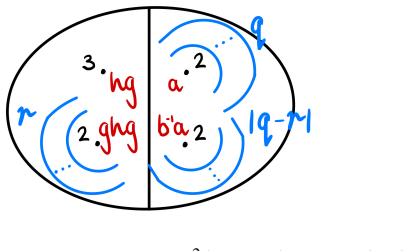
The central claim is Theorem 1: there are infinitely many closed graph manifolds $N_\Phi$ each containing, up to isotopy, exactly one connected essential surface; that surface is a torus; and it is not detected by the variety of $\mathrm{SL}_2(\mathbb{F})$-characters for any algebraically closed field $\mathbb{F}$. The proof classifies all connected essential surfaces in the glued manifolds, reducing them to the splitting torus $T$, the two genus-two surfaces $S_2$ and $S_3$, and the vertical tori $S_4(q,r)$ and $S_5$. It then computes the character variety of $N_\Phi$ from those of the two building blocks, whose irreducible and reducible curves are explicit: for the Klein bottle piece $X_{\mathrm{irr}}(K\tilde{\times}I,\mathbb{F})=\{(0,t,0)\mid t\in\mathbb{F}\}$, and for the trefoil piece $X_{\mathrm{irr}}(M,\mathbb{F})=\{(s,s,1)\mid s\in\mathbb{F}\}$. Detection and non-detection are decided by trace-function valuations at ideal points: a pole of a peripheral trace function forces a boundary slope, while constant traces rule a surface out. The non-detection theorem follows because, for the chosen families of gluing matrices, every curve in $X(N_\Phi,\mathbb{F})$ has the form listed in cases (C1)--(C3), and none produces the valuations needed to detect $T$; in the other families, exactly the characteristic-2 curves do.
Load-bearing premise
The load-bearing premise is that the extension of ideal-point detection theory to arbitrary algebraically closed fields, developed in the companion preprint and quoted as Corollary 7, Lemma 8, and Proposition 10, is fully correct; if trace equality does not characterize closure-equivalence, or if the commutator trace criterion or the ideal-point splitting theorem fails in positive characteristic, the conclusion that the exhibited tori are undetected in every characteristic no longer follows.
Editorial extensions
If this is right
- For the undetected family of Theorem 1, $\mathrm{SL}_2(\mathbb{F})$-character detection fails in every characteristic, so the question of detecting all essential surfaces by character varieties has a negative answer without any characteristic caveat.
- Theorems 2, 3, and 5 provide manifolds whose torus is detected over $\mathbb{F}$ if and only if $\operatorname{char}(\mathbb{F})=2$, so positive characteristic can create detected surfaces that the complex character variety does not see.
- Theorem 4 shows that in one graph manifold a non-separating genus-two surface is detected in every characteristic, because it is Poincaré dual to an epimorphism to $\mathbb{Z}$, while the companion torus is detected in none.
- Theorem 6 gives Seifert fibered spaces with infinitely many pairwise non-isotopic essential tori, all detected in every characteristic; vertical tori in these manifolds are numerous enough that the character variety detects the whole infinite family.
Reading between the lines
- The construction suggests a 'characteristic selector' phenomenon: choosing the gluing matrix $\Phi$ appears to determine both which essential surfaces occur and in which characteristic they become detectable; this may generalize to other gluings of Seifert pieces with two boundary slopes.
- The 2-dimensional component $C_\Phi$ and its subcurves $C(u,v)$ indicate a systematic relation between trace valuations on $S_4(q,r)$ and the parameters $(u,v)$; if Conjecture 18 holds, the detection pattern for all vertical tori in the $S^2(2,2,2,3)$ family would be completely understood.
- Because the Klein bottle group admits no faithful representation into $\mathrm{SL}_2(K)$ over any field $K$, the examples suggest that failure of faithful linearity of the fundamental group may be the underlying reason some tori are invisible; the paper does not itself advance this explanation.
- The authors' remark lists three infinite families of coprime pairs $(q,r)$ for which Conjecture 18 can be proved; checking further pairs by the same trace-valuation computation is a concrete way to test whether all $S_4(q,r)$ are detected.
Editorial analysis
A structured set of objections, weighed in public.
Referee Report
Summary. The paper constructs closed orientable 3-manifolds N_Φ by gluing the twisted I-bundle over the Klein bottle to the complement of the right-handed trefoil along a torus via Φ ∈ SL_2(Z). For each such manifold the authors classify the connected essential surfaces up to isotopy and study which of them are detected by ideal points of curves in the variety of SL_2(F)-characters for arbitrary algebraically closed fields F. The main results exhibit infinite families in which: a single essential torus is never detected in any characteristic (Theorem 1); a single essential torus is detected exactly in characteristic 2 (Theorem 2); a torus and a genus-two surface are both detected exactly in characteristic 2 (Theorem 3); a torus is never detected while a non-separating genus-two surface is always detected (Theorem 4); and Seifert fibered examples contain vertical tori with characteristic-dependent or uniform detection behaviour (Theorems 5 and 6).
Significance. If the main results are correct, they provide the first infinite families of closed 3-manifolds with essential surfaces that evade detection by SL_2-character varieties over every algebraically closed field, and also examples where switching to characteristic 2 improves detection. This is a meaningful contribution to the study of Culler-Shalen theory in positive characteristic. The paper is built on explicit matrix computations, a complete classification of essential surfaces in the constructed manifolds, and concrete families of gluing matrices, which are valuable assets. The main caveat is that the detection arguments rely on the authors' companion preprint [11] for the positive-characteristic extension of Culler-Shalen theory, so the unconditional status of the theorems depends on that work.
major comments (3)
- [§5.4 and §5.3] The graph-manifold condition stated in §5.4, 'm ≠ ±6 ≠ n', is inconsistent with the families used in Theorems 1 and 2. The family Φ_k = [[1+6k, k], [6, 1]] has m = 6, and the family Φ'_k = [[k, 1+6k], [-1, -6]] has n = -6; both are claimed to be graph manifolds. The correct condition should exclude precisely the two Seifert fibered families, namely Φ = [[k, ±1], [∓1-6k, ∓6]] and Φ = [[±1, l], [∓6, ±1-6l]]. As written, the condition misclassifies the examples and therefore the graph-manifold assertions in Theorems 1-4 need to be corrected.
- [§5.1 (S4), §5.3, §5.5] The matrix family for the Seifert fibered case with base S^2(2,2,2,3) is misstated. The displayed family Φ = [[k, ±1], [∓1, -6k ∓6]] is not in SL_2(Z) for arbitrary k; for example, with k=1 and one choice of signs the determinant is -11. Moreover, the proof of Lemma 14 itself says that the gluing equation 'requires n = -6l', which gives n = ∓6 and m = ∓1 - 6k, not the displayed entries. The correct family should be Φ = [[k, ±1], [∓1-6k, ∓6]]. This mistake propagates to Lemmas 14, 15, and 17 and to Theorem 6, even though the computations inside the proofs appear to use the correct condition n = -6l.
- [§2.3, Proposition 10] The detection results in Section 5 depend on the full positive-characteristic Culler-Shalen framework of the preprint [11], specifically Corollary 7, Lemma 8, and Proposition 10. Proposition 10 is quoted from [22, Property 5.4.2] with the note that the proof applies verbatim, but [22] works over C and uses the identification of the character variety with the GIT quotient R//SL_2, which §2.1 explicitly notes may fail in positive characteristic. If Proposition 10 or Lemma 8 fails in characteristic 2, the conclusions that the exhibited tori are undetected in every characteristic would not follow. The authors should either include a proof of the positive-characteristic statements needed here or clearly state that the main theorems are conditional on the companion preprint [11] being available and correct.
minor comments (6)
- [§2.1] The sentence 'We write F = F_p if we want to emphasise the characteristic' is confusing because F already denotes an algebraically closed field; the finite field of p elements is usually denoted F_p and should not be conflated with the algebraic closure.
- [§3] After Equation (3.5), the text says the matrix pair 'splits into infinitely many conjugacy classes'; it would be helpful to state explicitly that these conjugacy classes are not distinguished by the character, since the character variety is the quotient by closure equivalence rather than by conjugacy.
- [§5.3] In the proofs of Lemmas 14 and 15, the phrase 'so it is of is of type (C3)' contains a duplicated word and should read 'so it is of type (C3)'.
- [§5.5, Lemma 17] The 2-dimensional component C_Φ appears in both Lemma 14's proof and Lemma 17's proof with identical definitions; the paper could refer back to Equation (5.6) instead of restating the full coordinate expression in Equation (5.10).
- [Theorem 6 and Remark after it] The remark that Theorem 6 is not proved for all essential tori in the stated Seifert fibered manifolds is useful and should be incorporated into the theorem statement so that the scope of the claim is unambiguous.
- [Introduction and References] The paper relies on the unpublished companion works [11] and [17]; a sentence in the introduction stating this dependence explicitly would help readers assess the conditional nature of the results.
Circularity Check
No significant circularity: the main results are explicit trace computations on constructed manifolds, and the self-cited foundations are general and do not encode the target manifolds.
full rationale
The paper's derivation chain is direct and self-contained in the relevant sense. It constructs explicit graph manifolds and Seifert fibered spaces N_Phi by gluing a twisted I-bundle over the Klein bottle to the trefoil complement, classifies the essential surfaces using standard 3-manifold topology (Jaco, Hatcher, Schultens), and then computes explicit curves in the variety of SL_2(F)-characters, using trace valuations to decide which surfaces are detected. No equation defining the main objects is stated in terms of the conclusions, and no fitted parameter is renamed as a prediction: the families in Theorems 1 and 2 are chosen so that the relevant gluing matrices do or do not satisfy the explicitly derived detection conditions of Lemmas 14 and 15. The only self-citations of note are [9] (the Klein bottle group admits no faithful SL_2(K) representation) and [11] (the extension of Culler-Shalen theory to arbitrary algebraically closed fields). Both are general, parameter-free results whose assumptions do not include the specific manifolds N_Phi or the undetection claims; in particular, [11] supplies the trace/closures equivalence, the commutator reducibility criterion, and the ideal-point splitting statement, and Proposition 10 is additionally traced to Shalen [22] with the proof asserted to apply verbatim. Accordingly, these citations are real supporting evidence rather than circular re-imports of the paper's own conclusions. The dependence on the unverified positive-characteristic theory in [11] is a legitimate correctness risk, but it is not a circularity: the present paper's computations would be meaningful conditional on that foundation and do not reduce to it by definition.
Assumptions & free parameters
assumptions (6)
- domain assumption Culler-Shalen detection theorem over arbitrary algebraically closed fields (Proposition 10, from [11] and [22])
- domain assumption Trace equality characterizes closure equivalence over arbitrary fields (Corollary 7, from [11])
- domain assumption Commutator trace criterion: A and B generate a reducible subgroup iff tr[A,B]=2 (Lemma 8, from [11])
- domain assumption Klein bottle group representation classification (Proposition 13, from [9])
- standard math Hatcher's classification of essential surfaces in Seifert fibered spaces and Schultens' correspondence for vertical surfaces
- standard math GIT quotient and finite generation of the trace ring over algebraically closed fields
Cite this review
Pith. "Pith review of Essential tori in 3-manifolds not detected in any characteristic." pith.science (2026). https://pith.science/paper/QTKA7NA6
@misc{pith2026241115680,
  author       = {Pith},
  title        = {Pith review of: Essential tori in 3-manifolds not detected in any characteristic},
  year         = {2026},
  howpublished = {\url{https://pith.science/paper/QTKA7NA6}},
  note         = {Machine review of arXiv:2411.15680}
}
abstract
Infinite families of 3-dimensional closed graph manifolds and closed Seifert fibered spaces are exhibited, each member of which contains an essential torus not detected by ideal points of the variety of $\text{SL}_2(\mathbb{F})$-characters over any algebraically closed field $\mathbb{F}$.
Figures


Figures from the paper (3 more)


Reference graph
Works this paper leans on
-
[11]
Grace S. Garden and Stephan Tillmann. An invitation to Culler-Shalen theory in arbitrary characteristic. preprint,
-
[22]
Peter B. Shalen. Representations of 3–manifold groups. In Handbook of geometric topology , pages 955–1044. North-Holland, Amsterdam, 2002. 3, 4, 5, 6
work page 2002
-
[1]
Matthias Aschenbrenner, Stefan Friedl, and Henry Wilton. 3–manifold groups. EMS Series of Lectures in Math- ematics. European Mathematical Society (EMS), Z¨urich, 2015. 8
work page 2015
-
[2]
Alex Casella, Charles Katerba, and Stephan Tillmann. Ideal points of character varieties, algebraic non-integral representations, and undetected closed essential surfaces in 3–manifolds. Proc. Amer . Math. Soc., 148(5):2257– 2271, 2020. 1
work page 2020
-
[3]
Closed surfaces and character varieties
Eric Chesebro. Closed surfaces and character varieties. Algebraic and Geometry Topology, 13:2001–2037, 2013. 1
work page 2001
-
[4]
Not all boundary slopes are strongly detected by the character variety
Eric Chesebro and Stephan Tillmann. Not all boundary slopes are strongly detected by the character variety. Communications in Analysis and Geometry , 15(4):695–723, 2007. 1
work page 2007
-
[5]
Gordon, John Luecke, and Peter B
Marc Culler, Cameron McA. Gordon, John Luecke, and Peter B. Shalen. Dehn surgery on knots. Ann. of Math. (2), 125(2):237–300, 1987. 6
work page 1987
-
[6]
Marc Culler and Peter B. Shalen. Varieties of group representations and splittings of 3–manifolds. Ann. of Math. (2), 117(1):109–146, 1983. 1
work page 1983
Show all 26 references
-
[7]
Dunfield and Stavros Garoufalidis
Nathan M. Dunfield and Stavros Garoufalidis. Incompressibility criteria for spun-normal surfaces. Trans. Amer . Math. Soc., 364(11):6109–6137, 2012. 1
2012
-
[8]
A primer on mapping class groups
Benson Farb and Dan Margalit. A primer on mapping class groups . Princeton University Press, Princeton, 2012. 12
2012
-
[9]
Linear representations of 3–manifold groups over rings
Stefan Friedl, Montek Gill, and Stephan Tillmann. Linear representations of 3–manifold groups over rings. Proc. Amer . Math. Soc., 146(11):4951–4966, 2018. 6
2018
-
[10]
Representation varieties detect essential surfaces
Stefan Friedl, Takahiro Kitayama, and Matthias Nagel. Representation varieties detect essential surfaces. Math. Res. Lett., 25(3):803–817, 2018. 1
2018
-
[12]
Character varieties of higher dimensional representations and splittings of 3–manifolds
Takashi Hara and Takahiro Kitayama. Character varieties of higher dimensional representations and splittings of 3–manifolds. Geometriae Dedicata, 213:433–466, 2021. 1
2021
-
[13]
Notes on basic 3–manifold topology
Allen Hatcher. Notes on basic 3–manifold topology. http://www.math.cornell.edu/~hatcher, 2007. 5, 9
2007
-
[14]
3 -Manifolds
John Hempel. 3 -Manifolds. Princeton University Press, Princeton, N. J.; University of Tokyo Press, Tokyo, 1976. Ann. of Math. Studies, No. 86. 5
1976
-
[15]
Lectures on three–manifold topology , volume 43 of CBMS Regional Conference Series in Mathe- matics
William Jaco. Lectures on three–manifold topology , volume 43 of CBMS Regional Conference Series in Mathe- matics. American Mathematical Society, Providence, RI, 1980. 4
1980
-
[16]
Reductive subgroups of reductive groups in nonzero characteristic
Benjamin Martin. Reductive subgroups of reductive groups in nonzero characteristic. J. Algebra, 262(2):265–286,
-
[17]
G–equivariant inclusions and character varieties
Benjamin Martin. G–equivariant inclusions and character varieties. in preparation, 2024. 3
2024
-
[18]
John W. Morgan. The Smith conjecture. In The Smith conjecture (New York, 1979) , volume 112 of Pure Appl. Math., pages 3–6. Academic Press, Orlando, FL, 1984. 1
1979
-
[19]
Detection of essential surfaces in 3–manifolds with SL 2 –trees
Stephen Schanuel and Xingru Zhang. Detection of essential surfaces in 3–manifolds with SL 2 –trees. Math. Ann., 320(1):149–165, 2001. 1
2001
-
[20]
Kakimizu complexes of Seifert fibered spaces
Jennifer Schultens. Kakimizu complexes of Seifert fibered spaces. Algebr . Geom. Topol., 18(5):2897–2918, 2018. 5, 12
2018
-
[21]
Detection of incompressible surfaces in hyperbolic punctured torus bundles
Henry Segerman. Detection of incompressible surfaces in hyperbolic punctured torus bundles. Geom. Dedicata, 150:181–232, 2011. 1 22
2011
-
[23]
Stallings
John R. Stallings. A topological proof of Grushko’s theorem on free products. Math. Z., 90:1–8, 1965. 6
1965
-
[24]
Character varieties of mutative 3–manifolds
Stephan Tillmann. Character varieties of mutative 3–manifolds. Algebr . Geom. Topol., 4:133–149, 2004. 1
2004
-
[25]
Degenerations of ideal hyperbolic triangulations
Stephan Tillmann. Degenerations of ideal hyperbolic triangulations. Math. Z., 272(3-4):793–823, 2012. 1
2012
-
[26]
On ideal points of deformation curves of hyperbolic 3–manifolds with one cusp
Tomoyoshi Yoshida. On ideal points of deformation curves of hyperbolic 3–manifolds with one cusp. Topology, 30(2):155–170, 1991. 1 Grace S. Garden School of Mathematics and Statistics F07, The University of Sydney, NSW 2006, Australia grace.garden@sydney.edu.au —– Benjamin Mar...
1991
Reviewed August 12, 2026 · model on record in the stance chip above.
Discussion (0). Continue with ORCID to comment.