REVIEW 3 major objections 5 minor 177 references
Network Digital Twin for 6G and Beyond: An End-to-End View Across Multi-Domain Network Ecosystems
T0 review · 3 major / 5 minor · reviewed 2026-08-07 · deepseek-v4-flash
Pith's one-line read The paper claims to be the first comprehensive end-to-end survey of network digital twins for 6G, organizing the field across RAN, transport, core, cloud/edge, applications, non-terrestrial networks, and quantum networking.
desk verdict A useful but unfinished 6G digital-twin survey: the scope is genuinely broader than prior surveys, but duplicated text and broken citation mappings make the current version unreliable as an entry point. read the letter →
The pith
A machine-rendered reading of the paper's core claim, the machinery that carries it, and where it could break.
The reading
What carries the argument
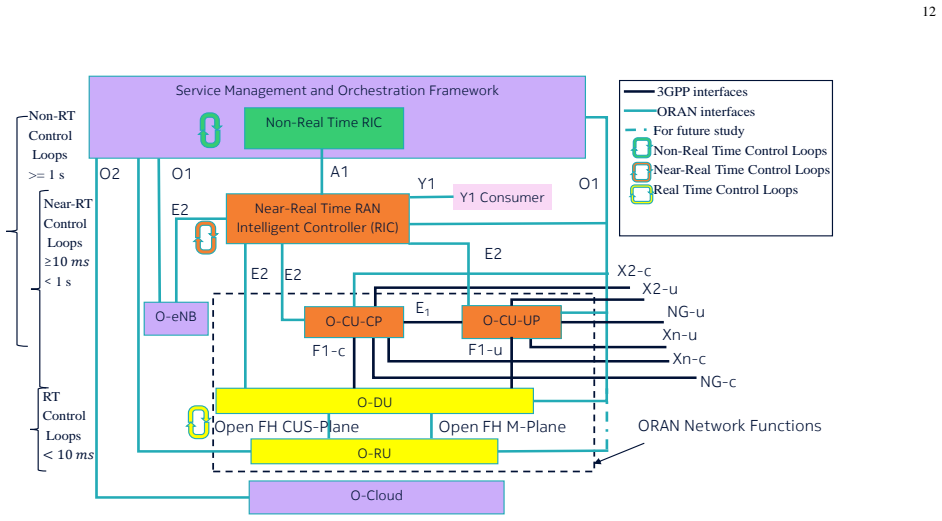
The central object is the network digital twin itself, defined as a continuously updated virtual replica of a physical network whose four required elements are data, models, mapping, and interfaces. The survey's organizing device is the end-to-end layered architecture (its Fig. 2) that stacks twins for RAN/O-RAN, transport, 5G core, cloud/edge, applications, NTN, and quantum networks, and the survey uses that layer stack to sort and compare primary works. The recurring mechanism inside each layer is a closed loop: real-time telemetry from the physical network feeds the twin, the twin runs physics-based simulation and AI/ML what-if scenarios, and only validated decisions return to the physical network.
What would settle it
Look up the cited primary sources for the survey's headline numbers: if the 99% anomaly-detection accuracy, the 99.997%/99.999% F1-scores, or the 96% FedTwin accuracy cannot be found as reported, or if reference [68]'s actual content does not match either of the two descriptions given in the survey, the survey's reliability as a reference is falsified. A literature search that finds an earlier survey covering the same domain set would falsify the 'first comprehensive survey' claim.
Extended reading notes
Core claim
The central claim is that the network digital twin is an end-to-end mirror of the entire 6G ecosystem, not a single-domain simulator. The survey's architecture starts with DT-RAN (plus O-RAN and reconfigurable intelligent surfaces), rises through transport, 5GCORE+, cloud/edge, applications, non-terrestrial networks, and quantum networking, and ties them together with continuous two-way synchronization: telemetry flows in, simulations and AI/ML run in the twin, and validated actions flow back to the physical network. The authors distinguish this from traditional simulation, which studies predefined scenarios offline, and they assert that no prior survey covers the full chain with both academic and industrial implementations, with the RAN and 5GCORE+ usage guide being their specific first. A sympathetic reading of the paper is that its contribution is synthesis: it makes the field legible by sorting primary works domain by domain and use case by use case, so the reader can see what has been tried and what remains open.
Load-bearing premise
The survey's value rests on the accuracy and correct attribution of the hundreds of primary studies it summarizes, a premise visibly strained by the same cited work being described as an optical-amplifier modeling method in Table IV and as a blockchain-based twin framework in Section VI-A; it also rests on the claim that no earlier survey covers the same full set of domains.
Editorial extensions
If this is right
- If the map is accurate, network digital twins move from a niche simulation tool to an organizing framework for 6G, with every layer of the network able to carry its own twin.
- Operators and vendors get a concrete starting point for NDT in RAN and 5GCORE+, shortening the path from prototype to closed-loop automation.
- The collected use cases imply that AI/ML models can be trained, tested, and stress-tested in the twin before touching the live network, which is the paper's core argument for the twin as a risk-free testbed.
- The NTN and quantum sections extend the same data-model-mapping-interface pattern to satellite constellations, UAV swarms, QKD systems, and quantum-classical hybrid networks.
- The survey's taxonomy provides a shared vocabulary for comparing future NDT work, a precondition for the standardized frameworks the paper names as a future direction.
Reading between the lines
- A practical extension of the survey's four-element definition is a design checklist: any proposed NDT should specify its data sources, model fidelity, synchronization/mapping loop, and interfaces to the physical network.
- The paper's repeated emphasis on closed-loop validation suggests that the first high-value deployments will be where mistakes are most expensive, such as autonomous vehicle networks, remote surgery, and satellite constellations.
- If the 'first comprehensive survey' claim holds, the paper is likely to become the baseline that future NDT surveys position themselves against; one check is whether later work adopts its layer taxonomy.
- A living registry of NDT implementations with reproducible metrics across the surveyed domains would be a natural next step, turning the survey's map into an updatable benchmark.
Editorial analysis
A structured set of objections, weighed in public.
Referee Report
Summary. This manuscript is a survey of network digital twin (NDT) techniques across 6G-and-beyond domains, covering radio access networks (RAN) and O-RAN, optical transport networks, 5G core networks and beyond (5GCORE+), cloud/edge computing, vertical applications (blockchain, health, manufacturing, security, vehicular networks), non-terrestrial networks, and quantum networking. It proposes an end-to-end NDT architecture, reviews academic and industrial use cases, provides summary tables for several domains, and closes with challenges and future research directions. The paper's stated contribution is to be the first survey covering this breadth from both academic and industry viewpoints, and in particular the first to provide an in-depth guide to NDT for RAN and 5GCORE+.
Significance. If the survey's attributions are accurate, it would be a useful reference entry point because of its breadth and its inclusion of industry-oriented use cases and standards. The manuscript compiles numerous concrete quantitative results (e.g., 99% anomaly detection accuracy, F1-scores of 99.997% and 99.999%, 96% FedTwin local test accuracy) that could help readers benchmark approaches. The contribution is organizational rather than derivational, so the accuracy of the summarized claims and the correctness of the citation mapping are the main scientific burden. These strengths are currently undermined by visible citation collisions and unfinished editorial passages, which prevent the survey from being relied upon as a trustworthy reference without correction.
major comments (3)
- [Section VI-A and Table IV] The same numeric reference keys are assigned to different works in different parts of the manuscript. In Table IV, [68] is described as 'NN-based EDFA mirror modeling' and [69] as 'SNR optimization for the multi-span DT system'; in Section VI-A, [68] is 'FedTwin' (a blockchain-enabled asynchronous federated learning framework) and [69] is a hierarchical FL/blockchain IIoT framework. References [70]–[72] are likewise reused for optical-network optimization in Table IV and for blockchain/FL methods in Section VI-A. Since a single numbered bibliography cannot contain two distinct works under the same key, the quantitative results attributed to these keys, including the 96% FedTwin accuracy in Section VI-A, are not traceable. The bibliography must be corrected so that each key identifies exactly one work.
- [Sections II-E and III] Reference [56] is also used for two unrelated purposes: in Section II-E it is cited together with [57] for intelligent reflecting surfaces, while in Section III it is cited as the digital-twin-assisted meta-learning framework for soft-failure localization in ROADMs. This is another reference-number collision that must be resolved before the survey's attributions can be verified.
- [Sections IV-A and IV-B] Section IV-A contains an unresolved placeholder in 'a 5, and a public data network (PDN)' and later refers repeatedly to 'the 5' where '5G core network' is clearly intended. Section IV-B repeats the same passage on machine-learning-based anomaly prediction almost verbatim in consecutive paragraphs. These defects do not by themselves invalidate the survey's content, but they indicate that the manuscript has not received the careful checking that a reference survey requires, and they compound the citation-mapping problem.
minor comments (5)
- [Section II-C1] There is a typo in 'Futhermore, There are numerous RAN-NDT applications'; 'Futhermore' should be 'Furthermore'.
- [Section V, Table V] The table header reads 'SUMMARY OFCLOUD/EDGE COMPUTING APPROACHES'; a space is missing between 'OF' and 'CLOUD'.
- [Section VI] The introductory paragraph describes the section as 'various DT for radio access networks in a number of domains', but the section actually covers application-layer digital twins (blockchain, health, manufacturing, security, vehicular networks); the description should be corrected.
- [Fig. 1] Figure 1 contains stray text ('ssssss E. What is DT-RAN?' and other fragments) and appears to be a draft outline rather than a clean figure; it should be regenerated.
- [Sections IV-C and VIII] There are duplicated phrases such as 'In [79], Sanz et al. Sanz et al.' and 'In [81], In [81], Jiadai et al.'; these should be cleaned up throughout.
Circularity Check
No significant circularity: the paper is a literature survey; its claims are descriptive and its load-bearing content is external attribution, not a derivation from fitted inputs.
full rationale
This manuscript claims no derivational results; it summarizes existing work on network digital twins across RAN, transport, core, cloud/edge, applications, NTN, and quantum networking. There are no equations whose output equals their input, no fitted parameters renamed as predictions, and no uniqueness theorem imported from the authors' prior work. The central novelty claim ('we are the first to provide an in-depth guide and usage of RAN and 5GCORE+ for NDT') is a scope claim about the literature, not a result derived from the cited papers; it can be true or false but is not circular. The visible defects—reference [68] describing an EDFA mirror model in Table IV and FedTwin in Section VI-A, a duplicated passage in Sections II-D2 and IV-B, and the unresolved placeholder 'a 5' in Section IV-A—are accuracy/attribution and editorial-quality problems. They undermine verifiability of the survey's summaries, but they do not make any 'prediction' reduce to an input or make any derivation equivalent to its premise. Under the specified circularity definitions, a survey that derives nothing has no circular step, so the appropriate finding is no significant circularity.
Assumptions & free parameters
assumptions (3)
- domain assumption Cited performance numbers are quoted accurately from the source papers.
- domain assumption The literature search is complete enough to support the 'first comprehensive survey' claim.
- domain assumption Digital twin technology is the appropriate organizing lens for 6G network management.
Cite this review
Pith. "Pith review of Network Digital Twin for 6G and Beyond: An End-to-End View Across Multi-Domain Network Ecosystems." pith.science (2026). https://pith.science/paper/S7NREAGA
@misc{pith2026250601609,
  author       = {Pith},
  title        = {Pith review of: Network Digital Twin for 6G and Beyond: An End-to-End View Across Multi-Domain Network Ecosystems},
  year         = {2026},
  howpublished = {\url{https://pith.science/paper/S7NREAGA}},
  note         = {Machine review of arXiv:2506.01609}
}
read the original abstract
With the rapid development of technology, the number of smart mobile users is increasing, accompanied by growing demands from applications such as virtual/augmented reality (VR/XR), remote surgery, autonomous vehicles, and real-time holographic communications, all of which require high transmission rates and ultra-low latency in 6G and beyond networks (6G+). This poses enormous challenges in efficiently deploying large-scale networks, including network design, planning, troubleshooting, optimization, and maintenance, without affecting the user experience. Network Digital Twin (NDT) has emerged as a potential solution, enabling the creation of a virtual model that reflects the actual network, supporting the simulation of various network designs, applying diverse operating policies, and reproducing complex fault scenarios under real-world conditions. This motivate us for this study, where we provide a comprehensive survey of NDT in the context of 6G+, covering areas such as radio access networks (RAN), transport networks, 5G core networks and beyond (5GCORE+), cloud/edge computing, applications (blockchain, health system, manufacturing, security, and vehicular networks), non-terrestrial networks (NTNs), and quantum networks, from both academic and industrial perspectives. In particular, we are the first to provide an in-depth guide and usage of RAN and 5GCORE+ for NDT. Then, we provide an extensive review of foundation technologies such as transport networks, cloud/edge computing, applications, NTNs, and quantum networks in NDT. Finally, we discuss the key challenges, open issues, and future research directions for NDT in the context of 6G+.
Figures


Figures from the paper (12 more)



Reference graph
Works this paper leans on
-
[9]
A survey on digital twins: Architecture, enabling technologies, security and privacy, and future prospects,
Y . Wang, Z. Su, S. Guo, M. Dai, T. H. Luan, and Y . Liu, “A survey on digital twins: Architecture, enabling technologies, security and privacy, and future prospects,”IEEE Internet of Things Journal, vol. 10, no. 17, pp. 14 965–14 987, 2023
2023
-
[6]
Digital twins: A survey on enabling technologies, challenges, trends and future prospects,
S. Mihai, M. Yaqoob, D. V . Hung, W. Davis, P. Towakel, M. Raza, M. Karamanoglu, B. Barn, D. Shetve, R. V . Prasadet al., “Digital twins: A survey on enabling technologies, challenges, trends and future prospects,”IEEE Communications Surveys & Tutorials, vol. 24, no. 4, pp. 2255–2291, 2022
2022
-
[10]
Survey on digital twin edge networks (diten) toward 6g,
F. Tang, X. Chen, T. K. Rodrigues, M. Zhao, and N. Kato, “Survey on digital twin edge networks (diten) toward 6g,”IEEE Open Journal of the Communications Society, vol. 3, pp. 1360–1381, 2022
2022
-
[11]
Empowering 6g communication systems with digital twin technology: A comprehensive survey,
N. P. Kuruvatti, M. A. Habibi, S. Partani, B. Han, A. Fellan, and H. D. Schotten, “Empowering 6g communication systems with digital twin technology: A comprehensive survey,”IEEE access, vol. 10, pp. 112 158–112 186, 2022
2022
-
[68]
Fedtwin: Blockchain- enabled adaptive asynchronous federated learning for digital twin networks,
Y . Qu, L. Gao, Y . Xiang, S. Shen, and S. Yu, “Fedtwin: Blockchain- enabled adaptive asynchronous federated learning for digital twin networks,”IEEE Network, vol. 36, no. 6, pp. 183–190, 2022
2022
-
[69]
Reinforcing industry 4.0 with digital twins and blockchain-assisted federated learning,
M. Aloqaily, I. A. Ridhawi, and S. Kanhere, “Reinforcing industry 4.0 with digital twins and blockchain-assisted federated learning,”IEEE Journal on Selected Areas in Communications, vol. 41, no. 11, pp. 3504–3516, 2023
2023
-
[52]
Federated Learning for Anomaly Detection in Open RAN: Security Architecture Within a Digital Twin,
Y . Rumesh, D. Attanayaka, P. Porambage, J. Pinola, J. Groen, and K. Chowdhury, “Federated Learning for Anomaly Detection in Open RAN: Security Architecture Within a Digital Twin,” 2024
2024
-
[80]
Deep Learning-Based Modeling of 5G Core Control Plane for 5G Network Digital Twin,
Z. Tao, Y . Guo, G. He, Y . Huang, and X. You, “Deep Learning-Based Modeling of 5G Core Control Plane for 5G Network Digital Twin,” IEEE Transactions on Cognitive Communications and Networking, vol. 10, no. 1, pp. 238–251, 2024
2024
-
[70]
Blockchain-based decentralized learning for security in digital twins,
Z. Lv, C. Cheng, and H. Lv, “Blockchain-based decentralized learning for security in digital twins,”IEEE Internet of Things Journal, vol. 10, no. 24, pp. 21 479–21 488, 2023
2023
-
[72]
Digital twins-enabled federated learning in mobile networks: From the per- spective of communication-assisted sensing,
J. Mu, W. Ouyang, T. Hong, W. Yuan, Y . Cui, and Z. Jing, “Digital twins-enabled federated learning in mobile networks: From the per- spective of communication-assisted sensing,”IEEE Journal on Selected Areas in Communications, vol. 41, no. 10, pp. 3230–3241, 2023
2023
-
[56]
Performance Analysis of User Pairing for Active RIS-Enabled Cooperative NOMA in 6G Cognitive Radio Networks,
P. T. Tin, M.-S. V . Nguyen, D.-H. Tran, C. T. Nguyen, S. Chatzinotas, Z. Ding, and M. V oznak, “Performance Analysis of User Pairing for Active RIS-Enabled Cooperative NOMA in 6G Cognitive Radio Networks,”IEEE Internet of Things Journal, vol. 11, no. 23, pp. 37 675–37 692, 2024
2024
-
[57]
Deep Learning-Driven Throughput Maximization in Covert Communication for UA V-RIS Cognitive Sys- tems,
N. Q. Long, V .-H. Dang, T. D. Ho, H. Tran, S. Chatzinotas, D.-H. Tran, S. Sanguanpong, C. So-Inet al., “Deep Learning-Driven Throughput Maximization in Covert Communication for UA V-RIS Cognitive Sys- tems,”IEEE Open Journal of the Communications Society, 2025
2025
Show all 177 references
-
[1]
The road towards 6g: A comprehensive survey,
W. Jiang, B. Han, M. A. Habibi, and H. D. Schotten, “The road towards 6g: A comprehensive survey,”IEEE Open Journal of the Communications Society, vol. 2, pp. 334–366, 2021
2021
-
[2]
6g internet of things: A comprehensive survey,
D. C. Nguyen, M. Ding, P. N. Pathirana, A. Seneviratne, J. Li, D. Niyato, O. Dobre, and H. V . Poor, “6g internet of things: A comprehensive survey,”IEEE Internet of Things Journal, vol. 9, no. 1, pp. 359–383, 2021
2021
-
[3]
Digital- twin-enabled 6g: Vision, architectural trends, and future directions,
L. U. Khan, W. Saad, D. Niyato, Z. Han, and C. S. Hong, “Digital- twin-enabled 6g: Vision, architectural trends, and future directions,” IEEE Communications Magazine, vol. 60, no. 1, pp. 74–80, 2022
2022
-
[4]
Wireless Network Digital Twin for 6G: Generative AI as a Key Enabler,
Z. Tao, W. Xu, Y . Huang, X. Wang, and X. You, “Wireless Network Digital Twin for 6G: Generative AI as a Key Enabler,”IEEE Wireless Communications, vol. 31, no. 4, pp. 24–31, 2024
2024
-
[5]
Digital twin: Mitigating unpredictable, undesirable emergent behavior in complex systems,
M. Grieves and J. Vickers, “Digital twin: Mitigating unpredictable, undesirable emergent behavior in complex systems,”Transdisciplinary perspectives on complex systems: New findings and approaches, pp. 85–113, 2017
2017
-
[7]
What is a digital twin?
IBM, “What is a digital twin?” Jan 2025. [Online]. Available: https://www.ibm.com/think/topics/what-is-a-digital-twin
2025
-
[8]
Digital twin for enhanced resource allocation in 6g non-terrestrial networks,
H. Al-Hraishawi, M. Alsenwi, J. Ur Rehman, E. Lagunas, and S. Chatzinotas, “Digital twin for enhanced resource allocation in 6g non-terrestrial networks,”IEEE Communications Magazine, vol. 63, no. 3, pp. 47–53, 2025
2025
-
[12]
6G digital twin networks: From theory to practice,
X. Lin, L. Kundu, C. Dick, E. Obiodu, T. Mostak, and M. Flaxman, “6G digital twin networks: From theory to practice,”IEEE Communications Magazine, vol. 61, no. 11, pp. 72–78, 2023
2023
-
[13]
Future technology trends of terrestrial IMT systems towards 2030 and beyond,
ITU-R, “Future technology trends of terrestrial IMT systems towards 2030 and beyond,”Report ITU-R M.2516-0, 2022
2022
-
[14]
Digital twin network–requirements and architecture,
ITU-T, “Digital twin network–requirements and architecture,”Recom- mendation ITU-T Y.3090, 2022
2022
-
[15]
Digital twin RAN: Key enablers,
O-RAN nGRG, “Digital twin RAN: Key enablers,”Report ID: RR- 2024-09, 2024
2024
-
[16]
Learning radio environments by differentiable ray tracing,
J. Hoydis, F. Aït Aoudia, S. Cammerer, F. Euchner, M. Nimier- David, S. Ten Brink, and A. Keller, “Learning radio environments by differentiable ray tracing,”IEEE Transactions on Machine Learning in Communications and Networking, vol. 2, pp. 1527–1539, 2024
2024
-
[17]
Calibrating wireless ray tracing for digital twinning using local phase error es- timates,
C. Ruah, O. Simeone, J. Hoydis, and B. Al-Hashimi, “Calibrating wireless ray tracing for digital twinning using local phase error es- timates,”IEEE Transactions on Machine Learning in Communications and Networking, vol. 2, pp. 1193–1215, 2024
2024
-
[18]
End-to-end network SLA quality assurance for C-RAN: A closed-loop management method based on digital twin network,
Y . Ren, S. Guo, B. Cao, and X. Qiu, “End-to-end network SLA quality assurance for C-RAN: A closed-loop management method based on digital twin network,”IEEE Transactions on Mobile Computing, vol. 23, no. 5, pp. 4405–4422, 2023
2023
-
[19]
Study on management aspect of network digital twin,
3GPP, “Study on management aspect of network digital twin,”TR 28.915, 2025
2025
-
[20]
Management and orchestration; management aspects of network digital twins,
——, “Management and orchestration; management aspects of network digital twins,”TS 28.561, 2025
2025
-
[21]
Advancing next generation wireless networks with digital twin: Construction, valida- tion, and real-world applications on an indoor over-the-air testbed,
B. Akgun, A. Jolly, B. Sachdev, D. Ravichandran, R. Amiri, V . Jain, M. Jayabalan, Y . Chen, H. Pathak, V . Chandeet al., “Advancing next generation wireless networks with digital twin: Construction, valida- tion, and real-world applications on an indoor over-the-air testbed,”...
2024
-
[22]
Digital twin approach to estimating and utilizing the capacity region of wireless ad hoc networks,
Y . Thomas, S. Toumpis, and N. Smyrnioudis, “Digital twin approach to estimating and utilizing the capacity region of wireless ad hoc networks,”Computer Networks, vol. 241, p. 110213, 2024
2024
-
[23]
Digital twin enabled 6G radio testing: Concepts, challenges and solutions,
H. Gao, P. Kyösti, X. Zhang, and W. Fan, “Digital twin enabled 6G radio testing: Concepts, challenges and solutions,”IEEE Communica- tions Magazine, vol. 61, no. 11, pp. 88–94, 2023
2023
-
[24]
Design of a standard-compliant real-time neural receiver for 5G NR,
R. Wiesmayr, S. Cammerer, F. A. Aoudia, J. Hoydis, J. Zakrzewski, and A. Keller, “Design of a standard-compliant real-time neural receiver for 5G NR,” inIEEE International Conference on Machine Learning for Communication and Networking, 2025, pp. 1–6. 37
2025
-
[25]
Multiverse at the edge: Interacting real world and digital twins for wireless beamforming,
B. Salehi, U. Demir, D. Roy, S. Pradhan, J. Dy, S. Ioannidis, and K. Chowdhury, “Multiverse at the edge: Interacting real world and digital twins for wireless beamforming,”IEEE/ACM Transactions on Networking, vol. 32, no. 4, pp. 3092–3110, 2024
2024
-
[26]
Research report on digital twin RAN use cases,
O-RAN nGRG, “Research report on digital twin RAN use cases,” Report ID: RR-2024-07, 2024
2024
-
[27]
Toward intelligent cyber-physical systems: Digital twin meets artificial intelligence,
M. Groshev, C. Guimaraes, J. Martín-Pérez, and A. de la Oliva, “Toward intelligent cyber-physical systems: Digital twin meets artificial intelligence,”IEEE Communications Magazine, vol. 59, no. 8, pp. 14– 20, 2021
2021
-
[28]
Ransight: Pro- grammable telemetry for next-generation open radio access networks,
A. Kak, V .-Q. Pham, H.-T. Thieu, and N. Choi, “Ransight: Pro- grammable telemetry for next-generation open radio access networks,” inGLOBECOM 2023 - 2023 IEEE Global Communications Confer- ence, 2023, pp. 5391–5396
2023
-
[29]
Digital twins of electromagnetic propagation environments for live 5G networks– Part I: Channel acquisition, EM simulation and verification,
L. Li, H. Sun, Z. Wang, W. Wang, and W. Fan, “Digital twins of electromagnetic propagation environments for live 5G networks– Part I: Channel acquisition, EM simulation and verification,”IEEE Transactions on Antennas and Propagation, vol. 73, no. 4, pp. 2053– 2064, 2025
2025
-
[30]
Digital twins of electromagnetic propagation environments for live 5G networks—Part II: High-fidelity emulation in the MPAC setup,
L. Li, S. Lin, Y . Zhong, Z. Wang, and W. Wang, “Digital twins of electromagnetic propagation environments for live 5G networks—Part II: High-fidelity emulation in the MPAC setup,”IEEE Transactions on Antennas and Propagation, vol. 73, no. 4, pp. 2065–2073, 2025
2025
-
[31]
Toward digital network twins: Integrating Sionna RT in NS3 for 6G multi-RAT networks simulations,
R. Pegurri, F. Linsalata, E. Moro, J. Hoydis, and U. Spagnolini, “Toward digital network twins: Integrating Sionna RT in NS3 for 6G multi-RAT networks simulations,”arXiv preprint arXiv:2501.00372, 2024
2024
-
[32]
Digital twin for 5G and beyond,
H. X. Nguyen, R. Trestian, D. To, and M. Tatipamula, “Digital twin for 5G and beyond,”IEEE Communications Magazine, vol. 59, no. 2, pp. 10–15, 2021
2021
-
[33]
5G air-to- ground network design and optimization: A deep learning approach,
Y . Chen, X. Lin, T. Khan, M. Afshang, and M. Mozaffari, “5G air-to- ground network design and optimization: A deep learning approach,” in IEEE 93rd Vehicular Technology Conference (VTC2021-Spring), 2021, pp. 1–6
2021
-
[34]
GNN-based power allocation and user association in digital twin network for the terahertz band,
H. Zhang, X. Ma, X. Liu, L. Li, and K. Sun, “GNN-based power allocation and user association in digital twin network for the terahertz band,”IEEE Journal on Selected Areas in Communications, vol. 41, no. 10, pp. 3111–3121, 2023
2023
-
[35]
Coverage optimization for large-scale mobile networks with digital twin and multi-agent rein- forcement learning,
H. Liu, T. Li, F. Jiang, W. Su, and Z. Wang, “Coverage optimization for large-scale mobile networks with digital twin and multi-agent rein- forcement learning,”IEEE Transactions on Wireless Communications, vol. 23, no. 12, pp. 18 316–18 330, 2024
2024
-
[36]
When digital twin meets generative AI: Intelligent closed-loop network man- agement,
X. Huang, H. Yang, C. Zhou, M. He, X. Shen, and W. Zhuang, “When digital twin meets generative AI: Intelligent closed-loop network man- agement,”IEEE Network, pp. 1–1, 2024
2024
-
[37]
Colosseum as a digital twin: Bridging real-world experimentation and wireless network emulation,
D. Villa, M. Tehrani-Moayyed, C. P. Robinson, L. Bonati, P. Johari, M. Polese, and T. Melodia, “Colosseum as a digital twin: Bridging real-world experimentation and wireless network emulation,”IEEE Transactions on Mobile Computing, vol. 23, no. 10, pp. 9150–9166, 2024
2024
-
[38]
Distributed digital twin migration in multi-tier computing systems,
Z. Chen, W. Yi, A. Nallanathan, and J. A. Chambers, “Distributed digital twin migration in multi-tier computing systems,”IEEE Journal of Selected Topics in Signal Processing, vol. 18, no. 1, pp. 109–123, 2024
2024
-
[39]
UA V Relay-Assisted Emergency Communications in IoT Networks: Resource Allocation and Trajectory Optimization,
D.-H. Tran, V .-D. Nguyen, S. Chatzinotas, T. X. Vu, and B. Ottersten, “UA V Relay-Assisted Emergency Communications in IoT Networks: Resource Allocation and Trajectory Optimization,”IEEE Transactions on Wireless Communications, vol. 21, no. 3, pp. 1621–1637, 2022
2022
-
[40]
Backscatter-Assisted Data Of- floading in OFDMA-Based Wireless-Powered Mobile Edge Computing for IoT Networks,
P. X. Nguyen, D.-H. Tran, O. Onireti, P. T. Tin, S. Q. Nguyen, S. Chatzinotas, and H. Vincent Poor, “Backscatter-Assisted Data Of- floading in OFDMA-Based Wireless-Powered Mobile Edge Computing for IoT Networks,”IEEE Internet of Things Journal, vol. 8, no. 11, pp. 9233–9243, 2021
2021
-
[41]
Coarse Trajectory Design for Energy Minimization in UA V- Enabled,
D.-H. Tran, T. X. Vu, S. Chatzinotas, S. ShahbazPanahi, and B. Ot- tersten, “Coarse Trajectory Design for Energy Minimization in UA V- Enabled,”IEEE Transactions on Vehicular Technology, vol. 69, no. 9, pp. 9483–9496, 2020
2020
-
[42]
O-RAN Empowering Vertical Industry: Scenarios, Solu- tions and Best Practice,
O. Alliance, “O-RAN Empowering Vertical Industry: Scenarios, Solu- tions and Best Practice,”White Paper, Dec., 2023
2023
-
[43]
O-RAN Architecture Description 11.0,
——, “O-RAN Architecture Description 11.0,”White Paper, Feb., 2024
2024
-
[44]
O-RAN.WG1.Slicing-Architecture-R003-v09.00,
——, “O-RAN.WG1.Slicing-Architecture-R003-v09.00,”Specifica- tion, March, 2023
2023
-
[45]
Network digital twins - outlook and opportunities,
P. Ohlen, C. Johnston, H. Olofsson, S. Terrill, and F. Chernogorov, “Network digital twins - outlook and opportunities,”Ericsson Technol- ogy Review, vol. 2022, no. 12, pp. 2–11, 2022
2022
-
[46]
Network Digital Twin: Context, Enabling Technologies, and Opportunities,
P. Almasan, M. Ferriol-Galmes, J. Paillisse, J. Suarez-Varela, D. Perino, D. Lopez, A. A. P. Perales, P. Harvey, L. Ciavaglia, L. Wong, V . Ram, S. Xiao, X. Shi, X. Cheng, A. Cabellos-Aparicio, and P. Barlet- Ros, “Network Digital Twin: Context, Enabling Technologies, and Oppo...
2022
-
[47]
Network Digital Twin: Concepts and Reference Architecture,
China Mobile, Telefonica, Huawei, Orange, “Network Digital Twin: Concepts and Reference Architecture,”Specification, March, 2024
2024
-
[48]
Network Digital Twin for Open RAN: The Key Enablers, Standardization, and Use Cases,
J. Mirzaei, I. Abualhaol, and G. Poitau, “Network Digital Twin for Open RAN: The Key Enablers, Standardization, and Use Cases,”arXiv preprint arXiv:2308.02644, 2023
2023 arXiv
-
[49]
Hexric: Building a better near-real time network controller for the open ran ecosystem,
V .-Q. Pham, H.-T. Thieu, A. Kak, and N. Choi, “Hexric: Building a better near-real time network controller for the open ran ecosystem,” in Proceedings of the 24th International Workshop on Mobile Computing Systems and Applications, ser. HotMobile ’23. New York, NY , USA: Asso...
2023
-
[50]
Secure Data Dissemination Scheme for Digital Twin Empowered Vehicular Networks in Open RAN,
R. Kumar, P. Kumar, A. Aljuhani, A. Jolfaei, A. N. Islam, and N. Mohammad, “Secure Data Dissemination Scheme for Digital Twin Empowered Vehicular Networks in Open RAN,”IEEE Transactions on Vehicular Technology, pp. 1–13, 2023
2023
-
[51]
Digital Twin-Driven Trust Management in Open RAN-Based Spatial Crowdsourcing Drone Services,
J. Akram, A. Anaissi, R. S. Rathore, R. H. Jhaveri, and A. Akram, “Digital Twin-Driven Trust Management in Open RAN-Based Spatial Crowdsourcing Drone Services,”IEEE Transactions on Green Com- munications and Networking, pp. 1–1, 2024
2024
-
[53]
Demo: A Digital Twin of the 5G Radio Access Network for Anomaly Detection Functionality,
P. Li, A. Aijaz, T. Farnham, S. Gufran, and S. Chintalapati, “Demo: A Digital Twin of the 5G Radio Access Network for Anomaly Detection Functionality,” in2023 IEEE 31st International Conference on Network Protocols (ICNP), 2023, pp. 1–2
2023
-
[54]
Colos- seum: The Open RAN Digital Twin,
M. Polese, L. Bonati, S. D’Oro, P. Johari, D. Villa, S. Velumani, R. Gangula, M. Tsampazi, C. P. Robinson, G. Gemmiet al., “Colos- seum: The Open RAN Digital Twin,”arXiv preprint arXiv:2404.17317, 2024
2024 arXiv
-
[55]
Digital Twin Assisted Closed-Loops for Energy-Efficient Open RAN-Based Fixed Wireless Access Provisioning in Rural Areas,
A. Ndikumana, K. K. Nguyen, and M. Cheriet, “Digital Twin Assisted Closed-Loops for Energy-Efficient Open RAN-Based Fixed Wireless Access Provisioning in Rural Areas,” inGLOBECOM 2023 - 2023 IEEE Global Communications Conference, 2023, pp. 6285–6290
2023
-
[58]
Towards efficient reflectarray digital twins - an em-driven machine learning perspective,
G. Oliveri, M. Salucci, and A. Massa, “Towards efficient reflectarray digital twins - an em-driven machine learning perspective,”IEEE Transactions on Antennas and Propagation, vol. 70, no. 7, pp. 5078– 5093, 2022
2022
-
[59]
Digital twin-aided learning for managing reconfigurable intelligent surface-assisted, uplink, user- centric cell-free systems,
Y . Cui, T. Lv, W. Ni, and A. Jamalipour, “Digital twin-aided learning for managing reconfigurable intelligent surface-assisted, uplink, user- centric cell-free systems,”IEEE Journal on Selected Areas in Commu- nications, vol. 41, no. 10, pp. 3175–3190, 2023
2023
-
[60]
The role of digital twin in optical communication: Fault management, hardware configuration, and transmission simulation,
D. Wang, Z. Zhang, M. Zhang, M. Fu, J. Li, S. Cai, C. Zhang, and X. Chen, “The role of digital twin in optical communication: Fault management, hardware configuration, and transmission simulation,” IEEE Communications Magazine, vol. 59, no. 1, pp. 133–139, 2021
2021
-
[61]
Ocata: a deep-learning-based digital twin for the optical time domain,
D. Sequeira, M. Ruiz, N. Costa, A. Napoli, J. Pedro, and L. Velasco, “Ocata: a deep-learning-based digital twin for the optical time domain,” Journal of Optical Communications and Networking, vol. 15, no. 2, pp. 87–97, 2023
2023
-
[62]
Applications of the ocata time domain digital twin: from qot estimation to failure management,
M. Devigili, M. Ruiz, N. Costa, C. Castro, A. Napoli, J. Pedro, and L. Velasco, “Applications of the ocata time domain digital twin: from qot estimation to failure management,”Journal of Optical Communi- cations and Networking, vol. 16, no. 2, pp. 221–232, 2024
2024
-
[63]
Applying digital twins to optical networks with cloud-native sdn controllers,
R. Vilalta, L. Gifre, R. Casellas, R. Muñoz, R. Martínez, A. Mozo, A. Pastor, D. López, and J. P. Fernández-Palacios, “Applying digital twins to optical networks with cloud-native sdn controllers,”IEEE Communications Magazine, vol. 61, no. 12, pp. 128–134, 2023
2023
-
[64]
Building a digital twin for large-scale and dy- namic c+l-band optical networks,
Y . Zhang, M. Zhang, Y . Song, Y . Shi, C. Zhang, C. Ju, B. Guo, S. Huang, and D. Wang, “Building a digital twin for large-scale and dy- namic c+l-band optical networks,”Journal of Optical Communications and Networking, vol. 15, no. 12, pp. 985–998, 2023. 38
2023
-
[65]
Building a digital twin of an edfa for optical networks: a gray-box modeling approach,
Y . Liu, X. Liu, Y . Zhang, M. Cai, M. Fu, X. Zhong, L. Yi, W. Hu, and Q. Zhuge, “Building a digital twin of an edfa for optical networks: a gray-box modeling approach,”Journal of Optical Communications and Networking, vol. 15, no. 11, pp. 830–838, 2023
2023
-
[66]
Digital twin modeling and controlling of optical power evolution enabling autonomous-driving optical networks: a Bayesian approach,
X. Liu, Y . Zhang, Y . Chen, Y . Liu, M. Cai, Q. Qiu, M. Fu, L. Yi, W. Hu, and Q. Zhuge, “Digital twin modeling and controlling of optical power evolution enabling autonomous-driving optical networks: a Bayesian approach,”Advanced Photonics, vol. 6, no. 2, p. 026006,
-
[67]
Digital-twin-assisted meta learning for soft-failure localization in roadm-based optical networks,
R. Wang, J. Zhang, Z. Gu, M. Ibrahimi, B. Zhang, F. Musumeci, M. Tornatore, and Y . Ji, “Digital-twin-assisted meta learning for soft-failure localization in roadm-based optical networks,”Journal of Optical Communications and Networking, vol. 16, no. 7, pp. C11–C19, 2024
2024
-
[71]
Fortifying federated learning in iiot: Leveraging blockchain and digital twin innovations for enhanced security and resilience,
S. B. Prathiba, Y . Govindarajan, V . P. A. Ganesan, A. Ramachandran, A. K. Selvaraj, A. K. Bashir, and T. R. Gadekallu, “Fortifying federated learning in iiot: Leveraging blockchain and digital twin innovations for enhanced security and resilience,”IEEE Access, pp. 1–1, 2024
2024
-
[73]
Multi-Agent Deep Reinforcement Learning for Resilience Optimization in 5G RAN,
S. Kaada, D.-H. Tran, N. Van Huynh, M.-L. A. Morel, S. Jelassi, and G. Rubino, “Multi-Agent Deep Reinforcement Learning for Resilience Optimization in 5G RAN,”arXiv preprint arXiv:2407.18066, 2024
2024 arXiv
-
[74]
5G System Principles,
Nokia, “5G System Principles,”IEEE Courses, 2019
2019
-
[75]
The 5G Core Network Demystified,
G. Gaurav and G. Kevin, “The 5G Core Network Demystified,” https://infohub.delltechnologies.com/en-us/p/the-5g-core-network- demystified/, 2023
2023
-
[76]
System Architecture for the 5G System (3GPP TS 23.501 version 15.3.0 Release 15),
ETSI, “System Architecture for the 5G System (3GPP TS 23.501 version 15.3.0 Release 15),” https://www.etsi.org/deliver/etsi_ts/123500_123599/123501/15.03.00 _60/ts_123501v150300p.pdf, 2023
2023
-
[77]
Research and Application of Configuration System in Core Network Based on Digital Twin,
Y . Zheng, C. Lin, S. Huang, W. Li, K. Wang, and J. Lou, “Research and Application of Configuration System in Core Network Based on Digital Twin,” in2022 IEEE 5th Advanced Information Management, Communicates, Electronic and Automation Control Conference (IM- CEC), vol. 5. IEE...
2022
-
[78]
Network Slicing for Zero-Touch Networks: A Top-Notch Technology,
S. Rani, H. Babbar, M. Krichen, K. Yu, and F. H. Memon, “Network Slicing for Zero-Touch Networks: A Top-Notch Technology,”IEEE Network, vol. 37, no. 5, pp. 16–24, 2023
2023
-
[79]
Digital Twins for 5G Networks: A Modeling and Deployment Methodology,
M. Sanz Rodrigo, D. Rivera, J. I. Moreno, M. Alvarez-Campana, and D. R. Lopez, “Digital Twins for 5G Networks: A Modeling and Deployment Methodology,”IEEE Access, vol. 11, pp. 38 112–38 126, 2023
2023
-
[81]
Digital Twin-Assisted Flexible Slice Admission Control for 5G Core Network: A Deep Reinforcement Learning Approach,
J. Wang, J. Li, and J. Liu, “Digital Twin-Assisted Flexible Slice Admission Control for 5G Core Network: A Deep Reinforcement Learning Approach,”Future Generation Computer Systems, vol. 153, pp. 467–476, 2024
2024
-
[82]
MVNOCoreSim: A Digital Twin for Virtualized IoT-Centric Mobile Core Networks,
S. GeiBler, F. Wamser, W. Bauer, S. Gebert, S. Kounev, and T. HoBfeld, “MVNOCoreSim: A Digital Twin for Virtualized IoT-Centric Mobile Core Networks,”IEEE Internet of Things Journal, vol. 10, no. 15, pp. 13 974–13 987, 2023
2023
-
[83]
A Proof of Concept on Digital Twin-Controlled WiFi Core Network Selection for In-Flight Connectivity,
T. Bilen, E. Ak, B. Bal, and B. Canberk, “A Proof of Concept on Digital Twin-Controlled WiFi Core Network Selection for In-Flight Connectivity,”IEEE Communications Standards Magazine, vol. 6, no. 3, pp. 60–68, 2022
2022
-
[84]
Digital Twin-Enabled Intelligent DDoS Detection Mechanism for Autonomous Core Networks,
Y . Yigit, B. Bal, A. Karameseoglu, T. Q. Duong, and B. Canberk, “Digital Twin-Enabled Intelligent DDoS Detection Mechanism for Autonomous Core Networks,”IEEE Communications Standards Mag- azine, vol. 6, no. 3, pp. 38–44, 2022
2022
-
[85]
Leveraging digital twins for healthcare systems engineering,
N. Mohamed, J. Al-Jaroodi, I. Jawhar, and N. Kesserwan, “Leveraging digital twins for healthcare systems engineering,”Ieee Access, 2023
2023
-
[86]
A novel cloud-based framework for the elderly healthcare services using digital twin,
Y . Liu, L. Zhang, Y . Yang, L. Zhou, L. Ren, F. Wang, R. Liu, Z. Pang, and M. J. Deen, “A novel cloud-based framework for the elderly healthcare services using digital twin,”IEEE access, vol. 7, pp. 49 088– 49 101, 2019
2019
-
[87]
Towards private similarity query based healthcare monitoring over digital twin cloud platform,
Y . Zheng, R. Lu, Y . Guan, S. Zhang, and J. Shao, “Towards private similarity query based healthcare monitoring over digital twin cloud platform,” in2021 IEEE/ACM 29th International Symposium on Qual- ity of Service (IWQOS). IEEE, 2021, pp. 1–10
2021
-
[88]
Cloud-edge hosted digital twins for coordinated control of distributed energy resources,
J. Han, Q. Hong, M. H. Syed, M. A. U. Khan, G. Yang, G. Burt, and C. Booth, “Cloud-edge hosted digital twins for coordinated control of distributed energy resources,”IEEE Transactions on Cloud Computing, vol. 11, no. 2, pp. 1242–1256, 2022
2022
-
[89]
Practical adoption of cloud computing in power systems—drivers, challenges, guidance, and real-world use cases,
S. Zhang, A. Pandey, X. Luo, M. Powell, R. Banerji, L. Fan, A. Parchure, and E. Luzcando, “Practical adoption of cloud computing in power systems—drivers, challenges, guidance, and real-world use cases,”IEEE Transactions on Smart Grid, vol. 13, no. 3, pp. 2390– 2411, 2022
2022
-
[90]
Digital twin intelligent system for industrial iot-based big data management and analysis in cloud,
C. L. Stergiou and K. E. Psannis, “Digital twin intelligent system for industrial iot-based big data management and analysis in cloud,”Virtual Reality & Intelligent Hardware, vol. 4, no. 4, pp. 279–291, 2022
2022
-
[91]
A new approach to build industrial internet of things (iiot) systems based on digital twin’s technologies,
A. Mikhailov, S. Tretyakov, and Y . Andreev, “A new approach to build industrial internet of things (iiot) systems based on digital twin’s technologies,” in2022 International conference on industrial engineering, applications and manufacturing (ICIEAM). IEEE, 2022, pp. 1091–1095
2022
-
[92]
Digital twin-driven online anomaly detection for an automation system based on edge intelligence,
H. Huang, L. Yang, Y . Wang, X. Xu, and Y . Lu, “Digital twin-driven online anomaly detection for an automation system based on edge intelligence,”Journal of Manufacturing Systems, vol. 59, pp. 138–150, 2021
2021
-
[93]
Digital twin based real-time production logistics synchronization system in a multi-level computing architecture,
Y . Pan, T. Qu, N. Wu, M. Khalgui, and G. Huang, “Digital twin based real-time production logistics synchronization system in a multi-level computing architecture,”Journal of Manufacturing Systems, vol. 58, pp. 246–260, 2021
2021
-
[94]
Cloud-based digital twinning for structural health monitoring using deep learning,
H. V . Dang, M. Tatipamula, and H. X. Nguyen, “Cloud-based digital twinning for structural health monitoring using deep learning,”IEEE Transactions on Industrial Informatics, vol. 18, no. 6, pp. 3820–3830, 2021
2021
-
[95]
Adaptive digital twin for vehicular edge computing and networks,
Y . Dai and Y . Zhang, “Adaptive digital twin for vehicular edge computing and networks,”Journal of Communications and Information Networks, vol. 7, no. 1, pp. 48–59, 2022
2022
-
[96]
Digital twin-enabled 6g aerial edge computing with ultra-reliable and low-latency communications : (invited paper),
T. Q. Duong, D. Van Huynh, Y . Li, E. Garcia-Palacios, and K. Sun, “Digital twin-enabled 6g aerial edge computing with ultra-reliable and low-latency communications : (invited paper),” in2022 1st Interna- tional Conference on 6G Networking (6GNet), 2022, pp. 1–5
2022
-
[97]
Ecoedgetwin: Enhanced 6g network via mobile edge computing and digital twin integration,
S. H. Karobi, S. Ahmed, S. R. Sabuj, and A. Khokhar, “Ecoedgetwin: Enhanced 6g network via mobile edge computing and digital twin integration,”arXiv preprint arXiv:2405.06507, 2024
2024 arXiv
-
[98]
Adaptive edge association for wireless digital twin networks in 6g,
Y . Lu, S. Maharjan, and Y . Zhang, “Adaptive edge association for wireless digital twin networks in 6g,”IEEE Internet of Things Journal, vol. 8, no. 22, pp. 16 219–16 230, 2021
2021
-
[99]
Edge-coordinated energy- efficient video analytics for digital twin in 6g,
P. Yang, J. Hou, L. Yu, W. Chen, and Y . Wu, “Edge-coordinated energy- efficient video analytics for digital twin in 6g,”China Communications, vol. 20, no. 2, pp. 14–25, 2023
2023
-
[100]
Human activity recognition in mobile edge computing: A low-cost and high-fidelity digital twin approach with deep reinforcement learning,
C. Wang, Z. Cai, and Y . Li, “Human activity recognition in mobile edge computing: A low-cost and high-fidelity digital twin approach with deep reinforcement learning,”IEEE Transactions on Consumer Electronics, 2024
2024
-
[101]
Realizing immersive communications in human digital twin by edge computing empowered tactile internet: Visions and case study,
H. Xiang, C. Yi, K. Wu, J. Chen, J. Cai, D. Niyato, and X. Shen, “Realizing immersive communications in human digital twin by edge computing empowered tactile internet: Visions and case study,”IEEE Communications Magazine, 2023
2023
-
[102]
Cardio twin: A digital twin of the human heart running on the edge,
R. Martinez-Velazquez, R. Gamez, and A. El Saddik, “Cardio twin: A digital twin of the human heart running on the edge,” in2019 IEEE international symposium on medical measurements and applications (MeMeA). IEEE, 2019, pp. 1–6
2019
-
[103]
A distributed digital twin architecture for shop floor monitoring based on edge-cloud collaboration,
N. Ouahabi, A. Chebak, M. Zegrari, O. Kamach, and M. Berquedich, “A distributed digital twin architecture for shop floor monitoring based on edge-cloud collaboration,” in2021 Third International Conference on Transportation and Smart Technologies (TST). IEEE, 2021, pp. 72–78
2021
-
[104]
Edge-based digital twin to trace and ensure sustainability in cross-company production networks,
M. Glatt, P. Kölsch, C. Siedler, P. Langlotz, S. Ehmsen, and J. C. Aurich, “Edge-based digital twin to trace and ensure sustainability in cross-company production networks,”Procedia CIRP, vol. 98, pp. 276– 281, 2021
2021
-
[105]
An intelligent edge-based digital twin for robotics,
L. Girletti, M. Groshev, C. Guimarães, C. J. Bernardos, and A. de la Oliva, “An intelligent edge-based digital twin for robotics,” in2020 IEEE Globecom Workshops (GC Wkshps. IEEE, 2020, pp. 1–6. 39
2020
-
[106]
Edge intelligence-based ultra-reliable and low-latency communications for digital twin-enabled metaverse,
D. Van Huynh, S. R. Khosravirad, A. Masaracchia, O. A. Dobre, and T. Q. Duong, “Edge intelligence-based ultra-reliable and low-latency communications for digital twin-enabled metaverse,”IEEE Wireless Communications Letters, vol. 11, no. 8, pp. 1733–1737, 2022
2022
-
[107]
Deep Learn- ing for Hybrid 5G Services in Mobile Edge Computing Systems: Learn From a Digital Twin,
R. Dong, C. She, W. Hardjawana, Y . Li, and B. Vucetic, “Deep Learn- ing for Hybrid 5G Services in Mobile Edge Computing Systems: Learn From a Digital Twin,”IEEE Transactions on Wireless Communications, vol. 18, no. 10, pp. 4692–4707, 2019
2019
-
[108]
Edge-fog-cloud secure storage with deep-learning- assisted digital twins,
Z. Lv and R. Lou, “Edge-fog-cloud secure storage with deep-learning- assisted digital twins,”IEEE Internet of Things Magazine, vol. 5, no. 2, pp. 36–40, 2022
2022
-
[109]
Building a Smart Campus Digital Twin: System, Analytics, and Lessons Learned From a Real-World Project,
L. Roda-Sanchez, F. Cirillo, G. Solmaz, T. Jacobs, C. Garrido-Hidalgo, T. Olivares, and E. Kovacs, “Building a Smart Campus Digital Twin: System, Analytics, and Lessons Learned From a Real-World Project,” IEEE Internet of Things Journal, vol. 11, no. 3, pp. 4614–4627, 2024
2024
-
[110]
Communication-Efficient Federated Learning for Digital Twin Edge Networks in Industrial IoT,
Y . Lu, X. Huang, K. Zhang, S. Maharjan, and Y . Zhang, “Communication-Efficient Federated Learning for Digital Twin Edge Networks in Industrial IoT,”IEEE Transactions on Industrial Infor- matics, vol. 17, no. 8, pp. 5709–5718, 2021
2021
-
[111]
Hypernetworks-Based Hierarchical Federated Learning on Hybrid Non-IID Datasets for Digital Twin in Industrial IoT,
J. Yang, W. Jiang, and L. Nie, “Hypernetworks-Based Hierarchical Federated Learning on Hybrid Non-IID Datasets for Digital Twin in Industrial IoT,”IEEE Transactions on Network Science and Engineer- ing, vol. 11, no. 2, pp. 1413–1423, 2024
2024
-
[112]
Digital Twin- Assisted Federated Learning Service Provisioning Over Mobile Edge Networks,
R. Zhang, Z. Xie, D. Yu, W. Liang, and X. Cheng, “Digital Twin- Assisted Federated Learning Service Provisioning Over Mobile Edge Networks,”IEEE Transactions on Computers, vol. 73, no. 2, pp. 586– 598, 2024
2024
-
[113]
Deep Reinforcement Learning for Network Energy Saving in 6G and Beyond Networks,
D.-H. Tran, N. Van Huynh, S. Kaada, V . N. V o, E. Lagunas, and S. Chatzinotas, “Deep Reinforcement Learning for Network Energy Saving in 6G and Beyond Networks,”arXiv preprint arXiv:2408.10974, 2024
2024 arXiv
-
[114]
Digital twin for intelligent context-aware iot healthcare systems,
H. Elayan, M. Aloqaily, and M. Guizani, “Digital twin for intelligent context-aware iot healthcare systems,”IEEE Internet of Things Journal, vol. 8, no. 23, pp. 16 749–16 757, 2021
2021
-
[115]
Fmcpnn in digital twins smart healthcare,
Z. Yu, K. Wang, Z. Wan, S. Xie, and Z. Lv, “Fmcpnn in digital twins smart healthcare,”IEEE Consumer Electronics Magazine, vol. 12, no. 4, pp. 66–73, 2023
2023
-
[116]
Digital-twin-enabled iomt system for surgical simulation using rac-gan,
Y . Tai, L. Zhang, Q. Li, C. Zhu, V . Chang, J. J. P. C. Rodrigues, and M. Guizani, “Digital-twin-enabled iomt system for surgical simulation using rac-gan,”IEEE Internet of Things Journal, vol. 9, no. 21, pp. 20 918–20 931, 2022
2022
-
[117]
A novel digital twin (dt) model based on wifi csi, signal processing and machine learning for patient respiration monitoring and decision-support,
S. Khan, A. Alzaabi, Z. Iqbal, T. Ratnarajah, and T. Arslan, “A novel digital twin (dt) model based on wifi csi, signal processing and machine learning for patient respiration monitoring and decision-support,”IEEE Access, vol. 11, pp. 103 554–103 568, 2023
2023
-
[118]
Cloud-based digital twinning for structural health monitoring using deep learning,
H. V . Dang, M. Tatipamula, and H. X. Nguyen, “Cloud-based digital twinning for structural health monitoring using deep learning,”IEEE Transactions on Industrial Informatics, vol. 18, no. 6, pp. 3820–3830, 2022
2022
-
[119]
Graph learning for cognitive digital twins in manufacturing systems,
T. Mortlock, D. Muthirayan, S.-Y . Yu, P. P. Khargonekar, and M. Ab- dullah Al Faruque, “Graph learning for cognitive digital twins in manufacturing systems,”IEEE Transactions on Emerging Topics in Computing, vol. 10, no. 1, pp. 34–45, 2022
2022
-
[120]
Machine-learning-driven digital twin for lifecycle management of complex equipment,
Z. Ren, J. Wan, and P. Deng, “Machine-learning-driven digital twin for lifecycle management of complex equipment,”IEEE Transactions on Emerging Topics in Computing, vol. 10, no. 1, pp. 9–22, 2022
2022
-
[121]
3d-amplifai: An ensemble machine learning approach to digital twin fault monitoring for additive manufacturing in smart factories,
G. A. R. Sampedro, M. A. P. Putra, and M. Abisado, “3d-amplifai: An ensemble machine learning approach to digital twin fault monitoring for additive manufacturing in smart factories,”IEEE Access, vol. 11, pp. 64 128–64 140, 2023
2023
-
[122]
Integrating machine learning model and digital twin system for additive manufacturing,
N. Jyeniskhan, A. Keutayeva, G. Kazbek, M. H. Ali, and E. Shehab, “Integrating machine learning model and digital twin system for additive manufacturing,”IEEE Access, vol. 11, pp. 71 113–71 126, 2023
2023
-
[123]
Resources-efficient adaptive federated learning for digital twin-enabled iiot,
D. Qiao, M. Li, S. Guo, J. Zhao, and B. Xiao, “Resources-efficient adaptive federated learning for digital twin-enabled iiot,”IEEE Trans- actions on Network Science and Engineering, pp. 1–13, 2024
2024
-
[124]
Real-world anomaly de- tection by using digital twin systems and weakly supervised learning,
A. Castellani, S. Schmitt, and S. Squartini, “Real-world anomaly de- tection by using digital twin systems and weakly supervised learning,” IEEE Transactions on Industrial Informatics, vol. 17, no. 7, pp. 4733– 4742, 2021
2021
-
[125]
A novel anomaly detection method for digital twin data using deconvolution operation with atten- tion mechanism,
Z. Li, M. Duan, B. Xiao, and S. Yang, “A novel anomaly detection method for digital twin data using deconvolution operation with atten- tion mechanism,”IEEE Transactions on Industrial Informatics, vol. 19, no. 5, pp. 7278–7286, 2023
2023
-
[126]
Dtitd: An intelligent insider threat detection framework based on digital twin and self-attention based deep learning models,
Z. Q. Wang and A. El Saddik, “Dtitd: An intelligent insider threat detection framework based on digital twin and self-attention based deep learning models,”IEEE Access, vol. 11, pp. 114 013–114 030, 2023
2023
-
[127]
On the need of neuromorphic twins to detect denial-of-service attacks on communication networks,
H. Boche, R. F. Schaefer, H. V . Poor, and F. H. P. Fitzek, “On the need of neuromorphic twins to detect denial-of-service attacks on communication networks,”IEEE/ACM Transactions on Networking, pp. 1–13, 2024
2024
-
[128]
Secure deep learning in defense in deep-learning-as-a-service computing systems in digital twins,
Z. Lv, D. Chen, B. Cao, H. Song, and H. Lv, “Secure deep learning in defense in deep-learning-as-a-service computing systems in digital twins,”IEEE Transactions on Computers, vol. 73, no. 3, pp. 656–668, 2024
2024
-
[129]
Blockchain and deep learning for secure communication in digital twin empowered industrial iot network,
P. Kumar, R. Kumar, A. Kumar, A. A. Franklin, S. Garg, and S. Singh, “Blockchain and deep learning for secure communication in digital twin empowered industrial iot network,”IEEE Transactions on Network Science and Engineering, vol. 10, no. 5, pp. 2802–2813, 2023
2023
-
[130]
A machine learning-based digital twin for anti-counterfeiting applications with copy detection patterns,
Y . Belousov, G. Quétant, B. Pulfer, R. Chaban, J. Tutt, O. Taran, T. Holotyak, and S. V oloshynovskiy, “A machine learning-based digital twin for anti-counterfeiting applications with copy detection patterns,” IEEE Transactions on Information Forensics and Security, vol. 19, ...
2024
-
[131]
Elite: An intelligent digital twin-based hierarchical routing scheme for softwarized vehicular networks,
L. Zhao, Z. Bi, A. Hawbani, K. Yu, Y . Zhang, and M. Guizani, “Elite: An intelligent digital twin-based hierarchical routing scheme for softwarized vehicular networks,”IEEE Transactions on Mobile Computing, vol. 22, no. 9, pp. 5231–5247, 2023
2023
-
[132]
Digital twin enhanced federated reinforcement learning with lightweight knowledge distillation in mo- bile networks,
X. Zhou, X. Zheng, X. Cui, J. Shi, W. Liang, Z. Yan, L. T. Yang, S. Shimizu, and K. I.-K. Wang, “Digital twin enhanced federated reinforcement learning with lightweight knowledge distillation in mo- bile networks,”IEEE Journal on Selected Areas in Communications, vol. 41, no. ...
2023
-
[133]
Ubiquitous 6G Service Through Non-Terrestrial Networks,
J. Wigard, E. Juan, J. Stanczak, M. Lauridsen, A. Marcone, S. Hoppe, A. Ahmadzadeh, A. Masri, and D.-H. Tran, “Ubiquitous 6G Service Through Non-Terrestrial Networks,”IEEE Wireless Communications, vol. 30, no. 6, pp. 12–18, 2023
2023
-
[134]
Emerging technologies for 6G non-terrestrial-networks: From academia to industrial applications,
C. T. Nguyen, Y . M. Saputra, N. Van Huynh, T. N. Nguyen, D. T. Hoang, D. N. Nguyen, V .-Q. Pham, M. V oznak, S. Chatzinotas, and D.-H. Tran, “Emerging technologies for 6G non-terrestrial-networks: From academia to industrial applications,”IEEE Open Journal of the Communicatio...
2024
-
[135]
Security-Reliability Trade- offs for Satellite–Terrestrial Relay Networks With a Friendly Jammer and Imperfect CSI,
T. N. Nguyen, T. Van Chien, D.-H. Tran, V .-D. Phan, M. V oznak, S. Chatzinotas, Z. Ding, and H. V . Poor, “Security-Reliability Trade- offs for Satellite–Terrestrial Relay Networks With a Friendly Jammer and Imperfect CSI,”IEEE Transactions on Aerospace and Electronic Systems...
2023
-
[136]
Security and reliability analysis of satellite-terrestrial multirelay networks with imperfect CSI,
T. N. Nguyen, D.-H. Tran, T. Van Chien, V .-D. Phan, M. V oznak, and S. Chatzinotas, “Security and reliability analysis of satellite-terrestrial multirelay networks with imperfect CSI,”IEEE Systems Journal, 2022
2022
-
[137]
Outage performance of satellite terrestrial full-duplex relaying networks with co-channel interference,
T. N. Nguyen, L.-T. Tu, D.-H. Tran, V .-D. Phan, M. V oznak, S. Chatzinotas, and Z. Ding, “Outage performance of satellite terrestrial full-duplex relaying networks with co-channel interference,”IEEE Wireless Communications Letters, vol. 11, no. 7, pp. 1478–1482, 2022
2022
-
[138]
A hi- erarchical digital twin network for satellite communication networks,
Y . Zhou, R. Zhang, J. Liu, T. Huang, Q. Tang, and F. R. Yu, “A hi- erarchical digital twin network for satellite communication networks,” IEEE Communications Magazine, vol. 61, no. 11, pp. 104–110, 2023
2023
-
[139]
In- terlink: A digital twin-assisted storage strategy for satellite-terrestrial networks,
L. Zhao, C. Wang, K. Zhao, D. Tarchi, S. Wan, and N. Kumar, “In- terlink: A digital twin-assisted storage strategy for satellite-terrestrial networks,”IEEE Transactions on Aerospace and Electronic Systems, vol. 58, no. 5, pp. 3746–3759, 2022
2022
-
[140]
Dynamic digital twin and online scheduling for contact window resources in satellite network,
H. Fan, J. Long, L. Liu, and Z. Yang, “Dynamic digital twin and online scheduling for contact window resources in satellite network,”IEEE Transactions on Industrial Informatics, vol. 19, no. 5, pp. 7217–7227, 2023
2023
-
[141]
A dt machine learning-based satellite orbit prediction for iot applications,
X. Xu, H. Wen, H. Song, and Y . Zhao, “A dt machine learning-based satellite orbit prediction for iot applications,”IEEE Internet of Things Magazine, vol. 6, no. 2, pp. 96–100, 2023
2023
-
[142]
Throughput maxi- mization for backscatter-and cache-assisted wireless powered UA V technology,
D.-H. Tran, S. Chatzinotas, and B. Ottersten, “Throughput maxi- mization for backscatter-and cache-assisted wireless powered UA V technology,”IEEE Transactions on Vehicular Technology, vol. 71, no. 5, pp. 5187–5202, 2022
2022
-
[143]
Satellite-and cache-assisted UA V: A joint cache placement, resource allocation, and trajectory optimization for 6G aerial networks,
——, “Satellite-and cache-assisted UA V: A joint cache placement, resource allocation, and trajectory optimization for 6G aerial networks,” IEEE Open Journal of Vehicular Technology, vol. 3, pp. 40–54, 2022
2022
-
[144]
Toward intelligent cooperation of uav swarms: When machine learning meets digital twin,
L. Lei, G. Shen, L. Zhang, and Z. Li, “Toward intelligent cooperation of uav swarms: When machine learning meets digital twin,”IEEE Network, vol. 35, no. 1, pp. 386–392, 2021
2021
-
[145]
Dynamic Digital Twin and Federated Learning With Incentives for Air-Ground 40 Networks,
W. Sun, N. Xu, L. Wang, H. Zhang, and Y . Zhang, “Dynamic Digital Twin and Federated Learning With Incentives for Air-Ground 40 Networks,”IEEE Transactions on Network Science and Engineering, vol. 9, no. 1, pp. 321–333, 2022
2022
-
[146]
Lightweight Digital Twin and Federated Learning With Distributed Incentive in Air-Ground 6G Networks,
W. Sun, S. Lian, H. Zhang, and Y . Zhang, “Lightweight Digital Twin and Federated Learning With Distributed Incentive in Air-Ground 6G Networks,”IEEE Transactions on Network Science and Engineering, vol. 10, no. 3, pp. 1214–1227, 2023
2023
-
[147]
Digital-Twin-Assisted Task Assignment in Multi-UA V Systems: A Deep Reinforcement Learning Approach,
X. Tang, X. Li, R. Yu, Y . Wu, J. Ye, F. Tang, and Q. Chen, “Digital-Twin-Assisted Task Assignment in Multi-UA V Systems: A Deep Reinforcement Learning Approach,”IEEE Internet of Things Journal, vol. 10, no. 17, pp. 15 362–15 375, 2023
2023
-
[148]
Hybrid Machine Learning Approach for Resource Allocation of Digital Twin in UA V- Aided Internet-of-Vehicles Networks,
B. Hazarika, K. Singh, A. Paul, and T. Q. Duong, “Hybrid Machine Learning Approach for Resource Allocation of Digital Twin in UA V- Aided Internet-of-Vehicles Networks,”IEEE Transactions on Intelli- gent Vehicles, vol. 9, no. 1, pp. 2923–2939, 2024
2024
-
[149]
Adaptive multi-uav trajectory planning leveraging digital twin technol- ogy for urban iiot applications,
L. Zhao, S. Li, Y . Guan, S. Wan, A. Hawbani, Y . Bi, and M. Guizani, “Adaptive multi-uav trajectory planning leveraging digital twin technol- ogy for urban iiot applications,”IEEE Transactions on Network Science and Engineering, vol. 11, no. 6, pp. 5349–5363, 2024
2024
-
[150]
Deep reinforcement learning for flocking motion of multi-uav systems: Learn from a digital twin,
G. Shen, L. Lei, Z. Li, S. Cai, L. Zhang, P. Cao, and X. Liu, “Deep reinforcement learning for flocking motion of multi-uav systems: Learn from a digital twin,”IEEE Internet of Things Journal, vol. 9, no. 13, pp. 11 141–11 153, 2022
2022
-
[151]
Digital-twin-assisted task assignment in multi-uav systems: A deep reinforcement learning approach,
X. Tang, X. Li, R. Yu, Y . Wu, J. Ye, F. Tang, and Q. Chen, “Digital-twin-assisted task assignment in multi-uav systems: A deep reinforcement learning approach,”IEEE Internet of Things Journal, vol. 10, no. 17, pp. 15 362–15 375, 2023
2023
-
[152]
Dynamic multi-objective awpso in dt-assisted uav cooperative task assignment,
M. Deng, Z. Yao, X. Li, H. Wang, A. Nallanathan, and Z. Zhang, “Dynamic multi-objective awpso in dt-assisted uav cooperative task assignment,”IEEE Journal on Selected Areas in Communications, vol. 41, no. 11, pp. 3444–3460, 2023
2023
-
[153]
A federated digital twin framework for uavs-based mobile scenarios,
L. Zhou, S. Leng, and Q. Wang, “A federated digital twin framework for uavs-based mobile scenarios,”IEEE Transactions on Mobile Com- puting, vol. 23, no. 6, pp. 7377–7393, 2024
2024
-
[154]
A proof of concept on digital twin-controlled wifi core network selection for in-flight connectivity,
T. Bilen, E. Ak, B. Bal, and B. Canberk, “A proof of concept on digital twin-controlled wifi core network selection for in-flight connectivity,” IEEE Communications Standards Magazine, vol. 6, no. 3, pp. 60–68, 2022
2022
-
[155]
Darius: A digital twin to improve the performance of quantum key distribution,
M. Ahmadian, M. Ruiz, J. Comellas, and L. Velasco, “Darius: A digital twin to improve the performance of quantum key distribution,”Journal of Lightwave Technology, vol. 42, no. 5, pp. 1356–1367, 2024
2024
-
[156]
Portable Frequency Sta- bilized Lasers for Quantum Technologies Using Digital Techniques,
H. K. Chau, C. Bridges, and P. Nisbet-Jones, “Portable Frequency Sta- bilized Lasers for Quantum Technologies Using Digital Techniques,” IEEE Transactions on Instrumentation and Measurement, vol. 72, pp. 1–6, 2023
2023
-
[157]
What can we expect from Quantum (Dig- ital) Twins?
M. Amir, C. Bauckhage, A. Chircu, C. Czarnecki, C. Knopf, N. Pi- atkowski, and E. Sultanow, “What can we expect from Quantum (Dig- ital) Twins?”17th International Conference on Wirtschaftsinformatik, WI 2022, 2022
2022
-
[158]
Toward Smart Manufacturing Using Spiral Digital Twin Framework and Twinchain,
A. Khan, F. Shahid, C. Maple, A. Ahmad, and G. Jeon, “Toward Smart Manufacturing Using Spiral Digital Twin Framework and Twinchain,” IEEE Transactions on Industrial Informatics, vol. 18, no. 2, pp. 1359– 1366, 2022
2022
-
[159]
Dynamic Spectrum Access for Ambient Backscatter Communication-assisted D2D Systems with Quantum Reinforcement Learning,
N. Van Huynh, B. Zhang, D.-H. Tran, D. T. Hoang, D. N. Nguyen, G. Zheng, D. Niyato, and Q.-V . Pham, “Dynamic Spectrum Access for Ambient Backscatter Communication-assisted D2D Systems with Quantum Reinforcement Learning,”arXiv preprint arXiv:2410.17971, 2024
-
[160]
Ab-initio tree- tensor-network digital twin for quantum computer benchmarking in 2d,
D. Jaschke, A. Pagano, S. Weber, and S. Montangero, “Ab-initio tree- tensor-network digital twin for quantum computer benchmarking in 2d,”arXiv preprint arXiv:2210.03763, 2022
2022 arXiv
-
[161]
Designing a digital twin for quantum key distribution,
M. Ahmadian, M. Ruiz, M. On, S. K. Singh, J. Comellas, R. Proietti, S. B. Yoo, and L. Velasco, “Designing a digital twin for quantum key distribution,” in2022 European Conference on Optical Communication (ECOC). IEEE, 2022, pp. 1–4
2022
-
[162]
Dtqfl: A digital twin- assisted quantum federated learning algorithm for intelligent diagnosis in 5g mobile network,
Z. Qu, Y . Li, B. Liu, D. Gupta, and P. Tiwari, “Dtqfl: A digital twin- assisted quantum federated learning algorithm for intelligent diagnosis in 5g mobile network,”IEEE journal of biomedical and health infor- matics, 2023
2023
-
[163]
Efficient resource allocation for building the metaverse with uavs: A quantum collective reinforcement learning approach,
Y . Wang, Y . He, F. R. Yu, B. Song, and V . C. Leung, “Efficient resource allocation for building the metaverse with uavs: A quantum collective reinforcement learning approach,”IEEE Wireless Communications, vol. 30, no. 5, pp. 152–159, 2023
2023
-
[164]
Integration of quantum technologies into metaverse: Applications, potentials, and challenges,
E. A. Tuli, J.-M. Lee, and D.-S. Kim, “Integration of quantum technologies into metaverse: Applications, potentials, and challenges,” IEEE Access, vol. 12, pp. 29 995–30 019, 2024
2024
-
[165]
Post-quantum hybrid digital sig- natures with hardware-support for digital twins,
S. E. Nouma and A. A. Yavuz, “Post-quantum hybrid digital sig- natures with hardware-support for digital twins,”arXiv preprint arXiv:2305.12298, 2023
2023 arXiv
-
[166]
Quantum computing for climate change detection, climate modeling, and climate digital twin,
S. Otgonbaatar, O. Nurmi, M. Johansson, J. Mäkelä, P. Gawron, Z. Puchała, J. Mielzcarek, A. Miroszewski, C. O. Dumitruet al., “Quantum computing for climate change detection, climate modeling, and climate digital twin,”Authorea Preprints, 2023
2023
-
[167]
Quantum Semantic Communications for Metaverse: Principles and Challenges,
U. Khalid, M. S. Ulum, A. Farooq, T. Q. Duong, O. A. Dobre, and H. Shin, “Quantum Semantic Communications for Metaverse: Principles and Challenges,”IEEE Wireless Communications, vol. 30, no. 4, pp. 26–36, 2023
2023
-
[168]
Service for deploying digital twins of qkd networks,
R. Martin, B. Lopez, I. Vidal, F. Valera, and B. Nogales, “Service for deploying digital twins of qkd networks,”Applied Sciences, vol. 14, no. 3, p. 1018, 2024
2024
-
[169]
Softwarized resource allocation in digital twins-empowered networks for future quantum-enabled consumer applications,
H. Cao, S. Garg, S. Mumtaz, M. Alrashoud, L. Yang, and G. Kaddoum, “Softwarized resource allocation in digital twins-empowered networks for future quantum-enabled consumer applications,”IEEE Transactions on Consumer Electronics, 2024
2024
-
[170]
Digital twin placement for minimum application request delay with data age targets,
M. Vaezi, K. Noroozi, T. D. Todd, D. Zhao, and G. Karakostas, “Digital twin placement for minimum application request delay with data age targets,”IEEE Internet of Things Journal, vol. 10, no. 13, pp. 11 547– 11 557, Jul. 2023
2023
-
[171]
Data synchronization in vehicular digital twin network: A game theoretic approach,
J. Zheng, T. H. Luan, Y . Zhang, R. Li, Y . Hui, L. Gao, and M. Dong, “Data synchronization in vehicular digital twin network: A game theoretic approach,”IEEE Transactions on Wireless Communications, vol. 22, no. 11, pp. 7635–7647, Nov. 2023
2023
-
[172]
Real-time digital twins: Vision and research directions for 6g and beyond,
A. Alkhateeb, S. Jiang, and G. Charan, “Real-time digital twins: Vision and research directions for 6g and beyond,”arXiv preprint arXiv:2301.11283, 2023
2023 arXiv
-
[173]
6g digital twin networks: From theory to practice,
X. Lin, L. Kundu, C. Dick, E. Obiodu, T. Mostak, and M. Flaxman, “6g digital twin networks: From theory to practice,”IEEE Communications Magazine, vol. 61, no. 11, pp. 72–78, 2023
2023
-
[174]
Explainable ai for 6g use cases: Technical aspects and research challenges,
S. Wang, M. A. Qureshi, L. Miralles-Pechuán, T. Huynh-The, and M. Liyanage, “Explainable ai for 6g use cases: Technical aspects and research challenges,”IEEE Open Journal of the Communications Society, vol. 5, pp. 1–18, 2024
2024
-
[175]
Digital twin: A comprehensive survey of security threats,
C. Alcaraz and J. Lopez, “Digital twin: A comprehensive survey of security threats,”IEEE Communications Surveys & Tutorials, vol. 24, no. 3, pp. 1475–1503, 2022
2022
-
[176]
Two-timescale synchronization and migration for digital twin net- works: A multi-agent deep reinforcement learning approach,
W. Liu, Y . Fu, Y . Guo, F. Wang, W. Sun, and Y . Zhang, “Two-timescale synchronization and migration for digital twin net- works: A multi-agent deep reinforcement learning approach,”IEEE Transactions on Wireless Communications, 2024, early Access, doi:10.1109/TWC.2024.3452689
2024
-
[2024]
Available: https://doi.org/10.1117/1.AP.6.2.026006
[Online]. Available: https://doi.org/10.1117/1.AP.6.2.026006
Reviewed August 7, 2026 · model on record in the stance chip above.
Discussion (0). Sign in to comment.