Persistence diagrams of random triangular matrices over finite fields
Pith reviewed 2026-06-27 00:14 UTC · model grok-4.3
The pith
An explicit formula gives the full distribution of the persistence diagram for row spans in a random lower triangular matrix over a finite field.
A machine-rendered reading of the paper's core claim, the machinery that carries it, and where it could break.
Core claim
The verbose persistence diagram of the filtration given by the successive row spans admits an explicit distribution formula that depends only on the field size and the matrix dimensions; the lifetimes of the diagram satisfy a law of large numbers, and the persistent Betti numbers have fluctuations that can be described explicitly.
What carries the argument
The verbose persistence diagram, which records the birth and death times of each new basis vector contributed by successive rows.
If this is right
- The expected number of features with any given lifetime can be computed in closed form.
- The persistent Betti numbers converge almost surely after suitable centering and scaling.
- The model yields exact formulas for the probability that a given dimension appears in the diagram at a given scale.
Where Pith is reading between the lines
- The same algebraic mechanism may produce exact distributions for persistence in other filtrations built from random linear maps over finite fields.
- Numerical checks on moderate-sized matrices would immediately confirm or refute the explicit formula.
- The law of large numbers suggests that typical realizations become deterministic in the large-n limit after rescaling lifetimes by log n.
Load-bearing premise
The entries on and below the diagonal are independent and uniformly random elements of a fixed finite field.
What would settle it
Generate many independent finite truncations of the matrix, compute their persistence diagrams by row reduction, and test whether the empirical distribution of diagrams converges to the claimed explicit formula.
Figures




read the original abstract
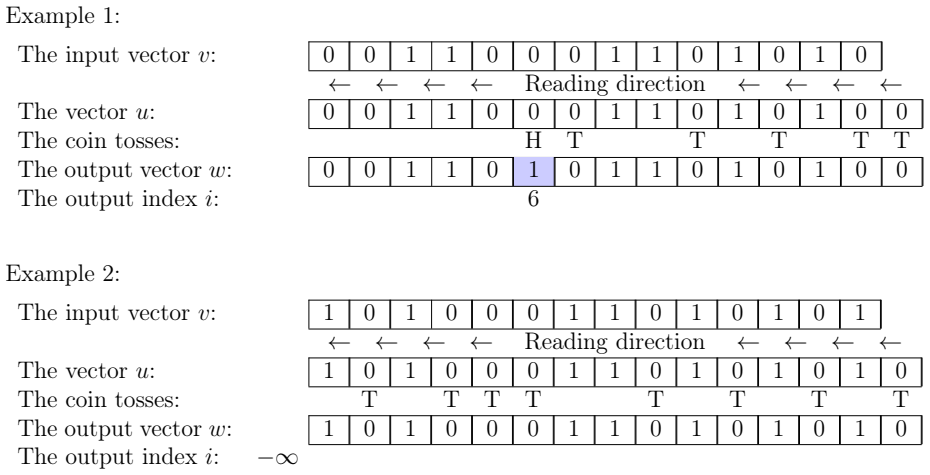
Let us consider a random infinite lower triangular matrix, where the entries on and below the diagonal are i.i.d. uniform random elements of a fixed finite field. We investigate the evolution of the span of the first $n$ rows of this matrix as $n$ grows. Many properties of this evolving subspace can be captured with the help of the verbose persistence diagram, which is a standard tool in stochastic topology and topological data analysis. We give an explicit formula for the distribution of the persistence diagram. We prove a law of large numbers for the distribution of lifetimes. We also describe the fluctuations of the persistent Betti numbers.
Editorial analysis
A structured set of objections, weighed in public.
Referee Report
Summary. The paper considers an infinite lower-triangular random matrix over a fixed finite field whose entries on and below the diagonal are i.i.d. uniform. It tracks the nested sequence of row spans and encodes their evolution via the verbose persistence diagram. The central claims are an explicit formula for the distribution of this diagram, a law of large numbers for the lifetimes, and fluctuation results for the persistent Betti numbers.
Significance. An explicit distributional formula for the persistence diagram in this discrete random-subspace model would be a notable advance; most results in stochastic topology supply only asymptotics or moments. The finite-field setting permits exact combinatorial counting, which, if carried through, strengthens the link between persistent homology and algebraic combinatorics. The LLN and fluctuation statements would furnish a complete first-order and second-order picture for the lifetimes and Betti numbers.
minor comments (3)
- [Abstract] The abstract introduces the 'verbose persistence diagram' without a one-sentence reminder of its definition or a pointer to the section where it is formalized; a brief parenthetical would improve accessibility.
- Notation for the finite field and its cardinality is introduced only in the model statement; repeating the symbol (e.g., 𝔽_q) in the statements of the main theorems would make the dependence on q transparent.
- The law-of-large-numbers statement for lifetimes is phrased in terms of 'distribution of lifetimes'; a short clarification whether this is the empirical measure on the diagram or the marginal on each lifetime would remove ambiguity.
Simulated Author's Rebuttal
We thank the referee for their positive assessment of the manuscript and for recommending acceptance. The report correctly summarizes the main contributions: the explicit distribution of the verbose persistence diagram, the LLN for lifetimes, and the fluctuation results for persistent Betti numbers.
Circularity Check
No significant circularity identified
full rationale
The paper defines a standard i.i.d. uniform model on lower-triangular entries over a finite field and states that it derives an explicit formula for the distribution of the verbose persistence diagram, an LLN for lifetimes, and fluctuation results for persistent Betti numbers. No equations, self-citations, or fitted parameters are visible in the provided abstract or reader summary that would reduce any claimed prediction back to the inputs by construction. The derivation is presented as a direct probabilistic computation on the evolving row spans, which is self-contained against the model assumptions without load-bearing self-references or renaming of known results.
Axiom & Free-Parameter Ledger
axioms (1)
- domain assumption Entries on and below the diagonal are i.i.d. uniform over a fixed finite field.
Reference graph
Works this paper leans on
-
[1]
Persistent homology for random fields and complexes
Robert J Adler, Omer Bobrowski, Matthew S Borman, Eliran Subag, and Shmuel Wein- berger. Persistent homology for random fields and complexes. InBorrowing strength: theory powering applications–a Festschrift for Lawrence D. Brown, volume 6, pages 124–144. Institute of Mathematical Statistics, 2010
2010
-
[2]
Homological connectivity in random Čech complexes.Probability Theory and Related Fields, 183(3):715–788, 2022
Omer Bobrowski. Homological connectivity in random Čech complexes.Probability Theory and Related Fields, 183(3):715–788, 2022
2022
-
[3]
Maximally persistent cycles in random geometric complexes.The Annals of Applied Probability, pages 2032–2060, 2017
Omer Bobrowski, Matthew Kahle, and Primoz Skraba. Maximally persistent cycles in random geometric complexes.The Annals of Applied Probability, pages 2032–2060, 2017
2032
-
[4]
A universal null-distribution for topological data analysis.Scientific reports, 13(1):12274, 2023
Omer Bobrowski and Primoz Skraba. A universal null-distribution for topological data analysis.Scientific reports, 13(1):12274, 2023
2023
-
[5]
Omer Bobrowski and Primoz Skraba. Universality in random persistent homology and scale-invariant functionals.arXiv preprint arXiv:2406.05553, 2024
-
[6]
Heuristics on class groups of number fields
Henri Cohen and Hendrik W Lenstra Jr. Heuristics on class groups of number fields. In Number Theory Noordwijkerhout 1983: Proceedings of the Journées Arithmétiques held at Noordwijkerhout, The Netherlands July 11–15, 1983, pages 33–62. Springer, 2006
1983
-
[7]
Decomposition of pointwise finite-dimensional persistence modules.Journal of Algebra and its Applications, 14(05):1550066, 2015
William Crawley-Boevey. Decomposition of pointwise finite-dimensional persistence modules.Journal of Algebra and its Applications, 14(05):1550066, 2015
2015
-
[8]
An incremental algorithm for Betti numbers of simplicial complexes on the 3-sphere.Computer Aided Geometric Design, 12(7):771–784, 1995
Cecil Jose A Delfinado and Herbert Edelsbrunner. An incremental algorithm for Betti numbers of simplicial complexes on the 3-sphere.Computer Aided Geometric Design, 12(7):771–784, 1995. 22
1995
-
[9]
Topological persistence and simplification
Edelsbrunner, Letscher, and Zomorodian. Topological persistence and simplification. Discrete & computational geometry, 28(4):511–533, 2002
2002
-
[10]
Maximum persistent Betti numbers of Čech complexes.arXiv preprint arXiv:2409.05241, 2024
Herbert Edelsbrunner, Matthew Kahle, and Shu Kanazawa. Maximum persistent Betti numbers of Čech complexes.arXiv preprint arXiv:2409.05241, 2024
-
[11]
On the shape of a set of points in the plane.IEEE Transactions on Information Theory, 29(4):551–559, 1983
Herbert Edelsbrunner, David Kirkpatrick, and Raimund Seidel. On the shape of a set of points in the plane.IEEE Transactions on Information Theory, 29(4):551–559, 1983
1983
-
[12]
Three-dimensional alpha shapes.ACM Transactions On Graphics (TOG), 13(1):43–72, 1994
Herbert Edelsbrunner and Ernst P Mücke. Three-dimensional alpha shapes.ACM Transactions On Graphics (TOG), 13(1):43–72, 1994
1994
-
[13]
On the distribution of divisor class groups of curves over a finite field
Eduardo Friedman and Lawrence C Washington. On the distribution of divisor class groups of curves over a finite field. InThéorie des nombres, pages 227–239. de Gruyter Berlin, 1989
1989
-
[14]
A distance for similarity classes of submanifolds of a euclidean space
Patrizio Frosini. A distance for similarity classes of submanifolds of a euclidean space. Bulletin of the Australian Mathematical Society, 42(3):407–415, 1990
1990
-
[15]
Stein’s method and the rank distribution of random matrices over finite fields.Annals of Probability, 43(3):1274–1314, 2015
Jason Fulman and Larry Goldstein. Stein’s method and the rank distribution of random matrices over finite fields.Annals of Probability, 43(3):1274–1314, 2015
2015
-
[16]
Nearly-symmetric matrices in the Cohen-Lenstra universality class
Elia Gorokhovsky. Nearly-symmetric matrices in the Cohen-Lenstra universality class. arXiv preprint arXiv:2603.01432, 2026
-
[17]
Time-inhomogeneous random walks on finite groups and cokernels of random integer block matrices.Combinatorics, Probability and Computing, 35(3):329– 355, 2026
Elia Gorokhovsky. Time-inhomogeneous random walks on finite groups and cokernels of random integer block matrices.Combinatorics, Probability and Computing, 35(3):329– 355, 2026
2026
-
[18]
Asymptotic behavior of lifetime sums for random simplicial complex processes.Journal of the Mathematical Society of Japan, 71(3):765– 804, 2019
Masanori Hino and Shu Kanazawa. Asymptotic behavior of lifetime sums for random simplicial complex processes.Journal of the Mathematical Society of Japan, 71(3):765– 804, 2019
2019
-
[19]
Minimum spanning acycle and lifetime of per- sistent homology in the Linial–Meshulam process.Random Structures & Algorithms, 51(2):315–340, 2017
Yasuaki Hiraoka and Tomoyuki Shirai. Minimum spanning acycle and lifetime of per- sistent homology in the Linial–Meshulam process.Random Structures & Algorithms, 51(2):315–340, 2017
2017
-
[20]
Limit theorems for persis- tence diagrams.The Annals of Applied Probability, 28(5):2740–2780, 2018
Yasuaki Hiraoka, Tomoyuki Shirai, and Khanh Duy Trinh. Limit theorems for persis- tence diagrams.The Annals of Applied Probability, 28(5):2740–2780, 2018
2018
-
[21]
The distribution of sandpile groups of random graphs with their pairings
Eliot Hodges. The distribution of sandpile groups of random graphs with their pairings. Transactions of the American Mathematical Society, 377(12):8769–8815, 2024
2024
-
[22]
Cohen-Lenstra flag universality for random matrix products.arXiv preprint arXiv:2508.10127, 2025
Yifeng Huang, Hoi H Nguyen, and Roger Van Peski. Cohen-Lenstra flag universality for random matrix products.arXiv preprint arXiv:2508.10127, 2025
-
[23]
Cohen–Lenstra heuristics for torsion in homology of random complexes.Experimental Mathematics, 29(3):347–359, 2020
Matthew Kahle, Frank H Lutz, Andrew Newman, and Kyle Parsons. Cohen–Lenstra heuristics for torsion in homology of random complexes.Experimental Mathematics, 29(3):347–359, 2020
2020
-
[24]
Dong Yeap Kang, Jungin Lee, and Myungjun Yu. Randomp-adic matrices with fixed zero entries and the Cohen–Lenstra distribution.arXiv preprint arXiv:2409.01226, 2024. 23
-
[25]
Universality of the cokernels of randomp-adic Hermitian matrices.Trans- actions of the American Mathematical Society, 376(12):8699–8732, 2023
Jungin Lee. Universality of the cokernels of randomp-adic Hermitian matrices.Trans- actions of the American Mathematical Society, 376(12):8699–8732, 2023
2023
-
[26]
Jungin Lee. Sharp threshold for universality of cokernels of random matrices over finite fields.arXiv preprint arXiv:2511.13070, 2025
-
[27]
Distributionofthecokernelsofdeterminantalrow-sparse matrices.arXiv preprint arXiv:2505.11700, 2025
JunginLeeandMyungjunYu. Distributionofthecokernelsofdeterminantalrow-sparse matrices.arXiv preprint arXiv:2505.11700, 2025
-
[28]
Structure de l’anneau d’homologie d’une représentation.CR Acad
Jean Leray. Structure de l’anneau d’homologie d’une représentation.CR Acad. Sci. Paris, 222:1419–1422, 1946
1946
-
[29]
A random walk on the category of finite abelianp-groups.arXiv preprint arXiv:2408.06492, 2024
Nikita Lvov. A random walk on the category of finite abelianp-groups.arXiv preprint arXiv:2408.06492, 2024
-
[30]
The distribution of sandpile groups of random regular graphs.Trans- actions of the American Mathematical Society, 373(9):6529–6594, 2020
András Mészáros. The distribution of sandpile groups of random regular graphs.Trans- actions of the American Mathematical Society, 373(9):6529–6594, 2020
2020
-
[31]
András Mészáros. A phase transition for the cokernels of random band matrices over the p-adic integers.arXiv preprint arXiv:2408.13037, 2024
-
[32]
The 2-torsion of determinantal hypertrees is not Cohen–Lenstra
András Mészáros. The 2-torsion of determinantal hypertrees is not Cohen–Lenstra. Israel Journal of Mathematics, pages 1–19, 2025
2025
-
[33]
Cohen–Lenstra distribution for sparse matrices with determinantal biasing.International Mathematics Research Notices, 2025(3), 2025
András Mészáros. Cohen–Lenstra distribution for sparse matrices with determinantal biasing.International Mathematics Research Notices, 2025(3), 2025
2025
-
[34]
The fluctuations of the mod p rank of triangular matrices.arXiv preprint arXiv:2508.08788, 2025
András Mészáros. The fluctuations of the mod p rank of triangular matrices.arXiv preprint arXiv:2508.08788, 2025
-
[35]
The persistent homology of the Linial-Meshulam process.arXiv preprint arXiv:2511.18338, 2025
András Mészáros. The persistent homology of the Linial-Meshulam process.arXiv preprint arXiv:2511.18338, 2025
-
[36]
The rank evolution of block bidiagonal matrices over finite fields
András Mészáros. The rank evolution of block bidiagonal matrices over finite fields. arXiv preprint arXiv:2504.12275, 2025
-
[37]
Universal constant order fluctuations for the cokernels of block triangular matrices.Electronic Communications in Probability, 30:1–13, 2025
András Mészáros. Universal constant order fluctuations for the cokernels of block triangular matrices.Electronic Communications in Probability, 30:1–13, 2025
2025
-
[38]
Abelian groups from random hypergraphs.Combinatorics, Proba- bility and Computing, 32(4):654–664, 2023
Andrew Newman. Abelian groups from random hypergraphs.Combinatorics, Proba- bility and Computing, 32(4):654–664, 2023
2023
-
[39]
Rank fluctuations of matrix products and a moment method for growing groups
Hoi H Nguyen and Roger Van Peski. Rank fluctuations of matrix products and a moment method for growing groups.arXiv preprint arXiv:2409.03099, 2024
work page internal anchor Pith review arXiv 2024
-
[40]
Universality for cokernels of random matrix products.Advances in Mathematics, 438:109451, 2024
Hoi H Nguyen and Roger Van Peski. Universality for cokernels of random matrix products.Advances in Mathematics, 438:109451, 2024
2024
-
[41]
Local and global universality of random matrix cokernels.arXiv preprint arXiv:2210.08526, 2022
Hoi H Nguyen and Melanie Matchett Wood. Local and global universality of random matrix cokernels.arXiv preprint arXiv:2210.08526, 2022
-
[42]
Random integral matrices: universality of surjectivity and the cokernel.Inventiones mathematicae, 228(1):1–76, 2022
Hoi H Nguyen and Melanie Matchett Wood. Random integral matrices: universality of surjectivity and the cokernel.Inventiones mathematicae, 228(1):1–76, 2022. 24
2022
-
[43]
Towards computing homology from finite approximations
Vanessa Robins. Towards computing homology from finite approximations. InTopology proceedings, volume 24, pages 503–532, 1999
1999
-
[44]
The moment problem for random objects in a category.arXiv preprint arXiv:2210.06279, 2022
Will Sawin and Melanie Matchett Wood. The moment problem for random objects in a category.arXiv preprint arXiv:2210.06279, 2022
-
[45]
Jiahe Shen. Quantative universality for cokernels of matrices with symmetries.arXiv preprint arXiv:2601.09704, 2026
-
[46]
Roger Van Peski. Reflecting poisson walks and dynamical universality inp-adic random matrix theory.arXiv preprint arXiv:2312.11702, 2023
-
[47]
Local limits in p-adic random matrix theory.Proceedings of the London Mathematical Society, 129(3):e12626, 2024
Roger Van Peski. Local limits in p-adic random matrix theory.Proceedings of the London Mathematical Society, 129(3):e12626, 2024
2024
-
[48]
The rank of a random triangular matrix overF q.International Mathematics Research Notices, 2026(1):rnaf371, 2026
Roger Van Peski. The rank of a random triangular matrix overF q.International Mathematics Research Notices, 2026(1):rnaf371, 2026
2026
-
[49]
What is a p-adic Dyson Brownian motion? InAnnales de l’Institut Henri Poincare (B) Probabilites et statistiques, volume62, pages245–262.InstitutHenri Poincaré, 2026
Roger Van Peski. What is a p-adic Dyson Brownian motion? InAnnales de l’Institut Henri Poincare (B) Probabilites et statistiques, volume62, pages245–262.InstitutHenri Poincaré, 2026
2026
-
[50]
Statistics of number fields and function fields
Akshay Venkatesh and Jordan S Ellenberg. Statistics of number fields and function fields. InProceedings of the International Congress of Mathematicians 2010 (ICM
2010
-
[51]
I: Plenary Lectures and Ceremonies Vols
(In 4 Volumes) Vol. I: Plenary Lectures and Ceremonies Vols. II–IV: Invited Lectures, pages 383–402. World Scientific, 2010
2010
-
[52]
What is
Shmuel Weinberger. What is... persistent homology.Notices of the AMS, 58(1):36–39, 2011
2011
-
[53]
The distribution of sandpile groups of random graphs.Journal of the American Mathematical Society, 30(4):915–958, 2017
Melanie Wood. The distribution of sandpile groups of random graphs.Journal of the American Mathematical Society, 30(4):915–958, 2017
2017
-
[54]
Random integral matrices and the Cohen-Lenstra heuristics
Melanie Matchett Wood. Random integral matrices and the Cohen-Lenstra heuristics. American Journal of Mathematics, 141(2):383–398, 2019. András Mészáros, HUN-REN Alfréd Rényi Institute of Mathematics, Budapest, Hungary, meszaros@renyi.hu 25
2019
discussion (0)
Sign in with ORCID, Apple, or X to comment. Anyone can read and Pith papers without signing in.