REVIEW 3 major objections 5 minor 43 references
Is Your Model Risk ALARP? Evaluating Prospective Safety-Critical Applications of Complex Models
T0 review · 3 major / 5 minor · reviewed 2026-08-06 · deepseek-v4-flash
Pith's one-line read The paper claims that a machine-learning model's risk is ALARP precisely when the value of further verification no longer exceeds its cost, and demonstrates the threshold with a weld-radiograph case study.
desk verdict A coherent, instructive template for evaluating ML model risk against ALARP, but the central operationalization of ALARP as a cost-benefit break-even is a regulatory overreach that needs fixing. read the letter →
The pith
A machine-rendered reading of the paper's core claim, the machinery that carries it, and where it could break.
The reading
What carries the argument
The engine of the argument is the model-risk integral R_m = ∫_S ∫_{MO} Pr(s) Pr(mo|s) I(s,mo) dmo ds, which measures expected adverse impact of using model m. The classification model's reliability enters through Pr(mo|s), estimated from a Dirichlet-multinomial posterior over confusion-matrix rows, and consequences enter through scenario-specific costs including a mixture model for failure cost, Cfail. The ALARP stopping rule is computed by value of information: compare the prior optimal expected cost with the pre-posterior optimal expected cost after hypothetical perfect verification; the difference is the maximum worth of further verification, and when actual verification costs exceed it, model risk is declared ALARP.
What would settle it
Recompute the expected costs using real defect-repair and inspection cost data and measured, non-perfect manual inspector error rates from a weld-inspection organization; if manual evaluation no longer has the lowest expected cost for cracking, porosity, or lack of penetration, or if the value of perfect verification exceeds quoted verification costs, the case-study conclusion fails. A simpler direct test is to compare actual verification quotes with the computed £51.07-per-radiograph value for lack of penetration: if verification can be bought for less than that, the ALARP claim for that scenario is overturned.
Extended reading notes
Core claim
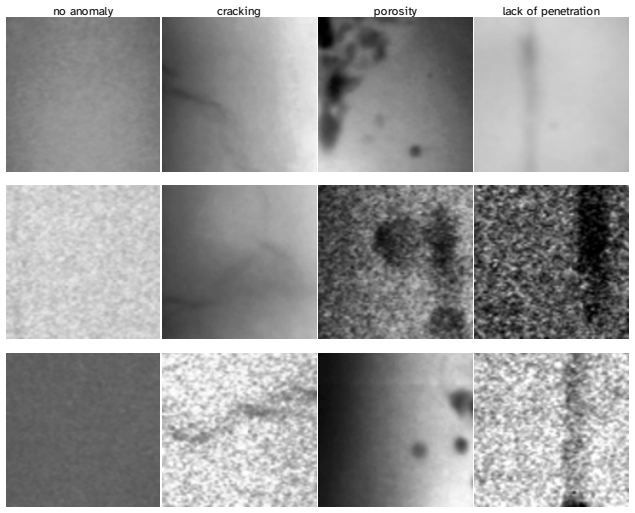
The central claim is that model risk should be treated as a decision-analytic quantity, computed as expected impact over scenarios and model outputs, and that the ALARP principle gives the stopping rule for model verification. In the weld radiograph example, ranking the three strategies by expected cost per radiograph shows manual evaluation is risk-optimal for cracking, porosity, and lack of penetration; the hybrid strategy is risk-optimal only for no-anomaly radiographs; and value-of-information analysis of perfect verification shows the largest per-radiograph benefit is £51.07 when lack of penetration is present, while the no-anomaly scenario gains essentially nothing from further verification. The authors read this as evidence that ALARP can be identified in practice, and that verification effort should follow decision value rather than raw uncertainty.
Load-bearing premise
The numerical rankings depend on the assumed costs in Table 2, including repair costs, the fixed manual-inspection cost, the hand-specified failure-cost mixture, and the perfect-manual-inspector benchmark, so if those values are wrong for a real deployment, the risk-optimal strategy and the ALARP threshold can flip.
Editorial extensions
If this is right
- Model risk becomes a documented, quantitative part of a safety case rather than a vague concern, with an explicit budget for verification.
- Verification spending should be allocated to scenarios where value of information is highest, not where model uncertainty looks largest.
- In the weld-inspection setting, the risk-optimal deployment depends on defect prevalence: the hybrid strategy is preferable only when most radiographs are clean.
- The same decision-analytic template can be applied to any complex model that informs high-consequence decisions, such as predictive maintenance or clinical decision support.
- ALARP determinations can be made concrete: further testing is justified only while its cost stays below the calculated value of information.
Reading between the lines
- The paper leaves implicit that the same value-of-information calculation could set contract or procurement thresholds, telling buyers how much verification a model vendor should be required to fund.
- Because the case study assumes a perfect manual inspector, a natural extension is to replace that benchmark with measured inspector error rates; the framework is compatible with that, and the optimal rankings could shift.
- The break-even prevalence thresholds (around 84.5% no-anomaly radiographs for an equal defect mix) suggest a deployment rule for sites with known defect density, a testable extension the paper does not pursue.
- Extending the cost inputs from pounds to multi-attribute consequences such as injury or environmental harm would require a utility model, but the decision-analytic structure would remain unchanged.
Signed reviews
Editorial analysis
A structured set of objections, weighed in public.
Referee Report
Summary. The manuscript proposes using the UK ALARP principle to decide whether the model risk introduced by deploying a complex machine-learning model in a safety-critical setting has been reduced to an acceptable level. It defines model risk as expected adverse impact, develops a decision-analysis workflow (influence diagram, cost matrix, Dirichlet-multinomial posterior over a confusion matrix, rank-ordering of manual, automated, and hybrid strategies, and value-of-information analysis for further verification), and applies this workflow to automated weld radiograph classification. The numerical results indicate that manual inspection is risk-optimal for defective welds, a hybrid strategy is best for no-anomaly radiographs, and further model verification is not cost-effective for most scenarios. The paper frames these results as demonstrating when model risk is ALARP.
Significance. The framework is a constructive step: it connects model reliability uncertainty to downstream decisions, and the value-of-information willingness-to-pay for verification is a useful concept. The Bayesian treatment of classification uncertainty is standard and appropriate, and the authors are transparent about assumptions such as perfect manual inspection. The main weakness is interpretive: the paper's operational definition of ALARP as a cost-benefit break-even is not the UK ALARP test, which requires stopping only when further risk reduction is grossly disproportionate. Because that identification is the paper's central claim, the contribution in its current form is not yet suitable for publication; the decision-analytic core is sound and can likely be reframed. The paper also leaves important numerical uncertainties unreported, which limits the strength of the demonstrated example.
major comments (3)
- [§3.4.2] The statement that model risk has reached ALARP "i.e. the point where further verification costs exceed their benefits to reduce risk" equates ALARP with a simple expected-value break-even. UK ALARP practice, as applied by HSE, requires further risk reduction unless the cost, including time and trouble, is grossly disproportionate to the safety benefit; it does not permit stopping merely because verification costs are slightly larger than expected benefits. With the paper's rule, an auditor would be instructed to stop precisely in cases where ALARP would still require the reduction. Since this sentence is the step that converts the VoI calculation into an ALARP determination, the main conclusion does not follow even if every cost input and confusion matrix is correct. Please reframe the contribution as a cost-benefit break-even for verification, or incorporate a gross-disproportion element (for example, a multiplier or a regulatory test) and justify it against HSE guidance.
- [§3.3.2–§3.3.3, Table 4, Figure 11, Algorithm 1] The expected costs in Table 4 and the VoI values in Figure 11 are computed by sampling from the Dirichlet posterior, but the paper reports neither the Monte Carlo sample size nor standard errors or credible intervals. This matters for the demonstrated ranking: in the porosity row, the automated strategy (£2,424.17) and hybrid strategy (£2,282.77) differ by only £141, a small margin relative to the variability induced by the £9,750 expected failure penalty that occurs with posterior probability around 0.16 under the stated Dirichlet(1,1,1,1) prior; the reported VoI for porosity is only £0.33 per radiograph. Without uncertainty quantification on these Monte Carlo outputs, the risk-optimal ordering and the conclusion that further verification is not cost-effective are not established at the precision claimed. No code or data are provided to reproduce the numbers, so the sampling details should be stated explicitly.
- [§3.3.1, Table 2, Eqs. (4)–(6)] The numerical demonstration rests on cost inputs that are stated without data or standard references: unit inspection and repair costs, the failure-cost mixture parameters (including the Gamma parameters), the 1, 1/2, and 1/10 failure-cost multipliers, and the assumption of error-free manual inspection. The paper notes that the framework is "equally compatible with alternative input models," but it does not test how the Table 4 ranking or the Section 3.4.2 ALARP threshold respond to plausible variations in these inputs. Because the example is the only demonstration of the framework, please add a sensitivity analysis, or at least a stated range of inputs over which the conclusions are unchanged.
minor comments (5)
- [§4, step 2] The text says "Section 3.3 presets a Bayesian analysis"; "presets" should be "presents".
- [§1.1] There is a missing space in "threshold foracceptable risk" in the ALARP definition.
- [§3.4.2, Eq. (13)] The symbol z in Eq. (13) is used for prospective verification data but is not defined in the nomenclature or at first use; please define it explicitly and clarify the relationship between VoPI and the more general z-based VoI.
- [Reference [10]] Reference [10] attributes "Artificial intelligence concepts and terminology" to BS ISO/IEC 42001, but that standard is an AI management system standard; the concepts-and-terminology standard is ISO/IEC 22989. Please correct the citation or the title.
- [Figure 11] The ordering of the bar labels and the numerical values in Figure 11 is confusing; please align the labels (no anomaly, porosity, cracking, lack of penetration) with the corresponding bars and values.
Circularity Check
No significant circularity: the decision-analytic results are forward computations from stated cost and reliability inputs; the ALARP 'i.e.' in Section 3.4.2 is a stipulated operationalization rather than a derived prediction, which is a correctness concern, not a circular step.
full rationale
The paper's derivation chain is self-contained for its quantitative claims. Section 3.3.1 defines scenario-specific model risk R_m(s) in Equation 3 as a function of costs C[d(mo), s] and output probabilities Pr(mo|s), with the cost inputs given in Table 2 and the Cfail mixture in Equations 4-6. Section 3.3.2 obtains Pr(mo|s) from a Dirichlet-multinomial posterior (Equations 7-9) fitted to the confusion matrix in Table 3. These are then used to compute expected costs for the manual, automated, and hybrid strategies (Figure 7, Table 4) and value-of-information quantities (Equations 12-14, Figure 11). Each step is a forward evaluation: the risk-optimal strategy and VoI numbers are not fitted to the conclusions, and no target result is assumed among the inputs. The citations to the authors' earlier VoI work (refs. [28], [40]) are not load-bearing because the VoI formulas are standard (Raiffa [38]) and the weld example is worked out independently with stated assumptions. The one passage that could look definitionally circular is Section 3.4.2's statement that ALARP is 'i.e. the point where further verification costs exceed their benefits to reduce risk'. This is an explicit operationalization chosen by the authors, not a consequence derived from the UK ALARP principle; it also conflates a cost-benefit break-even with the regulatory 'grossly disproportionate' test. That is a substantive correctness and assumptions risk in the central claim, but it is not circular in the sense of assuming the conclusion in the inputs. The numerical decision analysis would stand or fall on the validity of the cost inputs and the perfect-manual-inspector benchmark, independent of whether the ALARP label is accepted. Therefore the circularity score is low.
Assumptions & free parameters
free parameters (4)
- Cfail mixture distribution parameters =
pi ~ Dirichlet(9,3); f1 ~ N+(50000, 3000^2); f2 ~ Gamma(6, 40000)
- Unit inspection and repair costs =
manual £350; cracking £1000; lack of penetration £3000; porosity £500; failure multipliers 1, 1/2, 1/10
- Dirichlet prior concentration alpha =
[1, 1, 1, 1]
- Anomaly prevalence Pr(s) =
not specified; thresholds given (82.4%, 87.2%, 84.5%)
assumptions (5)
- standard math The optimal model is the one minimizing expected monetary cost.
- domain assumption The test-set confusion matrix is representative of deployment conditions, with no distribution shift between evaluation and operation.
- domain assumption Manual inspection is error-free (perfect benchmark).
- ad hoc to paper ALARP is operationalized as the point where further verification costs exceed expected benefit, measured by VoPI.
- domain assumption Costs are additive and linear; a weld with multiple defects incurs the sum of individual repair costs.
Cite this review
Pith. "Pith review of Is Your Model Risk ALARP? Evaluating Prospective Safety-Critical Applications of Complex Models." pith.science (2026). https://pith.science/paper/T37AEEDM
@misc{pith2026250710817,
  author       = {Pith},
  title        = {Pith review of: Is Your Model Risk ALARP? Evaluating Prospective Safety-Critical Applications of Complex Models},
  year         = {2026},
  howpublished = {\url{https://pith.science/paper/T37AEEDM}},
  note         = {Machine review of arXiv:2507.10817}
}
read the original abstract
The increasing availability of advanced computational modelling offers new opportunities to improve safety, efficacy, and emissions reductions. Application of complex models to support engineering decisions has been slow in comparison to other sectors, reflecting the higher consequence of unsafe applications. Adopting a complex model introduces a \emph{model risk}, namely the expected consequence of incorrect or otherwise unhelpful outputs. This should be weighed against the prospective benefits that the more sophisticated model can provide, also accounting for the non-zero risk of existing practice. Demonstrating when the model risk of a proposed machine learning application is As Low As Reasonably Practicable (ALARP) can help ensure that safety-critical industries benefit from complex models where appropriate while avoiding their misuse. An example of automated weld radiograph classification is presented to demonstrate how this can be achieved by combining statistical decision analysis, uncertainty quantification, and value of information.
Figures


Figures from the paper (8 more)


Reference graph
Works this paper leans on
-
[1]
a pro-innovation approach to ai regulation, 27
Department for Science Innovation & Technology, Command paper: Cp 1019. a pro-innovation approach to ai regulation, 27
-
[2]
HM Treasury, The Aqua Book: guidance on producing qual- ity analysis for government, Technical Report, HM Treasury,
-
[3]
Management of Risk – Princi- ples and Concepts, Technical Report, UK Government, 2023
UK Government, The Orange Book. Management of Risk – Princi- ples and Concepts, Technical Report, UK Government, 2023. URL:https: //www.gov.uk/government/publications/orange-book
work page 2023
-
[4]
Financial Services Authority, The Turner Review. A regulatory response to the global banking crisis, Technical Report, Financial Services Authority, 2009
work page 2009
-
[5]
Board of Governors of the Federal Reserve System Office of the Comptroller of the Currency, SR Letter 11-7 Supervisory Guidance on Model Risk Management, Technical Report, Federal Reserve, 2011
work page 2011
-
[6]
Bank of England, PS6 / 23 – Model risk management principles for banks, Technical Report May, Bank of England, 2023. URL: https: //www.bankofengland.co.uk/prudential-regulation/publication/ 2023/may/model-risk-management-principles-for-banks-ss
work page 2023
-
[7]
Bank of England, DP5 / 22 - Artificial Intelligence and Machine Learning, Technical Report, Bank of England, 2022
work page 2022
-
[8]
M. Mitchell, S. Wu, A. Zaldivar, P. Barnes, L. Vasserman, B. Hutchinson, E. Spitzer, I. D. Raji, T. Gebru, Model cards for model reporting, in: Pro- ceedings of the Conference on Fairness, Accountability, and Transparency, ACM, 2019, p. 220–229. URL: http://dx.doi.org/10.1145/3287560. 3287596. doi:10.1145/3287560.3287596. 28
arXiv 2019
Show all 43 references
-
[9]
Saidi, G
P. Saidi, G. Dasarathy, V. Berisha, Article Unraveling overoptimism and publication bias in ML- driven science Unraveling overoptimism and pub- lication bias in ML-driven science, Patterns 6 (2025) 101185
2025
-
[10]
BSI, BS ISO-IEC 42001: Information technology — Artificial intelligence — Artificial intelligence concepts and terminology, BSI Standards Limited, 2023
2023
-
[11]
St ˚ahl, D
C. St ˚ahl, D. Lundqvist, C. Reineholm, Improving work environments through regulation: A literature review on the influence of regulation, inspection practices and organizational conditions in European workplaces, Safety Science 191 (2025) 106917
2025
-
[12]
URL: https://github.com/alan-turing-institute/ AssurancePlatform
The Alan Turing Institute, Trustworthy and Ethical Assurance Plat- form, 2024. URL: https://github.com/alan-turing-institute/ AssurancePlatform
2024
-
[13]
C. Burr, S. Arana, C. Gould Van Praag, I. Habli, M. Kaas, M. Katell, S. La- her, D. Leslie, S. Niederer, B. Ozturk, N. Polo, Z. Porter, P. Ryan, M. Sharan, J. Solis Lemus, M. Strocchi, K. Westerling, Trustworthy and ethical assur- ance of digital health and healthcare, 2024. U...
2024 doi
-
[14]
Altmeyer, A
P. Altmeyer, A. V. Deursen, C. C. S. Liem, Explaining black-box models through counterfactuals, in: JuliaCon Proceedings, 2023, p. 130. doi: 10. 21105/jcon.00130
2023
-
[15]
A. Abid, M. Yuksekgonul, J. Zou, Meaningfully debugging model mis- takes using conceptual counterfactual explanations, in: 39th Interna- tional Conference on Machine Learning, PMLR, 2021, pp. 66–88. URL: http://arxiv.org/abs/2106.12723
2021 arXiv
-
[16]
Kares, T
F. Kares, T. Speith, H. Zhang, M. Langer, What makes for a good saliency map? comparing strategies for evaluating saliency maps in 29 explainable ai (xai), 2025. URL: https://arxiv.org/abs/2504.17023. arXiv:2504.17023
2025 arXiv
-
[17]
Simonyan, A
K. Simonyan, A. Vedaldi, A. Zisserman, Deep inside convolutional networks: Visualising image classification models and saliency maps, in: Workshop at International Conference on Learning Representations, 2014
2014
-
[18]
R. R. Selvaraju, M. Cogswell, A. Das, R. Vedantam, D. Parikh, D. Batra, Grad- cam: Visual explanations from deep networks via gradient-based localiza- tion, International Journal of Computer Vision 128 (2019) 336–359
2019
-
[19]
Felin, M
T. Felin, M. Sako, J. Hullman, Artificial Intelligence and Actor-Specific Decisions (2025)
2025
-
[20]
Innes, Flux: Elegant machine learning with julia, 2018
M. Innes, Flux: Elegant machine learning with julia, 2018. doi: 10.21105/ joss.00602
2018
-
[21]
Bezanson, A
J. Bezanson, A. Edelman, S. Karpinski, V. B. Shah, Julia: A fresh approach to numerical computing, SIAM review 59 (2017) 65–98
2017
-
[22]
Moses, V
W. Moses, V. Churavy, Instead of rewriting foreign code for machine learn- ing, automatically synthesize fast gradients, in: H. Larochelle, M. Ran- zato, R. Hadsell, M. F. Balcan, H. Lin (Eds.), Advances in Neural Infor- mation Processing Systems, volume 33, Curran Associates,...
2020
-
[23]
W. S. Moses, V. Churavy, L. Paehler, J. H¨ uckelheim, S. H. K. Narayanan, M. Schanen, J. Doerfert, Reverse-mode automatic differentiation and optimization of gpu kernels via enzyme, in: Proceedings of the Inter- national Conference for High Performance Computing, Networking, S...
2021
-
[24]
Stavrou, J
N. Stavrou, J. Morelos, D. Di Francesco, A. Meliones, P. Progias, D. Duncan, Development, verification, and certification of a digital twin for a voyage data recorder, Data-Centric Engineering 6 (2025)
2025
-
[25]
DNV, Risk management in marine and subsea operations, Technical Re- port, 2021
2021
-
[26]
American Petroleum Institute, Risk-Based Inspection Technology, API RP 581, 2008
2008
-
[27]
American Petroleum Institute, Risk-Based Inspection, API RP 580, third edit ed., 2016
2016
-
[28]
D. D. Francesco, Risk management in the era of data-centric engineering, Data-Centric Engineering 6 (2025)
2025
-
[29]
URL: https://standards.dnv.com/
DNV, DNV-SE-0474 Risk based verification, Technical Report, 2021. URL: https://standards.dnv.com/
2021
-
[30]
J. Lu, A. Liu, F. Dong, F. Gu, J. Gama, G. Zhang, Learning under concept drift: A review, IEEE Transactions on Knowledge and Data Engineering 31 (2019) 2346–2363
2019
-
[31]
British Standards Institute, BS EN 14015 - Specification for the design and manufacture of site built, vertical, cylindrical, flat-bottomed, above ground, welded, steel tanks for the storage of liquids at ambient temperature and above, Technical Report, 2004
2004
-
[32]
British Standards Institution, BS 2633 - Specification for Class I arc weld- ing of ferritic steel pipework for carrying fluids, Technical Report, 1987
1987
-
[33]
NASA, NASA-STD-5009: Nondestructive Evaluation Requirements for Fracture-Critical Metallic Components (2008) 1–28
2008
-
[34]
NASA, PRC-6503: Process Specification for Radiographic Inspection, Technical Report January, 2020. 31
2020
-
[35]
British Standards Institute, BS EN 13445 - Unfired pressure vessels, Tech- nical Report, 2021
2021
-
[36]
Totino, F
B. Totino, F. Spagnolo, S. Perri, Riawelc: A novel dataset of radiographic images for automatic weld defects classification, International Journal of Electrical and Computer Engineering Research 3 (2023) 13–17
2023
-
[37]
Perri, F
S. Perri, F. Spagnolo, F. Frustaci, P. Corsonello, Welding defects classifi- cation through a convolutional neural network, Manufacturing Letters 35 (2023) 29–32
2023
-
[38]
Raiffa, Information Value Theory, IEEE Transactions on System Science and Cybernetics SSC-2 (1966) 22–34
H. Raiffa, Information Value Theory, IEEE Transactions on System Science and Cybernetics SSC-2 (1966) 22–34
1966
-
[39]
Jordaan, Decisions under Uncertainty, Cambridge University Press,
I. Jordaan, Decisions under Uncertainty, Cambridge University Press,
-
[40]
D. D. Francesco, M. Langtry, A. B. Duncan, C. Dent, System effects in iden- tifying risk-optimal data requirements for digital twins of structures, 2023. URL: https://arxiv.org/abs/2309.07695. arXiv:2309.07695. 32
2023 arXiv
-
[2005]
doi:10.1017/CBO9780511804861
-
[2015]
URL: https://www.gov.uk/government/publications/ the-aqua-book-guidance-on-producing-quality-analysis-for-government
-
[2024]
URL: https://www.gov.uk/government/publications/ ai-regulation-a-pro-innovation-approach
Reviewed August 6, 2026 · model on record in the stance chip above.
Discussion (0). Continue with ORCID to comment.