REVIEW 4 major objections 5 minor 1 cited by
Efficient inference of dynamic gene regulatory networks using discrete penalty
T0 review · 4 major / 5 minor · reviewed 2026-08-06 · deepseek-v4-flash
Pith's one-line read This paper claims that an exact $\ell_0$ (zero-count) penalty can replace $\ell_1$ shrinkage in joint gene-network inference, and that the resulting mixed-integer problem is tractable for tree-structured populations.
desk verdict A genuinely scalable ℓ0 joint GRN estimator with a real positive-semidefiniteness problem at its core. read the letter →
The pith
A machine-rendered reading of the paper's core claim, the machinery that carries it, and where it could break.
The reading
What carries the argument
The load-bearing machinery is the element-wise decomposition of the objective (ELEM-0) combined with the tree-based dynamic program of [20]. For each off-diagonal coordinate $(i,j)$, the full joint problem reduces to minimizing over $K$ scalars a quadratic fit to the approximate backward mapping plus an $\ell_0$ penalty plus a tree-structured quadratic similarity term; [20, Algorithm 2] solves this mixed-integer quadratic program in $O(K^2)$ time. The second component is the approximate backward mapping $\tilde{F}^*(\hat\Sigma_k) = [ST_\nu(\hat\Sigma_k)]^{-1}$ from [24], which avoids the log-determinant term and keeps the objective quadratic. Together they convert a generally NP-hard $\ell_0$ problem into $p(p+1)/2$ small problems solvable in parallel.
What would settle it
Simulate data from a known precision matrix $\Theta^*_k$ with $n/p$ near 1 and compute $\| [ST_\nu(\hat\Sigma_k)]^{-1} - \Theta^*_k \|$; if ELEM-0's recovery error tracks this approximation error rather than the optimizer's gap, the backward-mapping proxy is the limiting assumption, while if recovery stays accurate despite large proxy error, the claim survives.
Extended reading notes
Core claim
The central discovery is that unbiased sparsity control for joint Gaussian graphical model inference is computationally feasible at genomic scale. The paper's estimator, ELEM-0, minimizes the sum of a backward-mapping deviation, an $\ell_0$ off-diagonal penalty, and a quadratic similarity penalty over tree-structured populations; because the objective separates coordinate-wise, each off-diagonal entry becomes a $K$-variable mixed-integer quadratic program that can be solved exactly in $O(K^2)$ time by dynamic programming. This yields an exact $\ell_0$ joint precision-matrix estimator rather than an $\ell_1$ relaxation, avoiding uniform shrinkage of strong interactions. The categorical extension splits each precision matrix into shared global and category-local components, letting information pool across conditions. On synthetic data with $n/p$ from 0.5 to 30 and up to 100 populations, ELEM-0 maintains F1 scores around 0.88 to 0.91, and the glioblastoma applications demonstrate that the inferred networks align with known biology such as BACH1 centrality in recurrent tumors and hypoxia-driven modules.
Load-bearing premise
The method treats the inverse of the soft-thresholded sample covariance, $[ST_\nu(\hat\Sigma_k)]^{-1}$, as a faithful stand-in for the true precision matrix; if that proxy is poor in high-dimensional, low-sample data, the exact $\ell_0$ solver is solving the wrong estimation problem.
Editorial extensions
If this is right
- Direct $\ell_0$ sparsity control removes the uniform shrinkage that $\ell_1$ penalties apply to strong edges, so inferred interaction strengths are less biased in the paper's synthetic comparisons.
- The $O(Kp^2n + Kp^3 + K^2p^2)$ runtime makes joint inference practical for thousands of genes and dozens of populations; the paper demonstrates $p = 2000$ and $K$ up to 100.
- The categorical decomposition into global and local components lets small per-category sample sizes borrow strength, improving F1 scores as category dissimilarity grows.
- Tree-structured population hypergraphs cover pseudo-temporal, developmental, and spatial-gradient designs common in single-cell and spatial transcriptomics.
- On glioblastoma data, the inferred networks recapitulate known regulators, including BACH1 in recurrence and SOX and FOX family factors in hypoxia, and suggest niche-specific rewiring.
Reading between the lines
- Not stated but implied: the same element-wise $\ell_0$ machinery could extend to non-tree hypergraphs by iterative edge-removal or Lagrangian relaxation, though the exact $O(K^2)$ dynamic-programming guarantee would be lost.
- A testable extension suggested by the paper's Section 7 limitations: replacing the fixed soft-threshold $\nu$ with per-population adaptive thresholds, or moving to count-valued generalized linear model losses, could remove the cluster-specific threshold tuning that the authors report as unresolved.
- The authors' stated dependence on scVI-imputed counts and cluster-specific thresholds means the biological findings inherit the quality of the imputation and the tuning choice; the paper does not quantify how either affects edge recovery.
- If the backward-mapping proxy is the true bottleneck, then a direct comparison of $\tilde{F}^*(\hat\Sigma_k)$ against $\Theta^*_k$ in synthetic low-sample regimes would isolate whether failures are optimization failures or approximation failures; this diagnostic is not run.
Editorial analysis
A structured set of objections, weighed in public.
Referee Report
Summary. The paper proposes ELEM-0, a joint estimator of multiple Gaussian precision matrices with an ℓ0 penalty, built on the approximate backward mapping of Yang et al. and on a dynamic-programming solver from prior work [20]. The main optimization is decomposed coordinate-wise over the off-diagonal entries, each subproblem being a mixed-integer quadratic program solved in O(K^2) time for tree-structured population hypergraphs; the total runtime is claimed as O(Kp²n + Kp³ + K²p²). The method is validated on synthetic data against ELEM-1, FASJEM, JGL, and GRNBoost2, and is applied to single-cell and spatial transcriptomics data from glioblastoma, including a categorical extension that separates global and local network components. The paper positions the contribution as an exact-ℓ0, scalable alternative to ℓ1-based joint graphical models with direct sparsity control.
Significance. If the statistical validity of the estimator were established, this would be a valuable contribution: it offers the first scalable joint precision-matrix estimator with an exact discrete penalty, with a clear complexity theorem (Theorem 2.1) and a proof that each element-wise MIQP is solved exactly by the dynamic program of [20]. The manuscript also ships open-source code and demonstrates the method on substantial real datasets, with biologically interpretable results. However, the central statistical claim currently rests on two unproven components: the approximate backward mapping target [ST_ν(Σ̂_k)]^{-1} may be indefinite, and the optimization in (ELEM-0) drops the positive-semidefinite constraint that is explicit in (MLE) and (JGL). The synthetic evaluation aligns the data-generating process with the tree-hypergraph assumption and scores only edge support, so the reported F1 gains do not fully address these concerns.
major comments (4)
- [Section 2, (ELEM-0) and Algorithm 1] The formulation (ELEM-0) omits the constraint Θ_k ∈ S_+^p that is present in both (MLE) and (JGL). Algorithm 1 optimizes each off-diagonal entry independently and then symmetrizes, with no mechanism that enforces positive semidefiniteness of the assembled {Θ̂_k}. This is load-bearing because (i) the eBIC criterion in Section 2.2 evaluates log det(Θ̂_k), which is undefined when det(Θ̂_k) ≤ 0; (ii) an indefinite symmetric matrix is not the precision matrix of any Gaussian Markov random field, so interpreting the output as a gene regulatory network is not justified; and (iii) the synthetic F1 scores measure only edge support, which can be correct even for indefinite matrices. The authors need to either add a PSD constraint and analyze how it interacts with the coordinate-wise decomposition, or prove that the solution of (ELEM-0) is PSD under stated conditions, or apply and document a post-processing projection.
- [Section 2, Equation (1)] The approximate backward mapping F̃*(Σ̂_k) = [ST_ν(Σ̂_k)]^{-1} is adopted from [24] without re-derivation or validation in the high-dimensional, low-sample regime typical of single-cell data. Elementwise soft-thresholding of a covariance matrix does not preserve positive semidefiniteness: for example, a 3×3 covariance with off-diagonals 0.9, 0.9, and 0.62 is PSD, but thresholding the 0.62 entry to zero gives an indefinite matrix whose inverse is indefinite. Consequently, even the ideal target of the objective can fail to be a valid precision matrix. The manuscript should provide conditions under which ST_ν(Σ̂_k) is invertible and PSD, or replace the backward mapping with a PSD-preserving estimator, or explicitly characterize the consequences of targeting a possibly indefinite quantity.
- [Section 2.2 and Discussion] The eBIC criterion in Section 2.2 includes a tunable parameter that is said to be fixed to a constant, but the constant is never specified, and the grid P includes a per-population ν_k. The Discussion further states that in the GBM single-cell case study, 'a single global threshold was insufficient and required cluster-specific adjustments.' This means the real-data networks are not produced by a single, pre-specified procedure with a documented threshold rule, which complicates reproducibility and weakens the claim of direct, unbiased sparsity control. The authors should report the exact eBIC constant, the threshold grid, and the protocol by which cluster-specific adjustments were made, preferably with a sensitivity analysis.
- [Section 3.1 and Table 1] The synthetic evaluation is closely aligned with the method's structural assumptions: the true precision matrices are generated as disjoint power-law modules, the population hypergraph is a minimum spanning tree, and the weight matrix W is set to the adjacency matrix of that same MST. This is exactly the tree structure for which the solver is designed, so the reported F1 gains over ELEM-1, FASJEM, and JGL may reflect favorable alignment rather than general superiority. In addition, GRNBoost2 is a directed GRN inference method not designed for precision-matrix estimation, and its reported F1=0 with recall=1 and precision=0 in Table 1 is not a meaningful comparison. I recommend additional simulations with non-tree population graphs or misspecified W, and either removal of GRNBoost2 from the headline comparison or a clear statement that it is an out-of-scope baseline.
minor comments (5)
- [Section 2.1, (Categorical ELEM-0)] The argmin in the categorical objective appears to contain a hat over Θ̂local in the domain, which is likely a typo; the domain should be over Θglobal_k and Θlocal_k,c without hats.
- [Section 2, equations (2) and (3)] The notation for the backward mapping is inconsistent: equation (2) uses F̃ while equation (1) and equation (3) use F̃*, and Algorithm 1 also uses F̃*. Please unify the notation.
- [Algorithm 1] Algorithm 1 lists input parameters as (μ, γ, ν), but the text and equations use λ for the sparsity penalty and ν for the soft-thresholding parameter; the symbol μ appears to be a typo for λ.
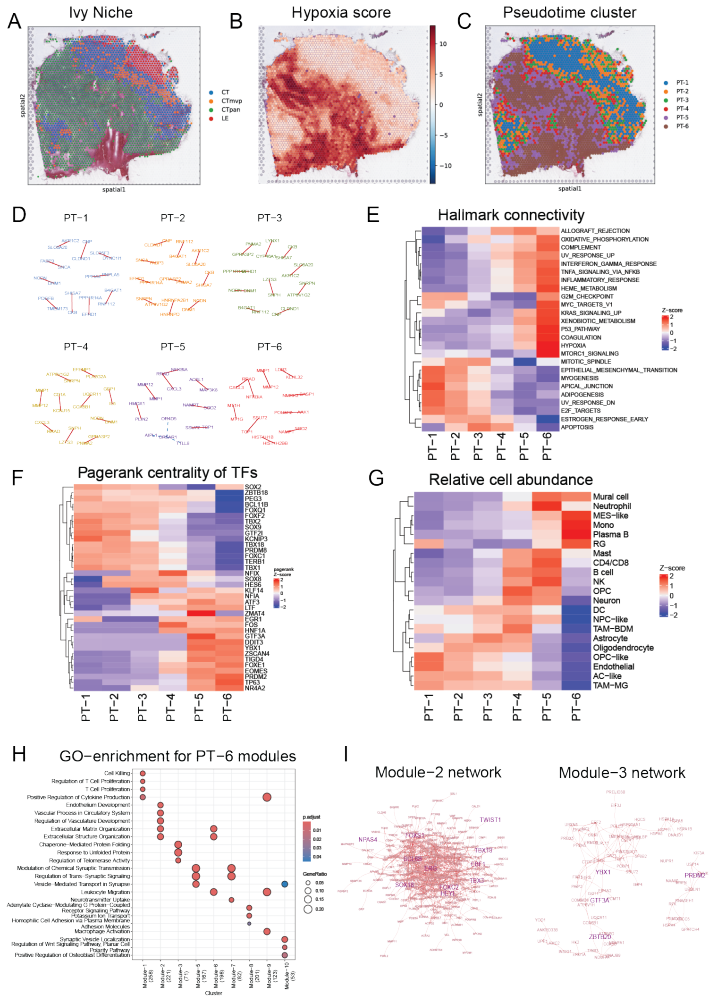
- [Figure 6] Figure 6 has a duplicated panel label: both panel (H) and panel (H) appear, and the key TFs panel is labeled (H) in one place and (I) in the text; the labels should be corrected.
- [Figure 7] The figure title contains the typo 'Supplemenatary'; it should be 'Supplementary'. Additionally, Figure 8D text refers to 'Fig8A–C' and 'Fig8D' with inconsistent spacing, which should be standardized.
Circularity Check
No significant circularity: the estimator is a new application of an independently published optimization solver, and the cited self-work is not used to smuggle in the target conclusion.
full rationale
The paper's derivation chain is not circular. The objective (ELEM-0) is a new joint ℓ0-penalized estimator whose data-fidelity target is the externally defined approximate backward mapping F~*(Σ̂_k)=[ST_ν(Σ̂_k)]^{-1} from Yang et al. [24]; this target is not defined in terms of the output Θ̂_k, so the estimator is not self-definitional. The coordinate-wise decomposition in Equation (3) follows algebraically from the objective, and the ℓ0 subproblem is then handed to Bhathena et al. [20] as an optimization subroutine. Although [20] and the earlier framework [32] have overlapping authorship, the cited result is an independent, peer-reviewed mathematical theorem about tree-structured MIQPs with stated assumptions that do not include the GRN target, so this is ordinary self-citation rather than load-bearing circularity. The eBIC selection in Section 2.2 and the Discussion's admission (Section 7) that 'a single global threshold was insufficient and required cluster-specific adjustments' are genuine statistical-tuning weaknesses, and the lack of an explicit PSD constraint on Θ̂_k is a correctness/validity concern for the GMRF interpretation; but none of these makes the estimate equal to its own input by construction. The synthetic benchmarks are evaluated against externally generated ground-truth networks, and F1 is a support-recovery metric that is not forced by the fitting procedure. No specific equation-level reduction from output back to input can be exhibited, so the appropriate circularity score is 0.
Assumptions & free parameters
free parameters (5)
- λ (sparsity penalty) =
selected by eBIC grid search over Λ
- γ (similarity penalty) =
selected by eBIC grid search over Γ
- ν_k (soft-thresholding parameter per population) =
selected by eBIC grid search; cluster-specific adjustments in GBM single-cell analysis
- α (ridge penalty in categorical extension) =
0.01
- eBIC tilt parameter =
not reported (described as fixed constant)
assumptions (5)
- domain assumption Each population's gene expression follows a zero-mean multivariate Gaussian distribution.
- domain assumption The population hypergraph H is a tree.
- standard math The approximate backward mapping F~*(Σ̂_k) = [ST_ν(Σ̂_k)]^{-1} approximates the true precision matrix.
- standard math The DP algorithm of Bhathena et al. [20] solves the element-wise MIQP subproblems exactly in O(K^2) for tree structures.
- domain assumption Extended BIC selects hyperparameters that generalize to unseen data.
invented entities (1)
-
Global (Θ_global_k) and local (Θ_local_k,c) precision components
Cite this review
Pith. "Pith review of Efficient inference of dynamic gene regulatory networks using discrete penalty." pith.science (2026). https://pith.science/paper/T7DYFGIY
@misc{pith2026250723106,
  author       = {Pith},
  title        = {Pith review of: Efficient inference of dynamic gene regulatory networks using discrete penalty},
  year         = {2026},
  howpublished = {\url{https://pith.science/paper/T7DYFGIY}},
  note         = {Machine review of arXiv:2507.23106}
}
abstract
Gene regulatory networks (GRNs) orchestrate cellular decision making and survival strategies. Inferring the structure of these networks from high-dimensional transcriptomics data is a central challenge in systems biology. Traditional approaches to GRN inference, such as the graphical lasso and its joint extensions, rely on $\ell_1$ penalty to induce sparsity but can bias network recovery and require extensive hyperparameter tuning. Here, we present a scalable framework for the joint inference of dynamic GRNs using a discrete $\ell_0$ penalty, enabling direct and unbiased control over network sparsity. Leveraging recent algorithmic advances, we efficiently solve the resulting mixed-integer optimization problem for populations structured as arbitrary tree hypergraphs, accommodating both continuous and categorical distinctions among biological samples. After validating our method on synthetic benchmarks, we apply it to single-cell and spatial transcriptomics data from glioblastoma (GBM) patient tumors. Our approach reconstructs gene networks across tumor clusters, maps network rewiring along hypoxia gradients, and reveals niche-specific differences between primary and recurrent tumors. By providing a robust and interpretable tool for GRN inference in complex tissues, our work facilitates high-resolution dissection of tumor heterogeneity and adaptation, with broad applicability to emerging large-scale transcriptomic datasets.
Figures


Figures from the paper (7 more)




Forward citations
Cited by 1 Pith paper
-
Coordinate Optimality Reformulation for Mixed-Integer Convex Programs with Indicators
A reformulation that injects coordinate-optimality conditions into indicator MIPs sharply cuts branch-and-bound work and yields polynomial tree bounds in several structured cases.
Reference graph
Works this paper leans on
-
[20]
A parametric approach for solving convex quadratic optimization with indicators over trees
Bhathena A, Fattahi S, G´ omez A, K¨ u¸ c¨ ukyavuz S. A parametric approach for solving convex quadratic optimization with indicators over trees. Mathematical Programming. 2025;212(1):1–31. doi:10.1007/s10107-025-02222-3
-
[24]
Elementary estimators for graphical models
Yang E, Lozano AC, Ravikumar PK. Elementary estimators for graphical models. Advances in neural information processing systems. 2014;27
2014
-
[1]
Network medicine: a network-based approach to human disease
Barab´ asi AL, Gulbahce N, Loscalzo J. Network medicine: a network-based approach to human disease. Nature reviews genetics. 2011;12(1):56–68
2011
-
[2]
Profiling cell identity and tissue architecture with single-cell and spatial transcriptomics
Gulati GS, D’Silva JP, Liu Y, Wang X, Newman AM. Profiling cell identity and tissue architecture with single-cell and spatial transcriptomics. Nature Reviews Molecular Cell Biology. 2025;26:11–31. doi:10.1038/s41580-024-00768-2
-
[3]
Advancements in single-cell RNA sequencing and spatial transcrip- tomics: transforming biomedical research
Desta M, Birhanu A. Advancements in single-cell RNA sequencing and spatial transcrip- tomics: transforming biomedical research. Acta Biochimica Polonica. 2025;72(1):1–16
2025
-
[4]
The dynamics and regulators of cell fate decisions are revealed by pseudotemporal ordering of single cells
Trapnell C, et al. The dynamics and regulators of cell fate decisions are revealed by pseudotemporal ordering of single cells. Nature biotechnology. 2014;32(4):381–386
2014
-
[5]
Network-based integration of multi-omics data for prioritizing cancer genes
Dimitrakopoulos C, et al. Network-based integration of multi-omics data for prioritizing cancer genes. Bioinformatics. 2018;34(14):2441–2448
2018
-
[6]
Topology-based metrics for finding the optimal sparsity in gene regulatory network inference
Lundqvist N, Garbulowski M, Hillerton T, Sonnhammer EL. Topology-based metrics for finding the optimal sparsity in gene regulatory network inference. Bioinformatics. 2025;41(5):btaf120
2025
Show all 103 references
-
[7]
Optimal Sparsity Selection Based on an Information Criterion for Gene Regulatory Network Inference
Zhu Y, et al. Optimal Sparsity Selection Based on an Information Criterion for Gene Regulatory Network Inference. Frontiers in Genetics. 2022;13:855770
2022
-
[8]
l {0} sparse inverse covariance estimation
Marjanovic G, Hero AO. l {0} sparse inverse covariance estimation. IEEE Transactions on Signal Processing. 2015;63(12):3218–3231
2015
-
[9]
Scalable inference of sparsely-changing Gaussian Markov random fields
Fattahi S, Gomez A. Scalable inference of sparsely-changing Gaussian Markov random fields. Advances in Neural Information Processing Systems. 2021;34:6529–6541
2021
-
[10]
Sparse inverse covariance estimation with the graphical lasso
Friedman J, Hastie T, Tibshirani R. Sparse inverse covariance estimation with the graphical lasso. Biostatistics. 2008;9(3):432–441. 25/31
2008
-
[11]
The joint graphical lasso for inverse covariance estimation across multiple classes
Danaher P, Wang P, Witten DM. The joint graphical lasso for inverse covariance estimation across multiple classes. Journal of the Royal Statistical Society: Series B (Statistical Methodology). 2014;76(2):373–397
2014
-
[12]
Network inference via the time-varying graphical lasso
Hallac D, Park Y, Boyd S, Leskovec J. Network inference via the time-varying graphical lasso. In: Proceedings of the 23rd ACM SIGKDD international conference on knowledge discovery and data mining; 2017. p. 205–213
2017
-
[13]
Breakdown in nonlinear regression
Stromberg AJ, Ruppert D. Breakdown in nonlinear regression. Journal of the American Statistical Association. 1992;87(420):991–997
1992
-
[14]
Robust Regression and Outlier Detection
Rousseeuw PJ, Leroy AM. Robust Regression and Outlier Detection. John Wiley & Sons; 2005
2005
-
[15]
Deleting outliers in robust regression with mixed integer program- ming
Zioutas G, Avramidis A. Deleting outliers in robust regression with mixed integer program- ming. Acta Mathematicae Applicatae Sinica. 2005;21:323–334
2005
-
[16]
Integer Programming for Learning Directed Acyclic Graphs from Non-identifiable Gaussian Models
Xu T, Taeb A, K¨ u¸ c¨ ukyavuz S, Shojaie A. Integer Programming for Learning Directed Acyclic Graphs from Non-identifiable Gaussian Models. arXiv preprint arXiv:240412592. 2024
2024
-
[17]
Consistent second-order conic integer programming for learning Bayesian networks
K¨ u¸ c¨ ukyavuz S, Shojaie A, Manzour H, Wei L, Wu HH. Consistent second-order conic integer programming for learning Bayesian networks. Journal of Machine Learning Research. 2023;24(322):1–38
2023
-
[18]
Integer Programming for Learning Directed Acyclic Graphs from Continuous Data
Manzour H, K¨ u¸ c¨ ukyavuz S, Wu HH, Shojaie A. Integer Programming for Learning Directed Acyclic Graphs from Continuous Data. INFORMS Journal on Optimization. 2021;3(1):46–73
2021
-
[19]
Scalable network estimation with L0 penalty
Kim J, Zhu H, Wang X, Do KA. Scalable network estimation with L0 penalty. Statistical Analysis and Data Mining: The ASA Data Science Journal. 2021;14(1):18–30
2021
-
[21]
Joint Structural Estimation of Multiple Graphical Models
Ma J, Michailidis G. Joint Structural Estimation of Multiple Graphical Models. Journal of Machine Learning Research. 2016;17(1):445–474
2016
-
[22]
A Fast and Scalable Joint Estimator for Learning Multiple Related Sparse Gaussian Graphical Models
Wang B, Gao J, Qi Y. A Fast and Scalable Joint Estimator for Learning Multiple Related Sparse Gaussian Graphical Models. In: Singh A, Zhu J, editors. Proceedings of the 20th International Conference on Artificial Intelligence and Statistics. vol. 54 of Proceedings of Machine L...
2017
-
[23]
A constrained ℓ 1 minimization approach to sparse precision matrix estimation
Cai T, Liu W, Luo X. A constrained ℓ 1 minimization approach to sparse precision matrix estimation. Journal of the American Statistical Association. 2011;106(494):594–607
2011
-
[25]
Joint estimation of multiple precision matrices with common structures
Lee W, Liu Y. Joint estimation of multiple precision matrices with common structures. The Journal of Machine Learning Research. 2015;16(1):1035–1062. 26/31
2015
-
[26]
Solution Path of Time-varying Markov Random Fields with Discrete Regularization
Fattahi S, G´ omez A. Solution Path of Time-varying Markov Random Fields with Discrete Regularization. arXiv preprint arXiv:230713750. 2023
2023
-
[27]
BEST SUBSET SELECTION VIA A MODERN OPTIMIZATION LENS
BERTSIMAS D, KING A, MAZUMDER R. BEST SUBSET SELECTION VIA A MODERN OPTIMIZATION LENS. The Annals of Statistics. 2016;44(2):813–852
2016
-
[28]
Certifiably optimal sparse regression via mixed- integer optimization
Bertsimas D, Pauphilet J, Van Parys B. Certifiably optimal sparse regression via mixed- integer optimization. Journal of Machine Learning Research. 2020;21(1):1–53
2020
-
[29]
On polynomial-time solvability of combinatorial Markov random fields
Han S, G´ omez A, Pang JS. On polynomial-time solvability of combinatorial Markov random fields. arXiv preprint arXiv:220913161. 2022
2022
-
[30]
Graph learning with tridiagonal Hessians: Efficient algorithms and applications
Liu Y, et al. Graph learning with tridiagonal Hessians: Efficient algorithms and applications. Annals of Statistics. 2023
2023
-
[31]
Real-time solution of quadratic optimization problems with banded matrices and indicator variables
Gomez A, Han S, Lozano L. Real-time solution of quadratic optimization problems with banded matrices and indicator variables. arXiv preprint arXiv:240503051. 2024
2024
-
[32]
Efficient inference of spatially-varying Gaussian Markov random fields with applications in gene regulatory networks
Ravikumar V, Xu T, Al-Holou WN, Fattahi S, Rao A. Efficient inference of spatially-varying Gaussian Markov random fields with applications in gene regulatory networks. IEEE/ACM transactions on computational biology and bioinformatics. 2023;20(5):2920–2932
2023
-
[33]
SCANPY: large-scale single-cell gene expression data analysis
Wolf F A, Angerer P, Theis FJ. SCANPY: large-scale single-cell gene expression data analysis. Genome biology. 2018;19:1–5
2018
-
[34]
Dictionary learning for integrative, multimodal and scalable single-cell analysis
Hao Y, Stuart T, Kowalski MH, Choudhary S, Hoffman P, Hartman A, et al. Dictionary learning for integrative, multimodal and scalable single-cell analysis. Nature biotechnology. 2024;42(2):293–304
2024
-
[35]
A comparison of single-cell trajectory inference methods
Saelens W, Cannoodt R, Todorov H, Saeys Y. A comparison of single-cell trajectory inference methods. Nature Biotechnology. 2019;37(5):547–554. doi:10.1038/s41587-019-0071-9
2019 doi
-
[36]
Graphical models, exponential families, and variational inference
Wainwright MJ, Jordan MI, et al. Graphical models, exponential families, and variational inference. Foundations and Trends in Machine Learning. 2008;1(1–2):1–305
2008
-
[37]
Computer solution of large sparse positive definite
George A, Liu JW. Computer solution of large sparse positive definite. Prentice Hall Professional Technical Reference; 1981
1981
-
[38]
Chordal graphs and semidefinite optimization
Vandenberghe L, Andersen MS. Chordal graphs and semidefinite optimization. Foundations and Trends in Optimization. 2015;1(4):241–433
2015
-
[39]
Model selection and estimation in the Gaussian graphical model
Yuan M, Lin Y. Model selection and estimation in the Gaussian graphical model. Biometrika. 2007;94(1):19–35
2007
-
[40]
Extended Bayesian information criteria for Gaussian graphical models
Foygel R, Drton M. Extended Bayesian information criteria for Gaussian graphical models. Advances in neural information processing systems. 2010;23
2010
-
[41]
A fast and scalable joint estimator for learning multiple related sparse Gaussian graphical models
Wang B, Gao J, Qi Y. A fast and scalable joint estimator for learning multiple related sparse Gaussian graphical models. In: Artificial Intelligence and Statistics. PMLR; 2017. p. 1168–1177
2017
-
[42]
GRNBoost2 and Arboreto: efficient and scalable inference of gene regulatory networks
Moerman T, Aibar Santos S, Bravo Gonz´ alez-Blas C, Simm J, Moreau Y, Aerts J, et al. GRNBoost2 and Arboreto: efficient and scalable inference of gene regulatory networks. Bioinformatics. 2019;35(12):2159–2161. 27/31
2019
-
[43]
Statistical mechanics of complex networks
Albert R, Barab´ asi AL. Statistical mechanics of complex networks. Reviews of modern physics. 2002;74(1):47
2002
-
[44]
Glioblastoma heterogeneity at single cell resolution
Eisenbarth D, Wang YA. Glioblastoma heterogeneity at single cell resolution. Oncogene. 2023;42(27):2155–2165
2023
-
[45]
An integrative model of cellular states, plasticity, and genetics for glioblastoma
Neftel C, Laffy J, Filbin MG, Hara T, Shore ME, Rahme GJ, et al. An integrative model of cellular states, plasticity, and genetics for glioblastoma. Cell. 2019;178(4):835–849
2019
-
[46]
Pathway-based classi- fication of glioblastoma uncovers a mitochondrial subtype with therapeutic vulnerabilities
Garofano L, Migliozzi S, Oh YT, D’Angelo F, Najac RD, Ko A, et al. Pathway-based classi- fication of glioblastoma uncovers a mitochondrial subtype with therapeutic vulnerabilities. Nature Cancer. 2021;2(2):141–156
2021
-
[47]
Cancer cell heterogeneity and plasticity: A paradigm shift in glioblastoma
Yabo YA, Niclou SP, Golebiewska A. Cancer cell heterogeneity and plasticity: A paradigm shift in glioblastoma. Neuro-oncology. 2022;24(5):669–682
2022
-
[48]
Collagen in the central nervous system: contributions to neurodegeneration and promise as a therapeutic target
Wareham LK, Baratta RO, Del Buono BJ, Schlumpf E, Calkins DJ. Collagen in the central nervous system: contributions to neurodegeneration and promise as a therapeutic target. Molecular Neurodegeneration. 2024;19(1):11
2024
-
[49]
Phosphorylation, dephosphorylation, and multiprotein assemblies regulate dynamic behavior of neuronal cytoskeleton: a mini-review
Kurochkina N, Bhaskar M, Yadav SP, Pant HC. Phosphorylation, dephosphorylation, and multiprotein assemblies regulate dynamic behavior of neuronal cytoskeleton: a mini-review. Frontiers in Molecular Neuroscience. 2018;11:373
2018
-
[50]
Phenotypic and functional consequences of haploinsufficiency of genes from exocyst and retinoic acid pathway due to a recurrent microdeletion of 2p13
Wen J, Lopes F, Soares G, Farrell SA, Nelson C, Qiao Y, et al. Phenotypic and functional consequences of haploinsufficiency of genes from exocyst and retinoic acid pathway due to a recurrent microdeletion of 2p13. 2. Orphanet journal of rare diseases. 2013;8:1–12
2013
-
[51]
Exploring the pathological mechanisms underlying Cohen syndrome
Vacca F, Yalcin B, Ansar M. Exploring the pathological mechanisms underlying Cohen syndrome. Frontiers in neuroscience. 2024;18:1431400
2024
-
[52]
Single-cell transcriptomics unveils gene regulatory network plasticity
Iacono G, Massoni-Badosa R, Heyn H. Single-cell transcriptomics unveils gene regulatory network plasticity. Genome biology. 2019;20:1–20
2019
-
[53]
Transcription factor BACH1 in cancer: roles, mechanisms, and prospects for targeted therapy
Hu D, Zhang Z, Luo X, Li S, Jiang J, Zhang J, et al. Transcription factor BACH1 in cancer: roles, mechanisms, and prospects for targeted therapy. Biomarker Research. 2024;12(1):21
2024
-
[54]
Single-cell multi-omics sequencing uncovers region-specific plasticity of glioblastoma for complementary therapeutic targeting
Wang X, Sun Q, Liu T, Lu H, Lin X, Wang W, et al. Single-cell multi-omics sequencing uncovers region-specific plasticity of glioblastoma for complementary therapeutic targeting. Science Advances. 2024;10(47):eadn4306
2024
-
[55]
TopicNet: a framework for measuring transcriptional regulatory network change
Lou S, Li T, Kong X, Zhang J, Liu J, Lee D, et al. TopicNet: a framework for measuring transcriptional regulatory network change. Bioinformatics. 2020;36(Supplement 1):i474–i481
2020
-
[56]
Inference of cell type-specific gene regulatory networks on cell lineages from single cell omic datasets
Zhang S, Pyne S, Pietrzak S, Halberg S, McCalla SG, Siahpirani AF, et al. Inference of cell type-specific gene regulatory networks on cell lineages from single cell omic datasets. Nature Communications. 2023;14(1):3064
2023
-
[57]
topicmodels: An R package for fitting topic models
Gr¨ un B, Hornik K. topicmodels: An R package for fitting topic models. Journal of statistical software. 2011;40:1–30
2011
-
[58]
Package ‘ldatuning’; 2016
Nikita M, Nikita MM. Package ‘ldatuning’; 2016. 28/31
2016
-
[59]
ZHX2 Interacts with Ephrin-B and regulates neural progenitor maintenance in the developing cerebral cortex
Wu C, Qiu R, Wang J, Zhang H, Murai K, Lu Q. ZHX2 Interacts with Ephrin-B and regulates neural progenitor maintenance in the developing cerebral cortex. Journal of Neuroscience. 2009;29(23):7404–7412
2009
-
[60]
Transcription factor AP2 epsilon (Tfap2e) regulates neural crest specification in Xenopus
Hong CS, Devotta A, Lee YH, Park BY, Saint-Jeannet JP. Transcription factor AP2 epsilon (Tfap2e) regulates neural crest specification in Xenopus. Developmental neurobiology. 2014;74(9):894–906
2014
-
[61]
The expanding roles of Nr6a1 in development and evolution
Li J, Mascarinas P, McGlinn E. The expanding roles of Nr6a1 in development and evolution. Frontiers in Cell and Developmental Biology. 2024;12:1357968
2024
-
[62]
Current understanding of hypoxia in glioblastoma multiforme and its response to immunotherapy
Park JH, Lee HK. Current understanding of hypoxia in glioblastoma multiforme and its response to immunotherapy. Cancers. 2022;14(5):1176
2022
-
[63]
Integrative spatial analysis reveals a multi-layered organization of glioblastoma
Greenwald AC, Darnell NG, Hoefflin R, Simkin D, Mount CW, Castro LNG, et al. Integrative spatial analysis reveals a multi-layered organization of glioblastoma. Cell. 2024;187(10):2485– 2501
2024
-
[64]
The molecular signatures database hallmark gene set collection
Liberzon A, Birger C, Thorvaldsd´ ottir H, Ghandi M, Mesirov JP, Tamayo P. The molecular signatures database hallmark gene set collection. Cell systems. 2015;1(6):417–425
2015
-
[65]
Pathway centric analysis for single-cell RNA-seq and spatial transcriptomics data with GSDensity
Liang Q, Huang Y, He S, Chen K. Pathway centric analysis for single-cell RNA-seq and spatial transcriptomics data with GSDensity. Nature communications. 2023;14(1):8416
2023
-
[66]
Epithelial-mesenchymal transition in glioblastoma progression
Iwadate Y. Epithelial-mesenchymal transition in glioblastoma progression. Oncology letters. 2016;11(3):1615–1620
2016
-
[67]
Adapt to persist: Glioblas- toma microenvironment and epigenetic regulation on cell plasticity
Uribe D, Niechi I, Rackov G, Erices JI, San Mart ´ ın R, Quezada C. Adapt to persist: Glioblas- toma microenvironment and epigenetic regulation on cell plasticity. Biology. 2022;11(2):313
2022
-
[68]
The role of hypoxia in glioblastoma invasion
Monteiro AR, Hill R, Pilkington GJ, Madureira PA. The role of hypoxia in glioblastoma invasion. Cells. 2017;6(4):45
2017
-
[69]
Cancer genetics and genomics of human FOX family genes
Katoh M, Igarashi M, Fukuda H, Nakagama H, Katoh M. Cancer genetics and genomics of human FOX family genes. Cancer letters. 2013;328(2):198–206
2013
-
[70]
Har- monized single-cell landscape, intercellular crosstalk and tumor architecture of glioblastoma
Ruiz-Moreno C, Salas SM, Samuelsson E, Brandner S, Kranendonk ME, Nilsson M, et al. Har- monized single-cell landscape, intercellular crosstalk and tumor architecture of glioblastoma. BioRxiv. 2022; p. 2022–08
2022
-
[71]
Hypoxia coordinates the spatial landscape of myeloid cells within glioblastoma to affect survival
Haley MJ, Bere L, Minshull J, Georgaka S, Garcia-Martin N, Howell G, et al. Hypoxia coordinates the spatial landscape of myeloid cells within glioblastoma to affect survival. Science Advances. 2024;10(20):eadj3301
2024
-
[72]
Multiomics analyses reveal DARS1-AS1/YBX1–controlled posttranscriptional circuits promoting glioblastoma tumori- genesis/radioresistance
Zheng C, Wei Y, Zhang Q, Sun M, Wang Y, Hou J, et al. Multiomics analyses reveal DARS1-AS1/YBX1–controlled posttranscriptional circuits promoting glioblastoma tumori- genesis/radioresistance. Science advances. 2023;9(31):eadf3984
2023
-
[73]
Spatially resolved multi-omics deciphers bidirectional tumor-host interdependence in glioblastoma
Ravi VM, Will P, Kueckelhaus J, Sun N, Joseph K, Sali´ e H, et al. Spatially resolved multi-omics deciphers bidirectional tumor-host interdependence in glioblastoma. Cancer cell. 2022;40(6):639–655
2022
-
[74]
Chromatin remodeler HELLS maintains glioma stem cells through E2F3 and MYC
Zhang G, Dong Z, Prager BC, Kim LJ, Wu Q, Gimple RC, et al. Chromatin remodeler HELLS maintains glioma stem cells through E2F3 and MYC. JCI insight. 2019;4(7):e126140. 29/31
2019
-
[75]
Glioblastoma stem-like cells, metabolic strategy to kill a challenging target
Garnier D, Renoult O, Alves-Guerra MC, Paris F, Pecqueur C. Glioblastoma stem-like cells, metabolic strategy to kill a challenging target. Frontiers in oncology. 2019;9:118
2019
-
[76]
Tumor cell plasticity, heterogene- ity, and resistance in crucial microenvironmental niches in glioma
Jung E, Osswald M, Ratliff M, Dogan H, Xie R, Weil S, et al. Tumor cell plasticity, heterogene- ity, and resistance in crucial microenvironmental niches in glioma. Nature communications. 2021;12(1):1014
2021
-
[77]
Mechanism of notch signaling pathway in malignant progression of glioblastoma and targeted therapy
Wang S, Gu S, Chen J, Yuan Z, Liang P, Cui H. Mechanism of notch signaling pathway in malignant progression of glioblastoma and targeted therapy. Biomolecules. 2024;14(4):480
2024
-
[78]
Identification of key genes involved in the recurrence of glioblastoma multiforme using weighted gene co-expression network analysis and differential expression analysis
Ren P, Wang J, Li L, Lin X, Wu G, Chen J, et al. Identification of key genes involved in the recurrence of glioblastoma multiforme using weighted gene co-expression network analysis and differential expression analysis. Bioengineered. 2021;12(1):3188–3200
2021
-
[79]
Transcription factor EHF drives cholangio- carcinoma development through transcriptional activation of glioma-associated oncogene homolog 1 and chemokine CCL2
Luo Y, Li Z, Zhu H, Lu J, Lei Z, Su C, et al. Transcription factor EHF drives cholangio- carcinoma development through transcriptional activation of glioma-associated oncogene homolog 1 and chemokine CCL2. MedComm. 2024;5(5):e535
2024
-
[80]
Vascular regulation of glioma stem-like cells: a balancing act
Brooks LJ, Parrinello S. Vascular regulation of glioma stem-like cells: a balancing act. Current Opinion in Neurobiology. 2017;47:8–15
2017
-
[81]
Tumor cell plasticity, heterogeneity, and resistance in crucial microenvironments of glioblastoma
Wang L, Babikir H, M¨ uller S, Yagnik G, Shamardani K, Catalan F, et al. Tumor cell plasticity, heterogeneity, and resistance in crucial microenvironments of glioblastoma. Nature Communications. 2021;12:5376. doi:10.1038/s41467-021-21117-3
2021 doi
-
[82]
Computational modelling of perivascular- niche dynamics for the optimization of glioblastoma treatment schedules
Ghaffari L, Mumenthaler SM, Sadeghi H, et al. Computational modelling of perivascular- niche dynamics for the optimization of glioblastoma treatment schedules. Nature Biomedical Engineering. 2021;5:964–978. doi:10.1038/s41551-021-00756-2
2021 doi
-
[83]
Joint inference of gene regulatory networks from multiple single-cell RNA-seq datasets
Wang X, et al. Joint inference of gene regulatory networks from multiple single-cell RNA-seq datasets. Scientific Reports. 2016;6:20533. doi:10.1038/srep20533
2016 doi
-
[84]
Adaptive penalization improves gene regulatory network inference from single-cell RNA-seq data
Zhang Y, et al. Adaptive penalization improves gene regulatory network inference from single-cell RNA-seq data. Nature Communications. 2021;12:8687. doi:10.1038/s41467-021- 28970-9
2021 doi
-
[85]
Challenges and advances in gene regulatory network infer- ence from single-cell data
Smith J, Doe A. Challenges and advances in gene regulatory network infer- ence from single-cell data. Computational Biology and Chemistry. 2022;100:107682. doi:10.1016/j.compbiolchem.2022.107682
2022
-
[86]
Single-cell multi-omics reveals regulatory programs in glioblastoma
Lee S, et al. Single-cell multi-omics reveals regulatory programs in glioblastoma. Science Advances. 2024;10(5):eabc1234. doi:10.1126/sciadv.abc1234
2024 doi
-
[87]
Deep learning for gene regulatory network inference from single-cell data
Wang X, et al. Deep learning for gene regulatory network inference from single-cell data. Nature Machine Intelligence. 2022;4:1234–1245. doi:10.1038/s42256-022-00567-8
2022 doi
-
[88]
BACH1 as a potential target for immunotherapy in glioblastomas
Li Y, et al. BACH1 as a potential target for immunotherapy in glioblastomas. Frontiers in Oncology. 2022;12:825252. doi:10.3389/fonc.2022.825252
2022
-
[90]
BACH1 promotes temozolomide resistance in glioblastoma
Zhang X, et al. BACH1 promotes temozolomide resistance in glioblastoma. Scientific Reports. 2016;6:39743. doi:10.1038/srep39743
2016 doi
-
[91]
Heterogeneity of glioblastoma stem cells in the context of the tumor microenvironment
Pombo Antunes AR, et al. Heterogeneity of glioblastoma stem cells in the context of the tumor microenvironment. Frontiers in Oncology. 2022;12:1022716. doi:10.3389/fonc.2022.1022716
2022
-
[92]
Glioma Stem Cell Niches in Human Glioblastoma Are Periarteriolar
Hira VVV, et al. Glioma Stem Cell Niches in Human Glioblastoma Are Periarteriolar. Cancers. 2018;10(4):96. doi:10.3390/cancers10040096
2018 doi
-
[93]
Glioblastoma: Microenvironment and Niche Concept
Pacioni S, et al. Glioblastoma: Microenvironment and Niche Concept. Frontiers in Immunol- ogy. 2018;9:2496. doi:10.3389/fimmu.2018.02496
2018
-
[94]
Targeting the Glioblastoma Perivascular Stem Cell Niche
Calabrese C, Poppleton H, et al. Targeting the Glioblastoma Perivascular Stem Cell Niche. Cancer Cell. 2007;11(1):69–82. doi:10.1016/j.ccr.2006.11.020
2007 doi
-
[95]
Glioblastoma: Defining Tumor Niches
Charles N, Holland EC. Glioblastoma: Defining Tumor Niches. Cancer Journal. 2015;21(4):254–261. doi:10.1097/PPO.0000000000000131
2015 doi
-
[96]
Tumor microenvironment in glioblastoma: Current and emerging concepts
Yue Q, et al. Tumor microenvironment in glioblastoma: Current and emerging concepts. Frontiers in Oncology. 2023;13:10034917. doi:10.3389/fonc.2023.10034917
2023
-
[97]
Covariate-adjusted construction of gene regulatory networks using generalized linear models
Chatrabgoun O, Ganjtabesh M, Sadeghi M. Covariate-adjusted construction of gene regulatory networks using generalized linear models. PLOS ONE. 2025;20(1):e0309556. doi:10.1371/journal.pone.0309556
2025 doi
-
[98]
Data integration for inferring context-specific gene regulatory networks
Baur B, Shin J, Zhang S, Roy S. Data integration for inferring context-specific gene regulatory networks. Current opinion in systems biology. 2020;23:38–46
2020
-
[99]
Leveraging chromatin accessibility for transcriptional regulatory network inference in T Helper 17 Cells
Miraldi ER, Pokrovskii M, Watters A, Castro DM, De Veaux N, Hall JA, et al. Leveraging chromatin accessibility for transcriptional regulatory network inference in T Helper 17 Cells. Genome Research. 2019;29(3):449–463. doi:10.1101/gr.238253.118
2019 doi
-
[100]
Dissecting cell identity via network-based in silico perturbation of single-cell transcriptomes
Kamimoto K, et al. Dissecting cell identity via network-based in silico perturbation of single-cell transcriptomes. Nature Communications. 2023;14:12345. doi:10.1038/s41467-023- 36137-1
2023 doi
-
[101]
SCENIC+: single-cell multiomic inference of enhancers and gene regulatory networks
Bravo Gonz´ alez-Blas C, De Winter S, Hulselmans G, Hecker N, Matetovici I, Christiaens V, et al. SCENIC+: single-cell multiomic inference of enhancers and gene regulatory networks. Nature methods. 2023;20(9):1355–1367
2023
-
[102]
Harnessing the power of single-cell multi-omic data for gene regulatory network inference
Kim D, Tran A, Kim HJ, Lin Y, Yang JYH, Yang P. Harnessing the power of single-cell multi-omic data for gene regulatory network inference. npj Systems Biology and Applications. 2023;9(1):51. doi:10.1038/s41540-023-00312-6
2023 doi
-
[103]
Predicting transcriptional outcomes of novel multigene perturbations with GEARS
Roohani Y, Huang K, Leskovec J. Predicting transcriptional outcomes of novel multigene perturbations with GEARS. Nature Biotechnology. 2024;42(6):927–935. doi:10.1038/s41587- 023-01905-6
2024 doi
-
[104]
A mini-review on perturbation modelling across single-cell omic modalities
Gavriilidis GI, Vasileiou V, Orfanou A, Ishaque N, Psomopoulos F. A mini-review on perturbation modelling across single-cell omic modalities. Computational and Structural Biotechnology Journal. 2024;23:1886–1896. doi:10.1016/j.csbj.2024.04.058. 31/31
2024 doi
Reviewed August 6, 2026 · model on record in the stance chip above.
Discussion (0). Sign in to comment.