High-mass new scalars at the LHC, with H in the final state
Pith reviewed 2026-07-02 00:34 UTC · model grok-4.3
The pith
Searches at the LHC limit the existence of high-mass new scalars that include a Higgs boson in their decay chains.
A machine-rendered reading of the paper's core claim, the machinery that carries it, and where it could break.
Core claim
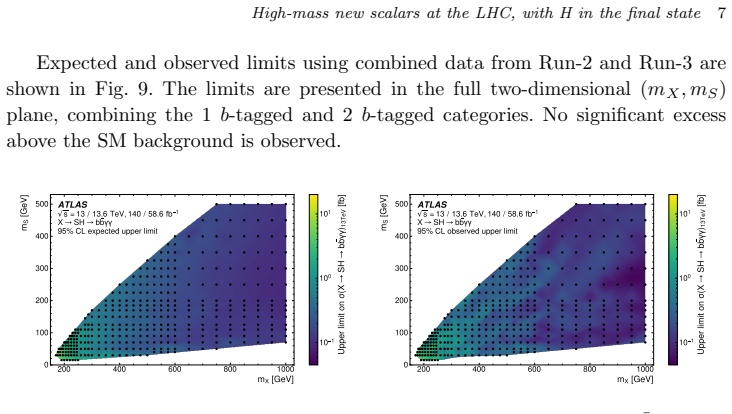
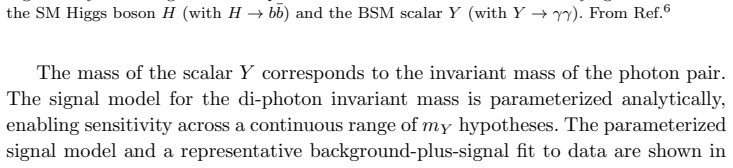
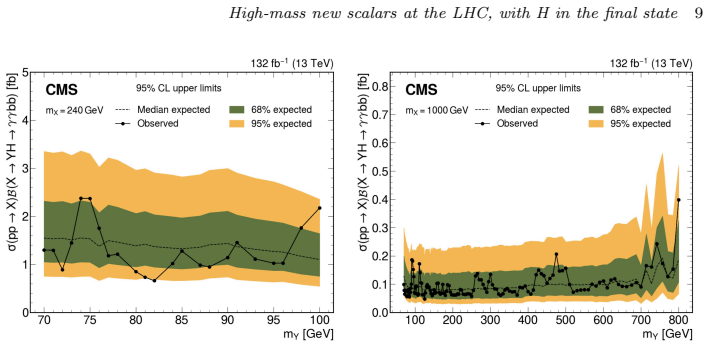
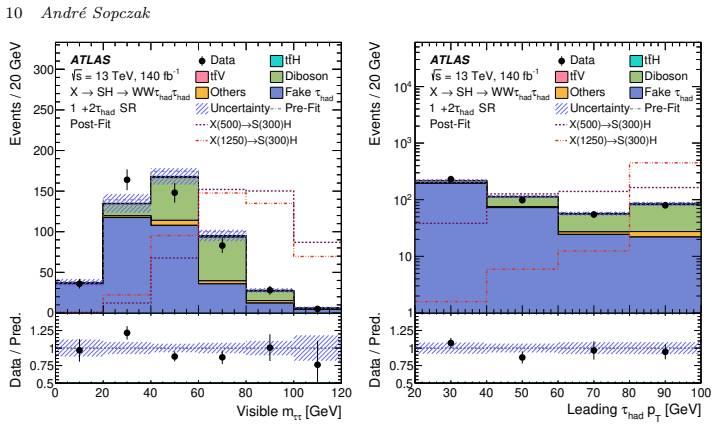
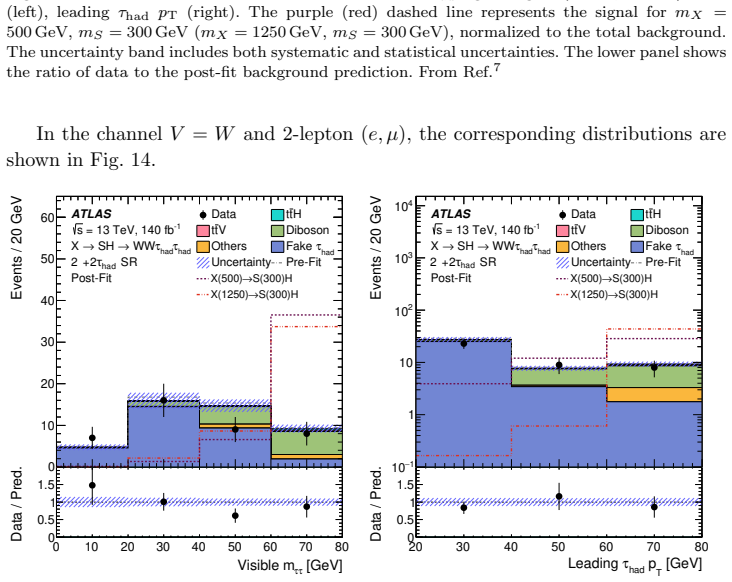
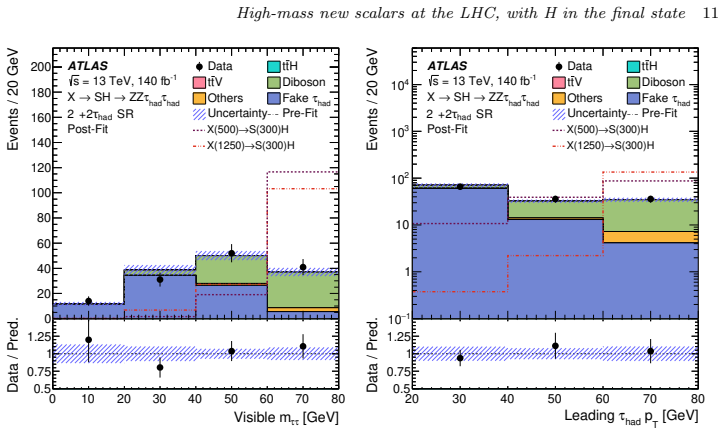
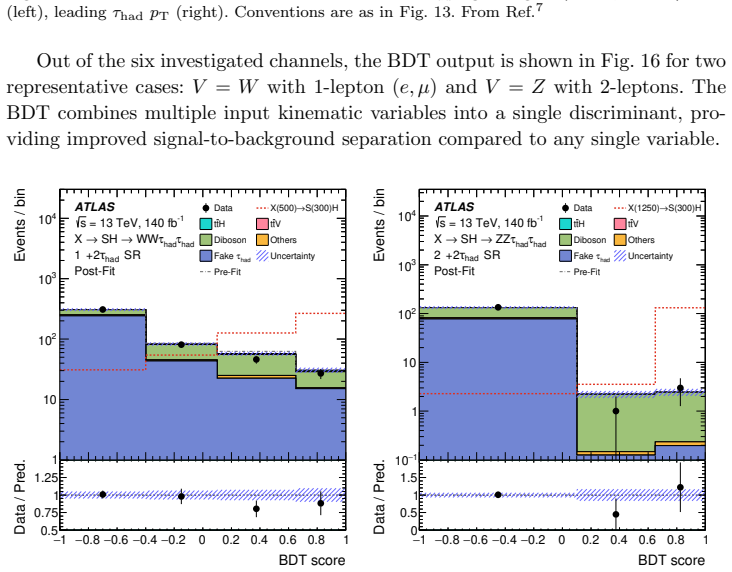
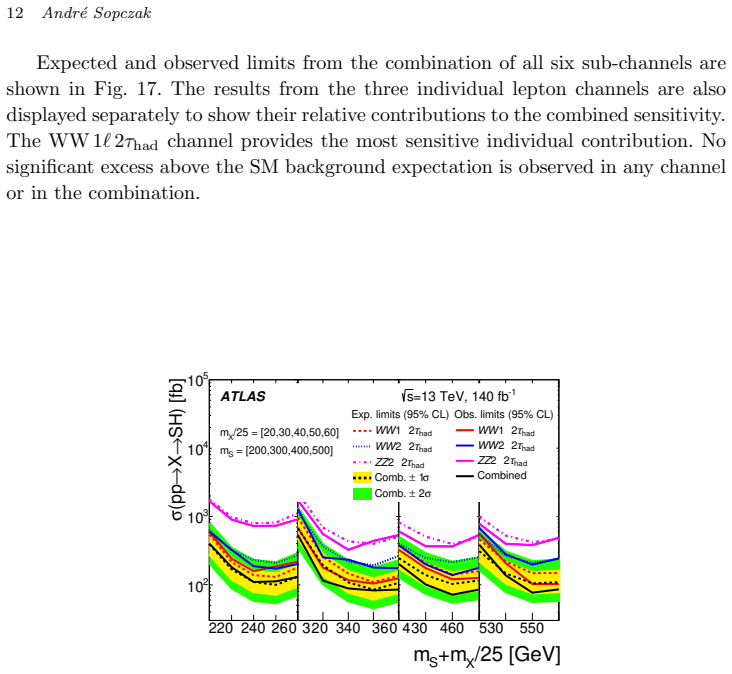
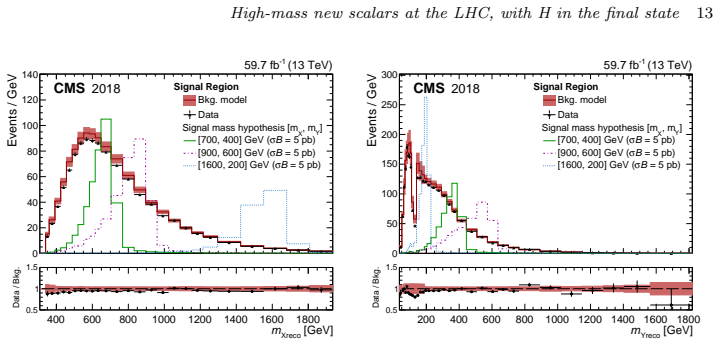
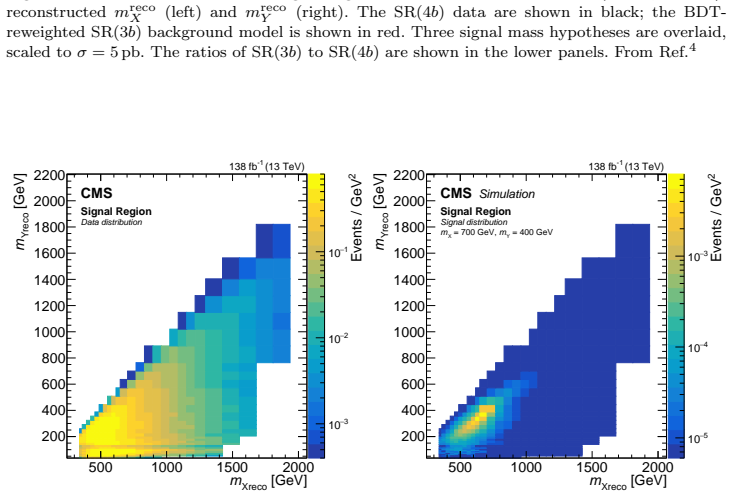
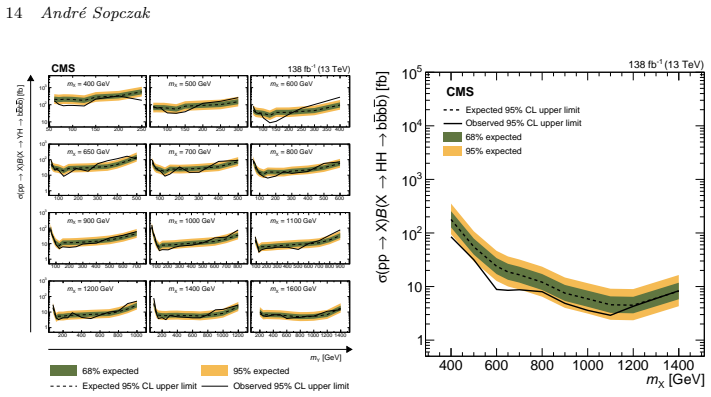
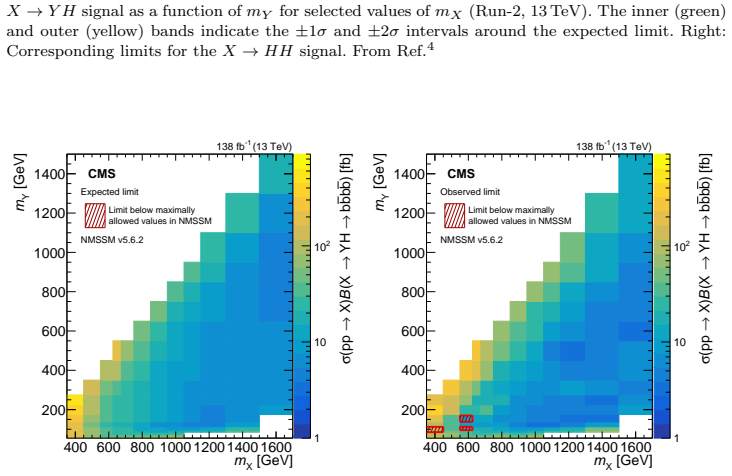
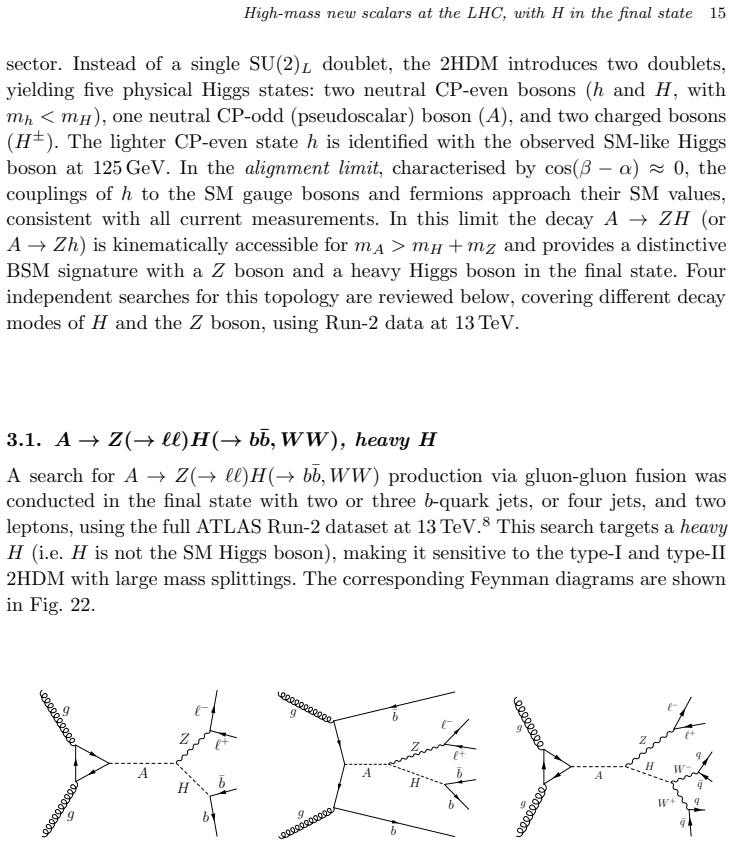
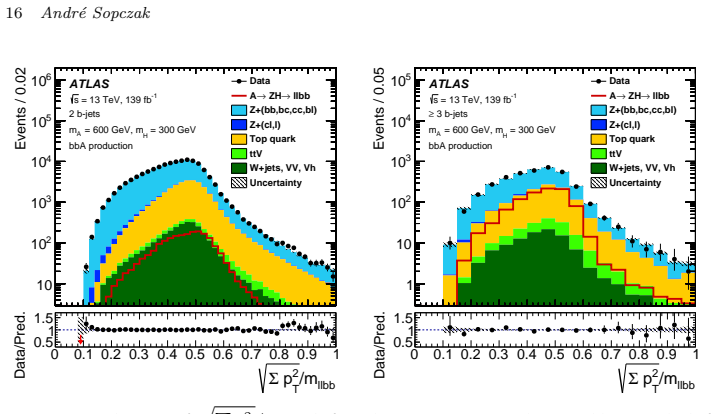
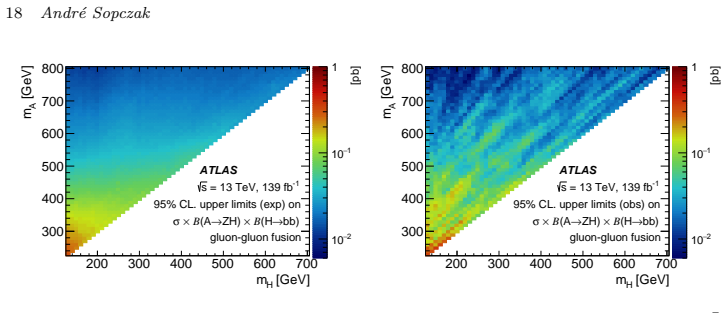
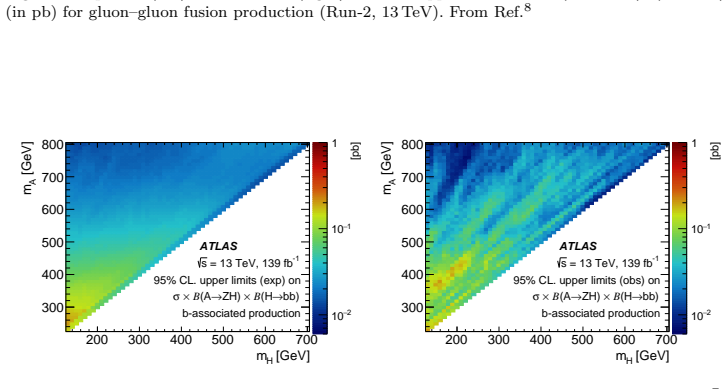
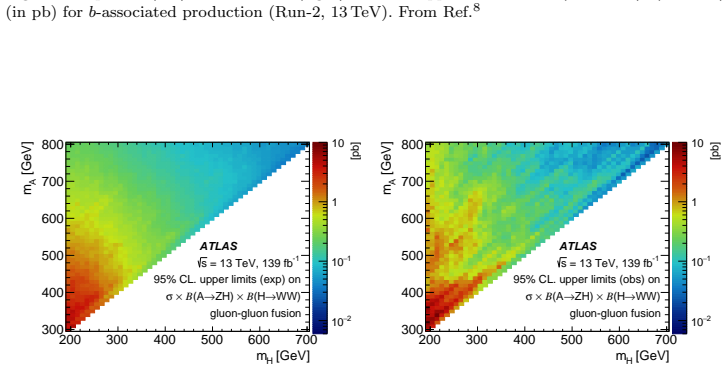
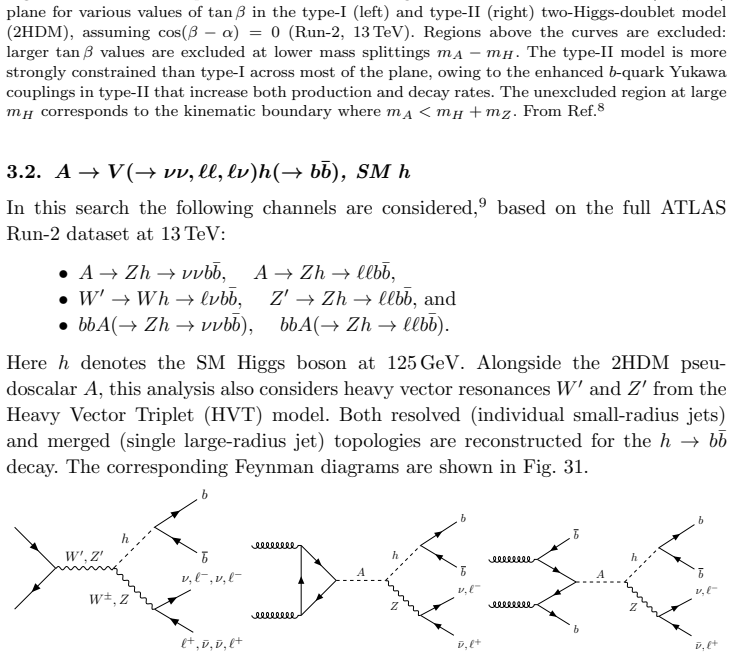
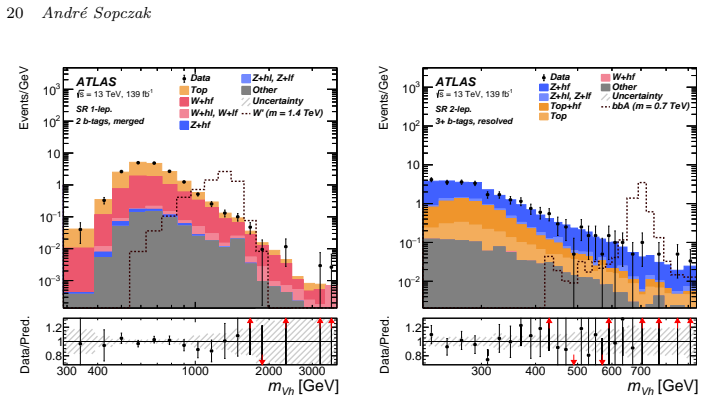
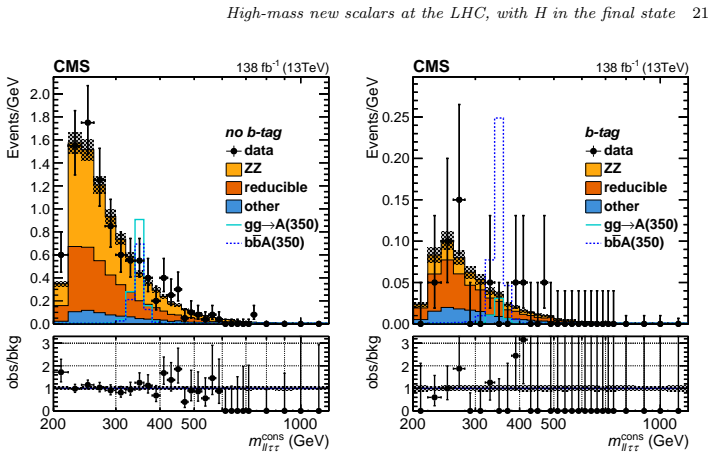
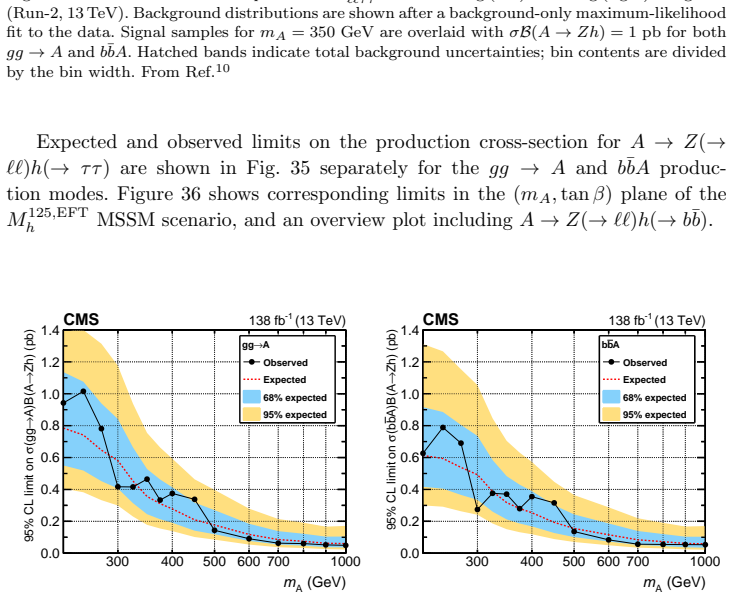
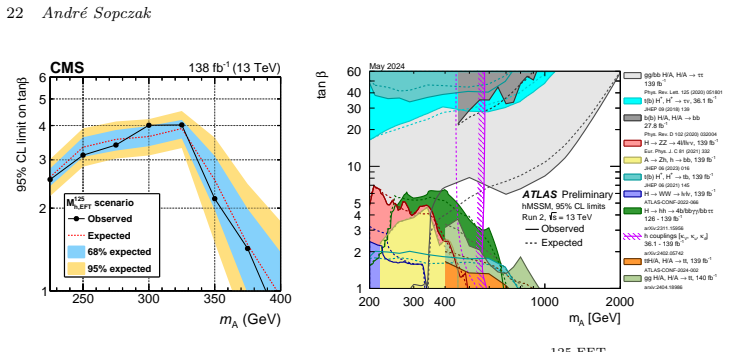
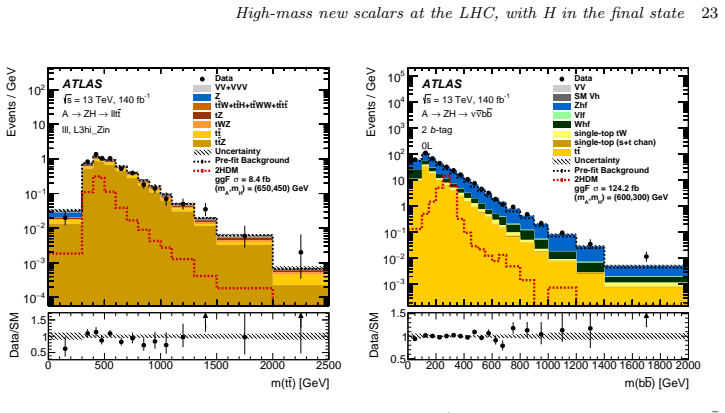
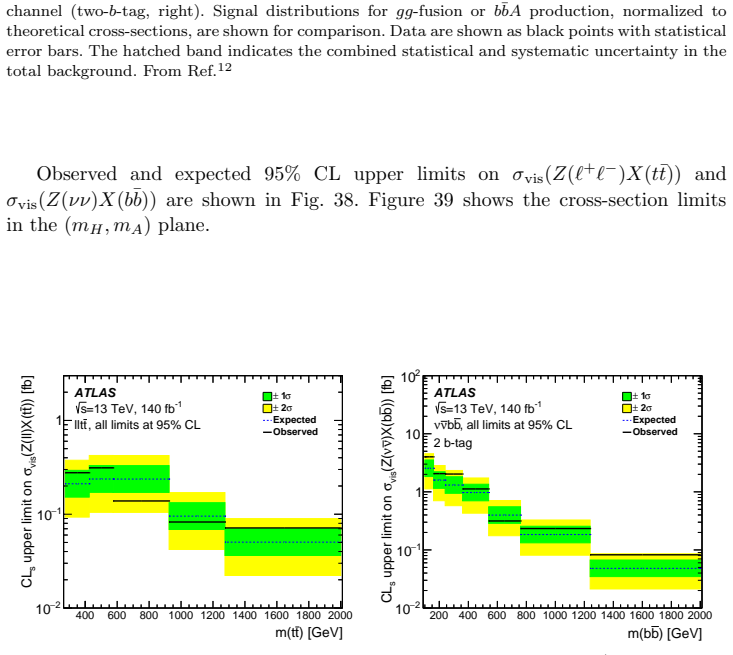
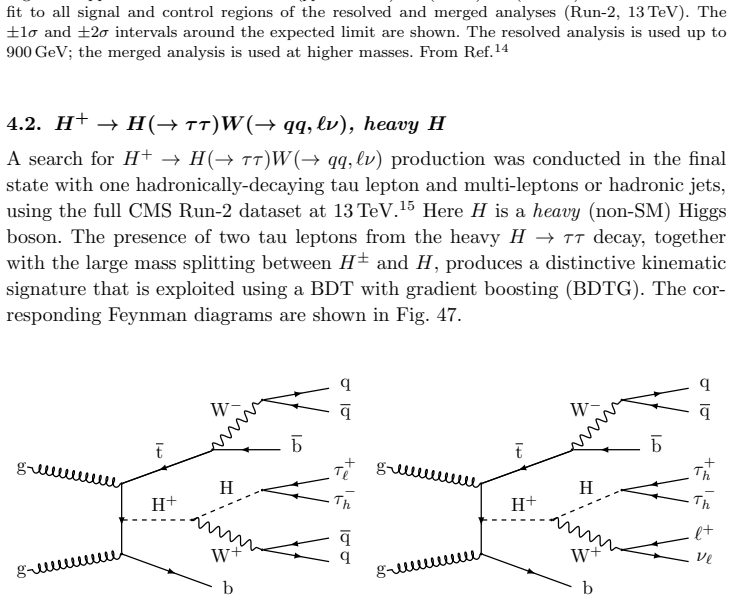
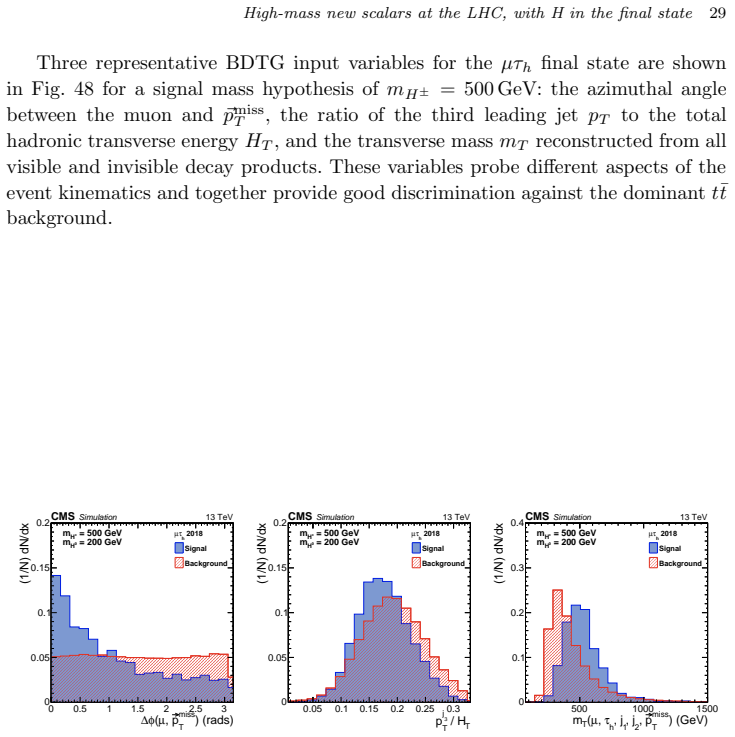
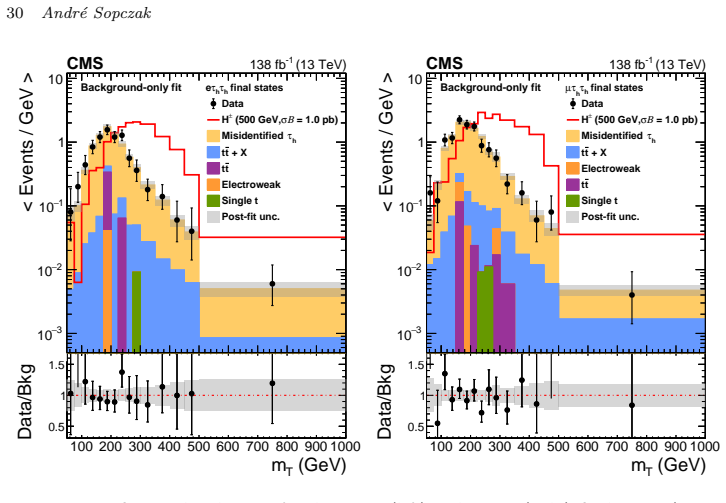
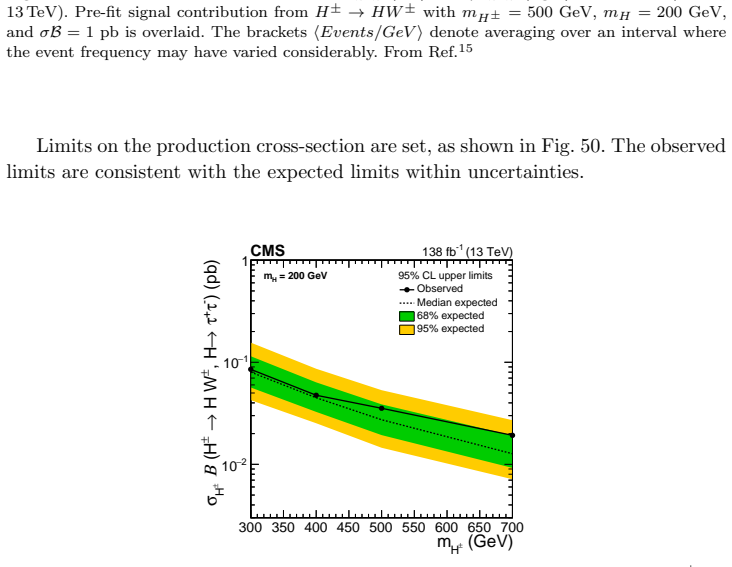
The paper compiles results from ATLAS and CMS on searches covering resonant production of a heavy scalar X decaying into a Higgs boson and a lighter scalar S, heavy neutral Higgs boson decaying into another neutral Higgs boson and a Z boson, and heavy charged Higgs boson production with subsequent decay into another neutral Higgs boson and a W boson, based on the complete LHC Run-2 dataset and partial Run-3 dataset.
What carries the argument
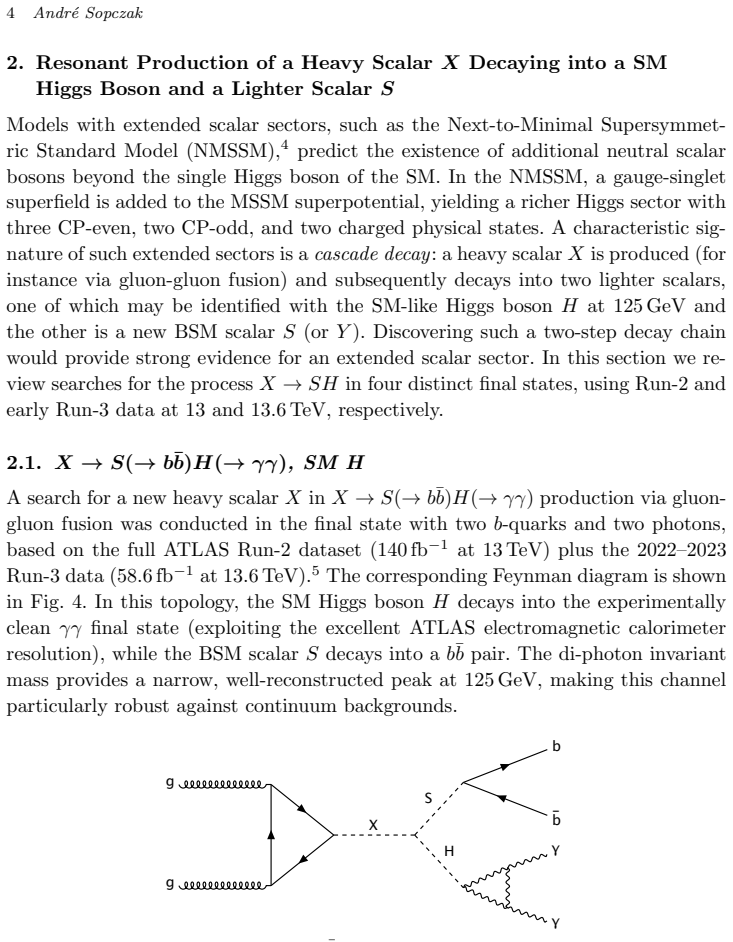
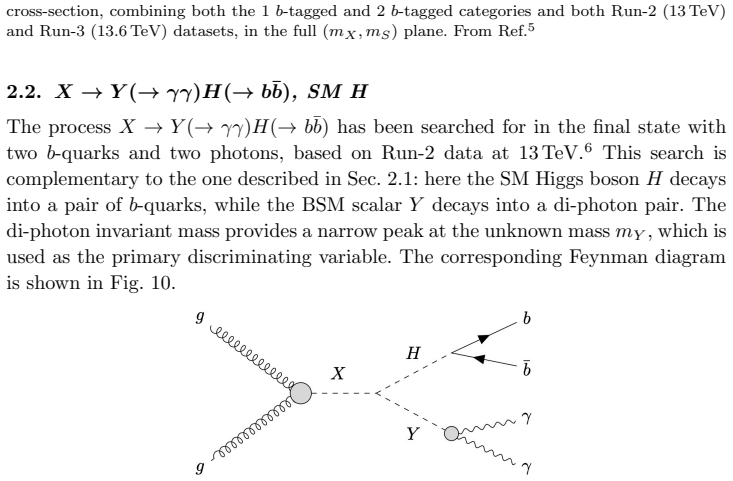
The three decay topologies (X to H plus S, neutral H to H plus Z, charged H to H plus W) that select the final states for the searches.
If this is right
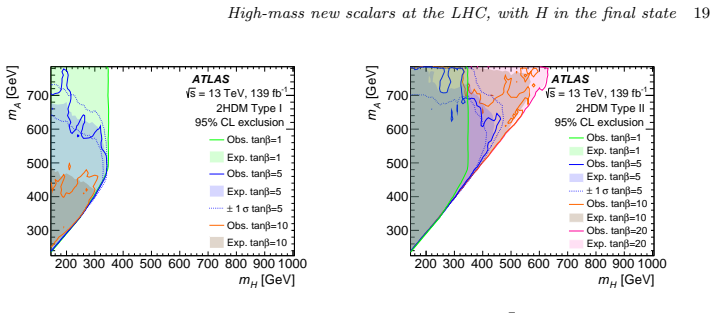
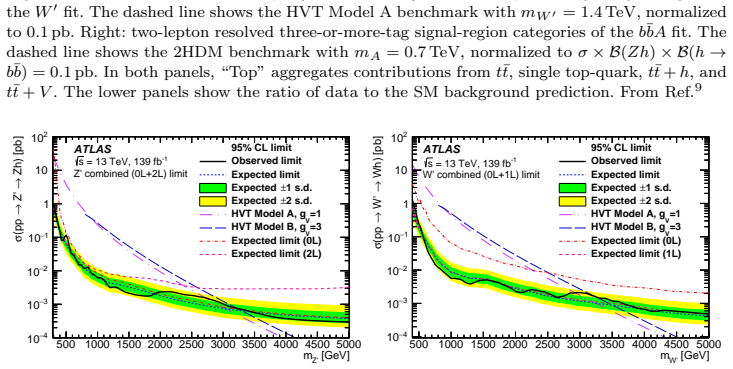
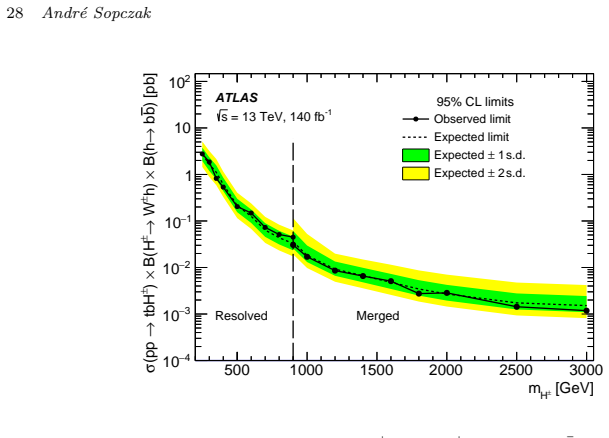
- No significant signals are reported, producing upper limits on the production rates of the new scalars as a function of mass.
- The limits apply across a range of masses from several hundred GeV up to a few TeV depending on the decay mode.
- These searches add to the set of constraints on models that predict extra Higgs-like particles.
Where Pith is reading between the lines
- The absence of signals constrains parameter space in models with multiple Higgs doublets.
- Additional Run-3 and high-luminosity LHC data could extend the excluded mass ranges or probe smaller production rates.
Load-bearing premise
The cited ATLAS and CMS experimental results are accurately and completely summarized without omission of selection criteria or uncertainties that would change the limits.
What would settle it
An observed excess of events above expected background in one of the final states at a mass above the known Higgs boson mass, with statistical significance that cannot be explained by systematic uncertainties.
Figures
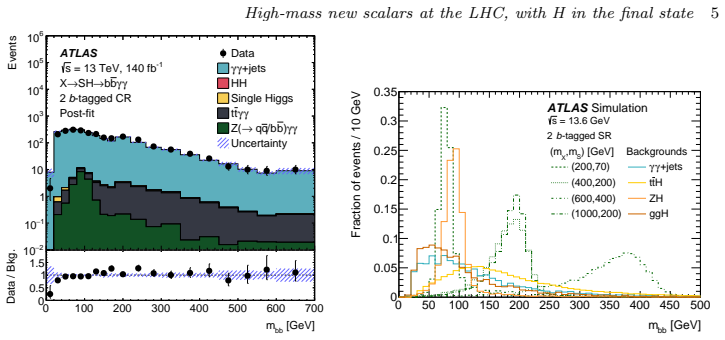
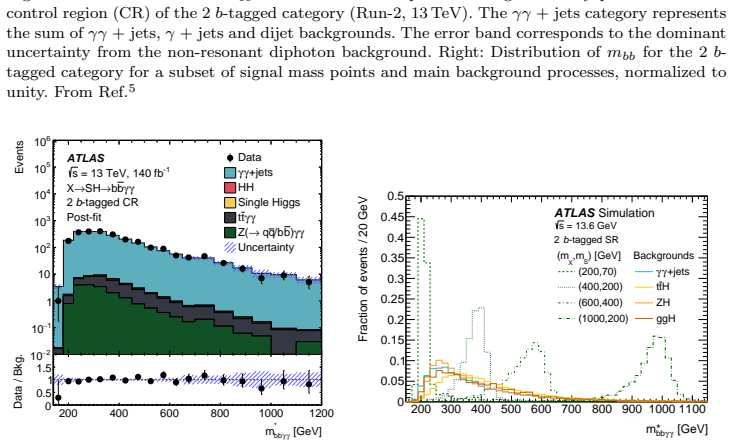
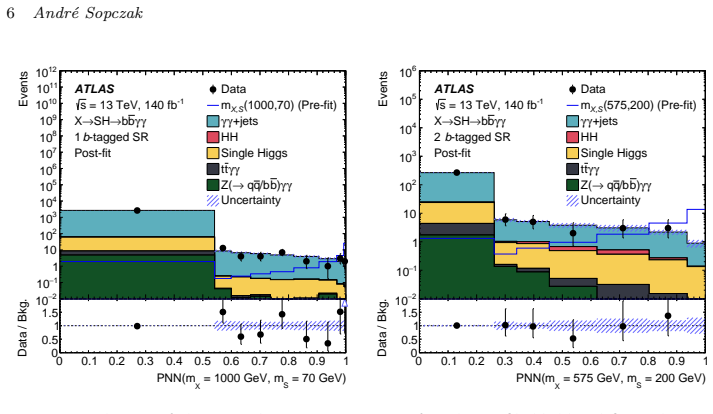
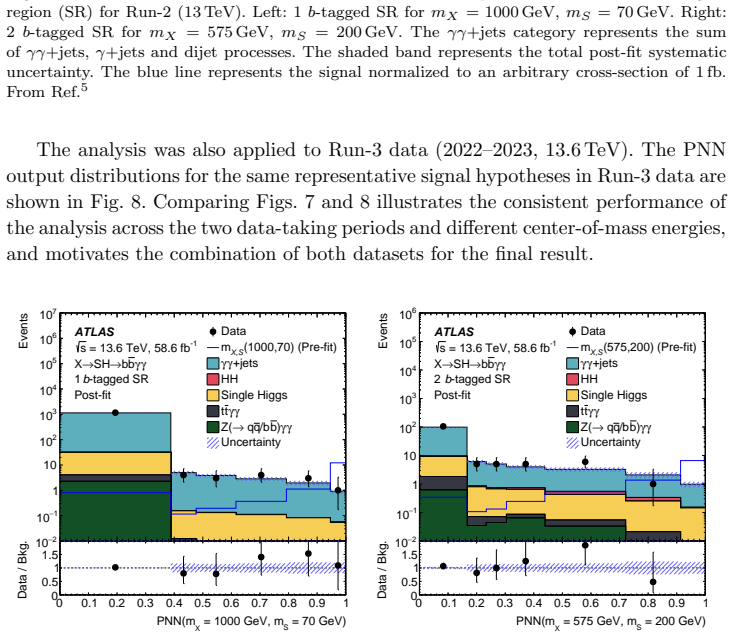
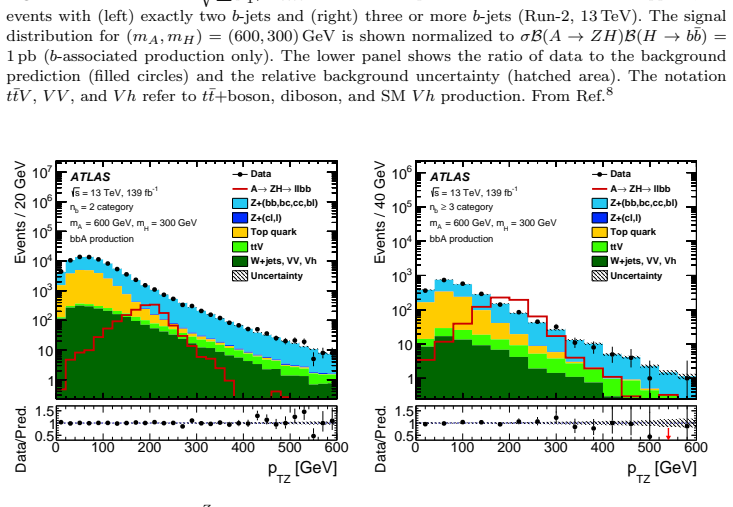
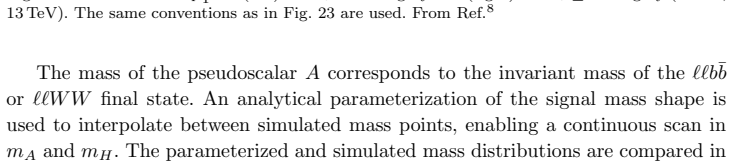
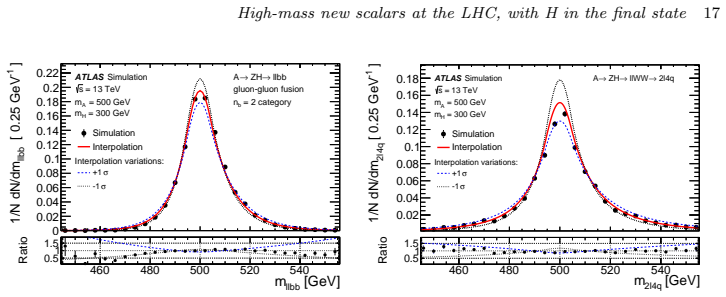
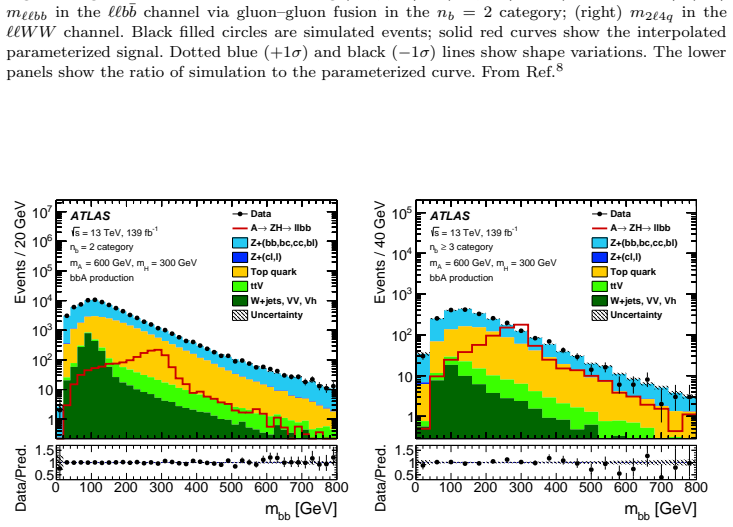
read the original abstract
The search for new particles, conducted at the LHC by the ATLAS and CMS collaborations, covers several production and decay modes, leading to a large variety of final states that could be observed in both detectors. This review focuses on the production of new heavy scalars that have a Higgs boson in the final state. Three cases are covered: resonant production of a heavy scalar $X$ decaying into a Higgs boson and a lighter scalar $S$, heavy neutral Higgs boson decaying into another neutral Higgs boson and a $Z$ boson, and a heavy charged Higgs boson production with subsequent decay into another neutral Higgs boson and a $W$ boson. The reviewed searches are based on the complete LHC Run-2 dataset and partial Run-3 dataset.
Editorial analysis
A structured set of objections, weighed in public.
Referee Report
Summary. The paper reviews searches for high-mass new scalars at the LHC by the ATLAS and CMS collaborations, with a focus on final states containing a Higgs boson. It covers three specific cases: resonant production of a heavy scalar X decaying to a Higgs and a lighter scalar S, heavy neutral Higgs decaying to another neutral Higgs and a Z boson, and heavy charged Higgs production decaying to a neutral Higgs and a W boson. The review is based on the full LHC Run-2 dataset and partial Run-3 dataset.
Significance. If the summaries are accurate, this review provides a consolidated overview of current experimental constraints on extended Higgs sectors from LHC data. It is useful for identifying which parameter spaces have been probed and where future searches might focus. The paper does not perform new analyses or provide new predictions but synthesizes existing results from public papers.
minor comments (1)
- [Abstract] Abstract: the statement that the reviewed searches use the 'complete LHC Run-2 dataset and partial Run-3 dataset' is central to the scope claim but would be strengthened by explicitly listing the integrated luminosities and the specific Run-3 papers included, to allow immediate verification of coverage without cross-referencing every citation.
Simulated Author's Rebuttal
We thank the referee for their assessment of the manuscript and the recommendation of minor revision. No specific major comments were raised in the report.
Circularity Check
Review summarizes external ATLAS/CMS results with no derivations or predictions
full rationale
The paper is a review of existing LHC searches by ATLAS and CMS collaborations. It reports on production/decay modes and datasets used in those external analyses but performs no fits, derivations, predictions, or parameter extractions of its own. No equations, ansatze, or self-citations appear in the provided text that could reduce any claim to the paper's inputs by construction. The central content is faithful summarization of cited external results, which is independent of the review itself.
Axiom & Free-Parameter Ledger
Reference graph
Works this paper leans on
-
[1]
ATLAS Collaboration,JINST3, S08003 (2008), doi:10.1088/1748-0221/3/08/S08003
-
[2]
CMS Collaboration,JINST3, S08004 (2008), doi:10.1088/1748-0221/3/08/S08004
-
[3]
CERN, LHC luminosity public results (2025),https://twiki.cern.ch/twiki/bin/ view/AtlasPublic/LuminosityPublicResultsRun3, accessed 2 Nov. 2025
2025
-
[4]
CMS Collaboration (2026),arXiv:2605.02848, submitted to Physical Review D
work page internal anchor Pith review Pith/arXiv arXiv 2026
-
[5]
ATLAS Collaboration,Phys. Lett. B868, 140425 (2026),arXiv:2510.02857 [hep-ex], doi:10.1016/j.physletb.2026.140425
work page internal anchor Pith review Pith/arXiv arXiv doi:10.1016/j.physletb.2026.140425 2026
- [6]
-
[7]
ATLAS Collaboration,JHEP10, 009 (2023),arXiv:2307.11120 [hep-ex], doi:10. 1007/JHEP10(2023)009
-
[8]
ATLAS Collaboration,Eur. Phys. J. C81, 396 (2021),arXiv:2011.05639 [hep-ex], doi:10.1140/epjc/s10052-021-09117-5
-
[9]
ATLAS Collaboration,JHEP06, 016 (2023),arXiv:2207.00230 [hep-ex], doi:10. 1007/JHEP06(2023)016
- [10]
-
[11]
ATLAS Collaboration, Summary plots for beyond-the-Standard-Model Higgs boson benchmarks for direct and indirect searches (2025),https://cds.cern.ch/record/ 2946409
2025
-
[12]
ATLAS Collaboration,JHEP02, 197 (2024),arXiv:2311.04033 [hep-ex], doi:10. 1007/JHEP02(2024)197
-
[13]
CMS Collaboration,Phys. Lett. B866, 139568 (2025), doi:10.1016/j.physletb.2025. 139568
-
[14]
ATLAS Collaboration,JHEP02, 143 (2025),arXiv:2411.03969 [hep-ex], doi:10. 1007/JHEP02(2025)143
- [15]
-
[16]
ATLAS Collaboration,JHEP04, 118 (2024),arXiv:2402.10607 [hep-ex], doi:10. 1007/JHEP04(2024)118
- [17]
discussion (0)
Sign in with ORCID, Apple, or X to comment. Anyone can read and Pith papers without signing in.