Perturbative solution of fermionic sign problem in lattice Quantum Monte Carlo
Pith reviewed 2026-05-24 10:03 UTC · model grok-4.3
The pith
First-order perturbation in chemical potential and t' around half-filling gives accurate spectral functions for doped Hubbard models at optimal cuprate parameters.
A machine-rendered reading of the paper's core claim, the machinery that carries it, and where it could break.
Core claim
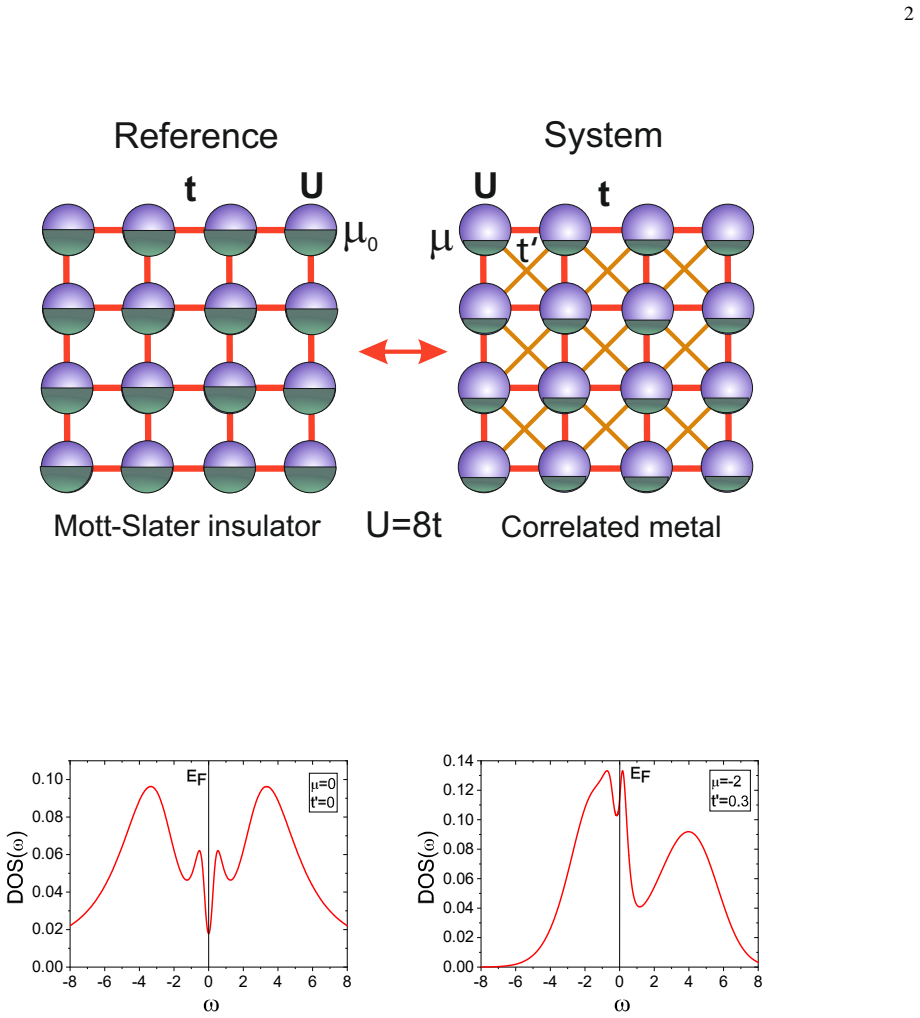
A strong-coupling perturbation scheme around a half-filled particle-hole-symmetric reference Hubbard model, implemented with lattice determinantal QMC in continuous or discrete time, yields accurate electronic spectral functions when only the first-order terms in the chemical potential shift and second-neighbor hopping are retained; this holds for the parameter range corresponding to optimally doped cuprates at T approximately 0.1t with U equal to the bandwidth.
What carries the argument
The first-order perturbative expansion in chemical potential and t' around the sign-problem-free half-filled particle-hole-symmetric point, evaluated by determinantal QMC on the reference system.
If this is right
- Spectral functions can be obtained for doped Hubbard systems at temperatures and dopings relevant to cuprates without encountering the sign problem.
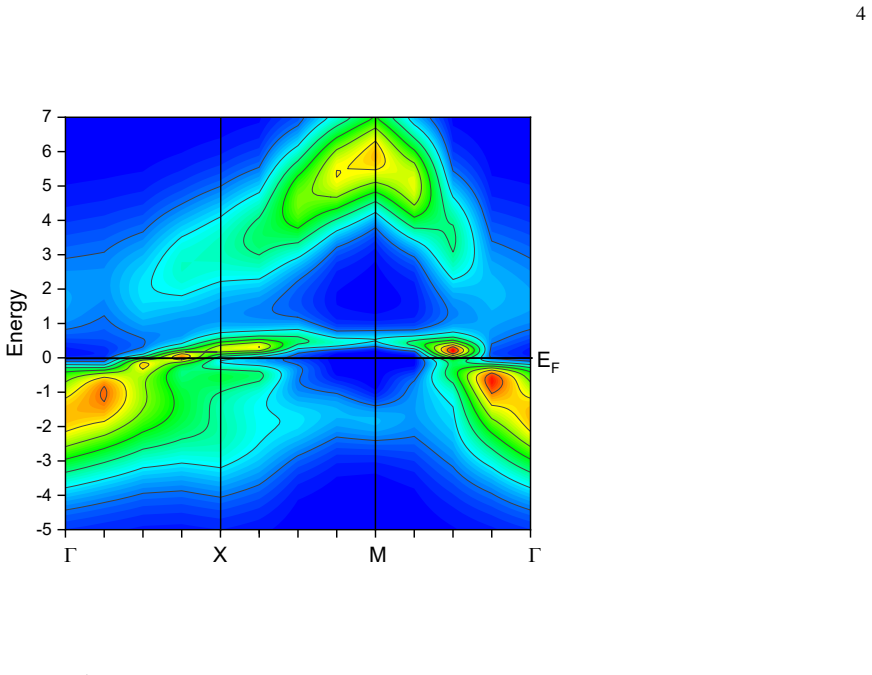
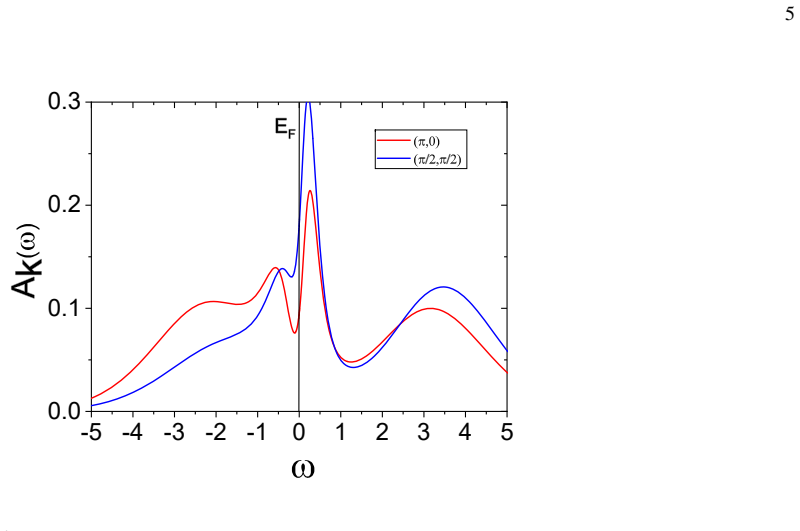
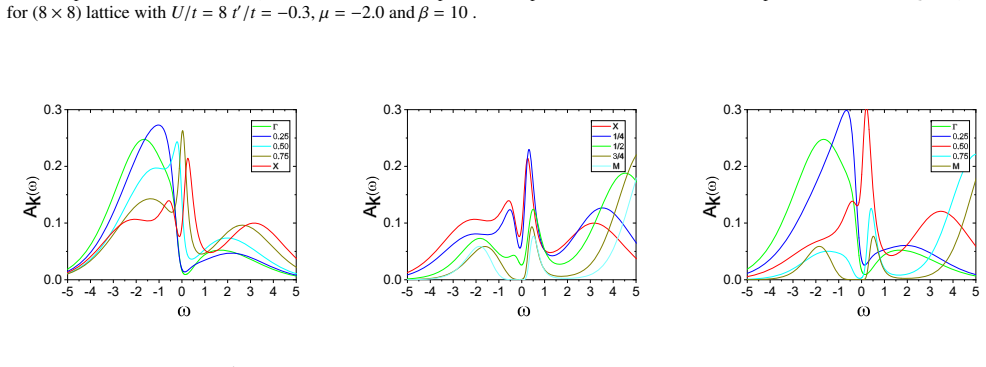
- The pseudogap and nodal-antinodal dichotomy become accessible for study in the strong-coupling regime with optimal t'.
- The method extends the reach of lattice QMC calculations to the optimally doped regime at T of order 0.1t.
Where Pith is reading between the lines
- Higher-order terms in the same expansion could extend the method to stronger doping or lower temperatures.
- The same reference-system approach might be combined with other observables beyond the spectral function.
- If the nodal-antinodal features survive in the calculation, they could be tested against ARPES data on cuprates at comparable parameters.
Load-bearing premise
That the first-order expansion in chemical potential and t' around half-filling stays quantitatively accurate for the doped regime when U equals the bandwidth.
What would settle it
A comparison of the first-order perturbative spectral function against results from a higher-order expansion or from an independent non-perturbative method at the same U, doping, t', and T=0.1t values would show whether the approximation holds.
Figures
read the original abstract
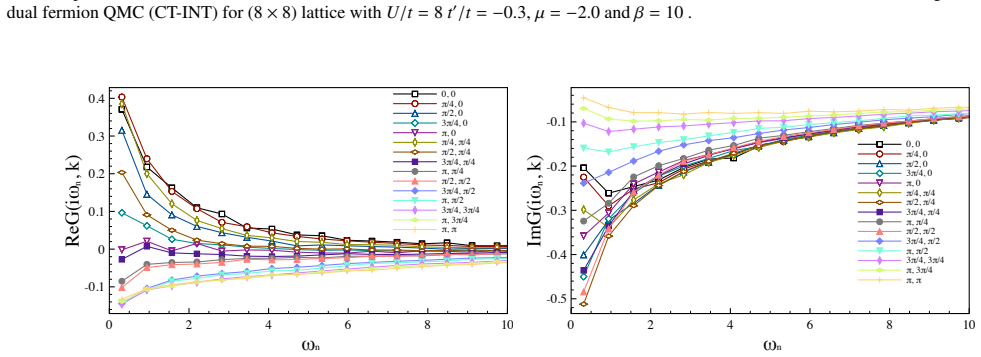
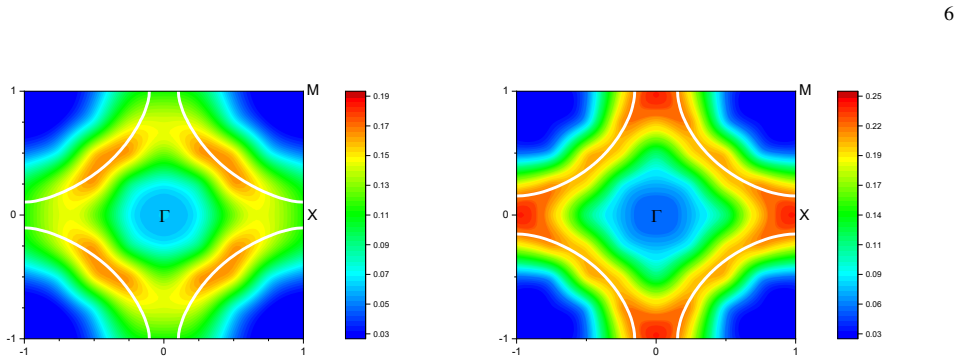
We develop a strong-coupling perturbation scheme for a generic Hubbard model around a half-filled particle-hole-symmetric reference system, which is free from the fermionic sign problem. The approach is based on the lattice determinantal Quantum Monte Carlo (QMC) method in continuous and discrete time versions for large periodic clusters in a fermionic bath. Considering the first-order perturbation in the shift of the chemical potential and of the second-neighbour hopping gives an accurate electronic spectral function for a parameter range corresponding to the optimally doped cuprate system for temperature of the order of $T=0.1t$, the region hardly accessible for the straightforward lattice QMC calculations. We discuss the formation of the pseudogap and the nodal-antinodal dichotomy for a doped Hubbard system in a strong-coupling regime with the interaction parameter $U$ equal to the bandwidth and the optimal value of the next-nearest-neighbor hopping parameter $t'$ for high-temperature superconducting cuprates.
Editorial analysis
A structured set of objections, weighed in public.
Referee Report
Summary. The manuscript develops a strong-coupling perturbation scheme for the generic Hubbard model around a half-filled particle-hole-symmetric reference system free from the fermionic sign problem. It employs lattice determinantal QMC (continuous and discrete time) on large periodic clusters and applies a first-order perturbation in the chemical-potential shift δμ and next-nearest-neighbor hopping t' to compute the electronic spectral function, claiming quantitative accuracy for parameters corresponding to optimally doped cuprates at T≈0.1t with U equal to the bandwidth. The work discusses pseudogap formation and nodal-antinodal dichotomy in the doped strong-coupling regime.
Significance. If validated, the approach would enable QMC-based access to the doped Hubbard regime relevant to cuprate physics without the sign problem, by combining a sign-problem-free reference calculation with controlled perturbation. The method targets a temperature and doping window that is otherwise difficult for direct lattice QMC.
major comments (2)
- [Abstract] Abstract and results section: the central claim that first-order perturbation in δμ and t' yields quantitatively accurate spectral functions at U equal to bandwidth, optimal t', and T=0.1t is load-bearing, yet no explicit second-order diagrams, truncation-error bounds, or benchmarks against independent methods (e.g., small-cluster ED or sign-problem-free QMC at nearby parameters) are provided to confirm that higher-order terms remain small.
- [Results] Method and results: the perturbation is applied to the Green's function or self-energy obtained from the particle-hole symmetric reference; without a concrete demonstration that the first-order correction remains accurate when U equals the bandwidth (where the expansion parameter is not obviously small), the quantitative accuracy asserted for the optimally doped regime cannot be assessed.
minor comments (2)
- [Method] Clarify in the equations how the continuous-time and discrete-time QMC implementations are combined with the perturbative correction.
- [Method] Add a brief statement on the cluster sizes used and finite-size effects in the reference QMC calculations.
Simulated Author's Rebuttal
We thank the referee for the constructive comments. We respond to each major comment below, clarifying the nature of the perturbation expansion and agreeing to enhance the discussion of its accuracy.
read point-by-point responses
-
Referee: [Abstract] Abstract and results section: the central claim that first-order perturbation in δμ and t' yields quantitatively accurate spectral functions at U equal to bandwidth, optimal t', and T=0.1t is load-bearing, yet no explicit second-order diagrams, truncation-error bounds, or benchmarks against independent methods (e.g., small-cluster ED or sign-problem-free QMC at nearby parameters) are provided to confirm that higher-order terms remain small.
Authors: The expansion is performed with respect to the small parameters δμ and t', which are of order 0.1-0.3t for the doping levels considered. This is distinct from the interaction strength U, which is treated non-perturbatively in the reference system. While the manuscript does not include explicit second-order calculations or direct benchmarks, the results demonstrate consistency with expected physical phenomena in the doped regime. We will revise the manuscript to include a discussion of the expected magnitude of higher-order terms based on the smallness of δμ and t'. revision: partial
-
Referee: [Results] Method and results: the perturbation is applied to the Green's function or self-energy obtained from the particle-hole symmetric reference; without a concrete demonstration that the first-order correction remains accurate when U equals the bandwidth (where the expansion parameter is not obviously small), the quantitative accuracy asserted for the optimally doped regime cannot be assessed.
Authors: We emphasize that the expansion parameter is δμ and t', not U. The reference system at half filling with t'=0 is sign-problem-free for arbitrary U, and the perturbation corrects for finite doping and t'. At the parameters studied, δμ and t' are sufficiently small to justify the first-order approximation, as evidenced by the smooth evolution of the spectral functions. We will add a clarification on this point in the revised version. revision: yes
Circularity Check
No circularity: perturbative expansion is independent of target doped spectral function
full rationale
The derivation performs lattice QMC at the half-filled particle-hole symmetric reference point (sign-problem free by construction) and then applies an explicit first-order perturbative correction in δμ and t'. This is a standard expansion whose output is not equivalent to the input by definition; the accuracy for doped parameters at U equal to bandwidth is an empirical claim about truncation error rather than a self-definitional or fitted-input reduction. No equations rename a fit as a prediction, no load-bearing uniqueness theorem is imported via self-citation, and the central result does not reduce to its own inputs. The approach remains self-contained against external benchmarks.
Axiom & Free-Parameter Ledger
axioms (1)
- domain assumption The half-filled particle-hole-symmetric Hubbard model is free from the fermionic sign problem.
Lean theorems connected to this paper
-
IndisputableMonolith/Cost/FunctionalEquation.leanwashburn_uniqueness_aczel unclear?
unclearRelation between the paper passage and the cited Recognition theorem.
We develop a strong-coupling perturbation scheme for a generic Hubbard model around a half-filled particle-hole-symmetric reference system, which is free from the fermionic sign problem... first-order perturbation in the shift of the chemical potential and of the second-neighbour hopping
-
IndisputableMonolith/Foundation/ArithmeticFromLogic.leanembed_injective unclear?
unclearRelation between the paper passage and the cited Recognition theorem.
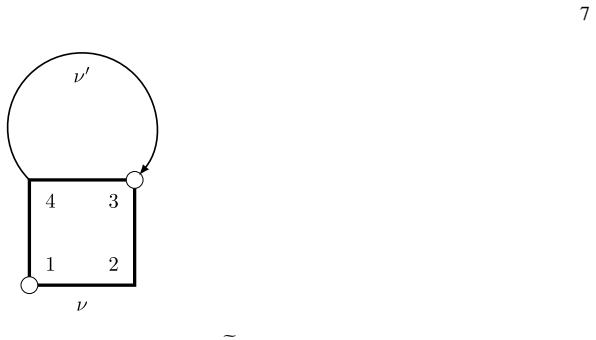
The first order for the vertex in particle-hole (PH) channel is given by the diagram shown in Fig.7 ˜Σ(1)12 = −∑s−QMC ∑3,4 γd1234(s) ˜G034
What do these tags mean?
- matches
- The paper's claim is directly supported by a theorem in the formal canon.
- supports
- The theorem supports part of the paper's argument, but the paper may add assumptions or extra steps.
- extends
- The paper goes beyond the formal theorem; the theorem is a base layer rather than the whole result.
- uses
- The paper appears to rely on the theorem as machinery.
- contradicts
- The paper's claim conflicts with a theorem or certificate in the canon.
- unclear
- Pith found a possible connection, but the passage is too broad, indirect, or ambiguous to say the theorem truly supports the claim.
Reference graph
Works this paper leans on
-
[1]
author Sch\"afer, T. et al. title Tracking the footprints of spin fluctuations: A multimethod, multimessenger study of the two-dimensional Hubbard model . journal Phys. Rev. X volume 11 , pages 011058 ( year 2021 ). ://link.aps.org/doi/10.1103/PhysRevX.11.011058
- [2]
-
[3]
author Loh, E. Y. et al. title Sign problem in the numerical simulation of many-electron systems . journal Phys. Rev. B volume 41 , pages 9301--9307 ( year 1990 ). ://link.aps.org/doi/10.1103/PhysRevB.41.9301
-
[4]
author Troyer, M. & author Wiese, U.-J. title Computational complexity and fundamental limitations to fermionic quantum monte carlo simulations . journal Phys. Rev. Lett. volume 94 , pages 170201 ( year 2005 ). ://link.aps.org/doi/10.1103/PhysRevLett.94.170201
-
[5]
author Mondaini, R. , author Tarat, S. & author Scalettar, R. T. title Quantum critical points and the sign problem . journal Science volume 375 , pages 418--424 ( year 2022 ). ://www.science.org/doi/abs/10.1126/science.abg9299. https://www.science.org/doi/pdf/10.1126/science.abg9299
-
[6]
author Jiang, H.-C. & author Devereaux, T. P. title Superconductivity in the doped Hubbard model and its interplay with next-nearest hopping t' . journal Science volume 365 , pages 1424--1428 ( year 2019 ). ://science.sciencemag.org/content/365/6460/1424. https://science.sciencemag.org/content/365/6460/1424.full.pdf
work page 2019
-
[7]
author Jiang, Y.-F. , author Zaanen, J. , author Devereaux, T. P. & author Jiang, H.-C. title Ground state phase diagram of the doped Hubbard model on the four-leg cylinder . journal Phys. Rev. Res. volume 2 , pages 033073 ( year 2020 ). ://link.aps.org/doi/10.1103/PhysRevResearch.2.033073
-
[8]
author Chung, C.-M. , author Qin, M. , author Zhang, S. , author Schollw\"ock, U. & author White, S. R. title Plaquette versus ordinary d -wave pairing in the t ^ ' - Hubbard model on a width-4 cylinder . journal Phys. Rev. B volume 102 , pages 041106 ( year 2020 ). ://link.aps.org/doi/10.1103/PhysRevB.102.041106
-
[9]
author Qin, M. et al. title Absence of superconductivity in the pure two-dimensional Hubbard model . journal Phys. Rev. X volume 10 , pages 031016 ( year 2020 ). ://link.aps.org/doi/10.1103/PhysRevX.10.031016
-
[10]
author Harland, M. , author Katsnelson, M. I. & author Lichtenstein, A. I. title Plaquette valence bond theory of high-temperature superconductivity . journal Phys. Rev. B volume 94 , pages 125133 ( year 2016 ). ://link.aps.org/doi/10.1103/PhysRevB.94.125133
-
[11]
author Harland, M. , author Brener, S. , author Katsnelson, M. I. & author Lichtenstein, A. I. title Exactly solvable model of strongly correlated d -wave superconductivity . journal Phys. Rev. B volume 101 , pages 045119 ( year 2020 ). ://link.aps.org/doi/10.1103/PhysRevB.101.045119
-
[12]
author Danilov, M. et al. title Degenerate plaquette physics as key ingredient of high-temperature superconductivity in cuprates . journal npj Quant. Mater. volume 7 , pages 50 ( year 2022 ). ://www.nature.com/articles/s41535-022-00454-6
work page 2022
-
[13]
author Prokof'ev, N. & author Svistunov, B. title Bold diagrammatic monte carlo technique: When the sign problem is welcome . journal Phys. Rev. Lett. volume 99 , pages 250201 ( year 2007 ). ://link.aps.org/doi/10.1103/PhysRevLett.99.250201
-
[14]
title Determinant diagrammatic monte carlo algorithm in the thermodynamic limit
author Rossi, R. title Determinant diagrammatic monte carlo algorithm in the thermodynamic limit . journal Phys. Rev. Lett. volume 119 , pages 045701 ( year 2017 ). ://link.aps.org/doi/10.1103/PhysRevLett.119.045701
-
[15]
author Rubtsov, A. N. , author Savkin, V. V. & author Lichtenstein, A. I. title Continuous-time quantum Monte Carlo method for fermions . journal Phys. Rev. B volume 72 , pages 035122 ( year 2005 ). ://link.aps.org/doi/10.1103/PhysRevB.72.035122
-
[16]
author S imkovic, F. , author 2Rossi, R. , author Georges, A. & author Ferrero1, M. title Incoherent transport across the strange metal regime of highly overdoped cuprates ( year 2022 ). ://doi.org/10.48550/arXiv.2209.09237. 2209.09237
-
[17]
author S imkovic, F. , author Rossi, R. & author Ferrero, M. title Two-dimensional Hubbard model at finite temperature: Weak, strong, and long correlation regimes . journal Phys. Rev. Res. volume 4 , pages 043201 ( year 2022 ). ://link.aps.org/doi/10.1103/PhysRevResearch.4.043201
-
[18]
author Rossi, R. , author Prokof'ev, N. , author Svistunov, B. , author Houcke, K. V. & author Werner, F. title Polynomial complexity despite the fermionic sign . journal Europhysics Letters volume 118 , pages 10004 ( year 2017 ). ://dx.doi.org/10.1209/0295-5075/118/10004
-
[19]
author Kim, A. J. , author Prokof'ev, N. V. , author Svistunov, B. V. & author Kozik, E. title Homotopic action: A pathway to convergent diagrammatic theories . journal Phys. Rev. Lett. volume 126 , pages 257001 ( year 2021 ). ://link.aps.org/doi/10.1103/PhysRevLett.126.257001
-
[20]
author Charlebois, M. & author Imada, M. title Single-particle spectral function formulated and calculated by variational monte carlo method with application to d -wave superconducting state . journal Phys. Rev. X volume 10 , pages 041023 ( year 2020 ). ://link.aps.org/doi/10.1103/PhysRevX.10.041023
-
[21]
author Rosenberg, P. , author S\'en\'echal, D. , author Tremblay, A.-M. S. & author Charlebois, M. title Fermi arcs from dynamical variational Monte Carlo . journal Phys. Rev. B volume 106 , pages 245132 ( year 2022 ). ://link.aps.org/doi/10.1103/PhysRevB.106.245132
-
[22]
author Sakai, S. , author Civelli, M. & author Imada, M. title Hidden fermionic excitation boosting high-temperature superconductivity in cuprates . journal Phys. Rev. Lett. volume 116 , pages 057003 ( year 2016 ). ://link.aps.org/doi/10.1103/PhysRevLett.116.057003
-
[23]
author Singh, A. et al. title Unconventional exciton evolution from the pseudogap to superconducting phases in cuprates . journal Nature Communications volume 13 , pages 7906 ( year 2022 ). ://doi.org/10.1038/s41467-022-35210-8
-
[24]
author Krien, F. , author Worm, P. , author Chalupa-Gantner, P. , author Toschi, A. & author Held, K. title Explaining the pseudogap through damping and antidamping on the fermi surface by imaginary spin scattering . journal Communications Physics volume 5 , pages 336 ( year 2022 ). ://doi.org/10.1038/s42005-022-01117-5
-
[25]
author Brener, S. , author Stepanov, E. A. , author Rubtsov, A. N. , author Katsnelson, M. I. & author Lichtenstein, A. I. title Dual fermion method as a prototype of generic reference-system approach for correlated fermions . journal Annals of Physics volume 422 , pages 168310 ( year 2020 ). ://www.sciencedirect.com/science/article/pii/S000349162030244X
work page 2020
-
[26]
author Abrikosov, A. A. , author Gorkov, L. P. & author Dzyaloshinski, I. E. title Methods of quantum field theory in statistical physics ( publisher Dover , address New York, NY , year 1975 ). ://cds.cern.ch/record/107441
work page 1975
-
[27]
Reviews of Modern Physics , author =
author Georges, A. , author Kotliar, G. , author Krauth, W. & author Rozenberg, M. J. title Dynamical mean-field theory of strongly correlated fermion systems and the limit of infinite dimensions . journal Rev. Mod. Phys. volume 68 , pages 13--125 ( year 1996 ). ://link.aps.org/doi/10.1103/RevModPhys.68.13
-
[28]
author Rubtsov, A. N. , author Katsnelson, M. I. & author Lichtenstein, A. I. title Dual fermion approach to nonlocal correlations in the Hubbard model . journal Phys. Rev. B volume 77 , pages 033101 ( year 2008 ). ://link.aps.org/doi/10.1103/PhysRevB.77.033101
-
[29]
author Bethe, H. A. & author Jackiw, R. W. title Intermediate quantum mechanics (3rh edition) ( publisher Taylor and Francis , address London , year 1986 ). ://www.taylorfrancis.com/books/mono/10.1201/9780429493645/intermediate-quantum-mechanics-roman-jackiw
work page doi:10.1201/9780429493645/intermediate-quantum-mechanics-roman-jackiw 1986
-
[30]
author Katsnelson, M. I. & author Irkhin, V. Y. title Metal-insulator transition and antiferromagnetism in the ground state of the Hubbard model . journal J. Phys. C volume 17 , pages 4291--4308 ( year 1984 ). ://iopscience.iop.org/article/10.1088/0022-3719/17/24/011
- [31]
-
[32]
author Irkhin, V. Y. & author Katsnelson, M. I. title Theory of intermediate-valence semiconductors . journal Sov. Phys. JETP volume 63 , pages 631--636 ( year 1986 ). ://www.jetp.ras.ru/cgi-bin/e/index/e/63/3/p631?a=list
work page 1986
-
[33]
title On a Minimum Property of the Free Energy
author Peierls, R. title On a Minimum Property of the Free Energy . journal Phys. Rev. volume 54 , pages 918--919 ( year 1938 ). ://link.aps.org/doi/10.1103/PhysRev.54.918
-
[34]
author Feynman, R. P. title Statistical mechanics: A set of lectures ( publisher Reading, Mass: Benjamin/Cummings , year 1972 )
work page 1972
-
[35]
author Bogolyubov, N. N. title On a variational principle in the many-body problem . journal Sov. Phys. Dokl. volume 3 , pages 292--294 ( year 1958 )
work page 1958
-
[36]
author Scalettar, R. T. , author Noack, R. M. & author Singh, R. R. P. title Ergodicity at large couplings with the determinant monte carlo algorithm . journal Phys. Rev. B volume 44 , pages 10502--10507 ( year 1991 ). ://link.aps.org/doi/10.1103/PhysRevB.44.10502
-
[37]
author Rohringer, G. et al. title Diagrammatic routes to nonlocal correlations beyond dynamical mean field theory . journal Rev. Mod. Phys. volume 90 , pages 025003 ( year 2018 ). ://link.aps.org/doi/10.1103/RevModPhys.90.025003
-
[38]
author Rost, D. , author Gorelik, E. V. , author Assaad, F. & author Bl\"umer, N. title Momentum-dependent pseudogaps in the half-filled two-dimensional Hubbard model . journal Phys. Rev. B volume 86 , pages 155109 ( year 2012 ). ://link.aps.org/doi/10.1103/PhysRevB.86.155109
-
[39]
author Fei, J. , author Yeh, C.-N. , author Zgid, D. & author Gull, E. title Analytical continuation of matrix-valued functions: Carath\'eodory formalism . journal Phys. Rev. B volume 104 , pages 165111 ( year 2021 ). ://link.aps.org/doi/10.1103/PhysRevB.104.165111
-
[40]
author Hirsch, J. E. & author Fye, R. M. title Monte carlo method for magnetic impurities in metals . journal Phys. Rev. Lett. volume 56 , pages 2521--2524 ( year 1986 ). ://link.aps.org/doi/10.1103/PhysRevLett.56.2521
-
[41]
author Wu, W. , author Ferrero, M. , author Georges, A. & author Kozik, E. title Controlling feynman diagrammatic expansions: Physical nature of the pseudogap in the two-dimensional Hubbard model . journal Phys. Rev. B volume 96 , pages 041105 ( year 2017 ). ://link.aps.org/doi/10.1103/PhysRevB.96.041105
-
[42]
author Rossi, R. , author S imkovic, F. & author Ferrero, M. title Renormalized perturbation theory at large expansion orders . journal EPL (Europhysics Letters) volume 132 , pages 11001 ( year 2020 ). ://doi.org/10.1209/0295-5075/132/11001
-
[43]
author Hafermann, H. , author Brener, S. , author Rubtsov, A. N. , author Katsnelson, M. I. & author Lichtenstein, A. I. title Cluster dual fermion approach to nonlocal correlations . journal JETP Letters volume 86 , pages 677--682 ( year 2008 ). ://doi.org/10.1134/S0021364007220134
-
[44]
author Pairault, S. , author S\'en\'echal, D. & author Tremblay, A.-M. S. title Strong-coupling expansion for the Hubbard model . journal Phys. Rev. Lett. volume 80 , pages 5389--5392 ( year 1998 ). ://link.aps.org/doi/10.1103/PhysRevLett.80.5389
-
[45]
author Gros, C. & author Valent\' i , R. title Cluster expansion for the self-energy: A simple many-body method for interpreting the photoemission spectra of correlated fermi systems . journal Phys. Rev. B volume 48 , pages 418--425 ( year 1993 ). ://link.aps.org/doi/10.1103/PhysRevB.48.418
-
[46]
author Maier, T. , author Jarrell, M. , author Pruschke, T. & author Hettler, M. H. title Quantum cluster theories . journal Rev. Mod. Phys. volume 77 , pages 1027--1080 ( year 2005 ). ://link.aps.org/doi/10.1103/RevModPhys.77.1027
discussion (0)
Sign in with ORCID, Apple, or X to comment. Anyone can read and Pith papers without signing in.