REVIEW 3 major objections 5 minor 8 references
Multiperspective Conformance Analysis of Central Venous Catheter Installation Procedure
T0 review · 3 major / 5 minor · reviewed 2026-08-14 · deepseek-v4-flash
Pith's one-line read Using conformance analysis of 20 video-recorded CVC insertions, this paper claims that students' procedure compliance and processing time improve significantly after training.
desk verdict Competent case study whose overall improvement claim survives, but the trace-alignment headcount needs a loop-aware re-computation before the numbers are quoted. read the letter →
The pith
A machine-rendered reading of the paper's core claim, the machinery that carries it, and where it could break.
The reading
What carries the argument
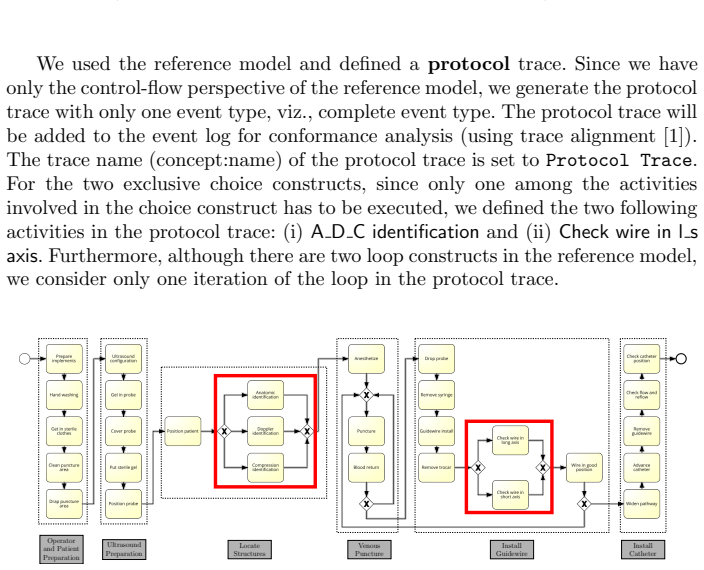
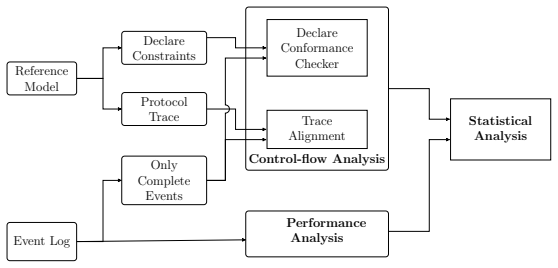
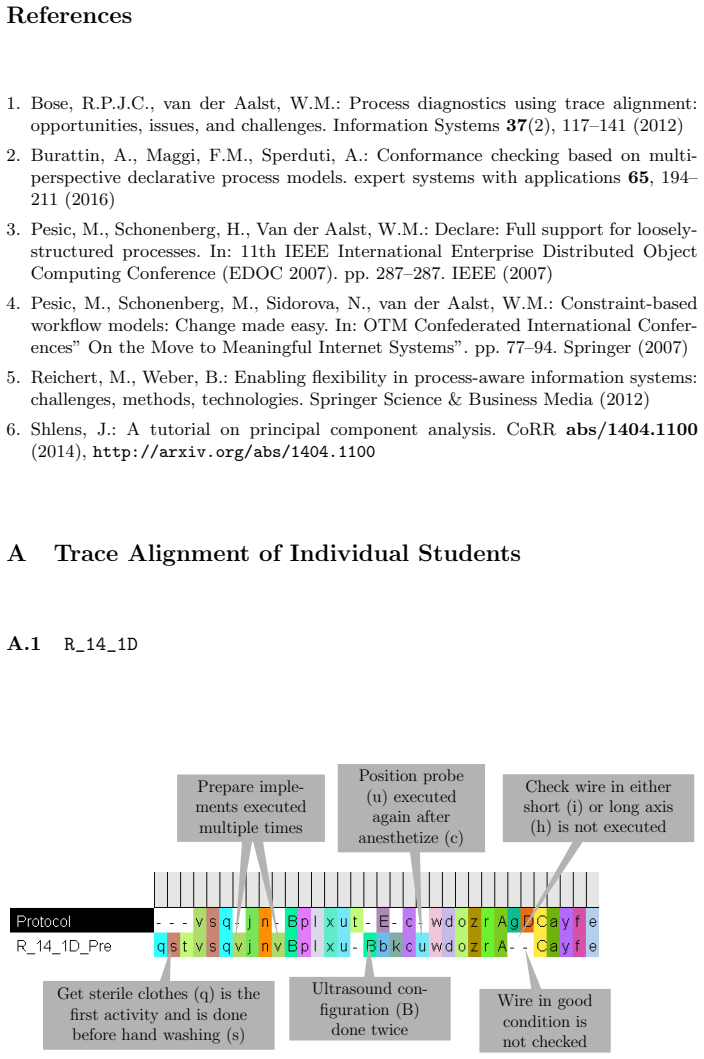
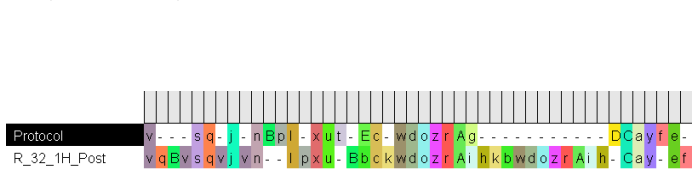
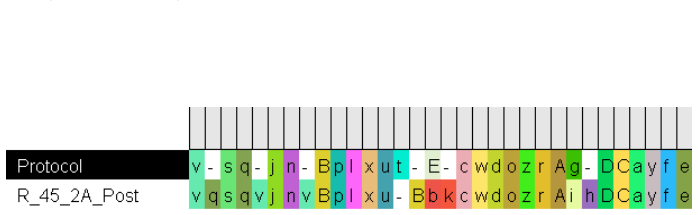
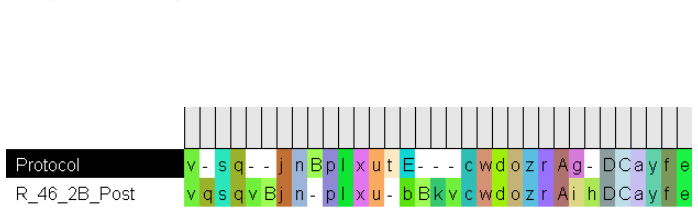
The argument rests on two conformance-checking techniques applied to the event log's complete-only events: trace alignment, which encodes activities as characters and aligns each student's trace against a protocol trace to expose insertions, deletions, and reorderings as gaps; and Declare, a constraint-based language that checks ten required behavioral rules (precedence, response, exclusive choice, exactly-once) across each trace. A simplified protocol trace is built from the reference model by keeping a single loop iteration and replacing each exclusive choice with one synthetic activity, and it is this trace plus the ten Declare constraints that define 'correct' behavior. Time analysis uses video-derived start and complete timestamps to compute processing and turnaround times.
What would settle it
Re-run the analysis on the same 20 traces with a domain-expert-validated protocol model instead of the simplified single-iteration protocol trace and intuition-based Declare constraints; if the PRE-to-POST improvements no longer reach significance, the measured improvement is an artifact of the chosen yardstick.
Extended reading notes
Core claim
The paper's central claim is that, at the aggregate level, the ten students' executions of the central venous catheter installation procedure are significantly more compliant with the reference protocol and significantly faster in the POST round than in the PRE round. Trace-alignment deviations fall from a mean of 23.8 to 12.9, Declare constraint violations from 4.3 to 2.8, and processing time from 1062 to 811 seconds, each with a p-value at or below 0.036. At the stage level, significant conformance gains appear in ultrasound preparation, venous puncture, and install guidewire, while operator and patient preparation, locate structures, and install catheter show no significant improvement. The paper also reports persistent deviations around the two exclusive-choice constructs and around overlapping activity executions.
Load-bearing premise
The measured improvement depends entirely on the author's simplified protocol trace and the ten intuition-based Declare constraints being an accurate representation of what a correct CVC procedure actually requires.
Editorial extensions
If this is right
- Students show significant overall improvement in protocol compliance and speed from the PRE to POST round, as measured by trace-alignment deviations, Declare violations, and processing time.
- Three stages—ultrasound preparation, venous puncture, and install guidewire—show significant conformance gains, while operator and patient preparation, locate structures, and install catheter do not, pointing instructors to specific training targets.
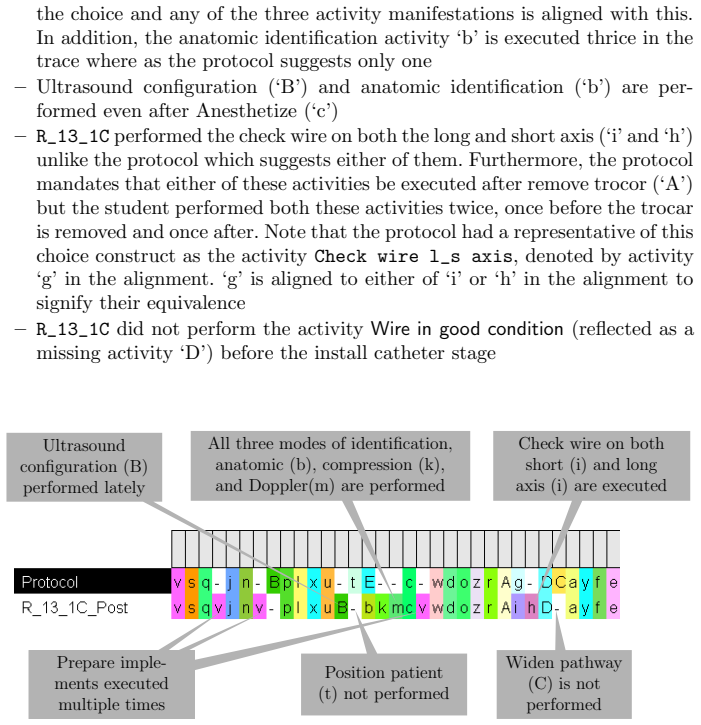
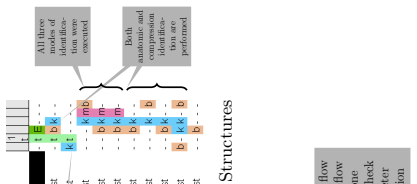
- A persistent deviation across rounds is the execution of multiple alternative activities where the protocol allows only one, such as performing several identification modes or checking the wire in both long and short axes.
- Overlapping activity executions occur in most students in both rounds, and if such concurrency is clinically unacceptable, it requires explicit training correction.
- PCA-based scatter plots of activity frequencies can help instructors identify students whose behavior is far from the protocol and track which students move closer after training.
Reading between the lines
- An unstated consequence is that the same conformance pipeline could serve as a formative feedback tool, turning each student's alignment gaps into personalized coaching advice once domain experts validate the yardstick.
- A testable extension would compare the conformance-derived deviations with error counts independently assigned by clinical instructors on the same 20 video traces, directly measuring how much of the reported improvement reflects clinically meaningful change.
- The simplification of the protocol trace—one loop iteration and synthetic activities for exclusive choices—may undercount deviations that matter to clinicians; a sensitivity analysis varying these simplifications would show how robust the PRE-to-POST improvement claim is.
- The approach could generalize to other video-recorded procedural skills training, such as laparoscopic tasks, wherever event logs can be derived from video timestamps.
Signed reviews
Editorial analysis
A structured set of objections, weighed in public.
Referee Report
Summary. The paper analyzes a public event log of 10 medical students performing a central venous catheter (CVC) installation procedure in PRE and POST training rounds. It combines trace alignment against a protocol trace derived from a BPMN reference model, Declarative (Declare) conformance checking with ten handpicked constraints, time/performance analysis, PCA-based visualizations, and t-tests. The central empirical claim is that students improve from PRE to POST at the overall procedure level: Table 8 reports decreases in trace-alignment deviations (23.8±10.45 to 12.9±6.49, p=0.011), Declare violations (4.3±1.34 to 2.8±0.79, p=0.007), turnaround time (1405±355 to 998±248, p=0.008), and processing time (1062±288 to 811±199, p=0.036). Stage-level results in Table 9 show significant control-flow improvement only in ultrasound preparation, venous puncture, and install guidewire.
Significance. If the reported results hold up, the paper provides a useful demonstration of how process-mining techniques can generate interpretable, actionable feedback for medical trainees and instructors. The manuscript is transparent in several ways: it states its data-preparation choices, shows full trace alignments for all students in the appendix, reports means, standard deviations, and p-values, and explicitly flags places where domain-expert validation is needed. The central claim is an empirical measurement against an external reference model rather than a circular derivation. However, the significance is conditional on the validity of the operationalized 'correct behavior': the simplified protocol trace and the intuition-based Declare constraints are the yardsticks for all conformance measurements, and the statistical analysis has unstated assumptions. These issues affect the strength of the headline PRE-to-POST conclusion, although they do not by themselves overturn the fact that three independent measures move in the same direction.
major comments (3)
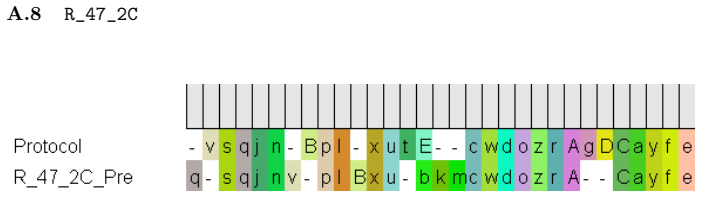
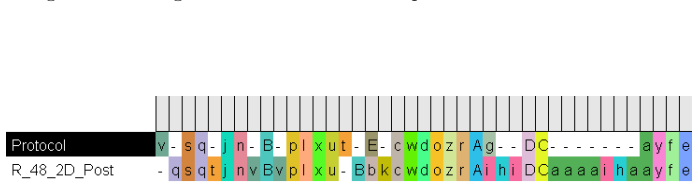
- [Sections 2.3 and 4.2.1, Table 8] The trace-alignment deviation counts in Table 8 are computed by aligning student traces against a protocol trace that keeps only one iteration of each loop (Section 2.3). Section 4.2.1 admits, for the venous puncture stage, that 'the reference model allows a loop over Puncture and Blood return activities... we consider multiple executions of wd to be compliant.' If the automated alignment treats additional wd iterations as insertions rather than as permitted repeats, then students who needed multiple puncture attempts or multiple guidewire passes accumulate deviations that are not protocol violations. Such extra attempts are plausibly more frequent in the PRE round, so the reported drop from 23.8 to 12.9 mean deviations (p=0.011) could be partly an artifact of the one-iteration protocol trace. The authors should either re-run the alignment with loop-aware costs, or quantitatively demonstrate that the PRE-to-POST difference is robust to this simplification (e.g., by reporting how many of the deviations come from repeated wd/h loops).
- [Section 3.1, Table 4, Table 7] The ten Declare constraints are described in a footnote as 'considered... to be critical elements of the process based on intuition,' with no domain-expert validation. The Declare-based p-value in Table 8 (4.3 to 2.8, p=0.007) and the stage-level discussion depend entirely on this constraint set. For example, constraint 3 (Exclusive Choice 1 of 3 among anatomic, Doppler, and compression identification) is violated by all ten PRE cases and eight POST cases, but it is not established that the clinical protocol forbids performing more than one identification mode. If the constraints misrepresent the actual CVC protocol, the measured violations overstate noncompliance. The authors should obtain expert review of the constraint set, or at minimum add a sensitivity analysis showing how the PRE-to-POST difference changes under plausible alternative constraint sets.
- [Section 4.2.3, Tables 8 and 9] The statistical reporting is incomplete in ways that affect the strength of the conclusions. First, the paper does not state whether paired or independent t-tests were used; because the same ten students are measured in PRE and POST, a paired test is the natural choice and the p-values would differ from an independent-samples test. Second, Table 9 reports six stage-level tests for trace-alignment deviations and six for processing times without any multiplicity correction; with a 0.05 threshold, several p-values (e.g., 0.02, 0.01, 0.005) would not remain significant under a simple Bonferroni correction (threshold about 0.008 for six tests). The small sample size (n=10) also makes the normality assumption nontrivial. The paper should specify the test procedure, justify it, and report effect sizes or confidence intervals so that the stage-level claims are not overinterpreted.
minor comments (5)
- [Section 2.3] The sentence 'For the two exclusive choice constructs, since only one among the activities involved in the choice construct has to be executed' is clear, but the invented activities 'A_D_C identification' and 'Check wire in l_s axis' should be introduced with notation that matches Table 5 (E and g), to avoid confusion in Figures 4-6.
- [Section 4.1.1, Figure 4 list] In the bullet list describing R_13_1C's PRE trace, the phrase 'Check wire on both short (i) and long axis (i)' contains a typo: the long-axis activity should be denoted 'h' (Table 5).
- [Section 4.2.1, Table 6] The table header contains a spelling error ('constriants') and the row label 'T otal' has an extra space; these should be corrected.
- [Section 4.2.2, Figures 9 and 19] The text refers to 'studentR_13_1C' and 'studentR_13_1C' in several places without a space; the labels should read 'student R_13_1C' for readability.
- [Section 5, Conclusions] The conclusion states that 'students perform significantly better in terms of compliance to the protocol and processing times,' but the stage-level results in Table 9 show no significant control-flow improvement for operator and patient preparation, locate structures, or install catheter. The wording should be amended to make clear that the overall-procedure improvement is the supported claim, and that stage-level improvement is mixed.
Circularity Check
No circularity: the PRE/POST improvement claim is an empirical measurement against an external reference model and independently chosen constraints, not an output derived from its own inputs.
full rationale
The paper's central claims are empirical measurements: trace-alignment deviations, Declare violations, and processing times are computed from the event log for PRE and POST rounds and compared with t-tests. The reference model used for conformance checking is supplied with the challenge, not derived from the student data or from the conclusion that students improved. The protocol-trace simplification in Section 2.3, which keeps only one loop iteration and replaces exclusive choices with synthetic activities, is a modeling choice that may affect absolute deviation counts, but it is applied uniformly to both rounds and does not make the PRE-to-POST comparison true by construction. Section 4.2.1 expressly acknowledges that the reference model allows a loop over Puncture and Blood return and that multiple executions of those activities are treated as compliant, which further shows the authors are aware of the simplification rather than silently building the desired result into the reference. The ten Declare constraints are admitted in a footnote to be chosen 'based on intuition' and without domain-expert validation; this is a validity limitation, but the constraints are not fitted to the measured deviations. The only self-citation is the trace-alignment method [1] by the same author, which is cited as a computational technique and not as a premise that entails the improvement finding. No equation or quantity in the paper is defined in terms of the outcome it is used to predict, and no fitted parameter is renamed as a prediction. The derivation chain is therefore self-contained with respect to the empirical comparison, and no significant circularity is present.
Assumptions & free parameters
free parameters (2)
- Loop iteration count in protocol trace =
1
- Significance threshold alpha =
0.05
assumptions (6)
- domain assumption The event log is noise free.
- domain assumption VIDEOSTART and VIDEOEND timestamps are more reliable than the event log timestamps.
- domain assumption The challenge-provided reference BPMN model correctly represents the consensus CVC procedure.
- ad hoc to paper The 10 Declare constraints capture the critical safety and ordering requirements of the CVC procedure.
- ad hoc to paper The simplified protocol trace adequately represents the reference model for trace alignment.
- domain assumption The t-test assumptions hold for the PRE/POST comparisons.
invented entities (2)
-
A_D_C identification
-
Check wire l_s axis
Cite this review
Pith. "Pith review of Multiperspective Conformance Analysis of Central Venous Catheter Installation Procedure." pith.science (2026). https://pith.science/paper/V2WYC5X6
@misc{pith2026190807938,
  author       = {Pith},
  title        = {Pith review of: Multiperspective Conformance Analysis of Central Venous Catheter Installation Procedure},
  year         = {2026},
  howpublished = {\url{https://pith.science/paper/V2WYC5X6}},
  note         = {Machine review of arXiv:1908.07938}
}
read the original abstract
Training and practice play a key role in a medical students' attainment of surgical procedural skills. It is beyond doubt that good skills correlate with better clinical outcomes and improved healthcare. Timely, holistic, and effective feedback provide a significant impetus to students acquiring skills with precision. In this paper, we analyze the activities performed by students while learning the central venous catheter installation procedure. We perform a holistic analysis, using trace alignment, declarative conformance checking, data visualization, and statistical analysis techniques, at different levels of abstraction on control-flow and time perspectives and provide insights at individual student level as well as across students. These insights can help students discover what they are doing right and where they are not and take corrective steps. Instructors can uncover common patterns and mistakes that students demonstrate and think of interventions in their teaching methodology.
Figures

Figures from the paper (35 more)














Reference graph
Works this paper leans on
-
[1]
Information Systems 37(2), 117--141 (2012)
Bose, R.P.J.C., van der Aalst, W.M.: Process diagnostics using trace alignment: opportunities, issues, and challenges. Information Systems 37(2), 117--141 (2012)
work page 2012
-
[2]
expert systems with applications 65, 194--211 (2016)
Burattin, A., Maggi, F.M., Sperduti, A.: Conformance checking based on multi-perspective declarative process models. expert systems with applications 65, 194--211 (2016)
work page 2016
-
[3]
In: 11th IEEE International Enterprise Distributed Object Computing Conference (EDOC 2007)
Pesic, M., Schonenberg, H., Van der Aalst, W.M.: Declare: Full support for loosely-structured processes. In: 11th IEEE International Enterprise Distributed Object Computing Conference (EDOC 2007). pp. 287--287. IEEE (2007)
work page 2007
-
[4]
On the Move to Meaningful Internet Systems
Pesic, M., Schonenberg, M., Sidorova, N., van der Aalst, W.M.: Constraint-based workflow models: Change made easy. In: OTM Confederated International Conferences" On the Move to Meaningful Internet Systems". pp. 77--94. Springer (2007)
work page 2007
-
[5]
Springer Science & Business Media (2012)
Reichert, M., Weber, B.: Enabling flexibility in process-aware information systems: challenges, methods, technologies. Springer Science & Business Media (2012)
work page 2012
-
[6]
CoRR abs/1404.1100 (2014), http://arxiv.org/abs/1404.1100
Shlens, J.: A tutorial on principal component analysis. CoRR abs/1404.1100 (2014), http://arxiv.org/abs/1404.1100
arXiv 2014
-
[7]
, " * write output.state after.block = add.period write
ENTRY address author booktitle chapter doi edition editor eid howpublished institution journal key month note number organization pages publisher school series title type url volume year label INTEGERS output.state before.all mid.sentence after.sentence after.block FUNCTION init.state.consts #0 'before.all := #1 'mid.sentence := #2 'after.sentence := #3 '...
-
[8]
write newline
" write newline "" before.all 'output.state := FUNCTION n.dashify 't := "" t empty not t #1 #1 substring "-" = t #1 #2 substring "--" = not "--" * t #2 global.max substring 't := t #1 #1 substring "-" = "-" * t #2 global.max substring 't := while if t #1 #1 substring * t #2 global.max substring 't := if while FUNCTION word.in bbl.in capitalize ":" * " " *...
Reviewed August 14, 2026 · model on record in the stance chip above.
Discussion (0). Continue with ORCID to comment.