REVIEW 3 major objections 5 minor 65 references
Extreme flows: where physics meets mathematically rigorous bounds
T0 review · 3 major / 5 minor · reviewed 2026-08-06 · deepseek-v4-flash
Pith's one-line read This essay argues that the S1–S3 framework has closed two model problems—maximum enstrophy growth in 1D viscous Burgers flows and enstrophy dissipation in unforced 2D Navier-Stokes flows—by finding flows that saturate rigorous bounds.
desk verdict A readable synthesis of a real research program; the Burgers sharpness is genuine, but the 2D 'closed' claim outruns the evidence. read the letter →
The pith
A machine-rendered reading of the paper's core claim, the machinery that carries it, and where it could break.
The reading
What carries the argument
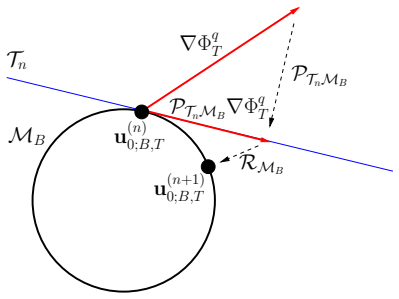
The engine is the S1-S3 loop: energy-method inequalities (e.g., $dE/dt \le C\nu^{-1/3}E^{5/3}$ for Burgers and the vorticity-difference bound (34)-(35) for 2D Navier-Stokes) provide upper bounds; variational problems such as Problem 3.2 and Problem 3.4 maximize the quantity of interest over constraint manifolds with fixed enstrophy, palinstrophy, or $L^q$ norm; and adjoint-based Riemannian gradient methods with continuation solve these nonconvex problems to produce maximizer branches. The central identities are the enstrophy growth rate $r(u)=dE/dt=-\nu\|\partial_{xx}u\|^2_{L^2}+\tfrac12\int(\partial_xu)^3dx$ and the enstrophy dissipation rate $\varepsilon_\nu(\varphi)\le \frac{2}{T}\|\varphi\|_{L^2}\|\omega(T)-\omega_\nu(T)\|_{L^2}$, which connects dissipation to inviscid-limit vorticity convergence. Sharpness means that a family of maximizers saturates the bound's exponent (or prefactor), and the physical mechanism is read off from the maximizing flows.
What would settle it
For the same $P_0$, $\nu$, and $T$ as in figure 3a, find an initial condition in the constraint set $S$ whose enstrophy dissipation exceeds the reported upper envelope $\hat{\varepsilon}_\nu^T$; if such a state exists, the combined estimate (34)-(35) is not saturated and the sharpness claim fails.
Extended reading notes
Core claim
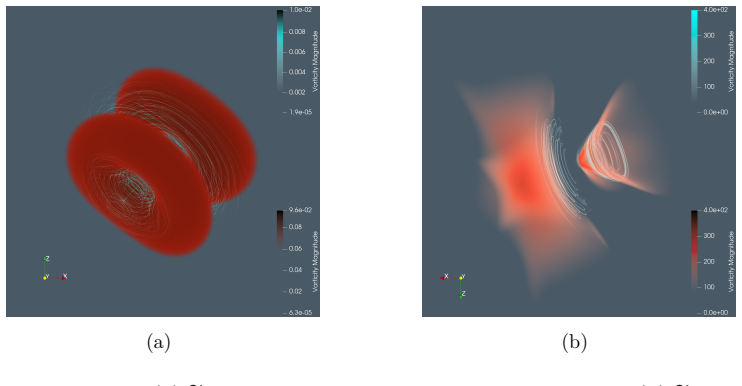
The central claim is that the S1-S3 loop (deduce a priori bounds, verify sharpness by variational maximization, extract mechanisms) yields closed solutions to two model problems. In the Burgers problem, the instantaneous bound $dE/dt \le C\nu^{-1/3}E^{5/3}$ is sharp in its exponent, and the finite-time numerical maximizers found by Ayala & Protas (2011) grow like $E_0^{3/2}$; Albritton & Nitti (2023) then proved the matching upper bound, so the problem is mathematically closed. In the 2D Navier-Stokes problem, Matharu et al. (2022) showed that the combined estimate (34)-(35) is saturated by six branches of extreme initial conditions that maximize enstrophy dissipation, so the estimate is declared sharp and offers no room for improvement other than, perhaps, a logarithmic correction. For 3D Euler flows, maximizing the $\dot{H}^3$ seminorm over Gevrey-class initial data yields a flow whose norm growth is consistent with finite-time singularity formation, with the near-singular structure being two colliding jets forming a flattened vortex-ring gap.
Load-bearing premise
The load-bearing premise is that the numerical search found every relevant branch of maximizers for the nonconvex Problem 3.4, so that the upper envelope over branches equals the true supremum of enstrophy dissipation; the paper itself concedes that all its maximizers are generally only local.
Editorial extensions
If this is right
- The maximum finite-time enstrophy growth in 1D viscous Burgers flows is now known to scale as $E_0^{3/2}$; no improvement in the exponent is possible.
- Enstrophy dissipation in unforced 2D Navier-Stokes flows vanishes in the inviscid limit at a rate consistent with the sharp bound (34)-(35), ruling out an enstrophy dissipation anomaly in this setting.
- The instantaneous 3D Navier-Stokes bounds on enstrophy growth and on $L^q$ norm growth are sharp in their exponents, but no single flow saturates both, suggesting a finite-time singularity would occur along a trajectory that does not saturate either bound.
- The variational search for extreme 3D Euler flows identifies a candidate finite-time singularity whose mechanism is nearly axisymmetric and emerges unprescribed from the optimization.
- Convex sum-of-squares upper bounds independently match the numerically observed Burgers extremes, giving a route to certify global sharpness for problems where local search alone is not exhaustive.
Reading between the lines
- If the 2D sharpness claim is right, then one expects analogous optimization-based saturation to reveal sharp bounds in forced 2D Navier-Stokes and in models such as the generalized Constantin-Lax-Majda and surface quasi-geostrophic equations, where anomalous dissipation or blow-up questions remain open.
- The recurring $3/2$ exponent for enstrophy amplification across Burgers and 3D Navier-Stokes optimized flows may be a general scaling law for extreme enstrophy growth; this is testable by computing higher-precision exponents at larger $E_0$ and $B$ values.
- A testable extension is to use the time-reversibility of Euler flows to formulate the singularity search from a near-blowup terminal state backward in time, which could sharpen the candidate geometry and give a concrete falsifiable prediction of the singular structure.
- The nonexhaustive branch search means the reported sharpness is conditional; a certified global-optimization upper bound matching the same envelope would remove that condition and elevate the 2D sharpness claim from numerical evidence to a verified statement.
Editorial analysis
A structured set of objections, weighed in public.
Referee Report
Summary. The manuscript is an essay presenting a three-step research program (S1–S3): derive rigorous a priori bounds on extreme growth/dissipation quantities in fluid models, probe sharpness of those bounds by solving variational optimization problems, and extract the physical mechanisms from the saturating flows. It surveys two model problems claimed to be 'closed': maximum enstrophy growth in 1D viscous Burgers flows, where the sharp exponent 3/2 is supported by the independent rigorous result of Albritton & Nitti (2023), and enstrophy dissipation in unforced 2D Navier–Stokes flows, where sharpness of the bound (34)–(35) is inferred from numerical maximizers of Problem 3.4 and fits to a power law in ν. The essay also reviews local-maximizer searches for potential singularities in 3D Navier–Stokes and Euler flows, and closes with open problems and methodological outlook.
Significance. If the two 'closed' claims were fully established, the paper would demonstrate a valuable template for connecting rigorous a priori estimates with numerical variational optimization. The Burgers half of that claim is genuinely strong: the upper bound, the independently proven exponent 3/2, and the numerically identified saturating family are mutually consistent. The paper also deserves credit for stating its nonconvexity limitation explicitly in Section 7 and for reporting computational details in Appendix B that make the optimization results reproducible in principle. However, the 2D sharpness claim is not supported to the same standard: it rests on local maximizers of a nonconvex problem and on a fit to only part of the rigorous bound. The essay is therefore best read as a programmatic survey whose flagship 2D conclusion needs substantial qualification or additional evidence.
major comments (3)
- [§3.2, specifically the paragraph after Eq. (37) and the concluding paragraph] The claim that 'the combined estimate (34)–(35) is sharp and does not offer any room for improvement' is not supported by the evidence presented. The comparison is made to the ansatz f2(ν)=Cν^α, which the paper itself identifies with only the second argument of the max in (35); the first argument θ_{φ,p,M}(Cν e^{-CT}/2) is left untested because it is 'not given explicitly enough'. Moreover, the bound (35) carries the prefactor M^{1-1/p} with M=∥φ∥_{L∞}, and the constraint set S in Problem 3.4 fixes only P(φ)=P0 in H^1. Since H^1(T^2) does not embed in L∞, M is uncontrolled and could carry an additional ν-dependence. Agreement of the numerical envelope with a fitted power law therefore does not demonstrate saturation of the full rigorous bound; it only establishes consistency with one term of one side. A complete sharpness argument would require control of M and a comparison with the full expression, including the θ term.
- [§3.2 and §7, with Appendix B.4] The sharpness conclusion also rests on an unverified completeness of the branches of maximizers. Problem 3.4 is nonconvex, and the methods described in Appendix B compute local maximizers; Section 7 explicitly concedes that 'the maximizers found with the approach described in Appendix B are generally only local'. The upper envelope q̂ν^T in Fig. 3a is the maximum over the branches that were found, not a certified global supremum over S. Continuation from a limited set of seeds, described in Appendix B.4, cannot rule out the existence of another branch with larger enstrophy dissipation. If such a branch existed, the saturation claim would fail. Thus, unlike the Burgers problem in §3.1 — where the exponent 3/2 is independently proved by Albritton & Nitti (2023) — the 2D problem is not mathematically closed on the basis of this manuscript.
- [§3.2, fitting procedure around Eqs. (37)–(38) and Figures 3–4] Even taking the computed upper envelope at face value, the fit has limited evidentiary weight. Only five viscosity values are used, the fitting error is reported only as a mean absolute deviation over those five points, and the exponent α̃(T) is itself a fitted parameter determined by a bracketing procedure. No confidence intervals or sensitivity analysis are given for C(T) or α̃(T). Furthermore, no estimate is provided for how the omitted first argument of the max in (35) or the uncontrolled factor M^{1-1/p} would affect the prefactor. Consequently, the quantitative agreement in Fig. 3b cannot distinguish between saturation of the full bound and agreement with an effective power law over a narrow range of ν. A sharpness claim of this strength requires either a rigorous lower bound matching the full upper-bound expression or a certified global solution of Problem 3.4.
minor comments (5)
- [§2, Eq. (15)] The displayed definition of the Sobolev norm appears to contain a typographical error: it reads [1+(2πk)^s]^2, whereas the standard H^s norm on the torus uses (1+(2π|k|)^2)^s |û_k|^2, with |k| rather than the vector k in the scalar factor.
- [§2, Eqs. (14) and (17)] The definitions of kinetic energy and enstrophy appear to omit the square on the L^2 norms: K(u) should be (1/2)∥u∥_{L^2}^2 and E(u) should be (1/2)∥ω∥_{L^2}^2. The text later uses these quantities consistently with the squared norms, so this is a formatting issue rather than a substantive error.
- [§1.1.1] The sentence describing the Clay Millennium problem says the challenge was posed 'at the beginning of the 20th century'; the Navier–Stokes prize problem was posed in 2000, which is the beginning of the 21st century.
- [§3.1, Fig. 2(d) caption versus Eq. (28)] The caption to Fig. 2(d) states that the observed power laws have exponents 1 and 3/2, whereas Eq. (28) in the text reports a fitted exponent 1.531. These should be reconciled; the value 1.531 is presumably a finite-range fit estimate, but the present wording invites confusion about whether the claimed asymptotic exponent is 3/2 or 1.53.
- [§4.2.2 and §4.3] The Euler singularity search is presented with appropriate caution in most places, but the phrases in §4.3 'our search did produce a solution with a behavior consistent with singularity formation' and the abstract's mention of singularity search could be read as giving the Euler numerical evidence the same status as the rigorously supported Burgers result. A sentence explicitly stating that the Euler result is a resolution-dependent numerical indication, not a proof, would help calibrate expectations.
Circularity Check
The 2D sharpness claim rests on a fit of ansatz f2(nu) to the very data it is then said to confirm.
-
fitted input called prediction
[Section 3.2, Eqs. (37)-(38), Figs. 3b and 4; sharpness conclusion at end of Section 3.2]
"To find out which of the functions (37a)-(37c) best describes the actual dependence of the data shown in figure 3a on nu, ... ansatz (37b) also involves an a priori undefined exponent alpha in (0,1). ... The most accurate fits were obtained with ansatz (37b) and the ratio qbar_nu^T/f2(nu) is plotted ... close to unity over the entire range of nu indicating that ansatz function f2(nu) accurately captures the dependence of qbar_nu^T on nu. ... these caveats notwithstanding, we conclude that the combined estimate (34)-(35) is sharp and does not offer any room for improvement."
The function f2(nu)=C nu^alpha is not fixed by bound (35): the first argument of the max contains an unspecified function theta_{phi,p,M}, and M=||phi||_{L^infty} is not controlled on the H^1 constraint manifold. The constants C(T) and alpha(T) are chosen by minimizing fitting error (38) against qbar_nu^T, which is exactly the quantity whose viscosity scaling is being assessed. Thus plotting qbar_nu^T/f2(nu) displays the data divided by its own best-fit curve, so near-unity values are ensured by the least-squares construction rather than by saturation of the rigorous bound. The later claim that alpha(T) is approximately exponential in T is likewise a fit to the already-fitted exponents (Fig. 4).
full rationale
Most of the essay is not circular. The Burgers enstrophy-growth problem (Section 3.1) is closed by the independent rigorous result of Albritton & Nitti (2023); the earlier numerics of Ayala & Protas (2011) are explicitly corroborated by that theorem and by the independent sum-of-squares bounds of Fantuzzi & Goluskin (2020). The 3D searches are presented as exploratory, with explicit caveats that Problems 4.1-4.7 are nonconvex and only local maximizers are found, so no closed-form claim is made there. The circularity is concentrated in Section 3.2. There, the ansatz f2(nu) is chosen to mimic one argument of the external bound (35), but its exponent alpha is a free parameter fitted to the optimization data, and the ratio qbar/f2 close to unity is then reported as evidence that the bound is sharp. Because f2 is the best-fit curve to qbar, the agreement is tautological; the unspecified function theta_{phi,p,M} and uncontrolled M=||phi||_{L^infty} prevent (35) from fixing alpha. Thus the sharpness conclusion "does not offer any room for improvement" is not independently supported. The nonconvexity and branch-completeness gap is a separate correctness risk and is not itself circularity. Overall, there is one load-bearing fitted-input-as-confirmation step, so the paper is partially circular.
Assumptions & free parameters
free parameters (5)
- Exponent alpha_tilde(T) in 2D dissipation ansatz f2 =
decreasing from about 0.8 to about 0.3 over T range (Figure 4)
- Prefactor C1 and exponent alpha1 of enstrophy growth fit, Eq. (69) =
C1 = 3.72e-3, alpha1 = 2.97 +/- 0.02
- Fitted exponents alpha2 and prefactors C2 for Lq growth, Table 2 =
e.g., q=4: alpha2 = 11.88 +/- 0.03, C2 = 2.9e-15
- Exponents in finite-time fits (71a)-(71c) =
1.490, 1.18, 1.19
- Prefactor C(t) = 0.0568 (ln ||u||)^{0.5742} for Euler singularity ansatz =
0.0568 and 0.5742
assumptions (4)
- standard math Standard inequalities: Young, Cauchy-Schwarz, Poincare, Gagliardo-Nirenberg, Gronwall (Appendix A).
- domain assumption Regularity and periodic boundary conditions: solutions are classical on [0,T] on T^d, d=1,2,3.
- ad hoc to paper The numerical maximizers of nonconvex PDE optimization problems represent the global extreme behavior.
- ad hoc to paper Resolution refinement of the pseudospectral discretization yields converging approximations to the variational problems and Euler trajectories.
Cite this review
Pith. "Pith review of Extreme flows: where physics meets mathematically rigorous bounds." pith.science (2026). https://pith.science/paper/Z762ESNV
@misc{pith2026260804859,
  author       = {Pith},
  title        = {Pith review of: Extreme flows: where physics meets mathematically rigorous bounds},
  year         = {2026},
  howpublished = {\url{https://pith.science/paper/Z762ESNV}},
  note         = {Machine review of arXiv:2608.04859}
}
read the original abstract
Extreme flows realize the largest possible growth, either instantaneously or in finite time, of certain quantities of interest which is achieved by a suitable choice of the initial condition or the applied forcing. The quantities of interest usually measure some small-scale properties and therefore provide information about the regularity of the flow. Extreme behavior is at the heart of several open problems in fluid mechanics including the dissipation anomaly in turbulence and formation of singularities in various models of fluid flow. In this essay we describe a framework making it possible to study such extreme behavior systematically by combining mathematical analysis, scientific computation and physics. As a first step, one aims to deduce rigorous upper bounds on the growth of the quantities of interest in the solutions of a given model. These inequalities express fundamental limitations on the most extreme behavior possible among {\em all} admissible solutions. However, given how they are obtained, these bounds may be conservative and overestimate the growth actually realizable in the system. In order to probe this possibility, as the next step, we set up variational optimization problems where the growth of the quantity of interest is maximized under suitable constraints. Solution of such problems is enabled by modern methods of numerical optimization. When properties of the thus obtained maximizers match the bounds, the bounds are declared sharp and therefore cannot be fundamentally improved. Finally, properties of the solutions saturating the bounds reveal insights about the physical mechanisms realizing the extreme behavior. We survey problems where this research program has produced sharp bounds together with extreme flows saturating these bounds. A collection of open problems is then presented and we close the essay with a discussion of possible methodological improvements.
Figures


Figures from the paper (13 more)




Reference graph
Works this paper leans on
-
[1]
Absil, P.-A. , Mahony, R. & Sepulchre, R. 2008 Optimization Algorithms on Matrix Manifolds\/ . Princeton: Princeton University Press
work page 2008
-
[2]
Adams, R. A. & Fournier, J. F. 2005 Sobolev Spaces\/ . Elsevier
work page 2005
-
[3]
Albritton, Dallas & Nitti, Nicola De 2023 Sharp bounds on enstrophy growth for viscous scalar conservation laws . Nonlinearity 36 (12), 7142
work page 2023
-
[4]
Ayala, D. & Protas, B. 2011 On maximum enstrophy growth in a hydrodynamic system . Physica D 240 , 1553--1563
work page 2011
-
[5]
Ayala, D. & Protas, B. 2017 Extreme vortex states and the growth of enstrophy in 3D incompressible flows . Journal of Fluid Mechanics 818 , 772--806
work page 2017
-
[6]
Barkley, Dwight 2020 A fluid mechanic’s analysis of the teacup singularity . Proceedings of the Royal Society A: Mathematical, Physical and Engineering Sciences 476 (2240), 20200348
work page 2020
-
[7]
Batchelor, G. K. 1969 Computation of the energy spectrum in homogeneous two‐dimensional turbulence . Phys. Fluids 12 (12), II--233--239 , arXiv:arXiv: https://aip.scitation.org/doi/pdf/10.1063/1.1692443
-
[8]
Beale, J. T. , Kato, T. & Majda, A. 1984 Remarks on the breakdown of smooth solutions for the 3 -D Euler equations . Comm. Math. Phys. 94 (1), 61--66
work page 1984
Show all 65 references
-
[9]
Berger, M. S. 1977 Nonlinearity and F unctional A nalysis\/ . New York: Academic Press
1977
-
[10]
Biryuk, A. \`E . 2001 Spectral properties of solutions of the burgers equation with small dissipation . Functional Analysis and Its Applications 35 (1), 1--12
2001
-
[11]
& Protas, B
Bleitner, F. & Protas, B. 2026 On the sharpness of bounds on the rate of growth of Lebesgue norms of the velocity in Navier-Stokes flows . (under review)
2026
-
[12]
Brachet, M. E. , Meiron, D. I. , Orszag, S. A. , Nickel, B. G. , Morf, R. H. & Frisch, U. 1983 Small-scale structure of the Taylor-Green vortex . Journal of Fluid Mechanics 130 , 411--452
1983
-
[13]
Journal of Fluid Mechanics 1034 , P1
Buaria, Dhawal & Pumir, Alain 2026 Turbulence intermittency and velocity gradients . Journal of Fluid Mechanics 1034 , P1
2026
-
[14]
Bustamante, M. D. & Brachet, M. 2012 Interplay between the Beale-Kato-Majda theorem and the analyticity-strip method to investigate numerically the incompressible Euler singularity problem . Phys. Rev. E 86 , 066302
2012
-
[15]
& Mailybaev, Alexei A
Campolina, Ciro S. & Mailybaev, Alexei A. 2018 Chaotic blowup in the 3D incompressible Euler equations on a logarithmic lattice . Phys. Rev. Lett. 121 , 064501
2018
-
[16]
, Quarteroni, A
Canuto, C. , Quarteroni, A. , Hussaini, Y. & Zang, T. A. 2006 Spectral Methods\/ . Berlin: Springer
2006
-
[17]
Ciampa, Gennaro , Crippa, Gianluca & Spirito, Stefano 2021 Strong convergence of the vorticity for the 2 D E uler equations in the inviscid limit . Arch. Ration. Mech. Anal. 240 (1), 295--326
2021
-
[18]
& Foias, Ciprian 2002 Energy dissipation in body-forced turbulence
Doering, Charles R. & Foias, Ciprian 2002 Energy dissipation in body-forced turbulence . Journal of Fluid Mechanics 467 , 289–306
2002
-
[19]
Doering, C. R. & Gibbon, J. D. 1995 Applied Analysis of the Navier-Stokes Equations\/ . Cambridge : Cambridge University Press
1995
-
[20]
& Elgindi, Tarek M
Drivas, Theodore D. & Elgindi, Tarek M. 2023 Singularity formation in the incompressible euler equation in finite and infinite time . EMS Surv. Math. Sci. 10 , 1--100
2023
-
[21]
2026 Dynamics of ideal fluid flows
Elgindi, Tarek M. 2026 Dynamics of ideal fluid flows . In Proceedings of the International Congress of Mathematicians 2026 - Volume 5: Invited Lectures (Sections 9–11)\/ , pp. 285--306
2026
-
[22]
Russian Mathematical Surveys 58 (2), 211--250
Escauriaza, L , Seregin, G A & Sverak, Vladimir 2003 L3, -solutions of the Navier-Stokes equations and backward uniqueness . Russian Mathematical Surveys 58 (2), 211--250
2003
-
[23]
Journal of Fluid Mechanics 988 , P1
Eyink, Gregory 2024 Onsager’s ‘ideal turbulence’ theory . Journal of Fluid Mechanics 988 , P1
2024
-
[24]
SIAM Journal on Applied Dynamical Systems 19 (3), 1823--1864
Fantuzzi, Giovanni & Goluskin, David 2020 Bounding extreme events in nonlinear dynamics using convex optimization . SIAM Journal on Applied Dynamical Systems 19 (3), 1823--1864
2020
-
[25]
Fefferman, C. L. 2000 Existence and smoothness of the Navier-Stokes equation. available at http://www.claymath.org/sites/default/files/navierstokes.pdf , Clay Millennium Prize Problem Description
2000
-
[26]
& Nussenzveig Lopes , Helena J
Filho, Milton C.Lopes , Mazzucato, Anna L. & Nussenzveig Lopes , Helena J. 2006 Weak Solutions, Renormalized Solutions and Enstrophy Defects in 2D Turbulence . Archive for Rational Mechanics and Analysis 179 (3), 353--387
2006
-
[27]
1995 Turbulence\/
Frisch, U. 1995 Turbulence\/ . Cambridge: Cambridge University Press , The legacy of A. N. Kolmogorov
1995
-
[28]
Gibbon, J. D. 2018 Weak and strong solutions of the 3D Navier--Stokes equations and their relation to a chessboard of convergent inverse length scales . Journal of Nonlinear Science (published on-line)
2018
-
[29]
Gibbon, J. D. , Bustamante, M. & Kerr, R. M. 2008 The three--dimensional Euler equations: singular or non--singular? Nonlinearity 21 , 123--129
2008
-
[30]
SeMA Journal 76 (3), 459--484
G \'o mez-Serrano, Javier 2019 Computer-assisted proofs in pde: a survey . SeMA Journal 76 (3), 459--484
2019
-
[31]
Hou, T. Y. 2009 Blow-up or no blow-up? a unified computational and analytic approach to 3D incompressible Euler and Navier--Stokes equations . Acta Numerica pp. 277--346
2009
-
[32]
Foundations of Computational Mathematics pp
Hou, Thomas Y 2022 Potential singularity of the 3D Euler equations in the interior domain . Foundations of Computational Mathematics pp. 1--47
2022
-
[33]
, Drivas, Theodore D
Iyer, Kartik P. , Drivas, Theodore D. , Eyink, Gregory L. & Sreenivasan, Katepalli R. 2025 Turbulence without walls: Whither the zeroth law of turbulence? Phys. Rev. Lett. 135 , 134001
2025
-
[34]
Nonlinearity 34 (4), 1837--1853
Jeong, In-Jee & Yoneda, Tsuyoshi 2021 Enstrophy dissipation and vortex thinning for the incompressible 2D Navier Stokes equations . Nonlinearity 34 (4), 1837--1853
2021
-
[35]
Journal of Nonlinear Science 32 (6), 81
Kang, Di & Protas, Bartosz 2022 Searching for singularities in Navier--Stokes flows based on the Ladyzhenskaya--Prodi--Serrin conditions . Journal of Nonlinear Science 32 (6), 81
2022
-
[36]
Journal of Fluid Mechanics 893 , A22
Kang, Di , Yun, Dongfang & Protas, Bartosz 2020 Maximum amplification of enstrophy in three-dimensional Navier-Stokes flows . Journal of Fluid Mechanics 893 , A22
2020
-
[37]
Journal of Functional Analysis 9 (3), 296--305
Kato, Tosio 1972 Nonstationary flows of viscous and ideal fluids in R ^3 . Journal of Functional Analysis 9 (3), 296--305
1972
-
[38]
Kerr, R. M. 1993 Evidence for a singularity of the three-dimensional, incompressible Euler equations . Phys. Fluids A 5 , 1725--1746
1993
-
[39]
Kiselev, A. A. & Ladyzhenskaya, O. A. 1957 On the existence and uniqueness of the solution of the nonstationary problem for a viscous, incompressible fluid . Izv. Akad. Nauk SSSR Ser. Mat 21 (5), 655--680
1957
-
[40]
& Lorenz, J
Kreiss, H. & Lorenz, J. 2004 Initial-Boundary Value Problems and the Navier-Stokes Equations\/ , Classics in Applied Mathematics , vol. 47 . SIAM
2004
-
[41]
& Doering, C
Lu, L. & Doering, C. R. 2008 Limits on enstrophy growth for solutions of the three-dimensional Navier--Stokes equations . Indiana University Mathematics Journal 57 , 2693--2727
2008
-
[42]
1969 Optimization by Vector Space Methods\/
Luenberger, D. 1969 Optimization by Vector Space Methods\/ . John Wiley and Sons
1969
-
[43]
& Hou, T
Luo, G. & Hou, T. Y. 2014 Toward the finite-time blowup of the 3D incompressible Euler equations: a numerical investigation . SIAM: Multiscale Modeling and Simulation 12 (4), 1722--1776
2014
-
[44]
, Silantyev, Denis A
Lushnikov, Pavel M. , Silantyev, Denis A. & Siegel, Michael 2021 Collapse versus blow-up and global existence in the generalized constantin--lax--majda equation . Journal of Nonlinear Science 31 (5), 82
2021
-
[45]
Majda, A. J. & Bertozzi, A. L. 2002 Vorticity and Incompressible Flow\/ . Cambridge: Cambridge University Press
2002
-
[46]
Physica D: Nonlinear Phenomena 441 , 133517
Matharu, Pritpal , Protas, Bartosz & Yoneda, Tsuyoshi 2022 On maximum enstrophy dissipation in 2d navier–stokes flows in the limit of vanishing viscosity . Physica D: Nonlinear Phenomena 441 , 133517
2022
-
[47]
& Doering, Charles R
Miles, Christopher J. & Doering, Charles R. 2018 A shell model for optimal mixing . Journal of Nonlinear Science 28 (6), 2153--2186
2018
-
[48]
Moffatt, H. K. & Kimura, Yoshifumi 2019 Towards a finite-time singularity of the Navier-Stokes equations Part 1. Derivation and analysis of dynamical system . Journal of Fluid Mechanics 861 , 930--967
2019
-
[49]
& Vincenzi, Dario 2025 Estimates for the 2D Navier-Stokes equations: the effects of forcing , arXiv:arXiv: 2512.15188
Mukherjee, Ritwik , Gibbon, John D. & Vincenzi, Dario 2025 Estimates for the 2D Navier-Stokes equations: the effects of forcing , arXiv:arXiv: 2512.15188
2025
-
[50]
2012 Sharp bounds on enstrophy growth in the viscous Burgers equation
Pelinovsky, D. 2012 Sharp bounds on enstrophy growth in the viscous Burgers equation . Proceedings of Royal Society A 468 , 3636--3648
2012
-
[51]
Pelz, R. B. 2001 Symmetry and the hydrodynamic blow-up problem . Journal of Fluid Mechanics 444 , 299--320
2001
-
[52]
Annali di Matematica Pura ed Applicata 48 (1), 173--182
Prodi, Giovanni 1959 Un teorema di unicit \`a per le equazioni di Navier-Stokes . Annali di Matematica Pura ed Applicata 48 (1), 173--182
1959
-
[53]
2022 Systematic search for extreme and singular behaviour in some fundamental models of fluid mechanics
Protas, B. 2022 Systematic search for extreme and singular behaviour in some fundamental models of fluid mechanics . Philosophical Transactions of the Royal Society A: Mathematical, Physical and Engineering Sciences 380 (2225), 20210035
2022
-
[54]
, Bewley, T
Protas, B. , Bewley, T. & Hagen, G. 2004 A Comprehensive Framework for the Regularization of Adjoint Analysis in Multiscale PDE Systems . J. Comp. Phys. 195 , 49--89
2004
-
[55]
2024 Alignments of triad phases in extreme one-dimensional Burgers flows
Protas, Bartosz , Kang, Di & Bustamante, Miguel D. 2024 Alignments of triad phases in extreme one-dimensional Burgers flows . Phys. Rev. E 109 , 055104
2024
-
[56]
(under review)
Ram \' rez, Elkin & Protas, Bartosz 2026 The Ladyzhenskaya-Prodi-Serrin Conditions and the Search for Extreme Behavior in 3D Navier-Stokes Flows . (under review)
2026
-
[57]
, Rodrigo, Jos \'e L
Robinson, James C. , Rodrigo, Jos \'e L. & Sadowski, Witold 2016 The Three-Dimensional Navier-Stokes Equations: Classical Theory\/ . Cambridge : Cambridge University Press
2016
-
[58]
2010 Extreme vorticity growth in Navier-Stokes turbulence
Schumacher, J \"o rg , Eckhardt, Bruno & Doering, Charles R. 2010 Extreme vorticity growth in Navier-Stokes turbulence . Physics Letters A 374 (6), 861--865
2010
-
[59]
Archive for Rational Mechanics and Analysis 9 (1), 187--195
Serrin, James 1962 On the interior regularity of weak solutions of the Navier-Stokes equations . Archive for Rational Mechanics and Analysis 9 (1), 187--195
1962
-
[60]
& Caflisch, R
Siegel, M. & Caflisch, R. E. 2009 Calculation of complex singular solutions to the 3D incompressible Euler equations . Physica D 238 , 2368--2379
2009
-
[61]
& Dritschel, David G
Tran, Chuong V. & Dritschel, David G. 2006 Vanishing enstrophy dissipation in two-dimensional Navier-Stokes turbulence in the inviscid limit . Journal of Fluid Mechanics 559 , 107–116
2006
-
[62]
, Lai, C.-Y
Wang, Y. , Lai, C.-Y. , G\'omez-Serrano, J. & Buckmaster, T. 2023 Asymptotic self-similar blow-up profile for three-dimensional axisymmetric euler equations using neural networks . Phys. Rev. Lett. 130 , 244002
2023
-
[63]
Journal of Fluid Mechanics 849 , 676–717
Nguyen van Yen, Natacha , Waidmann, Matthias , Klein, Rupert , Farge, Marie & Schneider, Kai 2018 Energy dissipation caused by boundary layer instability at vanishing viscosity . Journal of Fluid Mechanics 849 , 676–717
2018
-
[64]
Journal of Computational Physics 477 , 111876
Yin, Xi-Yuan , Schneider, Kai & Nave, Jean-Christophe 2023 A characteristic mapping method for the three-dimensional incompressible euler equations . Journal of Computational Physics 477 , 111876
2023
-
[65]
& Protas, B
Zhao, X. & Protas, B. 2023 Systematic search for singularities in 3D Euler flows . Journal of Nonlinear Science 33 (6), 120
2023
Reviewed August 6, 2026 · model on record in the stance chip above.
Discussion (0). Continue with ORCID to comment.