REVIEW 3 major objections 5 minor 9 references
About Some Relatives of Palindromes
T0 review · 3 major / 5 minor · reviewed 2026-08-14 · deepseek-v4-flash
Pith's one-line read This paper defines two new classes of integers and proves that all palindromes with an even number of digits or an even middle digit are in the first class, while all squares of palindromes with at least two digits are in the second.
desk verdict New digit-sum classes with a clean additive half, but the headline square-of-palindromes theorem is not proved as printed; the two-digit case has a false inequality at a=b−1. read the letter →
The pith
A machine-rendered reading of the paper's core claim, the machinery that carries it, and where it could break.
The reading
What carries the argument
The load-bearing object is the extra term $A$, a nonnegative integer satisfying $N = A+s_b(N)+(A+s_b(N))^R$ for b-wARH numbers and $N=(A+s_b(N))((A+s_b(N))^R)$ for b-wMRH numbers. The proofs work by choosing $A$ so that $A+s_b(N)$ becomes a prescribed number whose reversal is already known: the zero-padded half of the palindrome for the additive class, and the palindrome itself for the multiplicative class. The analytic ingredient that keeps $A$ nonnegative is Proposition 5, especially the digit-sum inequality $s_b(P^2)\le P$ for integers with at least three base-b digits.
What would settle it
For the two-digit palindromes the paper leaves to numerical checking, $P=[22]_6$, $P=[22]_7$, and $P=[22]_8$, find all integers $X$ with $X\cdot X^R=P^2$ and check whether any of them satisfies $X\ge s_b(P^2)$. If none does, Proposition 17(a) fails for that base; a single such case would refute the claim that all squares of palindromes with at least two digits are b-wMRH numbers.
Extended reading notes
Core claim
The central discovery is that a single extra-term construction turns digit sums into reversals that rebuild a number. For an even-length palindrome $N$ whose digits are $a_1\ldots a_n\,a_n\ldots a_1$, the choice $A=[a_1\ldots a_n\,0^n]_b - s_b(N)$ makes $A+s_b(N)$ equal to the zero-padded left half of $N$, whose reversal is the right half; adding them reproduces $N$. For a palindrome $P$ with at least two digits, the choice $A=P-s_b(P^2)$ makes $A+s_b(P^2)=P$, so $P^2$ is the product of $P$ with its own reversal. The same equations give the inclusions of the old classes: any b-ARH number is b-wARH and any b-MRH number is b-wMRH, using $A=s_b(N)(M-1)$. The paper claims these two inclusion statements hold in every base $b\ge 2$.
Load-bearing premise
The proof that every square of a palindrome with at least two digits is a b-wMRH number rests on the digit-sum inequality $s_b(P^2)\le P$; if this fails for some palindrome, the chosen extra term $A=P-s_b(P^2)$ would be negative and the construction would not give a witness.
Editorial extensions
If this is right
- Every base-b palindrome of even length, and every base-b palindrome of odd length with an even middle digit, is a b-wARH number for every base $b\ge 2$.
- Every base-b square of a palindrome with at least two digits is a b-wMRH number; more generally, if $P$ has at least three base-b digits, the same construction shows $P\cdot P^R$ is b-wMRH.
- Every b-ARH number is b-wARH and every b-MRH number is b-wMRH, with extra term $A=s_b(N)(M-1)$, so the new classes strictly contain the old ones.
- For every base $b\ge 2$ there are infinitely many b-wARH numbers, infinitely many b-wMRH numbers, and infinitely many corresponding extra terms.
- There are infinitely many b-wARH numbers that are not b-MRH numbers and infinitely many b-wMRH numbers that are not b-MRH numbers.
Reading between the lines
- The construction behind Proposition 17(a) actually works for any product $P\cdot P^R$ when $P$ has at least three base-b digits, not only for palindromic squares; the paper's statement singles out palindromes, but the same choice of $A$ proves the wider claim for this product-with-reversal family.
- Because the digit-sum inequality is the only analytic input, the inclusion results may be sensitive to base only through the size of $s_b$; bases with slack in the inequality are likely to admit many alternative extra terms, which connects to the paper's open multiplicity questions.
- A systematic scan of $s_b(P^2)-P$ over all two-digit palindromes would settle the finite cases the paper leaves to numerical checking and could reveal whether a uniform proof exists for all bases.
Signed reviews
Editorial analysis
A structured set of objections, weighed in public.
Referee Report
Summary. The paper introduces two new classes of integers, b-wARH and b-wMRH numbers, which relax the earlier b-ARH and b-MRH definitions by replacing the multiplier with an extra term A. The main claims are that every palindrome with an even number of digits, or with an odd number of digits and even middle digit, is b-wARH, and that every square of a palindrome with at least two digits is b-wMRH. The proofs rest on digit-sum inequalities in Proposition 5, a case analysis for two-digit palindromes, and several corollaries about infinitude, divisibility, and digit-length bounds. The paper also contains computational tables and OEIS references.
Significance. If established, the two inclusion theorems are attractive and give a large, easily described supply of numbers in the new classes. The lemma s_b(P^2) <= P for palindromic P is a useful observation, and Corollary 20, stating that every integer divides some b-wMRH number, is striking. The computational tables and OEIS entries are valuable additions. However, the manuscript as written does not prove the central inclusions: the main two-digit case for Proposition 17(a) contains a false inequality, Proposition 5(a) is false as stated, and the proof of Proposition 5(c) has a digit-count gap. These issues are load-bearing for the abstract's claims, so the paper needs substantial revision before the results can be accepted.
major comments (3)
- [§6, Case 3, Eq. (13)] The proof of Case 3 in Proposition 17(a) is invalid. The quadratic in (13), f(a)=4a^2-a(b+1)+4(1-b), evaluates at a=b-1 to 3(b-1)(b-3), not the printed "6-7b"; this is positive for every b>3. Hence the claimed inequality fails at a=b-1, so the upper bound s_b(P^2) <= 4a^2-4b+4 is not shown to be at most P. Consequently the argument does not establish s_b(P^2) <= P for the infinitely many two-digit palindromes [b-1,b-1]_b. The underlying statement may still be true, but the proof as written does not prove it.
- [§3, Prop. 5(c), Eqs. (11)-(12)] The proof of Proposition 5(c) asserts that N^2 has 2n-1 digits, but for N=b^n-1 one has N^2=b^{2n}-2b^n+1, which has 2n digits; for example, 999^2=998001 in base 10. The digit-sum bound should therefore be (b-1)*2n, and the printed inequality (12), with 2n-1, does not suffice. The text also states that (12) holds for n=3 and b>=2, but for b=2,n=3 it reads 5<=4, forcing the subsequent numerical check. Thus the load-bearing inequality s_b(N^2) <= N for N with at least three digits is not established by the printed proof.
- [§3, Prop. 5(a)-(b)] The sentence "Clearly b) implies a)" is incorrect, since the right-hand side of b) contains N*b rather than N; in fact Proposition 5(a) is false as stated. A counterexample is N=[11]_2=3, for which s_b(N)=2 and 2s_b(N)=4>3. This lemma is cited in the proof of Proposition 7(a) to justify A>=0. The construction in Proposition 7 can be repaired by noting directly that the digit string defining N' has value at least its digit sum, but the manuscript's current proof relies on a false statement.
minor comments (5)
- [§6, Case 2] The cases [22]_5, [22]_6, [22]_7, and [22]_8 are dismissed with "can be checked numerically" but the computations are not shown; a proof should either give the values of s_b(P^2) and P for these cases or replace the case split with a uniform argument.
- [§5, Prop. 16] The displayed extra terms in Proposition 16 do not satisfy the defining equation. For N_k=[1(0)^k(0)^k1]_b and A_k=b^{2k}-2, one has s_b(N_k)=2, so A_k+s_b(N_k)=b^{2k}; its reversal is 1, giving b^{2k}+1, which is not N_k=b^{2k+1}+1 for k>=1. The intended sequence is likely [1(0)^k1]_b with A=b^{k+1}-2.
- [§5, Prop. 23] In Proposition 23, for N_k=([1(0)^{k-1}1]_b)^2 and A_k=b^k-1, one has s_b(N_k)=4, so A_k+s_b(N_k)=b^k+3; multiplying by its reversal does not equal (b^k+1)^2 for general k. The correct extra term appears to be b^k-3, giving A_k+s_b(N_k)=b^k+1, whose square is N_k.
- [§5, Prop. 14] The claim that a b-MRH number must be divisible by s_b(N)^2 is not generally true. For example, 90 is a 10-wMRH number with s_10(90)=9, and 9^2=81 does not divide 90. The final divisibility step in Proposition 14 therefore needs a different justification.
- [§4, Prop. 7(a)] In the odd-length case of Proposition 7(a), the first displayed equality omits the middle digit in the summand; the printed equation should read [a_1...a_n(a_{n+1}/2)(0)^n]_b + [(a_{n+1}/2)a_n...a_1]_b = N. This is likely a typographical error.
Circularity Check
No significant circularity; the main inclusions are proved by direct construction from digit-sum inequalities.
full rationale
The paper's central assertions (Propositions 7(a) and 17(a)) are proved directly. For palindromes N, Proposition 7(a) defines the additive extra term A from the string of digits of N and the digit sum s_b(N), then verifies equation (1) by base-b digit manipulation; nonnegativity of A follows from Proposition 5(a), an elementary bound proved independently in Section 3. For squares of palindromes, Proposition 17(a) defines A = P - s_b(P^2) and verifies equation (2); the required inequality s_b(P^2) ≤ P is Proposition 5(c) for palindromes with at least three digits, with the two-digit cases handled explicitly in Section 6. None of these steps assumes the target result or fits a parameter to the conclusion: the extra term A is given in closed form, and the digit-sum bounds are independent of the wARH and wMRH definitions. The paper cites earlier work by the same author for infinitude statements, inclusion of b-ARH and b-MRH numbers, and existence of palindromic multiples; those citations are not load-bearing for the two main inclusion theorems, and even if one set them aside the direct constructions stand. Finite checks left as 'can be checked numerically' are not circular, because they are finite verifications rather than use of the target conclusion. A possible mathematical gap in the Case 3 inequality (13) of Proposition 17(a) would be a correctness concern, not a circularity concern, and does not change this verdict.
Assumptions & free parameters
assumptions (5)
- domain assumption For any integer N and base b, there exist infinitely many integers M such that N*M is a palindrome, cited as [8, Theorem 5].
- domain assumption Correctness of the prior theorems on ARH and MRH numbers from [6] and [8], specifically Theorems 13, 15, 26, and 35.
- standard math A base-b integer is divisible by b-1 if and only if its digit sum is divisible by b-1.
- standard math Standard digit-sum bounds, such as s_b(N) at most (b-1) times the number of digits of N, and the reversal properties used in Sections 3 and 9 through 12.
- domain assumption The finite numerical checks omitted in Proposition 17 and Theorem 36 are correct.
Cite this review
Pith. "Pith review of About Some Relatives of Palindromes." pith.science (2026). https://pith.science/paper/ZOIJPWGZ
@misc{pith2026190800713,
  author       = {Pith},
  title        = {Pith review of: About Some Relatives of Palindromes},
  year         = {2026},
  howpublished = {\url{https://pith.science/paper/ZOIJPWGZ}},
  note         = {Machine review of arXiv:1908.00713}
}
abstract
We introduce two new classes of integers. The first class consists of numbers $N$ for which there exists at least one nonnegative integer $A$, such that the sum of $A$ and the sum of digits of $N$, added to the reversal of the sum, gives $N$. The second class consists of numbers $N$ for which there exists at least one nonnegative integer $A$, such that the sum of $A$ and the sum of the digits of $N$, multiplied by the reversal of the sum, gives $N$. All palindromes that either have an even number of digits or an odd number of digits and the middle digit even belong to the first class, and all squares of palindromes with at least two digits belong to the second class. These classes contain and are strictly larger than the classes of $b$-ARH numbers, respectively $b$-MRH numbers introduced in Ni\c tic\u a \cite{N1}.
Figures
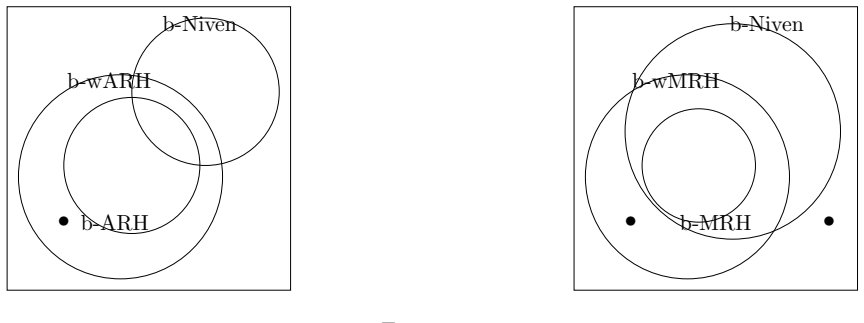
Reference graph
Works this paper leans on
-
[1]
C. N. Cooper and R. E. Kennedy, On consecutive Niven numbers, Fibonacci Quart., 21 (1993), 146–151
work page 1993
-
[2]
J. M. De Koninck and N. Doyon, Large and small gaps between con secutive Niven numbers, J. Integer Seq. , 6 (2003), Article 03.2.5
work page 2003
-
[3]
H. G. Grundman, Sequences of consecutive Niven numbers, Fibonacci Quart., 32 (1994), 174–175
work page 1994
-
[4]
H. Fredricksen, E. J. Iona¸ scu, F. Luca, and P. St˘ anic˘ a, Re marks on a sequence of minimal Niven numbers, In: Sequences, Subsequences, and Consequences, Lec. Notes in Comp. Sci., Vol 4893. Springer, 2007, pp. 162–168
work page 2007
-
[5]
G. H. Hardy, Ramanujan: Three Lectures on Subjects Suggested by his Life and Work , Chelsea, 1999
work page 1999
-
[6]
Nit ¸ic˘ a, About some relatives of the taxicab number,J
V. Nit ¸ic˘ a, About some relatives of the taxicab number,J. of Int. Seq. , 21 (2018), Article 18.9.4
work page 2018
-
[7]
V. Nit ¸ic˘ a, High degree b-Niven numbers, preprint, 2018, http://arxiv.org/abs/1807.02573
work page Pith review arXiv 2018
-
[8]
Nit ¸ic˘ a, Infinite sets ofb-additive and b-multiplicative Ramanujan-Hardy numbers, J
V. Nit ¸ic˘ a, Infinite sets ofb-additive and b-multiplicative Ramanujan-Hardy numbers, J. of Int. Seq. , 22 (2019), Article 19.4.3
work page 2019
Show all 9 references
-
[9]
N. J. A. Sloane, The On-Line Encyclopedia of Integer Sequences , http://oeis.org. 2010 Mathematics Subject Classification : Primary 11B83; Secondary 11B99. Keywords: base, b-Niven number, reversal, additive b-Ramanujan-Hardy number, multiplica- tive b-Ramanujan-Hardy number, hi...
2010
Reviewed August 14, 2026 · model on record in the stance chip above.
Discussion (0). Continue with ORCID to comment.