Parameter uncertainty in dynamical models: a practical identifiability index
Pith reviewed 2026-06-27 17:46 UTC · model grok-4.3
The pith
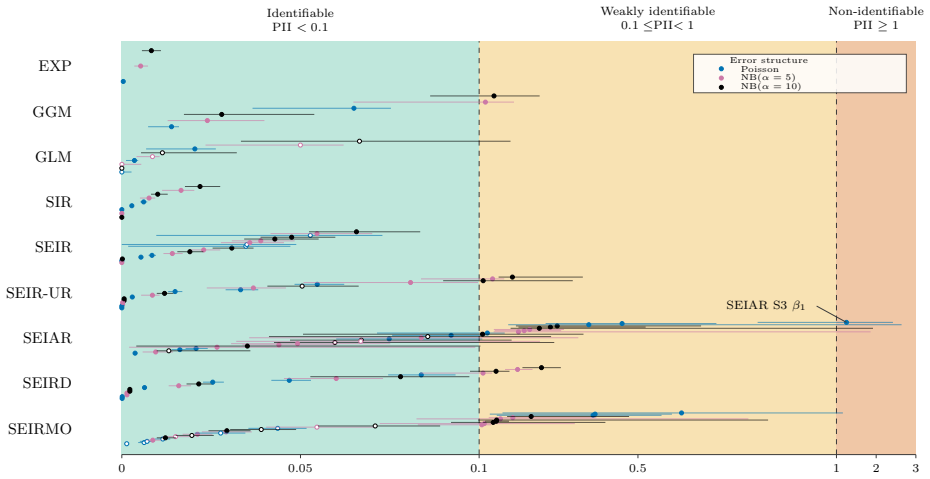
The Practical Identifiability Index measures how tightly each positive parameter in an ODE model is constrained by finite noisy data via the logarithmic width of its bootstrap confidence interval.
A machine-rendered reading of the paper's core claim, the machinery that carries it, and where it could break.
Core claim
The Practical Identifiability Index is the base-ten logarithm of the ratio of the upper to lower endpoint of a parametric bootstrap confidence interval for a positive parameter. This single number reports the number of orders of magnitude over which the parameter remains uncertain given the available observations, thereby supplying a reportable, comparable summary of practical identifiability that shrinks with richer data and grows with observation noise and parameter coupling.
What carries the argument
The Practical Identifiability Index (PII), defined as the logarithmic span of parametric bootstrap confidence intervals for each positive-valued parameter.
If this is right
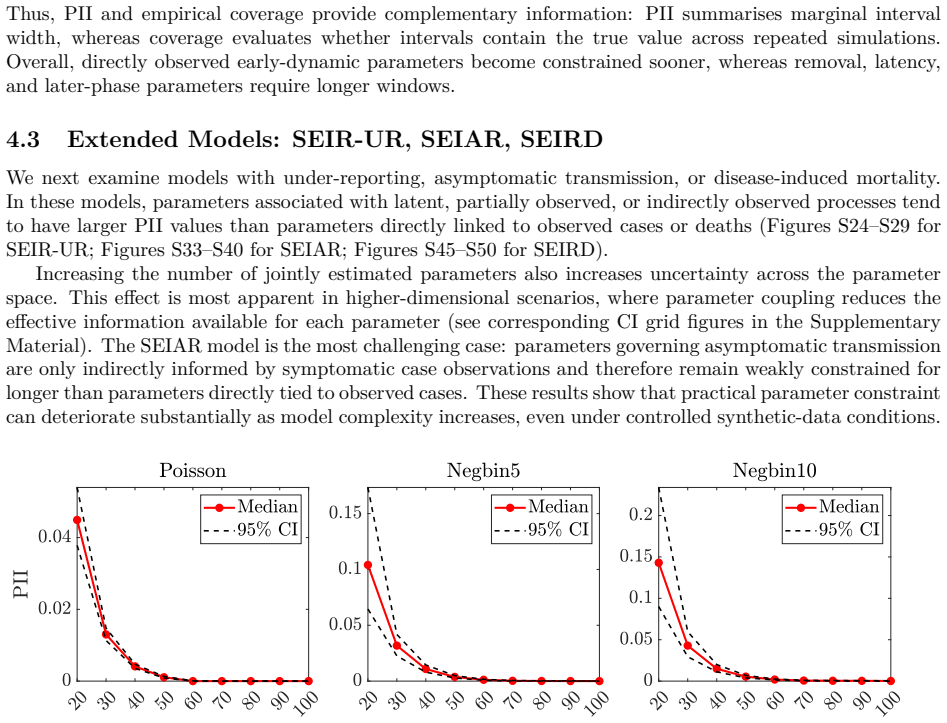
- Parameters that govern early observable dynamics reach low PII values sooner than those controlling latent progression or recovery.
- Adding observables that directly inform latent states lowers the PII for the corresponding progression and recovery parameters.
- Higher observation noise systematically raises PII values across all parameters.
- Stronger coupling between parameters produces higher individual PII values even when marginal intervals are examined separately.
- The index permits direct numerical ranking of parameters by practical identifiability within any given model and data set.
Where Pith is reading between the lines
- The PII could be recomputed from profile-likelihood or posterior intervals to check whether the ordering of parameters by uncertainty stays consistent across different uncertainty representations.
- In model-reduction workflows, parameters whose PII remains above a chosen threshold after all available data are used might be fixed to nominal values without large loss of predictive fidelity.
- Experimental designs that minimize the maximum PII across key parameters could be searched systematically before data collection begins.
- For models with dozens of parameters, the PII might serve as an inexpensive pre-screen before running full structural identifiability algorithms.
Load-bearing premise
Parametric bootstrap confidence intervals give a reliable marginal picture of each parameter's uncertainty for the tested growth and compartmental models.
What would settle it
If the widths of bootstrap confidence intervals computed from repeated independent resamples of the same data set fluctuate by more than one order of magnitude across different random seeds, the PII would lose its claimed stability as a summary metric.
Figures
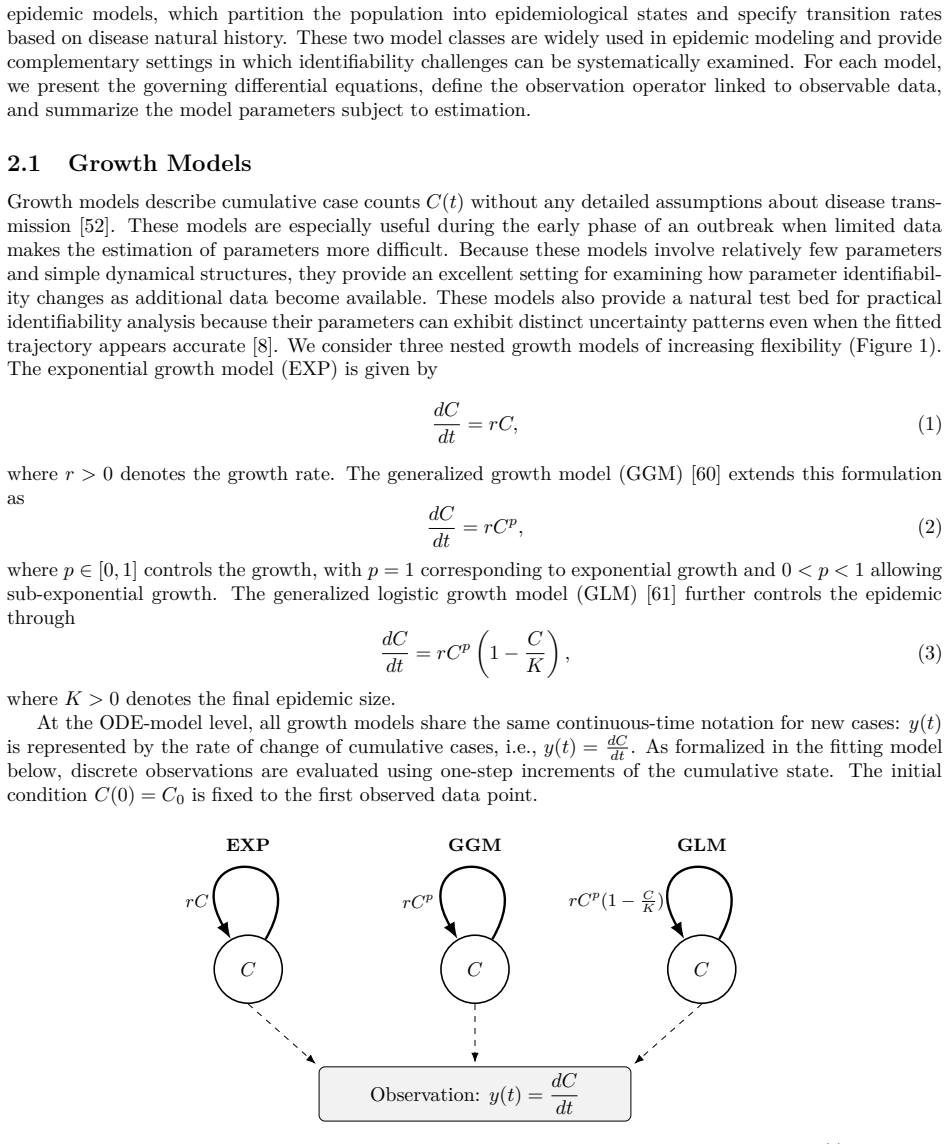
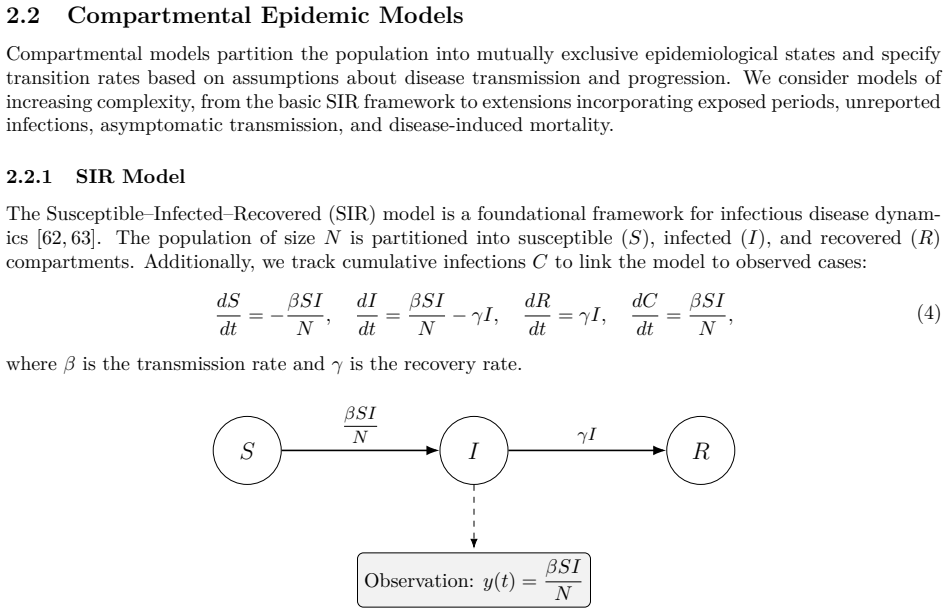
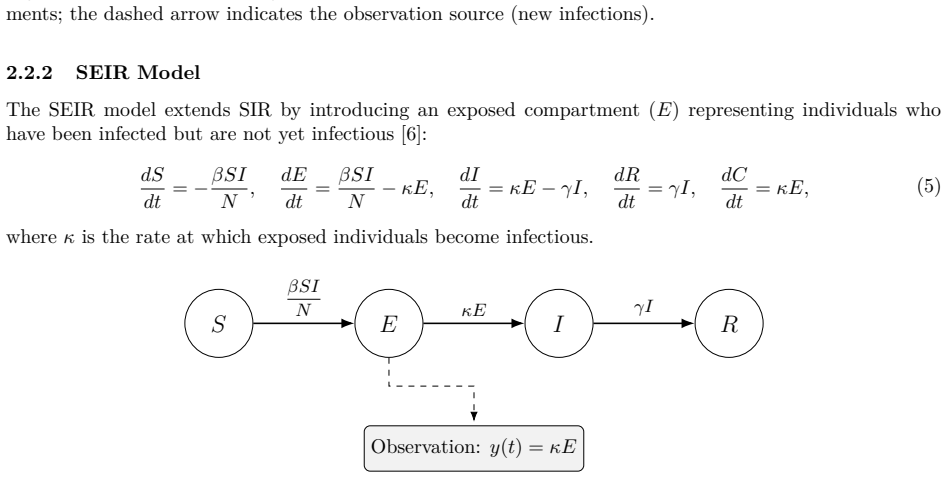
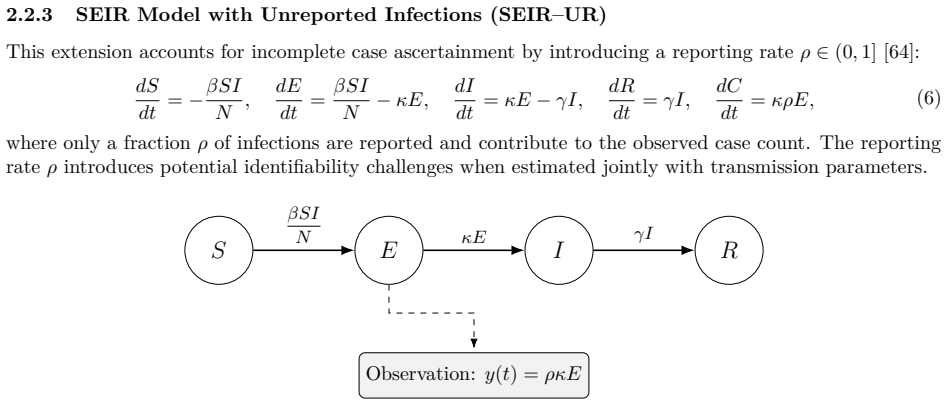
read the original abstract
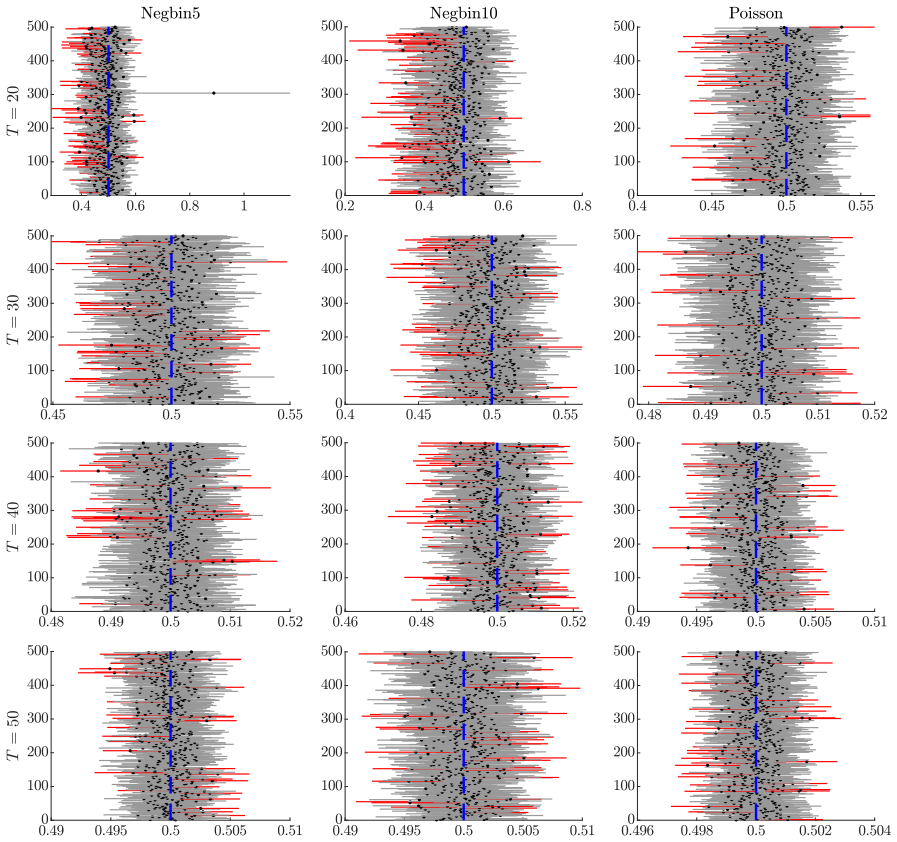
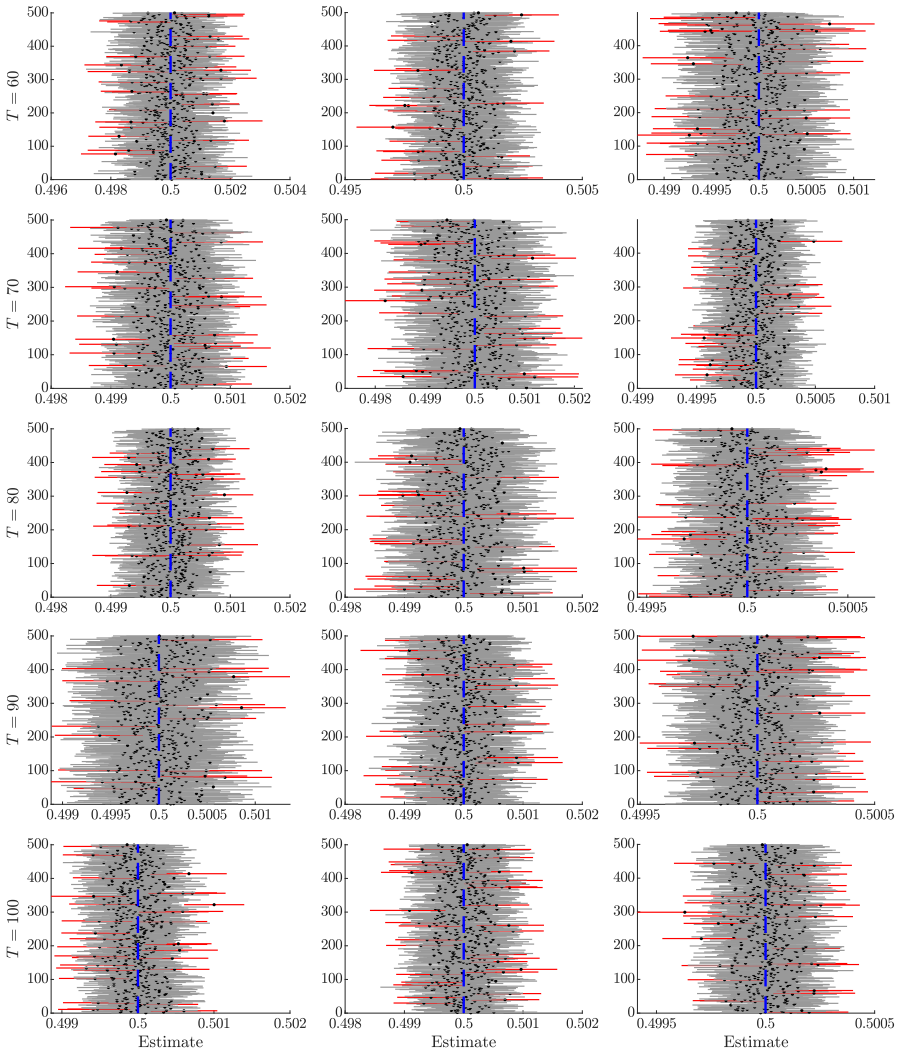
Ordinary differential equation models are widely used to understand and forecast complex dynamical systems, but their predictive value depends on reliable parameter estimation. Structural identifiability assesses whether parameters can be uniquely recovered from ideal observations, whereas practical identifiability depends on finite, noisy and partially observed data. We introduce the Practical Identifiability Index (PII), a marginal uncertainty-width metric based on the logarithmic span of confidence intervals. Expressed on an order-of-magnitude scale, the PII summarises how tightly individual positive-valued parameters are constrained by available observations, enabling comparison across parameters, models, error structures and observation designs. The PII is intended as a complementary diagnostic, not a standalone identifiability test, and should be interpreted alongside coverage, profile likelihoods, posterior summaries, sensitivity analysis or structural identifiability results. Using parametric bootstrap experiments across growth and compartmental epidemic models, we identify consistent principles: uncertainty decreases as calibration windows become more informative, increases with observation noise and parameter coupling, and remains high for latent or indirectly observed processes. Parameters governing early observable dynamics become constrained sooner, while additional observables can improve constraint for latent progression and recovery parameters. The PII provides a simple, reportable summary of marginal parameter uncertainty for dynamical modelling.
Editorial analysis
A structured set of objections, weighed in public.
Referee Report
Summary. The paper introduces the Practical Identifiability Index (PII), a metric defined as the logarithmic span of parametric-bootstrap confidence intervals for positive-valued parameters in ODE models. It positions PII as a simple, reportable summary of marginal uncertainty that enables comparisons across parameters, models, noise levels, and observation designs, and demonstrates its behavior via bootstrap experiments on growth and compartmental epidemic models, identifying patterns such as reduced uncertainty with more informative calibration windows and higher uncertainty for latent processes.
Significance. If the bootstrap intervals are statistically valid marginal representations, PII would offer a practical, order-of-magnitude scale diagnostic that complements profile likelihood, MCMC, and structural identifiability analyses for dynamical models. The approach is straightforward and directly addresses a common need in applied modeling, but its utility hinges on the reliability of the underlying intervals.
major comments (1)
- [bootstrap experiments] The central definition of PII (log-span of parametric bootstrap CIs) is load-bearing on the assumption that these intervals provide reliable marginal uncertainty for nonlinear ODEs. The abstract reports bootstrap experiments on growth and compartmental models but supplies no coverage diagnostics, convergence checks, or comparisons to profile likelihood or MCMC marginals. For models with parameter coupling, latent states, and non-elliptical likelihood surfaces, standard parametric bootstrap can produce intervals whose coverage deviates from nominal levels or whose width is dominated by optimization artifacts; this directly undermines the claim that PII faithfully summarises how tightly observations constrain each parameter.
minor comments (1)
- The abstract states that PII 'should be interpreted alongside' other diagnostics; this caveat is appropriate but could be strengthened with a brief decision tree or table showing when PII alone is insufficient.
Simulated Author's Rebuttal
We thank the referee for their careful reading and for identifying a key limitation in the validation of the bootstrap-based PII. We agree that the reliability of the underlying intervals must be demonstrated explicitly and will revise the manuscript accordingly.
read point-by-point responses
-
Referee: [bootstrap experiments] The central definition of PII (log-span of parametric bootstrap CIs) is load-bearing on the assumption that these intervals provide reliable marginal uncertainty for nonlinear ODEs. The abstract reports bootstrap experiments on growth and compartmental models but supplies no coverage diagnostics, convergence checks, or comparisons to profile likelihood or MCMC marginals. For models with parameter coupling, latent states, and non-elliptical likelihood surfaces, standard parametric bootstrap can produce intervals whose coverage deviates from nominal levels or whose width is dominated by optimization artifacts; this directly undermines the claim that PII faithfully summarises how tightly observations constrain each parameter.
Authors: We agree that the absence of coverage diagnostics, convergence checks, and comparisons to profile likelihood or MCMC is a substantive gap. In the revised manuscript we will add (i) simulation-based coverage assessments on the growth and epidemic models where ground-truth parameters are known, (ii) diagnostics for optimizer convergence across bootstrap replicates, and (iii) side-by-side comparisons of bootstrap intervals with profile-likelihood and MCMC marginals on at least two of the example models. These additions will allow readers to evaluate whether the reported PII values reflect genuine marginal uncertainty or optimization artifacts. revision: yes
Circularity Check
No circularity: PII is a direct post-processing metric on bootstrap CIs with no self-referential reduction
full rationale
The paper defines the Practical Identifiability Index explicitly as the logarithmic span of parametric-bootstrap confidence intervals and applies it to summarize results from bootstrap experiments on growth and compartmental models. This construction is a straightforward summary statistic rather than a claimed derivation that reduces by the paper's own equations to its inputs. No load-bearing self-citations, uniqueness theorems, or ansatzes are invoked; the bootstrap supplies the intervals that are then summarized by PII without the metric itself being fitted or redefined in terms of its outputs. The derivation chain is therefore self-contained against external benchmarks and does not exhibit any of the enumerated circularity patterns.
Axiom & Free-Parameter Ledger
axioms (2)
- domain assumption Parametric bootstrap yields valid confidence intervals that reflect true marginal uncertainty for the tested models
- domain assumption Parameters of interest are positive-valued
invented entities (1)
-
Practical Identifiability Index (PII)
no independent evidence
Forward citations
Cited by 1 Pith paper
-
Adaptive COVID-19 Trajectory Forecasting Using MAB-Inspired Ensemble Weighting
EXP3-based adaptive ensembles achieved the lowest mean weighted interval scores for COVID-19 incidence forecasts compared with individual models and simple ensemble baselines.
Reference graph
Works this paper leans on
-
[1]
Investigating and forecasting infectious disease dynamics using epidemiological and molecular surveillance data.Physics of Life Reviews, 51:294–327, 2024
Gerardo Chowell and Pavel Skums. Investigating and forecasting infectious disease dynamics using epidemiological and molecular surveillance data.Physics of Life Reviews, 51:294–327, 2024
2024
-
[2]
Differential equation models for infectious diseases: Mathe- matical modeling, qualitative analysis, numerical methods and applications.SeMA Journal, pages 1–36, 2025
Manh Tuan Hoang and Matthias Ehrhardt. Differential equation models for infectious diseases: Mathe- matical modeling, qualitative analysis, numerical methods and applications.SeMA Journal, pages 1–36, 2025
2025
-
[3]
Forecasting the spatial spread of an ebola epidemic in real time: Comparing predictions of mathematical models and experts.eLife, 13:RP98005, 2025
James D Munday, Alicia Rosello, W John Edmunds, and Sebastian Funk. Forecasting the spatial spread of an ebola epidemic in real time: Comparing predictions of mathematical models and experts.eLife, 13:RP98005, 2025. 137
2025
-
[4]
Chapman and Hall/CRC, 2024
Steven H Strogatz.Nonlinear dynamics and chaos: with applications to physics, biology, chemistry, and engineering. Chapman and Hall/CRC, 2024
2024
-
[5]
SIAM, 2005
Leah Edelstein-Keshet.Mathematical models in biology. SIAM, 2005
2005
-
[6]
Springer, 2019
Fred Brauer, Carlos Castillo-Chavez, Zhilan Feng, et al.Mathematical models in epidemiology, vol- ume 32. Springer, 2019
2019
-
[7]
Infectious disease modeling.Annual Review of Statistics and its Application, 12(1):19–44, 2025
Jing Huang and Jeffrey S Morris. Infectious disease modeling.Annual Review of Statistics and its Application, 12(1):19–44, 2025
2025
-
[8]
Structural and practical identifiability of phenomenological growth models for epidemic forecasting.Viruses, 17(4):496, 2025
Yuganthi R Liyanage, Gerardo Chowell, Gleb Pogudin, and Necibe Tuncer. Structural and practical identifiability of phenomenological growth models for epidemic forecasting.Viruses, 17(4):496, 2025
2025
-
[9]
Oxford University Press, 2001
Yudi Pawitan.In all likelihood: statistical modelling and inference using likelihood. Oxford University Press, 2001
2001
-
[10]
Universally sloppy parameter sensitivities in systems biology models.PLoS computa- tional biology, 3(10):e189, 2007
Ryan N Gutenkunst, Joshua J Waterfall, Fergal P Casey, Kevin S Brown, Christopher R Myers, and James P Sethna. Universally sloppy parameter sensitivities in systems biology models.PLoS computa- tional biology, 3(10):e189, 2007
2007
-
[11]
Structural and practical identifiability analysis of partially observed dynamical models by exploiting the profile likelihood.Bioinformatics, 25(15):1923–1929, 2009
Andreas Raue, Clemens Kreutz, Thomas Maiwald, Julie Bachmann, Marcel Schilling, Ursula Klingm¨ uller, and Jens Timmer. Structural and practical identifiability analysis of partially observed dynamical models by exploiting the profile likelihood.Bioinformatics, 25(15):1923–1929, 2009
1923
-
[12]
Structural identifiability of com- partmental models for infectious disease transmission is influenced by data type.Epidemics, 41:100643, 2022
Emmanuelle A Dankwa, Andrew F Brouwer, and Christl A Donnelly. Structural identifiability of com- partmental models for infectious disease transmission is influenced by data type.Epidemics, 41:100643, 2022
2022
-
[13]
Kimberlyn Roosa and Gerardo Chowell. Assessing parameter identifiability in compartmental dynamic models using a computational approach: application to infectious disease transmission models.Theo- retical Biology and Medical Modelling, 16(1):1, 2019
2019
-
[14]
Dynamical compensation and structural identifiability of bio- logical models: Analysis, implications, and reconciliation.PLoS computational biology, 13(11):e1005878, 2017
Alejandro F Villaverde and Julio R Banga. Dynamical compensation and structural identifiability of bio- logical models: Analysis, implications, and reconciliation.PLoS computational biology, 13(11):e1005878, 2017
2017
-
[15]
Identifiability and estimation of multiple transmission pathways in cholera and waterborne disease.Journal of theoretical biology, 324:84–102, 2013
Marisa C Eisenberg, Suzanne L Robertson, and Joseph H Tien. Identifiability and estimation of multiple transmission pathways in cholera and waterborne disease.Journal of theoretical biology, 324:84–102, 2013
2013
-
[16]
Quantifying and managing uncertainty in systems biology: Mechanistic and data-driven models
Eva Balsa-Canto, N´ uria Campo-Manzanares, Artai R Moimenta, Geoffrey Roudaut, Diego Troitin, et al. Quantifying and managing uncertainty in systems biology: Mechanistic and data-driven models. Current Opinion in Systems Biology, page 100557, 2025
2025
-
[17]
Identifiability of large nonlinear biochemical networks
Alejandro F Villaverde and Antonio Barreiro. Identifiability of large nonlinear biochemical networks. MATCH Commun. Math. Comput. Chem, 76(2):259–296, 2016
2016
-
[18]
On structural identifiability.Mathematical biosciences, 7(3- 4):329–339, 1970
Ror Bellman and Karl Johan ˚Astr¨ om. On structural identifiability.Mathematical biosciences, 7(3- 4):329–339, 1970
1970
-
[19]
Claudio Cobelli and Joseph J Distefano 3rd. Parameter and structural identifiability concepts and ambiguities: a critical review and analysis.American Journal of Physiology-Regulatory, Integrative and Comparative Physiology, 239(1):R7–R24, 1980
1980
-
[20]
Differential elimination for dynamical models via projections with applications to structural identifiability.SIAM Journal on Applied Algebra and Geometry, 7(1):194–235, 2023
Ruiwen Dong, Christian Goodbrake, Heather A Harrington, and Gleb Pogudin. Differential elimination for dynamical models via projections with applications to structural identifiability.SIAM Journal on Applied Algebra and Geometry, 7(1):194–235, 2023. 138
2023
-
[21]
Springer, 1997
Eric Walter and Luc Pronzato.Identification of Parametric Models from Experimental Data. Springer, 1997
1997
-
[22]
On global identifiability for arbitrary model parametrizations.Auto- matica, 30(2):265–276, 1994
Lennart Ljung and Torkel Glad. On global identifiability for arbitrary model parametrizations.Auto- matica, 30(2):265–276, 1994
1994
-
[23]
Parameter identifiability of nonlinear systems: the role of initial conditions.Automatica, 39(4):619–632, 2003
Maria Pia Saccomani, Stefania Audoly, and Leontina D’Angi` o. Parameter identifiability of nonlinear systems: the role of initial conditions.Automatica, 39(4):619–632, 2003
2003
-
[24]
Structural identifiability of systems biology models: a critical comparison of methods.PLOS ONE, 6(11):e27755, 2011
Oana-Teodora Chis, Julio R Banga, and Eva Balsa-Canto. Structural identifiability of systems biology models: a critical comparison of methods.PLOS ONE, 6(11):e27755, 2011
2011
-
[25]
Structural and practical identifiability analysis of outbreak models
Necibe Tuncer and Trang T Le. Structural and practical identifiability analysis of outbreak models. Mathematical biosciences, 299:1–18, 2018
2018
-
[26]
On identifiability of nonlinear ode models and applications in viral dynamics.SIAM review, 53(1):3–39, 2011
Hongyu Miao, Xiaohua Xia, Alan S Perelson, and Hulin Wu. On identifiability of nonlinear ode models and applications in viral dynamics.SIAM review, 53(1):3–39, 2011
2011
-
[27]
Benchmarking tools for a priori identifiability analysis
Xabier Rey Barreiro and Alejandro F Villaverde. Benchmarking tools for a priori identifiability analysis. Bioinformatics, 39(2):btad065, 2023
2023
-
[28]
Strike-goldd 4.0: user-friendly, efficient analysis of structural identifiability and observability.Bioinformatics, 39(1):btac748, 2023
Sandra D´ ıaz-Seoane, Xabier Rey Barreiro, and Alejandro F Villaverde. Strike-goldd 4.0: user-friendly, efficient analysis of structural identifiability and observability.Bioinformatics, 39(1):btac748, 2023
2023
-
[29]
On structural and practical identifiability: Current status and update of results.Current Opinion in Systems Biology, 41:100546, 2025
Mio Heinrich, Marcus Rosenblatt, Franz-Georg Wieland, Hans Stigter, and Jens Timmer. On structural and practical identifiability: Current status and update of results.Current Opinion in Systems Biology, 41:100546, 2025
2025
-
[30]
Practical parameter identifiability for spatio-temporal models of cell invasion.Journal of the Royal Society Interface, 17(164), 2020
Matthew J Simpson, Ruth E Baker, Sean T Vittadello, and Oliver J Maclaren. Practical parameter identifiability for spatio-temporal models of cell invasion.Journal of the Royal Society Interface, 17(164), 2020
2020
-
[31]
Minimally sufficient experimental design using identifiability analysis
Jana L Gevertz and Irina Kareva. Minimally sufficient experimental design using identifiability analysis. npj Systems Biology and Applications, 10(1):2, 2024
2024
-
[32]
Lack of practical identifiability may hamper reliable predictions in covid-19 epidemic models.Science advances, 8(3):eabg5234, 2022
Luca Gallo, Mattia Frasca, Vito Latora, and Giovanni Russo. Lack of practical identifiability may hamper reliable predictions in covid-19 epidemic models.Science advances, 8(3):eabg5234, 2022
2022
-
[33]
Inference-based assessment of parameter identifiability in nonlinear biological models.Journal of The Royal Society Interface, 15(144), 2018
Aidan C Daly, David Gavaghan, Jonathan Cooper, and Simon Tavener. Inference-based assessment of parameter identifiability in nonlinear biological models.Journal of The Royal Society Interface, 15(144), 2018
2018
-
[34]
Perspective: Sloppiness and emergent theories in physics, biology, and beyond.The Journal of Chemical Physics, 143(1), 2015
Mark K Transtrum, Benjamin B Machta, Kevin S Brown, Bryan C Daniels, Christopher R Myers, and James P Sethna. Perspective: Sloppiness and emergent theories in physics, biology, and beyond.The Journal of Chemical Physics, 143(1), 2015
2015
-
[35]
On the different flavours of practical identifiability
Mio Heinrich, Rafael Arutjunjan, and Jens Timmer. On the different flavours of practical identifiability. Current Opinion in Systems Biology, page 100556, 2025
2025
-
[36]
A systematic computational framework for practical identifiability analysis in mathematical models arising from biology.Advanced Science, 12(35):e04346, 2025
Shun Wang and Wenrui Hao. A systematic computational framework for practical identifiability analysis in mathematical models arising from biology.Advanced Science, 12(35):e04346, 2025
2025
-
[37]
Structural and practical identifiability of within- host models of virus dynamics–a review.Current Opinion in Systems Biology, page 100552, 2025
Necibe Tuncer, Maia Martcheva, and Stanca M Ciupe. Structural and practical identifiability of within- host models of virus dynamics–a review.Current Opinion in Systems Biology, page 100552, 2025
2025
-
[38]
Think before you fit: parameter identifiability, sensitivity and uncertainty in systems biology models
Simon P Preston, Richard D Wilkinson, Richard H Clayton, Mike J Chappell, and Gary R Mirams. Think before you fit: parameter identifiability, sensitivity and uncertainty in systems biology models. Current Opinion in Systems Biology, page 100563, 2025. 139
2025
-
[39]
Practical parameter identifiability and handling of censored data with bayesian inference in mathematical tumour models.npj Systems Biology and Applications, 10(1):89, 2024
Jamie Porthiyas, Daniel Nussey, Catherine AA Beauchemin, Donald C Warren, Christian Quirouette, and Kathleen P Wilkie. Practical parameter identifiability and handling of censored data with bayesian inference in mathematical tumour models.npj Systems Biology and Applications, 10(1):89, 2024
2024
-
[40]
Parameter identifiability and model selection for partial differential equation models of cell invasion.Journal of the Royal Society Interface, 21(212), 2024
Yue Liu, Kevin Suh, Philip K Maini, Daniel J Cohen, and Ruth E Baker. Parameter identifiability and model selection for partial differential equation models of cell invasion.Journal of the Royal Society Interface, 21(212), 2024
2024
-
[41]
Ryan J Murphy, Oliver J Maclaren, and Matthew J Simpson. Implementing measurement error models with mechanistic mathematical models in a likelihood-based framework for estimation, identifiability analysis and prediction in the life sciences.Journal of the Royal Society Interface, 21(210), 2024
2024
-
[42]
A comparative study of simulation-based inference methods for epidemic models with identifiability considerations.PLOS Computational Biology, 22(6):e1014364, 2026
Geunsoo Jang, K Sel¸ cuk Candan, and Gerardo Chowell. A comparative study of simulation-based inference methods for epidemic models with identifiability considerations.PLOS Computational Biology, 22(6):e1014364, 2026
2026
-
[43]
A method for computing profile-likelihood-based confidence intervals
DJ Venzon and SH Moolgavkar. A method for computing profile-likelihood-based confidence intervals. Journal of the Royal Statistical Society: Series C (Applied Statistics), 37(1):87–94, 1988
1988
-
[44]
Andreas Raue, Clemens Kreutz, Fabian Joachim Theis, and Jens Timmer. Joining forces of bayesian and frequentist methodology: a study for inference in the presence of non-identifiability.Philosophical Transactions of the Royal Society A: Mathematical, Physical and Engineering Sciences, 371(1984), 2013
1984
-
[45]
Likelihoodprofiler.jl: Unified profile-likelihood workflows for identifiability and confidence intervals.Journal of Open Source Software, 11(117):9501, 2026
Ivan Borisov, Aleksander Demin, and Evgeny Metelkin. Likelihoodprofiler.jl: Unified profile-likelihood workflows for identifiability and confidence intervals.Journal of Open Source Software, 11(117):9501, 2026
2026
-
[46]
Systems biology: parameter estimation for biochemical models.The FEBS journal, 276(4):886–902, 2009
Maksat Ashyraliyev, Yves Fomekong-Nanfack, Jaap A Kaandorp, and Joke G Blom. Systems biology: parameter estimation for biochemical models.The FEBS journal, 276(4):886–902, 2009
2009
-
[47]
Likelihood based observability analysis and confi- dence intervals for predictions of dynamic models.BMC Systems Biology, 6(1):120, 2012
Clemens Kreutz, Andreas Raue, and Jens Timmer. Likelihood based observability analysis and confi- dence intervals for predictions of dynamic models.BMC Systems Biology, 6(1):120, 2012
2012
-
[48]
A cost- effectiveness framework for covid-19 treatments for hospitalized patients in the united states.Advances in therapy, 38(4):1811–1831, 2021
Daniel Sheinson, Joseph Dang, Anuj Shah, Yang Meng, David Elsea, and Stacey Kowal. A cost- effectiveness framework for covid-19 treatments for hospitalized patients in the united states.Advances in therapy, 38(4):1811–1831, 2021
2021
-
[49]
Sars out- breaks in ontario, hong kong and singapore: the role of diagnosis and isolation as a control mechanism
Gerardo Chowell, Paul W Fenimore, Melissa A Castillo-Garsow, and Carlos Castillo-Chavez. Sars out- breaks in ontario, hong kong and singapore: the role of diagnosis and isolation as a control mechanism. Journal of theoretical biology, 224(1):1–8, 2003
2003
-
[50]
Inapparent infections and cholera dynamics.Nature, 454(7206):877–880, 2008
Aaron A King, Edward L Ionides, Mercedes Pascual, and Menno J Bouma. Inapparent infections and cholera dynamics.Nature, 454(7206):877–880, 2008
2008
-
[51]
Why is it difficult to accurately predict the covid-19 epidemic?Infectious disease modelling, 5:271–281, 2020
Weston C Roda, Marie B Varughese, Donglin Han, and Michael Y Li. Why is it difficult to accurately predict the covid-19 epidemic?Infectious disease modelling, 5:271–281, 2020
2020
-
[52]
A theory of growth.Mathematical Biosciences, 29(3-4):367–373, 1976
Malcolm E Turner Jr, Edwin L Bradley Jr, Katherine A Kirk, and Kenneth M Pruitt. A theory of growth.Mathematical Biosciences, 29(3-4):367–373, 1976
1976
-
[53]
Characterizing the repro- duction number of epidemics with early subexponential growth dynamics.Journal of The Royal Society Interface, 13(123), 2016
Gerardo Chowell, C´ ecile Viboud, Lone Simonsen, and Seyed M Moghadas. Characterizing the repro- duction number of epidemics with early subexponential growth dynamics.Journal of The Royal Society Interface, 13(123), 2016
2016
-
[54]
Observability and structural identifiability of nonlinear biological systems
Alejandro F Villaverde. Observability and structural identifiability of nonlinear biological systems. Complexity, 2019(1):8497093, 2019
2019
-
[55]
Determining identifiable parameter combinations using subset profiling.Mathematical biosciences, 256:116–126, 2014
Marisa C Eisenberg and Michael AL Hayashi. Determining identifiable parameter combinations using subset profiling.Mathematical biosciences, 256:116–126, 2014. 140
2014
-
[56]
Michael Binns, Alessandro Usai, and Constantinos Theodoropoulos. Identifiability methods for biologi- cal systems: Determining subsets of parameters through sensitivity analysis, penalty-based optimisation, profile likelihood and lasso model reduction.Computers & Chemical Engineering, 186:108683, 2024
2024
-
[57]
Identifiability and uncertainty for ordinary differential equation models with qualitative or semiquantitative data.Current Opinion in Systems Biology, page 100558, 2025
Domagoj Doreˇ si´ c, Dilan Pathirana, Daniel Weindl, and Jan Hasenauer. Identifiability and uncertainty for ordinary differential equation models with qualitative or semiquantitative data.Current Opinion in Systems Biology, page 100558, 2025
2025
-
[58]
Identifiability of infection model parameters early in an epidemic.SIAM journal on control and optimization, 60(2):S27–S48, 2021
Timothy Sauer, Tyrus Berry, Donald Ebeigbe, Michael M Norton, Andrew J Whalen, and Steven J Schiff. Identifiability of infection model parameters early in an epidemic.SIAM journal on control and optimization, 60(2):S27–S48, 2021
2021
-
[59]
On parameter identifiability in network-based epidemic models
Istvan Z Kiss and Peter L Simon. On parameter identifiability in network-based epidemic models. Bulletin of Mathematical Biology, 85(3):18, 2023
2023
-
[60]
A generalized-growth model to characterize the early ascending phase of infectious disease outbreaks.Epidemics, 15:27–37, 2016
C´ ecile Viboud, Lone Simonsen, and Gerardo Chowell. A generalized-growth model to characterize the early ascending phase of infectious disease outbreaks.Epidemics, 15:27–37, 2016
2016
-
[61]
Using phenomenological models to characterize transmissibility and forecast patterns and final burden of zika epidemics.PLoS currents, 8:ecurrents–outbreaks, 2016
Gerardo Chowell, Doracelly Hincapie-Palacio, Juan Ospina, Bruce Pell, Amna Tariq, Sushma Dahal, Seyed Moghadas, Alexandra Smirnova, Lone Simonsen, and C´ ecile Viboud. Using phenomenological models to characterize transmissibility and forecast patterns and final burden of zika epidemics.PLoS currents, 8:ecurrents–outbreaks, 2016
2016
-
[62]
A contribution to the mathematical theory of epidemics.Proceedings of the royal society of london
William Ogilvy Kermack and Anderson G McKendrick. A contribution to the mathematical theory of epidemics.Proceedings of the royal society of london. Series A, Containing papers of a mathematical and physical character, 115(772):700–721, 1927
1927
-
[63]
The mathematics of infectious diseases.SIAM review, 42(4):599–653, 2000
Herbert W Hethcote. The mathematics of infectious diseases.SIAM review, 42(4):599–653, 2000
2000
-
[64]
Hamed Karami, Ruiyan Luo, Pejman Sanaei, and Gerardo Chowell. Comparative study of bayesian and frequentist methods for epidemic forecasting: Insights from simulated and historical data.Statistical Methods in Medical Research, 35(1):21–39, 2026
2026
-
[65]
Structural identifiability analysis of epidemic models based on differential equations: a tutorial-based primer
Gerardo Chowell, Sushma Dahal, Yuganthi R Liyanage, Amna Tariq, and Necibe Tuncer. Structural identifiability analysis of epidemic models based on differential equations: a tutorial-based primer. Journal of mathematical biology, 87(6):79, 2023
2023
-
[66]
Gerardo Chowell, Amanda Bleichrodt, and Ruiyan Luo. Parameter estimation and forecasting with quantified uncertainty for ordinary differential equation models using quantdiffforecast: A matlab tool- box and tutorial.Statistics in medicine, 43(9):1826–1848, 2024
2024
-
[67]
Omar Saucedo, Amanda Laubmeier, Tingting Tang, Benjamin Levy, Lale Asik, Tim Pollington, and Olivia Prosper. Comparative analysis of practical identifiability methods for an seir model.arXiv preprint arXiv:2401.15076, 2024
-
[68]
Hamed Karami, Amanda Bleichrodt, Ruiyan Luo, and Gerardo Chowell. Bayesianfitforecast: a user- friendly r toolbox for parameter estimation and forecasting with ordinary differential equations.BMC Medical Informatics and Decision Making, 25(1):1–40, 2025
2025
-
[69]
Springer, 2006
Jorge Nocedal and Stephen J Wright.Numerical optimization. Springer, 2006. 141
2006
discussion (0)
Sign in with ORCID, Apple, or X to comment. Anyone can read and Pith papers without signing in.