CAPnet: A Defense Against Cache Accounting Attacks on Content Distribution Networks
Pith reviewed 2026-05-25 17:06 UTC · model grok-4.3
The pith
CAPnet uses a client-solved puzzle requiring data colocation to bound accounting attacks when untrusted caches join peer-assisted CDNs.
A machine-rendered reading of the paper's core claim, the machinery that carries it, and where it could break.
Core claim
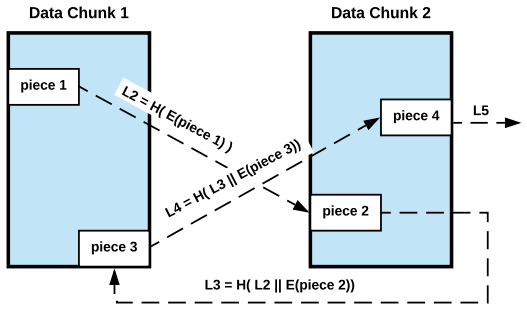
CAPnet is the first technique that lets untrusted caches join a peer-assisted CDN while providing a bound on the effectiveness of accounting attacks. At its heart is a lightweight cache accountability puzzle that clients must solve before caches are given credit. This puzzle requires colocating the data a client has requested, so its solution confirms that the content (or at least an amount of data within a pre-configured bound) has actually been retrieved.
What carries the argument
lightweight cache accountability puzzle whose solution requires colocating the requested data to confirm retrieval
If this is right
- Untrusted caches can participate without allowing unbounded false credit claims.
- Client overhead remains compatible with real-time high-definition video playback.
- Server-side puzzle generation scales to support hundreds of thousands of concurrent clients per core.
Where Pith is reading between the lines
- The same colocation requirement could be applied to other peer-to-peer incentive mechanisms that reward reported transfers.
- Tuning the pre-configured data bound offers a direct way to trade security margin against puzzle difficulty for different content sizes.
Load-bearing premise
A valid puzzle solution is possible only when the requested data is actually present and colocated with the client.
What would settle it
An experiment in which a client produces a valid puzzle solution for a cache that never transferred the requested content to that client.
Figures



read the original abstract
Peer-assisted content distribution networks(CDNs) have emerged to improve performance and reduce deployment costs of traditional, infrastructure-based content delivery networks. This is done by employing peer-to-peer data transfers to supplement the resources of the network infrastructure. However, these hybrid systems are vulnerable to accounting attacks in which the peers, or caches, collude with clients in order to report that content was transferred when it was not. This is a particular issue in systems that incentivize cache participation, because malicious caches may collect rewards from the content publishers operating the CDN without doing any useful work. In this paper, we introduce CAPnet, the first technique that lets untrusted caches join a peer-assisted CDN while providing a bound on the effectiveness of accounting attacks. At its heart is a lightweight cache accountability puzzle that clients must solve before caches are given credit. This puzzle requires colocating the data a client has requested, so its solution confirms that the content (or at least an amount of data within a pre-configured bound) has actually been retrieved. We analyze the security and overhead of our scheme in realistic scenarios. The results show that a modest client machine using a single core can solve puzzles at a rate sufficient to simultaneously watch dozens of 1080p videos. The technique is designed to be even more scalable on the server side. In our experiments, one core of a single low-end machine is able to generate puzzles for 4.26 Tbps of bandwidth - enabling 870,000 clients to concurrently view the same 1080p video. This demonstrates that our scheme can ensure cache accountability without degrading system productivity.
Editorial analysis
A structured set of objections, weighed in public.
Referee Report
Summary. The manuscript introduces CAPnet as the first technique allowing untrusted caches to participate in peer-assisted CDNs while bounding accounting attacks. It centers on a lightweight cache accountability puzzle that clients must solve before caches receive credit; the puzzle is designed to require colocation of the requested data so that a valid solution confirms retrieval of the content (or an amount within a pre-configured bound). The paper reports security and overhead analysis in realistic scenarios, claiming a single client core suffices for dozens of simultaneous 1080p streams and a single server core can generate puzzles for 4.26 Tbps (supporting 870,000 concurrent 1080p clients).
Significance. If the puzzle construction enforces the stated colocation property and the reported performance numbers hold under the described conditions, the work supplies a practical, scalable defense for incentive-driven peer-assisted CDNs against collusion-based accounting attacks. The provision of concrete throughput figures for both client and server sides is a strength that supports the claim of negligible productivity impact.
minor comments (2)
- [Abstract] Abstract: the performance claims (4.26 Tbps server generation rate and 870,000-client concurrency) are presented without any description of the experimental methodology, workload parameters, hardware configuration, or measurement variance; adding a brief methods clause or reference to the relevant evaluation section would improve verifiability.
- [Abstract] Abstract: the phrase 'an amount of data within a pre-configured bound' is used without indicating how the bound is chosen or enforced in the puzzle construction; a short clarifying sentence would reduce ambiguity for readers.
Simulated Author's Rebuttal
We thank the referee for their careful reading and positive evaluation of the manuscript. The recommendation for minor revision is noted. The report lists no major comments, so we have no specific technical points to address at this time.
Circularity Check
No significant circularity in derivation chain
full rationale
The paper introduces CAPnet as a new construction centered on a cache accountability puzzle whose security property (colocation of requested data confirming retrieval within a bound) is stated directly as the design premise rather than derived from equations, fitted parameters, or self-citations. No load-bearing steps reduce by construction to inputs; performance bounds are presented as experimental measurements on the proposed mechanism. The derivation chain is self-contained as an explicit protocol design with no renaming of known results or imported uniqueness theorems.
Axiom & Free-Parameter Ledger
free parameters (1)
- pre-configured data bound
axioms (2)
- domain assumption Puzzle solution requires colocating the requested content data
- standard math Standard cryptographic puzzle hardness holds against colluding clients and caches
invented entities (1)
-
cache accountability puzzle
no independent evidence
Reference graph
Works this paper leans on
- [1]
-
[2]
https://www.akamai.com/us/en/products/media-delivery/ netsession-interface-overview.jsp
Akamai NetSession. https://www.akamai.com/us/en/products/media-delivery/ netsession-interface-overview.jsp
-
[3]
Cisco Visual Networking Index: Forecast and Methodology, 2016-2021 . https://www.cisco.com/c/en/us/solutions/collateral/service-provider/ visual-networking-index-vni/mobile-white-paper-c11-520862 .html
work page 2016
- [4]
-
[5]
http://fortune.com/2016/03/05/house-of- cards-viewership/
House of Cards Viewers Stats . http://fortune.com/2016/03/05/house-of- cards-viewership/
work page 2016
- [6]
-
[7]
https://help.netflix.com/ en/node/306
Netflix Internet Connection Speed Recommendations. https://help.netflix.com/ en/node/306
- [8]
-
[9]
https://www.networks.nokia.com/products/velocix-media-delivery- platform
Velocix. https://www.networks.nokia.com/products/velocix-media-delivery- platform
- [10]
-
[11]
Reliable client accounting for p2p-infrastructure hybrids
Aditya, P., Zhao, M., Lin, Y., Haeberlen, A., Druschel, P., Maggs, B., and Wishon, B. Reliable client accounting for p2p-infrastructure hybrids. In NSDI’12 (2012)
work page 2012
-
[12]
Survey on peer-assisted content delivery networks
Anjum, N., Karamshuk, D., Shikh-Bahaei, M., and Sastry, N. Survey on peer-assisted content delivery networks. Computer Networks 116 (2017)
work page 2017
-
[13]
Content delivery networks , vol
Buyya, R., Pathan, M., and Vakali, A. Content delivery networks , vol. 9. Springer Science & Business Media, 2008
work page 2008
-
[14]
Dynamic proofs of retrievability via obliv- ious ram
Cash, D., K¨upc ¸¨u, A., and Wichs, D. Dynamic proofs of retrievability via obliv- ious ram. Journal of Cryptology 30 , 1 (2017)
work page 2017
-
[15]
Dziembowski, S., Faust, S., Kolmogorov, V., and Pietrzak, K. Proofs of space. In Crypto’15 (2015)
work page 2015
-
[16]
C., K ¨upc ¸¨u, A., Papamanthou, C., and Tamassia, R
Erway, C. C., K ¨upc ¸¨u, A., Papamanthou, C., and Tamassia, R. Dynamic provable data possession. ACM Transactions on Information and System Security 17, 4 (2015). 20
work page 2015
-
[17]
Peerreview: Practical accountability for distributed systems
Haeberlen, A., Kouznetsov, P., and Druschel, P. Peerreview: Practical accountability for distributed systems. ACM SIGOPS operating systems review 41, 6 (2007)
work page 2007
-
[18]
IEEE Transactions on Multimedia 18 , 5 (2016)
Jin, Y., Wen, Y., and Guan, K.Toward cost-efficient content placement in media cloud: modeling and analysis. IEEE Transactions on Multimedia 18 , 5 (2016)
work page 2016
-
[19]
Lian, Q., Zhang, Z., Yang, M., Zhao, B. Y., Dai, Y., and Li, X. An empirical study of collusion behavior in the maze p2p file-sharing system. In ICDCS’07 (2007)
work page 2007
-
[20]
Ensuring content integrity for untrusted peer-to-peer content distribution networks
Michalakis, N., Soul ´e, R., and Grimm, R. Ensuring content integrity for untrusted peer-to-peer content distribution networks. In NSDI’07 (2007)
work page 2007
-
[21]
K., Zentveld, E., Crispo, B., and Tanenbaum, A
Nair, S. K., Zentveld, E., Crispo, B., and Tanenbaum, A. S. Floodgate: A micropayment incentivized p2p content delivery network. In IEEE ICCCN’08 (2008)
work page 2008
-
[22]
K., Sekar, V., Spensky, C., and Zhang, Z
Reiter, M. K., Sekar, V., Spensky, C., and Zhang, Z. Making peer-assisted content distribution robust to collusion using bandwidth puzzles. In ICISS’09 (2009)
work page 2009
-
[23]
Toward publicly auditable secure cloud data storage services
Wang, C., Ren, K., Lou, W., and Li, J. Toward publicly auditable secure cloud data storage services. IEEE network 24 , 4 (2010)
work page 2010
-
[24]
Peer-assisted content distribution in akamai netsession
Zhao, M., Aditya, P., Chen, A., Lin, Y., Haeberlen, A., Druschel, P., Maggs, B., Wishon, B., and Ponec, M. Peer-assisted content distribution in akamai netsession. In IMC’13 (2013). 21
work page 2013
discussion (0)
Sign in with ORCID, Apple, or X to comment. Anyone can read and Pith papers without signing in.