Newswire versus Social Media for Disaster Response and Recovery
Pith reviewed 2026-05-25 16:00 UTC · model grok-4.3
The pith
Tweets and newswire articles provide complementary perspectives that together form a holistic view of disaster situations.
A machine-rendered reading of the paper's core claim, the machinery that carries it, and where it could break.
Core claim
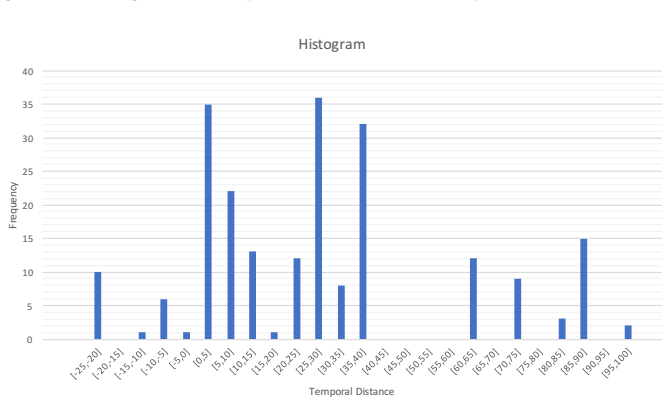
In the 2015 Nepal Earthquakes, tweets written by the public and newswire articles supply complementary perspectives that together form a holistic view of the disaster situation. The linking method permits direct comparison showing differences in when information appears and what aspects it covers. Treating matching tweets as summaries of the corresponding news articles further demonstrates how each medium captures distinct elements of events, needs, and impacts.
What carries the argument
A method for linking tweets to newswire articles that enables comparison of timeliness and content, with relevant tweets viewed as summaries of the matched articles.
Load-bearing premise
The method for linking tweets to newswire articles correctly identifies corresponding content without introducing substantial matching errors that would distort the timeliness and content comparisons.
What would settle it
A manual audit of the linked tweet-article pairs that finds a high rate of incorrect matches, or data from another disaster event in which the two sources show largely overlapping rather than complementary information.
Figures




read the original abstract
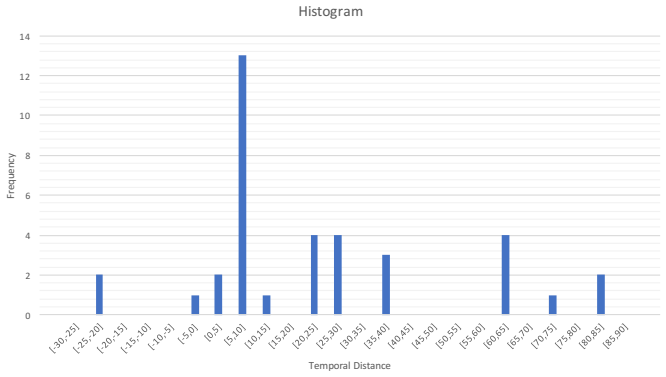
In a disaster situation, first responders need to quickly acquire situational awareness and prioritize response based on the need, resources available and impact. Can they do this based on digital media such as Twitter alone, or newswire alone, or some combination of the two? We examine this question in the context of the 2015 Nepal Earthquakes. Because newswire articles are longer, effective summaries can be helpful in saving time yet giving key content. We evaluate the effectiveness of several unsupervised summarization techniques in capturing key content. We propose a method to link tweets written by the public and newswire articles, so that we can compare their key characteristics: timeliness, whether tweets appear earlier than their corresponding news articles, and content. A novel idea is to view relevant tweets as a summary of the matching news article and evaluate these summaries. Whenever possible, we present both quantitative and qualitative evaluations. One of our main findings is that tweets and newswire articles provide complementary perspectives that form a holistic view of the disaster situation.
Editorial analysis
A structured set of objections, weighed in public.
Referee Report
Summary. The paper studies the 2015 Nepal Earthquakes to compare newswire articles and tweets for disaster situational awareness. It evaluates several unsupervised summarization methods on newswire, proposes an (unspecified) linking procedure between tweets and articles, compares the two sources on timeliness and content overlap, treats relevant tweets as summaries of matched articles, and concludes that the sources supply complementary perspectives that together yield a holistic view.
Significance. If the linking procedure is shown to be accurate, the work supplies a concrete, data-driven argument for combining social media and traditional news in crisis informatics, together with an empirical test of tweet-as-summary that could be reused in other event-monitoring settings. The absence of any reported link-validation statistics, however, leaves the central complementarity claim unsupported.
major comments (1)
- [linking procedure (abstract, §4)] The linking procedure is the load-bearing component for all timeliness and content-comparison results (abstract and §4). No precision, recall, or manual-validation figures are supplied for the generated tweet–article pairs; without them the reported differences in timeliness and the tweet-as-summary evaluation cannot be interpreted.
minor comments (2)
- [abstract] The abstract states that both quantitative and qualitative evaluations are presented “whenever possible,” yet the reader is given no indication of which results fall into each category.
- [summarization evaluation] The unsupervised summarization baselines are introduced without reference to the specific implementations or parameter settings used.
Simulated Author's Rebuttal
We thank the referee for the constructive review and for highlighting the importance of validating the linking procedure. We agree that this is a critical point and will strengthen the manuscript accordingly.
read point-by-point responses
-
Referee: [linking procedure (abstract, §4)] The linking procedure is the load-bearing component for all timeliness and content-comparison results (abstract and §4). No precision, recall, or manual-validation figures are supplied for the generated tweet–article pairs; without them the reported differences in timeliness and the tweet-as-summary evaluation cannot be interpreted.
Authors: We acknowledge that the manuscript does not report precision, recall, or manual validation statistics for the tweet–article linking procedure described in Section 4. This omission limits the interpretability of the timeliness and content-overlap results. In the revised version we will (1) provide a more explicit description of the linking criteria, (2) report the results of a manual validation study on a random sample of 200 candidate pairs (including precision and recall), and (3) discuss any limitations of the linking method. These additions will directly support the complementarity claims. revision: yes
Circularity Check
No circularity: empirical comparison with independent data analysis
full rationale
The paper conducts an empirical study on the 2015 Nepal Earthquakes, proposing a linking method between tweets and newswire articles, evaluating unsupervised summarization techniques, and comparing timeliness and content characteristics. No equations, derivations, or first-principles results are claimed that reduce to inputs by construction, fitted parameters renamed as predictions, or load-bearing self-citations. The complementarity finding emerges from direct data observations rather than self-referential definitions or ansatzes smuggled via prior work. The analysis is self-contained against external benchmarks with no reduction of outputs to the linking procedure itself.
Axiom & Free-Parameter Ledger
Reference graph
Works this paper leans on
-
[1]
S. Petrovic, M. Osborne, R. McCreadie, C. Macdonald, I. Ounis, L. Shrimp- ton, Can twitter replace newswire for breaking news?, in: Seventh interna- tional AAAI conference on weblogs and social media, 2013
work page 2013
- [2]
-
[3]
C. A. Cassa, R. Chunara, K. Mandl, J. S. Brownstein, Twitter as a sentinel 29 in emergency situations: lessons from the boston marathon explosions, PLoS currents 5
-
[4]
P. R. Spence, K. A. Lachlan, X. Lin, M. del Greco, Variability in twit- ter content across the stages of a natural disaster: Implications for crisis communication, Communication Quarterly 63 (2) (2015) 171–186
work page 2015
-
[5]
S. Doan, B.-K. H. Vo, N. Collier, An analysis of twitter messages in the 2011 tohoku earthquake, in: International conference on electronic healthcare, Springer, 2011, pp. 58–66
work page 2011
-
[6]
M. Martinez-Rojas, M. del Carmen Pardo-Ferreira, J. C. Rubio-Romero, Twitter as a tool for the management and analysis of emergency situa- tions: A systematic literature review, International Journal of Information Management 43 (2018) 196–208
work page 2018
-
[7]
F. Alam, S. Joty, M. Imran, Graph based semi-supervised learning with convolution neural networks to classify crisis related tweets, in: Twelfth International AAAI Conference on Web and Social Media, 2018
work page 2018
-
[8]
A. H¨ urriyetoglu, C. Gudehus, N. Oostdijk, Using relevancer to detect rele- vant tweets: The nepal earthquake case, in: booktitle = Working notes of FIRE 2016 - Forum for Information Retrieval Evaluation, Kolkata, India, December 7-10, 2016., 2016, pp. 76–78
work page 2016
-
[9]
J. Radianti, S. R. Hiltz, L. Labaka, An overview of public concerns during the recovery period after a major earthquake: Nepal twitter analysis, in: 49th Hawaii International Conference on System Sciences, HICSS 2016, Koloa, HI, USA, January 5-8, 2016, 2016, pp. 136–145
work page 2016
-
[10]
R. Subba, T. Bui, Online convergence behavior, social media communica- tions and crisis response: An empirical study of the 2015 nepal earthquake police twitter project, in: 50th Hawaii International Conference on System Sciences, HICSS 2017, Hilton Waikoloa Village, Hawaii, USA, January 4-7, 2017, 2017, pp. 1–10. 30
work page 2015
-
[11]
Y. Su, Z. Lan, Y. Lin, L. K. Comfort, J. Joshi, Tracking disaster response and relief following the 2015 nepal earthquake, in: 2nd IEEE International Conference on Collaboration and Internet Computing, CIC 2016, Pitts- burgh, PA, USA, November 1-3, 2016, 2016, pp. 495–499
work page 2015
-
[12]
M. Tsagkias, M. De Rijke, W. Weerkamp, Linking online news and social media, in: Proceedings of the fourth ACM international conference on Web search and data mining, ACM, 2011, pp. 565–574
work page 2011
-
[13]
Linking Tweets with Monolingual and Cross-Lingual News using Transformed Word Embeddings
A. Mogadala, D. Jung, A. Rettinger, Linking tweets with monolingual and cross-lingual news using transformed word embeddings, arXiv preprint arXiv:1710.09137
work page internal anchor Pith review Pith/arXiv arXiv
-
[14]
J. Wang, W. Tong, H. Yu, M. Li, X. Ma, H. Cai, T. Hanratty, J. Han, Mining multi-aspect reflection of news events in twitter: Discovery, link- ing and presentation, in: Data Mining (ICDM), 2015 IEEE International Conference on, IEEE, 2015, pp. 429–438
work page 2015
- [15]
-
[16]
B. Mazoyer, J. Cag´ e, C. Hudelot, M.-L. Viaud, Real-time collection of reliable and representative tweets datasets related to news events, in: Pro- ceedings of the first International Workshop on Analysis of Broad Dynamic Topics over Social Media: BroDyn, Vol. 18, 2018
work page 2018
-
[17]
X. Lin, Y. Gu, R. Zhang, J. Fan, Linking news and tweets, in: Australasian Database Conference, Springer, 2016, pp. 467–470
work page 2016
-
[18]
W. Guo, H. Li, H. Ji, M. Diab, Linking tweets to news: A framework to enrich short text data in social media, in: Proceedings of the 51st Annual Meeting of the Association for Computational Linguistics (Volume 1: Long Papers), Vol. 1, 2013, pp. 239–249. 31
work page 2013
-
[19]
B. Shi, G. Ifrim, N. Hurley, Be in the know: Connecting news articles to relevant twitter conversations, arXiv preprint arXiv:1405.3117
work page internal anchor Pith review Pith/arXiv arXiv
-
[20]
F. Abel, Q. Gao, G.-J. Houben, K. Tao, Semantic enrichment of twitter posts for user profile construction on the social web, in: Extended semantic web conference, Springer, 2011, pp. 375–389
work page 2011
-
[21]
R. McCreadie, C. Macdonald, I. Ounis, News vertical search: when and what to display to users, in: Proceedings of the 36th international ACM SIGIR conference on Research and development in information retrieval, ACM, 2013, pp. 253–262
work page 2013
-
[22]
Z. Wei, W. Gao, Gibberish, assistant, or master?: Using tweets linking to news for extractive single-document summarization, in: Proceedings of the 38th International ACM SIGIR Conference on Research and Development in Information Retrieval, ACM, 2015, pp. 1003–1006
work page 2015
- [23]
-
[24]
H. Li, H. Ji, Cross-genre event extraction with knowledge enrichment, in: Proceedings of the 2016 Conference of the North American Chapter of the Association for Computational Linguistics: Human Language Technologies, 2016, pp. 1158–1162
work page 2016
-
[25]
Z. Wei, W. Gao, Gibberish, assistant, or master?: Using tweets linking to news for extractive single-document summarization, in: Proceedings of the 38th International ACM SIGIR Conference on Research and Development in Information Retrieval, SIGIR ’15, ACM, New York, NY, USA, 2015, pp. 1003–1006. doi:10.1145/2766462.2767835. URL http://doi.acm.org/10.1145...
-
[26]
C. Lin, E. H. Hovy, Automatic evaluation of summaries using n-gram co- occurrence statistics, in: Human Language Technology Conference of the 32 North American Chapter of the Association for Computational Linguistics, HLT-NAACL 2003, Edmonton, Canada, May 27 - June 1, 2003, 2003. URL http://aclweb.org/anthology/N/N03/N03-1020.pdf
work page 2003
-
[27]
K. Rudra, S. Banerjee, N. Ganguly, P. Goyal, M. Imran, P. Mitra, Summarizing situational tweets in crisis scenario, in: Proceedings of the 27th ACM Conference on Hypertext and Social Media, HT ’16, ACM, New York, NY, USA, 2016, pp. 137–147. doi:10.1145/2914586.2914600. URL http://doi.acm.org.ezproxy.lib.uh.edu/10.1145/2914586. 2914600
-
[28]
F. Alam, S. Joty, M. Imran, Domain adaptation with adversarial training and graph embeddings, 2018
work page 2018
-
[29]
S. Bird, E. Klein, E. Loper, Natural language processing with Python, ” O’Reilly Media, Inc.”, 2009
work page 2009
-
[30]
G. A. Miller, Wordnet: A lexical database for english, Communications of the ACM 38 (11) (1995) 39–41
work page 1995
-
[31]
W. Guo, H. Li, H. Ji, M. Diab, Linking tweets to news: A framework to enrich short text data in social media, in: Proceedings of the 51th Annual Meeting of the Association for Computational Linguistics, 2013
work page 2013
-
[32]
R. M. Verma, D. Lee, Extractive summarization: Limits, compression, generalized model and heuristics, Computaci´ on y Sistemas 21 (4)
-
[33]
J. Zhang, T. Wang, X. Wan, PKUSUMSUM : A java platform for mul- tilingual document summarization, in: COLING 2016, 26th International Conference on Computational Linguistics, Proceedings of the Conference System Demonstrations, December 11-16, 2016, Osaka, Japan, 2016, pp. 287–291. URL http://aclweb.org/anthology/C/C16/C16-2060.pdf 33
work page 2016
-
[34]
C. Lin, ROUGE: A Package for Automatic Evaluation of Summaries, in: Proceedings of Workshop on Text Summarization Post-Conference Work- shop, (ACL 2004) Barcelona, Spain, 2004
work page 2004
-
[35]
K. Owczarzak, J. M. Conroy, H. T. Dang, A. Nenkova, An assessment of the accuracy of automatic evaluation in summarization, in: Proceedings of Workshop on Evaluation Metrics and System Comparison for Automatic Summarization@NACCL-HLT 2012, Montr` eal, Canada, June 2012, 2012, 2012, pp. 1–9. URL https://aclanthology.info/papers/W12-2601/w12-2601
work page 2012
-
[36]
Y. Graham, Re-evaluating automatic summarization with BLEU and 192 shades of ROUGE, in: Proceedings of the 2015 Conference on Empirical Methods in Natural Language Processing, EMNLP 2015, Lisbon, Portugal, September 17-21, 2015, 2015, pp. 128–137. URL http://aclweb.org/anthology/D/D15/D15-1013.pdf
work page 2015
-
[37]
J. Yin, J. Wang, A dirichlet multinomial mixture model-based approach for short text clustering, in: Proceedings of the 20th ACM SIGKDD inter- national conference on Knowledge discovery and data mining, ACM, 2014, pp. 233–242. 34
work page 2014
discussion (0)
Sign in with ORCID, Apple, or X to comment. Anyone can read and Pith papers without signing in.