Gray Level Image Threshold Using Neutrosophic Shannon Entropy
Pith reviewed 2026-05-25 16:16 UTC · model grok-4.3
The pith
Minimizing neutrosophic Shannon entropy yields optimal gray level thresholds for image segmentation.
A machine-rendered reading of the paper's core claim, the machinery that carries it, and where it could break.
Core claim
The method defines the neutrosophic truth, neutrality, and falsity degrees based on pixel belonging to the segmented regions and the separation threshold area, then minimizes the corresponding Shannon entropy to determine the optimal gray level thresholds for image segmentation.
What carries the argument
Neutrosophic Shannon entropy whose truth, neutrality, and falsity components are defined from region membership and threshold area.
If this is right
- The same minimization can return several thresholds when the image contains more than two intensity classes.
- Threshold selection depends only on the intensity histogram and the neutrosophic membership rules.
- The resulting partitions are intended to respect both region coherence and the uncertain zone near each threshold.
- Performance is reported as good on the test images used in the experiments.
Where Pith is reading between the lines
- The same membership rules could be applied to other entropy measures or to color channels independently.
- If the neutrality component captures boundary pixels effectively, the method might reduce sensitivity to small intensity shifts compared with crisp entropy.
- The construction offers a concrete way to blend classical information-theoretic thresholding with neutrosophic uncertainty handling.
Load-bearing premise
The chosen definitions of the neutrosophic components produce an entropy minimum that corresponds to segmentation thresholds that are meaningfully better or more stable than those from standard methods.
What would settle it
Apply the procedure to standard test images, compute segmentation quality metrics such as boundary error or region overlap against ground truth, and compare the scores directly to those obtained by ordinary Shannon entropy thresholding; if the neutrosophic version is not at least as good, the performance claim does not hold.
Figures
read the original abstract
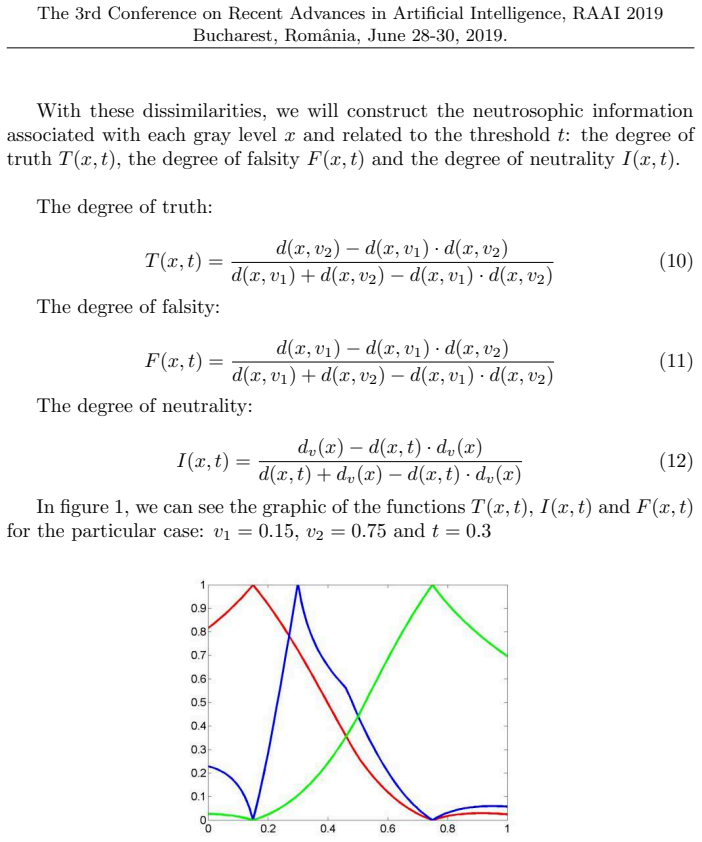
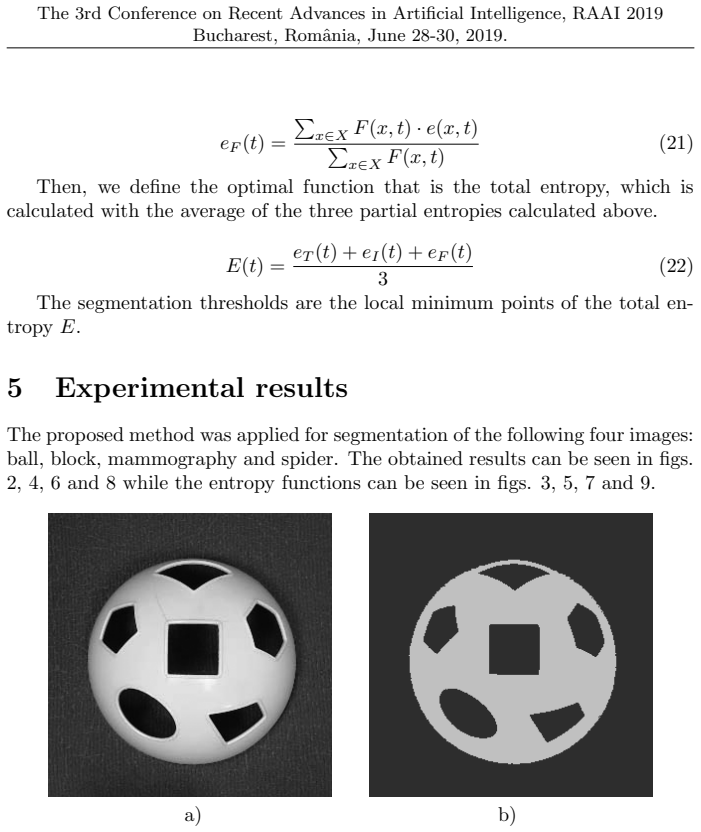
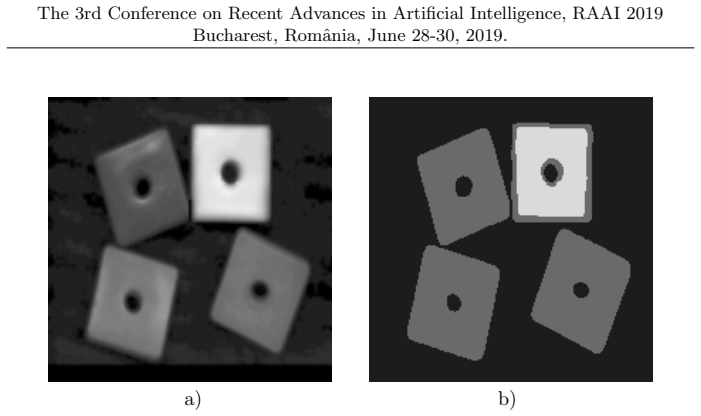
This article presents a new method of segmenting grayscale images by minimizing Shannon's neutrosophic entropy. For the proposed segmentation method, the neutrosophic information components, i.e., the degree of truth, the degree of neutrality and the degree of falsity are defined taking into account the belonging to the segmented regions and at the same time to the separation threshold area. The principle of the method is simple and easy to understand and can lead to multiple thresholds. The efficacy of the method is illustrated using some test gray level images. The experimental results show that the proposed method has good performance for segmentation with optimal gray level thresholds.
Editorial analysis
A structured set of objections, weighed in public.
Referee Report
Summary. The paper proposes a new grayscale image segmentation method that minimizes Shannon entropy in a neutrosophic framework. The truth, indeterminacy, and falsity components are defined by considering pixel membership in the segmented regions together with the separation threshold area; the approach is presented as simple, able to yield multiple thresholds, and effective on the basis of qualitative illustrations on a small set of test images.
Significance. A validated neutrosophic-entropy criterion could supply an alternative thresholding objective that explicitly models uncertainty, potentially useful in applications where classical entropy or variance-based methods are sensitive to noise or ambiguous boundaries. The current manuscript, however, supplies neither the explicit component formulas, the optimization procedure, quantitative performance metrics, nor any baseline comparison, so the practical significance cannot yet be assessed.
major comments (2)
- [Abstract] Abstract: the claim that 'the experimental results show that the proposed method has good performance for segmentation with optimal gray level thresholds' is unsupported; no numerical metrics (e.g., Dice, PSNR, misclassification error), no statistical tests, and no comparison against Otsu, Kapur, or standard Shannon entropy appear in the text.
- [Abstract] Abstract: the neutrosophic components are stated to be 'defined taking into account the belonging to the segmented regions and at the same time to the separation threshold area,' yet the manuscript provides neither the explicit mapping from pixels to T/I/F values nor the resulting entropy expression; without these it is impossible to determine whether the minimization is independent of the modeling choices or partly circular.
minor comments (1)
- The manuscript would benefit from a dedicated section or appendix containing the full mathematical definitions, the optimization algorithm (including any search strategy for multiple thresholds), and pseudocode to permit reproduction.
Simulated Author's Rebuttal
We thank the referee for the constructive feedback on our manuscript. We agree that the current version requires substantial improvements in quantitative validation and explicit mathematical detail to support the claims made. We address each major comment below and will incorporate the necessary revisions.
read point-by-point responses
-
Referee: [Abstract] Abstract: the claim that 'the experimental results show that the proposed method has good performance for segmentation with optimal gray level thresholds' is unsupported; no numerical metrics (e.g., Dice, PSNR, misclassification error), no statistical tests, and no comparison against Otsu, Kapur, or standard Shannon entropy appear in the text.
Authors: We agree that the abstract claim is not supported by quantitative evidence in the current manuscript, which relies solely on qualitative illustrations. In the revised version we will add numerical performance metrics (including misclassification error) together with comparisons against Otsu and Kapur methods, and we will revise or remove the unsupported statement in the abstract accordingly. revision: yes
-
Referee: [Abstract] Abstract: the neutrosophic components are stated to be 'defined taking into account the belonging to the segmented regions and at the same time to the separation threshold area,' yet the manuscript provides neither the explicit mapping from pixels to T/I/F values nor the resulting entropy expression; without these it is impossible to determine whether the minimization is independent of the modeling choices or partly circular.
Authors: The manuscript provides only a high-level conceptual description of the T/I/F components without the explicit pixel-to-membership mappings or the derived entropy formula. We will add the complete mathematical definitions, the explicit component formulas, and the entropy expression in the revised manuscript to enable reproducibility and independent assessment. revision: yes
Circularity Check
No significant circularity detected
full rationale
The method defines neutrosophic T/I/F components as functions of region membership and the candidate threshold, then minimizes the resulting Shannon entropy to select the threshold. This is a standard variational optimization construction (objective depends on the decision variable) and does not reduce to a tautology or self-definition by construction. No load-bearing self-citations, imported uniqueness theorems, or ansatz smuggling appear in the supplied text. The central claim rests on experimental demonstration rather than an internal reduction to inputs.
Axiom & Free-Parameter Ledger
axioms (1)
- domain assumption Shannon entropy remains a meaningful information measure when its arguments are neutrosophic triples (truth, neutrality, falsity).
Lean theorems connected to this paper
-
IndisputableMonolith/Cost/FunctionalEquation.leanwashburn_uniqueness_aczel unclear?
unclearRelation between the paper passage and the cited Recognition theorem.
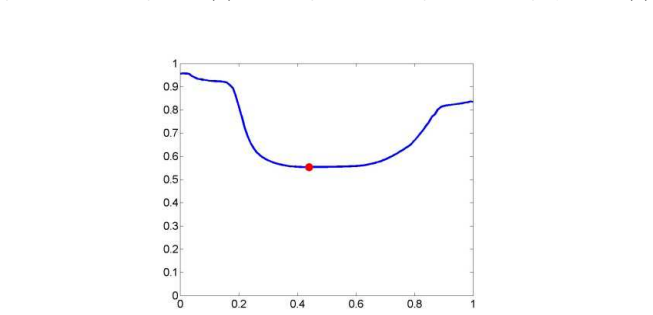
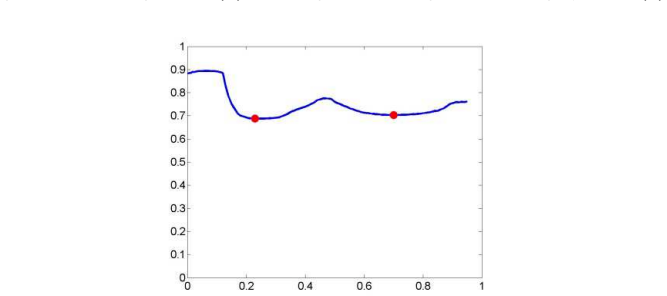
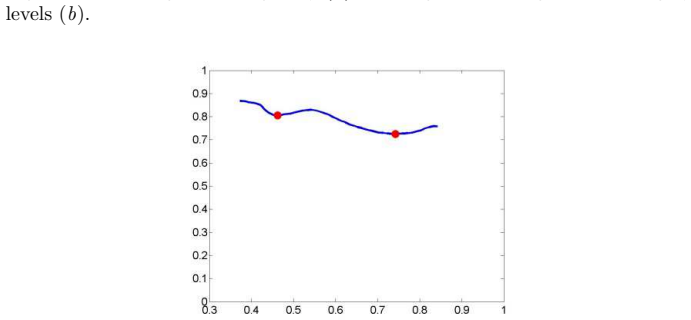
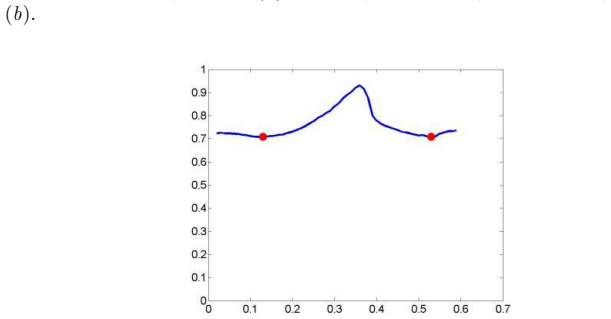
The neutrosophic information components... are defined taking into account the belonging to the segmented regions and at the same time to the separation threshold area... E(t) = (eT(t) + eI(t) + eF(t))/3. The segmentation thresholds are the local minimum points of the total entropy E.
What do these tags mean?
- matches
- The paper's claim is directly supported by a theorem in the formal canon.
- supports
- The theorem supports part of the paper's argument, but the paper may add assumptions or extra steps.
- extends
- The paper goes beyond the formal theorem; the theorem is a base layer rather than the whole result.
- uses
- The paper appears to rely on the theorem as machinery.
- contradicts
- The paper's claim conflicts with a theorem or certificate in the canon.
- unclear
- Pith found a possible connection, but the passage is too broad, indirect, or ambiguous to say the theorem truly supports the claim.
Reference graph
Works this paper leans on
-
[1]
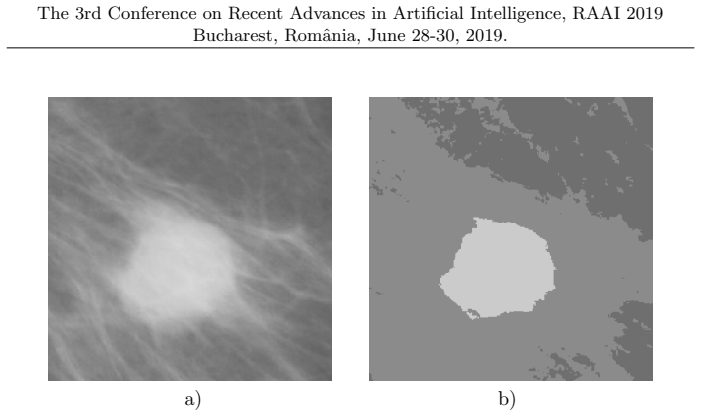
K. Atanassov. Intuitionistic Fuzzy sets. Fuzzy Sets and Systems 20, pp. 87-96, (1986). MDPI, Preprints 2019, 2019060248. 6 The 3rd Conference on Recent Advances in Artificial Intelligence, RAAI 2019 Bucharest, Romˆ ania, June 28-30, 2019. a) b) Figure 6: The image mammography ( a). The segmented image with three gray levels (b). Figure 7: The graphic of ne...
work page 1986
-
[2]
Ashbacher, Introduction to Neutrosophic Logic, American Research Press, Rehoboth, NM, (2002)
C. Ashbacher, Introduction to Neutrosophic Logic, American Research Press, Rehoboth, NM, (2002)
work page 2002
-
[3]
V. Patrascu, Shannon entropy for imprecise and under-defined or over- defined information, The 25th Conference on Applied and Industrial Math- ematics, CAIM 2017, Iasi, Romania, ROMAI Journal, vol. 14, no. 1, pp. 169-185, (2018)
work page 2017
-
[4]
V. Patrascu, Shannon Entropy for Neutrosophic Information, doi:10.13140 /RG.2.2.32352.74244, arXiv:1810.00748, September, (2018)
-
[5]
V. Patrascu, A Novel Penta-Valued Descriptor for Color Clustering, The 6th International Conference on Image and Signal Processing, ICISP 2014, Cherbourg, Normandy, France, June 30 - July 2, 2014, Volume: Image and Signal Processing, Lecture Notes in Computer Science, Volume 8509, Springer International Publishing Switzerland, pp. 173-182, (2014). MDPI, P...
work page 2014
-
[6]
V. Patrascu, New Framework of HSL System Based Color Clustering Al- gorithm, The 24th Midwest Artificial Intelligence and Cognitive Sciences Conference, MAICS 2013, April 13-14, 2013, New Albany, Indiana. USA, ceur-ws.org, Vol. 1348, pp. 85-91, (2013)
work page 2013
-
[7]
Rivieccio, Neutrosophic Logics: Prospects and Problems, Fuzzy Sets and Systems, 159, pp
U. Rivieccio, Neutrosophic Logics: Prospects and Problems, Fuzzy Sets and Systems, 159, pp. 1860-1868, (2008)
work page 2008
-
[8]
Smarandache, A Unifying Field in Logics: Neutrosophic Logic
F. Smarandache, A Unifying Field in Logics: Neutrosophic Logic. Neu- trosophy, Neutrosophic Set, Neutrosophic Probability, American Research Press, Rehoboth, NM, (1999)
work page 1999
-
[9]
F. Smarandache, Neutrosophic Set - A Generalization of the Intuitionistic Fuzzy Set, International Journal of Pure and Applied Mathematics, 24, no. 3, pp. 287-297, (2005)
work page 2005
-
[10]
Shannon, A mathematical theory of communication, Bell System Tech., J
C.E. Shannon, A mathematical theory of communication, Bell System Tech., J. 27, pp. 379-423, (1948). MDPI, Preprints 2019, 2019060248. 8 The 3rd Conference on Recent Advances in Artificial Intelligence, RAAI 2019 Bucharest, Romˆ ania, June 28-30, 2019
work page 1948
-
[11]
Wikipedia, https://en.wikipedia.org/wiki/Multiset
-
[12]
A. L. Zadeh. Fuzzy sets, Information and Control, 8, pp. 338-353, (1965). MDPI, Preprints 2019, 2019060248. 9
work page 1965
discussion (0)
Sign in with ORCID, Apple, or X to comment. Anyone can read and Pith papers without signing in.