Using Chinese Characters To Generate Text-Based Passwords For Information Security
Pith reviewed 2026-05-24 22:47 UTC · model grok-4.3
The pith
Chinese characters transformed into disconnected graphs with flawed labellings generate text-based passwords.
A machine-rendered reading of the paper's core claim, the machinery that carries it, and where it could break.
Core claim
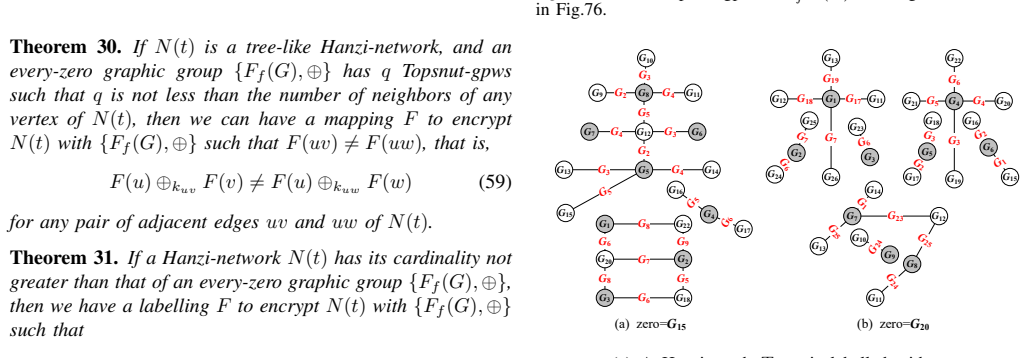
A Topsnut-gpw consists of a topological structure and a graph labelling that connects discrete elements into an interesting story. Chinese characters can be transformed into computer equipment with touch screens by speaking, writing and keyboard input to form Hanzi-graphs and Hanzi-gpws, which are then used to produce text-based passwords via flawed graph labellings on disconnected Hanzi-graphs.
What carries the argument
Hanzi-graphs formed from Chinese characters, equipped with flawed graph labellings on disconnected structures, that generate text-based passwords from topological graphic passwords.
If this is right
- Text-based passwords can be systematically derived from Hanzi-gpws.
- Flawed labellings on disconnected graphs provide a distinct mechanism from existing graphical password schemes.
- Input via speaking, writing or keyboard on touch screens enables direct mapping from characters to password elements.
- The topological structure plus labelling creates passwords that incorporate narrative connections between elements.
Where Pith is reading between the lines
- Users familiar with Chinese characters might find these passwords easier to remember than random strings, though this remains untested.
- The approach could extend to other character-based writing systems if the graph-labelling method generalizes beyond Hanzi.
- Security claims would require separate analysis of how the flawed labellings resist common password attacks.
- Device integration with touch screens suggests potential for direct drawing or selection interfaces during password creation.
Load-bearing premise
Representing Chinese characters as disconnected graphs with flawed labellings will produce passwords that are both secure and practical for users.
What would settle it
A test showing that passwords generated from these Hanzi-graphs are either easily guessed by attackers or too difficult for typical users to recall and enter on touch screens.
Figures











read the original abstract
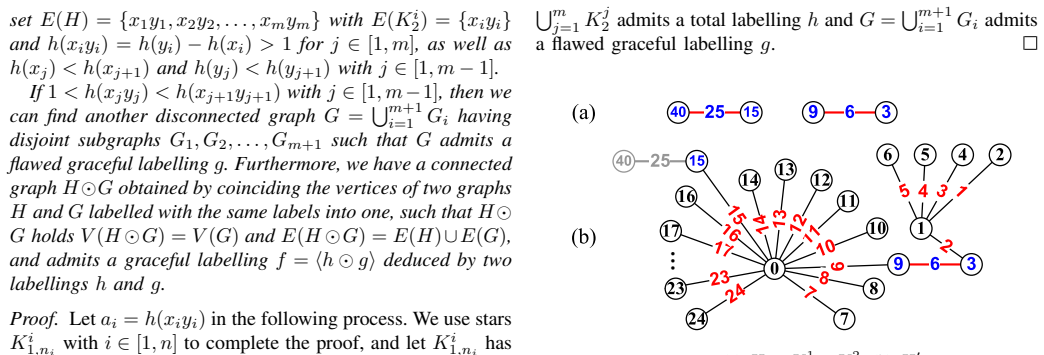
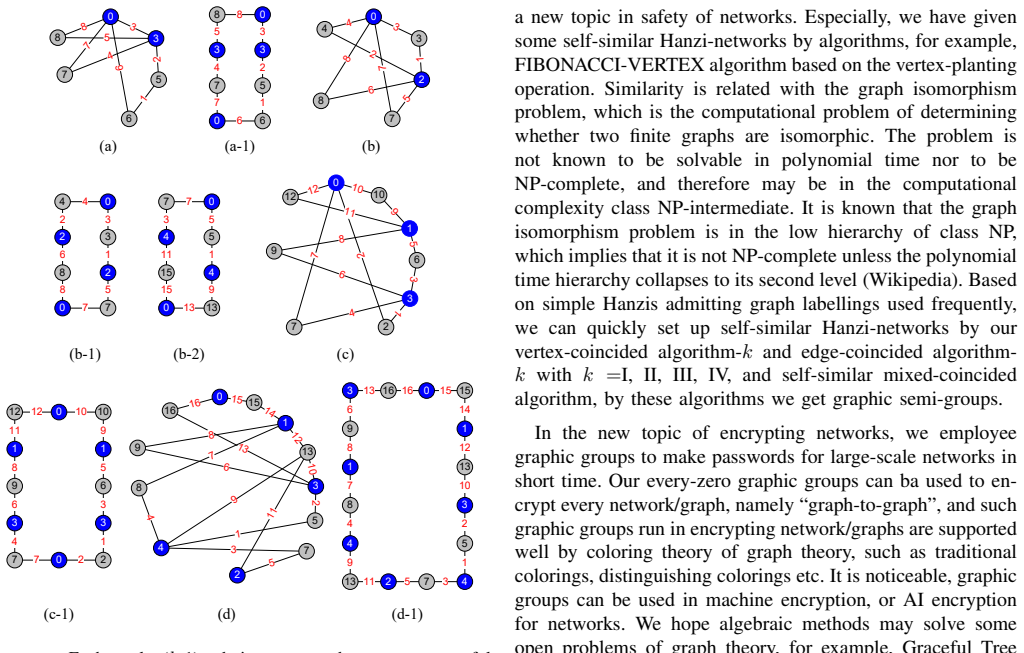
Graphical passwords (GPWs) are in many areas of the current world. Topological graphic passwords (Topsnut-gpws) are a new type of cryptography, and they differ from the existing GPWs. A Topsnut-gpw consists of two parts: one is a topological structure (graph), and one is a set of discrete elements (a graph labelling, or coloring), the topological structure connects these discrete elements together to form an interesting "story". Our idea is to transform Chinese characters into computer and electronic equipments with touch screen by speaking, writing and keyboard for forming Hanzi-graphs and Hanzi-gpws. We will use Hanzigpws to produce text-based passwords (TB-paws). We will introduce flawed graph labellings on disconnected Hanzi-graphs.
Editorial analysis
A structured set of objections, weighed in public.
Referee Report
Summary. The manuscript proposes transforming Chinese characters into Hanzi-graphs (disconnected graphs) equipped with flawed graph labellings to generate topological graphic passwords (Topsnut-gpws) that can then be converted into text-based passwords (TB-paws) for information security applications. The approach is described as using speaking, writing, and keyboard input to interface Chinese characters with touch-screen devices.
Significance. The core idea of using Chinese characters and graph labellings for password generation is conceptually novel within graphical password schemes. However, the manuscript provides no entropy estimates, attack resistance analysis, comparisons to existing schemes, or usability data, so any potential significance for the field cannot be evaluated from the current text.
major comments (1)
- [Abstract] Abstract: The claim that Hanzigpws will produce secure and practical TB-paws rests on the introduction of flawed graph labellings on disconnected Hanzi-graphs, yet the manuscript contains no security proofs, attack models, entropy calculations, or experimental results to support this. This absence is load-bearing for the central claim.
Simulated Author's Rebuttal
We thank the referee for the detailed comments. The manuscript is a conceptual proposal introducing Hanzi-graphs and flawed graph labellings for generating Topsnut-gpws convertible to TB-paws; it does not claim to deliver a fully analyzed scheme.
read point-by-point responses
-
Referee: [Abstract] Abstract: The claim that Hanzigpws will produce secure and practical TB-paws rests on the introduction of flawed graph labellings on disconnected Hanzi-graphs, yet the manuscript contains no security proofs, attack models, entropy calculations, or experimental results to support this. This absence is load-bearing for the central claim.
Authors: We agree the manuscript contains no security proofs, attack models, entropy calculations or experimental results. The work is an initial proposal of the Hanzi-graph construction and the use of flawed labellings on disconnected graphs; the statements about producing secure TB-paws are forward-looking rather than demonstrated. We will revise the abstract and introduction to replace 'will produce secure' phrasing with 'aim to generate' and 'potential for' and will add an explicit 'Future work' paragraph stating that entropy analysis, attack resistance and usability studies remain to be performed. revision: yes
Circularity Check
No significant circularity; conceptual proposal without derivations or self-referential claims
full rationale
The paper introduces the idea of transforming Chinese characters into Hanzi-graphs equipped with flawed graph labellings to generate text-based passwords, but presents no equations, quantitative predictions, fitted parameters, or derivation chains. No load-bearing steps reduce by construction to inputs, and the provided text contains no self-citations invoked as uniqueness theorems or ansatzes. The claims remain unsupported assertions rather than derived results, so the manuscript is self-contained with no circularity.
Axiom & Free-Parameter Ledger
axioms (1)
- domain assumption Graph theory structures can model secure and memorable passwords
invented entities (2)
-
Hanzi-graphs
no independent evidence
-
flawed graph labellings
no independent evidence
Lean theorems connected to this paper
-
IndisputableMonolith/Cost/FunctionalEquation.leanwashburn_uniqueness_aczel unclear?
unclearRelation between the paper passage and the cited Recognition theorem.
We will introduce flawed graph labellings on disconnected Hanzi-graphs such that each Hanzi-gpw with a flawed graph labelling can form a set of connected Topsnut-gpws, like a group.
-
IndisputableMonolith/Foundation/BranchSelection.leanbranch_selection unclear?
unclearRelation between the paper passage and the cited Recognition theorem.
Theorem 2. ... Then G admits a flawed α-labelling too.
What do these tags mean?
- matches
- The paper's claim is directly supported by a theorem in the formal canon.
- supports
- The theorem supports part of the paper's argument, but the paper may add assumptions or extra steps.
- extends
- The paper goes beyond the formal theorem; the theorem is a base layer rather than the whole result.
- uses
- The paper appears to rely on the theorem as machinery.
- contradicts
- The paper's claim conflicts with a theorem or certificate in the canon.
- unclear
- Pith found a possible connection, but the passage is too broad, indirect, or ambiguous to say the theorem truly supports the claim.
Reference graph
Works this paper leans on
-
[1]
https://www.thesslstore.com/blog/what-is-256-bit-encryption/)
-
[2]
Emergence of scaling in random networks
Albert-L ´aszl´o Barab´asi and Reka Albert. Emergence of scaling in random networks. Science 286 (1999) 509-512
work page 1999
-
[3]
M. E. J. Newman, The structure and function of complex networks, SIAM Review 45 (2003) 167-256
work page 2003
-
[4]
S. N. Dorogovtsev, A. V . Goltsev, J. F. F. Mendes. Pseudofractal scale-free web. Physical reviewer, 2002, ( 65), 066122-066125
work page 2002
-
[5]
Humboldt, W. (1999/1836). On Language: On the diversity of human language construction and its influence on the mental development of the human species. Cambridge University Press
work page 1999
-
[6]
Chomsky, N. (1965). Aspects of the Theory of Syntax. MIT Press
work page 1965
-
[7]
Relational inductive biases, deep learning, and graph networks
Peter W. Battaglia, Jessica B. Hamrick, Victor Bapst, Alvaro Sanchez- Gonzalez, Vinicius Zambaldi, Mateusz Malinowski, Andrea Tacchetti, David Raposo, Adam Santoro, Ryan Faulkner, Caglar Gulcehre, Francis Song, Andrew Ballard, Justin Gilmer, George Dahl, Ashish Vaswani, Kelsey Allen, Charles Nash4, Victoria Langston, Chris Dyer, Nicolas Heess, Daan Wierst...
work page internal anchor Pith review Pith/arXiv arXiv 2018
- [8]
-
[9]
B. D. Acharya and S. M. Hegde. Arithmetic graphs. J. Graph Theory, 14 (1990), 275-299
work page 1990
-
[10]
J. A. Bondy, U. S. R. Murty. Graph Theory. Springer London, 2008
work page 2008
-
[11]
Joseph A. Gallian. A Dynamic Survey of Graph Labeling. The electronic journal of combinatorics , Twenty-first edition, December 21 (2018), # DS6. (502 pages, 2643 reference papers)
work page 2018
- [12]
-
[13]
S. M. Hegde. On (k, d)-graceful graphs. Journal of Combinatorics, Information & System Sciences , V ol.25 (1-4) (2000), 255-265
work page 2000
-
[14]
Xiaoyuan Suo, Ying Zhu, G. Scott. Owen. Graphical Password: A Survey. In: Proceedings of Annual Computer Security Applications Con- ference (ACSAC), Tucson, Arizona. IEEE (2005) 463-472. (10 pages, 38 reference papers)
work page 2005
-
[15]
R. Biddle, S. Chiasson, and P. C. van Oorschot. Graphical passwords: Learning from the First Twelve Years. ACM Computing Surveys, 44 (4), Article 19:1-41. Technical Report TR-09-09, School of Computer Science, Carleton University, Ottawa, Canada. 2009. (25 pages, 145 reference papers)
work page 2009
-
[16]
A Survey on the Use of Graphical Passwords in Security
Haichang Gao, Wei Jia, Fei Ye and Licheng Ma. A Survey on the Use of Graphical Passwords in Security. Journal Of Software, V ol. 8 (7), July 2013, 1678-1698. (21 pages, 88 reference papers)
work page 2013
-
[17]
A. Rosa. On certain valuations of the vertices of a graph, Theory of Graphs (Internat. Symposium, Rome, July 1966), Gordon and Breach, N. Y . and Dunod Paris (1967) 349-355
work page 1966
-
[18]
Exploring New Cryptographical Con- struction Of Complex Network Data
Hongyu Wang, Jin Xu, Bing Yao. Exploring New Cryptographical Con- struction Of Complex Network Data. IEEE First International Conference on Data Science in Cyberspace. IEEE Computer Society, (2016) 155-160
work page 2016
-
[19]
The Key-models And Their Lock- models For Designing New Labellings Of Networks
Hongyu Wang, Jin Xu, Bing Yao. The Key-models And Their Lock- models For Designing New Labellings Of Networks. Proceedings of 2016 IEEE Advanced Information Management, Communicates, Electronic and Automation Control Conference (IMCEC 2016) 565-5568
work page 2016
-
[20]
Twin Odd-Graceful Trees Towards Information Security
Hongyu Wang, Jin Xu, Bing Yao. Twin Odd-Graceful Trees Towards Information Security. Procedia Computer Science 107 (2017)15-20, DOI: 10.1016/j.procs.2017.03.050
-
[21]
New Algebraic Groups Produced By Graphical Passwords Based On Colorings And Labellings
Hui Sun, Xiaohui Zhang, Meimei Zhao and Bing Yao. New Algebraic Groups Produced By Graphical Passwords Based On Colorings And Labellings. ICMITE 2017, MATEC Web of Conferences 139, 00152 (2017), DOI: 10. 1051/matecconf/201713900152
-
[22]
Algebraic Groups For Construction Of Topological Graphic Passwords In Cryptography
Bing Yao, Yarong Mu, Hui Sun, Xiaohui Zhang, Hongyu Wang, Jing Su, Fei Ma. Algebraic Groups For Construction Of Topological Graphic Passwords In Cryptography. 2018 IEEE 3rd Advanced Information Tech- nology, Electronic and Automation Control Conference (IAEAC 2018), 2211-2216
work page 2018
-
[24]
New-type Graphical Passwords Made By Chinese Characters With Their Topological Structures
Bing Yao, Hui Sun, Xiaohui Zhang, Yarong Mu, Hongyu Wang, Jin Xu. New-type Graphical Passwords Made By Chinese Characters With Their Topological Structures. 2018 2nd IEEE Advanced Information Man- agement,Communicates, Electronic and Automation Control Conference (IMCEC 2018), 1606-1610
work page 2018
-
[25]
Graph Theory Towards New Graphical Passwords In Information Networks
Bing Yao, Hui Sun, Hongyu Wang, Jing Su, Jin Xu. Graph The- ory Towards New Graphical Passwords In Information Networks. arXiv:1806.02929v1 [cs.CR] 8 Jun 2018
work page internal anchor Pith review Pith/arXiv arXiv 2018
-
[26]
Topological Graphic Passwords And Their Matchings Towards Cryptography
Bing Yao, Hui Sun, Xiaohui Zhang, Yarong Mu, Yirong Sun, Hongyu Wang, Jing Su, Mingjun Zhang, Sihua Yang, Chao Yang. Topological Graphic Passwords And Their Matchings Towards Cryptography. arXiv:
-
[27]
03324v1 [cs.CR] 26 Jul 2018
work page 2018
-
[28]
Text-based Passwords Generated From Topological Graphic Passwords
Bing Yao, Xiaohui Zhang, Hui Sun, Yarong Mu, Yirong Sun, Xiaomin Wang, Hongyu Wang, Fei Ma, Jing Su, Chao Yang, Sihua Yang, Mingjun Zhang. Text-based Passwords Generated From Topological Graphic Pass- words. arXiv: 1809.04727v1 [cs.IT] 13 Sep 2018
work page internal anchor Pith review Pith/arXiv arXiv 2018
-
[29]
Connections between labellings of trees
Bing Yao, Xia Liu and Ming Yao. Connections between labellings of trees. Bulletin of the Iranian Mathematical Society, ISSN: 1017-060X (Print) ISSN: 1735-8515 (Online), V ol. 43 (2017), 2, pp. 275-283
work page 2017
-
[30]
Connection Between Text-based Passwords and Topological Graphic Passwords
Bing Yao, Yarong Mu, Hui Sun, Xiaohui Zhang, Hongyu Wang, Jing Su. Connection Between Text-based Passwords and Topological Graphic Passwords. 2018 IEEE 4th Information Technology and Mechatronics Engineering Conference (2018), submitted
work page 2018
-
[31]
On Color- ing/Labelling Graphical Groups For Creating New Graphical Passwords
Bing Yao, Hui Sun, Meimei Zhao, Jingwen Li, Guanghui Yan. On Color- ing/Labelling Graphical Groups For Creating New Graphical Passwords. (ITNEC 2017) 2017 IEEE 2nd Information Technology, Networking, Electronic and Automation Control Conference, (2017) 1371-1375
work page 2017
-
[32]
A Note on Strongly Graceful Trees
Bing Yao, Hui Cheng, Ming Yao and Meimei Zhao. A Note on Strongly Graceful Trees. Ars Combinatoria 92 (2009), 155-169
work page 2009
-
[33]
On Gracefulness of Directed Trees with Short Diameters
Bing Yao, Ming Yao, and Hui Cheng. On Gracefulness of Directed Trees with Short Diameters. Bulletin of the Malaysian Mathematical Sciences Society, 2012, (2) 35(1). 133-146. WOS:000298904000012
work page 2012
-
[34]
Fei Ma, Ping Wang and Bing Yao. Emergence of power law in the mean first-passage time for random walks on Fibonacci tree as network models. submitted, 2019
work page 2019
-
[35]
On Disconnected Topological Graph Passwords For Information Security
Yarong Mu, Bing Yao. On Disconnected Topological Graph Passwords For Information Security. 2018 2nd IEEE Advanced Information Man- agement, Communicates, Electronic and Automation Control Conference (IMCEC 2018), 2109-2113
work page 2018
-
[36]
Exploring Topological Graph Passwords of Information Security By Chinese Culture
Yarong Mu, Bing Yao. Exploring Topological Graph Passwords of Information Security By Chinese Culture. 2018 submitted
work page 2018
-
[37]
Designing Hanzi-Graphs To- wards New-Type of Graphical Passwords With Applications
Yarong Mu, Xiaohui Zhang, Bing Yao. Designing Hanzi-Graphs To- wards New-Type of Graphical Passwords With Applications. Mathematics In Practice And Theory (Chinese), 2018
work page 2018
-
[38]
Construction of Topological Graphic Passwords By Hanzi-gpws
Yarong Mu, Bing Yao. Construction of Topological Graphic Passwords By Hanzi-gpws. submitted
-
[39]
Topological Graphic Passwords On Self-Similar Networks Made By Chinese Characters
Yarong Mu, Yirong Sun, Mingjun Zhang, Bing Yao. Topological Graphic Passwords On Self-Similar Networks Made By Chinese Characters. submitted, 2019
work page 2019
-
[40]
On Divided-Type Connectivity of Graphs and Networks
Xiaomin Wang, Fei Ma, Bing Yao. On Divided-Type Connectivity of Graphs and Networks. submitted, 2019
work page 2019
-
[41]
Applying Divided Operations Towards New Labellings Of Euler’s Graphs
Xiaomin Wang, Hongyu Wang, Bing Yao. Applying Divided Operations Towards New Labellings Of Euler’s Graphs. submitted, 2019
work page 2019
-
[42]
How long is the coast of Britain? Statistical self-similarity and fractional dimension
Mandelbrot, Benoit B. (5 May 1967). “How long is the coast of Britain? Statistical self-similarity and fractional dimension”. Science. New Series. 156 (3775): 636-638. Bibcode:1967Sci. . . 156. . 636M. doi: 10.1126/science.156.3775.636. PMID 17837158. Retrieved 11 January 2016
-
[43]
GB2312-80 Encoding of Chinese characters
“GB2312-80 Encoding of Chinese characters” cited from The Compila- tion Of National Standards For Character Sets And Information Coding, China Standard Press, 1998
work page 1998
-
[44]
Construction Of New Graphical Passwords With Graceful-type Labellings On Trees
Hui Sun, Xiaohui Zhang, Bing Yao. Construction Of New Graphical Passwords With Graceful-type Labellings On Trees. 2018 2nd IEEE 57 Advanced Information Management, Communicates, Electronic and Au- tomation Control Conference (IMCEC 2018), 1491-1494
work page 2018
-
[45]
Xiaohui Zhang, Hui Sun, Bing Yao, Xinsheng Liu. A Technique Based On The Module-K Super Graceful Labelling For Designing New- type Graphical Passwords. 2018 2nd IEEE Advanced Information Man- agement,Communicates, Electronic and Automation Control Conference (IMCEC 2018), 1494-1499
work page 2018
-
[46]
Adjacent strong edge coloring of graphs
Zhang Zhongfu, Liu Linzhong, Wang Jianfang. Adjacent strong edge coloring of graphs. Applied Mathematics Letters, 2002, 15: 623-626
work page 2002
-
[47]
On Topological Graphic Passwords Made By Twin Edge Module-k Odd-graceful Labelling
Xiaohui Zhang, Hui Sun, Bing Yao. On Topological Graphic Passwords Made By Twin Edge Module-k Odd-graceful Labelling. 2018 2nd IEEE Advanced Information Management, Communicates, Electronic and Au- tomation Control Conference (IMCEC 2018), 2114-2118
work page 2018
-
[48]
Felicitous Labellings of Some Network Models
Jiajuan Zhang, Bing Yao, Zhiqian Wang, Hongyu Wang, Chao Yang, Sihua Yang. Felicitous Labellings of Some Network Models. Journal of Software Engineering and Applications, 2013, 6, 29-32. DOI: 10. 4236/jsea. 2013. 63b007 Published Online March 2013 (http://www. scirp. org/journal/jsea)
work page 2013
-
[49]
A proof to the odd-gracefulness of all lobsters
Xiangqian Zhou, Bing Yao, Xiang’en Chen and Haixia Tao. A proof to the odd-gracefulness of all lobsters. Ars Combinatoria 103 (2012), 13-18
work page 2012
-
[50]
Xiangqian Zhou, Bing Yao, Xiang’en Chen. Every Lobster Is Odd- elegant. Information Processing Letters 113 (2013), 30-33
work page 2013
-
[51]
Xiangqian Zhou, Bing Yao, Hui Cheng. On 0-rotatable trees. Journal Of South China Normal University (Chinese), 2011, 4, 54-57. Appendix A. Table-1. Stirling’s approximation n! = ( n e )n√ 2nπ 9! = 362, 880≈ 218.46913302≈ 218.5 10! = 3, 628, 800≈ 221.791061114717≈ 221.8 11! = 39, 916, 800≈ 225.2504927333542≈ 225.3 12! = 479, 001, 600≈ 228.8354552340754≈ 22...
discussion (0)
Sign in with ORCID, Apple, or X to comment. Anyone can read and Pith papers without signing in.