Strong Lensing and Quasinormal modes of black hole around global monopole
Pith reviewed 2026-05-10 19:51 UTC · model grok-4.3
The pith
Increasing the global monopole parameter around a black hole produces gravitational waves with slower damping oscillations.
A machine-rendered reading of the paper's core claim, the machinery that carries it, and where it could break.
Core claim
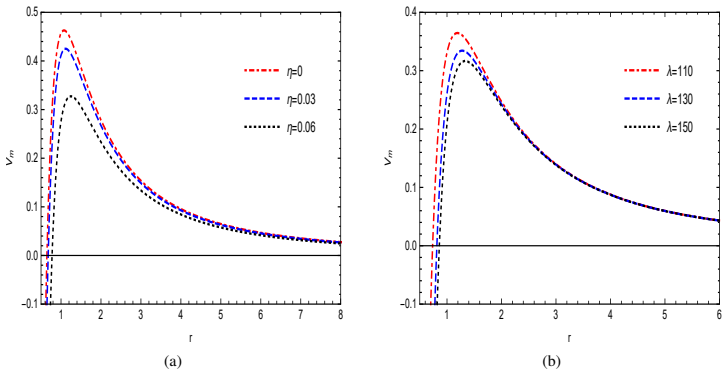
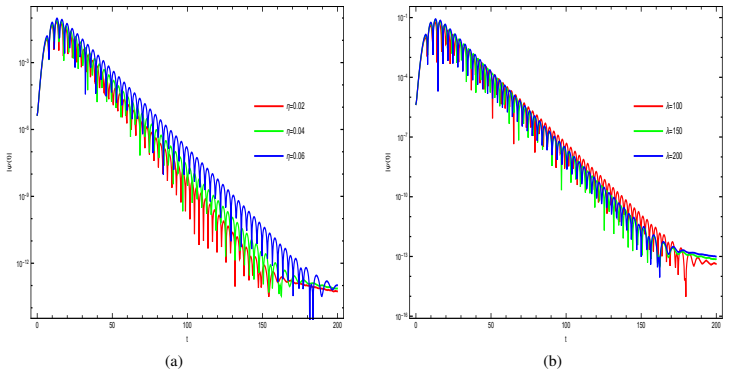
In the spacetime metric of a black hole with a global monopole, the quasinormal frequencies for electromagnetic perturbations are computed as a function of the monopole parameter eta. The results show that increasing eta produces modes with smaller imaginary parts, corresponding to gravitational waves that damp more slowly. Time-domain evolution of the perturbations confirms the characteristic quasinormal ringing followed by late-time power-law tails, validating the frequency-domain spectrum.
What carries the argument
The static spherically symmetric metric containing a global monopole, used to derive deflection angles, shadow radii, ISCO locations, and quasinormal mode spectra via standard perturbation methods.
If this is right
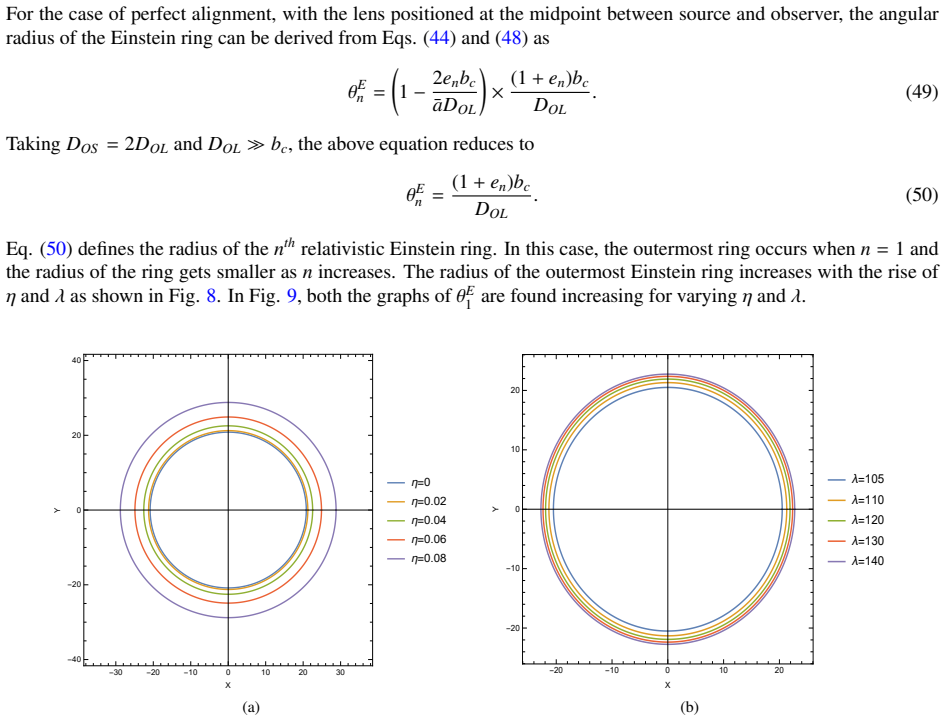
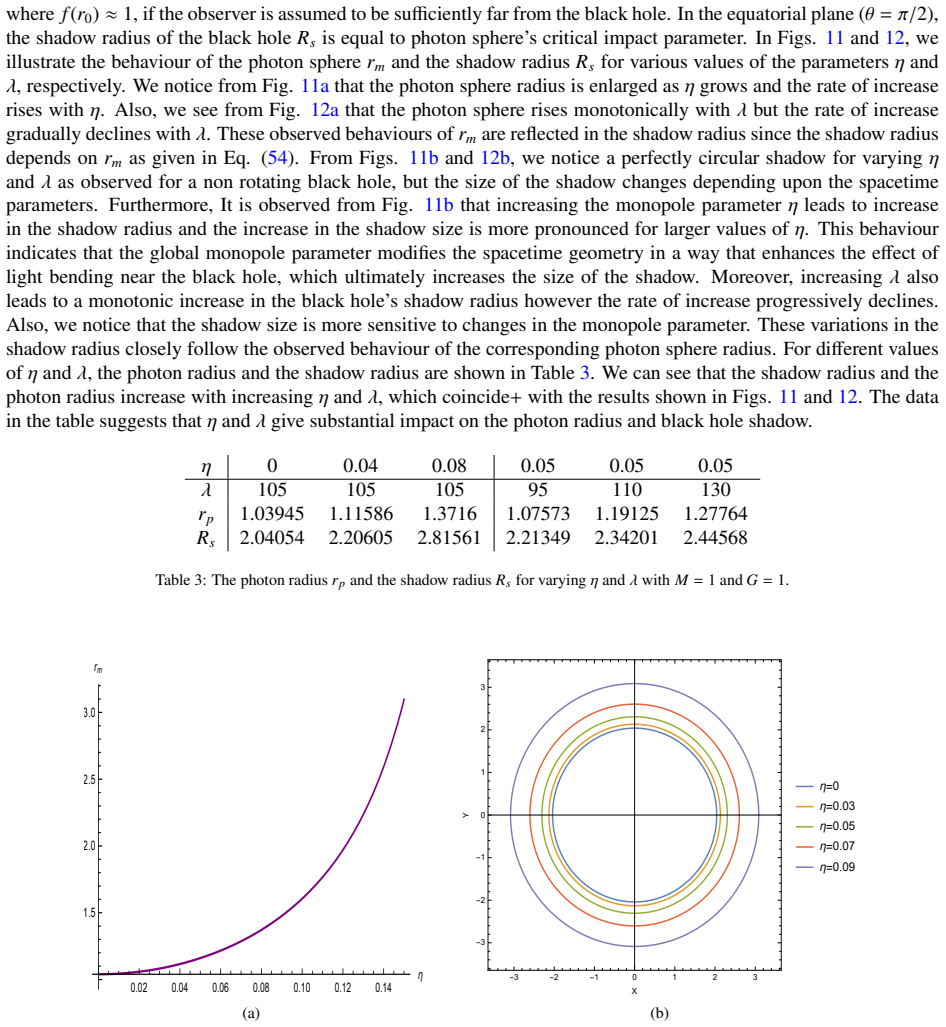
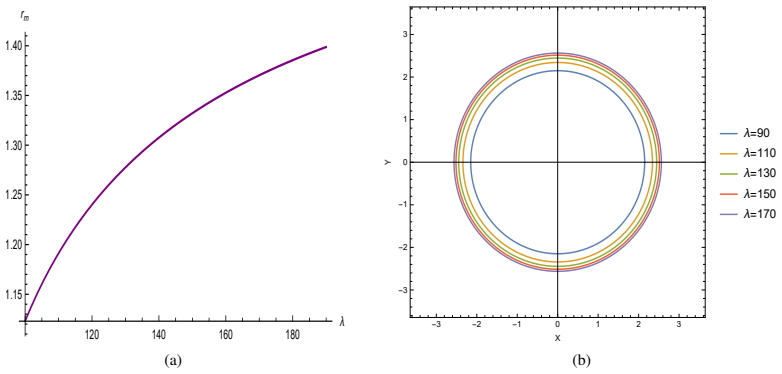
- Larger monopole parameter produces larger black hole shadow radii.
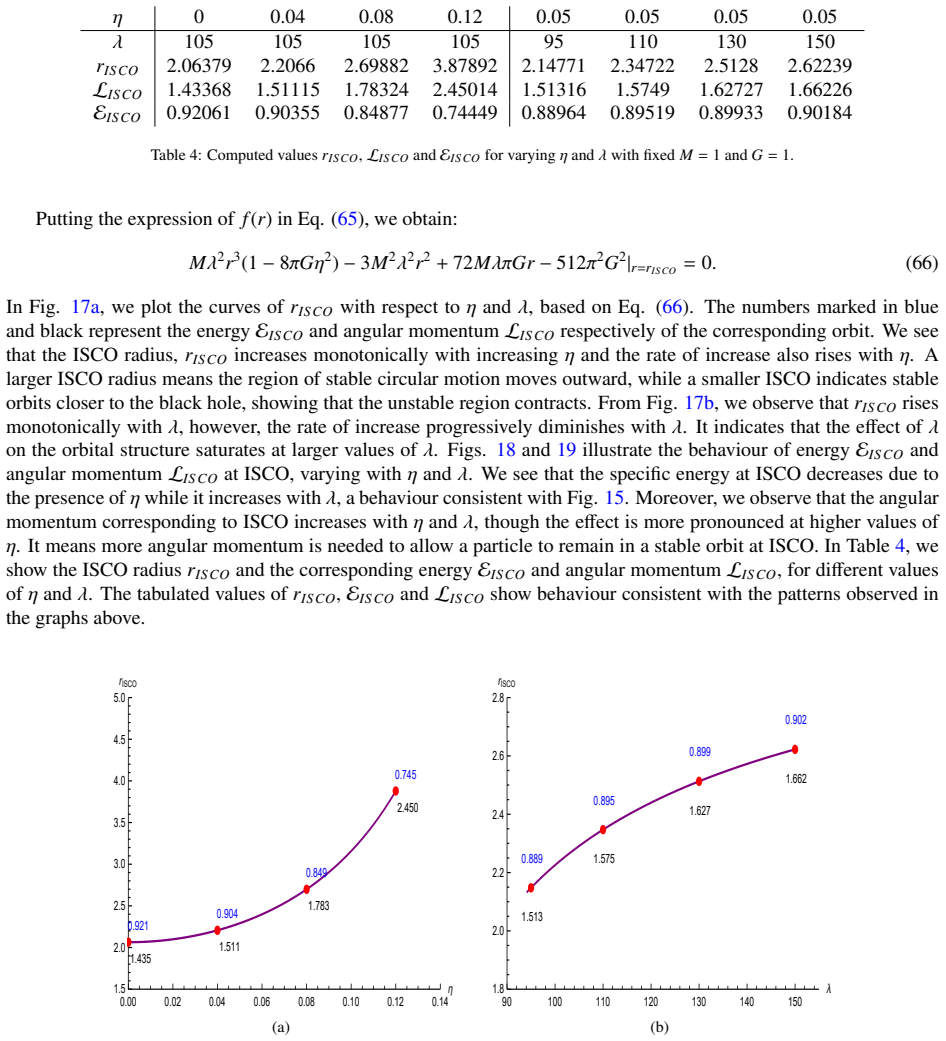
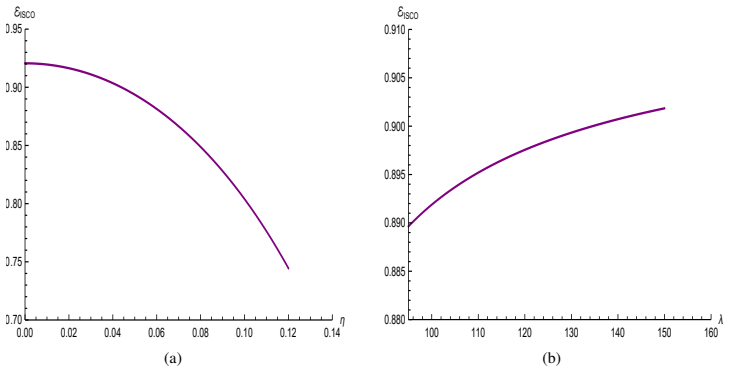
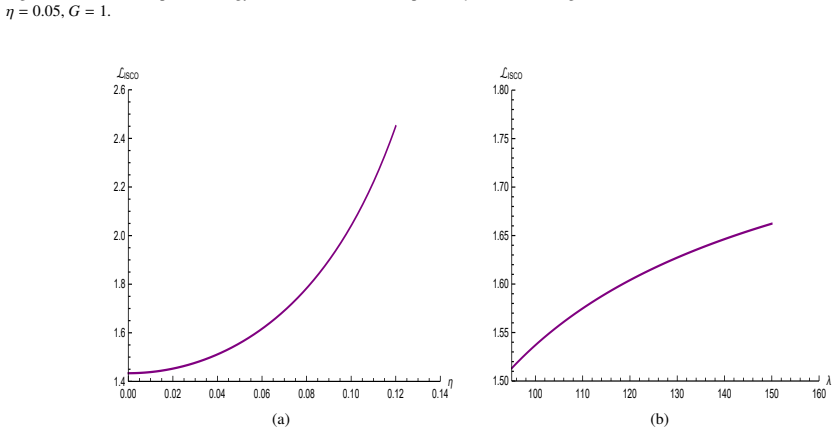
- The radius of the innermost stable circular orbit increases monotonically with the monopole parameter.
- Deflection angle of massive particles grows when the monopole parameters increase.
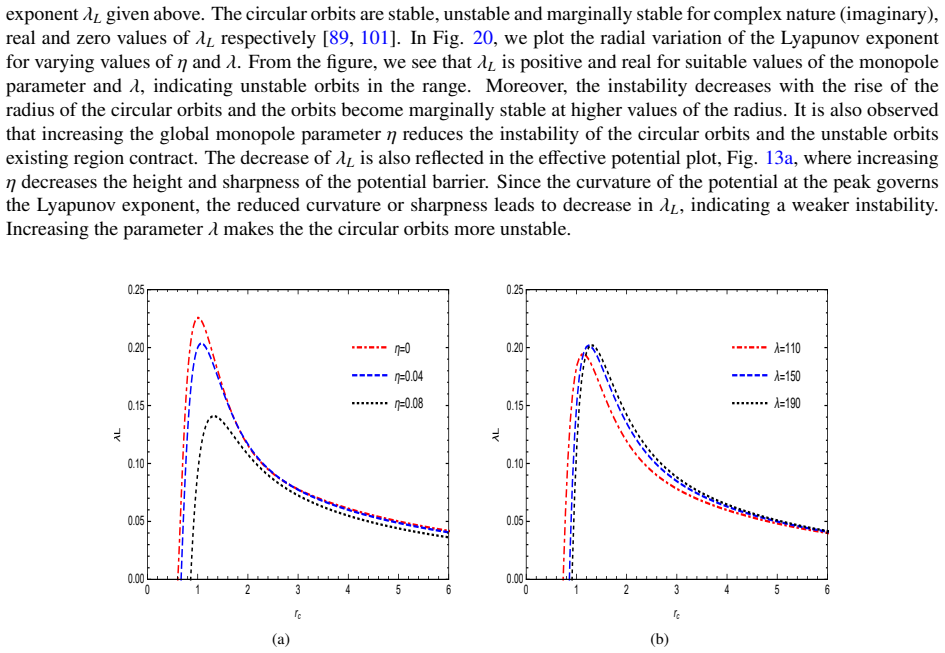
- Stability analysis via Lyapunov exponent indicates changes in timelike geodesic behavior with eta.
Where Pith is reading between the lines
- Observed black hole shadows could be used to place upper limits on possible monopole strength if the metric form holds.
- Slower damping could extend the duration of detectable ringdown signals in gravitational wave data.
- The late-time power-law tails remain present, so any monopole effect would appear mainly in the decay rate rather than the tail exponent.
Load-bearing premise
The spacetime is exactly described by the given static spherically symmetric metric with a global monopole at the center, taken without re-derivation or stability check.
What would settle it
A direct computation or numerical evolution showing that the imaginary part of the quasinormal frequency increases or remains unchanged as the monopole parameter rises.
Figures
read the original abstract
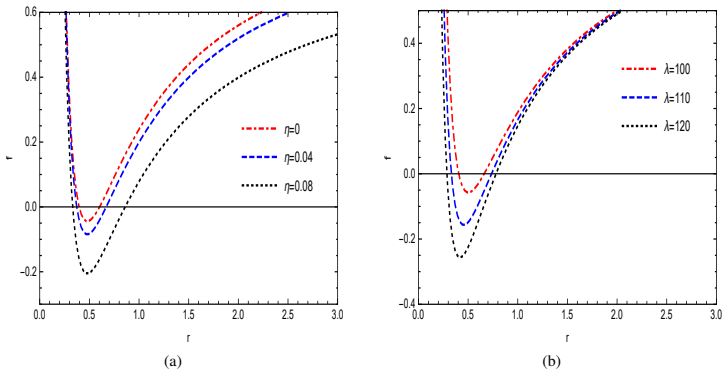
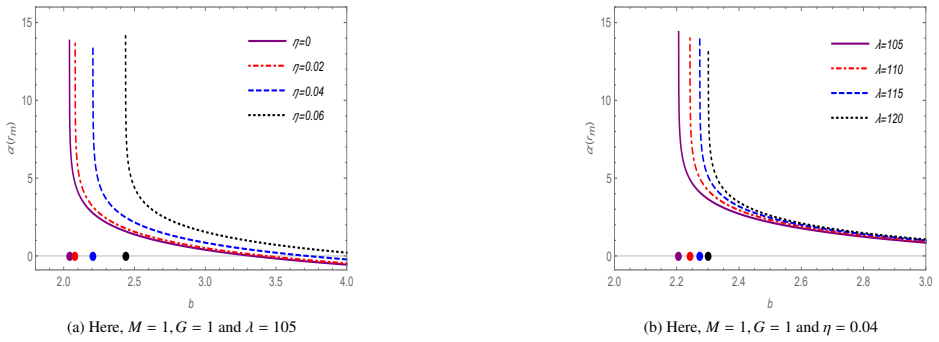
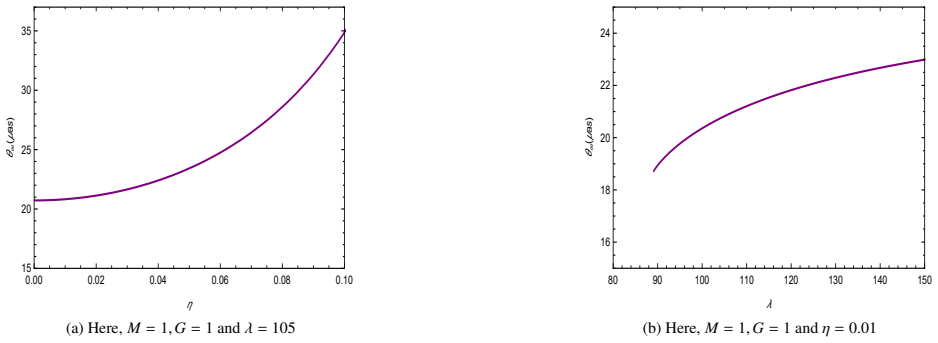
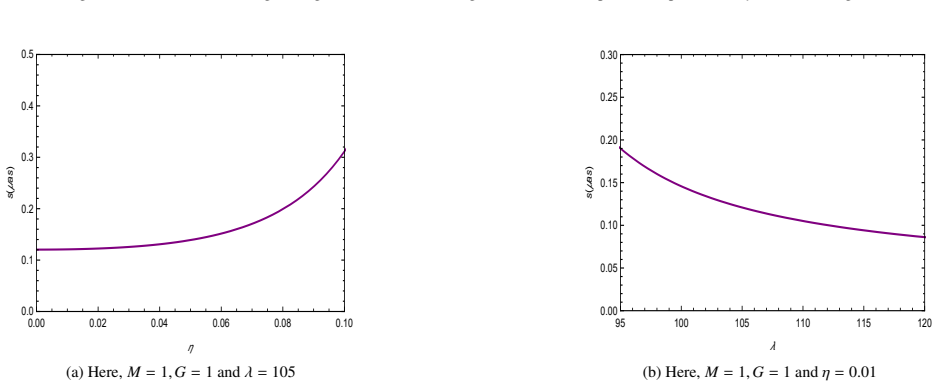
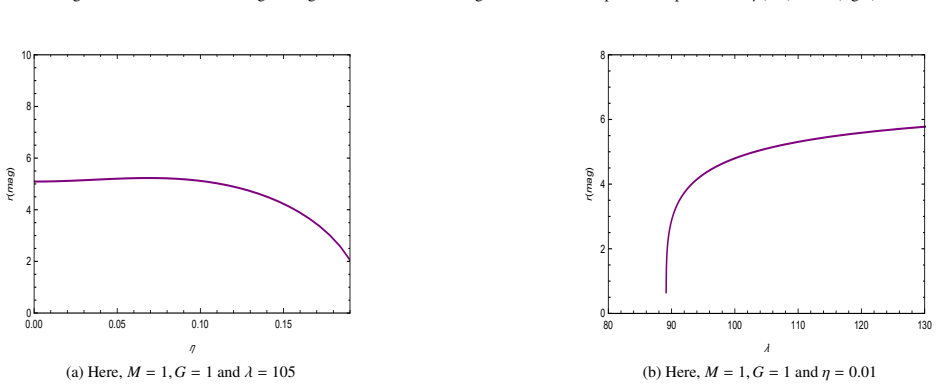
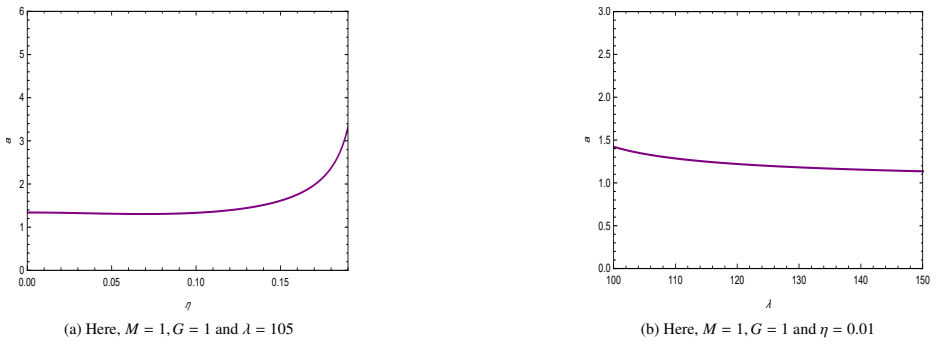
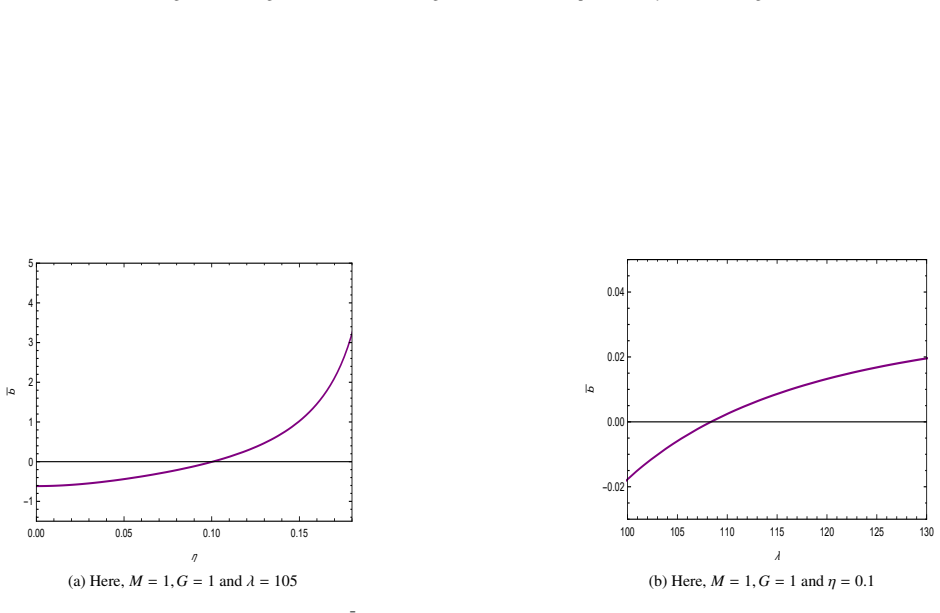
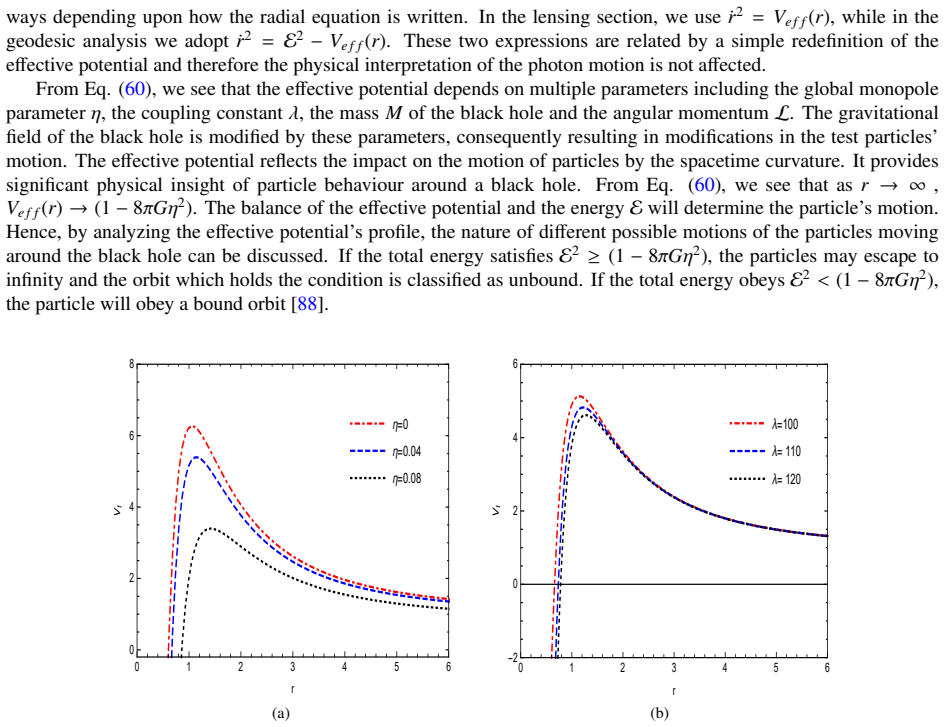
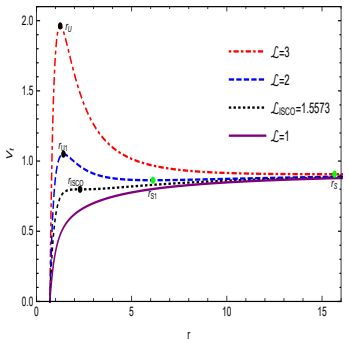
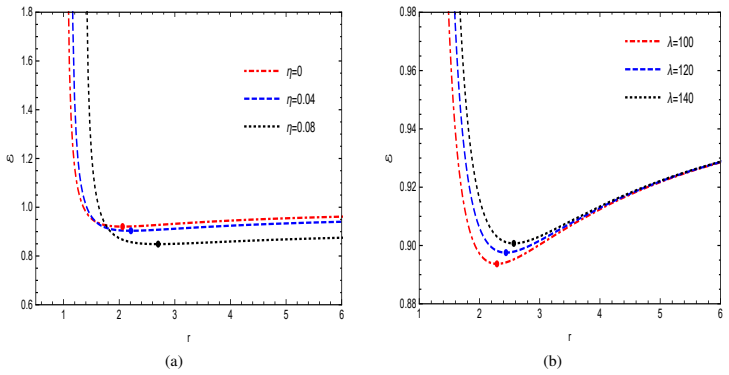
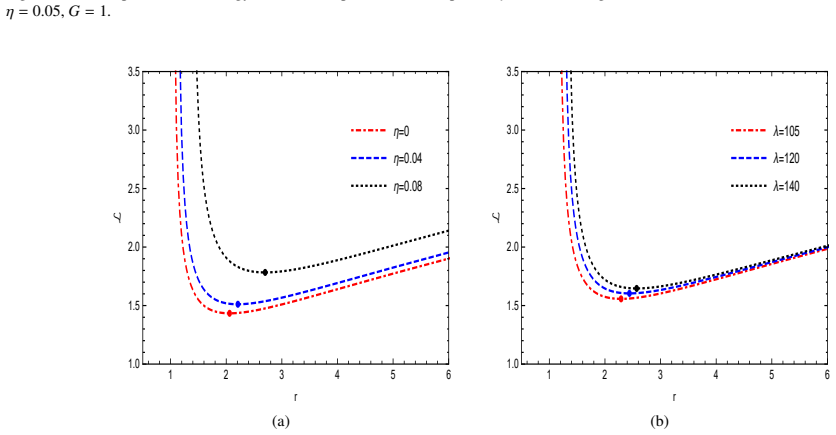
In this paper, we investigate various key aspects of a static and spherically symmetric black hole with global monopole. Firstly, we analyze the deflection angle in the strong field limit of massive particle by the global monopole. It shows that the angle of deflection increases when the two characteristic parameters for monopole configuration increase. The influence of the global monopole parameter on the lensing observables and the black hole shadow are studied. This shows that larger monopole parameter corresponds to larger shadow radii. The dynamics of timelike geodesics is also investigated in the spacetime. General circular orbits and the innermost stable circular orbits (ISCO) of timelike particles are discussed, highlighting that the monopole parameter significantly affects the circular orbits and the ISCO. In particular, it is observed that the radius of ISCO rises monotonically with $\eta$. In addition, the Lyapunov exponent is used to analyze the stability of timelike geodesics. The quasinormal modes for electromagnetic perturbation of the black hole with varying $\eta$ is also investigated. Our findings indicate that increasing the monopole parameter gives rise to gravitational waves with slower damping oscillations. To further validate the derived quasinormal mode spectrum, we discuss the evolution of electromagnetic perturbations in the time domain profile, confirming the presence of the characteristic quasinormal ringing followed by late-time power-law tails.
Editorial analysis
A structured set of objections, weighed in public.
Referee Report
Summary. The manuscript examines a static spherically symmetric black hole spacetime containing a global monopole, computing the strong-field deflection angle of massive particles, lensing observables and shadow radius, properties of timelike geodesics including circular orbits and ISCO radius, Lyapunov exponents for stability, and quasinormal frequencies of electromagnetic perturbations. It reports that the monopole parameter increases deflection angles and shadow/ISCO radii while producing slower damping in the QNMs, with time-domain evolution used to confirm the ringing phase and late-time tails.
Significance. If the reported monotonic trends hold under scrutiny, the work adds concrete analytic and numerical results on how global monopoles modify lensing and gravitational-wave signatures, which may be relevant for distinguishing such spacetimes observationally. The combination of strong-lensing formulas, Lyapunov analysis, and time-domain validation of QNMs provides a reasonably self-contained set of checks within the adopted metric.
major comments (2)
- Quasinormal modes section: the central claim that increasing the monopole parameter produces slower damping oscillations is presented without error bars, resolution studies, or convergence tests on the numerical frequencies; this omission directly affects in the reported monotonic trend.
- Metric and geodesic sections: the explicit line element is not written out, so the effective potentials for geodesics and the electromagnetic perturbation equations cannot be independently reconstructed from the text alone.
minor comments (2)
- Abstract: the phrase 'two characteristic parameters for monopole configuration' is used, yet only a single parameter η appears in the reported trends; the second parameter should be identified and its role clarified.
- Time-domain discussion: the late-time power-law tails are stated to be present but no comparison is made to the expected analytic decay exponents for electromagnetic perturbations on this background.
Simulated Author's Rebuttal
We thank the referee for the careful reading of our manuscript and the constructive comments. We appreciate the positive assessment and recommendation for minor revision. We address each major comment below and will incorporate the suggested improvements in the revised version.
read point-by-point responses
-
Referee: Quasinormal modes section: the central claim that increasing the monopole parameter produces slower damping oscillations is presented without error bars, resolution studies, or convergence tests on the numerical frequencies; this omission directly affects in the reported monotonic trend.
Authors: We thank the referee for highlighting this point. The quasinormal frequencies were computed using a standard numerical approach for the electromagnetic perturbations, and the time-domain evolution already serves as an independent check confirming the ringing phase and the trend of slower damping with larger monopole parameter. However, we agree that explicit convergence tests and error estimates would strengthen the claim. In the revised manuscript we will add a brief discussion of the numerical method, results from resolution studies (varying grid size and time step), and approximate error bars on the imaginary parts of the frequencies to support the reported monotonic trend. revision: yes
-
Referee: Metric and geodesic sections: the explicit line element is not written out, so the effective potentials for geodesics and the electromagnetic perturbation equations cannot be independently reconstructed from the text alone.
Authors: We agree that explicitly stating the line element improves readability and allows independent verification. Although the metric is the standard static spherically symmetric form with the global monopole parameter, we will insert the full line element at the start of the relevant sections in the revised manuscript, followed by the derived effective potentials and perturbation equations for completeness. revision: yes
Circularity Check
No significant circularity detected
full rationale
The derivation begins from the standard static spherically symmetric metric with global monopole taken from prior literature (not self-authored in a load-bearing way), then applies standard geodesic equations, strong-lensing formulas, and the Regge-Wheeler/Zerilli perturbation equations for electromagnetic modes. All reported results—deflection angles, shadow radii, ISCO radii, Lyapunov exponents, and QNM frequencies/damping times—are obtained by direct numerical integration or analytic approximation of these equations as functions of the monopole parameter η. No parameters are fitted to the target observables, no self-referential definitions appear, and the central claim (slower damping with larger η) is a computed output rather than an input. The paper is therefore self-contained against external benchmarks with no reduction of predictions to its own inputs by construction.
Axiom & Free-Parameter Ledger
axioms (2)
- domain assumption The spacetime is exactly described by the static spherically symmetric line element containing a global monopole.
- standard math Linear perturbation theory applies to electromagnetic fields on this background.
Lean theorems connected to this paper
-
IndisputableMonolith/Cost/FunctionalEquation.leanwashburn_uniqueness_aczel unclear?
unclearRelation between the paper passage and the cited Recognition theorem.
The quasinormal modes for electromagnetic perturbation of the black hole with varying η is also investigated. Our findings indicate that increasing the monopole parameter gives rise to gravitational waves with slower damping oscillations.
-
IndisputableMonolith/Foundation/RealityFromDistinction.leanreality_from_one_distinction unclear?
unclearRelation between the paper passage and the cited Recognition theorem.
The standard global monopole model... Lagrangian L=½∂ϕa∂ϕa−¼λ(ϕaϕa−η²)²
What do these tags mean?
- matches
- The paper's claim is directly supported by a theorem in the formal canon.
- supports
- The theorem supports part of the paper's argument, but the paper may add assumptions or extra steps.
- extends
- The paper goes beyond the formal theorem; the theorem is a base layer rather than the whole result.
- uses
- The paper appears to rely on the theorem as machinery.
- contradicts
- The paper's claim conflicts with a theorem or certificate in the canon.
- unclear
- Pith found a possible connection, but the passage is too broad, indirect, or ambiguous to say the theorem truly supports the claim.
Reference graph
Works this paper leans on
-
[1]
A. Einstein, Lens-Like Action of a Star by the Deviation of Light in the Gravitational Field, Science 84 (1936) 506-507
work page 1936
-
[2]
S. L. Adler, K. S. Virbhadra, Cosmological constant corrections to the photon sphere and black hole shadow radii, Gen. Relativ. Gravit. 54 (2022) 93
work page 2022
- [3]
-
[4]
K. S. Virbhadra, Compactness of supermassive dark objects at galactic centers, Can. J. Phys. 102 (2024) 523
work page 2024
-
[5]
P. Schneider, J. Ehlers, E. E. Falco, Gravitational Lenses (Springer-Verlag, Berlin, 1992)
work page 1992
-
[6]
K. S. Virbhadra, G. F. R. Ellis, Schwarzschild black hole lensing, Phys. Rev. D 62 (2000) 084003
work page 2000
-
[7]
Perlick, Exact gravitational lens equation in spherically symmetric and static spacetimes, Phys
V . Perlick, Exact gravitational lens equation in spherically symmetric and static spacetimes, Phys. Rev. D 69 (2004) 064017
work page 2004
-
[8]
Schmidt, Weak lensing probes of modified gravity, Phys
F. Schmidt, Weak lensing probes of modified gravity, Phys. Rev. D 78 (2008) 043002. 30
work page 2008
-
[9]
C. Darwin, The gravity field of a particle, Proceedings of the Royal Society of London Series A 249 (1959) 180
work page 1959
-
[10]
J. P. Luminet, Image of a spherical black hole with thin accretion disk, Astron. Astrophys. 75 (1979) 228-235
work page 1979
-
[11]
K. S. Virbhadra, G. F. R. Ellis, Gravitational lensing by naked singularities, Phys. Rev. D 65 (2002) 103004
work page 2002
-
[12]
S. Frittelli, T. P. Kling, E. T. Newman, Spacetime perspective of Schwarzschild lensing, Phys. Rev. D 61 (2000) 064021
work page 2000
- [13]
-
[15]
Bozza, Quasiequatorial gravitational lensing by spinning black holes in the strong field limit, Phys
V . Bozza, Quasiequatorial gravitational lensing by spinning black holes in the strong field limit, Phys. Rev. D 67 (2003) 103006
work page 2003
- [16]
-
[17]
Tsukamoto, Strong deflection limit analysis and gravitational lensing of an Ellis wormhole, Phys
N. Tsukamoto, Strong deflection limit analysis and gravitational lensing of an Ellis wormhole, Phys. Rev. D 94 (2016) 124001
work page 2016
-
[18]
N. Tsukamoto, Deflection angle in the strong deflection limit in a general asymptotically flat, static, spherically symmetric spacetime, Phys. Rev. D 95 (2017) 064035
work page 2017
-
[19]
E. F. Eiroa, G. E. Romero, D. F. Torres, Reissner-Nordström black hole lensing, Phys. Rev. D 66 (2002) 024010
work page 2002
-
[20]
S. Chen, J. Jing, Strong field gravitational lensing in the deformed Ho ˇrava-Lifshitz black hole, Phys. Rev. D 80 (2009) 024036
work page 2009
- [21]
- [22]
- [23]
- [24]
-
[25]
G. Z. Babar, F. Atamurotov, S. Ul Islam, S. G. Ghosh, Particle acceleration around rotating Einstein-Born-Infeld black hole and plasma effect on gravitational lensing, Phys. Rev. D 103 (2021) 084057
work page 2021
- [26]
-
[27]
B. Narzilloev, S. Shaymatov, I. Hussain, A. Abdujabbarov, B. Ahmedov, C. Bambi, Motion of particles and gravitational lensing around the (2+1)-dimensional BTZ black hole in Gauss–Bonnet gravity, Eur. Phys. J. C 81 (2021) 849
work page 2021
-
[28]
Bhadra, Gravitational lensing by a charged black hole of string theory, Phys
A. Bhadra, Gravitational lensing by a charged black hole of string theory, Phys. Rev. D 67 (2003) 103009
work page 2003
-
[29]
N. U. Molla, S. G. Ghosh, U. Debnath, Testing gravitational lensing effects by supermassive massive black holes with superstring theory metric: Astrophysical implications and EHT constraints, Phys. Dark Univ. 44 (2024) 101495. 31
work page 2024
- [30]
-
[31]
R. Takahashi, Shapes and Positions of Black Hole Shadows in Accretion Disks and Spin Parameters of Black Holes, Astrophys. J. 611 (2004) 996
work page 2004
-
[32]
Abbott et al., Observation of Gravitational Waves from a Binary Black Hole Merger, Phys
B.P. Abbott et al., Observation of Gravitational Waves from a Binary Black Hole Merger, Phys. Rev. Lett. 116 (2016) 061102
work page 2016
-
[33]
Akiyama et al., First Sagittarius A* Event Horizon Telescope Results
K. Akiyama et al., First Sagittarius A* Event Horizon Telescope Results. I. The Shadow of the Supermassive Black Hole in the Center of the Milky Way, Astrophys. J. Lett. 930 (2022) L12
work page 2022
-
[34]
Akiyama et al., First M87 Event Horizon Telescope Results
K. Akiyama et al., First M87 Event Horizon Telescope Results. I. The Shadow of the Supermassive Black Hole, Astrophys. J. Lett. 875 (2019) L1
work page 2019
- [35]
- [36]
-
[37]
J. L. Synge, The Escape of Photons from Gravitationally Intense Stars, Mon. Not. R. Astron. Soc. 131 (1966) 463
work page 1966
-
[38]
K. Hioki, K.-I. Maeda, Measurement of the Kerr spin parameter by observation of a compact object’s shadow, Phys. Rev. D 80 (2009) 024042
work page 2009
- [39]
-
[40]
N. Tsukamoto, Z. Li, C. Bambi, Constraining the spin and the deformation parameters from the black hole shadow, J. Cosmol. A. P. 2014 (2014) 043
work page 2014
- [41]
-
[42]
M. Afrin, S.G. Ghosh, Testing Horndeski Gravity from EHT Observational Results for Rotating Black Holes, Astrophys. J. 932 (2022) 51
work page 2022
- [43]
-
[44]
N. Tsukamoto, Black hole shadow in an asymptotically flat, stationary, and axisymmetric spacetime: The Kerr- Newman and rotating regular black holes, Phy. Rev. D 97 (2018) 064021
work page 2018
-
[45]
A. Övgün, ˙I Sakallı, Testing Generalized Einstein-Cartan-Kibble-Sciama Gravity using Weak Deflection Angle and Shadow Cast, Class. Quantum Grav. 37 (2020) 225003
work page 2020
-
[46]
I. Banerjee, S. Chakraborty, S. SenGupta, Silhouette of M87*: A new window to peek into the world of hidden dimensions, Phys. Rev. D 101 (2020) 041301
work page 2020
-
[47]
R.A. Konoplya, A. Zhidenko, Shadows of parametrized axially symmetric black holes allowing for separation of variables, Phys. Rev. D 103 (2021) 104033
work page 2021
- [48]
-
[49]
Kibble, Topology of cosmic domains and strings, J
T.W.B. Kibble, Topology of cosmic domains and strings, J. Phys. A 9 (1976) 1387-1398
work page 1976
-
[50]
Vilenkin, Cosmic strings and domain walls, Phys
A. Vilenkin, Cosmic strings and domain walls, Phys. Rep. 121 (1985) 263-315. 32
work page 1985
-
[51]
Q. Pan, J. Jing, A note on the evolution of arbitrary spin fields in the Schwarzschild-monopole spacetime, Class. Quantum Grav. 25 (2008) 038002
work page 2008
-
[52]
S. Chen, L.Wang, C. Ding, J. Jing, Holographic superconductors in the AdS black-hole spacetime with a global monopole, Nucl. Phys. B 836 (2010) 222-231
work page 2010
-
[53]
S. Soroushfar, S. Upadhyay, Phase transition of a charged AdS black hole with a global monopole through geometrical thermodynamics, Phys. Lett. B 804 (2020)135360
work page 2020
-
[54]
S. Chandrasekhar, S. Detweiler, The Quasi-Normal Modes of the Schwarzschild Black Hole, Proc. R. Soc. Lond. Ser. A 344 (1975) 441-452
work page 1975
-
[55]
K.D. Kokkotas, B.G. Schmidt, Quasi-Normal Modes of Stars and Black Holes, Living Rev. Relativ. 2 (1999) 2
work page 1999
- [56]
-
[57]
B.F. Schutz, C.M. Will, Black hole normal modes— A semianalytic approach, Astrophys. J. Lett. 291 (1985) L33-L36
work page 1985
-
[58]
Iyer, Black-hole normal modes: A WKB approach
S. Iyer, Black-hole normal modes: A WKB approach. II. Schwarzschild black holes, Phys. Rev. D 35 (1985) 3632
work page 1985
- [59]
-
[60]
Y . Priyobarta Singh, I. Roshila Devi, T. Ibungochouba Singh, Quasinormal modes of spherically symmetric black hole with cosmological constant and global monopole in bumblebee gravity, Nucl. Phys. B 1018 (2025) 117006
work page 2025
-
[61]
R.A. Konoplya, A. Zhidenko, Quasinormal modes of black holes: From astrophysics to string theory, Rev. Mod. Phys. 83 (2011) 793
work page 2011
-
[62]
Ferrari, B.Mashhoon, New approach to the quasinormalmodes of a black hole, Phys
V . Ferrari, B.Mashhoon, New approach to the quasinormalmodes of a black hole, Phys. Rev. D 30 (1984) 295
work page 1984
-
[63]
Y . Priyobarta Singh, T. Ibungochouba Singh, Greybody factor and quasinormal modes of scalar and Dirac field perturbation in Schwarzschild-de Sitter-like black hole in Bumblebee gravity model, Eur. Phys. J. C 84 (2024) 1245
work page 2024
-
[64]
Leaver, An analytic representation for the quasi-normal modes of Kerr black holes, Proc
E.W. Leaver, An analytic representation for the quasi-normal modes of Kerr black holes, Proc. R. Soc. Lond. A 402 (1985) 285
work page 1985
- [65]
-
[66]
H. T. Cho, A. S. Cornell, J. Doukas, W. Naylor, Black hole quasinormal modes using the asymptotic iteration method, Class. Quantum Grav. 27 (2010) 155004
work page 2010
-
[67]
S. Ponglertsakul, T. Tangphati, P. Burikham, Near-horizon quasinormal modes of charged scalar around a general spherically symmetric black hole, Phys. Rev. D 99 (2019) 084002
work page 2019
-
[68]
D. J. Gogoi, A. Övgün, D. Demir, Quasinormal modes and greybody factors of symmergent black hole, Phys. of Dark Universe 42 (2023) 101314
work page 2023
-
[69]
N. Media, Y .S. Priyobarta, Y .L. Onika, T.S. Ibungochouba, Entropy correction and quasinormal modes of slowly rotating Kerr-Newman-de Sitter-like black hole in bumblebee gravity, Gen. Relativ. Gravit. 57 (2025) 80
work page 2025
-
[70]
Y .S. Priyobarta, N. Media, T.S. Ibungochouba, Strong lensing and Hawking spectra of charged black hole under Lorentz violation theory, Eur. Phys. J. C 85 (2025) 1223. 33
work page 2025
-
[71]
Y . S. Priyobarta, C. Jayasri, T.S. Ibungochouba, D.J. Gogoi, Quasinormal modes and greybody factors of charge black hole in bumblebee gravity model, Eur. Phys. J. Plus 140 (2025) 1118
work page 2025
-
[72]
S. Chandrasekhar, The Mathematical Theory of Black Holes Indian Edn (Oxford: Oxford University Press) (2010)
work page 2010
-
[73]
N. Cruz, M. Olivares, J. R. Villanueva, The geodesic structure of the Schwarzschild anti-de Sitter black hole, Class. Quantum Grav. 22 (2005) 1167–1190
work page 2005
-
[74]
E. Berti, A black-hole primer: particles, waves, critical phenomena and superradiant instabilities, (2014)
work page 2014
-
[75]
G. W. Gibbons, The Jacobi metric for timelike geodesics in static spacetimes, Class. Quantum Grav. 33 (2016) 025004
work page 2016
- [76]
-
[77]
L. P. Eisenhart, Dynamical Trajectories and Geodesics, Ann. Math. 30 (1928) 591–606
work page 1928
-
[78]
V . Cardoso, A.S. Miranda, E. Berti, H. Witek, V .T. Zanchin, Geodesic stability, Lyapunov exponents, and quasi- normal modes, Phys. Rev. D 79 (2009) 064016
work page 2009
-
[79]
P. Pradhan, Stability analysis and quasinormal modes of Reissner-Nordstrøm space-time via Lyapunov exponent, Pramana 87 (2016) 5
work page 2016
- [80]
-
[81]
M. Barriola, A. Vilenkin, Gravitational field of a global monopole, Phys. Rev. Lett. 63 (1989) 341
work page 1989
discussion (0)
Sign in with ORCID, Apple, or X to comment. Anyone can read and Pith papers without signing in.