On the Complexity of the Discussion-based Semantics in Abstract Argumentation
Pith reviewed 2026-05-10 16:30 UTC · model grok-4.3
The pith
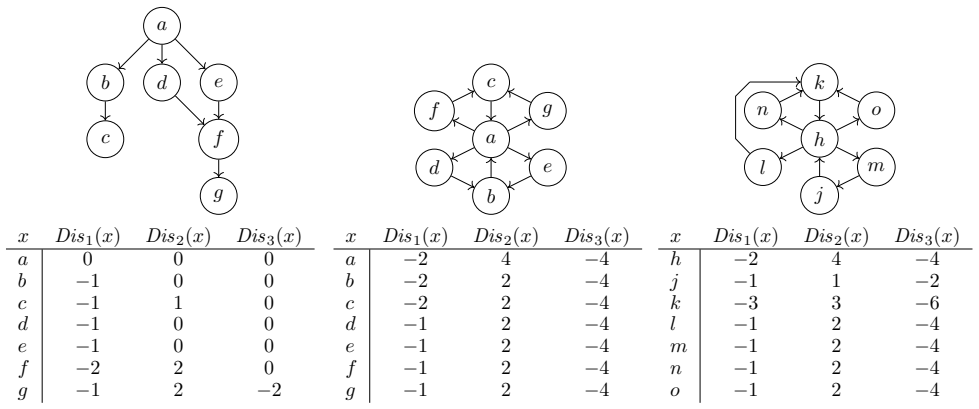
Deciding whether one argument is stronger than another under discussion-based semantics is possible in polynomial time.
A machine-rendered reading of the paper's core claim, the machinery that carries it, and where it could break.
Core claim
The authors prove that, for the discussion-based semantics, argument a is stronger than argument b if and only if the two corresponding vertices have identical numbers of walks of each length; they establish this equivalence and then reduce the resulting walk-count equality problem to semiring automata equivalence, which is known to be solvable in polynomial time.
What carries the argument
Reduction of walk-count equality between two vertices to equivalence testing of semiring automata over the appropriate semiring of walk enumerations.
If this is right
- The strength comparison problem for this semantics lies in P.
- The same reduction technique supplies an explicit polynomial-time algorithm via automata construction.
- The result gives a new, automata-theoretic lens on the complexity of ranking semantics in general.
- Other walk-based ranking methods may admit similar polynomial-time comparisons.
Where Pith is reading between the lines
- The same automata reduction might be lifted to decide other properties expressible by regular walk languages.
- Implementation of the semiring automata construction would allow direct empirical checks on large argumentation frameworks.
- If other ranking semantics can be shown to reduce to comparable walk or path-count problems, their complexity might also fall into P.
Load-bearing premise
The strength ordering of the discussion-based semantics is exactly captured by equality of the number of walks of each length ending at the two arguments.
What would settle it
A concrete pair of arguments in a small attack graph where the two vertices have identical walk counts of every length yet receive different strength values according to the definition of the semantics.
Figures


read the original abstract
We show that deciding whether an argument a is stronger than an argument b with respect to the discussion-based semantics of Amgoud and Ben-Naim is decidable in polynomial time. At its core, this problem is about deciding whether, for two vertices in a graph, the number of walks of each length ending in those vertices is the same. We employ results from automata theory and reduce this problem to the equivalence problem for semiring automata. This offers a new perspective on the computational complexity of ranking semantics, an area in which the complexity of many semantics remains open.
Editorial analysis
A structured set of objections, weighed in public.
Referee Report
Summary. The manuscript proves that deciding whether argument a is stronger than argument b under the discussion-based semantics of Amgoud and Ben-Naim is in P. The central reduction shows that strength comparison is equivalent to equality of the sequences counting walks of each length ending at the two vertices; this is then reduced to equivalence of N-weighted automata (states = arguments, transitions = edges weighted 1), whose equivalence is solvable in polynomial time via iterative linear-algebraic comparison of the generated power series.
Significance. If the result holds, it supplies a concrete polynomial-time algorithm for one ranking semantics whose complexity was previously open, using a standard linear-size automata construction with no exponential blowup. The approach leverages independently known results on semiring automata equivalence (via Hankel-matrix rank or simultaneous minimization) and thereby gives a new automata-theoretic perspective on the complexity landscape of argumentation semantics. The reduction is direct and preserves the exact walk-count semantics without hidden parameters or circularity.
minor comments (2)
- §2: the precise inductive definition of the discussion-based strength ordering (Amgoud & Ben-Naim) is referenced but not restated; adding a short self-contained paragraph would improve readability for readers outside the immediate sub-area.
- §4, after the automata construction: the claim that the reduction is 'linear size' is correct but would benefit from an explicit statement of the state and transition cardinalities in terms of |A| and |R|.
Simulated Author's Rebuttal
We thank the referee for their positive assessment of the manuscript and for recommending acceptance. The summary accurately captures the main contribution: a direct polynomial-time reduction from strength comparison under discussion-based semantics to equivalence of N-weighted automata.
Circularity Check
No significant circularity; derivation reduces to external automata result
full rationale
The paper's central claim is that strength comparison under the discussion-based semantics reduces to checking equality of per-length walk counts between two vertices, which is then reduced via a standard linear-size construction to the equivalence problem for semiring automata (known to be in P by independent automata-theoretic results). No step equates a derived quantity to its own fitted input, renames a known pattern, or relies on a load-bearing self-citation whose content is unverified; the cited definition originates from Amgoud and Ben-Naim (distinct authors) and the automata equivalence is an external, previously established fact. The derivation chain is therefore self-contained against external benchmarks.
Axiom & Free-Parameter Ledger
axioms (2)
- domain assumption Discussion-based semantics strength is defined by equality of walk counts of each length
- standard math Equivalence of semiring automata is decidable in polynomial time
Reference graph
Works this paper leans on
-
[1]
Ranking-based semantics for argumentation frameworks
[Amgoud and Ben-Naim, 2013] Leila Amgoud and Jonathan Ben-Naim. Ranking-based semantics for argumentation frameworks. In Weiru Liu, V . S. Subrahmanian, and Jef Wijsen, editors,Proceedings of the Seventh International Conference on Scalable Uncertainty Management, SUM 2013, Washington, DC, USA, September 16-18, 2013, vol- ume 8078 ofLecture Notes in Compu...
work page 2013
-
[2]
Computational Complexity - A Modern Approach
[Arora and Barak, 2009] Sanjeev Arora and Boaz Barak. Computational Complexity - A Modern Approach. Cam- bridge University Press,
work page 2009
-
[3]
From fine-grained properties to broad prin- ciples for gradual argumentation: A principled spectrum
[Baroniet al., 2019 ] Pietro Baroni, Antonio Rago, and Francesca Toni. From fine-grained properties to broad prin- ciples for gradual argumentation: A principled spectrum. Int. J. Approx. Reason., 105:252–286,
work page 2019
-
[4]
On the equivalence of Z-automata
8 [Béalet al., 2005 ] Marie-Pierre Béal, Sylvain Lombardy, and Jacques Sakarovitch. On the equivalence of Z-automata. In Luís Caires, Giuseppe F. Italiano, Luís Monteiro, Catuscia Palamidessi, and Moti Yung, editors,Automata, Languages and Programming, 32nd International Colloquium, ICALP 2005, Lisbon, Portugal, July 11-15, 2005, Proceedings, volume 3580 ...
work page 2005
- [5]
-
[6]
A ranking semantics for abstract argumentation based on serialisability
[Blümel and Thimm, 2022] Lydia Blümel and Matthias Thimm. A ranking semantics for abstract argumentation based on serialisability. InProceedings of the 9th Interna- tional Conference on Computational Models of Argument (COMMA’22), September
work page 2022
-
[7]
Argumentation ranking semantics based on propagation
[Bonzonet al., 2016a ] Elise Bonzon, Jerome Delobelle, Se- bastien Konieczny, and Nicolas Maudet. Argumentation ranking semantics based on propagation. InProceedings of the 6th International Conference on Computational Models of Argument (COMMA-2016),
work page 2016
-
[8]
Combining extension-based semantics and ranking-based semantics for abstract argumentation
[Bonzonet al., 2018 ] Elise Bonzon, Jerome Delobelle, Se- bastien Konieczny, and Nicolas Maudet. Combining extension-based semantics and ranking-based semantics for abstract argumentation. InProceedings of the Sixteenth International Conference on Principles of Knowledge Rep- resentation and Reasoning (KR 2018),
work page 2018
-
[9]
[Bonzonet al., 2023 ] Elise Bonzon, Jérôme Delobelle, Sébastien Konieczny, and Nicolas Maudet. An empirical and axiomatic comparison of ranking-based semantics for abstract argumentation.Journal of Applied Non-Classical Logics, 33(3–4):328–386,
work page 2023
-
[10]
Graduality in argumen- tation.Journal of Artificial Intelligence Research, 23:245– 297,
[Cayrol and Lagasquie-Schiex, 2005] Claudette Cayrol and Marie-Christine Lagasquie-Schiex. Graduality in argumen- tation.Journal of Artificial Intelligence Research, 23:245– 297,
work page 2005
-
[11]
PhD thesis, Centre de Recherche en Informatique de Lens,
[Delobelle, 2017] Jerome Delobelle.Ranking-based Seman- tics for Abstract Argumentation. PhD thesis, Centre de Recherche en Informatique de Lens,
work page 2017
-
[12]
Ranking semantics based on subgraphs analysis
[Dondio, 2018] Pierpaolo Dondio. Ranking semantics based on subgraphs analysis. InProceedings of the 17th Interna- tional Conference on Autonomous Agents and Multiagent Systems (AAMAS 2018),
work page 2018
-
[13]
[Dung, 1995] Phan Minh Dung. On the acceptability of argu- ments and its fundamental role in nonmonotonic reasoning, logic programming and n-person games.Artificial Intelli- gence, 77(2):321–358,
work page 1995
-
[14]
[Edmonds, 1967] Jack Edmonds. Systems of distinct repre- sentatives and linear algebra.Journal of Research of the National Bureau of Standards, 71B(4):241–245,
work page 1967
-
[15]
[Ésik and Maletti, 2010] Zoltán Ésik and Andreas Maletti. Simulation vs. equivalence. In Hamid R. Arabnia, George A. Gravvanis, and Ashu M. G. Solo, editors,Pro- ceedings of the 2010 International Conference on Founda- tions of Computer Science, FCS 2010, July 12-15, 2010, Las Vegas, Nevada, USA, pages 119–124. CSREA Press,
work page 2010
-
[16]
[Flajolet and Sedgewick, 2009] Philippe Flajolet and Robert Sedgewick.Analytic Combinatorics. Cambridge University Press,
work page 2009
-
[17]
[Grossi and Modgil, 2019] Davide Grossi and Sanjay Modgil. On the graded acceptability of arguments in abstract and instantiated argumentation.Artificial Intelligence, 275:138– 173, October
work page 2019
-
[18]
Hopcroft, Rajeev Motwani, and Jeffrey D
[Hopcroftet al., 2007 ] John E. Hopcroft, Rajeev Motwani, and Jeffrey D. Ullman.Introduction to automata theory, languages, and computation, 3rd Edition. Pearson interna- tional edition. Addison-Wesley,
work page 2007
-
[19]
Notes on equivalence and min- imization of weighted automata.CoRR, abs/2009.01217,
[Kiefer, 2020] Stefan Kiefer. Notes on equivalence and min- imization of weighted automata.CoRR, abs/2009.01217,
-
[20]
Argument, i choose you! preferences and ranking seman- tics in abstract argumentation
[Mailly and Rossit, 2020] Jean-Guy Mailly and Julien Rossit. Argument, i choose you! preferences and ranking seman- tics in abstract argumentation. InProceedings of the 17th International Conference on Principles of Knowledge Rep- resentation and Reasoning (KR’20),
work page 2020
-
[21]
Open-mindedness of gradual ar- gumentation semantics
[Potyka, 2019] Nico Potyka. Open-mindedness of gradual ar- gumentation semantics. In Nahla Ben Amor, Benjamin Qu- ost, and Martin Theobald, editors,Proceedings of the 13th International Conference on Scalable Uncertainty Man- agement (SUM’19), volume 11940 ofLecture Notes in Computer Science, pages 236–249. Springer,
work page 2019
-
[22]
[Rabin and Scott, 1959] Michael O. Rabin and Dana Scott. Finite automata and their decision problems.IBM Journal of Research and Development, 3(2):114–125,
work page 1959
-
[23]
Springer Berlin Heidelberg, Berlin, Heidelberg,
[Sakarovitch, 2009] Jacques Sakarovitch.Rational and Recognisable Power Series, pages 105–174. Springer Berlin Heidelberg, Berlin, Heidelberg,
work page 2009
-
[24]
Texts and Monographs in Computer Science
[Salomaa and Soittola, 1978] Arto Salomaa and Matti Soit- tola.Automata-Theoretic Aspects of Formal Power Se- ries. Texts and Monographs in Computer Science. Springer,
work page 1978
-
[25]
On the definition of a family of automata.Inf
[Schützenberger, 1961] Marcel Paul Schützenberger. On the definition of a family of automata.Inf. Control., 4(2-3):245– 270,
work page 1961
-
[26]
Towards ranking-based semantics for abstract argumentation using conditional logic semantics
[Skiba and Thimm, 2020] Kenneth Skiba and Matthias Thimm. Towards ranking-based semantics for abstract argumentation using conditional logic semantics. InPro- ceedings of the International Workshop on Computational Argumentation and Cognition (COGNITAR’20), August
work page 2020
-
[27]
Rank- ing extensions in abstract argumentation
[Skibaet al., 2021 ] Kenneth Skiba, Tjitze Rienstra, Matthias Thimm, Jesse Heyninck, and Gabriele Kern-Isberner. Rank- ing extensions in abstract argumentation. In Zhi-Hua Zhou, 9 editor,Proceedings of the 30th International Joint Con- ference on Artificial Intelligence (IJCAI’21), pages 2047– 2053, August
work page 2021
-
[28]
[Stockmeyer and Meyer, 1973] Larry J. Stockmeyer and Al- bert R. Meyer. Word problems requiring exponential time: Preliminary report. In Alfred V . Aho, Allan Borodin, Robert L. Constable, Robert W. Floyd, Michael A. Har- rison, Richard M. Karp, and H. Raymond Strong, editors, Proceedings of the 5th Annual ACM Symposium on Theory of Computing, April 30 - ...
work page 1973
-
[29]
Gaussian elimination is not optimal.Numer
[Strassen, 1969] V olker Strassen. Gaussian elimination is not optimal.Numer. Math. (Heidelb.), 13(4):354–356, August
work page 1969
-
[30]
Probabilistic graded semantics
[Thimmet al., 2018 ] Matthias Thimm, Federico Cerutti, and Tjitze Rienstra. Probabilistic graded semantics. In Sanjay Modgil, Katarzyna Budzynska, and John Lawrence, editors, Proceedings of the Seventh International Conference on Computational Models of Argumentation (COMMA’18), volume 305 ofFrontiers in Artificial Intelligence and Ap- plications, pages 3...
work page 2018
-
[31]
[Tinhoferet al., 1990 ] Gottfried Tinhofer, Rudolf Albrecht, Ernst Mayr, Hartmut Noltemeier, and Maciej M Syslo, editors.Computational Graph Theory. Computing Supple- menta. Springer, Vienna, Austria, April
work page 1990
-
[32]
On path equivalence of non- deterministic finite automata.Inf
[Tzeng, 1996] Wen-Guey Tzeng. On path equivalence of non- deterministic finite automata.Inf. Process. Lett., 58(1):43– 46,
work page 1996
-
[33]
Explaining arguments’ strength: Unveiling the role of attacks and supports
[Yinet al., 2024 ] Xiang Yin, Nico Potyka, and Francesca Toni. Explaining arguments’ strength: Unveiling the role of attacks and supports. InProceedings of the Thirty-Third International Joint Conference on Artificial Intelligence, IJCAI 2024, Jeju, South Korea, August 3-9, 2024, pages 3622–3630. ijcai.org,
work page 2024
-
[34]
Viewpoints using ranking- based argumentation semantics
[Yunet al., 2018 ] Bruno Yun, Srdjan Vesic, Madalina Croitoru, and Pierre Bisquert. Viewpoints using ranking- based argumentation semantics. InProceedings of the 7th International Conference on Computational Models of Ar- gumentation (COMMA’18),
work page 2018
discussion (0)
Sign in with ORCID, Apple, or X to comment. Anyone can read and Pith papers without signing in.