The radiation zone in general relativity
Pith reviewed 2026-05-09 16:24 UTC · model grok-4.3
The pith
The radiation zone concept from electrodynamics resolves the static charge radiation paradox in gravity and shows why laboratory gravitational wave sources cannot exist.
A machine-rendered reading of the paper's core claim, the machinery that carries it, and where it could break.
Core claim
The radiation zone is the region far from the sources in which the 1/r part of the field dominates the 1/r^2 and higher pieces. When this zone is identified in general relativity, a static charge held fixed in a gravitational field produces no radiation inside it, and compact laboratory devices lack the spatial scale needed to form such a zone for gravitational fields, so they generate no observable waves.
What carries the argument
The radiation zone, the asymptotic region where the 1/r falloff dominates the field expansion, used by direct analogy to electrodynamics.
If this is right
- A static electric charge held fixed in a gravitational field emits no radiation observable from the radiation zone.
- Only sources whose size is comparable to the wavelength of the radiation can establish a radiation zone and therefore produce gravitational waves.
- Astrophysical events succeed as gravitational wave sources precisely because their enormous scales permit a radiation zone to form.
- The nonlinear character of Einstein gravity does not prevent the radiation-zone analogy from holding in the far-field limit.
Where Pith is reading between the lines
- Laboratory attempts to generate gravitational waves would require baselines or frequencies that allow a radiation zone to develop, which may explain current experimental limits.
- The same zone criterion could be applied to charges or currents near black holes to predict whether apparent radiation is real or coordinate artifact.
- The approach suggests a general method for identifying true radiation in any nonlinear field theory by locating the dominant 1/r term at large distances.
Load-bearing premise
The radiation zone can be defined in general relativity by the same 1/r dominance criterion used in electrodynamics, without the nonlinearity of the Einstein equations or coordinate choices rendering the definition invalid.
What would settle it
Detection of electromagnetic radiation from a truly static charge at rest in a uniform gravitational field, or successful production of measurable gravitational waves from a small, controlled mechanical oscillator in a laboratory.
Figures
read the original abstract
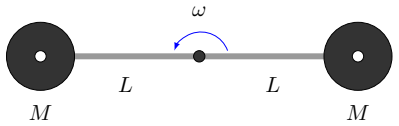
The radiation zone in electrodynamics is the region far enough away from the charges that the $1/r$ part of the field dominates over the $1/{r^2}$ piece. This concept is key in explaining two puzzling aspects of general relativity: The first is an old paradox that invokes the equivalence principle to argue that a static charge in a gravitational field will radiate. The second is the fact that while there are astrophysical sources of gravitational radiation, we do not have any man-made sources.
Editorial analysis
A structured set of objections, weighed in public.
Referee Report
Summary. The paper claims that the radiation zone concept from electrodynamics—where the 1/r term in the field dominates over the 1/r² near-field term at large distances—can be directly applied in general relativity to resolve two issues: the apparent paradox that a static charge in a gravitational field should radiate according to the equivalence principle, and the absence of man-made laboratory sources of gravitational radiation despite the existence of astrophysical ones.
Significance. If rigorously established, the result would offer a conceptual clarification for longstanding puzzles in gravitational radiation, providing an analogy-based explanation that avoids full nonlinear computations and highlights the role of distance scales in field propagation. This could aid pedagogical understanding and intuition-building in GR, though its impact depends on whether the analogy survives the differences between linear Maxwell theory and the Einstein equations.
major comments (3)
- [Abstract and main argument] The central claim rests on defining a radiation zone in GR by direct analogy to electrodynamics, but the manuscript provides no explicit derivation or mathematical construction showing how the 1/r dominance is identified in solutions to the Einstein equations. This is load-bearing for both applications, as the abstract presents only the conceptual argument without handling the nonlinear terms.
- [Application to static charge paradox] The explanation for the static charge in a gravitational field (invoking the equivalence principle) assumes the radiation zone can be defined without being invalidated by coordinate ambiguities or the non-tensorial nature of gravitational fields, but no calculation or gauge-invariant argument is given to support this in the curved-spacetime case.
- [Discussion of man-made sources] The claim that laboratory sources cannot generate gravitational waves relies on the same zone separation, yet the manuscript offers no quantitative estimate of the distance scale at which the 1/r term would dominate or comparison to the weak-field linearized regime where such sources are typically analyzed.
minor comments (1)
- [Abstract] The abstract would benefit from a sentence outlining the key steps in extending the radiation zone definition to GR, to help readers assess the scope immediately.
Simulated Author's Rebuttal
We thank the referee for their careful reading and insightful comments. We address each of the major comments point by point below.
read point-by-point responses
-
Referee: [Abstract and main argument] The central claim rests on defining a radiation zone in GR by direct analogy to electrodynamics, but the manuscript provides no explicit derivation or mathematical construction showing how the 1/r dominance is identified in solutions to the Einstein equations. This is load-bearing for both applications, as the abstract presents only the conceptual argument without handling the nonlinear terms.
Authors: The manuscript is intended as a conceptual clarification rather than a full technical derivation. In the weak-field limit, which is relevant for the applications discussed, the Einstein equations reduce to a form analogous to Maxwell's equations, where the radiation zone is identified by the 1/r fall-off of the propagating degrees of freedom. We agree that making this more explicit would strengthen the paper and will add a short section outlining the asymptotic behavior in linearized gravity. revision: partial
-
Referee: [Application to static charge paradox] The explanation for the static charge in a gravitational field (invoking the equivalence principle) assumes the radiation zone can be defined without being invalidated by coordinate ambiguities or the non-tensorial nature of gravitational fields, but no calculation or gauge-invariant argument is given to support this in the curved-spacetime case.
Authors: We note that while gravitational fields are not tensors in the same way, the radiation zone is defined in terms of the asymptotic behavior at large distances in asymptotically flat spacetimes, where the Bondi-Sachs formalism or similar provides a gauge-invariant description of the radiative degrees of freedom. The equivalence principle argument is local, but the lack of radiation is observed in the radiation zone. However, we acknowledge the need for a more gauge-invariant presentation and will revise the relevant section to reference the appropriate asymptotic framework. revision: partial
-
Referee: [Discussion of man-made sources] The claim that laboratory sources cannot generate gravitational waves relies on the same zone separation, yet the manuscript offers no quantitative estimate of the distance scale at which the 1/r term would dominate or comparison to the weak-field linearized regime where such sources are typically analyzed.
Authors: The radiation zone distance scale is set by the wavelength of the radiation, which for laboratory sources with frequencies around 1 Hz or higher would be on the order of hundreds of kilometers or more, far exceeding typical laboratory sizes. In the weak-field regime, the amplitude is also extremely small, making detection impossible. We will include a brief quantitative estimate in the revised manuscript to address this. revision: yes
Circularity Check
No circularity: external analogy applied to GR without self-referential reduction
full rationale
The paper defines the radiation zone via the standard 1/r vs 1/r^2 distinction from linear electrodynamics and then invokes that distinction to address two GR puzzles. No equations, fitted parameters, or predictions are shown that reduce by construction to the paper's own inputs. No self-citations are load-bearing, no uniqueness theorems are imported from the author's prior work, and no ansatz is smuggled in. The argument is self-contained against the external Maxwell analogy and does not rename a known GR result or force a result via internal fitting.
Axiom & Free-Parameter Ledger
axioms (1)
- domain assumption The radiation zone in GR can be identified by the same 1/r dominance criterion used in electrodynamics.
Reference graph
Works this paper leans on
-
[1]
Griffiths,Introduction to Electrodynamics, fourth edition, Cambridge University Press (2017)
D. Griffiths,Introduction to Electrodynamics, fourth edition, Cambridge University Press (2017)
work page 2017
-
[2]
W. Pauli, “Theory of Relativity”, P. 93, Pergamon, New York, 1958
work page 1958
-
[3]
G. A. Schott, Phil. Mag. 29, 49, 1915
work page 1915
- [4]
-
[5]
Feynman, Feynman Lectures on Gravitation, Addison-Wesley, 1995
R.P. Feynman, Feynman Lectures on Gravitation, Addison-Wesley, 1995
work page 1995
-
[6]
Abbott et al. Phys. Rev. Lett.116061102 (2016)
work page 2016
-
[7]
J. Lee, E. Adelberger, T. Cook, S. Fleischer, and B. Heckel, Phys. Rev. Lett.124101101 (2020)
work page 2020
- [8]
discussion (0)
Sign in with ORCID, Apple, or X to comment. Anyone can read and Pith papers without signing in.