Domijn: The Security of Domain Registrars and the Risk of a Domain Name Takeover
Pith reviewed 2026-05-21 04:17 UTC · model grok-4.3
The pith
Top domain registrars offer basic takeover protections but commonly fail to implement two-factor authentication correctly, and a successful takeover can inflict damage on par with ransomware.
A machine-rendered reading of the paper's core claim, the machinery that carries it, and where it could break.
Core claim
All registrars in the study implement relatively effective security measures to prevent domain takeovers, but they fall short in more advanced security controls such as the proper implementation of two-factor authentication. A domain takeover can have significant impact, potentially equalling that of a ransomware attack.
What carries the argument
An empirical survey of registrar security practices combined with an impact model that quantifies domain takeover consequences in terms comparable to ransomware and DDoS attacks.
If this is right
- Registrars should strengthen two-factor authentication to better prevent unauthorized domain transfers.
- Organizations may need to add extra layers of protection beyond what their registrar provides.
- Domain takeovers warrant preparation similar to ransomware incidents due to comparable potential damages.
- The .nl registry could consider mandating stronger security standards for all accredited registrars.
Where Pith is reading between the lines
- Improving registrar security could reduce the overall attack surface for DNS-based attacks on critical infrastructure.
- Similar studies on other top-level domains might reveal whether these patterns hold globally.
- Future work could test whether mandating specific controls reduces takeover incidents in practice.
Load-bearing premise
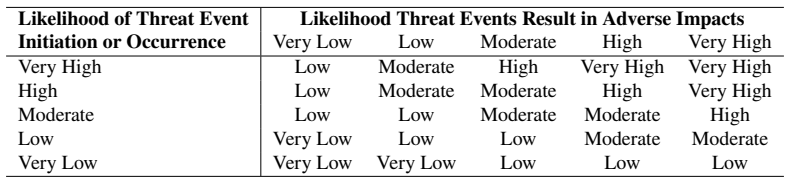
The impact model for domain takeovers accurately reflects real consequences and allows direct comparison to ransomware and DDoS without major unmodeled variables or selection effects in the registrar sample.
What would settle it
A documented domain takeover incident whose measured financial and operational costs deviate substantially from the modeled ransomware-equivalent impact would challenge the equivalence claim.
Figures


read the original abstract
Domain names are key assets for organisation. They anchor an organisation's online presence and reputation, and serve as linking pin for web services and, e.g., email. Consequently, a malicious takeover of a domain can lead to significant damages. Organisations register domain names through so-called registrars, a type of business that plays a key role in the domain name industry. This implies that registrars play an important part in safeguarding against malicious takeovers of domains. In this paper we empirically study how registrars implement security controls to prevent against such takeovers. We focus on the top 10 most popular registrars for the .nl ccTLD. We present the results of this study in light of a model for the impact of domain takeovers, that analyses the possible consequence of a takeover. We contrast this against the impact of two other well-known threats: ransomware and DDoS attacks. We find that all registrars in our study implement relatively effective security measures, but that they fall short in more advanced security controls, such as the proper implementation of two-factor authentication. We also find that a domain takeover can have significant impact, potentially equalling that of a ransomware attack.
Editorial analysis
A structured set of objections, weighed in public.
Referee Report
Summary. The paper empirically studies security controls at the top 10 .nl registrars to prevent domain takeovers, presents an impact model comparing takeover consequences to ransomware and DDoS attacks, and concludes that registrars use relatively effective basic measures but fall short on advanced controls such as proper 2FA, while domain takeovers can produce impacts potentially equaling ransomware.
Significance. If the empirical observations and impact model hold after clarification, the work is significant for identifying concrete gaps in registrar practices that protect a critical internet asset and for offering a comparative risk framework that could guide organizations and policymakers. The focus on a real ccTLD sample and the explicit contrast with well-known threats add practical value to the domain-security literature.
major comments (2)
- [Methods] Methods section: no description is given of how registrar security controls were observed or evaluated (e.g., public documentation review, account creation tests, or direct queries), nor of the precise criteria used to judge 'proper implementation' of two-factor authentication. Without these details the claim that registrars 'fall short in more advanced security controls' cannot be verified or reproduced.
- [Impact Model] Impact Model section: the assertion that a domain takeover 'can have significant impact, potentially equalling that of a ransomware attack' rests on a hypothetical contrast of consequences without calibration against documented hijacking incidents, without explicit variables for domain usage (email vs. web), organization type, or recovery speed, and without addressing possible selection effects in the .nl top-10 sample.
minor comments (2)
- [Abstract] The abstract states findings but omits the sample size and any quantitative summary of the security assessment results.
- [Results] A table or appendix listing the specific controls examined for each registrar would improve clarity and allow readers to assess the 'relatively effective' versus 'fall short' distinction.
Simulated Author's Rebuttal
We thank the referee for their constructive and detailed review of our manuscript. We address each major comment point by point below and indicate the changes we will make in the revised version.
read point-by-point responses
-
Referee: [Methods] Methods section: no description is given of how registrar security controls were observed or evaluated (e.g., public documentation review, account creation tests, or direct queries), nor of the precise criteria used to judge 'proper implementation' of two-factor authentication. Without these details the claim that registrars 'fall short in more advanced security controls' cannot be verified or reproduced.
Authors: We agree that the current manuscript lacks a sufficiently detailed Methods section. In the revision we will add an explicit subsection that describes our evaluation process: we reviewed publicly available documentation, support articles, and security policy pages from each of the ten registrars; where terms permitted, we created test accounts to observe the actual authentication flows during registration and login. For assessing 'proper implementation' of two-factor authentication we applied the following criteria: (i) whether 2FA is mandatory rather than optional, (ii) whether it supports app-based or hardware tokens in addition to or instead of SMS, and (iii) whether recovery or bypass paths (e.g., SMS fallback) undermine the control. These additions will make the evaluation transparent and reproducible. revision: yes
-
Referee: [Impact Model] Impact Model section: the assertion that a domain takeover 'can have significant impact, potentially equalling that of a ransomware attack' rests on a hypothetical contrast of consequences without calibration against documented hijacking incidents, without explicit variables for domain usage (email vs. web), organization type, or recovery speed, and without addressing possible selection effects in the .nl top-10 sample.
Authors: The impact model is intentionally qualitative, contrasting potential consequence chains rather than providing a calibrated quantitative estimate. We accept that the section would benefit from additional grounding. In revision we will (a) reference publicly reported domain-hijacking incidents to illustrate real-world outcomes, (b) introduce explicit variables covering primary domain use (email versus web), organization type and size, and typical recovery timelines drawn from industry reports, and (c) add a short discussion of selection effects, noting that the top-10 .nl registrars were chosen because they manage the large majority of .nl domains while acknowledging that smaller registrars may exhibit different practices. These clarifications will strengthen the comparison to ransomware and DDoS without changing the overall conclusion. revision: partial
Circularity Check
Empirical registrar study with constructed impact model exhibits no circularity
full rationale
The paper reports an empirical survey of security controls at the top 10 .nl registrars together with a constructed qualitative impact model that contrasts domain takeover consequences against ransomware and DDoS. No mathematical derivations, equations, fitted parameters, or self-citations appear in the abstract or described structure. Central claims rest on external observations of registrar practices and an independently constructed model rather than any reduction of results to the paper's own inputs by definition or self-reference. The analysis is therefore self-contained against external benchmarks.
Axiom & Free-Parameter Ledger
axioms (1)
- domain assumption The top 10 most popular registrars for the .nl ccTLD are representative of security practices that matter for domain takeover risk.
Reference graph
Works this paper leans on
-
[1]
Consumer attitudes toward data breach notifications and loss of personal information
Lillian Ablon, Paul Heaton, Diana Lavery, and Sasha Romanosky. Consumer attitudes toward data breach notifications and loss of personal information. 2016. doi:10.7249/rr1187
-
[2]
Risky BIZness: risks derived from registrar name management
Gautam Akiwate, Stefan Savage, Geoffrey M Voelker, and Kimberly C Claffy. Risky BIZness: risks derived from registrar name management. InProceedings of the 21st ACM Internet Measurement Conference, pages 673–686, 2021
work page 2021
-
[3]
CENTR.CENTRstatsGlobalTLDReport,12024.URL: https://centr.org/images/global_tld_report _2024_1.pdf
-
[4]
Richard Chirgwin. New York Times, twitter domain hijackers“cameinthroughfrontdoor”,Nov2013. URL: https://www.theregister.com/2013/08/27/twi tter_ny_times_in_domain_hijack/
work page 2013
-
[5]
Understanding the role of regis- trars in DNSSEC deployment
Taejoong Chung, Roland van Rijswijk-Deij, David Choffnes, Dave Levin, Bruce M Maggs, Alan Mislove, and Christo Wilson. Understanding the role of regis- trars in DNSSEC deployment. InProceedings of the 2017InternetMeasurementConference,pages369–383, 2017
work page 2017
-
[6]
CISA insights – CYBER: Mitigate DNS Infras- tructure Tampering
CISA. CISA insights – CYBER: Mitigate DNS Infras- tructure Tampering. URL:https://www.cisa.gov/s ites/default/files/publications/CISAInsigh ts-Cyber-MitigateDNSInfrastructureTamperin g_S508C.pdf
-
[7]
What is DNS hijacking? how it took downCurveFinance’swebsite,May2025
Cointelegraph. What is DNS hijacking? how it took downCurveFinance’swebsite,May2025. URL: https: //www.tradingview.com/news/cointelegraph: 9a15fa371094b:0-what-is-dns-hijacking-how -it-took-down-curve-finance-s-website/
-
[8]
Leslie Daigle. WHOIS Protocol Specification. RFC 3912, September 2004. URL:https://www.rfc-edi tor.org/info/rfc3912,doi:10.17487/RFC3912
-
[9]
The tangled web of pass- word reuse
Anupam Das, Joseph Bonneau, Matthew Caesar, Nikita Borisov, and XiaoFeng Wang. The tangled web of pass- word reuse. InNDSS, volume 14, pages 23–26, 2014
work page 2014
-
[10]
Keys to the (SAAS) kingdom, May 2025
Lee Davis. Keys to the (SAAS) kingdom, May 2025. URL: https://cybercx.com/blog/keys-to-the -saas-kingdom/
work page 2025
-
[11]
A File Format to Aid in Security Vulnerability Disclosure
Edwin Foudil and Yakov Shafranovich. A File Format to Aid in Security Vulnerability Disclosure. RFC 9116, April 2022. URL:https://www.rfc-editor.org/ info/rfc9116,doi:10.17487/RFC9116
-
[12]
Cybercrime bitcoin revenue estimations: Quantifying theimpactofmethodologyandcoverage
GibranGomez,KevinvanLiebergen,andJuanCaballero. Cybercrime bitcoin revenue estimations: Quantifying theimpactofmethodologyandcoverage. InProceedings of the 2023 ACM SIGSAC Conference on Computer and Communications Security, CCS ’23, page 3183–3197, New York, NY, USA, 2023. Association for Computing Machinery.doi:10.1145/3576915.3623094
-
[13]
Paul E. Hoffman. DNS Security Extensions (DNSSEC). RFC 9364, February 2023. URL:https://www.rf c-editor.org/info/rfc9364 , doi:10.17487/RFC 9364
-
[14]
ICANN. Registering Domain Names. URL:https: //www.icann.org/resources/pages/register-d omain-name-2017-06-20-en
work page 2017
-
[15]
ICANN. SAC 074 | SSAC Advisory on Registrant Pro- tection: Best Practices for Preserving Security and Sta- bility in the Credential Management Lifecycle. URL: https://www.icann.org/resources/files/1194 801-2015-11-03-en
work page 2015
-
[16]
What Does ICANN Do? URL:https://ww w.icann.org/resources/pages/what-2012-02-2 5-en
ICANN. What Does ICANN Do? URL:https://ww w.icann.org/resources/pages/what-2012-02-2 5-en
work page 2012
-
[17]
Guide for conducting risk assessments, Sep 2012
Joint Task Force Transformation Initiative. Guide for conducting risk assessments, Sep 2012. URL:https: //csrc.nist.gov/pubs/sp/800/30/r1/final
work page 2012
-
[18]
Global Cybersecurity Index 2024, May 2024
International Telecommunication Union (ITU). Global Cybersecurity Index 2024, May 2024. URL:https: //www.itu.int/epublications/publication/gl obal-cybersecurity-index-2024. 13
work page 2024
-
[19]
M. Asif Khan and Mureed Hussain. Cyber security quantification model. InProceedings of the 3rd Interna- tional Conference on Security of Information and Net- works, SIN ’10, page 142–148, New York, NY, USA,
-
[20]
Association for Computing Machinery. doi: 10.1145/1854099.1854130
-
[21]
Measuring the practical impact of{DNSSEC} deployment
WilsonLian,EricRescorla,HovavShacham,andStefan Savage. Measuring the practical impact of{DNSSEC} deployment. In22nd USENIX Security Symposium (USENIX Security 13), pages 573–588, 2013
work page 2013
-
[22]
SuqiLiu,IanFoster,StefanSavage,GeoffreyM.Voelker, and Lawrence K. Saul. Who is .com? learning to parse whois records. InProceedings of the 2015 Internet MeasurementConference,IMC’15,page369–380,New York, NY, USA, 2015. Association for Computing Ma- chinery.doi:10.1145/2815675.2815693
-
[23]
P. Mockapetris. Domain names - implementation and specification. RFC 1035, November 1987. URL:ht tps://www.rfc-editor.org/info/rfc1035 , doi: 10.17487/RFC1035
-
[24]
HOTP: An HMAC-Based One-Time Password Algorithm
DavidM’Raihi,FrankHoornaert,DavidNaccache,Mihir Bellare, and Ohad Ranen. HOTP: An HMAC-Based One-Time Password Algorithm. RFC 4226, December
-
[25]
URL: https://www.rfc-editor.org/info/r fc4226,doi:10.17487/RFC4226
-
[26]
Morium Akter Munny, Mahbub Alam, Sonjoy Ku- mar Paul, Daniel Timko, Muhammad Lutfor Rahman, and Nitesh Saxena. Infrastructure patterns in toll scam domains: A comprehensive analysis of cybercriminal registration and hosting strategies. In2025 APWG Sym- posium on Electronic Crime Research (eCrime), pages 1–13, 2025.doi:10.1109/eCrime66972.2025.113 27851
-
[27]
Goodsecuritypracticefordomainregistrars, Mar 2025
NCSC-UK. Goodsecuritypracticefordomainregistrars, Mar 2025. URL:https://www.ncsc.gov.uk/coll ection/security-practice-domain-registrars
work page 2025
-
[28]
JSON Responses fortheRegistrationDataAccessProtocol(RDAP)
Andy Newton and Scott Hollenbeck. JSON Responses fortheRegistrationDataAccessProtocol(RDAP). RFC 7483, March 2015. URL:https://www.rfc-editor. org/info/rfc7483,doi:10.17487/RFC7483
-
[29]
Multifactor authentication cheat sheet
OWASP. Multifactor authentication cheat sheet. URL: https://cheatsheetseries.owasp.org/cheatsh eets/Multifactor_Authentication_Cheat_Shee t.html
-
[30]
Harun Oz, Ahmet Aris, Albert Levi, and A. Selcuk Ulu- agac. A survey on ransomware: Evolution, taxonomy, and defense solutions.ACM Comput. Surv., 54(11s), September 2022.doi:10.1145/3514229
-
[31]
Dnspionage cam- paign targets middle east, Sep 2018
PaulRascagneres andWarren Mercer. Dnspionage cam- paign targets middle east, Sep 2018. URL:https: //blog.talosintelligence.com/dnspionage-cam paign-targets-middle-east/
work page 2018
-
[32]
Quantifying the Financial Impact of Cyber Security Attacks on Banks: A Big Data Analytics Ap- proach
Hooman Razavi, Mohammad Reza Jamali, Morvarid- sadat Emsaki, Ali Ahmadi, and Mostafa Hajiaghei- Keshteli. Quantifying the Financial Impact of Cyber Security Attacks on Banks: A Big Data Analytics Ap- proach. In2023 IEEE Canadian Conference on Elec- trical and Computer Engineering (CCECE), pages 533– 538, 2023. doi:10.1109/CCECE58730.2023.102889 63
-
[33]
Johann Schlamp, Josef Gustafsson, Matthias Wählisch, Thomas C. Schmidt, and Georg Carle. The abandoned side of the internet: Hijacking internet resources when domainnamesexpire. InMoritzSteiner,PereBarlet-Ros, andOlivierBonaventure,editors,TrafficMonitoringand Analysis, pages 188–201, Cham, 2015. Springer Interna- tional Publishing
work page 2015
-
[34]
Giovanni Schmid. Thirty Years of DNS Insecurity: Current Issues and Perspectives.IEEE Communica- tionsSurveys&Tutorials,23(4):2429–2459,2021. doi: 10.1109/COMST.2021.3105741
-
[35]
NL control: No domain name changes without permission
Stichting Internet Domeinregistratie Nederland. .NL control: No domain name changes without permission. URL: https://www.sidn.nl/en/product/nl-con trol
-
[36]
Vanaf 1 oktober geldt een verbod op privacy- en proxyservices onder .nl
Stichting Internet Domeinregistratie Nederland. Vanaf 1 oktober geldt een verbod op privacy- en proxyservices onder .nl. URL:https://www.sidn.nl/nieuws-e n-blogs/vanaf-1-oktober-geldt-een-verbod-o p-privacy-en-proxyservices-onder-nl
-
[37]
Data breaches, phishing, or malware? understanding the risks of stolen credentials
Kurt Thomas, Frank Li, Ali Zand, Jacob Barrett, Juri Ranieri, Luca Invernizzi, Yarik Markov, Oxana Co- manescu, Vijay Eranti, Angelika Moscicki, Daniel Mar- golis, Vern Paxson, and Elie Bursztein. Data breaches, phishing, or malware? understanding the risks of stolen credentials. InProceedings of the 2017 ACM SIGSAC Conference on Computer and Communicatio...
work page 2017
-
[38]
Association for Computing Machinery. doi: 10.1145/3133956.3134067
- [39]
-
[40]
Olivier van der Toorn, Moritz Müller, Sara Dickinson, Cristian Hesselman, Anna Sperotto, and Roland van Rijswijk-Deij. Addressing the challenges of modern DNS a comprehensive tutorial.Computer Science Re- view, 45:100469, 2022. URL:https://www.scienc 14 edirect.com/science/article/pii/S157401372 2000132,doi:10.1016/j.cosrev.2022.100469
-
[41]
The wolf of name street: Hijacking domains through their nameservers
Thomas Vissers, Timothy Barron, Tom Van Goethem, Wouter Joosen, and Nick Nikiforakis. The wolf of name street: Hijacking domains through their nameservers. In Proceedings of the 2017 ACM SIGSAC Conference on ComputerandCommunicationsSecurity,CCS’17,page 957–970, New York, NY, USA, 2017. Association for Computing Machinery.doi:10.1145/3133956.3133 988
-
[42]
ReinderWolthuis,FrankPhillipson,Hidde-JanJongsma, and Peter Langenkamp. A framework for quantifying cyber security risks.Cyber Security: A Peer-Reviewed Journal, 4(4):302, Jun 2021.doi:10.69554/cykn323 1
-
[43]
Daniel W Woods and Rainer Böhme. SoK: Quantifying cyber risk. In2021 IEEE Symposium on Security and Privacy (SP), pages 211–228. IEEE, 2021
work page 2021
-
[44]
RethinkingthesecuritythreatsofstaleDNSgluerecords
Yunyi Zhang, Baojun Liu, Haixin Duan, Min Zhang, Xiang Li, Fan Shi, Chengxi Xu, and Eihal Alowaisheq. RethinkingthesecuritythreatsofstaleDNSgluerecords. In33rdUSENIXSecuritySymposium(USENIXSecurity 24), pages 1261–1277, Philadelphia, PA, August 2024. USENIX Association. URL:https://www.usenix.o rg/conference/usenixsecurity24/presentatio n/zhang-yunyi-rethinking
work page 2024
-
[45]
Aaron Zimba and Mumbi Chishimba. On the economic impact of crypto-ransomware attacks: The state of the artonenterprisesystems.EuropeanJournalforSecurity Research, 4(1):3–31, 2019. 15 A Phone flow chart Figure 10: The flowchart we use for trying to gain access to an account by calling customer service. We do not press or guilt-trip the employee – we only p...
work page 2019
discussion (0)
Sign in with ORCID, Apple, or X to comment. Anyone can read and Pith papers without signing in.