The Ohio SETI Program -- The Last Decades
Pith reviewed 2026-06-27 11:26 UTC · model grok-4.3
The pith
The Ohio SETI Program assembled one of the largest long-term radio astronomy archives by surveying 70 percent of the sky consistently for three decades.
A machine-rendered reading of the paper's core claim, the machinery that carries it, and where it could break.
Core claim
The Ohio SETI Program operated the Big Ear as the world's first full-time dedicated SETI observatory from 1973 to 1998, evolving its receiver systems while conducting surveys that covered approximately 70 percent of the radio sky under largely consistent conditions. This produced one of the most extensive long-term radio astronomy archives assembled, containing over 40,000 transient narrowband events along with the Wow! Signal and evidence of unusual burst concentrations near the Galactic Center. The program's legacy continued through later projects, but the bulk of the collected data remains unexplored and available for future research.
What carries the argument
The Big Ear telescope's successive SETI surveys conducted with largely consistent instrumental configurations over three decades, which generated the archive of narrowband transients.
If this is right
- The archive supplies a multi-decade baseline of narrowband events that can be compared against new observations.
- Consistent instrumentation across surveys permits statistical studies of transient rates and distributions.
- The Wow! Signal and Galactic Center concentrations can be placed in the context of the full event population.
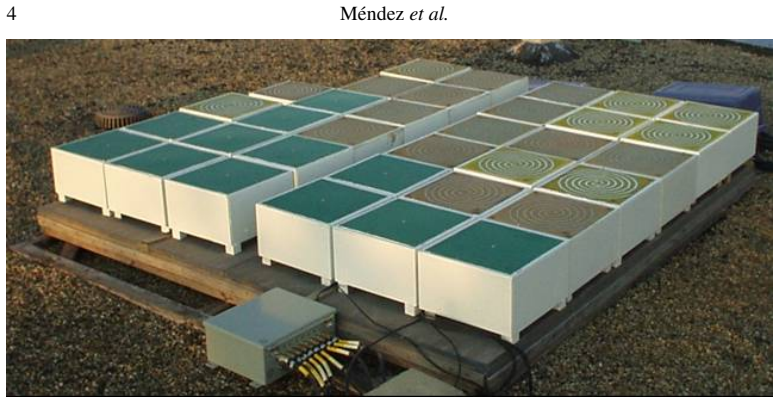
- Subsequent efforts such as Project Argus inherit and extend the program's survey approach.
- The data set supports renewed searches for extraterrestrial signals using current detection techniques.
Where Pith is reading between the lines
- Reprocessing the full event list with contemporary signal-processing tools might identify repeating patterns or candidates missed in the original manual reviews.
- The 70 percent sky coverage under uniform conditions offers a rare historical reference for validating transient rates reported by newer wide-field instruments.
- Linking the archive to modern all-sky monitoring programs could test whether the observed burst concentrations near the Galactic Center persist or vary over time.
Load-bearing premise
Most of the data collected by the Ohio SETI Program has not been thoroughly analyzed and remains accessible for new studies.
What would settle it
A published catalog or detailed re-analysis that fully processes and classifies all 40,000 transient events from the archive would test whether the data is in fact largely unexplored.
Figures
read the original abstract
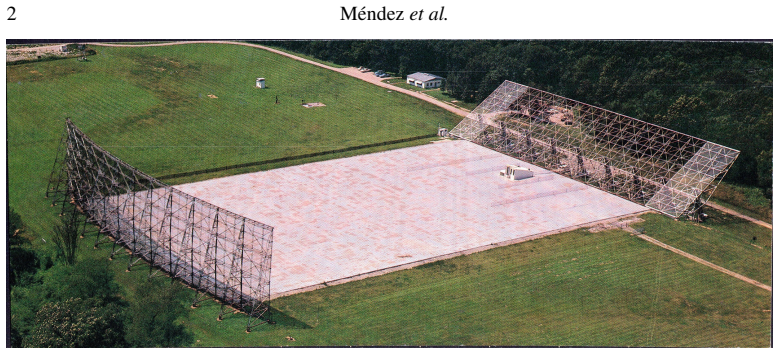
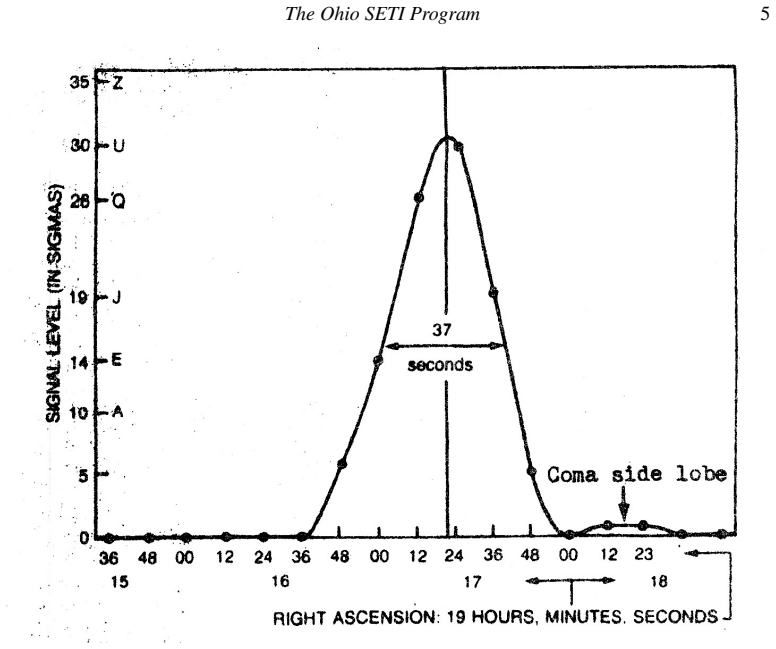
The Ohio State University Radio Observatory (OSURO), known as the Big Ear, played a pivotal role in both radio astronomy and the Search for Extraterrestrial Intelligence (SETI). Following the completion of the Ohio Sky Survey, the facility was repurposed in 1973 as the world's first full-time dedicated SETI observatory and operated continuously until its decommissioning in 1998. During this period, the Ohio SETI Program evolved from an 8-channel hydrogen-line receiver into increasingly sophisticated survey systems. Over three decades, these surveys covered approximately 70% of the radio sky using a largely consistent instrumental configuration, creating one of the most extensive long-term radio astronomy archives ever assembled. The program is best known for the detection of the Wow! Signal in 1977, but it also accumulated an archive of over 40,000 transient narrowband events, revealed unusual concentrations of radio bursts near the Galactic Center, and established one of the longest continuous radio monitoring records in astronomy. Following the closure of the Big Ear, its scientific legacy continued through Project Argus and, more recently, the Arecibo Wow! project. This paper provides an overview of the final decades of the Ohio SETI Program, including its instrumentation, survey strategies, scientific discoveries, and enduring impact on SETI, time-domain radio astronomy, and the preservation of historical astronomical data. Despite its scientific significance, most of the data collected by the Ohio SETI Program remains unexplored, leaving a unique archive available for future research.
Editorial analysis
A structured set of objections, weighed in public.
Referee Report
Summary. The manuscript is a historical review of the Ohio SETI Program at the Big Ear (OSURO) observatory, describing its operation from 1973 to 1998 after the Ohio Sky Survey. It covers the evolution of instrumentation from an 8-channel hydrogen-line receiver to more advanced systems, survey strategies achieving ~70% radio sky coverage with largely consistent configuration, accumulation of >40,000 transient narrowband events, the 1977 Wow! Signal detection, unusual Galactic Center burst concentrations, and the program's legacy via Project Argus and the Arecibo Wow! project. The central assertion is that this created one of the most extensive long-term radio astronomy archives, with most data remaining unexplored and available for future SETI and time-domain research.
Significance. If the factual historical account holds, the paper provides useful documentation of an early dedicated SETI effort and its archive, which may encourage re-examination of historical radio data in the context of modern transient astronomy. The emphasis on instrumental consistency over decades is a strength for potential comparative analyses.
minor comments (2)
- [Abstract] Abstract: the assertion that 'most of the data collected by the Ohio SETI Program remains unexplored' underpins the call for future research but is stated without specific examples of analyzed versus unanalyzed portions or supporting references; this is a presentation issue that could be addressed by adding brief details or citations.
- [Abstract] Abstract: numerical statements such as 'approximately 70% of the radio sky' and 'over 40,000 transient narrowband events' are presented as outcomes but lack inline citations to primary logs, papers, or data sources; adding these would improve verifiability without altering the historical narrative.
Simulated Author's Rebuttal
We thank the referee for the positive assessment of the manuscript, the recognition of its value as a historical record, and the recommendation for minor revision. No major comments were provided in the report.
Circularity Check
No significant circularity; purely descriptive historical review
full rationale
This paper contains no derivations, equations, predictions, fitted parameters, or logical chains that could reduce to inputs by construction. It is a factual historical summary of the Ohio SETI Program's operations, instrumentation, and archive extent from 1973-1998, with all claims presented as documented outcomes rather than derived results. The assertion that most data remains unexplored is a standard preservation statement, not a load-bearing technical premise. No self-citation patterns or ansatzes are present that meet the circularity criteria.
Axiom & Free-Parameter Ledger
Reference graph
Works this paper leans on
-
[1]
Big Ear Two: Listening for Other-Worlds
-
[2]
ApJ , year = 1970, month = jul, volume =
A Master List of Radio Sources. ApJ , year = 1970, month = jul, volume =. doi:10.1086/190216 , adsurl =
-
[3]
American Astronomical Society Meeting Abstracts , year = 1998, series =
From Big Ear to ARGUS. American Astronomical Society Meeting Abstracts , year = 1998, series =
1998
-
[4]
Vistas in Astronomy , keywords =
The Ohio Sky Survey and other radio surveys. Vistas in Astronomy , keywords =. doi:10.1016/0083-6656(77)90027-7 , adsurl =
-
[5]
The 1971 NASA/ASEE Summer Fac
Project Cyclops: A Design Study of a System for Detecting Extraterrestrial Intelligent Life. The 1971 NASA/ASEE Summer Fac. Fellowship Program (NASA-CR-114445) , year = 1971, editor =
1971
-
[6]
Icarus , year = 1973, month = jul, volume =
Project cyclops study: Conclusions and recommendations. Icarus , year = 1973, month = jul, volume =. doi:10.1016/0019-1035(73)90118-8 , adsurl =
-
[7]
The Search for Extraterrestrial Life: Recent Developments , year = 1985, editor =
The Ohio SETI program - The First Decade. The Search for Extraterrestrial Life: Recent Developments , year = 1985, editor =
1985
-
[8]
IAU Colloquium 161: Astronomical and Biochemical Origins and the Search for Life in the Universe , year = 1997, editor =
The Ohio SETI program and the ARGUS telescope. IAU Colloquium 161: Astronomical and Biochemical Origins and the Search for Life in the Universe , year = 1997, editor =
1997
-
[9]
Arecibo Wow! I: An Astrophysical Explanation for the Wow! Signal. arXiv e-prints , keywords =. doi:10.48550/arXiv.2408.08513 , archivePrefix =. 2408.08513 , primaryClass =
-
[10]
Arecibo Wow! II: Revised Properties of the Wow! Signal from Archival Ohio SETI Data. arXiv e-prints , keywords =. doi:10.48550/arXiv.2508.10657 , archivePrefix =. 2508.10657 , primaryClass =
-
[11]
Intermediate-Velocity Gas in the North Galactic Hemisphere: H\, i Studies. ApJ , keywords =. doi:10.1086/176765 , adsurl =
-
[12]
A 45-Year-Old
PHL , url =. A 45-Year-Old
-
[13]
Ohio Argus
NAAPO , url =. Ohio Argus
-
[14]
, title = "
Brown, William J. , title = ". 1997 , month =
1997
-
[15]
, title = "
Childers, Russell K. , title = "
-
[16]
, title = "
Dixon, Robert S. , title = ". Icarus , volume =
-
[17]
and Cole, Dennis M
Dixon, Robert S. and Cole, Dennis M. , title = ". Icarus , volume =
-
[18]
, title =
Kraus, John D. , title =. Cosmic Search , volume =
-
[19]
, title = "
Cole, Dennis M. , title = "
-
[20]
IEEE Transactions on Antennas and Propagation , author =
Argus:. IEEE Transactions on Antennas and Propagation , author =. 2008 , keywords =. doi:10.1109/TAP.2007.915467 , abstract =
discussion (0)
Sign in with ORCID, Apple, or X to comment. Anyone can read and Pith papers without signing in.