Midpoint reference decouples pulsar frequency and derivative
This removes leading covariance so uncertainties follow directly from detection-peak amplitude and widths without new simulations for each 2
full image
Instrumentation and Methods for Astrophysics
Detector and telescope design, experiment proposals. Laboratory Astrophysics. Methods for data analysis, statistical methods. Software, database design
This removes leading covariance so uncertainties follow directly from detection-peak amplitude and widths without new simulations for each 2
full image
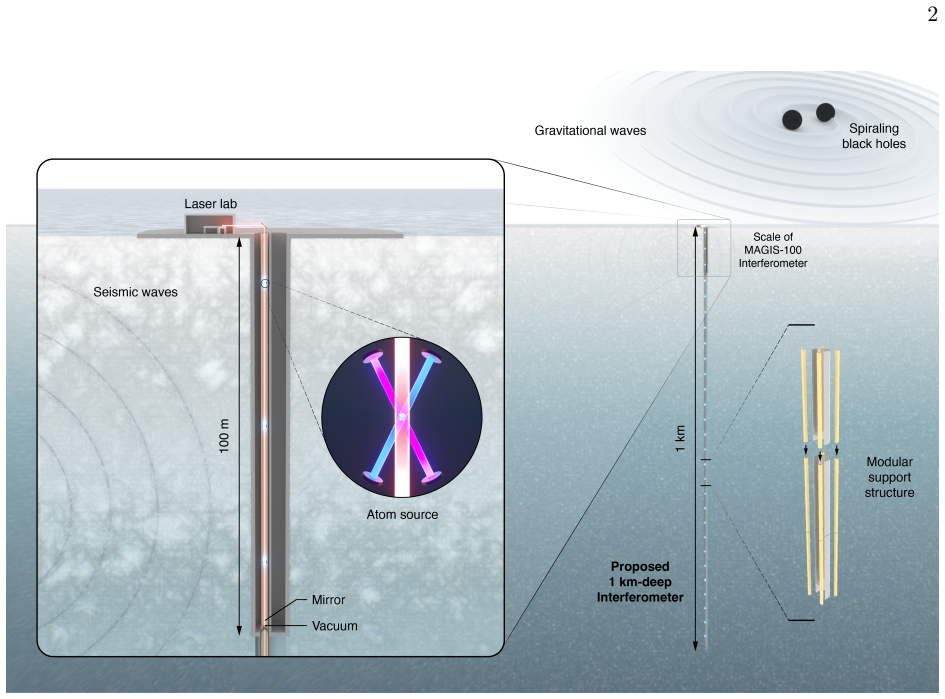
Opportunities for Gravitational Wave Physics at the South Pole
Low seismic noise and triangulation advantages would complement existing detectors and enable new fundamental physics tests.
full image
CIAO: Chandra's Data Analysis System for X-Ray Astronomy and Beyond
Unified data model lets users build custom workflows that stay consistent with the observatory's processing pipeline.
full image
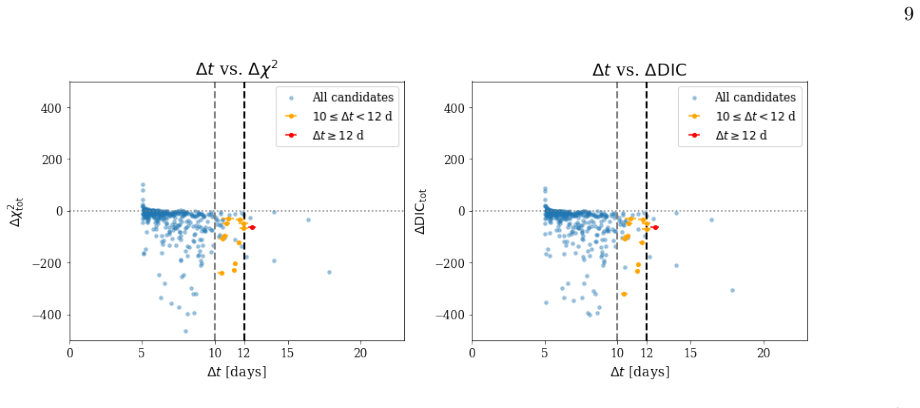
Scattered light noise at LIGO Livingston Observatory during O4
Analysis ties high-SNR glitches to corner X microseismic motion and low-SNR to vertical motion in one chamber, with baffles and isolation
full image
Rapid and robust simulation-based inference for kilonovae
The method learns posteriors directly from 1300 simulations to sidestep systematic errors from approximate likelihoods in traditional fits.
full image
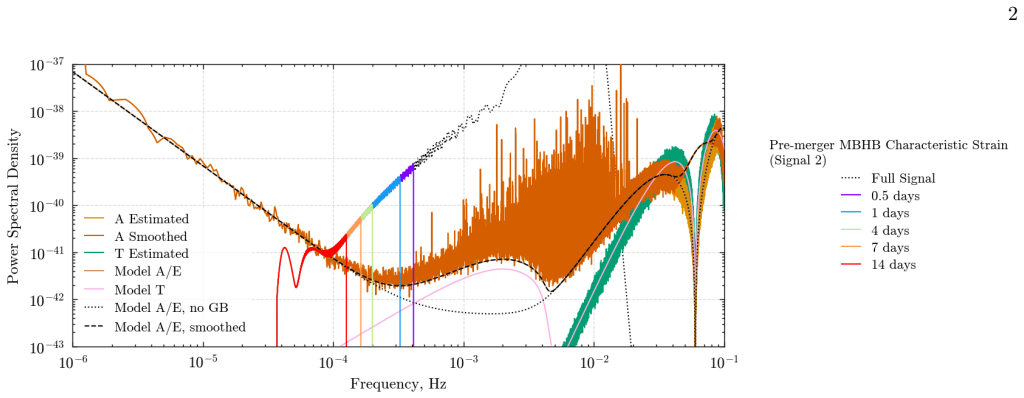
Tests on the Sangria-HM dataset recover all 14 expected signals half a day before merger even with three-day gaps.
full image
DEFROST: Detecting Excess in Faraday Rotation thrOugh Sophisticated analysis Techniques
Tests show stable recovery of cosmic magnetic field parameters when sources lie at absolute Galactic latitudes above 45 degrees.
full image
On the Numerical Stability of the Diffusion Coefficient in Microscopic Simulations
Microscopic simulations for galactic cosmic ray diffusion coefficients are limited by numerical inaccuracies, especially in velocity.
full image
Marginal multi-object multi-frame blind deconvolution
By integrating out the objects, the method adds a log-determinant term that prevents noise from being fitted as high-order aberrations.
full image
Real-time detection of solar flares from ground-based VLF data
Phase trend changes from ground stations give low-latency alerts and a satellite-independent backup while estimating X-ray levels.
full image
OPTICAM-ARG reaches 9.1 m effective focal length and 8.4 arcmin fields per channel by adding wedge angles to dichroics.
full image
From raw data to neutrino candidates: a neural-network pipeline for Baikal-GVD
Transformer networks suppress noise and air showers then select candidates orders of magnitude faster than standard reconstruction.
LLM tests on TNO spectral pipelines show multiple divergent implementations remain consistent with full methods text.
full image
Thirteen major surveys from X-ray to near-infrared can be compared instantly with no server or installation required.
full image
Mathematical model and simulations confirm direct phase-difference measurements work on extended low-contrast sources.
full image
An agentic framework for gravitational-wave counterpart association in the multi-messenger era
GW-Eyes combines large language models with domain tools to handle the coming flood of multi-messenger detections.
SAPLE: Swift Analysis Pipeline for Lightcurve Extraction
It automates UVOT and XRT processing to deliver magnitudes, corrected fluxes, and photon indices for point sources.
full image
High-speed single-photoelectron detection for Cherenkov astronomy
The integrated hexagonal sensor and low-power CMOS ASIC show linear response to 130 photoelectrons while preserving Cherenkov pulse timing.
full image
Design and in-orbit calibration of the MXT optics
Celestial source data confirm the 1-degree optimized field of view and constant PSF predicted by PANTER measurements.
Thermal Deformation Reduction in High-Power Interferometry with Higher-Order Laser Modes
LG2,2 and HG3,3 beams create more uniform test-mass heating, lowering the actuator power required at megawatt levels in future detectors.
full image
Wide-field arrays and VLBI follow-up isolate planetary-scale radio technosignatures that avoid Doppler issues.
A practical guide to implementing zero-order-hold interplanetary trajectory legs
Forward-backward shooting and softmax time grids enable reliable performance across 28 problems in four dynamical models.
full image
From Large Telescopes to the MUltiplexed Survey Telescope (MUST)
MUST uses 20,000 simultaneous fiber spectra over 5 square degrees for the largest 3D universe map in the 2030s
The method combines dual grids and efficient traversal to deliver near-ideal parallel speed-up for three-dimensional chemistry simulations.
full image
Image Processing Framework for Eclipse Shadow Band Analysis
Framework applied to two eclipses finds statistically significant activity matching scintillation theory plus simultaneous orthogonal modes.
full image
Earth Science Foundation Models: From Perception to Reasoning and Discovery
Review organizes multimodal models by capability depth and application breadth while compiling over 200 datasets to chart the next steps.
full image
Wideband RFI Monitor Requirements, Design, and Commissioning at DRAO
After calibration and stability upgrades it serves as both real-time detector and long-term environment tool with a new gain drift method.
full image
Divergence cleaning artifacts appear when fields localize or timesteps shift; constrained transport avoids them.
full image
The Hubble Advanced Spectral Product (HASP) Program
HASP filters and stacks COS and STIS observations, regenerating products as calibrations improve to deliver higher-quality archival spectra.
full image
Machine Learning Techniques for Astrophysics and Cosmology: Photometric Redshifts
Review concludes discriminative approaches have converged; further gains require better spectroscopic samples or generative Bayesian galaxy-
full image
A PINK update: Improvements to the CELEBI fast radio burst data reduction and analysis pipeline
Astrometry, gating, and calibration changes raise accuracy and speed for the coming higher detection rate from the CRACO upgrade.
full image
A preliminary exploration of the effects of baseline length for the LIFE space mission
Simulations show 25-80m range or discrete baselines lose under 10% in habitable planet detection performance.
full image
Hierarchical Bayesian methods recover the intrinsic astrophysical population accurately even when follow-up decisions correlate with unknown
full image
Atmospheric turbulence profiling with the Multistar Turbulence Monitor
Simulations with the HV model and three nights of Daocheng data confirm the inversion works under realistic noise
full image
Muon Track Reconstruction Procedures at the Baikal-GVD Neutrino Telescope
Track analysis methods applied to 2019-2021 data enable the Northern Hemisphere's largest neutrino detector to locate cosmic sources.
full image
Benchmark on 1,500 real alerts finds top models often cannot reliably judge their own reasoning
full image
The effect, confirmed in OVRO-LWA data, reaches levels that bias 21 cm cosmology but can be reduced by dithering or adjusted gain settings.
full image
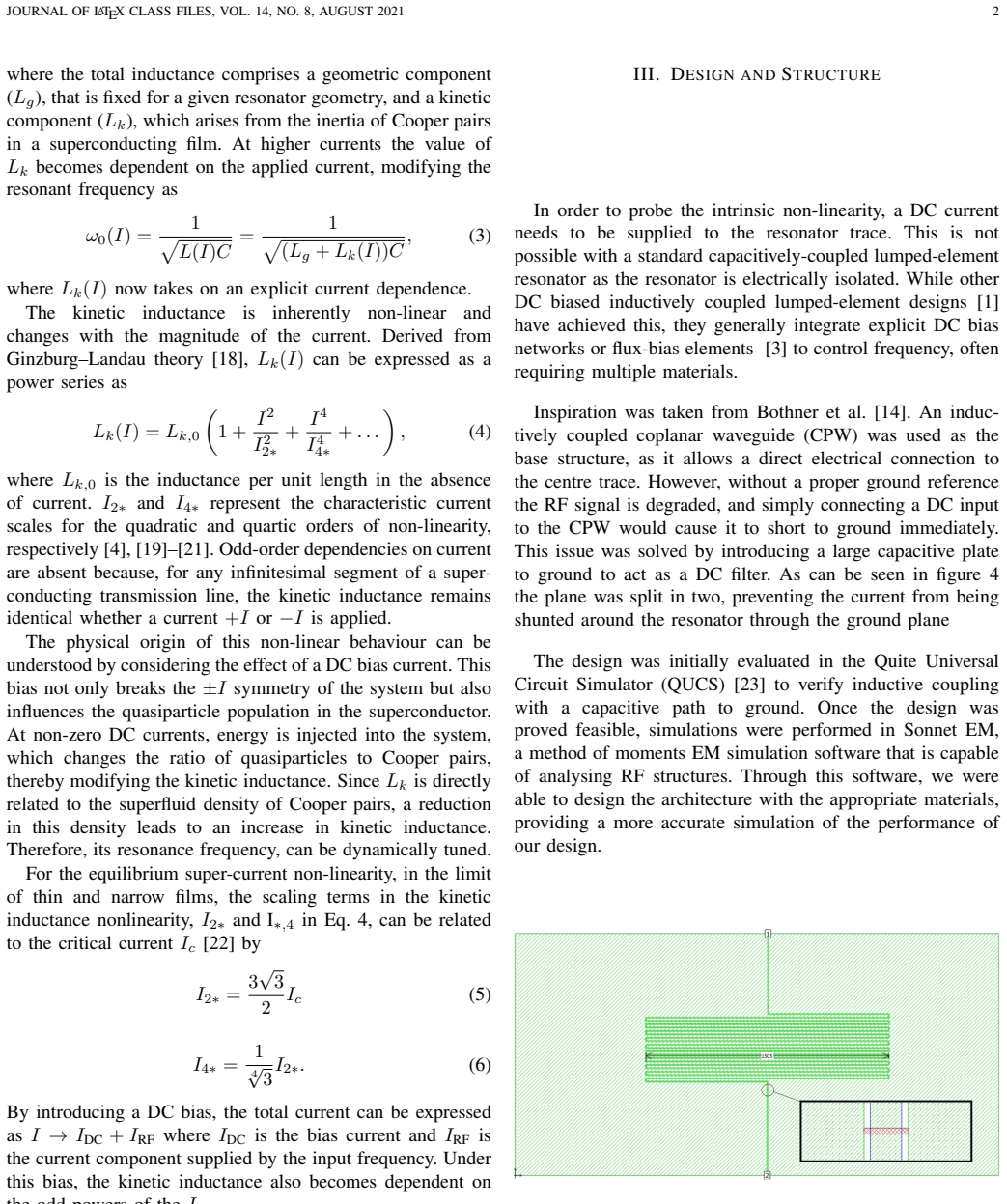
DC and microwave tests on evaporated films match a kinetic model and supply design constraints for future mm-wave on-chip spectrometers.
full image
Results of ten years of UCLA SETI searches with the Green Bank Telescope
This sets an upper limit of less than 0.0063 percent of stars within 20,000 light years hosting detectable transmitters.
full image
Results of ten years of UCLA SETI searches with the Green Bank Telescope
All 100 million candidates were human-made, yielding a 95 percent upper limit of 6.3e-5 on detectable transmitters within 20,000 light years
full image
Computer Vision Methods for Frequency Analysis of RFI in Radio Astronomy Data
GBT data on PSR J1713+0747 shows higher recovered pulse signal-to-noise than Spectral Kurtosis baseline when each channel is segmented in ST
full image
A useful representation of TESS light curves
Quantile graphs reduced by PCA and placed on the map group sources by amplitude, timescale, shape, and signal quality, with repeats staying
full image
Realistic simulations with PSF variations and foreground contaminants show the time-series classifier identifies candidates for prompt LSST
full image
First Detection of Extensive Air Showers Using a Small-Aperture Fluorescence Telescope
A 25 cm fluorescence instrument records over 15 shower tracks at high altitude, showing small optics can observe ultra-high-energy cosmicray
full image
Upgraded telescope data shows two-stage channelization creates periodic ripples that affect spectral measurements.
full image
Overview of the New Hubble Spectroscopic Legacy Archive
Automatic combination of all COS and STIS observations over instrument lifetimes creates ready-to-use spectra with metadata.
full image
Shaping the future of Global Interferometric Arrays: Imaging Strong Gravity and Magnetic Fields
Higher sensitivity and multi-frequency VLBI could tighten constraints on general relativity and clarify jet launching mechanisms.
PySME v1.0: improved modelling of stellar spectra for survey-scale applications
Opacity-based selection and refined hydrogen treatment let precise abundance work handle large survey datasets efficiently.
full image
PySME v1.0: improved modelling of stellar spectra for survey-scale applications
Revised line filtering and an updated gas model cut computation while keeping hydrogen and metal line accuracy intact.
full image
Equal-area multipole analysis of supernova remnant images finds more radial structure in X-rays than radio, with core-collapse remnantsโฆ
Limited astrometry combined with calibrations and diagnostics enables early warnings and long-term trend detection.
full image
Iterative Poisson Solvers for Self-gravity with the GPU Code Astaroth
Iterative Poisson methods in Cartesian and spherical coordinates match existing algorithm performance on structured grids.
full image
Mitigating effects of telescope jitter through differentiable forward-modeling
Differentiable simulations recover accurate separations unless a one-dimensional jitter model is wrongly applied to two-dimensional motion.
full image
StreakMind reconstructs streak geometry, matches objects to orbits, and logs results for surveys and space monitoring.
full image
Foundations for Discovery: A Coordinated Fleet Approach to NASA Astrophysics
The coordinated approach targets Astro2020 gaps through smaller missions that work together and leverage external partnerships.
full image
Role of General Users in the Lifecycle of Scientific Software
Radio astronomy tool's experience reveals ways to balance internal deadlines with general user needs using limited support resources.
full image
PDRS identifies candidate transients from large datasets like ZTF in O(N) time, matching Bayesian Blocks quality at far lower cost.
full image
Operating the Fabry-P\'erot systems of the European Solar Telescope in multi-aperture mode
Segmenting the 4.2 m aperture into six 1.4 m subapertures enables reliable post-processing restoration before MCAO is ready.
full image
Design, Testing, and Commissioning of the Sun Yat-sen University (SYSU) 80 cm Infrared Telescope
Background-limited J-band performance with millimagnitude precision supports observations of transients and high-redshift objects from 4100m
full image
The Catastrophic Consequences of Agnosticism for Life Searches and a Possible Workaround
By forcing confounder rates to be identical across groups that differ in life probability, the method yields strong evidence in 24 percent.
full image
Seven groups of point sources project to fixed longitudes with high significance, before any satellites existed.
full image
Status of the COSmological Microwave Observations CALibrator
The COSMOCal project builds an orbiting emitter at 90, 150 and 270 GHz to give telescopes a precise reference for polarization measurements.
The Outer Space Treaty Won't Save Us From Ourselves
Goodwill-based rules face unsustainable public and private demands, with environmental recognition proposed as the basis for new stewardship
Recommendations for the Astronomy Graduate Admissions Process
Uniform short materials and synchronized timelines ease the load on applicants and programs.
A tolerant one-layer metasurface plus seven Bragg pairs meets ET-Pathfinder reflectance specs with far lower thermal displacement noise.
full image
Model achieves 9 percent average error on mass-gap probability for O4a events by reading chirp mass alone
full image
Radiation Total Dose for PRIMA: Cold Exposure with Alpha Particles
The method keeps detectors cold to replicate space conditions and measures performance changes after controlled irradiation.
full image
The Large Array Survey Telescope-Pipeline. II. Image Subtraction and Transient Detection
ZOGY subtraction plus fixed filters reach 5-sigma depth of 20.3-20.7 mag and deliver clean candidates to the Transient Name Server without a
full image
This allows MCMC fitting to recover electromagnetic energy at 8.9 percent resolution and arrival direction at 0.08 degrees.
An Extended Evaluation Split for DeepSpaceYoloDataset
The new split supplies varied images to test YOLO detectors of deep sky objects used with smart telescopes.
full image
Finding Strongly Lensed Supernovae from Blended Light Curves
Fitting two delayed components to single ZTF curves yields one candidate in 445 normal supernovae for future large surveys.
full image
A benchmark for binary star interaction with a supermassive black hole in general relativity
Tests show statistical agreement with perturbation schemes only for million-solar-mass black holes, while pairwise PN reduces separation at
full image
Bayesian component separation and power spectrum estimation for 21 cm intensity mapping data cubes
The method separates the signal at map level and keeps the estimate within 2 sigma of truth even with strong foregrounds and missing RFI-fl
full image
IQUEYE at Gemini South: instrument, science commission, and first results
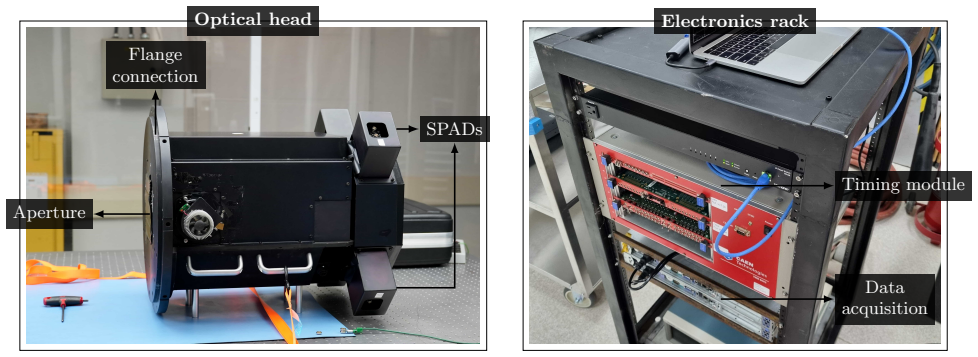
Precise 0.5-nanosecond photon timing now feasible for studying faint millisecond pulsars and fast radio bursts.
full image
The extended Nijboer-Zernike model shows how q = 0.8 and a 2-micron shift yield TTL coupling near the 0.1 pm/nrad requirement for space GW
full image
Charge diffusion and modulation transfer function in a Nancy Grace Roman Space Telescope detector
Laser speckle data give a 0.328-pixel width per axis with no wavelength dependence from 850 to 2000 nm for weak lensing corrections.
full image
Lab tests and simulations link sub-nanometer misalignments to observed performance, emphasizing cophasing needs for future exoplanet misss
Enabling real-time multi-messenger follow-up of transient events with Astro-COLIBRI
Astro-COLIBRI monitors streams, applies filters, and provides context plus observing conditions through web and mobile interfaces.
Joint Multiband Photometry with crowdsource
By sharing source positions across bands, crowdsource produces more consistent fluxes and locations than independent processing.
full image
Seismic background mitigation with the Lunar Gravitational-wave Antenna
Optimal spacing in an isotropic field lets array processing suppress background for Moon-based gravitational-wave antennas.
full image