Generalised Symmetries and Manifest Duality II: Curved Spacetime
Pith reviewed 2026-06-27 00:03 UTC · model grok-4.3
The pith
Self-dual and duality-symmetric gauge theories extend to curved spacetime by reusing Sen's metric-dependent linear map while keeping higher-form gauge symmetry.
A machine-rendered reading of the paper's core claim, the machinery that carries it, and where it could break.
Core claim
The potential-based formulation of self-dual and duality-symmetric gauge theories extends to curved spacetime when the gravitational coupling is introduced via the metric-dependent linear map of Sen's formalism. The parent action keeps its higher-form h-gauge symmetry, so that different gauge choices recover Sen's flux-based version or a potential description in which the shadow sector decouples at the level of the action. Explicit gravitational maps are derived for toroidally reduced theories in D=4n and for polyform formulations in arbitrary dimension. Non-trivial checks reproduce the Alvarez-Gaume-Witten anomalies of the two-dimensional chiral boson and the ten-dimensional self-dual five-
What carries the argument
Sen's metric-dependent linear map, which encodes gravitational coupling while preserving the higher-form h-gauge symmetry that permits different gauge choices.
If this is right
- Gauge choices recover either Sen's flux-based formulation or a potential description with direct shadow decoupling.
- The same gravitational maps derived for toroidally reduced D=4n and polyform cases apply to both this action and Sen's.
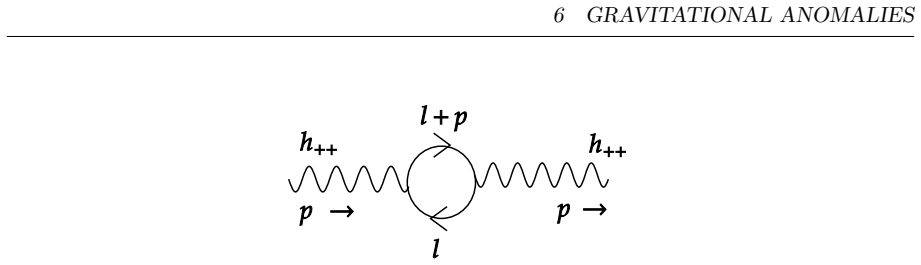
- The two-dimensional chiral boson anomaly is obtained without fermionisation.
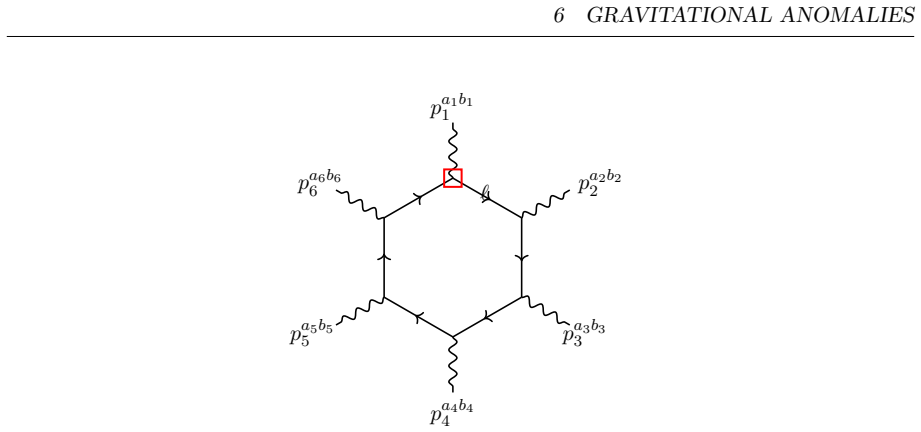
- The ten-dimensional self-dual five-form anomaly is reproduced.
- On AdS5 times S5 the on-shell action supplies the holographic boundary contribution automatically and matches the supergravity RR four-form locally.
Where Pith is reading between the lines
- The construction may allow direct study of self-dual fields on more general backgrounds without auxiliary fields.
- It could simplify computations of chiral anomalies for higher-form fields in curved space.
- The natural emergence of the holographic boundary term suggests the action is already adapted to asymptotically AdS settings.
- Local on-shell equivalence to the standard supergravity potential may ease matching to known black-hole or brane solutions.
Load-bearing premise
The gravitational coupling is encoded by the same metric-dependent linear map of Sen's formalism, and the parent action retains the higher-form h-gauge symmetry.
What would settle it
A calculation that fails to reproduce the Alvarez-Gaume-Witten gravitational anomaly for the two-dimensional chiral boson, or that requires an extra boundary term by hand to match the holographic contribution on AdS5 times S5.
Figures
read the original abstract
We extend the potential-based formulation of self-dual and duality-symmetric gauge theories developed in \cite{Chakrabarti:2025gyt} to curved spacetime. The gravitational coupling is encoded by the same metric-dependent linear map of Sen's formalism. The parent new action retains the higher-form $h$-gauge symmetry, and different gauge choices reproduce either Sen's flux-based formulation or a potential-based description in which the shadow sector decouples directly at the level of the action. We also derive explicit form of the gravitational map for the toroidally reduced theory in $D=4n$ and for a polyform formulation in arbitrary dimension, both of which apply equally to ours as well as Sen's formalism. As non-trivial checks, we reproduce the \'Alvarez-Gaum\'e-Witten gravitational anomalies of the two-dimensional chiral boson without fermionisation, and of the ten-dimensional self-dual five-form. Finally, on $\mathrm{AdS}_5\times S^5$ the physical on-shell action yields the non-vanishing boundary contribution required by holography without adding a boundary term by hand. We also establish a local on-shell identification with the textbook supergravity RR four-form potential.
Editorial analysis
A structured set of objections, weighed in public.
Referee Report
Summary. The paper extends the potential-based formulation of self-dual and duality-symmetric gauge theories from flat to curved spacetime. Gravitational coupling is introduced via the same metric-dependent linear map as in Sen's formalism. The parent action retains h-gauge symmetry, permitting gauge choices that recover either Sen's flux formulation or a potential description with direct shadow decoupling. Explicit forms of the map are derived for toroidally reduced D=4n theories and polyform formulations in arbitrary dimension. Non-trivial checks include reproduction of the Álvarez-Gaumé-Witten gravitational anomalies for the 2D chiral boson (without fermionisation) and the 10D self-dual five-form, plus demonstration that the on-shell action on AdS5×S5 produces the required non-vanishing boundary contribution for holography without manual addition, and a local on-shell identification with the standard supergravity RR four-form potential.
Significance. If the central extension holds, the work supplies a unified, manifestly duality-symmetric framework for higher-form fields coupled to gravity, with concrete value for consistency checks in string theory and supergravity. The anomaly reproductions without fermionisation and the holographic boundary-term result constitute independent external verifications that strengthen the approach. The explicit map derivations for reduced and polyform cases are also useful for applications.
major comments (2)
- [Abstract / gravitational map derivation] Abstract and the section deriving the gravitational map: the central claim that the metric-dependent linear map of Sen's formalism extends unchanged to the new potential-based parent action in general curved spacetime is load-bearing for all subsequent results. However, explicit derivations are provided only for the toroidally reduced D=4n case and the polyform formulation in arbitrary dimension; it is not shown how (or whether) curvature-dependent corrections are absent or cancelled by h-symmetry when the map is applied to the 2D chiral-boson and 10D five-form anomaly calculations.
- [Anomaly checks (2d and 10d)] The anomaly reproduction sections: the checks are presented as verifications that the map and h-symmetry together preserve the correct gravitational coupling. Because the map's general curved-space form is not derived beyond the two special cases, these reproductions cannot yet be regarded as independent confirmation that no additional curvature terms arise in the parent action.
minor comments (1)
- [Introduction / action definition] Notation for the h-gauge symmetry and shadow sector should be cross-referenced explicitly to the flat-space predecessor paper when first introduced in the curved-space setting.
Simulated Author's Rebuttal
We thank the referee for the careful reading of the manuscript and for the positive assessment of its significance. We address the major comments below with clarifications on the scope of the map derivations and their use in the anomaly checks.
read point-by-point responses
-
Referee: [Abstract / gravitational map derivation] Abstract and the section deriving the gravitational map: the central claim that the metric-dependent linear map of Sen's formalism extends unchanged to the new potential-based parent action in general curved spacetime is load-bearing for all subsequent results. However, explicit derivations are provided only for the toroidally reduced D=4n case and the polyform formulation in arbitrary dimension; it is not shown how (or whether) curvature-dependent corrections are absent or cancelled by h-symmetry when the map is applied to the 2D chiral-boson and 10D five-form anomaly calculations.
Authors: The metric-dependent linear map is taken directly from Sen's formalism, already defined for general curved spacetimes. Our work shows that this map can be incorporated into the potential-based parent action while retaining h-gauge symmetry. Explicit expressions are derived precisely for the toroidally reduced D=4n and polyform cases in arbitrary dimension, which cover the settings of the anomaly calculations. The 2D chiral-boson check uses the polyform formulation (applicable in D=2), and the 10D self-dual five-form uses the polyform map in D=10. In these explicit cases the h-symmetry guarantees that the gravitational coupling reproduces Sen's without additional curvature corrections, as confirmed by the anomaly matching. We do not provide a derivation of the map for arbitrary field configurations outside these classes. revision: partial
-
Referee: [Anomaly checks (2d and 10d)] The anomaly reproduction sections: the checks are presented as verifications that the map and h-symmetry together preserve the correct gravitational coupling. Because the map's general curved-space form is not derived beyond the two special cases, these reproductions cannot yet be regarded as independent confirmation that no additional curvature terms arise in the parent action.
Authors: The anomaly reproductions are performed within the frameworks where explicit maps are derived (polyform for both the 2D and 10D cases). They demonstrate that the parent action, when coupled via these maps, yields the correct gravitational anomalies without fermionisation. This constitutes a non-trivial consistency check that no extraneous curvature terms are generated by the new action in the relevant settings. A derivation of the map for completely general higher-form configurations in arbitrary curved backgrounds lies beyond the scope of the present work, which focuses on the potential-based extension and its verification in the cases where explicit expressions are available. revision: no
Circularity Check
No significant circularity; extension verified by external anomaly benchmarks
full rationale
The paper extends the potential-based formulation from the authors' prior work by adopting Sen's metric-dependent linear map and deriving its explicit form for toroidally reduced D=4n and polyform cases in arbitrary dimensions. The parent action preserves h-gauge symmetry, allowing recovery of known formulations. Central results are checked by reproducing the independent Álvarez-Gaumé-Witten gravitational anomalies for the 2d chiral boson and 10d self-dual 5-form, plus the required AdS5×S5 boundary term, none of which reduce to the inputs by construction or self-citation. No self-definitional, fitted-prediction, or load-bearing self-citation steps are present; the derivation remains self-contained against external benchmarks.
Axiom & Free-Parameter Ledger
Reference graph
Works this paper leans on
-
[1]
Alvarez-Gaume and E
L. Alvarez-Gaume and E. Witten,Gravitational Anomalies,Nucl. Phys. B234(1984) 269
1984
-
[2]
S. A. Kurlyand and A. A. Tseytlin,Type IIB supergravity action on M5×X5 solutions, Phys. Rev. D106(2022), no. 8 086017, [arXiv:2206.14522]
arXiv 2022
-
[3]
S. Chakrabarti, D. Gupta, and A. Manna,On-shell action for type IIB supergravity and superstrings onAdS 5 ×S 5,Phys. Lett. B835(2022) 137578, [arXiv:2211.02345]
arXiv 2022
-
[4]
A. Aggarwal, S. Chakrabarti, and M. Raman,Monopoles, Clarified,Fortsch. Phys.74 (2026) e70090, [arXiv:2504.16673]
Pith/arXiv arXiv 2026
-
[5]
S. Chakrabarti and M. Raman,Exploring T-Duality for Self-Dual Fields,Fortsch. Phys.72 (2024), no. 5 2400023, [arXiv:2311.09153]
arXiv 2024
-
[6]
M. Henningson and K. Skenderis,The Holographic Weyl anomaly,JHEP07(1998) 023, [hep-th/9806087]
Pith/arXiv arXiv 1998
-
[7]
H. Liu and A. A. Tseytlin,D = 4 superYang-Mills, D = 5 gauged supergravity, and D = 4 conformal supergravity,Nucl. Phys. B533(1998) 88–108, [hep-th/9804083]
Pith/arXiv arXiv 1998
-
[8]
S. S. Gubser,Einstein manifolds and conformal field theories,Phys. Rev. D59(1999) 025006, [hep-th/9807164]
Pith/arXiv arXiv 1999
-
[9]
M. Blau, K. S. Narain, and E. Gava,On subleading contributions to the AdS / CFT trace anomaly,JHEP09(1999) 018, [hep-th/9904179]
Pith/arXiv arXiv 1999
-
[10]
C. P. Burgess, N. R. Constable, and R. C. Myers,The Free energy of N=4 superYang-Mills and the AdS / CFT correspondence,JHEP08(1999) 017, [hep-th/9907188]
Pith/arXiv arXiv 1999
-
[11]
J. G. Russo and K. Zarembo,Large N Limit of N=2 SU(N) Gauge Theories from Localization,JHEP10(2012) 082, [arXiv:1207.3806]
Pith/arXiv arXiv 2012
-
[12]
S. Adhikari, J. Hong, C. Joung, and G. Lee,Type IIB Supergravity Action and Holography, arXiv:2603.18248. 27
discussion (0)
Sign in with ORCID, Apple, or X to comment. Anyone can read and Pith papers without signing in.