Four-qubit states reproduce known CFTs
Critical points of an entropy function reconstruct a CFT's spectrum with no Hamiltonian input.
· “A systematic search for conformal field theories in very small spaces”

High Energy Physics - Theory
Formal aspects of quantum field theory. String theory, supersymmetry and supergravity.
sort pith recommended most recent
Critical points of an entropy function reconstruct a CFT's spectrum with no Hamiltonian input.
· “A systematic search for conformal field theories in very small spaces”
Outranks the usual color-octet shape functions by 1/v and depends on one well-measured constant.
· “The role of the soft scale for J/psi production in the transverse momentum dependent framework”
Pole-skipping points match shock-wave scattering, mapping the dual theory into nonlocal and non-Hermitian sectors.
· “Cosmological pole-skipping, shock waves and quantum chaotic dynamics of de Sitter horizons”
One-loop AdS_d fermion partition function becomes a ratio of Dirac-type determinants, with fewer ghosts than BV.
The narrow mass window still evaporating today is the key target for testing whether black hole information is recovered.
· “Page Time of Primordial Black Holes in the Standard Model and Beyond”

Aligning the dynamical metric to a reference geometry controls the chiral spin-2 mode and tunes toward nematic order.
· “Chiral Graviton Theory of Fractional Quantum Hall States”

Inversion relations turn vacuum Feynman graphs into lattice models, giving all-loop dimensions and OPE coefficients.
· “Integrable systems: From the ice rule to supersymmetric fishnet Feynman diagrams”

The generating functional in AdS_d is the same for two covariant gauges, confirming gauge independence.
· “Covariant quantization of totally antisymmetric tensor-spinor field in AdS_d”

Curvature becomes an invariant of the pair (metric, divergence), with explicit formulas in classical data.
· “The canonical generalised Levi-Civita connection and its curvature”
An exact inversion turns low-order coefficients into a Borel-summed tail, making alpha_s and quark masses precise.

A dust-shell collapse fixes energy as ADM mass, forcing entropy to A/4G — generalized entropies fail.
· “Black Holes Thermodynamics and Generalised Non-Extensive Entropy”
Lattice data at N = 169, 289, 361 give 1.77(65), compatible with the analytic prediction 1 and ending a 40-year debate.

Long-range Coulomb acceleration forces universal retarded-time tails into the electromagnetic waveform in every dimension.
· “Logarithmic Soft Photon Theorem and Waveform Tails in Higher Dimensions”
Well-defined QCD mixing forces ALP masses into a factor-of-two ladder and leaves decay constants near f_a0 empty.

Quantum fluxes amplify near the inner horizon and turn a trapped black-hole region into a white-hole one.
· “Semiclassical Black Hole-White Hole transitions: an analytical treatment”
Perturbativity caps the volume, so almost all 2-form axions get large masses—except one fibred corner.
Body gives Kretschmann ~ r^-9 vs Schwarzschild r^-6 and calls the singularities generally stronger.

The genus-g analogue of the KLT double-copy relations, with numerical checks at genus two.
Lecture notes derive Penrose and super-Penrose transforms for conserved, scalar, and generic operators.
· “Lectures on the Spinor and Twistor Formalism in 3D Conformal Field Theory”
The paper's holographic effective theory matches every leading-twist dimension at charge Q and spin J through second order in ε.
· “Towards Large-Spin Effective Theory II: O(2) model in d=4-ε”

In compactifiable symmetric moduli spaces, towers of light states are forced by representation weights.
· “The Boundary of Symmetric Moduli Spaces and the Swampland Distance Conjecture”
The new R-matrix covers every irreducible representation of sl_3, not just the symmetric ones.
Mass–radius data from compact stars force the chiral-invariant mass above half the proton mass.
· “Implication of neutron star observations to the origin of nucleon mass”
In the dual-horizon region, an effective van der Waals system keeps topological number W=+1 for all charges and γ.
· “High-order QED correction impacts on phase transition of the Euler-Heisenberg dS spacetime”

Crossing symmetry of three operators pins down the theory's exponents and ties the φ⁶ theory to the 2d minimal model.

A closed form now resums every half-odd post-Newtonian correction at arbitrary velocity.
· “Radiation-Reaction and Angular Momentum Loss at mathcal{O}(G⁴)”

The modified Mathieu and doubly confluent Heun equations emerge from Painlevé III3 and III1, yielding the dual gauge period.
· “From Painlev\'e equations to {cal N}=2 susy gauge theories: prolegomena”
Planar two-loop 2-to-4 master integrals shrink to a 202-integral pure basis with a 128-letter alphabet.
· “Planar Six-Point Feynman Integrals for Four-Dimensional Gauge Theories”
One derivation gives T=1/8πGM and S=A/4G, tying gravity to thermodynamics.
A new Wilson-line operator reproduces known two-post-Minkowskian spin-orbit results.
· “Generalized Wilson lines and the gravitational scattering of spinning bodies”

Probe strings show each boundary hides a Kaluza-Klein tower or a critical string, with a unique fastest gauge field.
· “Asymptotics of 5d Supergravity Theories and the Emergent String Conjecture”

Despite apparent singularities, this Calabi-Yau integral admits ε-factorized form.
· “Calabi-Yau Feynman integrals in gravity: varepsilon-factorized form for apparent singularities”
Photon-ring and highly damped overtones both descend from one seed mode via pp-wave symmetries.
· “pp-Waves and the Hidden Symmetries of Black Hole Quasinormal Modes”

For 2d CFT degenerate operators, forbidden singularities dissolve and minimal models emerge from resummation.
· “On the 1/c expansion in 2d CFTs with degenerate operators”

Exact pole cancellation plus finite-field coefficients deliver the NNLO cross-section grid.
· “Two-loop QCD amplitudes for tbar{t}W production at the LHC in the leading-colour approximation”

The inflaton's kinetic rule may encode critical exponents that CMB experiments can read.
· “From Quantum Correlations to Inflationary Tracking Scalar Field Evolution”

A Cartan-style construction unifies a global duality group and a local gauge group into one curvature hierarchy.
· “Gauged Extended Field Theory and Generalised Cartan Geometry”
Models with short hidden pre-peak phases fail; a persistent, luminosity-thinned torus matches X-ray counts.
Best-fit masses match charmonium, bottomonium, and B_c states within ~70 MeV, preferring a gluon mass of 300–370 MeV.
· “Nonrelativistic meson masses from the Curci-Ferrari model”

The holographic QCD phase boundary is a first-order line plus a subtle third-order line, both ending at one point.

A sourced Teukolsky equation on plane waves computes quadratic quasinormal-mode ratios for Kerr lightrings.
· “Perturbations of Plane Waves and Quadratic Quasinormal Modes on the Lightring”
The pair admits Maxwell's higher-form symmetry while excluding hyperplane theories, generalized free fields, and odd Majorana chains.

A review extends the growing interior volume to charged, rotating, higher-dimensional and f(R) black holes.

Above a critical temperature, relaxation time stops shrinking and pins to quasinormal-mode decay.
· “On the late time behavior of thermal two point function in curved space-time”
If the censorship conjecture holds, no post-evaporation region exists for information to leak into.
Charged observables settle into a generalized Gibbs ensemble that remembers the initial projective charge.
· “Eigenstate Thermalization Hypothesis with projective representation”
A running Newton's constant replaces the Big Bang singularity with a bounce and may resolve the Hubble tension.
When area fails, an entropy-based expansion keeps light rays converging and obeys a second law.
· “Generalised focusing theorem and dynamical horizon entropy in diffeomorphism-invariant theories”
For U_q(sl3), split-Casimir methods yield explicit Hirota bilinear identities beyond group-like elements.
Fully analytic NNLO prediction matches B-factory data and explains the ln^3 r growth

An effective Hamiltonian without a large-N limit predicts triple-twist dimensions all the way to the 3d Ising model.
· “Towards Large-Spin Effective Theory I: Three-Particle States in AdS φ⁴ Theory”
The slope of its gravitational form factor puts the Higgs's energy radius below its Compton wavelength.

Borel-Laplace and alien calculus show CFT blocks I1 and I2 encode each other's large-c trans-series and monodromy.
· “Resurgence for large c expansion in Coulomb gas formalism”

Curved field-space manifolds shift merger times, a possible GW fingerprint of string-motivated dark matter.
· “Scalar fields from nonlinear sigma models on black hole spacetimes”

Quantizing with a deformed-fuzzy-sphere Lie derivative turns matrix Chern-Simons droplets into effective gauge theories.
· “Microscopic field theories of the quantum skyrmion Hall effect”
Counterterms make the spectrum and parton densities finite while block-encoding cost grows only ~50 percent.

A Doppler-shifted reservoir changes the engine's boundaries and can yield work even with zero temperature difference.
· “Relativistic Quantum Thermal Machine: Harnessing Relativistic Effects to Surpass Carnot Efficiency”
A fifth-power scaling law ties formation to horizon-scale fluctuations and predicts small spins.
· “Primordial Black Hole Formation and Spin in Matter Domination Revisited”
ARPES power-law self-energies in cuprates support a common core theory shared by metal and black hole, the paper argues.
· “Holographic Strange Metals for Philosophers and Physicists”

A tail-free subalgebra of the Lagrangian algebra predicts additivity and Haag-duality failure in any dimension.
· “Symmetry, Symmetry Topological Field Theory and von Neumann Algebra”
Small curvature-squared and aether corrections phase-shift the h+ and h× waveforms, giving future detectors a concrete target.

A thermalized hidden-sector coupling freezes the axion angle, then lets it ring coherently at late times.
A corrected gauge derivation shows CGR equals GR in vacuum; massive test particles would deviate from geodesics.
The same Weyl-invariant theory ties the small Higgs mass and cosmological constant to tiny gauge couplings.
Interior operators can be dressed to the background and reconstructed from Hawking radiation

For the scale-separated vacuum, the procedure yields a strongly coupled D4-brane geometry — a candidate holographic dual.

Only gauge fields commuting with the cos θ background stay massless; the rest get Kaluza-Klein masses.

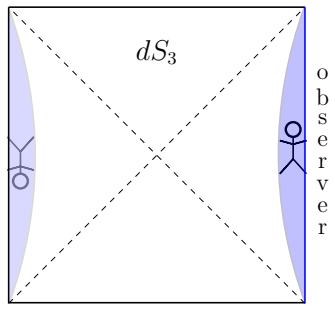
The model explains both DSSYK temperatures from gravity and fixes the SYK coupling to 8πG_N.
· “A microscopic model of de Sitter spacetime with an observer”
Monte Carlo checks on triangular and hexagonal lattices confirm one-point, three-point, and TT correlators.
· “Energy-momentum tensor in the 2D Ising CFT in full modular space”

The planar calculus once limited to bipartite knots extends to all knots through one universal algebraic formula.

Adding corner and center variables keeps the lattice solvable and makes defects local.
Complete Ricci-flat manifolds that look flat at infinity yet are not Euclidean Kerr black holes.
Inverse neural-net analysis exposes a temporary interaction; refitting the equation restores its conservation law.

Functional supergraph rules handle fermions and gauge invariance, yielding two-loop Euler-Heisenberg coefficients.

They solve the recursion and yield the coefficient of every Virasoro monomial.
Conservation is restored by a current shift; the 2s-derivative trace anomaly survives, squared in Weyl and Ricci tensors.
· “Symmetric formulation for higher spin correlators, quantum effective action and anomaly”
If right, all small-temperature spectral corrections can be computed inside the near-horizon throat alone.
· “Projecting Gravitational Fluctuations onto Near-Horizon Throats”
Exterior geometry matches a black hole, but the interior boundary condition shifts the force on scalar and electric charges.

Half-line and full-line path integrals yield scattering amplitudes directly, checked through six-point Compton scattering.
Quantizing the string mass in momentum-fraction space yields the SYK conformal spectrum from a Pöschl–Teller equation.
