Intrinsically Stable Spiking Neural Networks: Overcoming the Performance Barrier in the Absence of Batch Normalization
Pith reviewed 2026-07-01 05:43 UTC · model grok-4.3
The pith
Spiking neural networks match batch-norm accuracy without runtime multiplications by folding topology-aware weight standardization into static weights.
A machine-rendered reading of the paper's core claim, the machinery that carries it, and where it could break.
Core claim
The IS-SNN architecture removes activation-normalization layers by enforcing signal homeostasis through topology-aware weight standardization and modified residual connections. By folding the standardization operations into static weights offline, IS-SNN removes the runtime statistics tracking and multiplications introduced by activation normalization, restoring an accumulation-oriented inference datapath. Comprehensive experiments show that IS-SNN achieves performance competitive with or superior to computationally expensive dynamic BN techniques across VGG, ResNet, and Transformer-based models, notably a competitive accuracy of 68.05 percent on ImageNet, and overcomes the severe depth limi
What carries the argument
topology-aware weight standardization combined with modified residual connections that enforce signal homeostasis
If this is right
- IS-SNN matches or exceeds dynamic BN performance on VGG, ResNet, and Transformer-based spiking models.
- The method reaches 68.05 percent accuracy on ImageNet without any activation normalization.
- It removes the depth limits that previously constrained BN-free spiking networks.
- Neuron implementations consume 96.4 percent fewer FPGA lookup tables.
Where Pith is reading between the lines
- The offline folding of standardization suggests the same homeostasis technique could be applied to other spike-based or event-driven models that must run on fixed-point hardware.
- Because inference reduces to pure accumulation, the approach may directly translate to analog or mixed-signal neuromorphic chips that cannot afford digital multipliers.
- The stability mechanism could be tested on additional datasets or neuron types to check whether the same firing-rate homeostasis holds outside the reported architectures.
Load-bearing premise
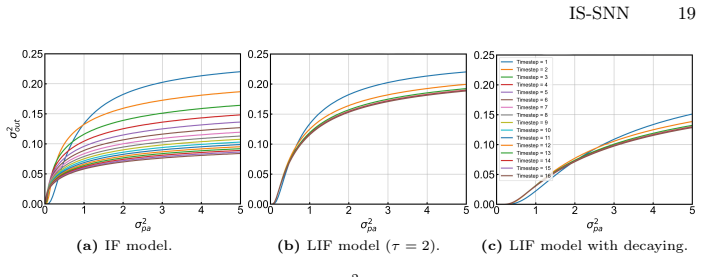
Catastrophic firing-rate decay is the primary cause of severe performance degradation in normalization-free SNNs and can be corrected by topology-aware weight standardization plus modified residual connections.
What would settle it
An ablation that removes the topology-aware standardization or the modified residuals and then measures whether firing-rate decay reappears and ImageNet accuracy falls below dynamic-BN baselines.
Figures




read the original abstract
The performance of deep spiking neural networks (SNNs) often relies on batch normalization (BN). However, the advanced dynamic BN variants used in state-of-the-art models introduce runtime multiplications, which weaken the hardware-efficiency motivation of SNNs. To address this tension, we identify catastrophic firing-rate decay as a primary cause of severe performance degradation in normalization-free SNNs. Guided by this insight, this work proposes the Intrinsically Stable SNN (IS-SNN) architecture, which removes activation-normalization layers by enforcing signal homeostasis through topology-aware weight standardization and modified residual connections. By folding the standardization operations into static weights offline, IS-SNN removes the runtime statistics tracking and multiplications introduced by activation normalization, restoring an accumulation-oriented inference datapath. Comprehensive experiments show that IS-SNN achieves performance competitive with or superior to computationally expensive dynamic BN techniques across VGG, ResNet, and Transformer-based models. Notably, it achieves a competitive accuracy of 68.05\% on ImageNet and overcomes the severe depth limitations of prior BN-free attempts. Together with a 96.4\% reduction in FPGA lookup table resource consumption for neuron implementations, these results support IS-SNN as a practical framework for building accurate and hardware-friendly deep neuromorphic systems.
Editorial analysis
A structured set of objections, weighed in public.
Referee Report
Summary. The manuscript introduces the Intrinsically Stable Spiking Neural Network (IS-SNN) to overcome performance issues in deep SNNs without batch normalization. It identifies catastrophic firing-rate decay as the primary cause and proposes topology-aware weight standardization combined with modified residual connections to maintain signal homeostasis. These operations are folded into static weights offline, enabling an accumulation-oriented inference without runtime multiplications or statistics tracking. Experiments demonstrate competitive or superior performance to dynamic BN methods on VGG, ResNet, and Transformer architectures, including 68.05% accuracy on ImageNet, while achieving a 96.4% reduction in FPGA lookup table resources.
Significance. If the central claims hold, this work is significant for neuromorphic computing as it resolves the tension between accuracy in deep SNNs and hardware efficiency by eliminating dynamic normalization overhead. Strengths include the empirical validation across diverse model families and the substantial, quantified hardware benefit. The approach of offline folding to restore pure accumulation datapath is a practical contribution.
major comments (2)
- [Abstract] Abstract: the claim that IS-SNN achieves 'performance competitive with or superior to computationally expensive dynamic BN techniques' is presented without the specific baseline accuracies, variance, or number of runs; this is load-bearing for the central empirical result.
- [Insight paragraph] The paragraph beginning 'Guided by this insight': the assertion that topology-aware weight standardization plus modified residual connections enforce input-independent signal homeostasis that remains stable after offline folding into static weights lacks a dedicated stability analysis or pre/post-folding firing-rate comparison, which is central to the architecture claim.
minor comments (2)
- [Experiments] The experimental protocol (training details, hyperparameter choices, and ablation controls) is referenced but not summarized with sufficient granularity to allow reproduction of the ImageNet result.
- [Hardware evaluation] Figure or table presenting the 96.4% FPGA LUT reduction should include the exact neuron implementation baseline for clarity.
Simulated Author's Rebuttal
We thank the referee for their positive assessment of the significance of our work and for the constructive feedback. We address each major comment below and propose revisions where appropriate to strengthen the manuscript.
read point-by-point responses
-
Referee: [Abstract] Abstract: the claim that IS-SNN achieves 'performance competitive with or superior to computationally expensive dynamic BN techniques' is presented without the specific baseline accuracies, variance, or number of runs; this is load-bearing for the central empirical result.
Authors: We agree that the abstract would be strengthened by including specific baseline accuracies and details on experimental runs. The full manuscript provides comparisons showing IS-SNN matching or exceeding dynamic BN methods, with the ImageNet result of 68.05%. We will update the abstract to reference the specific baseline performance and indicate the number of runs used for the reported accuracies. revision: yes
-
Referee: [Insight paragraph] The paragraph beginning 'Guided by this insight': the assertion that topology-aware weight standardization plus modified residual connections enforce input-independent signal homeostasis that remains stable after offline folding into static weights lacks a dedicated stability analysis or pre/post-folding firing-rate comparison, which is central to the architecture claim.
Authors: The central claim is supported by the empirical results demonstrating that deep SNNs can be trained without BN using our method, with performance preserved after folding the operations into static weights. However, we acknowledge that a dedicated stability analysis would provide additional rigor. We will add pre- and post-folding firing-rate comparisons in a revised version to explicitly demonstrate the input-independent signal homeostasis. revision: yes
Circularity Check
No significant circularity in derivation chain
full rationale
The paper is an empirical architecture proposal that identifies firing-rate decay as a cause of degradation in BN-free SNNs and introduces topology-aware weight standardization plus modified residuals to enforce homeostasis, with the standardization folded offline into static weights. Claims are validated by reported accuracies (including 68.05% on ImageNet) and hardware metrics across VGG/ResNet/Transformer models rather than by any equations or self-citations that reduce performance metrics to quantities defined by the method itself. No load-bearing step reduces by construction to fitted inputs or prior self-citations; the derivation chain remains self-contained against external benchmarks.
Axiom & Free-Parameter Ledger
Reference graph
Works this paper leans on
-
[1]
In: Proceedings of the IEEE conference on computer vision and pattern recognition
Amir, A., Taba, B., Berg, D., Melano, T., McKinstry, J., Di Nolfo, C., Nayak, T., Andreopoulos, A., Garreau, G., Mendoza, M., et al.: A low power, fully event-based gesture recognition system. In: Proceedings of the IEEE conference on computer vision and pattern recognition. pp. 7243–7252 (2017)
2017
-
[2]
In: International Conference on Learning Representations (2021)
Brock, A., De, S., Smith, S.L.: Characterizing signal propagation to close the per- formance gap in unnormalized resnets. In: International Conference on Learning Representations (2021)
2021
-
[3]
In: International Conference on Machine Learning
Brock, A., De, S., Smith, S.L., Simonyan, K.: High-performance large-scale im- age recognition without normalization. In: International Conference on Machine Learning. pp. 1059–1071. PMLR (2021)
2021
-
[4]
bnn-bn=?
Chen, T., Zhang, Z., Ouyang, X., Liu, Z., Shen, Z., Wang, Z.: " bnn-bn=?": Train- ing binary neural networks without batch normalization. In: Proceedings of the IEEE/CVF conference on computer vision and pattern recognition. pp. 4619–4629 (2021)
2021
-
[5]
Ieee Micro38(1), 82–99 (2018)
Davies, M., Srinivasa, N., Lin, T.H., Chinya, G., Cao, Y., Choday, S.H., Dimou, G., Joshi, P., Imam, N., Jain, S., et al.: Loihi: A neuromorphic manycore processor with on-chip learning. Ieee Micro38(1), 82–99 (2018)
2018
-
[6]
In: International Conference on Learning Representations (2022)
Deng, S., Li, Y., Zhang, S., Gu, S.: Temporal efficient training of spiking neu- ral network via gradient re-weighting. In: International Conference on Learning Representations (2022)
2022
-
[7]
Advances in Neural Information Processing Systems35, 34377–34390 (2022)
Duan, C., Ding, J., Chen, S., Yu, Z., Huang, T.: Temporal effective batch nor- malization in spiking neural networks. Advances in Neural Information Processing Systems35, 34377–34390 (2022)
2022
-
[8]
Science Advances9(40), eadi1480 (2023)
Fang, W., Chen, Y., Ding, J., Yu, Z., Masquelier, T., Chen, D., Huang, L., Zhou, H., Li, G., Tian, Y.: Spikingjelly: An open-source machine learning infrastructure platform for spike-based intelligence. Science Advances9(40), eadi1480 (2023)
2023
-
[9]
Advances in Neural Information Processing Systems34, 21056–21069 (2021)
Fang, W., Yu, Z., Chen, Y., Huang, T., Masquelier, T., Tian, Y.: Deep residual learning in spiking neural networks. Advances in Neural Information Processing Systems34, 21056–21069 (2021)
2021
-
[10]
In: Proceedings of the IEEE/CVF international conference on computer vision
Fang, W., Yu, Z., Chen, Y., Masquelier, T., Huang, T., Tian, Y.: Incorporating learnable membrane time constant to enhance learning of spiking neural networks. In: Proceedings of the IEEE/CVF international conference on computer vision. pp. 2661–2671 (2021)
2021
-
[11]
Pro- ceedings of the IEEE102(5), 652–665 (2014)
Furber, S.B., Galluppi, F., Temple, S., Plana, L.A.: The spinnaker project. Pro- ceedings of the IEEE102(5), 652–665 (2014)
2014
-
[12]
In: Proceed- ings of the IEEE/CVF International Conference on Computer Vision
Guo, Y., Zhang, Y., Chen, Y., Peng, W., Liu, X., Zhang, L., Huang, X., Ma, Z.: Membrane potential batch normalization for spiking neural networks. In: Proceed- ings of the IEEE/CVF International Conference on Computer Vision. pp. 19420– 19430 (2023)
2023
-
[13]
In: Pro- ceedings of the IEEE/CVF conference on computer vision and pattern recognition
Han, B., Srinivasan, G., Roy, K.: Rmp-snn: Residual membrane potential neuron for enabling deeper high-accuracy and low-latency spiking neural network. In: Pro- ceedings of the IEEE/CVF conference on computer vision and pattern recognition. pp. 13558–13567 (2020)
2020
-
[14]
In: Proceedings of the AAAI Conference on Artificial Intelligence
Hao, Z., Bu, T., Ding, J., Huang, T., Yu, Z.: Reducing ann-snn conversion error through residual membrane potential. In: Proceedings of the AAAI Conference on Artificial Intelligence. vol. 37, pp. 11–21 (2023)
2023
-
[15]
In: International Conference on Learning Representations (2023) 16 Ma et al
Hao, Z., Ding, J., Bu, T., Huang, T., Yu, Z.: Bridging the gap between anns and snns by calibrating offset spikes. In: International Conference on Learning Representations (2023) 16 Ma et al
2023
-
[16]
He,K.,Zhang,X.,Ren,S.,Sun,J.:Deepresiduallearningforimagerecognition.In: Proceedings of the IEEE conference on computer vision and pattern recognition. pp. 770–778 (2016)
2016
-
[17]
Sensors22(8), 2876 (2022)
Ikegawa,S.i.,Saiin,R.,Sawada,Y.,Natori,N.:Rethinkingtheroleofnormalization and residual blocks for spiking neural networks. Sensors22(8), 2876 (2022)
2022
-
[18]
Nature Machine Intelligence2(3), 181–191 (2020)
Imam, N., Cleland, T.A.: Rapid online learning and robust recall in a neuromorphic olfactory circuit. Nature Machine Intelligence2(3), 181–191 (2020)
2020
-
[19]
In: International conference on machine learning
Ioffe, S., Szegedy, C.: Batch normalization: Accelerating deep network training by reducing internal covariate shift. In: International conference on machine learning. pp. 448–456. pmlr (2015)
2015
-
[20]
In: International Conference on Machine Learning
Jiang, H., Anumasa, S., De Masi, G., Xiong, H., Gu, B.: A unified optimization framework of ann-snn conversion: towards optimal mapping from activation values to firing rates. In: International Conference on Machine Learning. pp. 14945–14974. PMLR (2023)
2023
-
[21]
In: International Conference on Learning Representations (2024)
Jiang, H., Zoonekynd, V., De Masi, G., Gu, B., Xiong, H.: Tab: Temporal accumu- lated batch normalization in spiking neural networks. In: International Conference on Learning Representations (2024)
2024
-
[22]
Frontiers in neuroscience15, 773954 (2021)
Kim, Y., Panda, P.: Revisiting batch normalization for training low-latency deep spiking neural networks from scratch. Frontiers in neuroscience15, 773954 (2021)
2021
-
[23]
Master’s thesis, University of Tront (2009)
Krizhevsky, A., Hinton, G., et al.: Learning multiple layers of features from tiny images. Master’s thesis, University of Tront (2009)
2009
-
[24]
Frontiers in neuroscience11, 244131 (2017)
Li, H., Liu, H., Ji, X., Li, G., Shi, L.: Cifar10-dvs: an event-stream dataset for object classification. Frontiers in neuroscience11, 244131 (2017)
2017
-
[25]
Advances in Neural Information Processing Systems34, 23426–23439 (2021)
Li, Y., Guo, Y., Zhang, S., Deng, S., Hai, Y., Gu, S.: Differentiable spike: Re- thinking gradient-descent for training spiking neural networks. Advances in Neural Information Processing Systems34, 23426–23439 (2021)
2021
-
[26]
In: Proceedings of the AAAI Conference on Artificial Intelligence
Ma, R., Meng, L., Qiao, G., Ning, N., Liu, Y., Hu, S.: I2e: Real-time image-to- event conversion for high-performance spiking neural networks. In: Proceedings of the AAAI Conference on Artificial Intelligence. vol. 40, pp. 1982–1990 (2026)
1982
-
[27]
In: Proceedings of the IEEE/CVF Conference on Computer Vision and Pattern Recognition
Ma, R., Qiao, G., Liu, Y., Meng, L., Ning, N., Liu, Y., Hu, S.: A&b bnn: Add&bit- operation-only hardware-friendly binary neural network. In: Proceedings of the IEEE/CVF Conference on Computer Vision and Pattern Recognition. pp. 5704– 5713 (2024)
2024
-
[28]
Science345(6197), 668–673 (2014)
Merolla, P.A., Arthur, J.V., Alvarez-Icaza, R., Cassidy, A.S., Sawada, J., Akopyan, F., Jackson, B.L., Imam, N., Guo, C., Nakamura, Y., et al.: A million spiking- neuron integrated circuit with a scalable communication network and interface. Science345(6197), 668–673 (2014)
2014
-
[29]
IEEE Signal Processing Magazine36(6), 51–63 (2019)
Neftci, E.O., Mostafa, H., Zenke, F.: Surrogate gradient learning in spiking neural networks: Bringing the power of gradient-based optimization to spiking neural networks. IEEE Signal Processing Magazine36(6), 51–63 (2019)
2019
-
[30]
Nature572(7767), 106–111 (2019)
Pei, J., Deng, L., Song, S., Zhao, M., Zhang, Y., Wu, S., Wang, G., Zou, Z., Wu, Z., He, W., et al.: Towards artificial general intelligence with hybrid tianjic chip architecture. Nature572(7767), 106–111 (2019)
2019
-
[31]
Neu- rocomputing544, 126234 (2023)
Qiao, G., Ning, N., Zuo, Y., Zhou, P., Sun, M., Hu, S., Yu, Q., Liu, Y.: Batch normalization-free weight-binarized snn based on hardware-saving if neuron. Neu- rocomputing544, 126234 (2023)
2023
-
[32]
Frontiers in neuroscience9, 141 (2015) IS-SNN 17
Qiao, N., Mostafa, H., Corradi, F., Osswald, M., Stefanini, F., Sumislawska, D., Indiveri, G.: A reconfigurable on-line learning spiking neuromorphic processor com- prising 256 neurons and 128k synapses. Frontiers in neuroscience9, 141 (2015) IS-SNN 17
2015
-
[33]
arXiv preprint arXiv:1903.10520 , year=
Qiao, S., Wang, H., Liu, C., Shen, W., Yuille, A.: Micro-batch training with batch-channel normalization and weight standardization. arXiv preprint arXiv:1903.10520 (2019)
-
[34]
Nature575(7784), 607–617 (2019)
Roy, K., Jaiswal, A., Panda, P.: Towards spike-based machine intelligence with neuromorphic computing. Nature575(7784), 607–617 (2019)
2019
-
[35]
International journal of computer vision115, 211–252 (2015)
Russakovsky, O., Deng, J., Su, H., Krause, J., Satheesh, S., Ma, S., Huang, Z., Karpathy, A., Khosla, A., Bernstein, M., et al.: Imagenet large scale visual recog- nition challenge. International journal of computer vision115, 211–252 (2015)
2015
-
[36]
Frontiers in neuroscience13, 95 (2019)
Sengupta, A., Ye, Y., Wang, R., Liu, C., Roy, K.: Going deeper in spiking neural networks: Vgg and residual architectures. Frontiers in neuroscience13, 95 (2019)
2019
-
[37]
Ad- vances in neural information processing systems31(2018)
Shrestha, S.B., Orchard, G.: Slayer: Spike layer error reassignment in time. Ad- vances in neural information processing systems31(2018)
2018
-
[38]
Turrigiano, G.G.: Homeostatic plasticity in neuronal networks: the more things change,themoretheystaythesame.Trendsinneurosciences22(5),221–227(1999)
1999
-
[39]
Nature reviews neuroscience5(2), 97–107 (2004)
Turrigiano, G.G., Nelson, S.B.: Homeostatic plasticity in the developing nervous system. Nature reviews neuroscience5(2), 97–107 (2004)
2004
-
[40]
In: IJCAI
Wang, B., Cao, J., Chen, J., Feng, S., Wang, Y.: A new ann-snn conversion method with high accuracy, low latency and good robustness. In: IJCAI. pp. 3067–3075 (2023)
2023
-
[41]
Frontiers in neuroscience12, 331 (2018)
Wu, Y., Deng, L., Li, G., Zhu, J., Shi, L.: Spatio-temporal backpropagation for training high-performance spiking neural networks. Frontiers in neuroscience12, 331 (2018)
2018
-
[42]
In: Proceedings of the AAAI conference on artificial intelligence
Wu, Y., Deng, L., Li, G., Zhu, J., Xie, Y., Shi, L.: Direct training for spiking neural networks: Faster, larger, better. In: Proceedings of the AAAI conference on artificial intelligence. vol. 33, pp. 1311–1318 (2019)
2019
-
[43]
Advances in neural information processing systems35, 20717–20730 (2022)
Xiao, M., Meng, Q., Zhang, Z., He, D., Lin, Z.: Online training through time for spiking neural networks. Advances in neural information processing systems35, 20717–20730 (2022)
2022
-
[44]
In: IJCAI
Xu, Q., Qi, Y., Yu, H., Shen, J., Tang, H., Pan, G., et al.: Csnn: an augmented spiking based framework with perceptron-inception. In: IJCAI. vol. 1646 (2018)
2018
-
[45]
In: Proceedings of the IEEE/CVF international conference on computer vision
Yun, S., Han, D., Oh, S.J., Chun, S., Choe, J., Yoo, Y.: Cutmix: Regularization strategy to train strong classifiers with localizable features. In: Proceedings of the IEEE/CVF international conference on computer vision. pp. 6023–6032 (2019)
2019
-
[46]
Neuron109(4), 571–575 (2021)
Zenke,F.,Bohté,S.M.,Clopath,C.,Comşa,I.M.,Göltz,J.,Maass,W.,Masquelier, T., Naud, R., Neftci, E.O., Petrovici, M.A., et al.: Visualizing a joint future of neuroscience and neuromorphic engineering. Neuron109(4), 571–575 (2021)
2021
-
[47]
In: International Confer- ence on Learning Representations (2018)
Zhang, H.: mixup: Beyond empirical risk minimization. In: International Confer- ence on Learning Representations (2018)
2018
-
[48]
In: Proceedings of the AAAI conference on artificial intelligence
Zheng, H., Wu, Y., Deng, L., Hu, Y., Li, G.: Going deeper with directly-trained larger spiking neural networks. In: Proceedings of the AAAI conference on artificial intelligence. vol. 35, pp. 11062–11070 (2021)
2021
-
[49]
In: Proceedings of the AAAI conference on artificial intelligence
Zhou, S., Li, X., Chen, Y., Chandrasekaran, S.T., Sanyal, A.: Temporal-coded deep spiking neural network with easy training and robust performance. In: Proceedings of the AAAI conference on artificial intelligence. vol. 35, pp. 11143–11151 (2021)
2021
-
[50]
Zhou, Z., Zhu, Y., He, C., Wang, Y., YAN, S., Tian, Y., Yuan, L.: Spikformer: When spiking neural network meets transformer. In: The Eleventh International Conference on Learning Representations (2023) Supplementary Material for Intrinsically Stable Spiking Neural Networks: Overcoming the Performance Barrier in the Absence of Batch Normalization Ruichen M...
2023
discussion (0)
Sign in with ORCID, Apple, or X to comment. Anyone can read and Pith papers without signing in.