Mean square displacement and instantaneous diffusion coefficient of charged particles in stochastic motion
Pith reviewed 2026-05-25 16:23 UTC · model grok-4.3
The pith
Numerical calculation of diffusion coefficients for charged particles can differentiate astrophysical configurations.
A machine-rendered reading of the paper's core claim, the machinery that carries it, and where it could break.
Core claim
The mean square displacement and instantaneous diffusion coefficient for different configurations of charged particles in stochastic motion are calculated by numerically solving the associated equations of motion. The method is suitable for obtaining accurate descriptions of diffusion in both intermediate and long time regimes and for studying a variety of astrophysical configurations. The results show that, in the intermediary time regime, the diffusion coefficient has an irregular behavior, which can be described in terms of the complex interplay appearing between the physical parameters describing the configuration. The main conclusion is that such an approach may serve at differential诊断s
What carries the argument
Numerical solution of equations of motion to compute mean square displacement and instantaneous diffusion coefficient for charged particles.
If this is right
- The approach provides accurate diffusion descriptions in intermediate and long time regimes.
- It incorporates microscopic physics that analytical methods cannot handle.
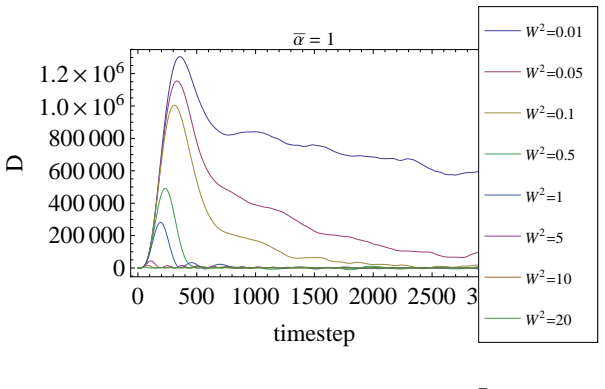
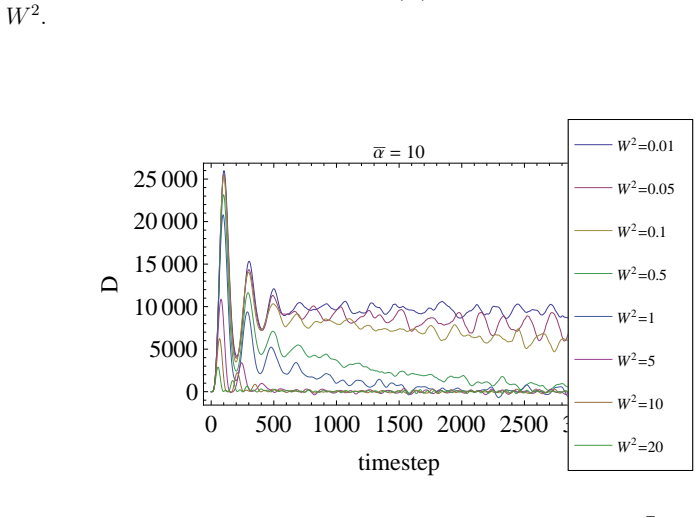
- The instantaneous diffusion coefficient exhibits irregular behavior in the intermediary regime due to parameter interplay.
- Such numerical methods can be used for differential diagnosis of astrophysical configurations.
Where Pith is reading between the lines
- Observed diffusion patterns from particles could be matched to specific astrophysical environments using this method.
- The technique might extend to other types of stochastic particle motion beyond charged particles.
- Quantifying the irregularity could lead to a diagnostic tool based on time-series data of particle positions.
Load-bearing premise
The irregular behavior in the instantaneous diffusion coefficient arises from the specific complex interplay of parameters in a manner that permits unique identification of different astrophysical configurations.
What would settle it
Finding that multiple different astrophysical configurations produce the same irregular pattern in the diffusion coefficient would challenge the usefulness for differential diagnosis.
Figures
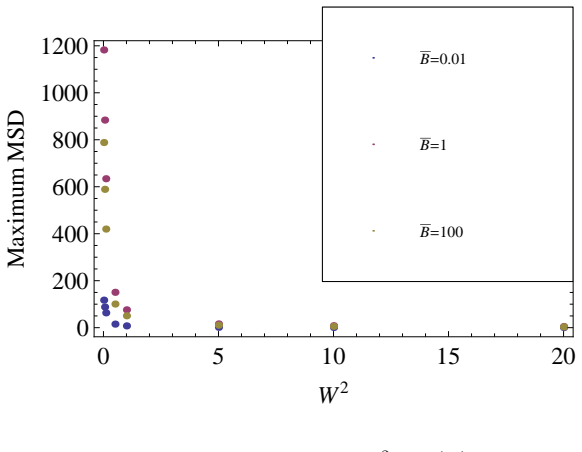
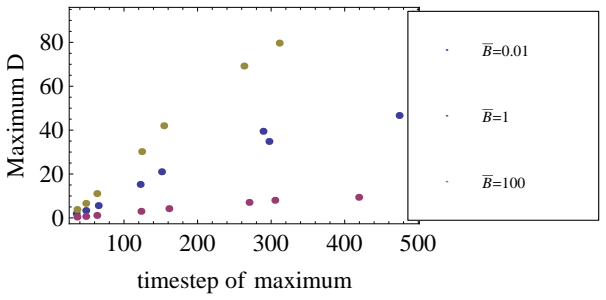
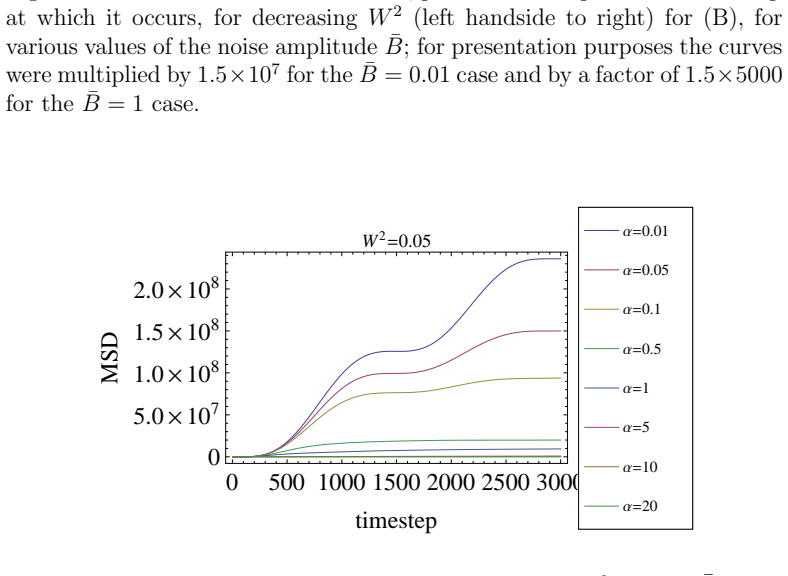
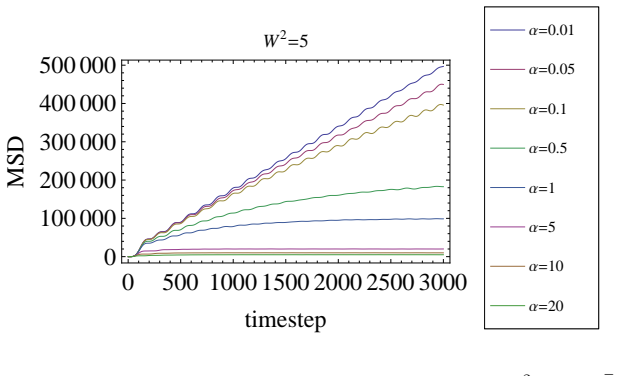
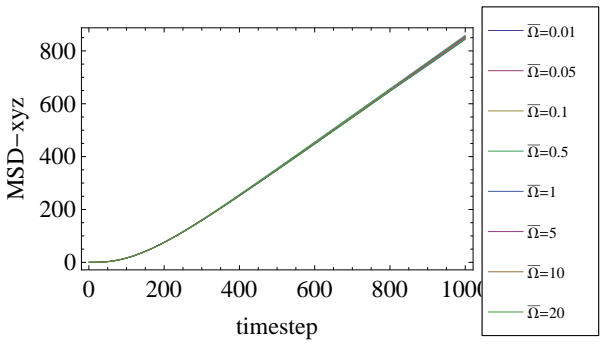
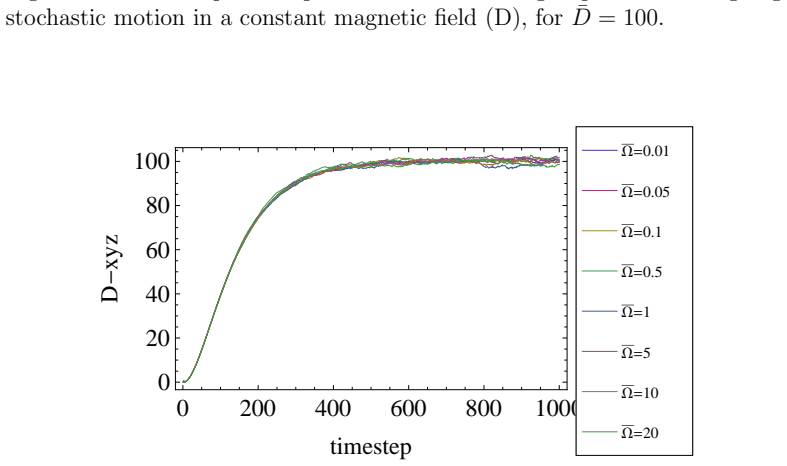
read the original abstract
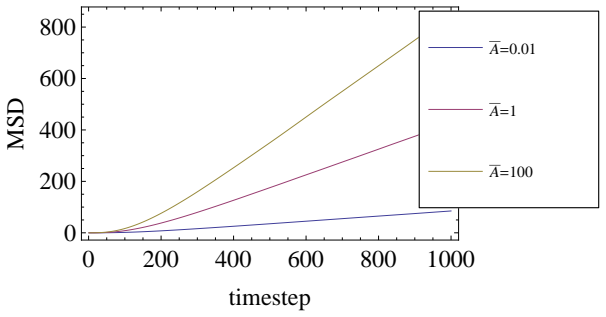
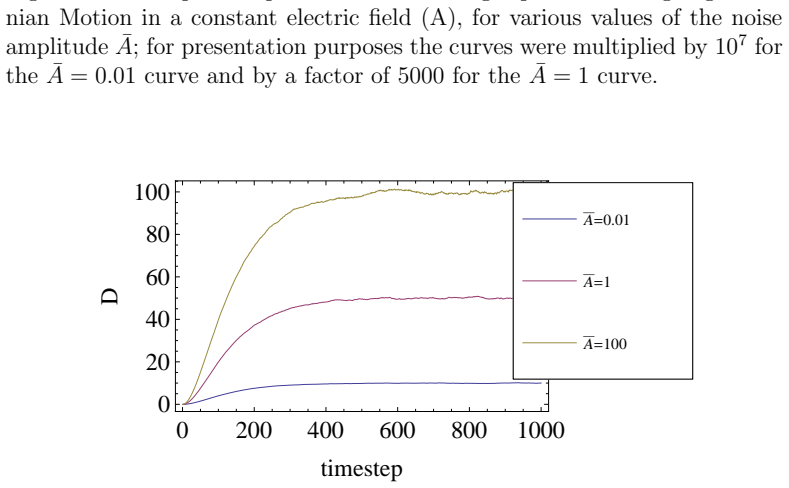
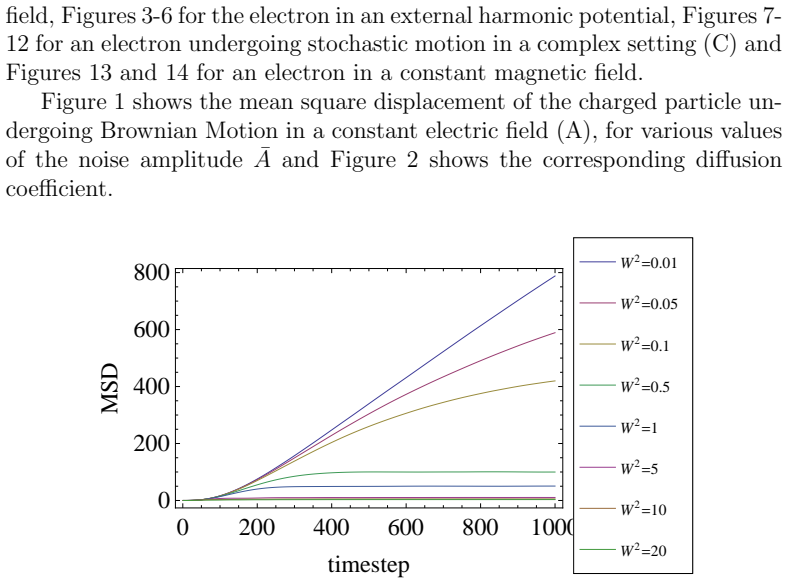
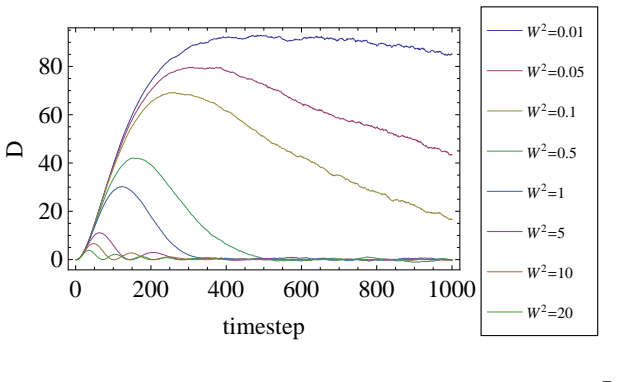
The mean square displacement and instantaneous diffusion coefficient for different configurations of charged particles in stochastic motion are calculated by numerically solving the associated equations of motion. The method is suitable for obtaining accurate descriptions of diffusion in both intermediate and long time regimes. It is also appropriate for studying a variety of astrophysical configurations since it may incorporate microscopic physics that analytical methods cannot cope with. The results show that, in the intermediary time regime, the diffusion coefficient has an irregular behavior, which can be described in terms of the complex interplay appearing between the physical parameters describing the configuration. The main conclusion is that such an approach may serve at differential diagnosis of different astrophysical configurations.
Editorial analysis
A structured set of objections, weighed in public.
Referee Report
Summary. The paper numerically solves the equations of motion for charged particles undergoing stochastic motion to compute mean-square displacement and instantaneous diffusion coefficient across different astrophysical configurations. It reports that the diffusion coefficient exhibits irregular behavior in the intermediate-time regime arising from complex interplay among physical parameters, and concludes that the method may enable differential diagnosis of such configurations.
Significance. If the numerical results are robust and the irregular patterns prove configuration-specific, the approach could provide a practical route to studying diffusion in regimes where analytic methods are intractable, particularly by incorporating microscopic physics. No machine-checked proofs, reproducible code, or parameter-free derivations are described.
major comments (2)
- [Abstract] Abstract: no information is supplied on the specific equations of motion, the numerical integration scheme, time-stepping method, validation against known analytic limits (e.g., free-particle or constant-B cases), error bars, or convergence tests, so it is impossible to determine whether the reported irregular behavior is physical or numerical.
- [Conclusion] Conclusion (final paragraph): the assertion that the method 'may serve at differential diagnosis' is unsupported because the manuscript presents no quantitative comparison (overlap integrals, distance metrics, or classification success rates) demonstrating that the irregular patterns are distinguishable across configurations rather than generic features of the stochastic model.
minor comments (2)
- The abstract and main text should explicitly list the ranges of B, charge, turbulence spectrum, and other parameters used for the different configurations.
- Notation for the instantaneous diffusion coefficient should be defined at first use and kept consistent with the mean-square displacement definition.
Simulated Author's Rebuttal
We thank the referee for the detailed comments. We address each major point below and will make revisions to improve clarity and support for the claims.
read point-by-point responses
-
Referee: [Abstract] Abstract: no information is supplied on the specific equations of motion, the numerical integration scheme, time-stepping method, validation against known analytic limits (e.g., free-particle or constant-B cases), error bars, or convergence tests, so it is impossible to determine whether the reported irregular behavior is physical or numerical.
Authors: The abstract is kept brief per journal guidelines, but the full manuscript specifies the equations of motion (including the Lorentz force with stochastic terms), the numerical integration via a velocity Verlet-like scheme with fixed time step, validation against free-particle and constant-B analytic limits in Section 3, and convergence with respect to time step and ensemble size. Error estimates from multiple realizations are shown in the figures. We will expand the abstract to include a concise statement on the numerical method and validation performed. revision: yes
-
Referee: [Conclusion] Conclusion (final paragraph): the assertion that the method 'may serve at differential diagnosis' is unsupported because the manuscript presents no quantitative comparison (overlap integrals, distance metrics, or classification success rates) demonstrating that the irregular patterns are distinguishable across configurations rather than generic features of the stochastic model.
Authors: The manuscript demonstrates configuration-specific irregular patterns in the instantaneous diffusion coefficient arising from distinct parameter combinations, as shown in the figures for several astrophysical setups. The conclusion uses cautious language ('may serve'). We agree that no formal quantitative metrics (e.g., overlap integrals or classification accuracy) are provided. We will revise the final paragraph to tone down the claim to 'suggests potential for' and explicitly note that quantitative distinguishability metrics remain for future work, while retaining the qualitative evidence from the simulations. revision: partial
Circularity Check
Numerical simulation of diffusion shows no circularity
full rationale
The paper computes MSD and instantaneous diffusion coefficient by numerically integrating the equations of motion for charged particles under stochastic forces. Results on irregular behavior in the intermediate-time regime are presented as direct outputs of these integrations, attributed to parameter interplay without any redefinition, fitting of inputs, or self-citation chains that reduce the claim to its own assumptions. The differential-diagnosis suggestion is an interpretive conclusion drawn from the computed curves rather than a quantity forced by construction or prior self-referential theorems. No load-bearing steps match the enumerated circularity patterns.
Axiom & Free-Parameter Ledger
axioms (1)
- domain assumption Numerical solution of the equations of motion for charged particles in stochastic motion yields accurate mean square displacement and instantaneous diffusion coefficient in intermediate and long time regimes.
Reference graph
Works this paper leans on
-
[1]
and Pollock, J.: 2005, I.A.P.P.P
Azarnia, G., and Webb, J. and Pollock, J.: 2005, I.A.P.P.P. Communications 101 , 1
work page 2005
-
[2]
and Wang H., Misguich J.:1994, Phys
B a lescu R. and Wang H., Misguich J.:1994, Phys. Plasmas, 1 (12) , 3826
work page 1994
-
[3]
B a lescu, R.: 1997, Statistical dynamics: Matter out of equilibrium, Imperial College Press, London
work page 1997
- [4]
-
[5]
Harko, T. and Leung, C.S. and Mocanu, G.R.: 2014, Eur. Phys. J. C 74 , 2900
work page 2014
- [6]
-
[7]
Hershkowitz, E.: 1998, Journal of Chemical Physics 108, 22 , 9253
work page 1998
-
[8]
Klafter, De J. and Sokolov, M.: 2011, First Steps in Random Walks: From tools to applications, Oxford University Press, New York
work page 2011
-
[9]
Lemons, D. S. and Kaufman, D. L.: 1999, IEEE Trans. on Plasma Science 27 , 5
work page 1999
-
[10]
Leung, C. S. and Wei, J. and Kong,A. and Kovacs, Z. and Harko, T.: 2011, Research in Astronomy and Astrophysics 11 , 1031
work page 2011
-
[11]
Mahnke, R. and Kaupuzs, J. and Lubashevsky, I.: 2009, Physics of stochastic processes: How randomness acts in time, Wiley-VCH, Weinheim
work page 2009
discussion (0)
Sign in with ORCID, Apple, or X to comment. Anyone can read and Pith papers without signing in.