Four-qubit states reproduce known CFTs
Critical points of an entropy function reconstruct a CFT's spectrum with no Hamiltonian input.
· “A systematic search for conformal field theories in very small spaces”

Statistical Mechanics
Phase transitions, thermodynamics, field theory, non-equilibrium phenomena, renormalization group and scaling, integrable models, turbulence
sort pith recommended most recent
Critical points of an entropy function reconstruct a CFT's spectrum with no Hamiltonian input.
· “A systematic search for conformal field theories in very small spaces”
The paper's holographic effective theory matches every leading-twist dimension at charge Q and spin J through second order in ε.
· “Towards Large-Spin Effective Theory II: O(2) model in d=4-ε”

Crossing symmetry of three operators pins down the theory's exponents and ties the φ⁶ theory to the 2d minimal model.

Same noise-based argument replaces perturbation proofs and tightens quantum precision bounds under strong driving.

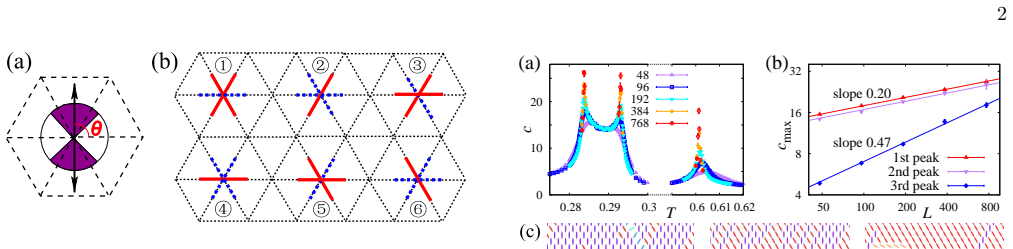
One extra patch turns close-packed disks into a tunable testbed for critical phenomena.
· “Orientational phase transitions induced by two-patch interactions”
Charged observables settle into a generalized Gibbs ensemble that remembers the initial projective charge.
· “Eigenstate Thermalization Hypothesis with projective representation”
Beyond a Thouless time, kicked many-body spectra reproduce COE, CUE, and CSE form factors to second order.

Simulations show a tiny off-center dipole creates a tunable electric field, up to 16 MV/cm at water-like settings.
· “Stockmayer Fluid with a Shifted Dipole: Interfacial Behavior”

Edge currents and odd diffusion follow from one effective temperature, verified with spinning vibrobots.
· “Active thermodynamics of inertial chiral active gases: equation of state and edge currents”
Simulations find a gapless glass between Néel order and quantum disorder, with stretched-exponential susceptibility.
· “Mott Glass and Criticality in a S=1/2 Bilayer Heisenberg Model with Interlayer Bond Dilution”
Vibrated particles form a giant cluster only past a link threshold near 2.1, matching 3D percolation universality.

A four-stroke anyon engine gets the most low-temperature work from particles at an intermediate statistical angle, not the extremes

Quantum channels get both a least-bias derivation and a many-copy thermodynamic justification.
· “Maximum channel entropy principle and microcanonical channels”
A 2D slice built by Schur projection reproduces stable metals and matching 3D critical exponents.

Adding quartic phase interactions turns oscillator networks into high-capacity analog associative memories.
· “Higher-Order Kuramoto Oscillator Network for Dense Associative Memory”

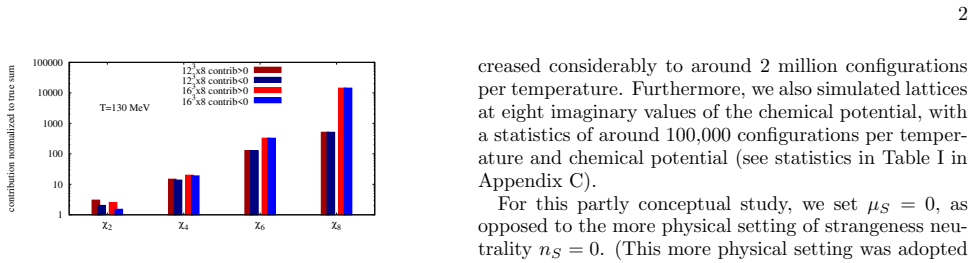
Baryon-number cumulants and Lee-Yang zeros put an 84% probability on the endpoint's temperature.
Strained amorphous packings show a critical intermediate phase with correlation length growing as (pc−p)^−1.66.

A single coupling g=Φa²τ_ion sets grain size, pressure independence, and faceting onset.

Short-range repulsion either blocks arrested collapse or densifies the liquid fourfold, a new theory shows.

Simulations show knot family shifts the collapse point, so knotting can tune active materials.
· “Effects of knotting on the collapse of active ring polymers”

Flattening the sampling distribution, tuned each step, gets the same gradient accuracy with far fewer samples.
· “Looking elsewhere: improving variational Monte Carlo gradients by importance sampling”

Flux strings split into meson pairs and nucleate glueball-like loops at computable field strengths
· “String Breaking Dynamics and Glueball Formation in a 2+1D Lattice Gauge Theory”

From voting to epidemics, binary-state agents act like spins—with testable tipping points.
Well-defined heat and entropy let local detailed balance survive strong coupling.
· “A Rigorous Foundation for Stochastic Thermodynamics via the Microcanonical Ensemble”
No stirring involved: quench speed alone sets the vortex tangle, whose energy spectrum obeys Kolmogorov 5/3 scaling.

CACAO moves the feedback idea behind FALQON and CD-FQA onto ordinary hardware and scales to 10,000 spins.

Restores the expected young-elderly-CHF order where the standard permutation measure fails.
· “Fuzzy permutation time irreversibility for nonequilibrium analysis of complex system”
Quantum revivals survive weak disorder but die near w≈2, when entanglement hits full-Hilbert-space random values.
· “Disordering a permutation symmetric system: revivals, thermalization and chaos”

A single measured current and its fluctuations bound entropy production at any bias, with no heat-current measurement needed.
· “Thermodynamic Uncertainty Relations for Coherent Transport”

Doublon and singlon counts stay fixed while the charge-density-wave imbalance relaxes slowly.

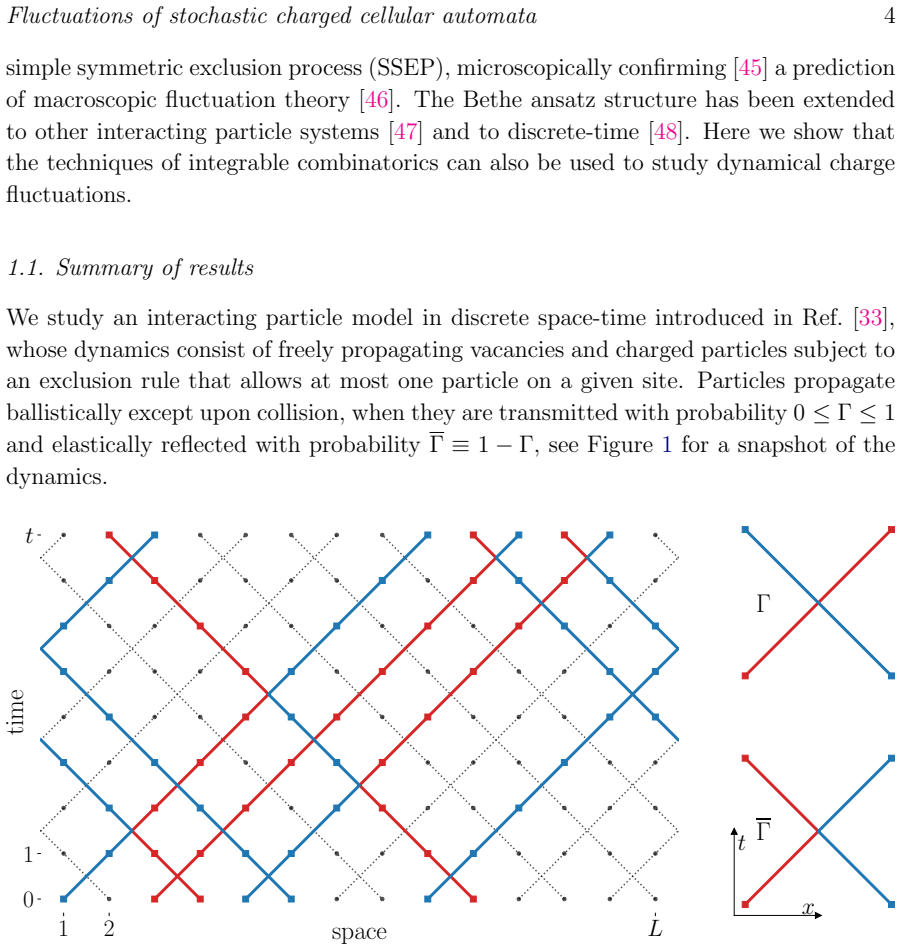
Exact full counting statistics interpolate from single-file Mainardi-Wright at pure reflection to Gaussian at pure transmission.
Scalar diffusivity equals renormalized viscosity; Kolmogorov constants follow from the same Craya-Herring calculation.
A single local loss both bounds and reduces the exponential sampling slowdown of frustrated quantum magnets.
· “Local Basis Transformation to Mitigate Negative Sign Problems”

One normalization constant maps energy density to charge density and reproduces entanglement statistics.
· “Quantum chaos at finite temperature in local spin Hamiltonians”

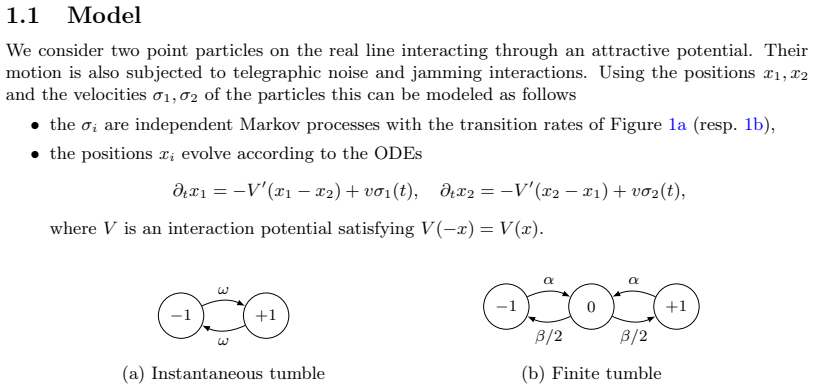
Explicit formulas for clustering probabilities and relaxation times of two attracting, non-crossing run-and-tumble particles.
For large Schwarzschild radius, the entropy scales with horizon area as S ≈ C A/4G.
· “The quantum relative entropy of the Schwarzschild black-hole and the area law”

One software package now handles ground states, quench dynamics, and finite-temperature benchmarks against quantum Monte Carlo.

In a random trap lattice, the tail shape is fixed by just two moments of the local escape rates.
· “Diffusion in Quenched Random Environments: Reviving Laplace's First Law of Errors”

A driven probe in a pattern-forming medium maps flow regimes and a stripe-edge Hall angle that purely repulsive systems lack.
· “Active Microrheology and Dynamic Phases for Pattern Forming Systems with Competing Interactions”

A matrix-cocycle calculation gives the exact heating phase boundary and Lyapunov exponent for driven critical systems.
· “Phase Transitions in Quasi-Periodically Driven Quantum Critical Systems: Analytical Results”

On an NMR processor, the shortcut engine beats the non-adiabatic one at short driving times, even paying the shortcut's energy cost.

Hydrodynamics shows altruists act as surfactants and sharply cut the barrier to the optimal state.
· “Hydrodynamics of Cooperation and Self-Interest in a Two-Population Occupation Model”

RG-inspired flow keeps ESS/N above 80 percent in symmetric and broken phases for 2D phi4.
· “Super-Resolving Normalising Flows for Lattice Field Theories”

Scalar and fermion modes near the BTZ horizon show Wigner-Dyson spacing, a linear ramp, and Krylov peaks.
· “Brickwall One-Loop Determinant: Spectral Statistics & Krylov Complexity”
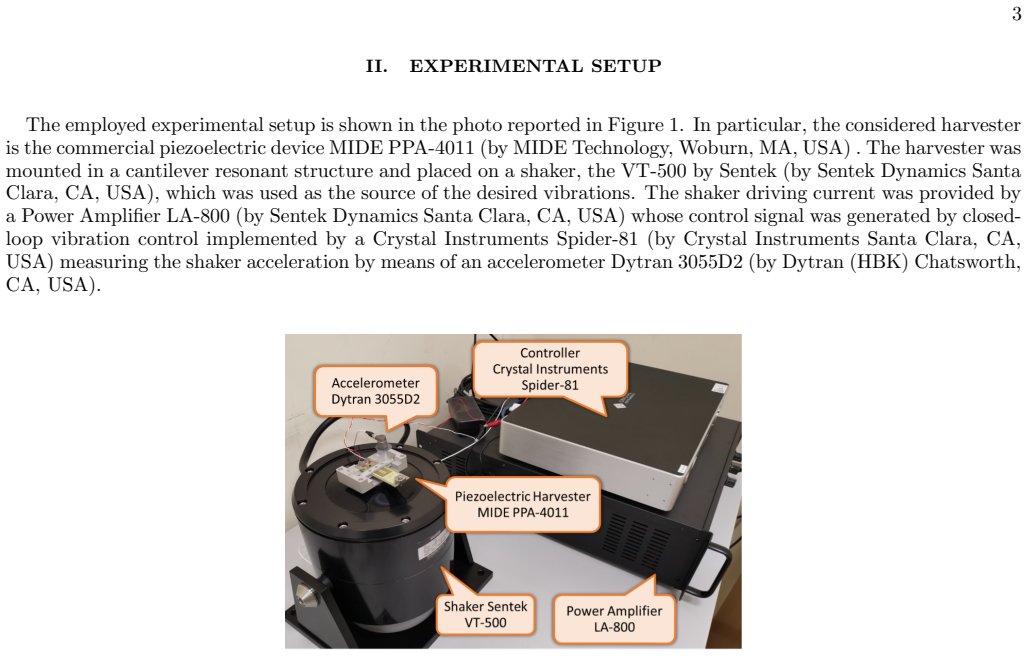
Simulations match both load types, locating the resistance that maximizes harvested power.
· “Stochastic Model for a Piezoelectric Energy Harvester Driven by Broadband Vibrations”
Renormalized truncation spectra match M(3,8) on the PT boundary; M(3,5) and M(3,7) fits fail.
· “Testing the RG-flow M(3,10)+φ_(1,7)to M(3,8) with Hamiltonian Truncation”

SU(2)-symmetric Heisenberg model supports a generalized eigenstate thermalization hypothesis for noncommuting charges.
· “Numerical evidence for the non-Abelian eigenstate thermalization hypothesis”

Sampling projectors whose average is the identity removes truncation bias and shrinks statistical error exponentially.
· “Markov Chain Monte Carlo in Tensor Network Representation”

A periodic Feynman–Kitaev clock turns shift-register Floquet states into zero-energy eigenstates with maximal block entropy.

A dip in the relaxation time reveals two aging mechanisms acting together—trapping plus a slow free-energy landscape.
· “Aging of glass-forming materials following a temperature jump”

Nested kill-time integrals give the nth survivor's survival function, with applications to single-file diffusion and CDS pricing.

Stationary Gaussian baths add only subpolynomial overhead; local observables need depth independent of system size.
· “Optimizing digital quantum simulation of open quantum lattice models”

Only a perfectly even bias or a 50% contrarian share yields a tie; otherwise one opinion always dominates.
· “Analysing contrarian behaviour using nonlinear biased q-voter model”

Fitting fMRI fluxes to an Ising model shows symmetric wiring stays put while antisymmetric couplings change per task.
· “Distinct weak asymmetric interactions shape human brain functions as probability fluxes”
Imbalance measurements on 8×8 to 24×24 lattices show a growing crossover only under random disorder.

Adiabatic first-principles runs reproduce the glass-transition jump and sodium's falling heat capacity with no fitting.
· “The total energy approach for calculating the specific heat of liquids and glasses”
Two lab-built metamaterials show wavelength, period and amplitude growing together until the whole solid swings in sync.
· “Wave coarsening drives time crystallization in active solids”

Models show phase-separated droplets concentrate viral genomes and capsid proteins, sharpening selection — a lever for engineered encapsulat
· “Liquid-liquid phase separation enables highly selective viral genome packaging”
The same decay coefficient as in d=1 would control a differently shaped tail, with fluctuations at positions scaling with time.
Convergent cluster expansion pins the truncated two-point correlation exponent to alpha in d dimensions.
· “Cluster Expansion and Decay of Correlations for Multidimensional Long-Range Ising Models”
Monitored dissipative time crystals can give a global QFI rate scaling as N^3, and the TCD model keeps super-classical scaling even with…
· “Attaining Quantum Sensing Enhancement from Monitored Dissipative Time Crystals”
New limit theorems connect immigration schedules to all-searchers-present search, and Yule births give non-classical extremes.
· “Passage times of fast inhomogeneous immigration processes”
Simulations show three stages: bubble nucleation, semiclassical growth, then a Bloch-oscillation halt.
· “Real-time bubble nucleation and growth for false vacuum decay on the lattice”
Changing the frequency ratio c makes scars persist or vanish, giving a knob for prethermal and time-crystal-like phases.
· “Controlling quantum scars and engineering subharmonic responses with a two frequency drive”
Reflection positivity plus strong coupling forces long-range order in a 3D cubic lattice at low temperature.
· “Antiferromagnetic Long-Range Order in a Lattice Fermion Model”
A defect-by-defect determinant method yields first-passage statistics and uncovers a two-peak regime.
· “Predicting First-Passage Dynamics in Disordered Systems Exactly: Application to Sparse Networks”

Hydrodynamic equations for dense mixtures in narrow pores show smaller particles push larger ones aside.
· “Hydrodynamic approximations for driven dense colloidal mixtures in narrow pores”
In 2D long-range systems, pinned and flowing states coexist; elsewhere, large avalanches expand ballistically.
· “Anomalous Critical Behavior of Driven Disordered Systems Beyond the Overdamped Limit”
At leading coupling, transient peaks, steady-state currents, and conductivity all follow from a single two-point function.
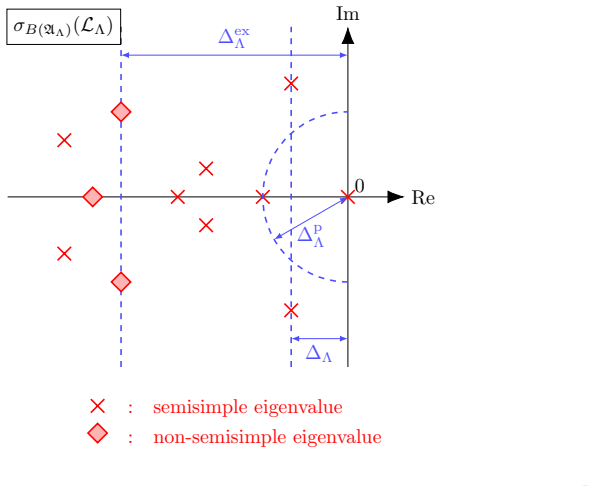
Spectral gaps aren't enough: a uniform nonnormality bound is what makes infinite steady states computable.
· “Nonequilibrium steady state in Lindblad dynamics for infinite quantum spin systems”
A dual of the Aztec diamond theorem controls how hole evolution changes matchings on the torus.
Continuous rise and cubic scaling tie chaos onset to unstable fixed points in random neural networks.
A quantum Doob transform reshapes Hamiltonian and dissipation together to maximize currents and activity.
· “Optimizing quantum transport via the quantum Doob transform”
A two-frequency Thue-Morse pulse sequence thermalizes a driven PXP chain far slower than periodic, random, or Fibonacci drives.
· “Heating suppression via two-rate random and quasiperiodic drive protocols”
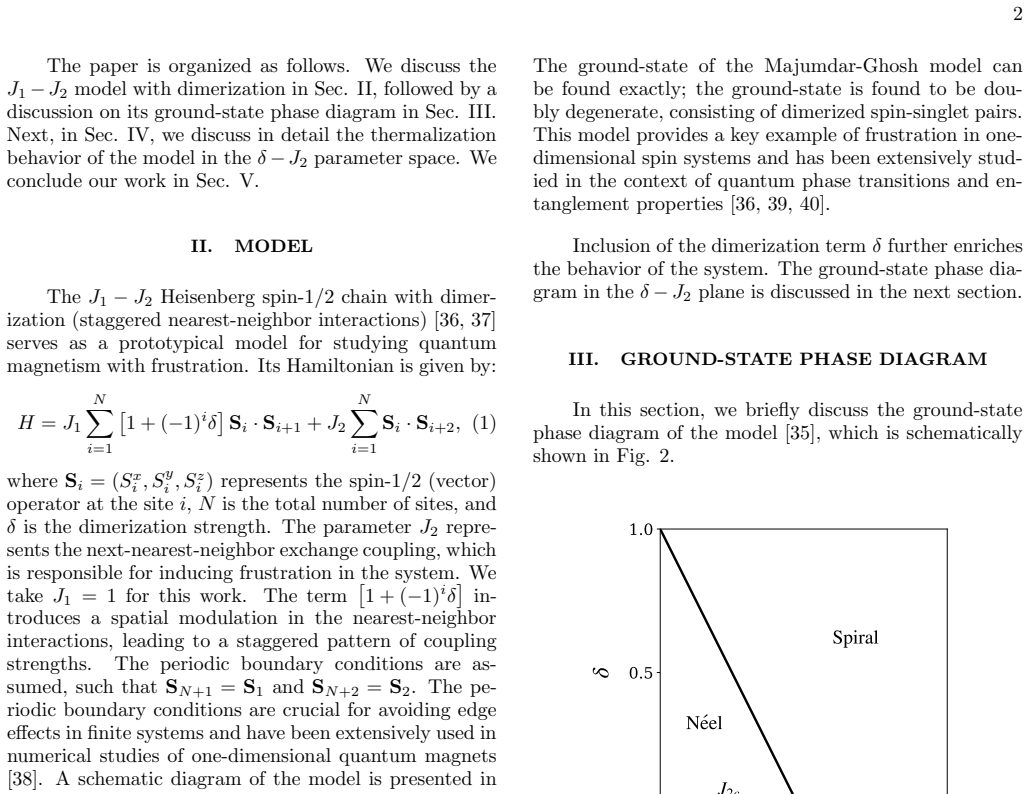
Which parameters thermalize a frustrated spin chain maps onto its ground-state spiral phase, a knob for quantum simulators.
Smooth approximations of the sign rule keep the edge, so real hardware can use it.
· “How to Incorporate Higher-order Interactions in Analog Ising Machines”

A shear-activated double-well free energy matches DEM layer patterns and collapses the data onto one curve.

The r-color Temperley–Lieb generalization matches its chord-diagram action and yields a new r=2 boundary solution.
· “Fuss--Catalan algebras on generalized Dyck paths via non-crossing partitions”

The CPTP fix to Caldeira-Leggett master equations forces nonequilibrium steady states with broken micro-reversibility.
· “Broken Detailed Balance and Entropy Production in CPTP Quantum Brownian Motion”
A time-dependent metric and connection turn response spectra and three-operator correlations into many-body quantum geometry.