GPU forward model runs 600x faster
A fully differentiable JAX pipeline makes mock galaxy maps cheap enough for simulation-based inference.
· “Fast GPU-Powered and Auto-Differentiable Forward Modeling of IFU Data Cubes”

Data Analysis, Statistics and Probability
Methods, software and hardware for physics data analysis: data processing and storage; measurement methodology; statistical and mathematical aspects such as parametrization and uncertainties.
sort pith recommended most recent
A fully differentiable JAX pipeline makes mock galaxy maps cheap enough for simulation-based inference.
· “Fast GPU-Powered and Auto-Differentiable Forward Modeling of IFU Data Cubes”
Glitch masking restores galactic-binary frequencies to 1 ppm; planned gaps still widen black-hole error bars 2-3x.
· “Extraction of gravitational wave signals from LISA data in the presence of artifacts”

Viscous-layer velocity jumps stay non-Gaussian at every scale, even the largest.
· “Structure functions and flatness of streamwise velocity in a turbulent channel flow”

Thermal neutron capture on 27Al leaves a 1113.6 eV recoil line, a source-free calibration for low-energy detectors.

Training on simulated 2D track images, the net separates rare 12C decays from scattering backgrounds in a planned TPC.
A trained flow passes a joint-distribution test and packs a likelihood into a few megabytes, easing reuse.

Graph networks, transformers, and interpolation-based CNNs each fill a niche; open datasets make them testable.
· “Machine learning for modelling unstructured grid data in computational physics: a review”

Charge-normalized FFT spectra push adversarial ROC AUC to 0.999 at 10 MS/s, where the fixed index falls to 0.751.

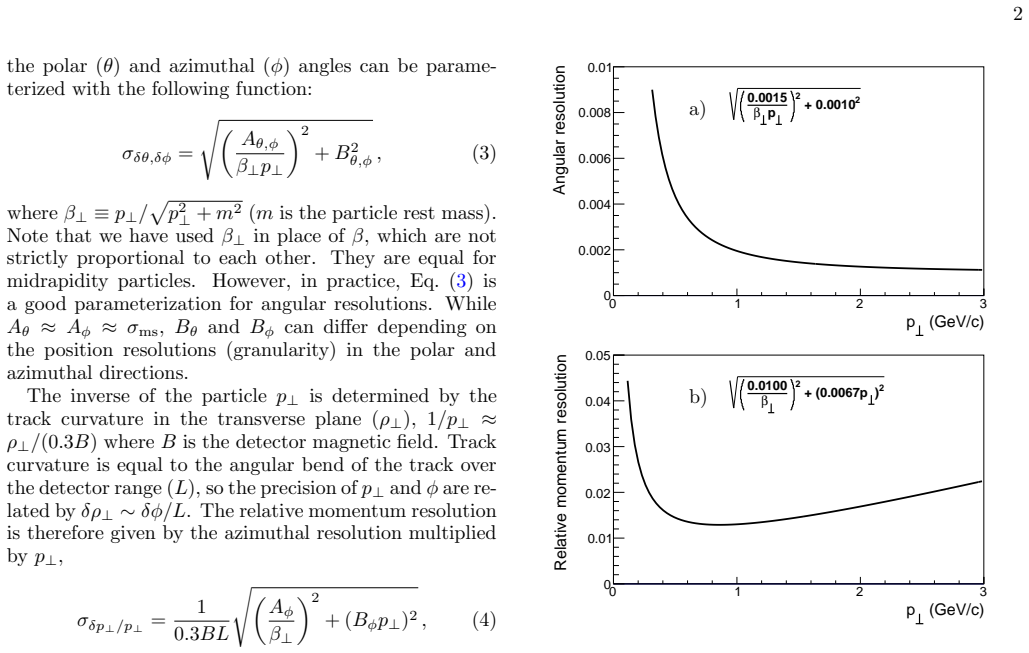
Simulation says resolution shifts stay under 0.0005, inside the ~0.001 uncertainty of current measurements.
· “Impact of Tracking Resolutions on φ-Meson Spin Alignment Measurement”
Know where random cross-correlations end; everything beyond is a candidate for a genuine shared signal.
· “Distribution of singular values in large sample cross-covariance matrices”

Trained purely on simulation, it runs live and cuts reconstruction error roughly 30-fold versus neighbor averaging.
· “Reconstructing Time-of-Flight Detector Values of Angular Streaking Using Machine Learning”

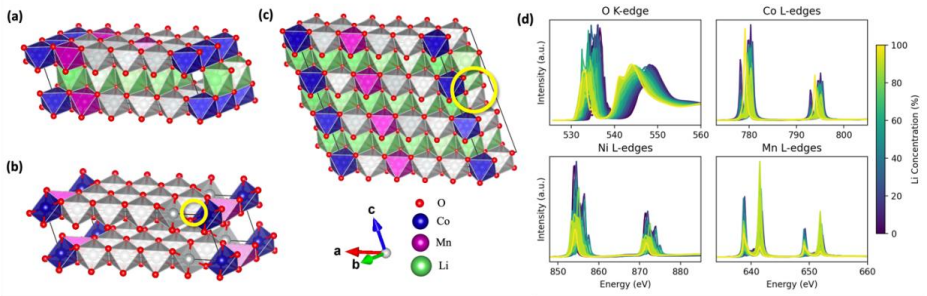
Trained on computed spectra, the model transfers to real X-ray and electron energy-loss maps of battery cathodes
· “Revealing Local Structures through Machine-Learning- Fused Multimodal Spectroscopy”
Rule-following enters as a penalty term, and the weight of rules vs. results is left to judges and legislators.

Three cheap tweaks make random feature maps match top chaos forecasters up to 512 dimensions.
· “Learning dynamical systems with hit-and-run random feature maps”

Trained on plain eigenvalue spacings, the classifiers match known boundaries and reproduce scaling exponents from standard methods.

Across 696 Dark Energy Survey objects, size is shared but color and variability track place of origin.

The first hidden layer and the output layer carry enough uncertainty for active learning, at a fraction of the cost.
· “Active and transfer learning with partially Bayesian neural networks for materials and chemicals”

Classical TDI corrupts roughly 400 seconds of data around six one-sample gaps; the new method loses only the gap samples.
· “Robust Bayesian inference with gapped LISA data using all-in-one TDI-infty”

A theorem explains why day-resolution data show power laws while second-resolution streetfights show lognormals.
· “The distribution of violent event and interevent times in conflicts”

Degree lists, spectra and centralities reveal periodicity, memory decay and chaos in temporal networks where node identity is lost.
· “Characterising the dynamics of unlabelled temporal networks”
The single-atom R1 method no longer needs a human to pick fragments or delete ghost atoms between cycles.
A guided single-atom search cuts computer time and misplaced atoms; fragment search only for low-resolution data.
Ensemble and diffusion classifiers keep near-95% accuracy on PM2.5 levels despite a sparse urban monitoring grid.

An adaptive leave-one-out score finds the feature subsets that raise and lower predictive power, revealing when features cooperate.
· “Assessing high-order effects in feature importance via predictability decomposition”

A delayed driver plus a periodic response forcing creates large oscillations neither can produce alone.

Seeing data, model assumptions, and groupings can catch biases that aggregate statistics hide.
· “Toward Ethical Spatial Analysis: Addressing Endogenous Bias Through Visual Analytics”

Unbiased estimators hit 1 mm sea-level accuracy in days instead of a year of supercomputer time.
· “Multifidelity Uncertainty Quantification for Ice Sheet Simulations”

A model-agnostic wrapper gives every location its own prediction interval; bootstrapping caps out near 81%.
Trained on 2.7 million simulated events, it doubles resolution and sharpens the antimatter gravity test.
· “AI Meets Antimatter: Unveiling Antihydrogen Annihilations”

Distance-based PCA and MDS embeddings recover periodicity, memory, change points, and chaos from a network trajectory.

Beyond discrete-subsystem analyses, scanning all partial-information descriptions shows where redundancy and synergy live.
· “Surveying the space of descriptions of a composite system with machine learning”

A full 3-D field map simulation confirms the experiment's expected vacuum sensitivity to axion-photon coupling.
· “An accurate solar axions ray-tracing response of BabyIAXO”
A critical threshold $k_{\mathrm{th}}=\gamma\omega/\sin(\omega\bar{\beta})$ separates growing from fading oscillations; numerics confirm it.

122 years of data tie descending phase to winter and pre-monsoon floods, ascending phase to monsoon.

Bayesian optimization over tilt and row spacing beats latitude-plus-winter-solstice design, especially on pricey land.

A bidirectional LSTM trained on simulated proton-proton events matches a standard fitter on top-quark momenta.
Laboratory seas with kurtosis near 4 confirm that exceedance probability is just the packet amplitude tail.
· “Rogue Wave Statistics from a Sparse Coherent Structure Decomposition”

Annotated starting points and a subfield map replace the 4,000-paper list.
· “The Living Guide of Machine Learning for Particle Physics”
An iterative Padé-sequence algorithm fixes noisy measurements while preserving genuine resonances.
· “Analytically Consistent Reconstruction of Finite Data Using Pad\'e Sequences”

It estimates how much faster molecules move along one axis even from short, randomly oriented tracks.

Physics-informed attention beats larger models on astrophysical light curves and matches them on milling data.

After the CMIP6 constraint weakens, residual alignment 0.593 recovers HadCRUT5 ECS near 3.00 K.
· “Finite-Response Complementarity in Fluctuation Constraints on Climate Sensitivity”

A training-free, O(1) model predicts clicks on desktop and mobile with 98.1% accuracy while prefetching at a 1.37:1 ratio.

A segmented softplus network trained with Levenberg-Marquardt returns exact gradients, Hessians, and Laplacians.

Nearest-neighbor forecast-error decay gives contraction rates from short recovery responses, without a Jacobian.

A single weak-form regression estimates vol-of-vol, leverage, and mean reversion without option quotes.

IceCube's GollumFit recovers true parameter values and cuts fit time with compressed Monte Carlo events.
· “GollumFit: An IceCube Open-Source Framework for Binned-Likelihood Neutrino Telescope Analyses”

A calibrated model of 2022-2024 shows six zones would cut consumer costs by £9.4/MWh even as northern generators lose 30-40% of revenue.
· “Risk and Reward of Transitioning from a National to a Zonal Electricity Market in Great Britain”

Four analysis modules, customizable charts, and AI-generated explanations aim to replace multi-tool literature review workflows.
· “MetaInfoSci: An Integrated Web Tool for Scholarly Data Analysis”

EggNet keeps ~96% track efficiency on HL-LHC-scale TrackML events while using one tenth of the training GPU memory.
· “Physics and Computing Performance of the EggNet Tracking Pipeline”

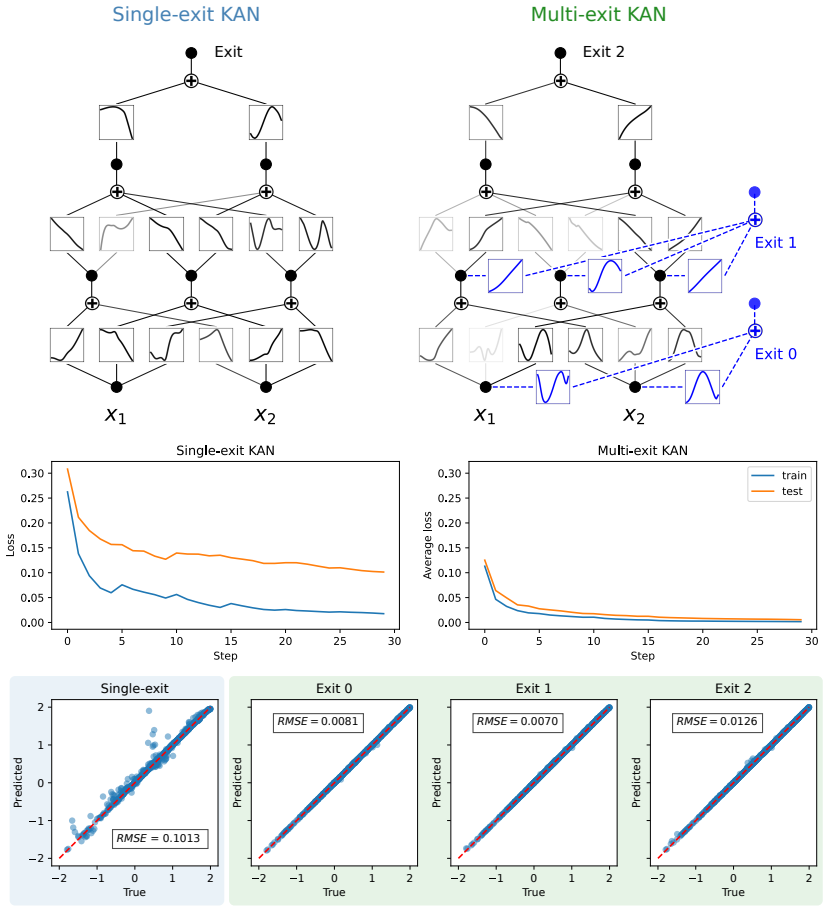
Adding small prediction branches at every layer improves accuracy and often finds a simpler model.
· “Multi-Exit Kolmogorov-Arnold Networks: enhancing accuracy and parsimony”
The measured +0.09 eb quadrupole moment exceeds ab initio predictions and calls for alpha clustering and triaxiality.

A finite fraction of states re-extends at λ≈1.55–2.1 (Fibonacci) and λ≈0.7–1.3 (Bronze Mean), beyond the localization threshold.
· “Reentrant localization in a quasiperiodic chain with correlated hopping sequences”

Even the best hyperbolic embedding reproduces degrees and clustering but misses the block mixing patterns.
· “Random Hyperbolic Graphs with Arbitrary Mesoscale Structures”

If right, probability gets a mechanical base, and early-run deviations become testable predictions.

The training set is the prior, so matching ensemble DA demands a fresh denoiser every cycle.
A modified local-effect model predicts cell survival from the dose-enhancement ratio alone, skipping voxel simulations.
· “Monte Carlo Simulation and Dosimetric Analysis of Gold Nanoparticles (AuNPs) in Breast Tissue”

Free portal unites peer-reviewed data on superconductors and the auxiliary materials their devices need.
A gradient-boosted surrogate trained on ~1M simulated sea states now guides turret disconnection decisions offshore.
· “An application of machine learning to the motion response prediction of floating assets”

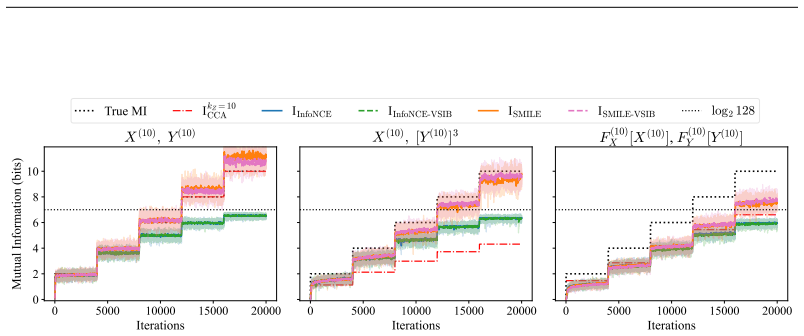
A protocol with error bars recovers near-true mutual information on 784-pixel images from 16,384 samples.
· “Accurate Estimation of Mutual Information in High Dimensional Data”
It also reveals a bias threshold near $1/\sqrt{3}$ that reshapes last-passage tails.
· “Closed-form survival probabilities for biased random walks at arbitrary step number”

A 6–12 month course of the osteoporosis drug raised skull density and focal temperatures, and all five repeat ablations succeeded.

A single taxonomy sorts three decades of methods by whether the model is physical or learned from data.
· “Bayesian Learning in Structural Dynamics: A Comprehensive Review and Emerging Trends”

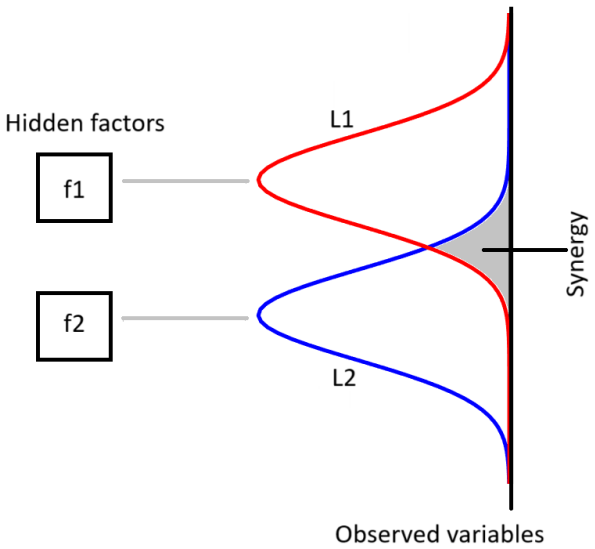
The same score works for any dataset that can be summarized by latent factors, from brain scans to gene expression.
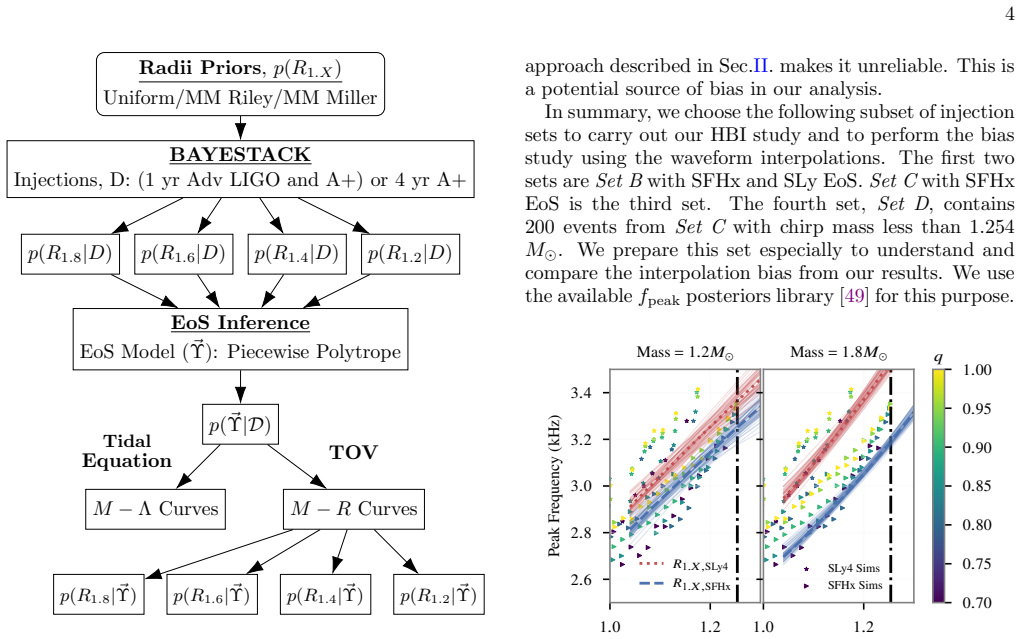
Combining four radius measurements through one equation of state tightens bounds to about a kilometer.
· “Prospect of Constraining the EoS of Neutron Stars Using Post-Merger Signals”
Open-hole tension models match tests within about 13 percent, with melt-spun interleaves localizing damage.
A quintilinear cohesive-law model matches measured Mode I delamination onset and ranks BMI & GNP interleaves best.
Derived from the FLRW equations and recent BAO data, the value stays above the phantom divide at all redshifts.

Five seasons of Premier League data give Boltzmann-informed probabilities a $1,841.57 edge in Kelly-criterion betting.
In Type Ia supernova simulations, compressed fuel near the flame may be primed for the long-sought detonation.

A generalized-mean power match widens LISA's search peak, letting one laptop find and characterize signals in about a day.
· “Searching for extreme mass ratio inspirals in LISA: from identification to parameter estimation”

A cmdstan-like interface to PolyChord gives Stan users black-box Bayes factors and sampling for hard targets.
· “PolyStan: PolyChord nested sampling and Bayesian evidences for Stan models”

The 20–300 mHz oscillation is tied to the ultraluminous source, but QPO frequency alone cannot weigh it.
· “A NuSTAR study of quasi-periodic oscillations from the ultraluminous X-ray sources in M82”

Recovers governing equations from non-uniform sensor data, tolerating up to 75% noise and running in under a minute.

The paper argues CMIP models understate natural variability; climate sensitivity would be low and Net-Zero unnecessary.
· “Detection, attribution, and modeling of climate change: key open issues”

Same congestion transition in four cities and a grid; small junctions spike more than hubs.

POLEVAL, a free notebook-based Python toolbox, constrains peak widths and positions across entire measurement series.

Assimilating both observation types beats either alone and works with both tested smoothers.
· “Glacier data assimilation on an Arctic glacier: Learning from large ensemble twin experiments”

Shared likes become positive links and shared dislikes negative links, once chance is filtered out by a maximum-entropy benchmark.
· “Statistically validated projection of bipartite signed networks”

A single matrix formula predicts linear and nonlinear Green's functions from data, with no equations needed.
· “Interpretable and Equation-Free Response Theory for Complex Systems”
