Quiet-night plasma blob forms by mapped electric fields
Multi-instrument data link Es/MSTID polarization fields to F-layer uplift and a rare blob–front interaction.
Space Physics
Space plasma physics. Heliophysics. Space weather. Planetary magnetospheres, ionospheres and magnetotail. Auroras. Interplanetary space. Cosmic rays. Synchrotron radiation. Radio astronomy.
Multi-instrument data link Es/MSTID polarization fields to F-layer uplift and a rare blob–front interaction.
Direct diffusion measurements match theory only when large fluctuations are kept

High-resolution map shows inverse period gradient that challenges the usual expanding-canopy model
· “Mapping Oscillatory Flows in a Giant Chromospheric Spiral”

A 1 m^{2} detector can spot cavities fast and water after about ten minutes of counting.
· “The muon Moonshot: Moon subsurface tomography with upward-going muons”

MMS data and hybrid runs show a self-regulating cycle explains most non-stationarity at a perpendicular bow shock.

First detection of a large polycyclic aromatic hydrocarbon outside TMC-1 shows these carbon molecules survive the onset of star formation.

Low-frequency precursors reflected from magnetized pair shocks match FRB frequencies, durations and energies.
· “Photon Acceleration in Magnetized Plasma: A Mechanism for Fast Radio Bursts”

A new transport theory shows magnetic geometry drives heating channels overlooked by standard models, with implications for slow-wind origin
· “A Transport Theory of Turbulent Coronal Heating in General Geometry”

A May 2024 ICME simultaneously intensified hydrogen and oxygen UV emissions across the whole planet, revealing dual proton-electron excita

A piece-wise nonlinear cold-fluid equation matches the plus or minus 0.75 GV/m field boundaries from CERN's proton-driven plasma accelerator

Expansion amplifies them; dispersion, reconnection and shocks wear them down—and the survivors power turbulence, heating and particle transp
· “Evolution and Impact of Switchbacks Throughout the Heliosphere”
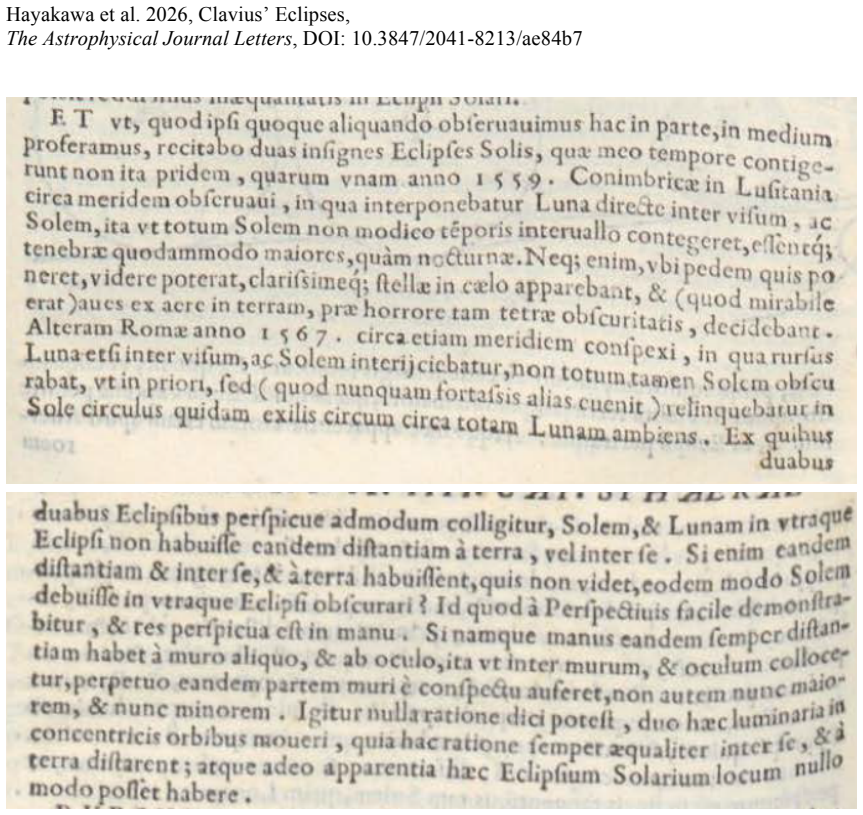
Revised Delta T bounds from 1560 and 1567 eclipses exclude linear shrinkage but allow oscillations
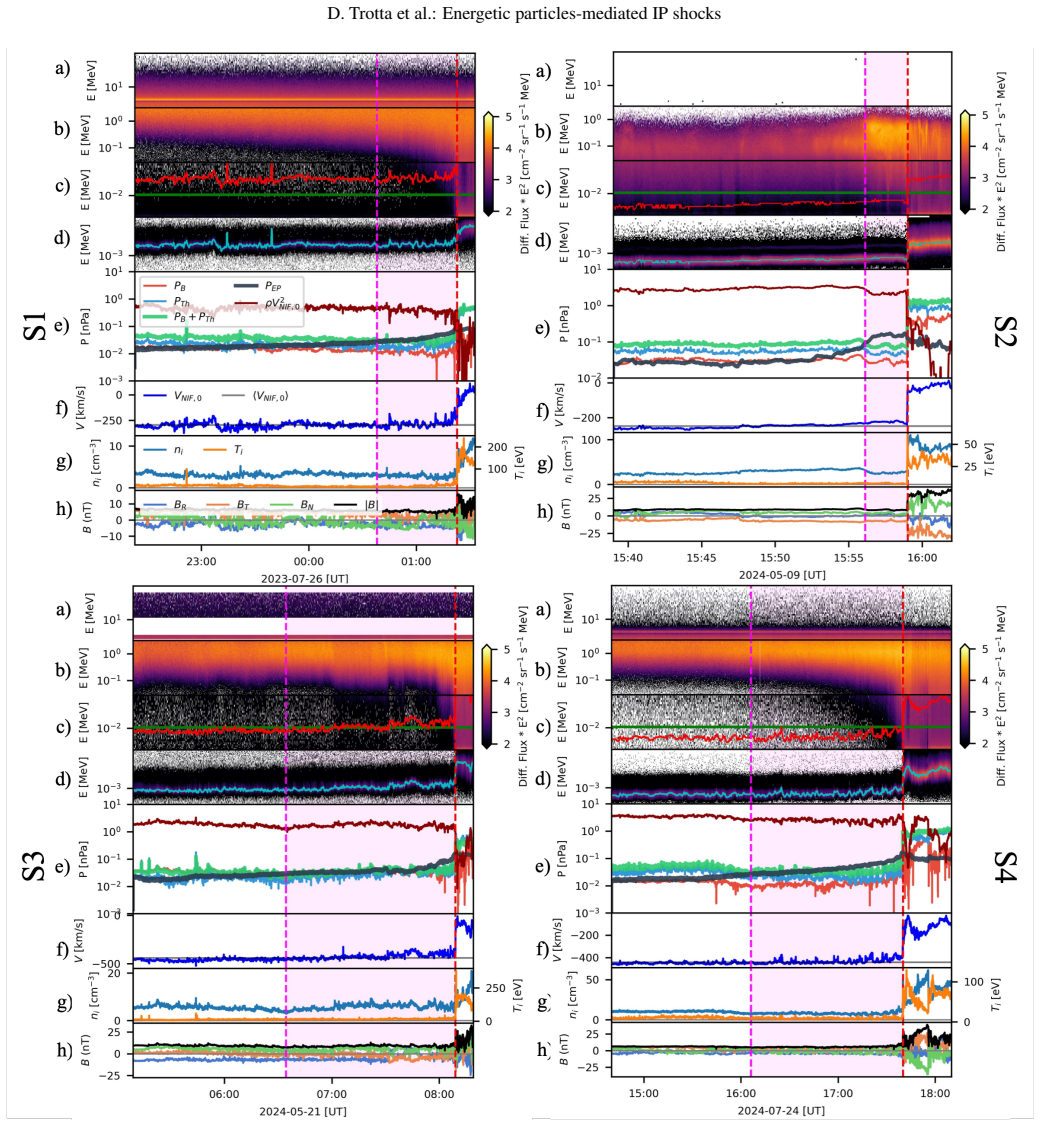
The events are strong and fast, with particle-dominated regions extending up to 100000 ion inertial lengths upstream.
· “Energetic particle-mediated interplanetary shocks observed by Solar Orbiter”
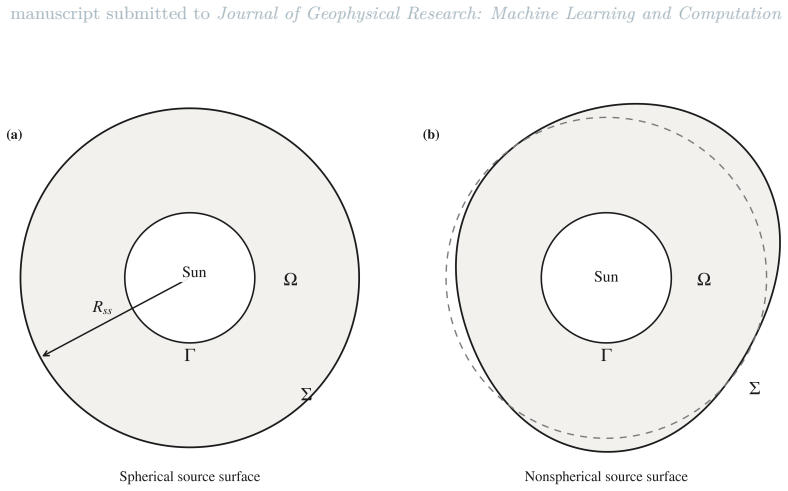
Tuning to Parker Solar Probe data improves open flux agreement while holding polarity accuracy steady
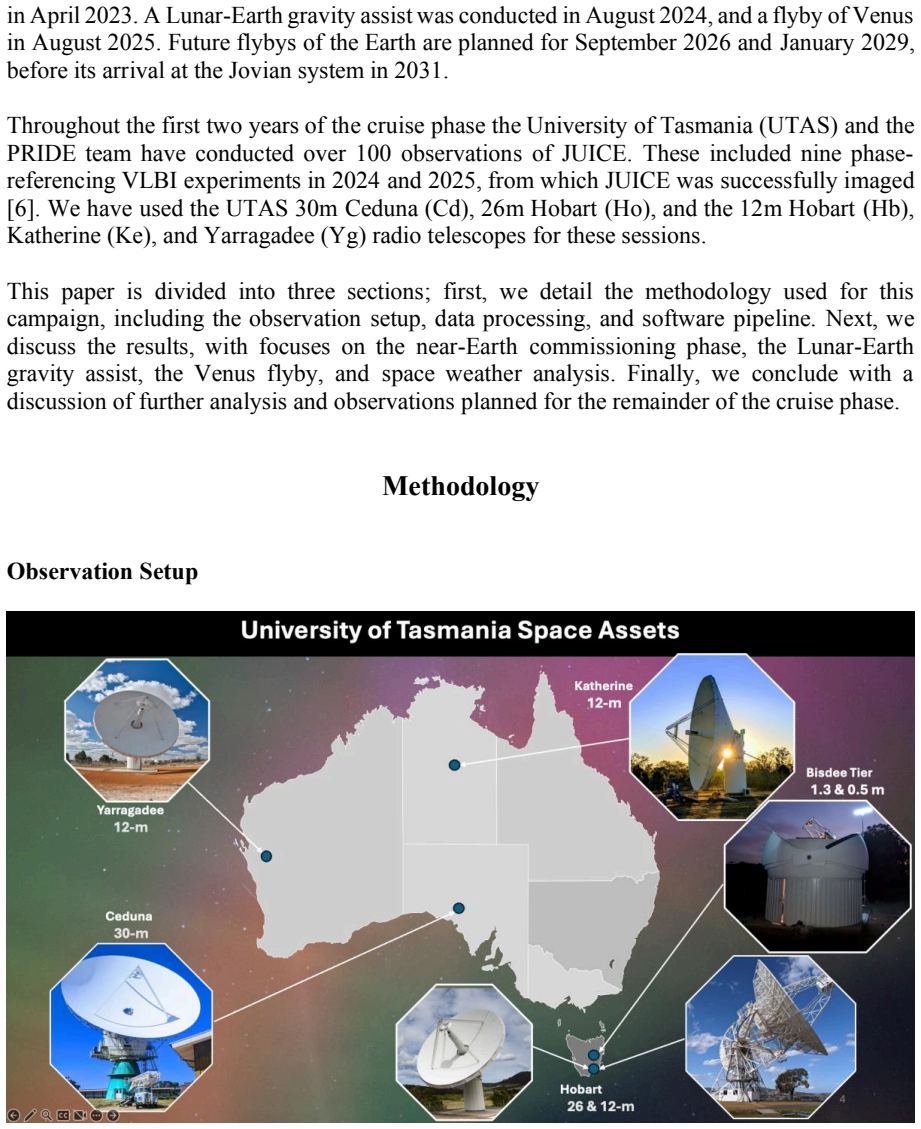
More than 100 observations add geometric diversity for better position accuracy and spacecraft diagnostics during cruise.
· “VLBI Tracking of the JUICE Mission: Two Years of Cruise Phase Operations and Performance Analysis”
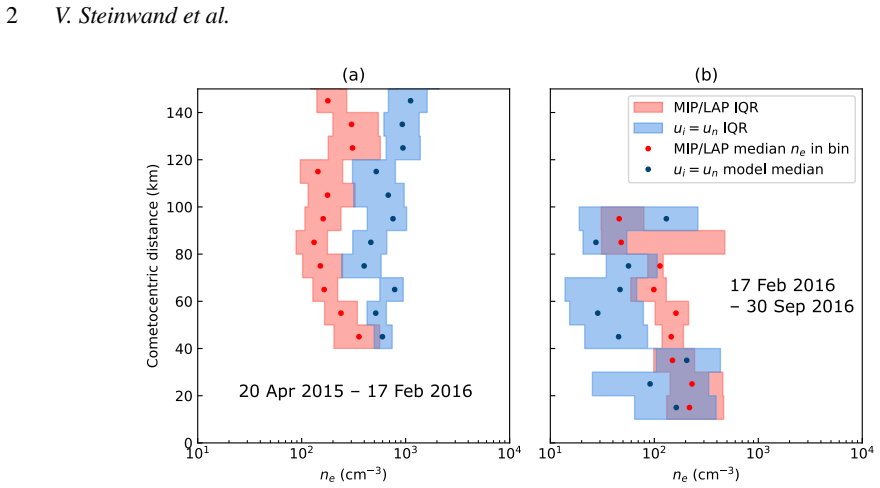
The cooling exobase aligns with Rosetta density data and explains when ions co-move with neutrals.
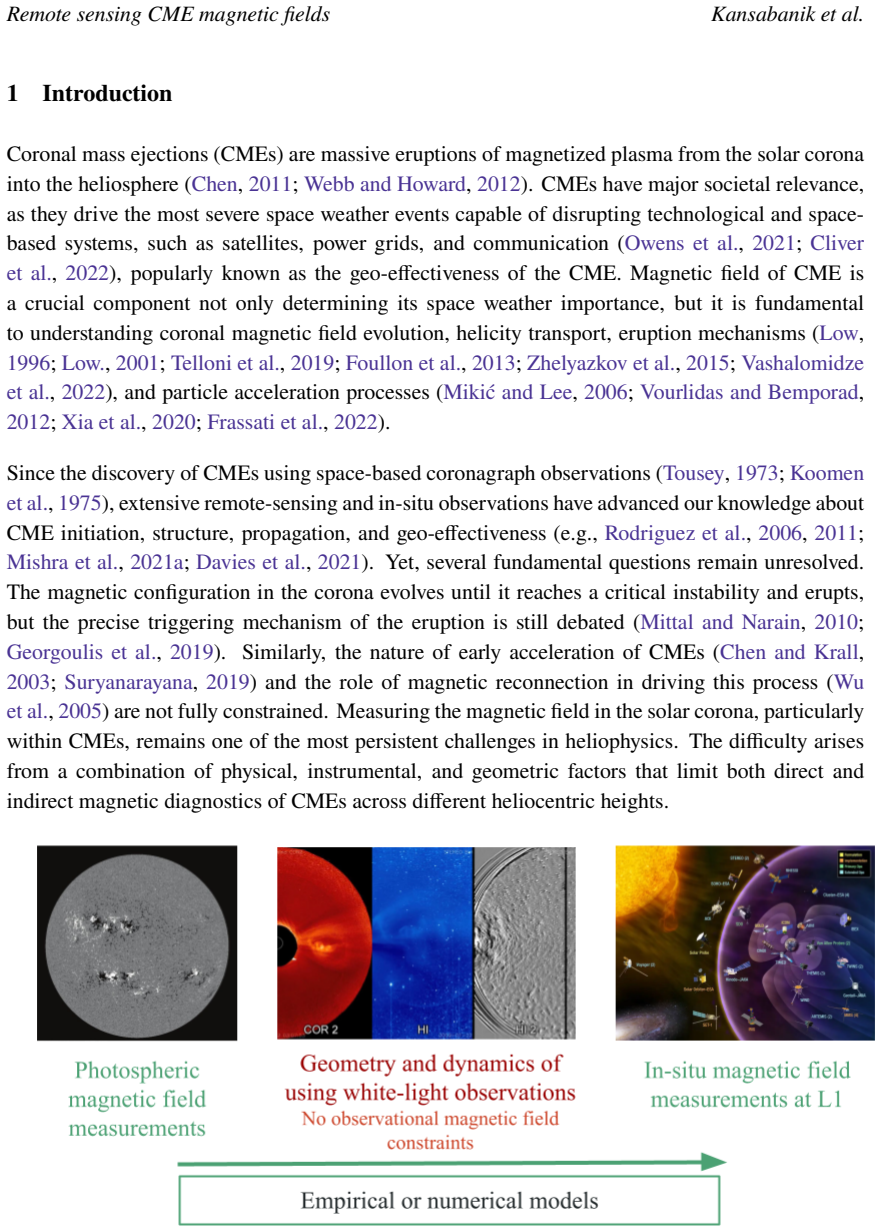
Precursor radio techniques work; higher sensitivity and bandwidth can close the forecasting gap.
· “Role of SKA in Advancing Remote Measurements of Magnetic Fields of Solar Coronal Mass Ejections”
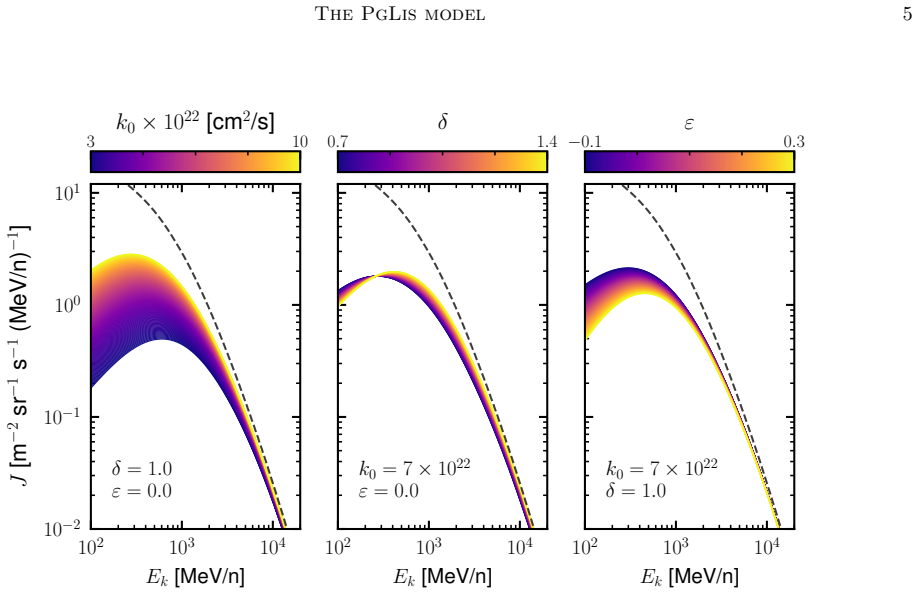
A one-dimensional transport equation with solar-proxy parameters matches existing data and projects intensities for future mission planning.
· “A new model for long-term forecasting of Galactic cosmic rays”
Internal ranging leaves a six-dimensional rigid-body gap that only an Earth baseline can close.

t-STEP derives irregularity indicators from high-cadence predictions and beats LSTM baselines on storm data from one station.
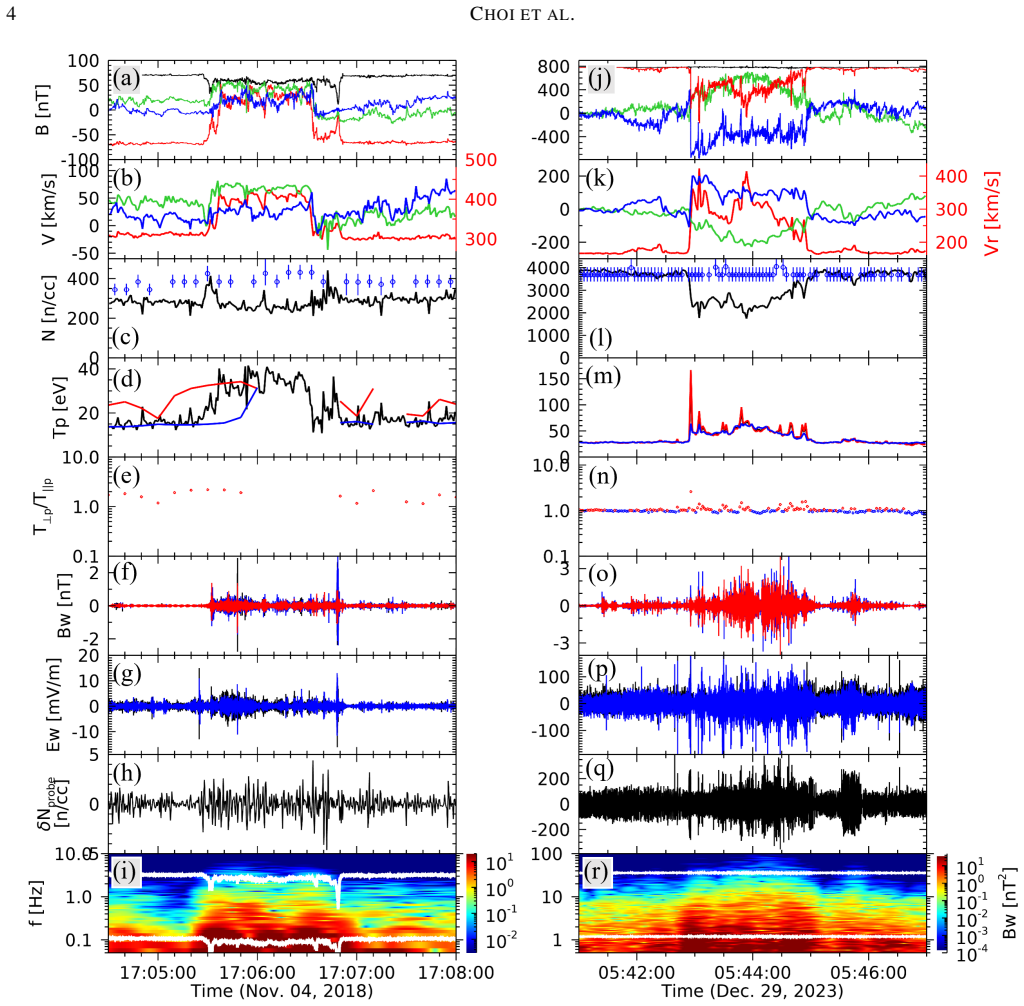
Matched-angle analysis shows intrinsic amplification linked to higher proton temperatures in the near-Sun wind.
· “Wave Activity at MHD-ion Scales Associated with Switchbacks”
Time histories from a few virtual probes yield reconstructed 2D velocity and density maps in meridional and equatorial planes.
Structure factor of threshold exceedances matches in-situ observations in co-moving frames
· “Excursion-set structure factor of the auroral electric field”
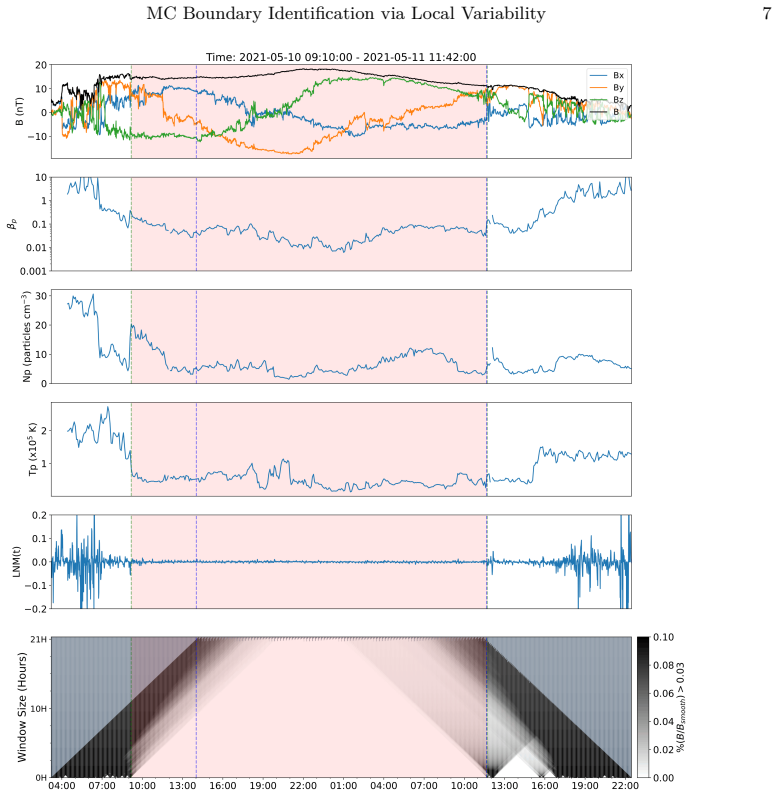
The parameter tracks field deviations from a five-minute median and is supported by spectral differences inside versus outside seventy-six c
· “Magnetic Cloud Boundary Identification Using a Local-Normalized Magnetic Field Parameter”
Densities ran 2-3 times above forecast, exhausting even conservative drag budgets for thousands of mission years
· “The Billion Dollar Surprise: How Solar Cycle 25 Cut Satellite Lifetimes in LEO”
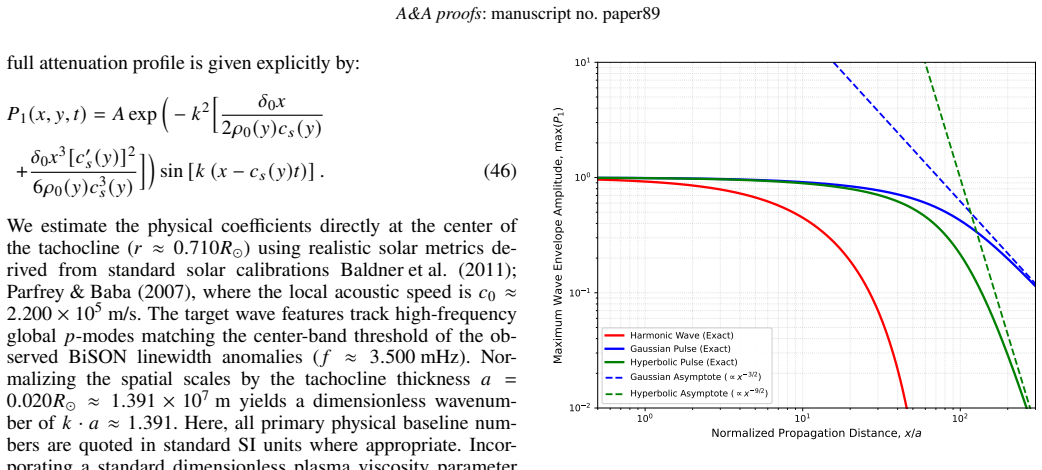
Phase-mixing supplies the bulk dissipation missing from classical models of low-ℓ p-modes above 3000 μHz.
· “Phase-mixing of acoustic waves with applications to solar tachocline”
Bubble front advances at Alfvén speed from inner field and outer density, providing a basic route to lab plasma flows and particle accelerat
· “Plasma Flow Generation and Particle Acceleration from Expanding Magnetic Bubbles”

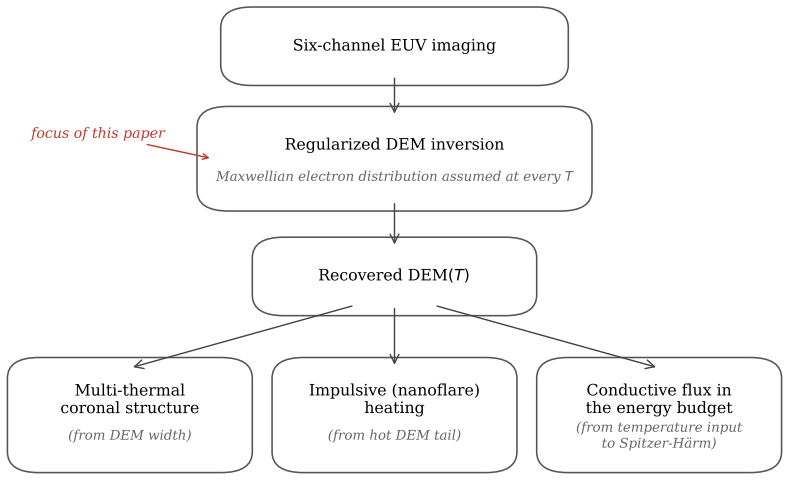
Standard DEM inversions cannot tell them from multi-thermal Maxwellian plasma, so two heating pillars lose their footing
· “The Quiet-Sun DEM Under Kappa: Diagnostic Degeneracy and the Failure of the Conductive Closure”
Time-resolved measurements reveal a temperature-linked change missed by pre- and post-test methods.
· “Emissivity of oxidizing titanium in simulated atmospheric entry flows”

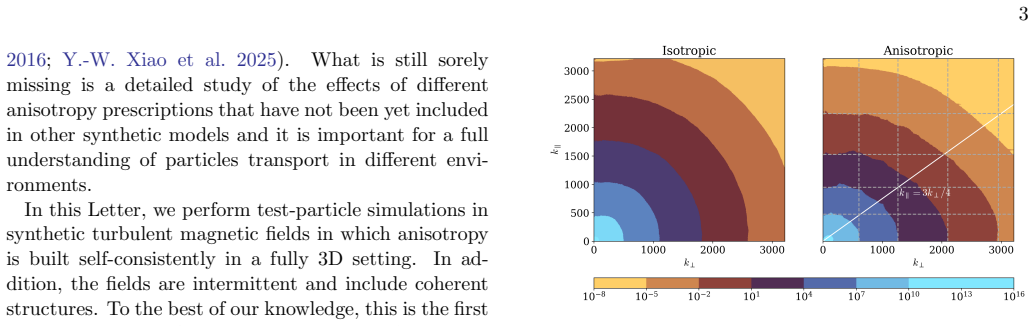
Simulations reveal a mechanism unlike pitch-angle diffusion when no background field organizes the fluctuations.
· “High-energy Particle Transport in Three-dimensional Anisotropic Turbulent Magnetic Fields”
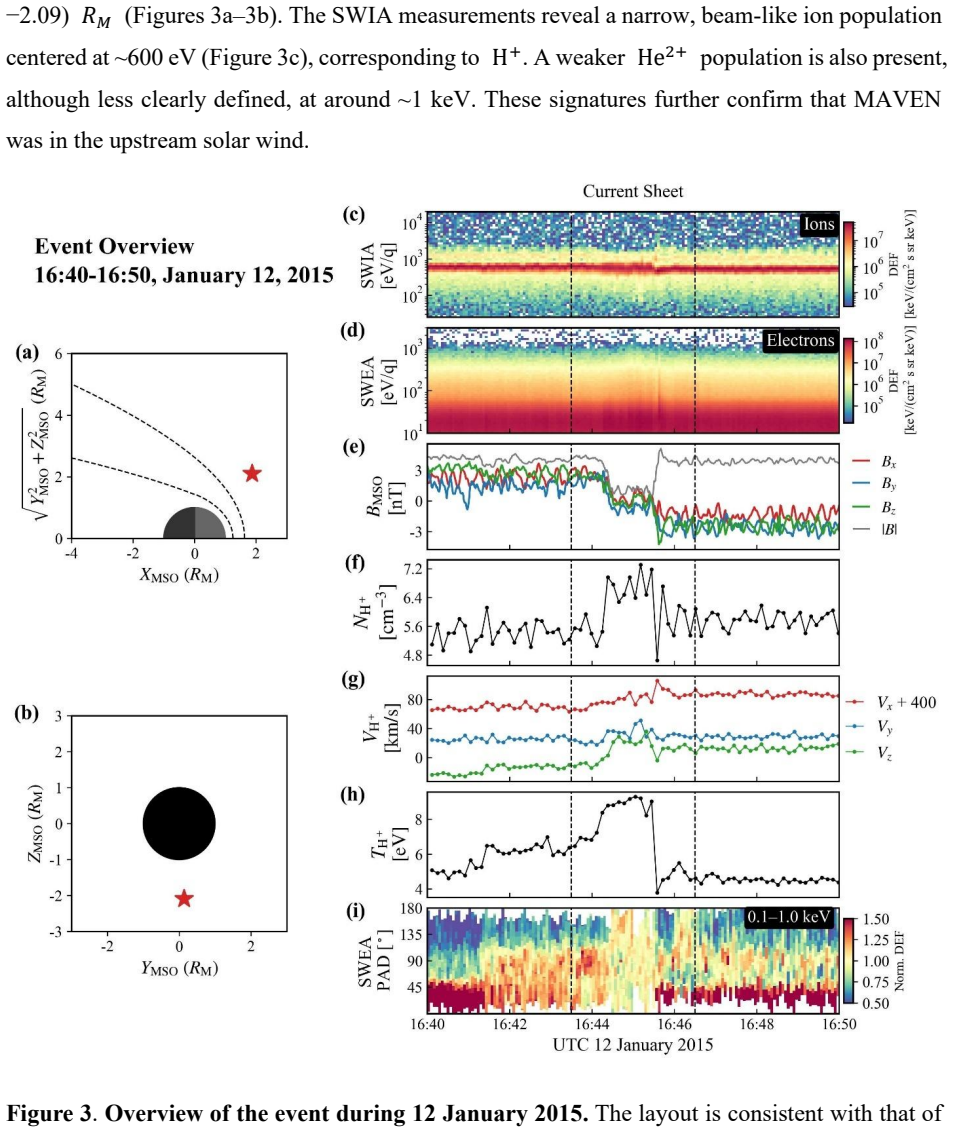
Bifurcated fields and Alfvenic outflows appear in solar wind current sheets and exceed their usual thickness.
· “Direct Observations of Magnetic Reconnection in the Solar Wind Current Sheets near Mars”
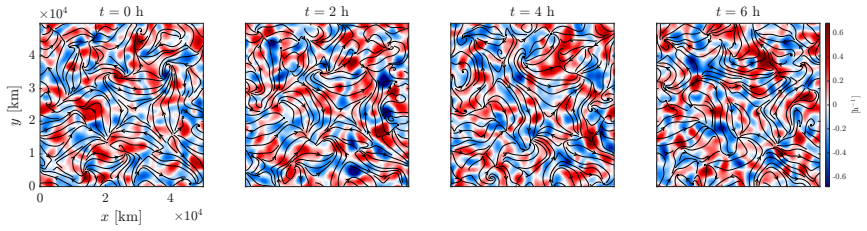
Combining two diagnostics shows coherent regions can form by contraction rather than persistent vortices in the photosphere.
· “Quasi-material finite-time rotationally coherent sets in photospheric supergranulation”
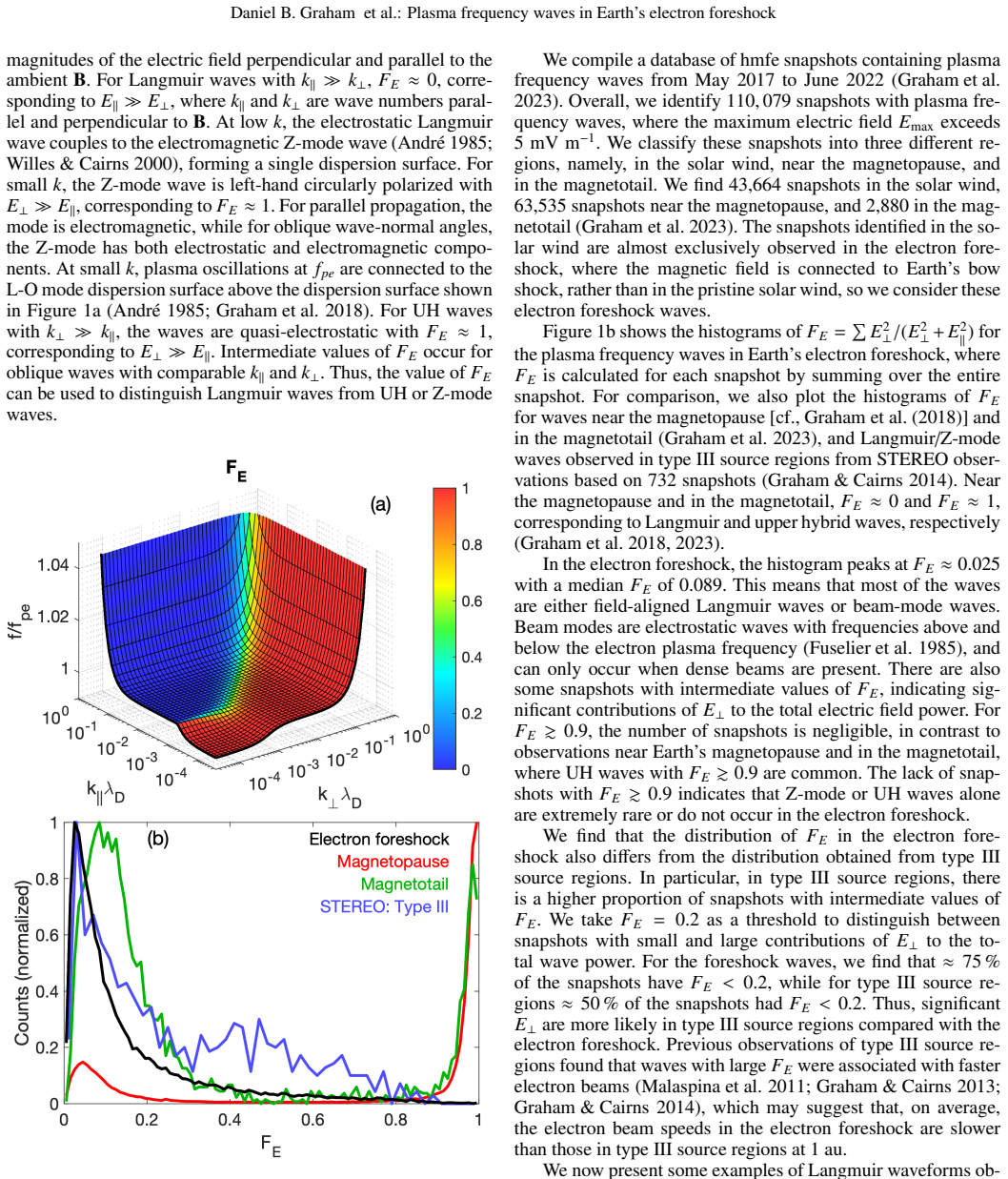
MMS data shows small-scale perturbations shape wave growth and radio emission alongside nonlinear decay.
Proton density and magnetic field magnitude lead attributions while transverse velocity contributes 13-17 percent on 102 held-out events.

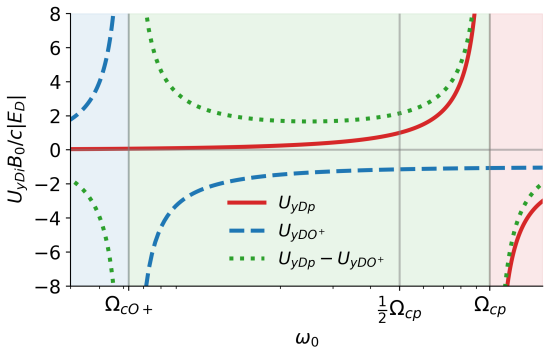
Simulations show polarization drifts excite lower-hybrid modes that anisotropically heat protons, oxygen ions and electrons even when EMIC w
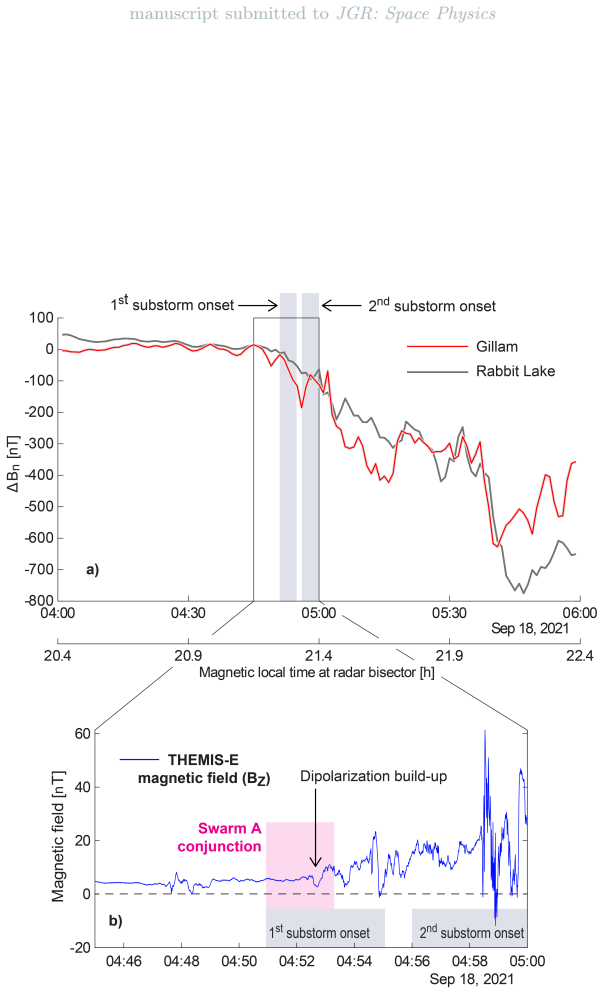
Radar and satellite data link extreme auroral transients to a shear wave launched during magnetotail dipolarization.
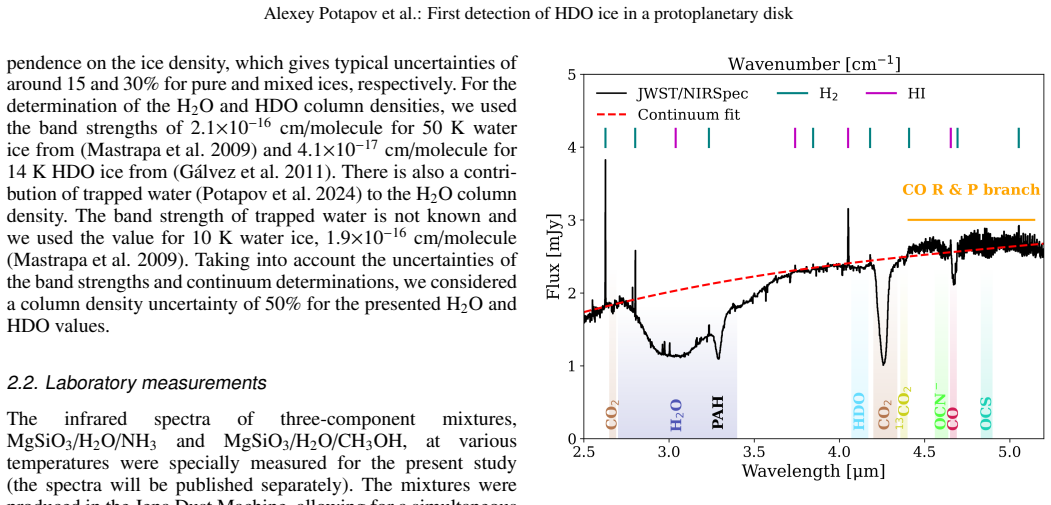
JWST data on 132-1832 shows HDO/H2O upper limit higher than in comets or chondrites, pointing to disk ice processing.
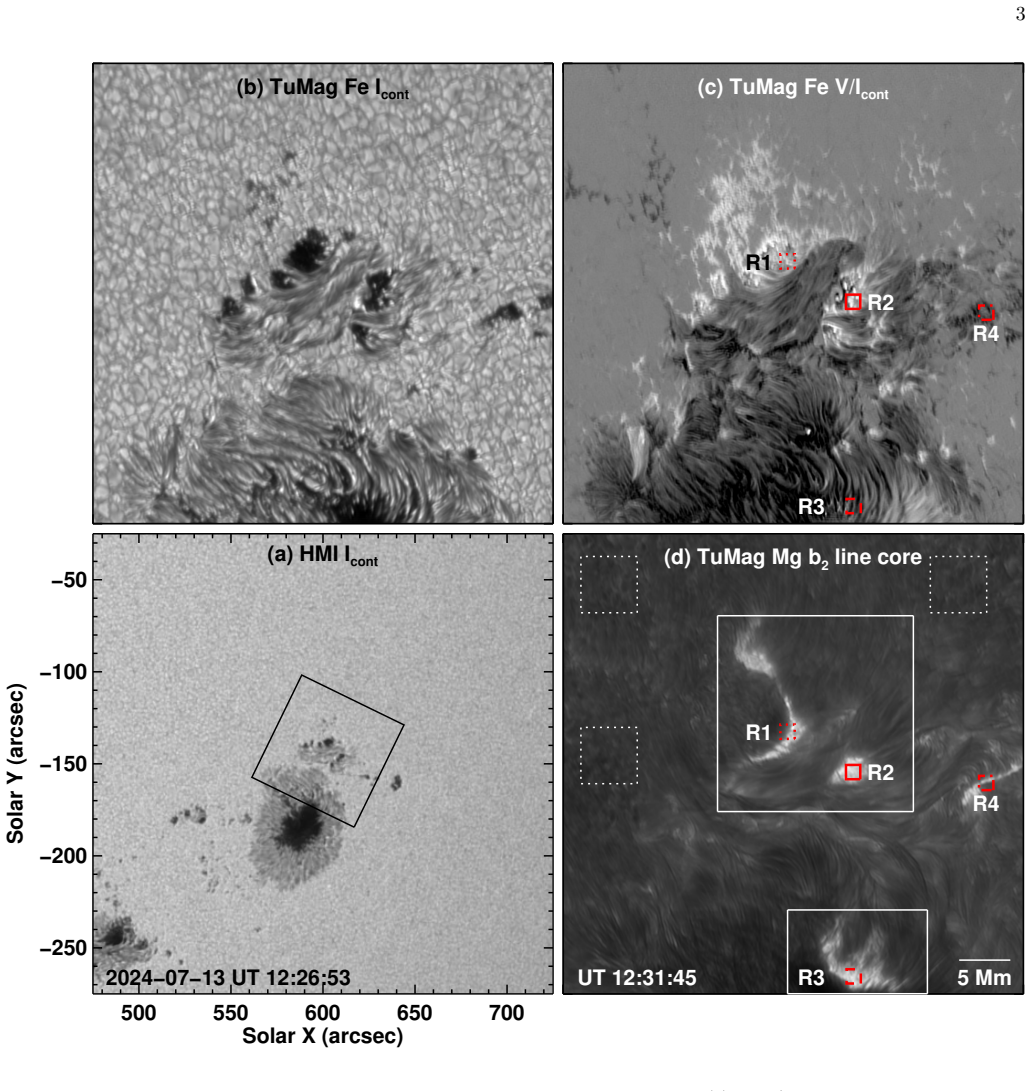
Spectral observations link stable non-flaring chromospheric structures to the spatial pattern of energy deposition in flare ribbons.
· “Solar flare ribbons structured by uncombed chromospheric loops”
Matches parent model at 2.6 nT error, enabling rapid surveys of plasma conditions for ocean detection.
· “LEAP: A Rapid Neural Surrogate of Multi-Fluid MHD at Europa”
Standard ACF methods distort long lags, but an ergodicity-based approach gives consistent correlation and integral timescales regardless of
· “The integral and correlation scales of solar wind turbulence”
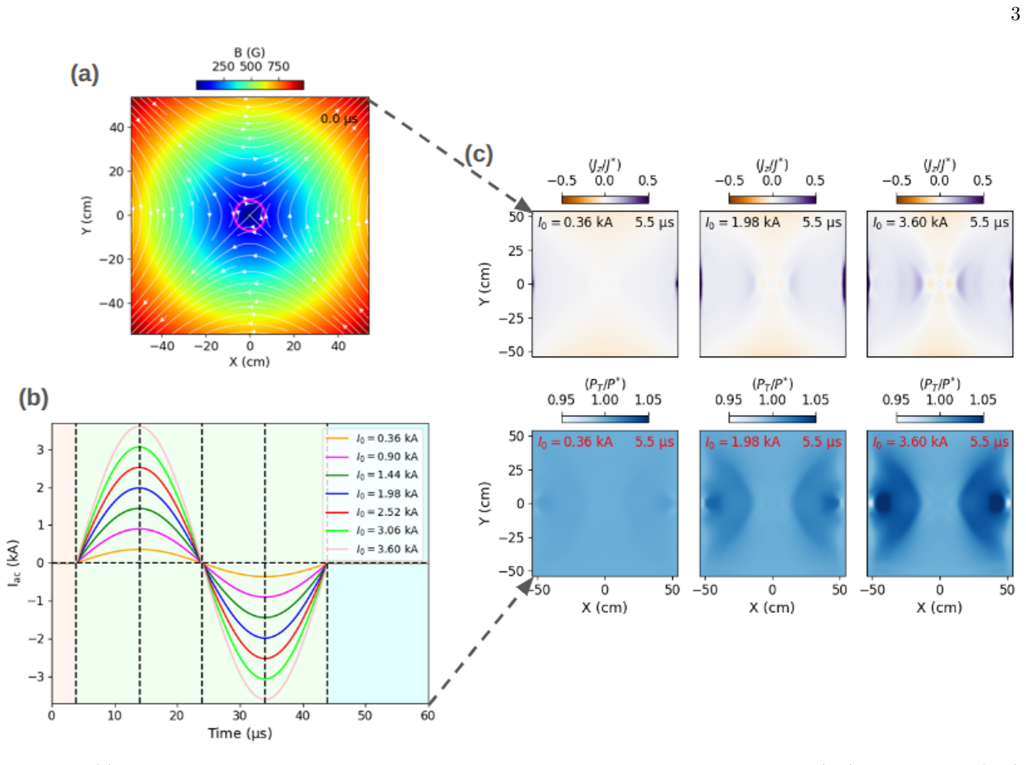
Simulations show y-to-x reorientation, Hall flows lagging pressure peaks, and stronger effects at higher amplitudes
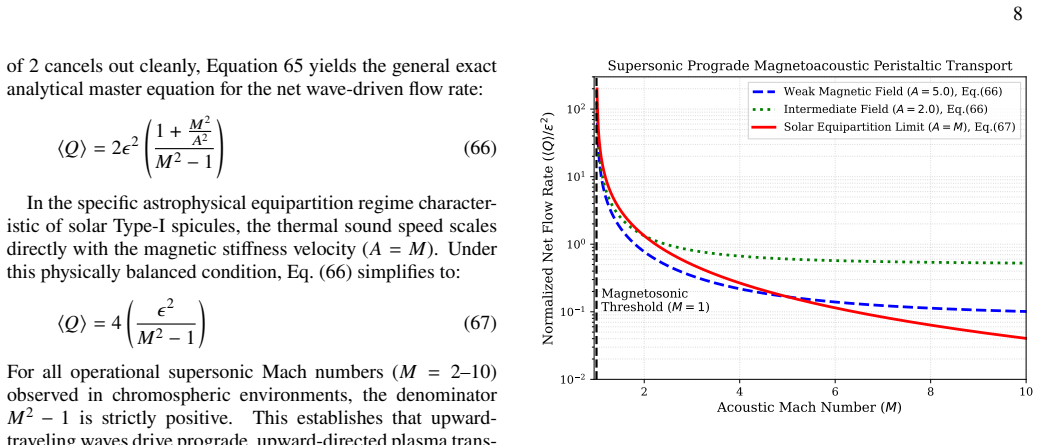
Peristaltic mechanism in compressible MHD tubes yields collimated upward flow under equipartition conditions
· “Peristaltic Flow in Compressible, Ideal Magnetohydrodynamics: A Mechanism For Solar Spicules”
Focused transport equation shows lower values because particles stream in over the poles where scattering is weaker.
· “Are the Parker and Focused Transport Equations Equivalent for Galactic Cosmic Ray Modulation?”

Authors argue broad term blurs distinct phenomena and introduce SCIR for rare strong-field events that drive superstorms.
Hybrid simulations of young solar wind show relaxation through right-handed waves imprints the observed velocity features.
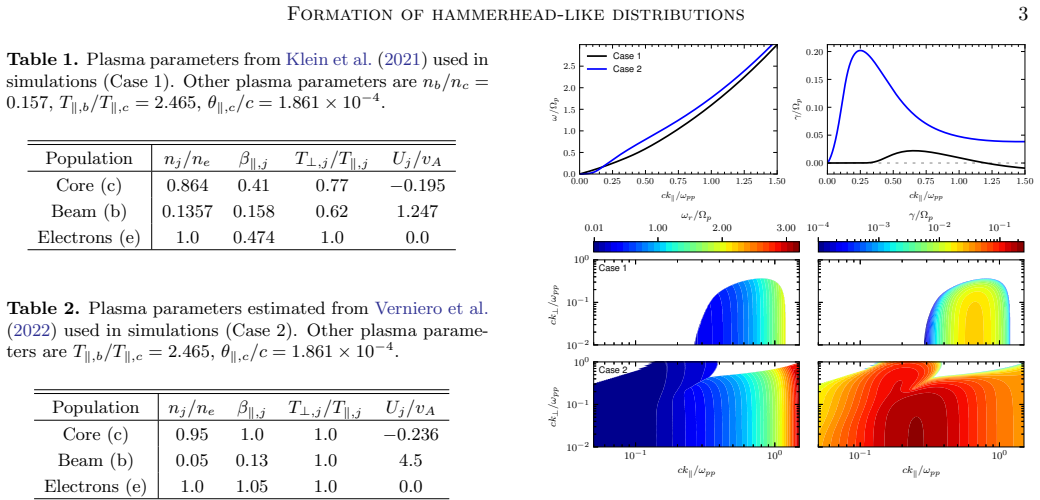
Simulations show disordered MO signatures form only when axial field escapes tight magnetic confinement by 1 AU

Simulations identify distinguishable bursts that could serve as earthquake precursors for satellite detection.

The pattern reveals nonthermal broadening at footpoints is mainly along magnetic fields rather than random or across them.
· “Nonthermal line broadening at solar flare footpoints is primarily field-aligned”
Multi-level and multi-term rates for 10830 Å and D3 lines supply input for statistical equilibrium equations
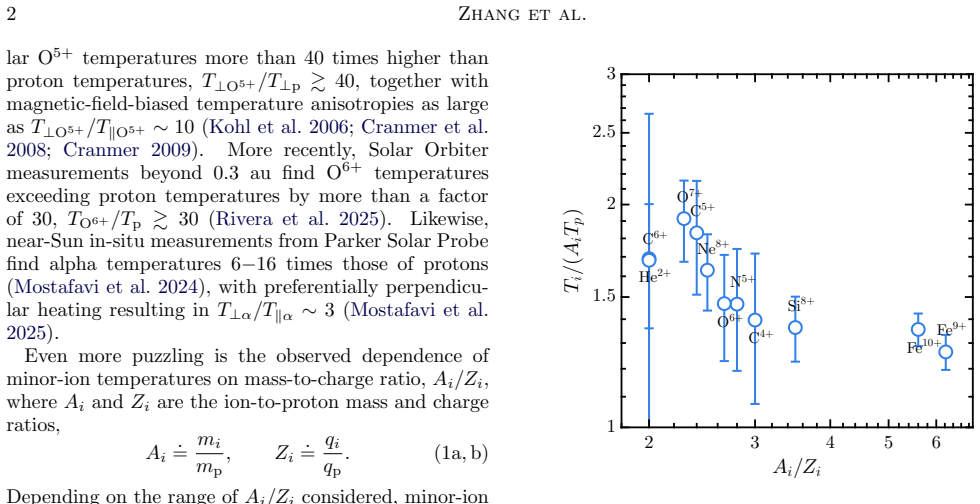
Flat spectra from parallel proton-cyclotron waves cause heating to decrease with rising mass-to-charge ratio
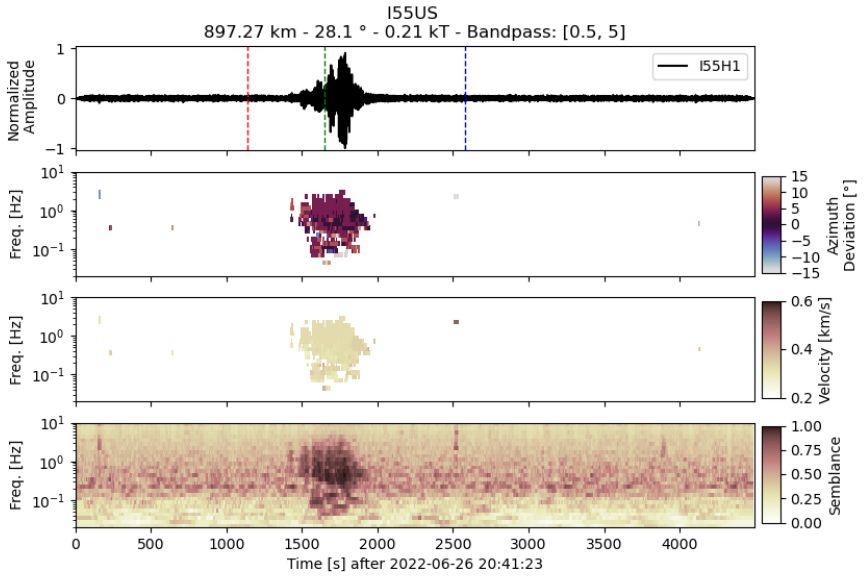
Steeper trajectories with lower energy deposition reach global arrays more reliably than shallow high-altitude ones across the 623-event sam
· “The Role of Source Geometry and Atmospheric Propagation in Global Bolide Infrasound Detectability”
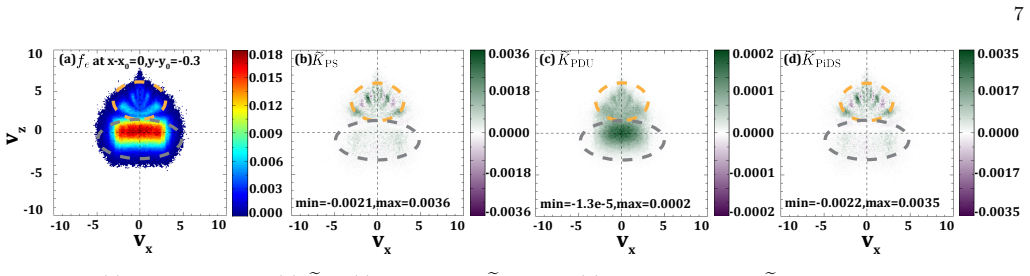
Velocity-space diagnostics applied to PIC simulations isolate distinct electron contributions near the diffusion region.
In the 2023 event, Solar Orbiter linked to stronger shock region while nearby Earth and STA connected to weaker flanks due to footpoint shif

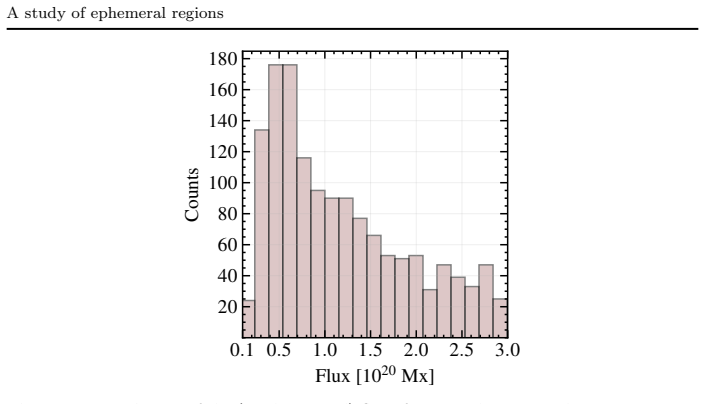
Short-lived ones show turbulent tilts; longer-lived ones hint at Coriolis effect, adding to the Sun's flux budget.
Candidates treated as structured departures from natural manifolds yield measurable thresholds like D≈5.1 and f_crit≈0.13 in simulations.
Reachable-set overlaps reveal which periodic orbit families connect easily and which stay isolated under limited budgets.
Local kernels lifted by single- and multi-reflection operators preserve reciprocity and normalization at every larger scale.
· “An extended scattering kernel formalism for multi-scale gas-surface dynamics”
New method recovers 11240 m/s motion implying 560 mV/m electric fields as five-second clusters on closed field lines
· “Extreme, transient bursts of energy in the auroral ionosphere. I. Predictive radar tracking”
TRACERS data show storm-time changes in cusp width and latitude follow solar-wind conditions, not intrinsic storm-phase effects.
· “Storm-Time Cusp Precipitation: Insights from TRACERS Multi-Crossing Observations”

MMS statistical study finds bidirectional energy exchange in magnetotail structures with only small net transfer to particles.
Multi-station data show a 45 g object produced an acoustic source far larger than itself, requiring density boost from volatiles in thin air
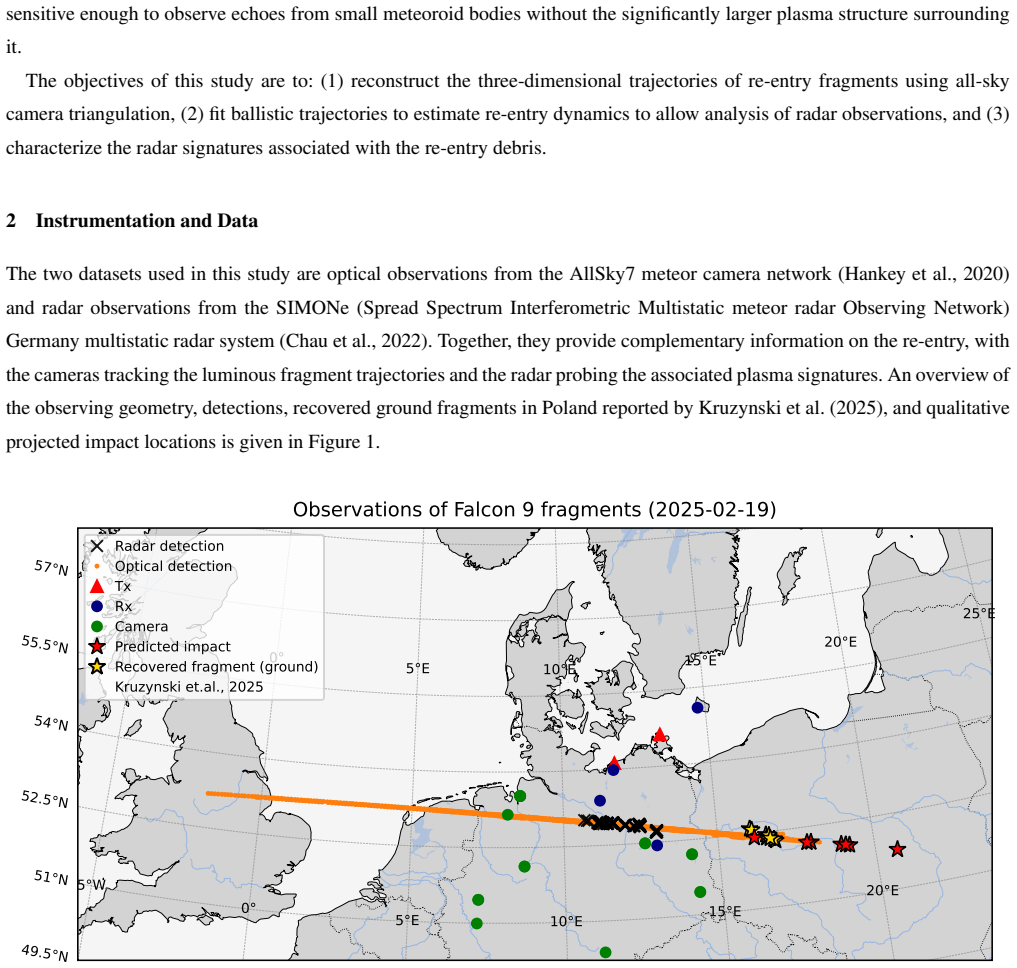
Plasma echoes match optical fragment paths, indicating the same systems could track smaller satellites like Starlink on re-entry.
· “Optical and Radar Observations of the February 2025 Falcon 9 Upper-Stage Re-entry”
Phase-slope analysis of intensity signals extracts sub-frame timing from ordinary video, validated on smartphone recordings of a pulsed cali
· “Estimating sub-frame time differences in camera image sequences”

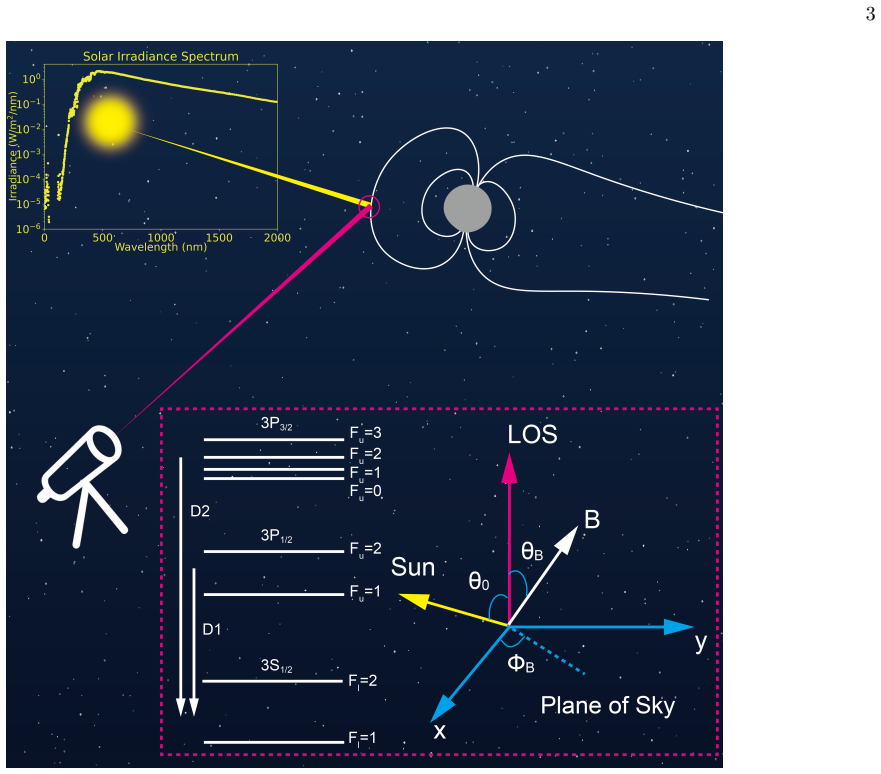
Ground-state alignment and Hanle effect polarization allow remote mapping of weak heliospheric magnetic fields.
· “A Method for Imaging Interplanetary Magnetic Field Strength and Orientation”
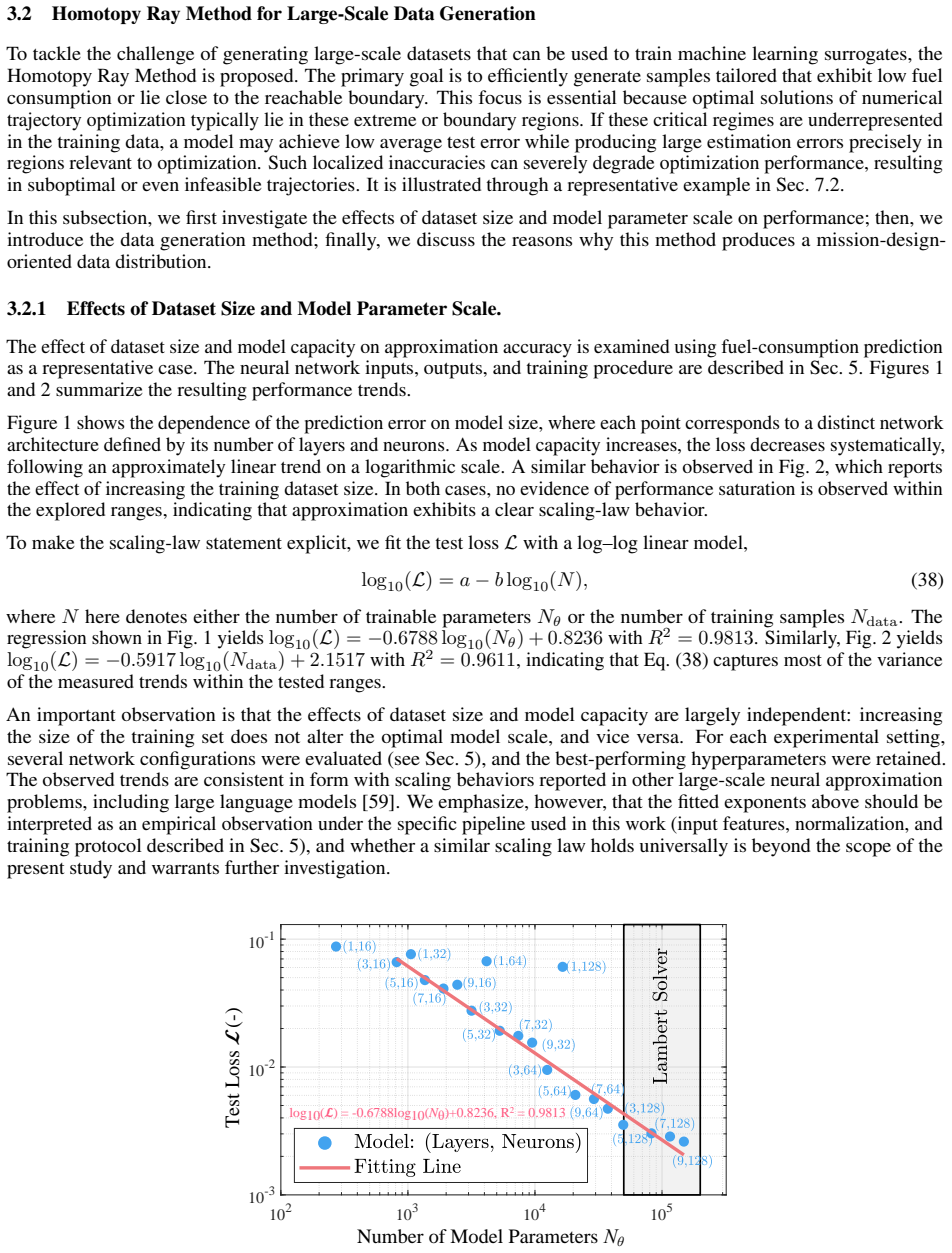
Scaled data plus a self-similar transform lets one model generalize across orbit sizes, tilts, and central bodies.
· “Pretrained Approximators for Low-Thrust Trajectory Cost and Reachability”
Speed-matched analysis of 1600 events shows intrinsic differences in magnetic strength and density by solar cycle phase.
· “Evolution of Coronal Mass Ejection Properties through Superposed Epoch Analysis from 0.2 to 2.2 au”
PICWs driven unstable near the sun increase their normalized wavenumber while propagating outward and damp when exceeding the turbulent thre
· “Cyclotron breaking: a mechanism for parallel ion cyclotron waves to heat the fast solar wind”

One scalar threshold per target replaces grid-based reachable-set construction
· “Reachability for Low-Thrust Trajectories via Maximum Initial Mass”

10R Space Framework and three environments separate in-orbit, terrestrial, and celestial operations to close resource loops.

Imaging of 613 pairs at 30-50 MHz finds displaced sources with reduced drift rates matching simulations of anisotropic plasma scattering.
· “Imaging spectroscopy reveals spike-like repeating radio burst pairs in the solar corona”
Model finds 1 percent of fleet at critical risk with daily economic impacts up to $1.3 billion

Separating occurrence from cloud and moonlight effects improves single-stage baseline by 0.087 on test and independent sites.
· “Aurora Hunter: A Two-Stage Framework for Probabilistic Visibility Forecasting”

Simulations show pre-existing compressive turbulence shortens the foreshock and raises both the number and maximum energy of accelerated non

In weakly collisional plasmas the convergence of electron-temperature methods reflects a shared ionization limit rather than independent sam
· “Multi-diagnostic convergence: a single measurement in weakly collisional plasmas”

Benchmark against known non-ablating capsule shows common meteor approximation overestimates blast radius by more than factor of three.
· “Benchmarking Cylindrical Blast Wave Theory Against the OSIRIS-REx Sample Return Capsule Reentry”
Decelerated expansion before inflation raises the Hubble horizon and imposes a cutoff that reduces power at the largest scales.
· “A novel pre-inflationary model in view of the lack of angular correlation of CMB”
Across 24,000+ pairs, the standard propagator wins 65-75 percent of comparisons even at seven-day horizons.

Reported signals match recurring orbital illumination patterns and solar wind changes instead of the gamma-ray burst arrival.
Simulations across topologies show only 10 percent variation, outperforming other energy and helicity metrics

Amplitude-weighted diagnostics show smaller angles because high-amplitude misaligned states deplete faster, leaving typical angles nearly sc
