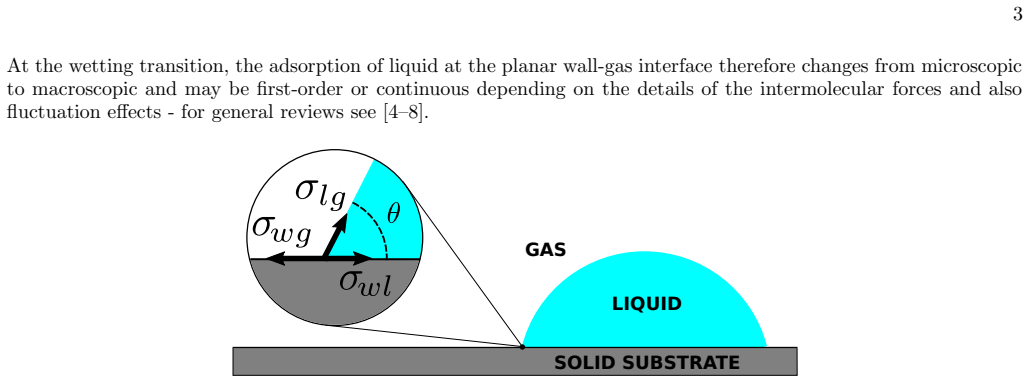
We show how a broad class of two-component square-gradient models of wetting may be solved exactly for the surface tensions and density profile paths, and clarify how the presence or absence of critical point wetting, in binary and ternary mixtures, is related to universality and symmetry principles at critical end points. We begin by solving a model of fluid interfaces, first introduced by Koga and Widom, in ternary mixtures showing three phase coexistence. Numerical studies had revealed interesting wetting transitions, as well as curious geometrical properties of the profile paths in the density plane, and led these authors to conjecture expressions for the surface tensions. These conjectures were extended by Koga and Indekeu and predicted that partial wetting may persist up to the line of critical end points, i.e. critical point wetting was absent. Here, we obtain the exact density profiles and surface tensions for the Koga-Widom-Indekeu (KWI) model using complex analysis and drawing on the theory of algebraic curves. The exact solution determines the location and order of wetting transitions in the surface phase diagram, confirming that critical point wetting is absent. The model also displays the remarkable property that microscopic density profiles are mapped, by a conformal transform, onto the shape of a macroscopic drop near the contact line whose tensions satisfy the Neumann triangle. Two related models, which illustrate the role of the component isotropy, are also discussed. These models suggest that a universality principle governs wetting in fluid mixtures, resolving contradicting results from earlier studies: Critical point wetting is present if the order-parameter components of the mixture describe Ising-like criticality, but is absent if there is a local XY symmetry. Implications for wetting transitions in more microscopic models and in experiments are discussed.
Geometric analogs of Bloch oscillations studied so far have relied on Berry curvature. We show that a weakly inhomogeneous electric field adds a distinct quantum-metric term to semiclassical wavepacket dynamics, generating an oscillatory real-space contribution even when the Berry curvature vanishes. The associated transport response comprises an intrinsic and a scattering-time-dependent part. In the regime studied, the latter can dominate and approach finite saturation at high field when the relative field inhomogeneity is held fixed. A tilted Dirac model illustrates the mechanism. Realistic platforms will likely require synthetically engineered superlattices, with a finite quantum metric and an adequate band gap.
Nanoscale maps reveal core-concentrated resistance over 5 nm scales rather than uniform spread in a SrTiO3 grain boundary.
abstractclick to expand
Dislocations in crystalline materials are widely exploited to tailor the thermal conductivity of semiconductors and thermoelectrics, yet a critical gap persists: direct measurement of local thermal resistance at individual buried dislocations, along with its spatial extent, remains elusive due to the limitations of conventional thermal probes. Here, we use in situ scanning transmission electron microscopy-electron energy-loss spectroscopy to map nanoscale temperature distributions across a low-angle SrTiO3 grain boundary with periodic dislocation arrays. Our results reveal a temperature drop of 47 K across the dislocation array. The associated temperature-field distortions are concentrated near the dislocation cores, consistent with stronger local thermal resistance at these discrete sites rather than a uniformly distributed resistance along the array. We further identify a distinct two-scale heat transport characteristic near the dislocation array: core-dominated effects over approximately 4.8-6.2 nm and extended inter-core influences over approximately 10.3-14.3 nm. Atomic-scale structural and vibrational analyses further reveal core-associated atomic reconstruction and localized optical-phonon perturbations, providing a microscopic basis for the stronger local thermal resistance inferred near dislocation cores. These findings quantitatively resolve spatial heterogeneity of dislocation-mediated heat transport, uncover its atomic-scale mechanism, and provide a quantitative basis for defect engineering, guiding the design of high-performance thermoelectrics, semiconductors, high-temperature structural alloys, and other functional crystalline materials.
We introduce a systematic expansion tailored to systems with strong local interactions and capable of computing response functions, including finite DC transport, analytically. The expansion is controlled by a small parameter $s^2$ that measures the area of the momentum space region where kinematics of the theory is concentrated. In real space, this corresponds to single-particle or correlated hopping terms with amplitudes that decay over a length scale $1/s$ and scale in magnitude as $s^2$ in two dimensions. In the limit $s^2\ll 1$, long, self-avoiding tunneling paths dominate over paths revisiting the same site. This enables systematic controlled calculations of various physical quantities. We illustrate the method with three applications. (i) A Hubbard model with concentrated dispersion: we analytically obtain spectral broadening which scales as $s^2$ and identify a high-temperature bad metal with $T$-linear resistivity coexisting with parametrically long-lived quasiparticles, as well as an intermediate-temperature "thermal FL*" with a small hole pocket that coexists with thermally disordered fluctuating local moments, all within a single controlled framework. (ii) A correlated-hopping model with interesting electron-trion dynamics. (iii) A model of Chern bands with concentrated Berry curvature, motivated by twisted bilayer graphene, which realizes a Mott semimetal where we compute the broadening for the electron and trion spectral functions. At the end, we discuss how our approach paves the way to addressing various challenging questions in strongly correlated systems and outline its various generalizations.
Absence of local conserved quantities, or \textit{nonintegrability}, is often assumed when discussing various phenomena in quantum many-body systems, such as thermalization and transport. However, no concrete proof of this property is known in electron--phonon coupled systems, a typical setting for condensed matter physics. In this paper, we show that the one-dimensional Holstein model has no nontrivial local conserved quantities other than the Hamiltonian itself and the total fermion number operator. We further show that the absence of nontrivial local conserved quantities also holds for the more general Holstein--Hubbard model. Our result has accomplished an advance in nonintegrability proofs by expanding their scope to systems in which particles with different statistical properties are mixed.
Since the discovery of high-temperature superconductivity in nickelate superconductors, it is an open question how closely the superconducting state resembles that of cuprate superconductors. One salient feature of the phase diagram of the high-temperature cuprate superconductors is stripe order. Despite their prevalence, real-space imaging has been limited to the charge sector. Here we use spin-polarised scanning tunnelling microscopy to visualize the local magnetic and charge distribution emerging due to a stripe order in the trilayer nickelate La$_4$Ni$_3$O$_{10}$. The stripe order exhibits a four unit cell periodicity, closely resembling that seen in cuprates, and opens a near-complete $\sim66\mathrm{meV}$ gap at the Fermi level. Crucially, discrete phase slips can be triggered by tunneling electrons above a $\sim 20\mathrm{meV}$ threshold, allowing imaging of stripe dynamics at the atomic scale. These results highlight the importance of correlation physics driving stripe-like orders in lanthanum nickelates with striking similarities to the cuprates.
While modern Large Language Models (LLMs) and agentic artificial intelligence (AI) have demonstrated transformative capabilities in digital domains, the realization of embodied AI capable of real-world scientific discovery remains a difficult frontier. The advancements are hindered by the inherent complexity of integrating high-level reasoning, multimodal information processing and real-time physical execution. Here we introduce Qumus, the first AI quantum materials experimentalist. Physically embodied within a robotic mini-laboratory, Qumus is an intelligent, multimodal, and multi-agent system designed for the creation and nano-processing of atomically thin two-dimensional (2D) materials and stacked van der Waals (vdW) structures. Qumus autonomously navigates the full scientific cycle, from hypothesis generation and protocol planning to multi-step experimental execution, result analysis and reporting, acting as an experimentalist. Markedly, the system has achieved, for the first time, the AI-creation of graphene, as well as the first AI-fabrication of complex nanodevices including atomically thin field-effect transistors via vdW stacking. Qumus excels at these tasks by demonstrating autonomous error correction and closed-loop experimentation. Our results establish a generalizable framework for self-improving embodied AI systems that learn directly from the quantum world, opening a pathway toward accelerated discovery in quantum materials, electronics and beyond.
Anderson localization is fundamentally controlled by dimensionality, yet the nature of the Anderson transition in continuously tunable noninteger dimensions remains largely unexplored. Here, we introduce a family of three-dimensional fractal lattices with continuously tunable spectral dimension $d_s\in[2,3]$, providing a controlled platform for studying localization physics beyond integer dimensions and across the lower critical dimension $d_s=2$. Using large-scale finite-size scaling analysis, we systematically investigate the Anderson transition and identify mobility edges throughout the fractal family. The critical disorder strength evolves continuously from $0$ to $16.6$ as the spectral dimension increases from $2$ to $3$. We show that the spectral dimension predominantly governs the universality class of the transition, while the precise critical point is additionally influenced by microscopic geometric details of the underlying fractal lattice. The critical exponent exhibits an approximate inverse dependence on $d_s$, providing quantitative insight into scaling theory in noninteger dimensions. Our results establish tunable fractal lattices as a versatile framework for exploring localization and quantum critical phenomena beyond conventional integer-dimensional systems.
The finite-temperature spin response of the uniform electron gas (UEG) is a fundamental reference for spin-polarized and magnetized electron liquids, including warm dense matter (WDM), yet it remains far less constrained than charge response. Using variational diagrammatic Monte Carlo, we compute the static spin exchange--correlation (XC) kernel $K_{xc}(q;T)$ of the unpolarized UEG at metallic densities across the quantum-degenerate, warm-dense, and classical regimes. The kernel connects smoothly to zero-temperature spin-response parametrizations at low temperature, while heating suppresses the Fermi-surface-scale spin-correlation structure and weakens the XC-driven Stoner enhancement. Its long-wavelength limit provides a direct response test of the spin stiffness implied by thermal local-spin-density-approximation (LSDA) parametrizations, showing low-temperature consistency while exposing a resolved warm-dense residual in current LSDA parametrizations. In the classical regime, the spin XC kernel becomes nearly local on the Fermi-momentum scale, in sharp contrast to the corresponding charge XC kernel. These results provide a first-principles basis for finite-temperature spin-response theory and magnetized WDM modeling.
Pattern formation in soft, active, and biological matter is described by two ostensibly distinct continuum frameworks: phase-field theories driven by chemical-potential gradients, and mass-conserving reaction-diffusion (McRD) dynamics governed by local interconversion kinetics. Here we establish a constructive, equation-level duality valid in the nonlinear, far-from-equilibrium regime. McRD is the broader class: every chemical-potential theory with conserved order parameters embeds as the slow dynamics on an attracting manifold of an McRD system; conversely, every McRD with attractive nullcline admits an exact chemical-potential representation in the fast-interconversion limit, with the constitutive relation set by the nullcline. The construction resolves the generic non-invertibility of the chemical-potential as a function of density in phase-separating regimes by embedding it as an attracting manifold in an extended two-field description with conserved total density. Gradient stiffness maps faithfully onto an intrinsic reaction-diffusion length set by the auxiliary field, yielding a diagonal-diffusion normal form whose interface profile matches the original Cahn-Hilliard model by construction. The duality yields an explicit dictionary for phase coexistence: the Maxwell equal-area construction is exactly equivalent to the reactive turnover-balance condition. It extends to weakly nonconservative dynamics, unifying reaction-arrested coarsening and mesa splitting, and to multicomponent theories with broken Maxwell symmetry. As a concrete payoff, the dual sharp-interface picture yields a closed-form velocity law for traveling waves in nonreciprocal Cahn-Hilliard dynamics, in quantitative agreement with simulations.
Half-filled state matches the quantized resistance of the single-particle topological phase, indicating helical channels survive strong Mott
abstractclick to expand
Quantum spin Hall (QSH) insulators and Mott insulators are conventionally regarded as distinct insulating phases, arising from band topology and strong Coulomb interactions, respectively. Here, we report the observation of QSH edge transport in a magnetic-field-stabilized Mott insulating state at half filling of the second moire band in a 2.29 degree twisted WSe2 device. This state exhibits a resistance plateau identical to that of the single-particle QSH state at full filling of the first moire valence band, indicating the same number of helical edge channels. Electrical transport measurements reveal nearly quantized resistance that is insensitive to vertical electric field, out-of-plane magnetic field, and temperature below 5 K. Pronounced nonlocal transport and strong negative in-plane magnetoconductance further support helical edge conduction, establishing robust edge transport in the strongly correlated regime. Temperature-dependent Hall measurements reveal a characteristic temperature scale of approximately 10 K, corresponding to an energy scale of about 1 meV. Our results demonstrate that spin-conserved QSH edge states can persist in a half filled, strongly correlated insulating phase and under external magnetic field, opening a route toward interaction-resilient topological transport in moire quantum materials.
Half-filled second moiré band displays the same helical edge conduction as the single-particle state, stabilized by magnetic field.
abstractclick to expand
Quantum spin Hall (QSH) insulators and Mott insulators are conventionally regarded as distinct insulating phases, arising from band topology and strong Coulomb interactions, respectively. Here, we report the observation of QSH edge transport in a magnetic-field-stabilized Mott insulating state at half filling of the second moire band in a 2.29 degree twisted WSe2 device. This state exhibits a resistance plateau identical to that of the single-particle QSH state at full filling of the first moire valence band, indicating the same number of helical edge channels. Electrical transport measurements reveal nearly quantized resistance that is insensitive to vertical electric field, out-of-plane magnetic field, and temperature below 5 K. Pronounced nonlocal transport and strong negative in-plane magnetoconductance further support helical edge conduction, establishing robust edge transport in the strongly correlated regime. Temperature-dependent Hall measurements reveal a characteristic temperature scale of approximately 10 K, corresponding to an energy scale of about 1 meV. Our results demonstrate that spin-conserved QSH edge states can persist in a half filled, strongly correlated insulating phase and under external magnetic field, opening a route toward interaction-resilient topological transport in moire quantum materials.
Chiral magnons, the quanta of handed spin waves, transport spin angular momentum without energy loss due to Joule heating. The recently discovered altermagnets were proposed to host chiral magnons arising from a non-relativistic exchange mechanism, similar to that in ferromagnets but without net magnetization, offering a stray-field-free platform for efficient magnon spin-current manipulation. In this work, we directly observed chiral magnons in the altermagnetic prototype MnTe using polarized inelastic neutron scattering. Furthermore, the magnon chirality was found to be reversibly switched by magnetic-field control, establishing a robust foundation for functional altermagnetic magnonics.
Crack initiation and propagation are fundamental problems in materials science, often leading to catastrophic failure. While fracture in elastic solids occurs instantaneously above a critical load, viscoelastic materials may sustain high loads for a finite time before cracks start to propagate. This phenomenon, known as delayed fracture, has been widely observed experimentally but is still only partially understood theoretically. In this study, we present a rigorous framework based on the Lagrange--d'Alembert principle of virtual work (PVW) to predict both the viscoelastic delay time and the subsequent crack evolution under arbitrary loading histories. We derive how the delay time depends on the applied remote load and validate the theory through quantitative comparison with experiments, using directly measured delay times together with DMA-based viscoelastic characterization of the material. Very good agreement is obtained over a broad range of loading and delay times. Our results also show that crack propagation starts at finite speed and that load-dependent steady-state conditions are soon established. Finite element analyses further support the proposed framework and clarify the role of finite-ranged adhesion forces at fixed adhesion energy, showing that shorter interaction ranges yield results in quantitative agreement with theory. We also present, for the first time, a rigorous J-integral formulation valid for linear viscoelastic solids under arbitrary, time-varying loading histories. The result restores path independence and yields a generalized Griffith criterion that naturally predicts delayed fracture initiation in non-conservative materials. Remarkably, fracture initiation can be described without specifying the detailed stress distribution within the process zone, as long as it remains small relative to the crack length.
The self-duality of the transverse-field Ising model is an archetype for dualities that, alongside symmetry and topology, are used as an organizing principle throughout modern physics. This duality, however, is not exact. The original and dual models have different symmetries and numbers of ground states, and the duality is implemented by a non-invertible operator giving rise to a non-invertible symmetry at the quantum critical point. Here, we show that by adjusting the model to accommodate open rather than periodic boundary conditions, it allows for an exact duality implemented by a unique invertible operator. In the model with exact duality, the symmetry at the quantum critical point is also exact, and hence invertible. Moreover, we find that the exact duality necessitates the presence of an anomalous edge degree of freedom, thus realizing a duality rather than topology based bulk-boundary correspondence. Finally, the exactness of the duality implies that the spontaneous breakdown of a global symmetry in terms of the original model can equivalently be described as spontaneously breaking a local symmetry in the dual system. We show that this seeming contradiction of Elitzur's theorem can be explained by the original and dual models obtaining different sensitivities to spatially local perturbations in any physical implementation of the Hamiltonian. Although the dual partners are mathematically equivalent, their physical implementations therefore are not. In analogy to the spontaneous breakdown of symmetries, we term this emergent distinction due to arbitrarily small environmental influences spontaneous duality breaking.
Single-tile aperiodic structures in microcavities produce six-fold Bragg peaks and synchronization unlike periodic or Penrose cases.
abstractclick to expand
A plethora of unconventional localization phenomena and fractal features of linear spectrum observed in quasiperiodic structures have been accompanied by a long-standing quest for the geometrical elements and structures that permit tilings of the plane, but only in a non-periodic manner. Until 2024, it was believed that such quasiperiodic structures, or quasicrystals, could only be composed of at least two different tiles. Surprisingly, a newly discovered class of quasicrystals requires only one elementary monotile. However, its physical realization and study of propagating coherent excitations in this novel setting remained elusive. Here we optically sculpt aperiodic quasicrystals composed of "einstein" monotiles in an inorganic microcavity and observe nontrivial relative phases of the exciton-polariton condensates nonresonantly excited at the vertices of each monotile. Utilizing energy-resolved tomography in momentum-space, we reveal the formation of distinct Bragg peaks with six-fold symmetry and Dirac-like spectral fingerprints, intrinsic to the underlying graphene-like structure, while interferometric phase reconstruction shows a nontrivial synchronization pattern distinct from both periodic triangular lattices and Penrose quasicrystals. Our work demonstrates that monotiles can be converted into a programmable driven-dissipative artificial material, where long-range coherence coexists with enforced geometric aperiodicity, producing synchronization and spectral responses distinct from both periodic and conventional quasicrystalline tilings.
We directly visualize a two-dimensional anisotropic Wigner crystal and its quantum melting in monolayer 1T-ReSe2 using non-invasive scanning tunnelling microscopy. In crystals with anisotropic effective mass, an electron's quantum wavefunction becomes elongated along the light-mass direction to reduce kinetic energy. At low electron density, such anisotropic electrons are predicted to form an oblique Wigner crystal rather than the familiar triangular lattice of isotropic systems. Despite longstanding theoretical interest, this physics has been little explored experimentally. Here we first image the anisotropic shape of individual electrons in gated monolayer ReSe2, whose wavefunctions are strongly elongated along the light-mass direction. At low density, these electrons crystallize into an oblique Wigner lattice. As the density increases, quantum fluctuations grow more rapidly along the light-mass direction than along the heavy-mass direction, driving a one-dimensional melting of the crystal. The resulting state retains order along one direction but melts along the other, consistent with a smectic electron liquid crystal between the electron solid and Fermi liquid phases. Our work establishes monolayer ReSe2 as a platform for studying anisotropic correlated electrons, quantum melting, and coupled one-dimensional electron chains.
Control of light polarization and propagation in sub-wavelength architectures is foundational to nanophotonic technologies. A frontier direction is to leverage strong optical spin-orbit interactions to realize polarization-selective light steering, known as the photonic spin Hall effect. In this context, hyperbolic plasmon polaritons (HPPs) are of particular interest as they offer large optical spin-orbit coupling from strong confinement and dielectric anisotropy, as well as ray-like propagation. Despite theoretical predictions, however, the hyperbolic spin Hall effect in natural materials has remained elusive. Here, we demonstrate the hyperbolic spin Hall effect in the visible and near-infrared range in the natural hyperbolic van der Waals metal MoOCl2. Enabling this discovery is a novel far-field pump-probe microscope that facilitates the launching and imaging of HPPs with exceptional sensitivity through interference with a high-momentum reference field. This approach preserves excellent control over light polarization, overcoming a key barrier to polarization-selective interrogation of hyperbolic materials. We show that both hyperbolic and surface plasmons in MoOCl2 display chiral fields, and that their propagation direction can be completely switched upon light helicity reversal. Our results demonstrate on-demand steering of chiral plasmons, firmly establishing natural hyperbolic materials as ideal components for reconfigurable nanophotonics and chiral light-matter coupling.
Computational sampling has been central to the sciences since the mid-20th century. While machine-learning-based approaches have recently enabled major advances, their behavior remains poorly understood, with limited theoretical control over when and why they succeed. Here we provide such insight for diffusion models-a class of generative schemes highly effective in practice-by analyzing their application to the $O(n)$ model of statistical field theory in the Gaussian limit $n \to \infty$. In this analytically tractable setting, we show that training a score model with a one-layer network architecture matching the exact solution exhibits a form of critical slowing down in parameter learning. This slowing down also impacts the generation process, indicating that the well-known difficulties of sampling near criticality persist even for learned generative models. To overcome this bottleneck, we demonstrate the power of combining architectural depth with physical locality. We find that using a two-layer architecture drastically reduces the critical slowing down, with the training time scaling logarithmically rather than quadratically with system size. By introducing a local score approximation we show that this acceleration in training time can be achieved without increasing the number of neural network parameters. Taken together, these results demonstrate that diffusion models can overcome the critical slowing down through appropriate architectural design, and establish a controlled framework for understanding and improving learned sampling methods in statistical physics and beyond.
Predicting universal transport coefficients in far-from-equilibrium quantum systems remains a fundamental challenge. A paradigmatic example is the non-thermal fixed point (NTFP) of isolated Bose gases, where coherence spreads as $\ell^2(t) = C\hbar t/m$ with a universal constant $C$. While the scaling exponent $z=2$ is well established, the amplitude $C$ has remained elusive because the underlying particle cascade $n(k)\sim k^{-4}$ leads to a divergent kinetic energy, threatening the very existence of a constant speed limit. Here we resolve this paradox and present the first analytical, parameter-free prediction of a universal amplitude $C$. A deep interplay between symmetry and dissipation is uncovered. The emergent weak U(1) symmetry at the NTFP enforces a conserved total current, forcing the low-energy phase dynamics to obey a diffusive Langevin equation with noise entering as the divergence of a stochastic current. This structure, combined with dynamical decoherence of high-momentum modes, yields a universal power-law momentum distribution $\tilde{f}(v)\sim(1+v^2)^{-3}$ (with $v=k\ell$) that naturally regularizes the ultraviolet divergence. From this, a parameter-free geometric baseline $C=3$ is obtained, independent of microscopic details. The experimental value $C=3.4(3)$ [Martirosyan et al., Nature 647, 608 (2025)] is then shown to be quantitatively consistent with universal logarithmic corrections arising from a marginally irrelevant coupling at the fixed point. A new paradigm is thus established for predicting transport coefficients in strongly correlated non-equilibrium systems: symmetry constraints determine the low-energy effective theory, dynamical decoherence provides a natural ultraviolet completion, and scaling analysis delivers testable predictions moving beyond scaling exponents to quantitative amplitude prediction.
How do solute concentration and molecular chemistry govern the transition from membrane saturation to destabilization? We address this using microsecond-scale molecular dynamics simulations of dipalmitoylphosphatidylcholine (DPPC) bilayers with chloroform (CHCl$_3$) and a homologous series of alkanols (methanol, ethanol, octanol) over $0-50\%$ concentrations. Although complete membrane melting is not observed within $1000\, ns$, all systems exhibit clear precursors of destabilization, including enhanced thickness fluctuations, reduced lipid order, and mechanical softening. Chloroform induces pronounced thinning and large fluctuations, consistent with deep, transient insertion. Methanol perturbs primarily the headgroup region, while ethanol shows intermediate behavior with partial insertion. Octanol preserves bilayer thickness at high concentrations due to lipid-like insertion but significantly increases fluctuations and interdigitation. Across all systems, increasing concentration decreases the area compressibility modulus and deuterium order parameter, accompanied by smoothing of lateral pressure profiles, indicating stress redistribution. Free energy analysis reveals increased membrane partitioning and reduced translocation barriers with concentration, strongest for octanol and weakest for methanol. These results demonstrate that membrane destabilization is governed by the interplay of insertion depth, interfacial crowding, and lipid packing disruption.