Pith. sign in

physics.comp-ph

Computational Physics

All aspects of computational science applied to physics.

Pith rank uses recent reader upvotes; each upvote's ranking weight halves after 24 hours. It is not a machine-review quality score.

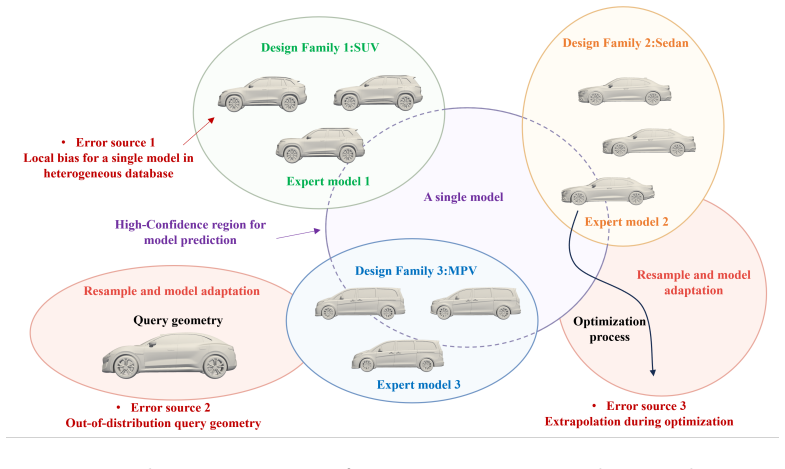
Constrained neural models clone density functionals self-consistently

Molecular-only training data enables accurate reproduction of lattice constants and bulk moduli across metallic, covalent, ionic, oxide, and

· “Constraint-aware functional cloning for stable and transferable machine-learned density functional theory”

open re-runnable review →
Figure from the paper

AI lab tutor plays five roles—and can drift into grader

Case study of a constrained astrophysics tutor maps framings that demand design boundaries and student verification

· “Generative AI in Higher Education Laboratory Learning: A Qualitative Case Study of Epistemic Scaffolding and Assessment Boundaries”

open re-runnable review →
Figure from the paper

Ship two AI resource packs, and general agents can run PHITS

RAG knowledge base plus agent rules let existing tools edit, execute, and interpret particle-transport workflows

· “Toward AI-Agent-Driven Particle Transport Simulations: Implementation of AI-Assisted Workflows for PHITS”

open re-runnable review →

Only input-dependent uncertainty yields reliable spinodoid designs

Deterministic and constant-noise optima both violate reliability targets once morphology scatter is measured.

· “Uncertainty-Aware Structure-Property Mapping of Spinodoid Metamaterials via Heteroscedastic Gaussian Process Regression”

open re-runnable review →
Figure from the paper

Reduced-basis tallies beat mesh matrices on Monte Carlo correlation

On an exact 2D scattering chain, cosine Galerkin models cut bias and solve cost versus discrete cells

· “Functional Expansion Tallies of Matrix Operators for Prediction for Integrated Autocorrelation Time in Batch Monte Carlo: an Analytic 2D Scattering Chain Benchmark”

open re-runnable review →
Figure from the paper

One-term ESBGK now matches species Boltzmann rates

Relative targets from Grad-13 VHS production recover velocity, temperature and stress exchange while keeping mixture Prandtl correct.

· “A Multispecies ESBGK Model for Gas Mixtures with Variable Hard Sphere Transport: Theory and Verification”

open re-runnable review →
Figure from the paper

FE² tracks phase evolution without meshing every interface

A microforce Hill–Mandel condition gives RVE problems that match DNS averages for Allen–Cahn and martensite.

· “Scale-Bridging Phase-Field Modeling of Microstructure Evolution by FE² Computational Homogenization”

open re-runnable review →
Figure from the paper

WTe2 interface flips MnSe2 magnetism out of plane

Half-metallicity, spin-resolved type-II bands and 20.8 meV MAE appear in MSe2/WTe2 stacks

· “Interface-induced spin-resolved type-II band alignment and enhanced magnetic anisotropy in MSe2/WTe2 (M = V, Cr, Mn, Fe and Co) van der Waals heterobilayers”

open re-runnable review →
Figure from the paper

High-order dual basis keeps EFIE iterations constant

Explicit B-spline dual generalizes Buffa-Christiansen functions; GMRES count independent of mesh size and degree

· “An Explicit Higher-Order Dual Basis for a Multiplicatively Calder\'on Preconditioned Electric Field Integral Equation”

open re-runnable review →
Figure from the paper

Optimal transport beats Euclidean metrics for cleaning negative MC weights

An IRC-safe distance lets cell resampling skip jet clustering and cut bias in NLO samples, but the test is on 100k events, not millions.

· “Optimal-Transport-Based Cell Resampling for Negative and Pathological Event Weights”

open re-runnable review →

Cheap boards time 1 MV arcs to 8 ns without a master clock

Record triggers, subtract fiber delays, and locate breakdowns from probe lags alone

· “Repurposing acquisition devices into trigger-based timing synchronization of breakdown events during MITICA high voltage holding experiments”

open re-runnable review →
Figure from the paper

Bright and dark CrSBr excitons are phase partners

Same Bloch transitions add or cancel by sublattice symmetry; local orbital labels alone do not decide brightness.

· “Bright and Dark Excitons in CrSBr: Local Ligand-Field Character and Band-Coherent Optical Selection Rules”

open re-runnable review →
Figure from the paper

ML potentials capture oxide order only when geometry already freezes it

Scalar bond modes work; vector orbital patterns get the wrong symmetry; on-site spin crossovers stay invisible.

· “Bond, orbital and spin order in d4/d6/d7 perovskite oxides: successes and limitations of foundation interatomic potentials”

open re-runnable review →
Figure from the paper

Complex time turns three open mechanics problems into theorems

Kime phase statistics give sharp uncertainty floors and prove why continuous quantities must pair

· “Kime-Representation Formulations of Three Open Problems in the Foundations of Classical Mechanics: Uncertainty, Invariant Entropy, and Directional Degrees of Freedom”

open re-runnable review →

Three-body oscillator coupling is just pairwise links with hidden channel memory

Standard higher-order interactions emerge only under symmetry and instant transmission; break either and richer dynamics appear

· “Impact of Channel Dynamics on Higher-order Interactions of Oscillators”

open re-runnable review →
Figure from the paper

AI turns brightfield microscopes into virtual Raman spectrometers

A dual-decoder VAE reconstructs single-cell Raman fingerprints from plain microscopy images at 98% similarity, and the generated spectra out

· “Pic2Spec: Generative Modeling Reconstructs Single Cell Raman Fingerprints from Brightfield Images”

open re-runnable review →
Figure from the paper

Hydrogen-exact exchange factor binds Rydberg states in semilocal DFT

Solving a 1993 equation as an inverse problem yields a nonempirical exchange ingredient that recovers bound Rydberg-like states where PBE to

· “Semilocal exchange functionals from the exact-exchange condition for the hydrogen atom: Hydrogenic exactness and recovery of Rydberg-like bound states”

open re-runnable review →
Figure from the paper

Giant AI atom models barely beat small ones

23-model test finds 730M-parameter potentials gain only 3–5 meV/atom over lightweight ones while losing 100–1000× in speed — sometimes near-

· “Are Machine Learning Interatomic Potentials Truly Practical? A Benchmark of 23 Mainstream Models”

open re-runnable review →
Figure from the paper

Engine-swap move decorrelates rare-event paths roughly 5x faster

Swapping Hamiltonians between path ensembles lets a cheaper helper system unstick trapped trajectories, cutting convergence time for drug-m膜

· “Collaborate to decorrelate in path space: Hamiltonian replica exchange transition interface sampling (HRETIS)”

open re-runnable review →
Figure from the paper

3D turbulence recovered from noisy 2D maps at 5% accuracy

A spectral cutoff lets astronomers extract true 3D density fluctuations from noisy column-density data down to SNR ≈ 1, extending the Brunt

· “From 2D to 3D: Recovering Turbulent Density Dispersions from Noisy Data”

open re-runnable review →
Figure from the paper

New framework reconstructs shock waves by lifting 0D points to 2D surfaces

By treating discontinuities as low-dimensional manifolds and explicitly modeling their gradients, the method outperforms physics-informed NN

· “Inverse Low-Dimensional Manifold Reconstruction Framework for Spatiotemporal Reconstruction of Compressible Physical Fields”

open re-runnable review →

Radiation cascades in fullerite thermalize for hundreds of picoseconds

The core discovery is that radiation damage in a molecular solid like fullerite produces a thermalization phase lasting hundreds of…

· “Radiation Damage Cascades in Fullerite Using Molecular Dynamics”

open re-runnable review →
Figure from the paper

UV scattering inside saliva droplets shields viruses from disinfection

A CFD-DDA platform and corrected inactivation law show why uniform-dose models overestimate air-purifier kill rates.

· “An Innovative Computational Fluid Dynamics Discrete Dipole Approximation (CFD-DDA) Platform for Predicting Airborne Virus-in-Saliva Disinfection by Ultraviolet Irradiation”

open re-runnable review →
Figure from the paper

Magic Courant number cancels FDTD numerical dispersion

Set Sc equal to the refractive index and pulses stay clean even in rarefied or left-handed media

· “Impact of Courant number on the results of numerical simulating of signal propagation in non-dispersive homogeneous media”

open re-runnable review →
Figure from the paper

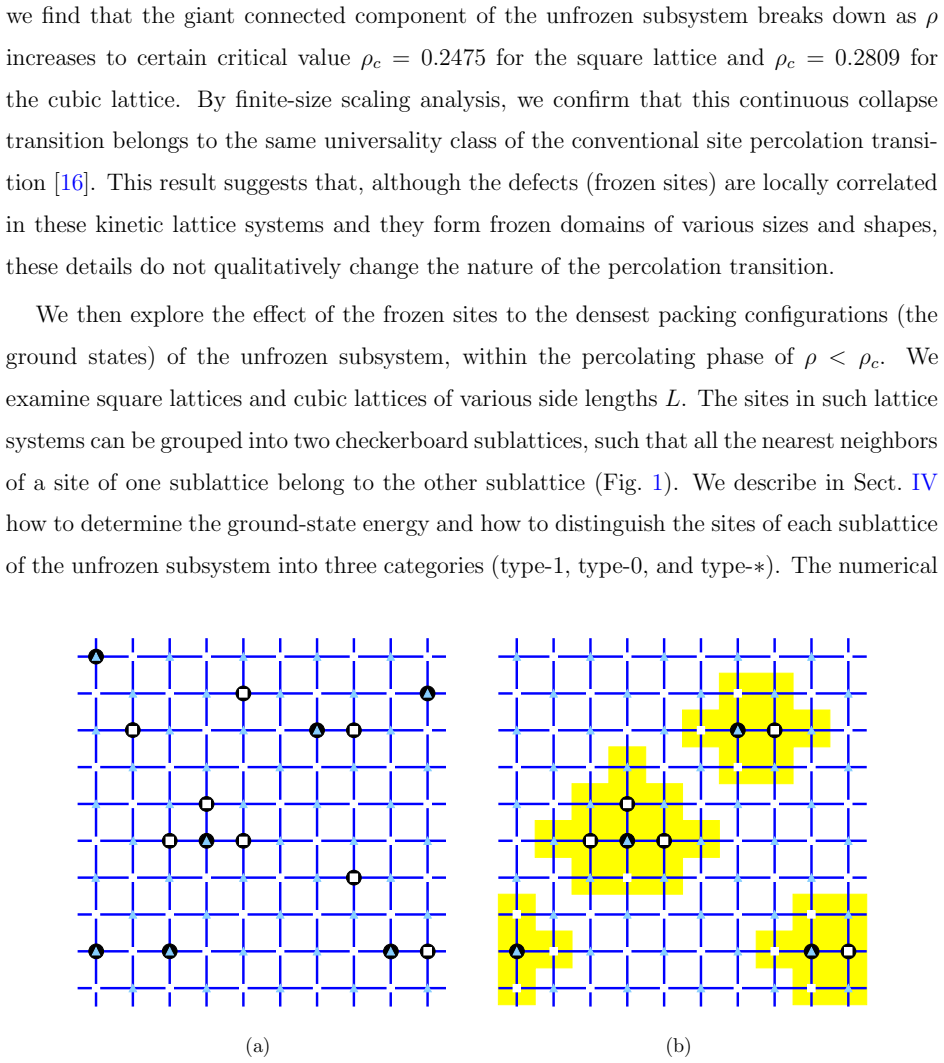
Frozen neighbors fracture lattice into percolating and glassy phases

The central discovery is that a purely local kinetic rule — blocking any site that has an occupied neighbor — generates two distinct…

· “Thermodynamic phase transitions in lattice spin systems with severe kinetic constraints: Numerical simulation results”

open re-runnable review →
Figure from the paper

Adding Mass Conservation to AI Solvers Cuts Error 67x at 5% Cost

Standard neural PDE solvers lose up to 21% of mass over long simulations. A soft penalty constraint fixes this with negligible overhead.

· “Mass-Conserving Physics-Informed Neural Networks For The One-Dimensional Advection-Diffusion Equation”

open re-runnable review →
Figure from the paper

Fourier interpolation of screened Coulomb W cuts BSE k-mesh cost

Computing the screened interaction on a coarse k-mesh and interpolating to a dense one makes converged optical spectra affordable for solids

· “Efficient Bethe-Salpeter Equation Calculations Based on Numerical Atomic Orbitals and Norm-Conserving Pseudopotentials: Dual-{boldsymbol k}-Mesh Strategy”

open re-runnable review →
Figure from the paper

Excited-state forces and couplings fit on an 8 GB GPU

One contraction graph turns EOM-CC relaxation into reverse-mode differentiation, validated small-scale and run on Mg-porphine

· “EOM-CC Excited-State Gradients and Nonadiabatic Couplings on a Consumer GPU from a Contraction-DAG with Laplace-Transform J/K Kernels”

open re-runnable review →
Figure from the paper

More passivation molecules can break the perovskite they protect

Simulations show amino-silane molecules switch from multi-point to upright binding as coverage rises, disrupting the perovskite lattice and

· “Data-driven atomistic modelling of hybrid halide perovskite passivation”

open re-runnable review →
Figure from the paper

browse all of physics.comp-ph → full archive · search · sub-categories