pith. sign in

nucl-ex

Nuclear Experiment

Nuclear Experiment Results from experimental nuclear physics including the areas of fundamental interactions, measurements at low- and medium-energy, as well as relativistic heavy-ion collisions. Does not include: detectors and instrumentation nor analysis methods to conduct experiments; descriptions of experimental programs (present or future); comments on published results

Top Pith
4
hep-ph 2026-05-19 2 theorems

Helium-4 shows separate maps for quarks and gluons

by V. Martínez-Fernández, B. Pire +2 more

Quark and gluon tomography of the helium-4 nucleus

Calculations using QCD factorization deliver the first 3D parton tomography of a light nucleus.

Figure from the paper full image
abstract click to expand
QCD collinear factorization allows coherent hard exclusive reactions to reveal the quark-gluon structure of light nuclei, enabling their 3D tomography. We study elastic form factors and deeply virtual Compton scattering on a helium-4 target, achieving theoretical precision unprecedented even in proton studies. Constraining generalized parton distributions at next-to-leading order in $\alpha_s$, incorporating kinematic twist corrections, and using full evolution equations, we provide the first tomography of a light nucleus, revealing distinct transverse spatial distributions of quarks and gluons.
1 0
Top Pith
5
nucl-ex 2026-05-19 1 theorem

Zirconium-96 single beta decay half-life measured at 2.27 × 10^20 yr

by A. S. Barabash, S. Evseev +15 more

First observation of single beta decay of ⁹⁶Zr

First observation via gamma rays from the 96Zr to 96Nb to 96Mo chain yields the long-predicted but previously unseen decay rate.

Figure from the paper full image
abstract click to expand
The single beta decay of $^{96}$Zr has been detected for the first time using a 211 cm$^3$ low-background HPGe detector and an external source consisting of two samples of enriched zirconium (atomic fraction of $^{96}$Zr is 88.28%, total mass is 140.65 g). During the search for the $\beta$ decay of $^{96}$Zr, the $\beta$ decay of the daughter nucleus $^{96}$Nb to the excited states of $^{96}$Mo has been observed. The $\gamma$-ray cascade produced by the $^{96}$Mo nucleus while de-exciting to the ground state has been detected with the HPGe detector. The experiment has been carried out at the Baksan Neutrino Observatory. It has produced 12625.34 h of data. The half-life of the single beta decay of $^{96}$Zr is measured to be $T_{1/2} = [2.27^{+0.53}_{-0.36}(stat) \pm 0.27(syst)]\times10^{20}$ yr.
1 0
0
nucl-th 2026-06-30

Bayesian MCMC yields nuclear mass model at 759 keV RMS

by Xiangnan Lee, Yi Hua Lam +2 more

Bayesian Analysis with Markov Chain Monte Carlo for Global Optimization and Degeneracy Diagnosis in Nuclear Mass Models

BWL adds deformation and shell terms to Bethe-Weizsacker variants and improves fits for light nuclei and actinides

Figure from the paper full image
abstract click to expand
We employ a full Bayesian analysis with adaptive Metropolis-Hastings Markov chain Monte Carlo (BA-MCMC) sampling to systematically study the posterior probability distributions of the strengths of energy terms in optimized nuclear mass models of Bethe-Weizs\"{a}cker variants. Strong correlations of some energy terms for some mass models are revealed through the parameter degeneracy diagnosis. We analyze selected refined models to determine parameter degeneracies while proposing a new macroscopic-microscopic mass model, BWL, which considers quadrupole and high-multipole deformation and shell corrections. All mass models in this work are analyzed and optimized through the BA-MCMC method. Compared with 2242 precise experimental binding energies of AME2020, BWL produces a root-mean-square deviation of 759 keV, particularly improving the description of masses in the light-nuclei and actinide regions. BA-MCMC offers robust inference on parameter degeneracy while providing an optimization method for future nuclear mass models.
0
0
nucl-ex 2026-06-30

Neutron decay analysis details radiative photon spectrum corrections

by J.S. Nico, R. Alarcon +19 more

Precision measurement of radiative neutron b{eta}-decay: methodology and systematic effects

Monte Carlo comparisons establish systematic uncertainties for the 0.4-782 keV branching ratio measurement

Figure from the paper full image
abstract click to expand
In the Standard Model the free neutron decays to a proton, an electron, and an antineutrino along with a continuous spectrum of photons. In 2016 the RDK II collaboration reported on a measurement of the photon energy spectrum and branching ratio over the range of 0.4 keV to the 782 keV endpoint using two different detector arrays. In the experiment, the radiative decay photons were observed in coincidence with the decay electrons and protons. In this paper, we present details of the analysis, including the determination of the systematic corrections and uncertainties and comparison of measured particle and photon energy spectra to Monte Carlo simulations. We conclude with approaches to improving the precision of these measurements.
0
0
hep-lat 2026-06-30

Lattice QCD finds isospin splits chemical potentials in Ru-Zr collisions

by Heng-Tong Ding, Jin-Biao Gu +2 more

Isospin-Driven Splitting of Chemical Potentials in Isobar Collisions from Lattice QCD

Splitting ratios match STAR data magnitude with charge sector dominant and only moderate magnetic dependence

Figure from the paper full image
abstract click to expand
Strong magnetic fields produced in relativistic heavy-ion collisions can modify fluctuations of conserved charges and, consequently, their associated chemical potentials. We present first-principles $(2+1)$-flavor lattice-QCD results for isospin-driven splittings of conserved-charge chemical potentials between the isobar systems $^{96}_{44}\mathrm{Ru}+^{96}_{44}\mathrm{Ru}$ and $^{96}_{40}\mathrm{Zr}+^{96}_{40}\mathrm{Zr}$ in the QCD crossover region, both at vanishing and nonzero magnetic fields along the pseudo-critical line $T_{pc}(eB)$. We outline a framework that, under strangeness neutrality and charge-to-baryon ratio $r\equiv n_{\rm Q}/n_{\rm B}$, maps the isospin difference between two nuclei, as encoded in $r_{\rm Zr}$ and $r_{\rm Ru}$, onto splitting ratios $\Delta\mu_{\rm Q}/\Delta\mu_{\rm B}$, $\Delta\mu_{\rm S}/\Delta\mu_{\rm B}$, and $\Delta\mu_{\rm S}/\Delta\mu_{\rm Q}$ as functions of $\mu_{\rm B}(r_{\rm Ru})/\Delta\mu_{\rm B}$. Using continuum-estimated lattice results for the leading-order coefficients $q_1\equiv(\mu_{\rm Q}/\mu_{\rm B})_{\rm LO}$ and $s_1\equiv(\mu_{\rm S}/\mu_{\rm B})_{\rm LO}$, we find that, at vanishing magnetic field, the splitting ratios are of similar magnitude to recent Bayesian extractions from STAR isobar data and yield $\Delta\mu_{\rm Q}<0$ and $\Delta\mu_{\rm S}>0$, with the electric-charge sector dominating. At nonzero magnetic fields, the splitting ratios show only moderate $eB$ dependence. We therefore further examine Ru--Zr differences in the normalized magnetic-field response of chemical-potential ratios, particularly those involving $\mu_{\rm Q}/\mu_{\rm B}$, which display a pronounced enhancement in lattice QCD. We also present hadron resonance gas (HRG) results and experimentally motivated proxy observables with kinematic cuts to facilitate contact with experiment.
0
0
hep-ph 2026-06-30

CLAS12 data show quark-hadron duality persists to 10 GeV²

by Y. Wunderlich, A. Bulgakov +3 more

Quark--hadron duality in inclusive electron--proton scattering at high Q²: structure functions and truncated moments from CLAS12

Resonance-region cross sections and extracted moments match perturbative QCD fits including target-mass and higher-twist terms.

Figure from the paper full image
abstract click to expand
We present a high-precision study of quark--hadron duality in inclusive electron--proton scattering in the nucleon resonance region, extending to $Q^2\approx10~\mathrm{GeV}^2$, based on recent CLAS12 cross-section measurements at Jefferson Lab. The data, taken with a 10.6~GeV beam, span $2.55 \le Q^2 \le 10.4~\mathrm{GeV}^2$ and cover the full resonance region up to $W\approx2.5~\mathrm{GeV}$. To reach the CLAS12 kinematics, we develop a phenomenological high-$Q^2$ extension of the Argonne--Osaka (ANL-Osaka) dynamical coupled-channels framework, anchored to the original calculation at $Q_0^2=2.774~\mathrm{GeV}^2$ and constrained by the measured cross sections. This enables an ANL-Osaka-constrained longitudinal--transverse decomposition and determination of the proton structure function $F_2(W,Q^2)$, from which we evaluate $W$-truncated Cornwall--Norton moments $M_2(Q^2)$. Comparison with the CJ15 global QCD analysis, including target-mass and higher-twist corrections, shows consistency at the cross-section, structure-function, and truncated-moment levels, providing quantitative evidence for both local and global quark--hadron duality at substantially higher $Q^2$ than previously explored. We further identify a threshold effect in the partonic calculation: the finite-$Q^2$ corrections do not enforce the physical pion-production threshold, and the residual discrepancy in the first resonance region is consistent with this effect rather than a breakdown of duality. Within the coupled-channel description, the single-pion channel alone underestimates the inclusive resonance-region strength above the $\Delta(1232)$, which is carried predominantly by the multi-meson channels, as required for duality.
0
0
nucl-th 2026-06-29

HIC constraints match neutron-star pressure to 2.5 n_sat

by A. Le Fèvre

Nuclear equation-of-state at high density and multi-messenger astronomy: contribution of heavy-ion collisions

Combined symmetry-energy and symmetric-matter data from collisions agree with gravitational-wave and pulsar observations up to 2.5 times sat

abstract click to expand
In the past decades, heavy-ion collisions (HIC) at intermediate energies have allowed to probe the nuclear equation-of-state (EoS) of both symmetric and asymmetric nuclear matter over a broad range of densities. In particular, flow has proven to be a powerful observable. Combining the symmetry energy and the symmetric nuclear matter constraints of the EoS from HIC allowed to predict a density dependence of the pressure in a neutron star, up to about 2.5 times saturation density ($n_{sat}$), which agrees with recent astronomical measurements deduced from gravitational waves and pulsar observations. So far, the accuracy from HIC expectations is comparable to the latter up to 1.5 $n_{sat}$. In these studies, a fundamental aspect is the determination of the profile of densities that are probed by experimental observables used to constrain the EoS. In the near future, new experiments like ASY-EOS performed at higher incident energy and with better accuracy will push further the frontier of the knowledge of the symmetry energy at higher density. These efforts cannot be conclusive without a reliable uncertainty determination, which is related to the reliability of transport model dependencies. Improvements and breakthroughs in transport model simulations and nuclear theory are therefore expected in a joint effort towards HIC contributions to the field of neutron-star physics, including the contribution of strangeness and of the QCD phase transition.
0
0
cs.LG 2026-06-29

Self-supervised method calibrates detectors from raw data alone

by M. Rejmund (1), A. Lemasson (1) ((1) GANIL +6 more

Self-Supervised Calibration of Scientific Instruments Using Physical Consistency Constraints

Using discrete atomic masses and a weak prior, the approach learns calibration and ionic charge inference simultaneously without labels.

Figure from the paper full image
abstract click to expand
Calibration remains one of the principal obstacles to the deployment of machine learning in scientific instrumentation because it typically relies on expert intervention, dedicated procedures, and manually labelled data. We introduce a physics-informed self-supervised framework that jointly learns latent detector calibration parameters and task-specific predictions directly from raw measurements without requiring pre-calibrated signals or external labels. The method exploits known physical constraints to generate pseudo-labels iteratively, transforming calibration into a self-supervised optimization problem. The approach is demonstrated for ionic charge-state determination in the VAMOS++ magnetic spectrometer, where the calibration of a segmented ionization chamber and the inference of ionic charge states are learned simultaneously. Starting from a weak prior on the mean ionic charge state, the model progressively refines its predictions through iterative fractional pseudo-labelling driven by the discrete nature of atomic masses. Beyond accurate ionic charge-state reconstruction, the inferred calibration coefficients provide a compact representation of the detector state that enables automated monitoring of gain drifts, pressure variations, and detector aging. The resulting labels can subsequently be transferred to specialized models that quantify detector imperfections and track their spatial and temporal evolution. These results establish a general paradigm for self-calibrating and self-monitoring scientific instruments and represent a step toward intelligent experimental systems capable of autonomous calibration, analysis, and performance optimization.
0
0
physics.acc-ph 2026-06-29

Coupled model matches RHIC carbon-strip lifetimes but flags EIC limits

by F. Rathmann, O. Eyser +3 more

Thermal and electromechanical response of ultra-thin carbon-strip polarimeter targets in relativistic bunched beams

RHIC data fix motion and RF-heating scales; EIC proton flattop needs shorter dwell and end-heating control while 3He cases exceed simple ext

Figure from the paper full image
abstract click to expand
Thin carbon-strip targets provide fast relative hadron beam polarimetry, but their response in intense relativistic bunched beams is not governed by local stopping-power heating alone. We develop a coupled response model that combines beam-target overlap, secondary-electron escape, retained heat, target motion, transient heat transport, RF-induced strip-end heating, beam-induced forces, resistance changes, and slack-strip deformation. RHIC target observations constrain the relevant motion, force, and nonlocal-heating scales and show that target survival depends on both beam-center heating and electromagnetic boundary conditions near the strip ends. Applying the model to Booster, AGS, RHIC, and EIC proton and $^{3}\mathrm{He}$ cases shows that the RHIC proton lifetime scale is reproduced at the order-of-magnitude level, while the RHIC target-holder fin results require the additional RF/end-heating mechanism. For EIC proton flattop operation, carbon-strip polarimetry may remain viable only with reduced dwell time, sufficient detector acceptance, and suppression of RF-induced end heating. For cooled-emittance $^{3}\mathrm{He}$, the calculated sublimation-loss scale is far beyond a straightforward RHIC-like carbon-strip extrapolation. Conventional carbon strips are therefore unlikely to remain viable for the most demanding EIC light-ion cases without major changes in target motion, target technology, or diagnostic concept.
0
0
nucl-ex 2026-06-29

Dineutron clusters detected in neutron halo nuclei

by Takashi Nakamura, Kouichi Hagino +1 more

Dineutron clusters

Breakup and scattering data on 11Li show compact two-neutron pairs at low density, with similar searches underway in 16Be and four-neutron s

Figure from the paper full image
abstract click to expand
The dineutron is a spatially compact two-neutron cluster, which is expected to appear in a low-density part of nuclei. In recent years, there has been rapid progress in experimental and theoretical research on dineutron clusters, particularly on neutron-rich rare isotopes. Experimentally, evidence for dineutron in two-neutron halo nuclei, such as $^{11}$Li, has been obtained using Coulomb breakup, measurements of charge radii, and quasi-free proton scattering. Specific unbound nuclei just beyond the neutron drip line, which decay by emitting two neutrons, are also candidates for having a dineutron correlation. For instance, the dineutron structure has recently been investigated for $^{16}$Be, focusing on its decay into the core and the two neutrons. Theoretically, it is shown that the dineutron is partially due to the admixture of different-parity configurations for the two valence neutrons. Few-body theories, including dynamical effects of the decay process, play important roles in interpreting three-body decays. We also discuss the four-neutron clusters, showing the experimental results of recent tetraneutron experiments and observation of $^{28}$O. Possible relevance of these states to dineutron correlation is discussed. Finally, we discuss future perspectives on dineutron clusters in neutron-rich nuclei and their relation to the universal features in few-body physics.
1 0
0
hep-ph 2026-06-29

Soft contributions stabilize NNLO quarkonium predictions

by Luca Maxia, Hua-Sheng Shao +2 more

Soft Contributions Stabilize NNLO QCD Corrections to Quarkonium Production and Decay

A remedy that includes missing soft terms improves convergence and data agreement for S-wave color-singlet processes.

Figure from the paper full image
abstract click to expand
Next-to-next-to-leading order (NNLO) QCD corrections to quarkonium production and decay are known to exhibit perturbative instabilities within non-relativistic QCD. We identify the origin of this problem and propose a simple remedy. Applying our approach to $S$-wave color-singlet quarkonium processes, we achieve substantially improved perturbative convergence and agreement with experimental data.
0
0
nucl-th 2026-06-29

Radius-to-EOS inverse mappings shift inferred neutron star parameters with precision

by Bao-An Li

Universal EOS-Radius Inverse Mappings Govern Precision-Dependent Inference of the Neutron Star Equation of State

Posterior means move even when the central radius value is fixed because the radius distribution is nonlinearly filtered through universal f

Figure from the paper full image
abstract click to expand
Bayesian inference of the neutron star (NS) equation of state (EOS) generally assumes that improved observations primarily reduce posterior uncertainties while leaving inferred EOS parameters unchanged. Using mock measurements of the radius of a canonical $1.4\,M_\odot$ NS with identical central values but varying observational precisions, we show that the inferred posterior means of EOS parameters can shift systematically as the measurement uncertainty changes. We demonstrate that this behavior originates from previously unidentified nearly universal inverse mappings between the NS radius $R_{1.4}$ and empirical EOS parameters. Across a broad range of observational precisions, posterior samples collapse onto nearly unique functions. These mappings are largely independent of observational precision and define a low-dimensional EOS manifold underlying Bayesian inference. We show that the precision dependence of inferred EOS parameters arises from nonlinear filtering of the posterior radius distribution through these mappings. In the narrow-distribution limit this effect reduces to a Jensen-type correction proportional to the local curvature of the inverse mapping, while for presently realistic uncertainties the full nonlinear-filtering relation accurately reproduces the posterior means. Our results reveal a geometric origin of precision-dependent inference in NS EOS studies and provide a new framework for connecting astrophysical observations directly to microscopic nuclear many-body theories.
0
0
nucl-ex 2026-06-29

Source size in pp collisions scales differently with multiplicity than in Pb-Pb

by ALICE Collaboration

Multiplicity dependence of the size of the common hadron emission source in pp collisions at the LHC

Femtoscopic radii show distinct multiplicity dependence in small systems, clarifying how particle emission volume grows with system size.

Figure from the paper full image
abstract click to expand
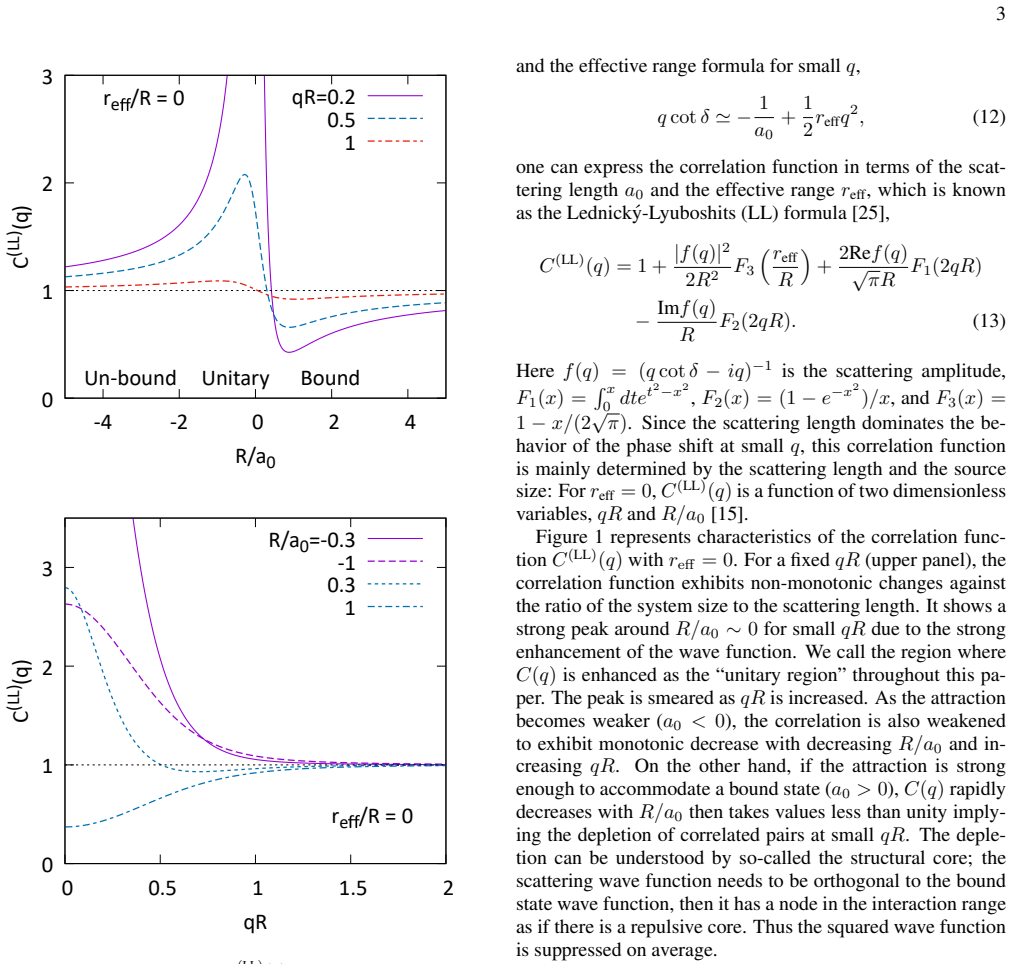
Femtoscopic analysis can shed light on hadron production in pp collisions. In this paper, proton-proton correlations measured in collisions at $\sqrt{s}=13.6$ TeV recorded with the ALICE detector at the LHC are presented. The analysis is based on the minimum bias dataset collected in 2022 following the upgrade of the ALICE detector and corresponds to an integrated luminosity of $19.3$ pb$^{-1}$. The increased integrated luminosity allows us, for the first time, to simultaneously measure the multiplicity and transverse-mass ($m_{\rm T}$) dependence of the size of the hadron-emitting source. Precise knowledge of the femtoscopic source size in pp collisions is a crucial ingredient for using femtoscopy to study the residual strong interaction among stable and unstable hadrons at the LHC. In this light, the source radius was determined from the measured correlation functions by assuming several state-of-the-art models of the nucleon$-$nucleon interactions. The consistency among the extracted radii demonstrates the robustness of the measurement with respect to interaction model assumptions. A comparison to femtoscopic radii measured in Pb$-$Pb collisions at $\sqrt{s}=5.02$ TeV reveals a markedly different multiplicity dependence in similar $m_{\rm T}$ intervals, providing new insight into the system-size dependence of particle emission dynamics.
0
0
nucl-th 2026-06-29

Silicon-28 ground state mostly oblate with under 20% prolate mix

by Yasutaka Taniguchi, Masaaki Kimura

Oblate-prolate shape mixing and E0 transition in 28Si

Fitting to radius and E2 data while varying Gogny term limits prolate admixture and caps E0 strength at 0.206.

Figure from the paper full image
abstract click to expand
Background: oblate-prolate shape coexistence in $^{28}$Si has been discussed for decades, but the degree of shape mixing between these configurations remains poorly constrained. Purpose: We constrain the oblate-prolate mixing amplitudes in $^{28}$Si using available experimental information and discuss the inter-band E0 transition strength. Methods: Oblate and prolate $0^+$ and $2^+$ configurations are obtained by antisymmetrized molecular dynamics combined with the generator coordinate method. Using these configurations as the basis states, we constrain the mixing amplitudes by simultaneously reproducing the measured charge radius, the quadrupole moment of the $2_1^+$ state, and the in-band and inter-band $B(\mathrm{E2})$ values. The strength of the density-dependent term in the Gogny interaction is also varied within a reasonable range. Results: In the ground state, the oblate component is dominant, and the prolate component in the ground state is limited to less than about $20\%$. For the $2_1^+$ state, the allowed prolate component is smaller than that in the ground state. The present analysis does not tightly constrain the corresponding E0 transition strength, but an upper limit of $\rho^2(\mathrm{E0};0_3^+\rightarrow0_1^+) \lesssim 0.206$ is obtained. Conclusions: The low-lying $0^+$ states of $^{28}$Si may exhibit substantial oblate-prolate mixing. A measurement of the inter-band E0 transition strength would provide a quantitative determination of the mixing amplitude.
0
0
nucl-th 2026-06-26

Curvature of proton-antiproton flow split probes baryon stopping

by Tribhuban Parida, Sandeep Chatterjee

Rapidity-even directed flow splitting of protons and antiprotons as a probe of baryon stopping in relativistic heavy-ion collisions

The mid-rapidity curvature of the difference in even directed flow distinguishes initial baryon deposition profiles in heavy-ion collisions.

Figure from the paper full image
abstract click to expand
We compare the rapidity-even directed flow $v_1^{\rm even}$ in Au+Au collisions at Beam Energy Scan (BES) energies for baryons and anti-baryons within a (3+1)-dimensional viscous relativistic hydrodynamics coupled to hadronic transport framework. The double-junction baryon stopping picture motivates a rapidity-even component in the baryon deposition in the initial state. We demonstrate that the split in the $v_1^{\rm even}$ of protons and anti-protons is sensitive to the rapidity extension of the baryon deposition that we associate with the double junction baryon stopping. Particularly, we find that the mid-rapidity curvature $\frac{d^2 \Delta v_1^{\rm even} (p-\bar{p})}{dy^2}\vert_{y=0}$ is a robust discriminator of the initial state baryon rapidity profiles. A simultaneous measurement of $\Delta v_1^{\rm even}$ and its curvature at mid-rapidity could constrain both the baryon diffusion strength and the baryon stopping profile, providing access to the physics of baryon stopping in relativistic heavy ion collisions.
0
0
nucl-ex 2026-06-26

117mSn half-life measured at 13.95 days instead of 13.76

by O Nusair, D Devries +1 more

Half-Life Measurements of ¹¹⁰Sn, ¹¹³Sn, ^(117m)Sn, and ^(123m)Sn Produced via Photon Activation of Natural Tin

The new value for the tin isomer deviates significantly from the Nuclear Data Sheets recommendation while the other three isotopes match pri

Figure from the paper full image
abstract click to expand
We report independent determinations of the ground-state half-lives of $^{110}$Sn, $^{113}$Sn, and the isomeric states $^{117\mathrm{m}}$Sn (J$^{\pi} = 11/2^{-}$) and $^{123\mathrm{m}}$Sn (J$^{\pi} = 3/2^{+}$), produced via photon activation of natural tin using a TT-300HE Rhodotron accelerator. The activated samples were monitored over several months using a high-purity germanium (HPGe) detector. Time-dependent $\gamma$-ray spectra were analyzed using Gaussian peak fitting for the \SI{280.49}{keV}, \SI{391.697}{keV}, \SI{158.56}{keV}, and \SI{160.34}{keV} transitions, yielding half-lives of \SI{4.165(25)}{h} for $^{110}$Sn, \SI{116.08(94)}{d} for $^{113}$Sn, \SI{13.95(1)}{d} for $^{117\mathrm{m}}$Sn, and \SI{39.95(12)}{min} for $^{123\mathrm{m}}$Sn. Agreement with Nuclear Data Sheets (NDS) recommended values is generally observed for $^{110}$Sn, $^{113}$Sn, and $^{123\mathrm{m}}$Sn, with deviations consistent within combined uncertainties when quantified using standardized differences (z-scores). In contrast, $^{117\mathrm{m}}$Sn exhibits a statistically significant deviation from the evaluated value of \SI{13.76(4)}{d}, with a z-score indicating a discrepancy well beyond expected statistical fluctuations. This result suggests a systematic difference warranting further investigation, with potential implications for applications relying on precise decay data, including calibration, dosimetry, and astrophysical modeling.
0
0
physics.ins-det 2026-06-26

Nested xenon TPCs target both dark matter and 0νββ decay

by L. Althueser, N. Hargittai +5 more

HERETIX: A Hermetic, Enriched, Rare-Event Time Projection Chamber in Xenon

Hermetic enriched inner vessel projects 3.2 × 10^28 year half-life sensitivity while preserving outer DM reach.

Figure from the paper full image
abstract click to expand
Xenon-based time projection chambers have established themselves as one of the most powerful technologies for rare-event searches. HERETIX is a proposed multi-tonne liquid xenon observatory featuring two nested time projection chambers that enable the simultaneous optimisation of searches for weakly interacting massive particles and neutrinoless double beta decay ($0\nu\beta\beta$) of $^{136}$Xe. A hermetically sealed sapphire vessel containing xenon enriched to 90% $^{136}$Xe forms the inner detector, providing an ultra-low-background environment for $0\nu\beta\beta$ searches. Monte Carlo studies indicate that material-induced backgrounds can be effectively eliminated, yielding a projected $0\nu\beta\beta$ half-life sensitivity of $3.2 \times 10^{28} \, \mathrm{years}$ at 90% confidence level after a 10-year exposure, while the surrounding xenon volume, depleted in $^{136}$Xe, preserves the excellent dark matter sensitivity of large liquid xenon detectors. HERETIX therefore offers a unified experimental approach capable of delivering leading sensitivity to two of the most compelling questions in fundamental physics.
0
0
physics.ins-det 2026-06-26

Vanadium nanoparticles reach 0.719 fm coherent scattering length

by Masayuki Hiromoto, Tatsushi Shima +9 more

Development and Characterization of Low-Scattering Vanadium Nanoparticle Targets for Short-Range Interaction Searches

RF plasma method with quantified oxygen control matches natural vanadium performance and cuts nuclear backgrounds for submicron searches.

Figure from the paper full image
abstract click to expand
We developed high-purity vanadium-based nanoparticle targets for neutron scattering experiments aimed at exploring gravity-like short-range new interactions in the submicron regime. Vanadium and V-Ni nanoparticles were fabricated using top-down and bottom-up methods and quantitatively characterized by SEM-EDS, ICP-AES, NDIR and SAXS. Through the performance tests, an RF thermal plasma method was found to be the best from viewpoints of the reproducibility, dispersion of the radius, and contamination of metallic elements. The oxygen incorporation during fabrication was quantified, and its impact on the effective coherent scattering length was evaluated, leading to a minimum average coherent scattering length of $\mathrm{0.719(23)\,fm}$, comparable to that of natural vanadium. These results demonstrate that vanadium-based nanoparticle targets with controlled composition and nanostructure can be systematically designed and fabricated to suppress nuclear scattering backgrounds, thereby enabling experimentally viable coherent neutron scattering measurements for short-range interaction searches.
0
0
hep-ph 2026-06-25

One lattice point fixes meson screening response in hot QCD

by Jie Ren, Chen Chen +2 more

Axial-Vector Lattice Benchmarks Reveal a Common Medium Response of Meson Screening in Hot QCD

Axial-vector benchmark sets temperature dependence for all channels and flavors with no further input

Figure from the paper full image
abstract click to expand
Meson screening masses trace the dissolution of hadronic correlations in hot QCD. Combining lattice-QCD benchmarks with a symmetry-preserving Dyson--Schwinger baseline, we identify a flavor-dependent axial-vector quasi-free onset and a finite-interval medium response. One axial-vector point fixes the response; remaining axial-vector data test it, and vector screening masses validate it without input. The framework predicts light-charm and bottom-containing spectra; its pseudoscalar--scalar extension gives conservative lower estimates for ordinary chiral partners.
0
0
hep-ph 2026-06-25

Positron double-beta modes reach 1-100 TeV new physics

by Lukáš Gráf, Jenni Kotila +1 more

Positron-Emitting and Electron-Capturing Double-Beta Processes in the Standard Model and Beyond

Data from multiple isotopes can separate contributions from different lepton-number violating operators.

abstract click to expand
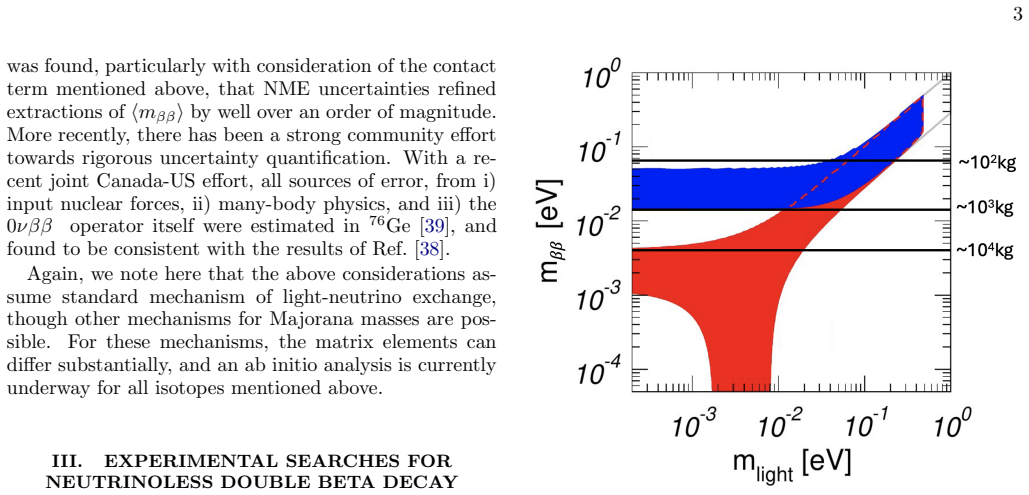
We study positron-emitting and electron-capturing double-beta-decay modes as probes complementary to the usual double beta decay. Motivated by the proposed NuDoubt++ experiment, we analyze the candidate isotopes ${}^{78}$Kr, ${}^{106}$Cd, and ${}^{124}$Xe, providing nuclear matrix elements and phase-space factors for both neutrinoful and neutrinoless modes. For the Standard-Model channels, we find that $2\nu$ECEC and $2\nu\beta^+$EC are the most experimentally accessible, whereas $2\nu\beta^+\beta^+$ remains strongly phase-space suppressed. For the neutrinoless channel, we interpret a projected sensitivity of $T_{1/2}^{0\nu} = 10^{24}$ y in terms of dimension-seven SMEFT operators and find sensitivity to lepton-number-violating new-physics scales of order 1-100 TeV. We further show that measurements in multiple isotopes can help to resolve degeneracies in multi-operator scenarios, making positron-emitting double-beta searches a useful complement to conventional neutrinoless double beta decay experiments.
0
0
nucl-th 2026-06-25

Chiral EFT renormalizes 0νββ operators consistently for shell models

by L. Coraggio, G. De Gregorio +2 more

The renormalization of the shell-model neutrinoless double-beta decay operator starting from effective field theory (I)

Effective Hamiltonians and decay operators for 48Ca, 76Ge and 82Se are built together via perturbation theory from the same starting point.

Figure from the paper full image
abstract click to expand
In this work, we approach for the first time the task to perform a shell-model calculation of the matrix element for the neutrinoless double-beta decay, within a fully-consistent framework where the expressions of the nuclear Hamiltonian and of the decay operators have been derived through chiral perturbation theory. More precisely, the effective shell-model Hamiltonian and all transition operators have been constructed by way of the many-body perturbation theory, and then employed to calculate both spectroscopic properties of the nuclei involved in the decays under our consideration - namely 48Ca, 76Ge, and 82Se -, as well as the nuclear matrix elements of the electromagnetic and neutrinoless double-beta decays. We also present a study of the convergence properties of the calculated matrix elements in order to provide the elements for an estimate of the theoretical uncertainty.
0
0
nucl-ex 2026-06-24

150Pm has 1- ground state with 2- and 6- isomer nearby

by A. Pal, S. Basak +20 more

Low lying excitations in ¹⁵⁰Pm

New gamma data and calculations identify low states and two-quasiparticle bands in this odd-odd rare earth nucleus.

Figure from the paper full image
abstract click to expand
The low lying excitations in odd-odd $^{150}$Pm have been studied through proton induced reaction with an array of five Compton suppressed Clover HPGe and one segmented planar Ge detectors. The relative excitation functions for the observed $\gamma$ rays have been studied using singles data at two beam energies of 8~MeV and 9~MeV. 16 new $\gamma$ rays and 15 new levels have been placed in the level scheme of $^{150}$Pm based on $\gamma-\gamma$ coincidence data. The relative intensities for the observed $\gamma$ rays have been determined using total and gated projections. Tentative spin-parity assignments were made to few low lying excitations of $^{150}$Pm, using limited angular distribution data and other information. Lifetimes were estimated for two excited levels in this nucleus using using generalized centroid difference analysis, applied in the nanosecond range, with Ge detectors. Large basis shell model and projected shell model calculation were performed to interpret the experimentally observed levels. The present work indicates 1$^-$ ground state, a 2$^-$ state close to the ground state ($\sim$50~keV) and a low lying 6$^-$ isomeric state in this odd-odd nucleus along with emerging band structures developed with two quasiparticle configurations.
0
0
nucl-th 2026-06-24

Ab initio calc gives 208Pb neutron skin 0.187 fm

by Frederic Noël, Matthias Heinz +3 more

Ab initio calculations of parity-violating electron scattering off ⁴⁸Ca and ²⁰⁸Pb

Chiral-force calculations with Coulomb corrections produce 1.9 sigma tension and a thinner skin than the experimental extraction.

Figure from the paper full image
abstract click to expand
Parity-violating electron scattering off nuclei both serves as a low-energy precision probe to test electroweak interactions and allows one to access neutron distributions inside nuclei. It has implications for strong interactions in dense neutron-rich environments, also providing constraints for the properties of matter in neutron stars. Precision measurements are available for $^{48}$Ca and $^{208}$Pb by the CREX and PREX collaborations, respectively, and their interpretation requires advanced nuclear-structure calculations to draw firm conclusions. We perform the first ab initio calculations of the parity-violating asymmetry $A_\text{PV}$ based on nuclear forces from chiral effective field theory, fully including corrections due to Coulomb distortion effects. Based on these results, we critically reexamine correlation analyses employed to infer weak radii and quantify the resulting tensions between ab initio and experimental results. We find that ab initio calculations prefer values of $A_\text{PV}$ slightly smaller and larger than observed for $^{48}$Ca and $^{208}$Pb, respectively, with a global significance of $1.9\sigma$. Using theoretically consistent inputs for charge and weak densities, we infer from the experimental $A_\text{PV}$ a neutron skin of $^{208}$Pb of $R_n-R_p = 0.187(25)(18)$ fm, substantially smaller than that reported by PREX II.
0
0
physics.ins-det 2026-06-24

PMTs show afterpulses delayed by up to 260 microseconds

by Nikita Ushakov, Bayarto Lubsandorzhiev +3 more

Anomalously long-delayed afterpulses in large-area photomultipliers

Rare single-photoelectron signals in large tubes for neutrino detectors appear independent of operating voltage.

abstract click to expand
We report the observation of anomalously long-delayed afterpulses in photomultipliers of the Baksan Large Neutrino Telescope project$~-$ 10-inch R7081-100, 8-inch R5912-100, 20-inch R12860 photomultipliers produced by Hamamatsu Photonics, and 20-inch N6205 photomultipliers produced by NNVT. The mean delay times relative to the main pulses are approximately $85~\mu$s, $73~\mu$s, $260~\mu$s, and $90~\mu$s, respectively. The probability of such afterpulses does not exceed 0.1% per photoelectron, and their amplitudes are strictly confined to the single-photoelectron level, regardless of the amplitude of the main pulse. The delay time of these afterpulses shows no significant dependence on the PMT operating voltage.
0
0
astro-ph.IM 2026-06-24

Bayesian unfolding recovers gamma-ray spectra with uncertainties

by A. H. Mj{o}s, E. Lima +3 more

Empirical-Bayes Unfolding of γ-ray Spectra

Empirical-Bayes model preserves Poisson statistics, handles background jointly, and matches frequentist results in high- and low-count cases

Figure from the paper full image
abstract click to expand
Unfolding observed $\gamma$-ray spectra is an ill-conditioned Poisson inverse problem. Detector response effects and finite energy resolution make distinct non-negative emitted $\gamma$-ray spectra nearly indistinguishable after forward mapping, so direct inversion can strongly amplify statistical fluctuations. Here, we present an empirical-Bayes hierarchical unfolding method that preserves the Poisson counting structure, enforces non-negativity, and incorporates background through a joint ON/OFF likelihood. The prior on the emitted spectrum is centered on an automatically selected Richardson-Lucy reference spectrum, with an adaptive width that remains broad in weakly constrained regions. Posterior inference is performed with the No-U-Turn Sampler, and simultaneous uncertainty bands are reported for the resolution-limited unfolded spectrum. Our Bayesian method provides a robust and extensible framework for uncertainty quantification in unfolding, and a direct comparison with a recent frequentist regularized maximum-likelihood method gives highly consistent unfolded spectra in representative high- and low-statistics cases.
0
0
hep-ph 2026-06-23

Track functions reveal model-dependent jet changes in plasma

by João Barata, Yeonju Go +1 more

Mapping jet substructure in heavy-ion collisions with track functions

Higher moments of energy flow to charged hadrons shift differently in JEWEL versus HYBRID quenching simulations.

abstract click to expand
We investigate the dynamics of high-energy QCD cascades in heavy-ion collisions, focusing on modifications to jets' substructure induced by the presence of a quark-gluon plasma (QGP). To this end, we study the properties and scale evolution of track functions, non-perturbative objects encoding the flow of energy from an initiating parton to all charged hadrons. In contrast to the more standard fragmentation functions, these objects have a non-linear renormalization group (RG) evolution, being sensitive to the entire jet fragmentation process. Using the JEWEL and HYBRID Monte-Carlo models of jet quenching, we find that in both frameworks the higher moments and cumulants of the track functions' distributions exhibit sizable deviations from their vacuum baselines, demonstrating that medium-induced energy loss imprints itself in the in-medium jet fragmentation pattern. We find that the quantitative magnitude of these modifications differs significantly between the two models. This identifies track functions as a class of observables capable of discriminating between competing microscopic pictures of jet-medium interactions. We further examined the (in-medium) RG flows for the leading moments, which remain in qualitative agreement with the in-vacuum evolution. This provides an avenue to directly test the RG flows inside a QGP, linking heavy-ion jet measurements to basic QFT understanding of partonic branching. Finally, we comment on the feasibility and challenges associated with extracting track functions from experimental data.
0
0
nucl-ex 2026-06-23

Nickel (gamma,p) cross section twice JENDL-5 prediction

by O. Nusair, N. Solomon +2 more

Measurements of Bremsstrahlung-Averaged Cross Sections for Reactions on Natural Nickel Targets at Eendpoint = 40MeV

Bremsstrahlung-averaged value reaches 9.192 mb and matches TALYS-2.2 but not JENDL-5 evaluation.

Figure from the paper full image
abstract click to expand
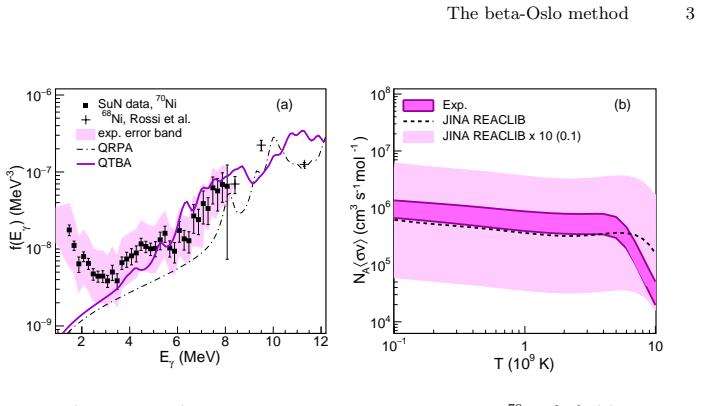
Bremsstrahlung activation measurements were performed to study the production of $^{57}\mathrm{Ni}$, $^{56}\mathrm{Ni}$, $^{58}\mathrm{Co}$, $^{57}\mathrm{Co}$, $^{56}\mathrm{Co}$, and $^{55}\mathrm{Co}$ from natural nickel targets irradiated with photons generated by \SI{40}{MeV} electrons incident on a tantalum converter. Bremsstrahlung spectra were modeled using MCNP6.3\texttrademark{} and experimentally validated through activation of natural tin. Bremsstrahlung-averaged cross sections were extracted from end-of-irradiation activities, yielding $\langle\sigma\rangle = 8.983~\pm~0.028$~mb for $^{58}\mathrm{Ni}(\gamma,n)^{57}\mathrm{Ni}$, $0.248~\pm~0.025$~mb for $^{58}\mathrm{Ni}(\gamma,2n)^{56}\mathrm{Ni}$, $0.704~\pm~0.218$~mb for $^{nat}\mathrm{Ni}(\gamma,pxn)^{58}\mathrm{Co}$, $9.192~\pm~0.386$~mb for $^{58}\mathrm{Ni}(\gamma,p)^{57}\mathrm{Co}$, and $2.239~\pm~0.355$~mb for $^{58}\mathrm{Ni}(\gamma,pn)^{56}\mathrm{Co}$. A $90\%$ confidence-level upper limit of $\langle\sigma\rangle < 0.021$~mb is established for the $^{58}\mathrm{Ni}(\gamma,p2n)^{55}\mathrm{Co}$ channel. Comparison with JENDL-5 evaluations and prior studies indicates channel-dependent agreement, with residual discrepancies observed for selected charged-particle emission reactions. In particular, the measured $^{58}\mathrm{Ni}(\gamma,p)^{57}\mathrm{Co}$ cross section exceeds the JENDL-5 prediction by approximately a factor of two, whereas TALYS-2.2 calculations reproduce the experimental value, suggesting an underestimation of the $(\gamma,p)$ channel strength in JENDL-5 under bremsstrahlung conditions. For the $^{58}\mathrm{Ni}(\gamma,pn)^{56}\mathrm{Co}$ channel, both TALYS-2.2 and JENDL-5 predictions are in reasonable agreement, while the present measurement is higher by approximately a factor of two, though with larger associated uncertainty.
0
0
hep-ph 2026-06-23

Born spin initialization shapes polarized DIS shower observables

by M.R. Masouminia, A. Papaefstathiou +1 more

Polarized Deep-Inelastic Scattering with Spin Correlations in Herwig 7

Real-emission spin adds no visible change for longitudinal polarization in NLO-matched Herwig events

abstract click to expand
We investigate polarized deep-inelastic scattering (DIS) in the context of fully exclusive Monte Carlo simulations for the Electron-Ion Collider (EIC). We present a next-to-leading-order (NLO) treatment of polarized DIS in Herwig 7 using the POWHEG matching scheme, including neutral-current $\gamma/Z$ exchange and charged-current scattering. We also construct a spin-correlation treatment for NLO-matched events, first by initializing the shower from the spin-density matrix of the polarized DIS Born process and then by propagating the spin-density matrix of the accepted real-emission configuration without changing the POWHEG event weight or hardest-emission choice. We validate the integrated cross sections against fixed-order calculations, use parton-level comparisons without subsequent shower evolution to isolate the accepted POWHEG real-emission kinematics, and employ shower-level observables to test the numerical importance of the Born-level and real-emission spin information. We find that the Born-level spin-density initialization can have a visible impact on shower-sensitive observables, while the additional spin information from the accepted real-emission configuration is not resolved for the longitudinally polarized observables considered here.
0
0
hep-ph 2026-06-23

Hadron CP violation quantified for EDM and beta decay tests

by Nodoka Yamanaka

Quantification of the Flavor Diagonal Hadronic CP Violation

Progress in computing flavor-diagonal effects connects theory to atomic and nuclear observables, and offers a way to address the strong CP p

Figure from the paper full image
abstract click to expand
The flavor diagonal CP violation of elementary particle physics contributes to the atomic, nuclear, and nucleon electric dipole moments (EDMs), T-violating neutron optics, and to the angular correlations of beta decay. In this contribution, we review the basics and the importance of CP violation in the search for new physics beyond the standard model, the recent progress in the quantification of the hadron level CP violation contributing to the aforementioned observables, and finally the current attempt to solve the strong CP problem without additional interactions and fields.
0
0
nucl-th 2026-06-23

Multitask model turns UPC patterns into nuclear deformation and skin values

by Jing-Zong Zhang, Wang-Mei Zha +2 more

Ultra-Peripheral Collisions as a Nuclear-Structure Interferometer with Interpretable Multitask Deep Learning

Interpretable network isolates diffraction and interference signals in zirconium J/ψ data to deliver simultaneous structure constraints.

Figure from the paper full image
abstract click to expand
Precise knowledge of nuclear structure is essential across fundamental physics, yet probing these structures is notoriously difficult. To address this challenge, ultra-peripheral collisions (UPCs) provide a femtoscopic tomography for imaging the atomic nucleus. UPCs offer a pristine electromagnetic pathway: coherent vector-meson photoproduction generates patterns of diffraction and two-source interference that directly encode the nuclear spatial density. Turning these patterns into quantitative constraints is, however, a challenging inverse problem, complicated by correlated sensitivities to deformation and neutron skin, phase smearing, and experimental backgrounds. Here we introduce an interpretable Multitask deep-learning framework that maps transverse momentum distributions to multiple nuclear-structure indicators simultaneously and identifies the kinematic regions driving each inference. We demonstrate the approach with coherent $J/\psi$ photoproduction in $^{96}_{40}\text{Zr} + ^{96}_{40}\text{Zr}$ collisions, showing that the learned features separate diffraction-dominated and interference-dominated information and provide analysis-ready observables for future high-luminosity data.
0
0
nucl-ex 2026-06-23

Zinc-65 mixes single-particle states with collective bands

by Anil Sharma, S. Nandi +16 more

Single Particle Excitations, Band Structures and Octupole Correlation in ⁶⁵Zn

Gamma-ray measurements show how collectivity grows when nucleons fill high-j orbitals outside a closed shell.

Figure from the paper full image
abstract click to expand
The excitation scheme of the $^{65}$Zn ($Z = 30, N = 35$) nucleus has been probed following its population in the $^{63}$Cu($\alpha$,pn) reaction at E$_{beam}$ = 30 MeV and using an array of Compton suppressed HPGe clovers as the detection system. This work has identified several new transitions of the nucleus and have modified the placements of some of the previously known ones. The multipolarities and the electric/ magnetic nature of the observed $\gamma$-ray rays have been measured, using the conventional methodologies. The spin-parity assignments for the levels have consequently been made; some of the spin-parities are new while others are either validation of the existing values or are modified results based on the present analysis. The experimental level scheme exhibits collective as well as single particle structures. The measured level energies have been compared with those calculated in the framework of the large basis shell model using a model space of $p_{3/2}, f_{5/2}, p_{1/2}, g_{9/2}$ orbitals and two different interactions. The collective excitations of the nucleus were probed through the properties of its band structures and through the calculations of the Total Routhian Surface (TRS) for the associated deformations/ shapes. The results of this study brings out the essential features of evolving structural characteristics and developing collectivity with increasing number of nucleons outside a doubly-magic core and with their occupancy of deformation driving high-$j$ orbitals.
0
0
nucl-th 2026-06-23

Kinematic maps locate high-momentum pion reactions in carbon

by Junki Tanaka, Junichi Kato +1 more

Exploring Pion-Induced High-Momentum Components in Nuclei via (p,p'π) Reactions

Three-body calculations at 392 MeV identify accessible regions for studying pion-induced correlations while keeping residual excitation low.

Figure from the paper full image
abstract click to expand
Pion exchange plays a fundamental role in nuclear structure and is responsible for tensor correlations and high-momentum components in nuclei. The $(p,p'\pi)$ reaction provides a unique opportunity to investigate pion dynamics under large-momentum-transfer conditions. Its three-body kinematics allows large momentum transfer to be achieved while keeping the excitation energy of the residual nucleus low. We investigate the kinematical properties of the $^{12}\mathrm{C}(p,p'\pi^+)^{12}\mathrm{B}$ reaction using Lorentz-invariant three-body phase-space calculations. The calculations were performed for a 392-MeV proton beam assuming a constant transition amplitude. The resulting momentum-transfer map and phase-space distribution identify experimentally accessible regions of large momentum transfer and provide guidance for optimizing a double-arm spectrometer experiment at RCNP. The present study establishes a model-independent kinematical foundation for future investigations of pion-induced correlations, high-momentum components, and pion dynamics in nuclei.
0
0
nucl-ex 2026-06-23

Neural net doubles statistics for ΣN cusp measurement

by K. Amemiya, Y. Ichikawa +9 more

Development of a Neural Network-Based Background Suppression Technique for Sigma N Cusp Spectroscopy at J-PARC

Machine learning on track data matches strict cuts but keeps twice as many events without distorting the spectrum shape

abstract click to expand
A clear spectral enhancement, known as the ``$\Sigma N$ cusp'', has been observed near the $\Sigma N$ threshold in the $d(K^-, \pi^-)$ reaction. To understand the dynamical origin of this enhancement, the J-PARC E90 experiment aims to investigate the missing-mass spectrum with an unprecedented resolution of 0.4 MeV ($\sigma$). In this experiment, a Hyperon Time Projection Chamber (HypTPC) is utilized to detect charged decay products and suppress severe contamination from quasi-free (QF) background processes. While a conventional track multiplicity condition of three (Mt=3) effectively suppresses these QF events, it restricts the signal statistics to approximately 17\% and introduces a mass-dependent acceptance bias that distorts the spectrum. In contrast, events with a track multiplicity of two (Mt=2) offer roughly double the statistical power ($\sim$39\%) with minimal mass dependence, but they suffer from heavy background contamination. To fully exploit the Mt=2 events, we developed an innovative background suppression technique based on a neural network. By constructing a binary classification model using the HypTPC track topology and energy loss ($dE/dx$) as input features, we successfully discriminated the signal from QF backgrounds. This machine learning approach achieves a signal-to-noise ratio comparable to the strict Mt=3 condition while preserving the integrity of the spectral shape. By combining this independent ML-selected Mt=2 sample with the conventional Mt=3 sample, the total usable statistics are effectively doubled compared to traditional methods, significantly enhancing the sensitivity for determining the $\Sigma N$ cusp parameters.
0
0
nucl-ex 2026-06-22

Coalescence fits first ^4_ΛHe yields at 3 GeV

by The STAR Collaboration

Hyper-Nuclei ⁴_(Λ)hbox{He} Production in sqrt{s_{rm{NN}}} = 3 GeV Au+Au collisions at RHIC

Rapidity yields and ratios match ^4_ΛH and ^3He/t while thermal model overpredicts absolute yields

Figure from the paper full image
abstract click to expand
The STAR experiment reports the first measurement of the $^4_{\Lambda}\hbox{He}$ hyper-nuclei yield as a function of rapidity and transverse momentum in 0-50% central Au+Au collisions at $\sqrt{s_{\rm{NN}}} =$ 3 GeV. The $^4_{\Lambda}\hbox{He}$ is reconstructed through its three-body decay channel, $^4_{\Lambda}\rm{He} \rightarrow {}^{3}\rm{He} + \rm{p} + \pi^-$, with a statistical significance of about 9.5 standard deviations. We find that the yield of $^4_{\Lambda}\hbox{He}$ as a function of rapidity is consistent with that of $^4_{\Lambda}\hbox{H}$, and the rapidity-dependent yield ratio of $^4_{\Lambda}\hbox{He}$/$^4_{\Lambda}\hbox{H}$ is consistent with that of $^3$He/t. All the measurements, as well as the transverse-momentum spectra, can be reasonably described by the JAM with a coalescence afterburner, suggesting a coalescence-based formation scenario for hyper-nuclei at this energy. The canonical thermal model reproduces the observed yield ratios but overpredicts the absolute hyper-nuclei yields.
0
0
hep-ph 2026-06-22

Gluon screening mass rise flips catalysis to inverse near QCD transition

by Fei Gao, Kairen Huang +2 more

From Magnetic to Inverse Magnetic Catalysis: The Interplay of Quark and Gluon Mass Generation in Magnetic Fields

Competing gluon effect overtakes quark mass enhancement close to the chiral phase transition.

Figure from the paper full image
abstract click to expand
We analyze the effects of the magnetic field on the quark and gluon propagators within the functional QCD framework. By solving the coupled Dyson-Schwinger equations for the quark and gluon propagators, we find that the quark mass is generally enhanced in the presence of a magnetic field, leading to magnetic catalysis of the chiral condensate. Meanwhile, the magnetic field also induces an increase in the gluon screening mass. The enhancement of the gluon screening mass suppresses the quark-gluon interaction and thereby weakens the strength of dynamical chiral symmetry breaking, establishing a competing mechanism against magnetic catalysis. In particular, this enhancement of the gluon screening mass becomes dominant near the chiral phase transition, which in turn gives rise to inverse magnetic catalysis.
0
0
nucl-th 2026-06-22

Stochastic sampler yields exact nuclear wave functions

by Rongzhe Hu, Furong Xu +2 more

Full Configuration Interaction Quantum Monte Carlo for Accurate textit{Ab Initio} Nuclear Structure Calculations

Full configuration interaction quantum Monte Carlo reaches sub-percent accuracy for energies and radii of helium-4 through oxygen-16.

Figure from the paper full image
abstract click to expand
We introduce novel full configuration interaction quantum Monte Carlo (FCIQMC) as an accurate many-body solver for $\textit{ab initio}$ nuclear structure calculations. This stochastic approach directly samples the exact wave function in the full configuration space, enabling high-fidelity treatment of high-order many-body correlations in strongly interacting nuclear systems. Using interactions from chiral effective field theory, we have computed ground-state energies and charge radii of $^4$He, $^8$Be, $^{12}$C and $^{16}$O with sub-percent-level many-body uncertainties. These results establish FCIQMC as a stochastic full-configuration-space solver capable of treating systems beyond the reach of the conventional no-core shell model, and as an accurate benchmark for truncated many-body expansion methods.
0
0
nucl-th 2026-06-22

Multistage models link collision data to finite-density QCD properties

by Lipei Du

Multistage dynamical modeling of heavy-ion collisions

Rapidity-dependent charge stopping, strange hadrons and heavy flavor together constrain equation of state and transport via combined inferen

Figure from the paper full image
abstract click to expand
Relativistic heavy-ion collisions create deconfined QCD matter whose properties must be inferred from final-state observables through dynamical modeling. This contribution discusses recent progress and open issues in multistage simulations, with emphasis on the connection between bulk evolution, conserved charges, strangeness, and heavy flavor. At RHIC Beam Energy Scan energies, the breaking of longitudinal boost invariance makes charge stopping and rapidity-dependent observables essential for constraining the finite-density medium. Strange hadrons are sensitive to the local chemical environment and conserved-charge correlations, while heavy flavor probes microscopic transport and hadronization. Combining these observables within multi-sector inference frameworks provides a path toward more robust constraints on the equation of state and transport properties of QCD matter.
0
0
physics.acc-ph 2026-06-22

SQUID polarimeter reads full proton spin vector bunch by bunch

by Frank Rathmann

Quantum noninvasive three-component beam-spin polarimetry in the Hadron Storage Ring of the Electron-Ion Collider

Three channels capture all polarization components at spin-tune frequencies, enabling continuous monitoring and 1% precision checks with low

Figure from the paper full image
abstract click to expand
We propose a noninvasive SQUID-based polarimeter for the polarized proton beam in the Electron-Ion Collider (EIC) Hadron Storage Ring (HSR), exploiting the collective magnetic dipole moment of the bunches rather than scattering. The six-snake HSR lattice has synchronous-particle spin tune $\nu_s = 1/2$, placing the in-plane spin-precession signal at half the revolution frequency ($\sim$39 kHz), in the DC SQUID band. Three pickup channels (cosine-$\theta$ and sine-$\theta$ saddle loops for the transverse components, a coaxial axial gradiometer for the longitudinal one) reconstruct the full polarization vector $(P_x, P_y, P_z)$ in two complementary modes. Static mode, the default for continuous noninvasive monitoring, reads all three components: $P_y$ at the revolution frequency and the residual in-plane components at $\nu_s f_\mathrm{rev}$, bunch by bunch over an hours-long fill, including $P_z$, inaccessible to single-spin scattering polarimetry by parity conservation. Dynamic mode gives a precise polarization-magnitude measurement: a longitudinal kicker tips a small fraction of the polarization into the horizontal (ring) plane to produce a free-induction-decay (FID) signal, and many phase-locked tip-$\pi$-echo-restore cycles are summed coherently via a matched filter across all bunches, with $\mathcal{O}(\alpha^2/\pi^2) \sim 10^{-4}$ loss per cycle, negligible over a full $\delta P/P = 1\%$ measurement. For tipping angle $\alpha = 30$ mrad, polarization $P = 0.7$, and effective rms spin-tune spread $\sigma_{\nu_s}^\mathrm{eff} = 10^{-3}$ (coherence time $\sim$2 ms), the integration time to reach $\delta P/P = 1\%$ is about 18 s at injection and 5 min at flattop. The architecture extends to deuteron and $^3$He beams via species-specific spin-magnetic factors, with applications to storage-ring EDM searches.
0
0
nucl-th 2026-06-22

Fayans pairing density terms drive calcium radius bell shape

by Tomoya Naito, Gianluca Colò +3 more

Microscopic mechanism of the Fayans pairing for the enhancement of charge radii

Density and gradient dependence generate a repulsive rearrangement potential that enhances radii in open-shell nuclei and cannot be replaced

Figure from the paper full image
abstract click to expand
The Fayans energy density functional (EDF), and in particular its pairing sector, have been claimed to be able to reproduce the experimental data of charge radii in many instances. A particularly intriguing case is that of the $ \mathrm{Ca} $ isotopes between $ A = 40 $ and $ 48 $, where charge radii exhibit a "bell shape". In our work, we examine the microscopic origin of this behaviour. We prepare in total $ 25 $ paramerizations of the Fayans-like pairing interaction, that are equivalent in fulfilling the same criteria for the reproduction of empirical pairing gaps. We find that both the density and the density-gradient dependence of the pairing interaction are important to reproduce the well-known enhancement of charge radii in the open-shell nuclei, leading to the "bell shape" behaviour of $ \mathrm{Ca} $ isotopes. In particular, this originates from the repulsive nature of the rearrangement potential, and cannot simply be mocked up by a refit of the pairing strength. At the same time, we notice some drawbacks of the Fayans standard EDFs, that may call for investigating a more general form of it.
0
0
astro-ph.HE 2026-06-22

Tidal deformability scales with neutron-star core pressure ratio

by Jian-Hao Shi, Bao-Jun Cai +2 more

A New Scaling of Neutron Star Tidal Deformability for Directly Probing the Core Equation of State

A new relation lets gravitational-wave observations probe the central equation of state without assuming a specific model.

Figure from the paper full image
abstract click to expand
The dimensionless tidal deformability, $\Lambda$, of neutron stars (NSs), inferred from gravitational-wave (GW) observations, has thus far been used primarily to constrain the pressure of dense matter near twice nuclear saturation density, leaving the core equation of state (EOS) largely inaccessible to inspiral-phase GW observations. We show that the core EOS can be probed directly through $\Lambda$ using a perturbative analysis of the dimensionless stellar-structure and tidal-response equations formulated in terms of scaled intrinsic variables, without invoking any specific EOS model. We uncover a remarkable EOS-insensitive scaling relation between $\Lambda$ and the central EOS parameter $\mathrm{X}\equiv P_{\rm c}/\varepsilon_{\rm c}$, where $P_{\rm c}$ and $\varepsilon_{\rm c}$ denote the central pressure and energy density, respectively. The relation is validated against a broad ensemble of physically viable EOSs. Applying it to tidal deformabilities inferred from events such as GW170817 enables a direct determination of $\mathrm{X}$. We further derive a tight lower bound, $\Lambda_{\rm{TOV}}\gtrsim 9.2^{+1.2}_{-1.2}$, for maximum-mass NSs along stable mass-radius sequences, quantitatively demonstrating that even the most compact stable NSs remain distinctly separated from black holes, for which $\Lambda_{\rm{BH}}=0$. These findings reveal a previously unrecognized connection between inspiral-phase tidal deformability and the core EOS, establishing a direct link between GW observables and the microphysics of ultradense matter in the strong-gravity regime. The resulting scaling establishes inspiral-phase tidal deformability as a direct and largely model-insensitive probe of the EOS of NS cores.
0
0
physics.ins-det 2026-06-22

GaN:Si and ZnO:Ga cut timing resolution to 35ps and 49ps

by Julius Meyer, Joshua W. Cates +8 more

Characterization of GaN:Si and ZnO:Ga for position-resolved fast timing applications

These scintillators outperform YAP:Ce by more than three times in detector timing for alpha particle applications.

Figure from the paper full image
abstract click to expand
We present the characterization of two fast, crystalline inorganic scintillators, silicon-doped gallium nitride (GaN:Si) and gallium-doped zinc oxide (ZnO:Ga), and compare their performance with cerium-doped yttrium aluminium perovskite (YAP:Ce) for in-vacuum alpha-detection applications that require high-performance timing, position, and energy resolution, such as 3D elemental mapping, medical imaging, and homeland security applications. In this paper, we propose ZnO:Ga and GaN:Si as high-performance drop-in replacements for the alpha detector in Associated Particle Imaging (API) systems. However, the results reported here also have wide applicability. Prior work has reported on polycrystalline forms of ZnO:Ga, which suffer from self-absorption. To our knowledge, GaN:Si has not been proposed to be used in API systems. We present room-temperature scintillation time constants obtained via X-ray-induced time-correlated single-photon counting for both proposed materials. They both exhibit exceedingly fast rise times of <15ps, and high brightness >1000ph/MeV with resolved alpha-peaks. Single-crystal ZnO:Ga and single-crystal GaN:Si yield single-component decays of 805ps and 32ps, respectively. Using a plastic scintillator reference setup, coincidence timing resolution (CTR) and detector timing resolution (DTR) measurements demonstrate a >3x improvement in timing resolution compared to traditional YAP:Ce. GaN:Si and ZnO:Ga exhibit (35(9))ps and (49(5))ps DTR, respectively, compared to(144(2))ps for conventional, single-crystal YAP:Ce. Finally, we evaluate their position resolution in an experimental setup designed for API and measure better than 0.2mm for YAP:Ce and approximately 1mm for GaN:Si. We obtain a position resolution of 0.3mm for ZnO:Ga from simulations. We also present alpha-induced ionoluminescence emission spectra that reveal direct, red-shifted near-bandgap emission.
0
0
nucl-ex 2026-06-22

152Sm higher bands match excited X(5) symmetry

by S. Basaka, S. Rajbanshi +24 more

Evidence of the Excited X(5)-like Critical-Point Symmetry Structures in 152Sm

Spectroscopy data extend the critical-point pattern to bands built on excited 0+ states in the N=90 nucleus.

Figure from the paper full image
abstract click to expand
The positive-parity structure of 152Sm has been investigated through high-statistics {\gamma}-ray spectroscopy following the (150Nd({\alpha},2n)152Sm reaction at Elab = 26 MeV. Several collective structures built on excited 0+ states have been extended through the observation of new levels and {\gamma}-ray transitions, and spin-parity assignments have been established using directional-correlation and linear-polarization measurements. Electromagnetic transition strengths (B(E2)), deduced from measured branching ratios and known level lifetimes, reveal pronounced collectivity among the excited configurations. The resulting level scheme provides evidence for a sequence of excited collective bands extending beyond the well-known ground-state and first excited 0+ structures. The excitation energies and transition strengths are examined within the framework of the X(5) critical-point description of the first-order U(5)-SU(3) shape-phase transition. In addition to the established X(5)-like features of the low-lying spectrum, the observed systematics of the higher-lying bands are found to be consistent with excited collective structures exhibiting X(5)-like characteristics. The results provide new constraints on the realization of critical-point behavior in finite nuclei and on the evolution of collectivity in the N=90 region.
0
0
nucl-th 2026-06-22

Ab initio methods cut nuclear uncertainties in dark matter searches

by Bai-Shan Hu

Ab Initio Nuclear Theory for Heavy Nuclei and Its Application to Dark Matter-Nucleus Scattering

Calculations for lead-208 and deformed nuclei enable clearer interpretation of direct detection data.

Figure from the paper full image
abstract click to expand
The era of precision ab initio nuclear theory has arrived, enabling uncertainty-quantified predictions for nuclear structure and for interactions with external probes directly from the underlying nuclear force and electroweak currents. This review highlights recent breakthroughs that extend ab initio calculations to the heavy nucleus $^{208}$Pb, to medium-mass systems with complex deformation, and to weakly-bound nuclei near the driplines. We also summarize ab initio calculations of nuclear responses for dark matter direct detection. Together, these advances demonstrate how ab initio methods can substantially reduce nuclear-physics uncertainties in searches for physics beyond the Standard Model, providing a more robust interpretation of current and forthcoming precision experiments.
0
0
nucl-ex 2026-06-19

Dijet imbalance grows with centrality in O+O and Ne+Ne

by ATLAS Collaboration

Observation of centrality-dependent dijet transverse momentum imbalance in O+O and Ne+Ne collisions at sqrt{s_(NN)} = 5.36 TeV with the ATLAS detector

Deviations from pp reference show medium-induced energy loss persists in smaller nuclear systems.

abstract click to expand
The ATLAS experiment presents an observation of a centrality-dependent dijet transverse momentum imbalance in O+O and Ne+Ne collisions at a nucleon-nucleon center-of-mass energy of 5.36 TeV at the Large Hadron Collider. The measurement uses 8.0 nb$^{-1}$ of O+O and 1.0 nb$^{-1}$ of Ne+Ne data collected in 2025, together with 386 pb$^{-1}$ of \textit{pp} data at the same energy used as a reference. The dijet momentum balance is quantified using the ratio of the sub-leading jet transverse momentum to that of the leading jet, $x_J$. For dijets produced azimuthally back-to-back, the self-normalized $x_J$ distributions exhibit increasingly large deviations from the \textit{pp} reference as collisions become more central, corresponding to an increasing overlap of the colliding nuclei. The observed centrality dependence is consistent with medium-induced partonic energy loss in O+O and Ne+Ne collisions, demonstrating that such effects persist in collision systems considerably smaller than Pb+Pb and Xe+Xe. These results establish a new regime for investigating the path-length dependence of jet quenching and constrain the onset of quark-gluon plasma effects in small nuclear collision systems.
0
0
nucl-ex 2026-06-19

ATLAS measures particle density in O+O and Ne+Ne collisions

by ATLAS Collaboration

Measurements of charged-particle pseudorapidity and transverse momentum distributions in O+O and Ne+Ne collisions at sqrt{s_(_NN)} = 5.36 TeV with the ATLAS detector

First LHC data give dn/dη and mean pT versus pseudorapidity across centrality classes for light nuclear systems at 5.36 TeV

abstract click to expand
Measurements of charged-particle transverse momentum spectra, multiplicity, and mean transverse momentum are presented as a function of pseudorapidity and collision centrality in O+O and Ne+Ne collisions at $\sqrt{s_{_\text{NN}}}= 5.36$ TeV using 27.7 $\mu\text{b}^{-1}$ and 53.1 $\mu\text{b}^{-1}$ data sets recorded by the ATLAS experiment at the LHC. The collision centrality is characterized by the total transverse energy measured in the ATLAS forward calorimeters. The kinematics of charged particles are reconstructed with the inner detector over the fiducial pseudorapidity and transverse momentum ranges $|\eta|<2.5$ and $0.27 < p_{\text{T}} < 5$ GeV using data from the ATLAS inner detector. The per-event charged-particle pseudorapidity density $dn/d\eta$ and mean transverse momentum $\langle p_{\text{T}}\rangle$ are measured over this fiducial range as a function of $\eta$. The results are reported in 5%-wide centrality intervals covering the 5-80% centrality range, and in 1%-wide intervals covering the 0-5% centrality range. Invariant per-event yields are evaluated as a function of $\eta$ and $p_{\text{T}}$. Their $p_{\text{T}}$ dependence is fitted to estimate extrapolated $dn/d\eta$ and $\langle p_{\text{T}}\rangle$ values over $0 < p_{\text{T}} < 5$ GeV. To evaluate the impact of using pseudorapidity instead of rapidity, measurements are also performed as a function of rapidity computed using a pion mass hypothesis. The fiducial and extrapolated results are compared with hydrodynamic calculations.
0
0
nucl-ex 2026-06-19

Strange-hadron multiplicity distributions measured in pp collisions

by Sara Pucillo (for the ALICE Collaboration)

Probing Strange-Quark Hadronization via (Multi-)Strange Hadron Multiplicity Distributions in Small Collision Systems with ALICE

Event-by-event counting of K0S, Lambda, Xi and Omega offers a new test bench for production mechanisms beyond mean yields.

Figure from the paper full image
abstract click to expand
Strangeness enhancement is defined as the increased relative production of strange hadrons in heavy-ion collisions compared to proton--proton (pp) interactions. It was originally proposed as one of the signatures of quark--gluon plasma (QGP) formation. At the LHC, the ALICE experiment observed that strange-hadron-to-pion yield ratios rise with increasing charged-particle multiplicity at midrapidity, independently of collision energy ($\sqrt{s}$) and system size, from pp to p--Pb and up to Pb--Pb collisions. To gain deeper insight into the mechanisms of strangeness production, the ALICE collaboration has measured the probability distribution of producing a given number of strange particles ($K^{0}_{S}$, $\Lambda$, $\Xi$, and $\Omega$) of the same species per event in pp collisions at $\sqrt{s}~=~5.02$ TeV. This measurement extends the study of strangeness production beyond the mean particle yield by employing, for the first time, a technique based on event-by-event particle counting. It provides a new test bench for production mechanisms, probing events with large imbalances between strange and non-strange content. The results are compared with state-of-the-art phenomenological models implemented in commonly used Monte Carlo event generators, offering enhanced sensitivity to the underlying dynamics of strangeness production.
0
0
nucl-ex 2026-06-19

The ALICE experiment measured the masses of the Omega and Xi baryons and their…

by ALICE Collaboration

Precision mass measurements of multistrange baryons and their antiparticles

ALICE reports mass measurements of Ω−, Ξ− and antiparticles at ~60 ppm precision via invariant-mass reconstruction in pp collisions…

Figure from the paper full image
abstract click to expand
The $\Omega^-$ baryon, composed of three strange quarks (sss), was predicted by the quark model and discovered in 1964, playing a pivotal role in establishing quarks as fundamental constituents of matter. Despite its importance, experimental knowledge of its mass remains limited, with the current world average relying on measurements performed more than four decades ago and lacking robust estimates of systematic uncertainties. This is notable given the central role of the $\Omega^-$ mass, and alternatively that of the $\Xi^-$(dss), in lattice QCD calculations, where it is widely used to set the overall physical scale. Precise scale setting is essential for first-principles studies of quark confinement, chiral symmetry breaking, and stringent tests of the Standard Model. Here we report high-precision measurements of the masses of the $\Omega^-$ and $\Xi^-$ baryons and their antiparticles, determined from invariant-mass reconstruction of their decay products in proton$-$proton collisions at the LHC. The analysis exploits the excellent tracking and particle-identification capabilities of the ALICE experiment, enabling accurate reconstruction of the displaced decay vertices characteristic of these short-lived particles. Each mass is measured with a fractional uncertainty of about 60 parts per million, for example $M_{\bar{\Omega}^+}=1672.558\,\pm\,0.034\,({\rm stat.})\,\pm\,0.102\,({\rm syst.})$ MeV/$c^2$. The precisely known K$^0_{\rm S}$ and $\Lambda$ masses are used for calibration. These results establish new precision benchmarks in strange-baryon spectroscopy and enable stringent tests of Charge-Parity-Time invariance in the multistrange-hadron sector. Our measurement reduces the scale uncertainty in lattice QCD calculations, enabling for instance sub per mille precision for the hadronic vacuum-polarization contribution to the muon anomalous magnetic moment.
0
0
hep-ph 2026-06-19

First uncertainty-resolved fragmentation functions for triply heavy baryons

by Francesco Giovanni Celiberto

Toward Precision Fragmentation of Ω_(3Q) Baryons: The OMG3Q1.1 Framework

The OMG3Q1.1 framework combines diquark inputs with evolved functions to support precision collider predictions for rare baryons.

Figure from the paper full image
abstract click to expand
Recent experimental advances in the baryon sector, including the observation of doubly charmed states, have renewed interest in the production mechanisms of increasingly heavy hadronic systems, calling for precision and uncertainty-controlled descriptions. We present the OMG3Q1.1 framework for the fragmentation of same-flavor all-heavy $\Omega_{3Q}$ baryons in high-energy hadronic collisions. The construction combines diquark-inspired inputs for constituent-heavy-quark and gluon channels with threshold-aware DGLAP evolution within the HF-NRevo scheme. A replica-based strategy consistently quantifies perturbative missing-higher-order effects (F-MHOUs) and nonperturbative wave-function uncertainties (F-NPWFs), yielding the first uncertainty-resolved fragmentation-function set for the $\Omega_{3Q}$ sector. The resulting LHAPDF6 grids are employed to investigate semi-inclusive $\Omega_{3Q}$ plus jet production at the HL-LHC and future FCC within the (sym)JETHAD environment. The OMG3Q1.1 framework establishes a precision-oriented baseline for rare triply heavy baryons and provides a foundation for future studies of the heavy-flavor baryon landscape.
0
0
nucl-ex 2026-06-19

Jet energy flow narrows in heavy-ion collisions

by ALICE Collaboration

Modification of jet-energy flow in heavy-ion collisions

Suppression at larger radii reaches 3.5-4.5 sigma significance, indicating medium-induced changes to parton showers.

Figure from the paper full image
abstract click to expand
The ALICE Collaboration presents the first measurements of the jet-energy flow ($\Delta p_{\rm T}$) observable in proton-proton and heavy-ion collisions. Jets are excellent probes for the quark$-$gluon plasma, a deconfined state of matter produced in heavy-ion collisions. The jet-energy flow observable characterizes the radial distribution of energy from the jet axis in an infrared and collinear-safe way and is sensitive to medium-induced parton-shower modifications. Inclusive charged jets are measured in Pb$-$Pb collisions at $\sqrt{s_{\rm NN}} = 5.02$ TeV for the transverse-momentum interval 60$-$80 GeV/$c$. For pp collisions at $\sqrt{s}=13$ TeV, measurements include the 40$-$60 and 60$-$80 GeV/$c$ intervals, where the latter serves as the reference for investigating medium-induced modifications. Results show that most parton energy is concentrated in the jet core, with a clear suppression of energy flow in heavy-ion collisions at larger radii (significance 3.5$-$4.5$\sigma$) indicating a narrowing of the energy flow. While all models -- PYTHIA 8, HERWIG, JEWEL, and JETSCAPE -- reproduce the pp results with only small deviations in the tails, the relative modification in Pb$-$Pb collisions is well described by JEWEL without recoil. Conversely, JEWEL with recoil (medium response) and JETSCAPE show significant deviations, exhibiting increasing or more constant trends with radius that are disfavored by the data.
0
0
nucl-ex 2026-06-19

D0-tagged jets show reduced angularity at low weights

by ALICE Collaboration

Probing flavor effects in the QCD parton shower using mathbf{{rm D}⁰}-tagged jet angularities in proton-proton collisions at mathbf{ sqrt{s} = 5.02} TeV

Comparison to inclusive jets supports suppression of collinear radiation by charm quark mass.

Figure from the paper full image
abstract click to expand
The ALICE Collaboration presents the first measurements of ${\rm D}^0$-tagged jet angularities in proton$-$proton (pp) collisions at $\sqrt{s} = 5.02$ TeV. Jet angularities are powerful substructure observables that characterize the angular and momentum distributions of particles within jets via tunable weighting parameters. Varying the angular parameter in jet angularities allows for a systematic probe of the sensitivity to collinear and soft radiation, enabling the study of flavor-dependent fragmentation and hadronization through comparisons of jets initiated by different partons. This paper reports ${\rm D}^0$-tagged and inclusive (gluon-dominated) charged-particle jet angularities with a resolution parameter $R=0.4$ in the low jet transverse momentum range ($10 < p_{\rm T}^{\rm ch. \, jet} < 20$ GeV/$c$), where charm-quark mass effects are most significant. At low angular weight, which emphasizes collinear radiation, ${\rm D}^0$-tagged jets exhibit smaller angularity values than inclusive jets. This provides evidence for the radiation suppression from massive quarks -- a phenomenon known as the QCD dead-cone effect. As the angular weight increases, giving more emphasis to wide-angle radiation, the difference between ${\rm D}^0$-tagged and inclusive jet distributions decreases. This indicates that the modification is concentrated within the jet core rather than its edge. PYTHIA 8 simulations qualitatively reproduce both the angularity of ${\rm D}^0$-tagged and inclusive charged-particle jets, but reproduce the ${\rm D}^0$-tagged jet distributions better than those of inclusive jets, offering a powerful new constraint for models. These results provide insight into flavor-dependent fragmentation and establish an essential baseline for future studies of jet modifications in the quark-gluon plasma produced in heavy-ion collisions.
0
0
nucl-ex 2026-06-19

Double ratio establishes parton energy loss in OO collisions

by ALICE Collaboration

Evidence for parton energy loss in oxygen-oxygen collisions at mathbf{sqrt{s_(rm NN)}=5.36} TeV

4.9 sigma suppression after CNM cancellation indicates hot medium effects in oxygen collisions at 5.36 TeV.

Figure from the paper full image
abstract click to expand
Ultra-relativistic heavy-ion collisions create a hot and dense medium of deconfined quarks and gluons, the quark$-$gluon plasma (QGP), in which parton energy loss ("jet quenching") is a key probe of hot medium properties. While parton energy loss has been firmly established in large systems such as Pb$-$Pb and Au$-$Au collisions, no unambiguous direct evidence exists in smaller systems such as high-multiplicity p$-$Pb and pp collisions. To probe the onset of parton energy loss at intermediate system size, measurements of neutral-pion production are presented in this Letter for oxygen$-$oxygen (OO) and proton$-$oxygen (pO) collisions recorded with the ALICE detector in July 2025, relative to a pp baseline. The nuclear modification factor $R_{\rm OO}$ is suppressed relative to unity with a transverse-momentum dependence similar to that observed in Pb$-$Pb collisions, consistent with a previous CMS measurement in OO collisions with charged particles. As $R_{\rm OO}$ contains contributions from both cold and hot nuclear matter effects, $R_{\rm pO}$ is also presented in order to constrain cold nuclear matter (CNM) contributions. $R_{\rm pO}$ is found to be compatible with unity, indicating that CNM effects alone cannot account for the suppression observed in $R_{\rm OO}$. Final-state effects are isolated using the measured double ratio $R_{\rm OO} \left/ R_{\rm pO}^2 \right.$, which largely cancels CNM contributions and exhibits a significant suppression relative to expectations without energy loss at a 4.9$\sigma$ level. Theoretical models incorporating parton energy loss via different mechanisms predict a significant suppression of the $R_{\rm OO} \left/ R_{\rm pO}^2 \right.$ relative to unity, consistent with the data. These findings establish parton energy loss in OO collisions, extending experimental evidence for jet quenching to the smallest nuclear system studied to date.
0
0
physics.ins-det 2026-06-18

Fifteen silicon modules commissioned for E16 at J-PARC

by Dairon Rodríguez Garcés, Rento Yamada +34 more

The Silicon Tracking System of the E16 experiment at J-PARC: construction, installation and commissioning in beam test experiments

Modules built with CBM procedures operated in two planes under 3 GeV electrons to prepare for 30 GeV proton runs

Figure from the paper full image
abstract click to expand
The J-PARC E16 experiment aims to search for signatures of chiral symmetry restoration. It studies in-medium modifications of vector mesons that decay via the dielectron channel. The measurements use a high-intensity 30 GeV proton beam with C and Cu targets at rates up to 10 MHz. To achieve this, the experiment upgrades its tracking, by introducing innermost detector modules constructed with the same technology and procedures as the modules of the Silicon Tracking System (STS) of the Compressed Baryonic Matter (CBM) experiment at Facility for Antiproton and Ion Research (FAIR). A total of 15 modules were assembled, tested, characterized and then installed in the E16 detector setup. The detector was commissioned in a beam test experiment at Tsukuba, where the detector modules could be exposed to a 3 GeV electron beam. In preparation for the beam test the modules were characterized and calibrated, and performance studies were accomplished to assess the quality of the setup. During beamtime, three modules were operated and illuminated in two planes by the electron beam. This paper presents the results of the construction, characterization, commissioning, and operation of the E16-STS modules in beam test experiments.
0
0
physics.ins-det 2026-06-18

Orthogonal TPC simulation reaches under 1% energy sigma

by Martin Vít Vavřík, Babar Ali +3 more

Track and energy reconstruction algorithms for a time projection chamber with orthogonal fields

Drift-map tracking plus Runge-Kutta fits deliver this resolution for electrons and positrons when initial conditions are known perfectly and

abstract click to expand
In this work, we describe the development of track- and energy-reconstruc-tion algorithms for atypical Time Projection Chambers (TPCs) that will be used at the Institute of Experimental and Applied Physics, Czech Technical University in Prague, to search for the anomalous internal pair creation reported by the ATOMKI group. These chambers operate with an inhomogeneous toroidal magnetic field oriented orthogonally to the electric field; we therefore refer to them as Orthogonal-Field TPCs (OFTPCs). Although this configuration distorts the drift of ionization electrons and complicates the resulting electron and positron trajectories, it also offers several practical advantages. We present the most effective of several tested approaches, which employs a simulated ionization-electron drift map for track reconstruction and a Runge--Kutta-based fit for energy reconstruction. Using simulations, we demonstrate that -- under idealized conditions, namely an ideal charge readout with no amplification and no noise and with known initial track positions and directions -- it is possible to achieve a fitted Gaussian width (sigma) better than 1\% in relative energy for both electrons and positrons, after applying corrections for systematic effects that depend on the track parameters.
0
0
nucl-ex 2026-06-18

250No isomer decays by alternative path

by A. Lopez-Martens, K. Hauschild +17 more

The electromagnetic decay of ^(250m)No and the stability of neutron deficient Rf isotopes

Geant4 analysis revises expected location of stability border for neutron-deficient Rf isotopes

Figure from the paper full image
abstract click to expand
The electromagnetic decay of the $\approx$40 $\mu$s isomer of $^{250}$No has been investigated using the \textsc{Geant4} toolkit for the simulations of the interaction of particles through matter. It is concluded that the decay does not follow the pattern established in the lighter isotones, where the isomer decays directly to members of the ground state rotational band. An alternative scenario is proposed. The implications on the location of the isotopic border for neutron deficient Rf isotopes are discussed.
0
0
nucl-ex 2026-06-17

K- escape cross section in carbon measured at 436 μb/sr

by Fumiya Oura, Yudai Ichikawa +33 more

First Measurement of the K^- Escape Cross Section in the {}¹²{rm C}(K⁻,p) Reaction

First direct extraction of imaginary optical potential gives -100 MeV, exceeding one-nucleon model predictions.

Figure from the paper full image
abstract click to expand
We investigated the $\bar{K}$-nucleus interaction through the simultaneous measurement of the inclusive $^{12}{\rm C}(K^-, p)$ and exclusive $K^-$-escape $^{12}{\rm C}(K^-, p K^-_{esc})$ reactions at $1.8$ GeV/$c$ at J-PARC. The present measurement explicitly focuses on the $K^-$ escape process for the first time, successfully accomplishing a direct experimental determination of the imaginary part of the $K^-$ optical potential. The differential cross section for the $K^-$-escape reaction was determined to be $436 \pm 6\:(\text{stat.}) \pm 44\:(\text{syst.})~\mu\text{b/sr}$. A simultaneous likelihood fit yielded real and imaginary potential strengths of $V_0 = -72\:^{+3}_{-5}\:(\text{stat.})\:^{+0}_{-8}\:(\text{syst.})~\text{MeV}$ and $W_0 = -100\:^{+7}_{-1}\:(\text{stat.})\:^{+0}_{-16}\:(\text{syst.})~\text{MeV}$ at the nuclear center, respectively. The derived $W_0$ is significantly stronger than that predicted by theoretical models based on one-nucleon processes, suggesting possible contribution of multi-nucleon involving processes.
0
0
hep-ph 2026-06-17

Solar data calibrates argon neutrino cross section to 2%

by Rasmi Hajjar, Obada Nairat +1 more

Self-Calibration of the Neutrino-Argon Cross Section with Solar Neutrinos

Known 8B flux and transition angular distributions allow self-calibration in the 9-15 MeV range.

Figure from the paper full image
abstract click to expand
The success of DUNE's MeV physics program depends upon high-precision knowledge of the charged-current (CC) $\nu_e+\mathrm{^{40}Ar}$ cross section. While there are indirect constraints at the 10% level for the nuclear transitions that constitute this cross section, the only direct measurement in the MeV range has an uncertainty of $\sim$50%. We show, surprisingly, that the cross section can be precisely measured using the solar-neutrino data themselves. This is possible because of independent knowledge of the $^8$B flux and survival probability, plus the distinctive angular distributions of the Fermi and Gamow-Teller transitions that comprise the cross section. We propose new methods to extract the transition strengths, considering both intuitive groupings and a Principal Component Analysis. Under pessimistic assumptions about detection, but taking detector uncertainties to be controlled, we demonstrate that a precision of $\lesssim$2% on the cross section can be achieved in the 9-15 MeV energy range. These results will be an important foundation for studying the cross section up to several tens of MeV, where the complexity increases significantly due to nuclear breakup channels but where reducing uncertainties is critical for supernova and atmospheric neutrino studies.
0
0
nucl-ex 2026-06-17

Large spectroscopic factor shows 32Si 5- isomer is mostly f7/2 neutron

by C. R. Hoffman, G. L. Wilson +9 more

Observation of a dominant boldsymbol{0f_(7/2)} neutron configuration in the boldsymbol{³²}Si boldsymbol{J^(π)=5^-} isomeric state

Reaction data confirm single-particle character; hindered E3 decay traced to inactive protons and neutrons

Figure from the paper full image
abstract click to expand
An yrast, $J^{\pi}=5^-$, spin-trap isomer has been previously identified in $^{32}$Si. The isomeric state decays predominantly via a hindered $E3$ transition [B($E3$) = 0.0841(10)~W.u.], bypassing a nearby $E2$ decay path to the first excited $3^-$ level. The single-neutron aspects of these negative parity levels were investigated via the $^{31}$Si$(d$,$p)^{32}$Si reaction at 9.6~MeV/$u$ using HELIOS and the ATLAS in-flight facility. The $5^-$ state appears as a dominant $\ell=3$ transfer with a relatively large spectroscopic factor, confirming its single-particle $\nu0f_{7/2}$ character. The yrast $3^-$ level had a reduced $\ell=3$ spectroscopic factor of $\approx$ 0.44 compared to that of the $5^-_1$ level. This is similar to the situation observed in nearby $^{34}$S which by contrast has a measured B($E2, 5^-\rightarrow 3^-$) transition strength closer to 1~W.u.. It has been concluded that the hinderance of the $5^-_1\rightarrow 3^-_1$ transition in $^{32}$Si is not primarily due to the differing overlaps in the neutron structure. Instead, the lack of participation by both the protons and the neutrons in the transition is proposed as the transition-strength reduction mechanism.
0
0
nucl-ex 2026-06-17

Jet energy angles modified in p-Pb collisions below 40 GeV

by ALICE Collaboration

Energy-energy correlators in p-Pb collisions at sqrt{s_(rm NN)} = 5.02 TeV

First EEC data show more energy at wide angles and less at narrow angles in low-momentum jets versus pp reference, constraining nuclear effe

Figure from the paper full image
abstract click to expand
This paper presents the first measurement of the two-point energy-energy correlator (EEC) inside charged-particle jets in p-Pb collisions at $\sqrt{s_{\rm NN}} = 5.02$ TeV with the ALICE experiment. The two-point EEC, an infrared- and collinear-safe measure of angular energy flow within jets, is used to probe both perturbative and non-perturbative stages of the jet evolution. The EEC is reported in 20-80 GeV/$c$ jets in p-Pb collisions and compared to a measurement of the EEC in pp events at $\sqrt{s} = 5.02$ TeV. A modification is observed in the 20-40 GeV/$c$ interval, with an enhancement at large opening angles and a suppression at small angles relative to pp collisions. The dependence of this modification on jet transverse momentum, rapidity, and forward activity is investigated. These results provide new constraints on cold nuclear matter effects relevant for disentangling initial- and final-state contributions to jet-structure modifications. An understanding of these cold nuclear matter effects is also relevant for interpreting EEC measurements in heavy-ion collisions.
0
0
nucl-ex 2026-06-17

Like-sign jet pairs track showers

by ALICE Collaboration

Probing jet evolution with charged energy correlators in small systems

ALICE measurements in pp and pPb collisions at the LHC show charge-signed energy correlators respond differently to modeling choices.

Figure from the paper full image
abstract click to expand
The ALICE Collaboration presents measurements of charged energy-energy correlators (charged EECs) within charged-particle jets at $\sqrt{s_{\rm NN}} = 5.02$ Tev in proton-proton and proton-lead collisions at the LHC. Charged EECs are a class of jet substructure observables that trace the flow of energy and electric charge within a jet, and provide a tool for disentangling the energy scales involved in the jet fragmentation process through the angular separation and charges of particle pairs. The interplay between energy distribution and charge conservation enables charged EECs to provide novel constraints on hadronization mechanisms. Measurements of charged EECs in proton--proton collisions in charged-particle jets with $20 < p_{\rm T,chjet} < 80$ GeV/$c$ are compared to event generators to investigate different hadronization mechanisms and parton shower models. These model comparisons show that the like-sign EECs are sensitive to changes in parton shower modeling, while unlike-sign EECs are sensitive to different hadronization schemes. Measurements in proton-lead collisions indicate that cold nuclear matter effects on charged EECs are consistent with charge-independent behavior.
0
0
nucl-ex 2026-06-17

First beam-axis Lambda polarization seen vs third-order event plane

by ALICE Collaboration

Hyperon (Λ) polarization along the beam axis in Pb-Pb collisions at sqrt{s_(rm NN)} = 5.36 TeV

The measurement offers an independent constraint on both bulk and shear viscosities of the quark-gluon plasma.

Figure from the paper full image
abstract click to expand
The measurement of hyperon ($\Lambda$ and $\overline{\Lambda}$) polarization along the beam axis in Pb-Pb collisions at $\sqrt{s_{\rm NN}} = 5.36$ TeV using the ALICE detector is presented. The polarization, arising from vorticity components induced by anisotropic flow, is studied relative to the second- and third-order event planes. The measured polarization exhibits clear azimuthal sine modulations, providing the first observation of polarization along the beam direction measured relative to the third-order event plane at the Large Hadron Collider. The values of the polarization measured with respect to the second-order event plane relative to the second harmonic event plane are consistent with previous measurements at $\sqrt{s_{\rm NN}} = 5.02$ TeV and show improved statistical precision owing to the larger data sample. Comparisons with hydrodynamic calculations indicate that the measured polarization is sensitive to the bulk viscosity and the vortical structure of the quark-gluon plasma, offering new constraints on its transport properties. In particular, the polarization measured relative to the third-order event plane is expected to provide an additional and independent input to constrain both bulk and shear viscosities of the quark-gluon plasma.
0
0
physics.ins-det 2026-06-17

Optimized filter cuts pile-up background 31% in 0νββ search

by V. Berest, M. Buchynska +14 more

Optimized filtering for pulse-shape based pile-up rejection applied to 0νββ search with ¹⁰⁰Mo

New digital filter improves rejection of overlapping signals in cryogenic molybdenum detectors at 90% efficiency compared with prior method.

Figure from the paper full image
abstract click to expand
Pile-up events, arising from the partial or complete temporal overlap of distinct signals, represent a major challenge in many areas of experimental physics where rare or low-rate processes are targeted. If not properly identified, pile-up can distort reconstructed observables, degrade energy resolution, and generate backgrounds that mimic genuine events of interest. This work presents an algorithm to obtain an optimized digital filter for the discrimination of pile-up events for detectors with known signal response and stationary noise power spectral density. It is developed in the context of the search for neutrinoless double beta decay with cryogenic Li$_{2}$$^{100}$MoO$_4$ detectors like CUPID, where pile-up induced background from $^{100}$Mo $2\nu\beta\beta$ is expected to be the leading background contribution. For this application, the new filter discriminant reduces the pile-up induced background (at 90% efficiency) by 31%, compared to an analysis with a reference method previously presented in Eur. Phys. J. C 83(5), 373 (2023). While the discussion is grounded in cryogenic calorimetric detectors, the concepts and methods described are broadly applicable to a wide class of detector technologies and experimental contexts.
0
0
nucl-ex 2026-06-17

XENONnT measures 212Pb and 214Pb ground-state beta branching ratios

by E. Aprile, J. Aalbers +179 more

Direct Measurement of the ²¹²Pb and ²¹⁴Pb β Decay Branching Ratios with the XENONnT Experiment

14.75% and 9.8% values tighten low-energy background estimates for dark matter and neutrino searches.

Figure from the paper full image
abstract click to expand
We present precision measurements of $^{212}\mathrm{Pb}$ and $^{214}\mathrm{Pb}$ $\beta$ decay branching ratios using $^{220}\mathrm{Rn}$ and $^{222}\mathrm{Rn}$ calibration data from the XENONnT detector, a dual-phase liquid xenon time projection chamber. Characterizing these isotopes is critical, as they lead to significant low-energy backgrounds in rare-event searches. We report ground-state branching ratios of $(14.75 \pm 0.20(\mathrm{stat}) ^{+0.14}_{-0.40}(\mathrm{sys}))\%$ for $^{212}\mathrm{Pb}$ and $(9.8 \pm 0.3(\mathrm{stat}) ^{+0.8}_{-0.2}(\mathrm{sys}))\%$ for $^{214}\mathrm{Pb}$, providing the most precise direct measurements of these transitions to date. These results contribute to enhancing background modeling for dark matter and neutrino experiments, improving sensitivity to solar neutrinos and physics beyond the Standard Model.
0
0
physics.ins-det 2026-06-17

Wave resonator experiment finds neutron diffuse scattering probability

by E.D. Kolupaev, V.D. Zhaketov +1 more

Diffuse scattering of neutrons in a wave resonator

This probability limits flux and storage time in neutron devices, so measuring it aids fundamental experiments.

Figure from the paper full image
abstract click to expand
In fundamental experiments with neutrons, the neutron flux and the neutron storage time in the measuring setup are of primary importance. These quantities can be increased by using a storage device for neutrons generated by a pulsed source. In a storage device with material walls, both parameters are determined by the probabilities of neutron absorption and diffuse scattering upon reflection from the storage walls, as well as by the neutron decay probability. This work considers a neutron measurement method and presents the results of an experimental determination of the probability of diffuse neutron scattering in a wave resonator.
0
0
nucl-ex 2026-06-17

Two-jet yields suppressed in photon-tagged Pb+Pb events

by ATLAS Collaboration

Measurement of isolated photon plus two-jet correlations in Pb+Pb and pp collisions at 5.02 TeV with ATLAS

I_AA below one across three observables signals parton energy loss in the nuclear medium

Figure from the paper full image
abstract click to expand
This paper presents a measurement of photon plus two-jet events in $pp$ and Pb+Pb collisions, i.e. events in which the transverse momentum of a single photon is balanced by two distinct jets. The measurement was performed using $pp$ data taken in 2017 with an integrated luminosity 260 pb$^{-1}$, and Pb+Pb data taken in 2018 with an integrated luminosity 1.72 nb$^{-1}$, both at $\sqrt{s_\mathrm{NN}}$ =5.02 TeV, as recorded by the ATLAS detector. Events with photons in the transverse momentum range 90-180 GeV and at least two anti-$k_t$ $R = 0.2$ jets with a $p_\mathrm{T}$ > 30 GeV are selected, and three observables are measured: ${\mathrm{x}}_{\mathrm{JJ}\gamma}$, $\mathrm{A}_{\mathrm{JJ}\gamma}$, and $\Delta R_{\mathrm{JJ}}$. These observables characterise the overall energy loss of the multiparton system from medium interactions (${\mathrm{x}}_{\mathrm{JJ}\gamma}$), the relative energy loss between the two colour-charge carriers ($\mathrm{A}_{\mathrm{JJ}\gamma}$), and medium-induced modifications to their opening angle ($\Delta R_{\mathrm{JJ}}$). The observables are corrected for uncorrelated combinatoric background contributions using a novel multijet mixing technique, for photon purity, and for detector resolution effects via iterative unfolding. Final results are presented per photon, and the ratio ($I_\mathrm{AA}$) is taken between measurements in Pb+Pb and $pp$ collisions, for Pb+Pb centrality intervals of 30-80%, 10-30%, and 0-10%. Significant suppression of per photon two-jet yields in all three observables, $I_\mathrm{AA} < 1$, is observed as a result of parton-medium interactions. The experimental measurements are compared to three different jet quenching models: JEWEL, JETSCAPE, and LBT.
0
0
nucl-th 2026-06-17

Tetrahedral shape creates mass peak at N=40 in Zr

by F. F. Xu, P. W. Zhao

Mass Probe of Tetrahedral Symmetry in Atomic Nuclei

The triple binding energy difference isolates the effect only when tetrahedral deformation is included at mean field.

Figure from the paper full image
abstract click to expand
Tetrahedral symmetry has long been predicted as an exotic shape degree of freedom in atomic nuclei, yet clear experimental manifestations remain elusive. We show that the triple binding energy difference $\delta V_{pn}^{(3)}$ can isolate a structural effect of tetrahedral symmetry in $^{80}$Zr. Using relativistic density functional theory solved on a three-dimensional lattice without symmetry restrictions, the experimental $\delta V_{pn}^{(3)}$ values for even-even $^{80\text{-}90}$Zr isotopes are well reproduced without adjustable parameters. While an enhancement of $\delta V_{pn}^{(3)}$ near $N\simeq Z$ is commonly attributed to proton-neutron correlations beyond the mean field, the pronounced nonmonotonic peak at $N=40$ emerges at the mean-field level only when the tetrahedral degree of freedom is included. Constraining the tetrahedral deformation to zero removes the peak and leads to clear deviations from experiment. The anomaly is traced to a well-localized tetrahedral minimum in $^{80}$Zr, supported by potential energy surfaces and characteristic single-particle level splittings. Calculations restricted to quadrupole and triaxial shapes fail to reproduce the localized enhancement, indicating that the effect is not a generic proton-neutron correlation but a symmetry-selective increase of proton-neutron binding associated with tetrahedral geometry. We therefore identify the $\delta V_{pn}^{(3)}$ anomaly in $^{80}$Zr as a structural mechanism distinct from the conventional Wigner-type enhancement and show that nuclear masses constitute a sensitive probe of tetrahedral symmetry.
0
0
hep-ph 2026-06-16

String breaking decoheres vacuum spin entanglement in hadronization

by Feng Liu, Zhoudunming Tu

Quantum decoherence of hyperon spin correlations in QCD hadronization

A model of initial entanglement followed by environmental decoherence reproduces Lambda hyperon correlations at both RHIC and the LHC.

Figure from the paper full image
abstract click to expand
Hadronization, the transition of quarks and gluons into hadrons, lies beyond the reach of perturbative quantum chromodynamics (QCD) and is commonly described by the semiclassical Lund string model. Yet this very success raises a fundamental question: where does the quantumness go during hadronization? In this Letter, we propose an approach inspired by quantum information science, in which (i) quark-antiquark pairs excited from the QCD vacuum inherit its quantum numbers, giving rise to spin entanglement at their creation, and (ii) subsequent string breaking generates environmental degrees of freedom that induce quantum decoherence of the spin state. This framework simultaneously describes the $\Lambda$ hyperon spin-correlation data measured at RHIC [Nature 650, 65-71 (2026)] and at the LHC, establishing a quantitative connection between the QCD vacuum, spin entanglement and decoherence, and hadronization.
1 0
0
physics.ins-det 2026-06-16

AI agent measures copper cylinder yield from video alone

by Sonata Simonaitis-Boyd, Soonhong Lee +6 more

Vision AI Agent for Continuous Material Monitoring of LEGEND-1000 LoFi Reentrant Tube

Pipeline reconstructs hoop stress-strain curves and yield strengths from diameter changes, agreeing with Ansys at 5-pixel level.

Figure from the paper full image
abstract click to expand
We report on a vision AI agent pipeline for non-contact material strain and property extraction from video data, demonstrated on video taken during hydrostatic testing of four OFHC copper cylinders conducted as part of the LEGEND-1000 hardware validation campaign. Traditional strain gauge measurements proved unreliable, motivating a fully-automated agentic alternative. The agent was built on the LangChain framework with Claude Haiku 4.5 as its central reasoning engine, integrating a specialized suite of computer vision tools: FFmpeg for video preprocessing and rotation correction via Hough Line Transform, the Segment Anything Model 2 (SAM2) for spatiotemporal segmentation with automated memory-informed dynamic chunking, and a hybrid EasyOCR and LLM-based timestamp validation pipeline. Three specialized sub-agents were developed to process the video data and obtain cylinder diameters and timestamps while autonomously handling obstacles such as corrupted frames and memory limits. From the diameter profiles synchronized to pressure data, hoop stress--strain curves were reconstructed and yield strengths were calculated using the 0.2\% offset, 0.5\% EUL, and Johnson-Cook methods across two independent tests. Cross-validation against a non-agentic pipeline confirmed agreement for the diameter extraction at the $\pm$5 pixel level. The material properties and testing results were further compared to Ansys mechanical simulations performed as part of the LEGEND-1000 reentrant tube design campaign. This work showcases the power of agentic pipelines to extract materials data from video alone.
0
0
hep-ph 2026-06-16

EIC jet-pion data could reveal quark short-range correlations in protons

by Jen-Chieh Peng, Krishna Rajagopal +1 more

Short-Range Correlations Between Partons in a Proton

Jet and pion signals with the scattered electron would exploit ud diquark preference to detect partonic SRCs analogous to nuclear np dominan

Figure from the paper full image
abstract click to expand
A principal lesson from recreating droplets of quark-gluon plasma (QGP) in heavy ion collisions is that it is a strongly coupled liquid, not a plasma of partons. The energy density and pressure of quarks and gluons confined within a proton are comparable to those of QGP at or just above the QCD transition temperature. Given this similarity between protons and QGP, we propose that the investigation of correlations between nearby partons within a proton must be a central goal for the future Electron-Ion Collider (EIC). Here, we ask how EIC measurements can discern such short-range correlations (SRCs) of quark pairs. Doing so would characterize the strongly coupled interior of a proton, augmenting the one-parton-at-a-time understanding of protons via (generalized) parton distribution functions, and could at the same time yield a key ingredient for the microscopic understanding of the liquid nature of QGP. Motivated by the experiments that have been used to demonstrate the existence of SRCs between nucleon pairs within a nucleus, we propose using EIC observables involving measurements of a jet and a pion, together with the scattered electron, to seek and quantify the possible existence of SRCs between quark pairs within a nucleon. The pronounced isospin dependence observed in the dominance of $np$ SRCs over $pp$ or $nn$ SRCs has played a central role in establishing the importance of SRCs among nucleons in nuclei. Analogously, the QCD attraction in the $ud$ diquark channel can make the $ud$ SRC stronger than the $uu$ and $dd$ SRCs, allowing a first observation of partonic SRCs.
0
0
hep-ph 2026-06-15

One-parameter model reproduces kaon cross sections and predicts more

by Ting-Yan Li, Zi-Yue Bai +1 more

Production of high-orbital kaon excited states in the K⁻p reaction

Calculations match data on four high-orbital states and forecast sizable forward-peaked rates for others in K-p collisions.

Figure from the paper full image
abstract click to expand
In this work, a systematic investigation of the production of high-orbital-excitation kaons in $K^{-}p$ reactions is carried out within an effective Lagrangian approach. The relevant $t$-channel processes are constructed, and the model is calibrated using a single adjustable parameter determined from existing experimental data. With this parameter, the measured production cross sections for the $K_3^*(1780)$, $K_2(1820)$, $K_2(1770)$ and $K_4^*(2045)$ states are successfully reproduced. Employing the same framework, the production cross sections for other high-orbital kaons are predicted. The results indicate that these states possess sizable cross sections and exhibit characteristically forward-peaked angular distributions, which is a typical feature of $t$-channel exchange, highlighting their great potential for observation in future experiments.
0
0
nucl-th 2026-06-15

Reactor data confirms ENDF/B-VIII.0 gamma-ray accuracy

by Aaron Hurst, Emanuel Chimanski +4 more

Fast-reactor neutron sources in evaluated nuclear data library validation

Flux-weighted cross sections for Si, S, Fe and W match integral measurements plus CoH3 and EMPIRE calculations at two fast sources.

Figure from the paper full image
abstract click to expand
Two different neutron sources, based on $^{235}$U-fission neutrons with different average energies, provide integral benchmark data for validation of $\gamma$-ray production data in the evaluated nuclear data libraries corresponding to fast-neutron-induced inelastic-neutron scattering reactions. Firstly, we consider the IRT-M Research Reactor, formerly located at the Nuclear Research Institute just outside of Baghdad, Iraq, to demonstrate the validation methodology using the associated $\gamma$-ray data in the Evaluated Nuclear Data File, version VIII.0 (ENDF/B-VIII.0), for several $\gamma$-ray transitions over a wide range of nuclides including $^{28}$Si, $^{32}$S, $^{56}$Fe, and $^{186}$W. Using the characterized neutron flux of the Baghdad IRT-M Reactor, we find flux-weighted cross-sections deduced using the ENDF/B-VIII.0 $\gamma$-ray data to be in good agreement with the integral measurements performed at the Baghdad Research Reactor in addition to the corresponding results of different reaction-model calculations, {\tt CoH$_{3}$} and {\tt EMPIRE}. Given the excitation thresholds for the $\gamma$-ray transitions involved in this investigation, these observations lend further support to the characterization of the IRT-M flux in the fast-neutron energy region $0.862 \leq E_{n} \leq 5.0$ MeV. The additional detail devoted to the IRT-M source reflects the broader scope of the validation work carried out at that facility. A second neutron source considered for this validation work is the Forschungsreaktor M{\"u}nich (FRM-II), Garching, Germany. Again, the flux-weighted $\gamma$-ray data from ENDF/B-VIII.0 for $^{56}$Fe compare well to the integral FRM-II measurement and reaction-model calculations.
0
0
nucl-th 2026-06-12

Leading Coulomb correction in beta decays comes from three changes

by Daniel Benatar, Ayala Glick-Magid +1 more

The leading nuclear-structure electrostatic correction in arbitrary β decays

Form-factor modification plus momentum shifts in lepton traces and multipole operators supply the model-independent term at the few-per-mill

Figure from the paper full image
abstract click to expand
We develop a systematic theoretical framework to improve theoretical predictions for nuclear $\beta$ decays of arbitrary angular momentum $J$, leading to a model-independent nuclear-structure electrostatic correction to the Coulomb interaction between the emitted lepton and the nuclear charge distribution, useful for ongoing and future precision searches for physics beyond the Standard Model. The formalism is based on nuclear matrix elements expanded in multipole operators, as commonly used in \emph{ab initio} calculations. First-order Coulomb corrections are derived from one-photon exchange preserving the full multipole and angular structure of the decay rate, and are subsequently expanded in the relevant small parameters of the nuclear problem, suppressing the leading nuclear structure correction to a few per-mills for medium mass nuclei with natural beta decay properties. We show that within this formalism, the leading Coulomb correction originates from three modifications of the original weak-only interaction: a modification of the nuclear charge form factor, which yields a correction similar to the known Fermi function, a shift of the momentum transfer within the lepton traces, and the same shift but inside the nuclear multipole operators. We additionally provide explicit results for allowed Gamow--Teller and unique first-forbidden transitions.
0
0
nucl-ex 2026-06-11

Blast-wave fits limit eta decay uncertainty to 10% of direct photon signal

by Klaus Reygers, Andreas Kirchner +1 more

Constraining the Low-p_T η/π⁰ Ratio for Direct-Photon Analyses with Blast-Wave Fits to π, K, and p Spectra

K/π ratio anchors radial-flow model for low-p_T extrapolation in central Pb-Pb at 2.76 TeV

Figure from the paper full image
abstract click to expand
We predict the $\eta/\pi^0$ ratio at low $p_T$ ($p_T \lesssim 3~\mathrm{GeV}/c$) using the measured charged $K/\pi$ ratio and model input from a blast-wave framework with feeddown contributions. This approach can provide improved, data-constrained background estimates for direct-photon and dilepton measurements in heavy-ion collisions. In this approach, the explicit modeling of radial flow and hadronic feeddown enables an uncertainty estimate for the low-$p_T$ extrapolation of the $\eta/\pi^0$ ratio. Using central Pb-Pb collisions at $\sqrt{s_{NN}}=2.76$ TeV as an example, we find that the $\eta$-related decay-photon uncertainty at $p_T \approx 1~\mathrm{GeV}/c$ is of order 10\% of the expected direct-photon signal.
0
0
physics.ins-det 2026-06-11

New liquid hydrogen target boosts luminosity at RIBF

by Madalina Enciu, Christina Xanthopoulou +5 more

The STRASSE liquid hydrogen target system

125 mL cell with thin Mylar walls cuts straggling and dead time for precise nuclear studies.

Figure from the paper full image
abstract click to expand
A compact liquid hydrogen target system has been developed for the Silicon Tracker for RAdioactive nuclei Studies at SAMURAI Experiments (STRASSE) at the RIKEN Nishina Center. This target, designed for proton-induced quasi-free scattering measurements in inverse kinematics, features a customizable cylindrical cell with a volume up to 125~mL which increases the reaction rate/luminosity, and thin Mylar walls to minimize the protons' angular straggling. The cryogenic system, operated at 20~K, is optimized for rapid cool-down ($\leq$ 5~h) and empty-target measurements, avoiding long experimental dead time. This new setup will allow for high-precision studies of nuclear structure using both missing-mass and in-flight prompt $\gamma$-ray spectroscopy techniques at the RIBF facility.
0
0
nucl-ex 2026-06-11

S_loss aligns jet radius trends in heavy-ion data

by Rafet Kavak, Riccardo Longo +1 more

Jet Radius Dependence of Energy Loss in Pb+Pb Collisions: A Comparative Analysis of the Ratio of Nuclear Modification Factors and Fractional Energy Loss

The fractional energy loss quantity cuts sensitivity to the proton-proton spectrum, letting experiments compare energy loss versus jet size

Figure from the paper full image
abstract click to expand
The quark-gluon plasma (QGP) is a deconfined state of strongly interacting matter formed at extreme temperature and energy density in ultra-relativistic nucleus-nucleus collisions at RHIC and the LHC. High transverse momentum jets, produced in initial hard scatterings, traverse the QGP and lose energy via elastic and radiative processes, an effect known as jet quenching. The nuclear modification factor, $R_{\mathrm{AA}}$, defined as the ratio of the Pb+Pb jet yield to the $pp$ cross section scaled by the nuclear thickness function, is widely used to quantify jet quenching. However, its value depends strongly on both the $pp$ jet spectral shape and the strength of the quenching, complicating comparisons across jet selections. The fractional energy loss, $S_{\text{loss}}$, quantifying the average medium-induced momentum shift of jets, is designed to mitigate this dependence. In central Pb+Pb collisions at $\sqrt{s_{\mathrm{NN}}}=5.02~\mathrm{TeV}$, we compile and compare published ATLAS and ALICE measurements of jet suppression for inclusive single-jet and dijet selections across multiple jet radii, considering (i) the ratio of the nuclear modification factor at a given radius to that at a reference radius of 0.2, and (ii) the fractional energy loss. The radius dependence of this ratio differs between single-jet and dijet measurements, and between ATLAS calorimeter jets and ALICE charged-particle jets, reflecting differences in kinematic event selections and jet constituents. Expressing the results in terms of $S_{\text{loss}}$ allows direct, radius-differential comparisons across experiments with reduced sensitivity to the $pp$ spectral slope. Combining these approaches enables constraints on the radius dependence of jet modification that account for selection biases, and facilitates cross-experiment benchmarking of jet quenching models.
0
0
nucl-th 2026-06-11

CBS model reproduces rare-earth nuclear data in R4/2 window

by Jim A. Papadopoulos, T.J. Mertzimekis +3 more

The Confined beta-Soft rotor model in rare-earth nuclei

Ground-state energies, B(E2) rates and beta bands match experiment for nuclei between 2.904 and 3.333, with predictions for unmeasured value

abstract click to expand
Contemporary theoretical descriptions of nuclear structure rely mainly on microscopic, single-particle frameworks often in competition with collective degrees of freedom, especially when deformation plays a dominant role. Such phenomena are prominent in the rare-earth region, where rotational band structures and enhanced electric quadrupole transitions are systematically examined. The Confined beta-Soft (CBS) rotor model, introduced by N. Pietralla and O.M. Gorbachenko, bridges the gap between the X(5) critical point and the rigid-rotor limit in the region where the R_4/2 = E(4+)/E(2+) ratio lies between 2.904 and 3.333. In the present work, the CBS framework is employed to calculate ground-state band energies, associated B(E2) transition rates, and beta-band excitations of even-even nuclei in the rare-earth region. The theoretical results are systematically compared with available experimental data, and predictions are provided for nuclear observables that have not yet been measured, offering guidance for future experimental investigations.
0
0
nucl-th 2026-06-11

Subtracted RPA eliminates nuclear theory pathologies

by Danilo Gambacurta, Marcella Grasso

Recent applications of the subtracted second RPA method

SSRPA improves matches to experimental data on nuclear excitations compared to standard methods.

Figure from the paper full image
abstract click to expand
In this review, we discuss the most recent developments and applications of the Subtracted Second RPA (SSRPA), an extension of the Second RPA (SRPA), which overcomes its pathological issues encountered within the Energy Density Functional theory. After recalling the formal properties of the SRPA and SSRPA, the anomalous behavior of SRPA is shown and discussed by presenting several applications with different kinds of nuclear interactions. The most recent pathology-free SSRPA studies are then presented both for charge-conserving and charge-exchange nuclear excitations. The comparison with experimental data is presented to assess and quantify the improvement introduced by the SSRPA with respect to the RPA and SRPA. The impact of beyond-mean-field correlations induced in SSRPA is also qualitatively estimated in connection with the modeling of the nuclear equation of state. We conclude by discussing the future perspectives of the SSRPA, focusing on its potential connections with some current experimental challenges and outlining necessary theoretical extensions and numerical developments.
0
0
physics.atom-ph 2026-06-11

Eu-153 Schiff moment limited below 1.7e-8 e fm³

by Bassam Nima, Mingyu Fan +7 more

Limit on the nuclear Schiff moment of europium-153

Crystal-based resonance comparison of polarized ions constrains TeV-scale new physics.

Figure from the paper full image
abstract click to expand
The Schiff moment of a nucleus is a symmetry-violating nuclear moment that indicates new physics beyond the Standard Model. We place the limit, $|\mathscr{S}({}^{153}$Eu)$| < 1.7 \times 10^{-8}$ $e\,$fm$^3$ (95\% confidence), on the Schiff moment of the $^{153}$Eu nucleus, using nuclear spin resonances in two ensembles of oppositely-polarized $^{153}$Eu$^{3+}$ ions in a Y${}_2$SiO${}_5$ crystal. This measurement using octupolar nuclei in a mm-scale crystal constrains new physics at the TeV energy-scale.
0
0
hep-ph 2026-06-11

Σ_c rescattering ten times weaker than Λ_c in J/ψ photoproduction

by Samson Clymton, Sang-Ho Kim +1 more

Nonexistence of hidden-charm pentaquarks in J/psi photoproduction

This suppression removes pentaquark peaks while still matching GlueX and CLAS12 cross sections with one parameter.

Figure from the paper full image
abstract click to expand
We investigate $J/\psi$ photoproduction off the proton, $\gamma p \to J/\psi p$, to elucidate the nonexistence of hidden-charm pentaquark signals reported by the GlueX and CLAS12 experiments. Within a coupled-channel rescattering mechanism, we employ the transition amplitudes from a previous coupled-channel analysis that dynamically generates the $P_{c\bar{c}}$ states. The kernel amplitudes for the transition to the $J/\psi N$ channel include both $t$-channel heavy-meson exchange and $u$-channel heavy-baryon exchange. We find that the rescattering contributions from the $\bar{D}^{(*)}\Sigma_c$ channels -- indispensable for the formation of the $P_{c\bar{c}}$ resonances -- are about one order of magnitude smaller than those from $\bar{D}^{(*)}\Lambda_c$, since $g_{\bar{D}^{(*)}N\Sigma_c}$ is roughly five times smaller than $g_{\bar{D}^{(*)}N\Lambda_c}$. Since the $P_{c\bar{c}}$ resonances couple to the $J/\psi N$ channel predominantly through the $\bar{D}^{(*)}\Sigma_c$ intermediate states, their suppression prevents the pentaquark signal from appearing in photoproduction. With only a single parameter controlling the overall normalization, the present work describes the GlueX and CLAS12 cross sections well. These results suggest that the null result from photoproduction need not be in conflict with the pentaquark signals observed by the LHCb Collaboration.
0
0
nucl-ex 2026-06-10

EIC data can precisely measure helium-3 Compton form factor

by Jackson R. Pybus, Xuan Li +1 more

Polarized Nuclear DVCS at the EIC

Simulations show early runs constrain real and imaginary parts of the unpolarized CFF; polarized version needs more luminosity.

Figure from the paper full image
abstract click to expand
The Electron-Ion Collider (EIC) will enable a series of measurements at unprecedented energies and luminosities, providing new opportunities to investigate the microscopic structure of nucleons and nuclei at small $x_B$. Exclusive processes such as Deeply Virtual Compton Scattering (DVCS) offer unique access to the three-dimensional structure of hadrons through Generalized Parton Distributions (GPDs), while polarized electron and ion beams further enable detailed studies of spin-dependent structure. A model for coherent DVCS on polarized $^3$Heis developed and applied to simulations of for $9\times166$-GeV $e^3$He collisions at the EIC. Using this framework, the statistical precision achievable is estimated for measurements of beam-spin asymmetries and for the extraction of the Compton Form Factors (CFFs) $\mathcal H_{^3\mathrm{He}}$ and $\tilde{\mathcal H}_{^3\mathrm{He}}$. Early EIC data are found to enable precise differential measurements of the unpolarized CFF $\mathcal H_{^3\mathrm{He}}$ and to provide significant constraints on its real and imaginary components. By contrast, meaningful constraints on the polarized CFF $\tilde{\mathcal H}_{^3\mathrm{He}}$ require substantially larger integrated luminosities. The kinematics of the recoil $^3$He nucleus are also examined, and the far-forward detector capabilities at the EIC required to tag the intact nucleus and perform fully exclusive measurements of coherent nuclear DVCS are discussed.
0
0
physics.ins-det 2026-06-10

Accelerator ion source to test barium tagging in xenon detectors

by D. Ray, M. Marquis +5 more

Experimental updates on development of accelerator-driven ion source at TRIUMF to benchmark Ba-tagging techniques for future neutrinoless double beta decay searches

Device stops radioactive ions in liquid xenon to benchmark methods for identifying decay daughters and reducing backgrounds

Figure from the paper full image
abstract click to expand
Neutrinoless double beta decay ($0\nu\beta\beta$) could provide a way to probe physics beyond the Standard Model of particle physics. The proposed nEXO experiment aims to search for $0\nu\beta\beta$ in $^{136}$Xe using a tonne-scale liquid xenon (LXe) time projection chamber. The projected half-life sensitivity for nEXO for 10 years of livetime is $>$10$^{28}$ years. Efforts are ongoing to further suppress backgrounds and increase the experiment's sensitivity. One approach pursued is Ba-tagging, which entails extracting and identifying the daughter nuclide from the $\beta\beta$-decay of $^{136}$Xe, $^{136}$Ba. Once successful, this technique has the potential to separate background events from true $\beta\beta$ events. While different extraction and identification methods are being investigated by different groups, a Ba-ion source is required for testing, quantifying and optimizing them. An accelerator-driven ion source is currently being developed at TRIUMF, where radioactive ions will be be injected into and stopped in an LXe volume, collected electrostatically and detected using $\gamma$ spectroscopy. In this contribution, an experimental status update on the commissioning of this Ba-ion source at TRIUMF is provided.
0

browse all of nucl-ex → full archive · search · sub-categories