Kinetic Gibbs-Duhem recovers sound speed
One density equation at fluid interfaces unifies equilibrium thermodynamics with Newtonian mechanics.
· “Density evolution at fluid-fluid interfaces: A generalized Gibbs-Duhem theory”
Classical Physics
Newtonian and relativistic dynamics; many particle systems; planetary motions; chaos in classical dynamics. Maxwell's equations and dynamics of charged systems and electromagnetic forces in materials. Vibrating systems such as membranes and cantilevers; optomechanics. Classical waves, including acoustics and elasticity; physics of music and musical instruments. Classical thermodynamics and heat flow problems.
One density equation at fluid interfaces unifies equilibrium thermodynamics with Newtonian mechanics.
· “Density evolution at fluid-fluid interfaces: A generalized Gibbs-Duhem theory”
Away from the battery, charge density grows with arc length, independent of geometry
Nested C6 and C4 lattices give volume-preserving plasma-frequency control for axion searches

Mean-field schemes plus derivatives give both effective moduli and strain fluctuations
In a Cosserat metamaterial the final spin sign is set solely by the trajectory’s direction.
· “Chiral switching of elastic spin via dynamic encirclement of exceptional points”
A solvable non-uniform trajectory turns the Fourier integral into a one-dimensional thermal spectrum.
· “An advanced undergraduate derivation of acceleration thermality”

The same spectral skeleton reorganises the Dzhanibekov flip into a frequency-domain design map
· “Spectral taxonomy for quartic systems: fundamental clock, parity, and continuum”

The memory lives in the beam envelope and equals a large gauge kick set by pulse strength
· “Memory-like effects and kinematics of trajectories in Cyclotron motion”

Geometry alone renormalizes the magnetic length by √2 and flips chirality with one control parameter

An oblique vortex-dipole test shows only a tuned equilibrium-plus-rate package keeps trajectories isotropic.

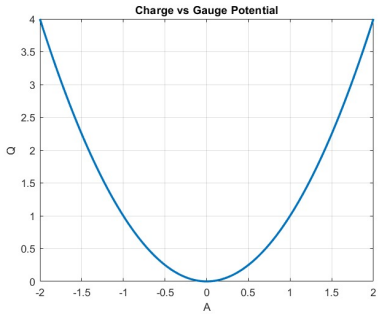
A universal parabola and a one-line current rule give schedulers a thermodynamic floor for discharge.
· “Finite-Time Thermodynamics of Battery Discharging: Power-Efficiency Trade-Off and Optimization”

Independent Hertzian asperities cannot produce friction responses with arbitrarily small positive slope versus normal load.

Active controllers impose non-reciprocal couplings that turn interface-bound modes into ones occupying the full 1D crystal bulk.
· “Extended topological mode in a one-dimensional non-Hermitian acoustic crystal”
The two-body problem stays consistent; anomalies appear only with certain rigid constraints
· “What if active and passive gravitational masses were not equal?”
A dimensionless quadratic change leaves Lagrangians unchanged in scalar, Abelian and non-Abelian theories and yields conservation laws.
Codimension-zero tubes foliated by brane-like hypersurfaces evade the Geroch-Traschen obstruction and reduce to effective point particles in
· “Gravitating Tubes Beyond World Line Paradigm In General Relativity”
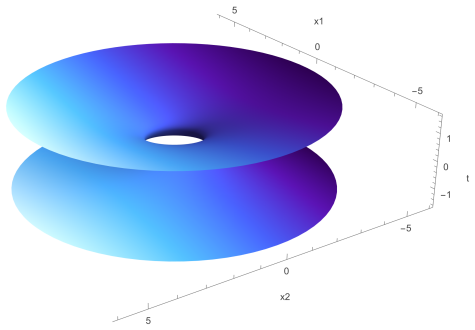
Saddle-center birth always creates a planar-stable branch; every family has a fully stable subfamily.
· “Stable Ballistic Prograde Cyclers in the Three-Body Problem”

Treating them strictly as factors separates human choices from natural values and uncovers geometry hidden by extra units.
The method works for heterogeneous materials and produces a degenerate elliptic system despite hyperbolic primal dynamics.
It matches Lyapunov exponents and SALI while showing algebraic decay for sticky episodes

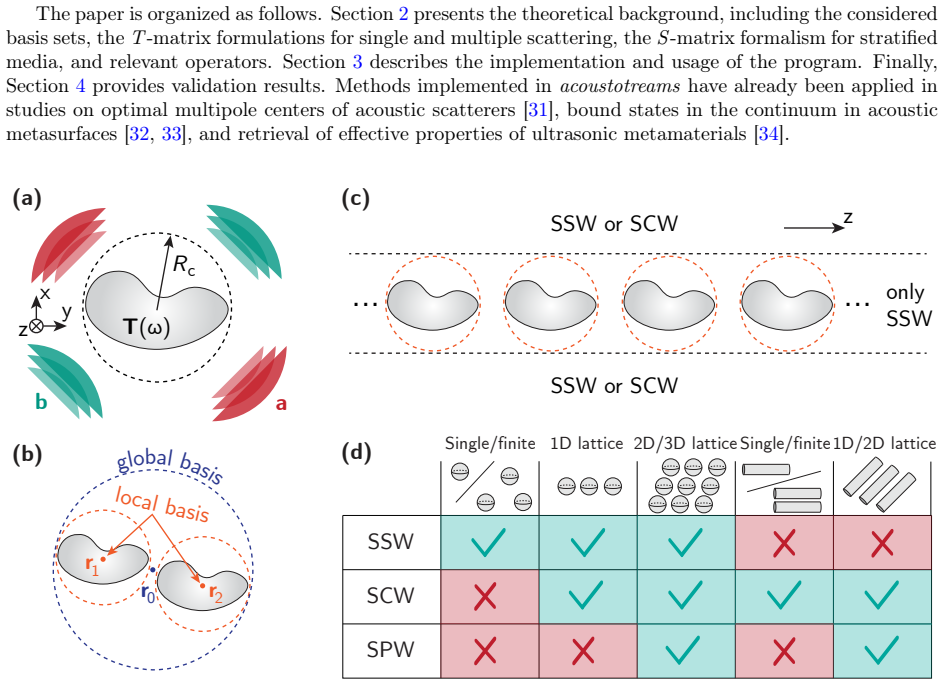
Acoustotreams handles pressure waves on particle clusters and periodic media using scalar wave bases adapted from electromagnetics.
· “acoustotreams -- A Python package for acoustic-wave scattering based on the T-matrix method”
Asymptotics, adiabatic invariance and Hamiltonian reduction all give the same formula for conservative systems with slow changes.

It proves equivalence between strain-driven and stress-driven one-dimensional models and shows a mixed potential remains equally ill-conditi
· “On Potentials and Complementary Potentials in One-Dimensional Nonlocal Integral Formulations”
Sous-vide soak, 66-second boil and ice bath meet 65°C yolk and 85°C albumen exactly while respecting both limits at every instant.

Replacing exponential waits with q-exponentials in mass-conserving chains produces shifted stable laws for 1<q<2 without fractional derivati
· “Asymptotic hydrographs and anomalous dispersion in mass-conserving storage cascades”

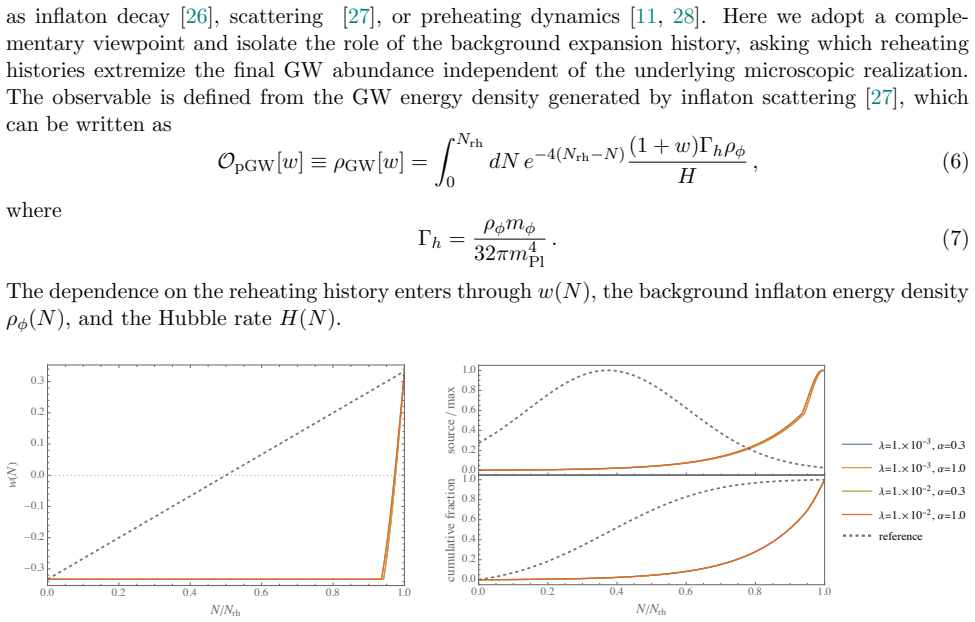
A variational framework in equation-of-state space shows gravitational waves and primordial black holes pick separate expansion paths.
· “Reheating as a variational probe of cosmological observables”
Coupled electrical and optical measurements on steel show opening stresses fall as maximum stress rises under tension-compression loading.
A two-layer closure combining AMD with the Gradient model reduces error across velocity and temperature statistics under receiver conditions
· “A posteriori study of Thermal-Large Eddy Simulation in solar receiver operating conditions”

Hand force shifts pressure under base to generate net turning torque without twisting
· “A tabletop demonstration of distributed friction: the spinning wine glass”

First-order formula from rigid-wall eigenfunction separates wall physics and supplies a phase rule for stabilization, checked at Mach 4.5.
Non-locality vector and nabla products create scalar and tensor types, with kernels and isotropy derived for each.
· “Formulation of stress-gradient models describing three-dimensional non-local medium”
Independent direct and modulated fields produce forced, parametric, and amplified oscillations with matching theory and data.

An explicit softplus energy is polyconvex yet produces falling uniaxial Cauchy stress

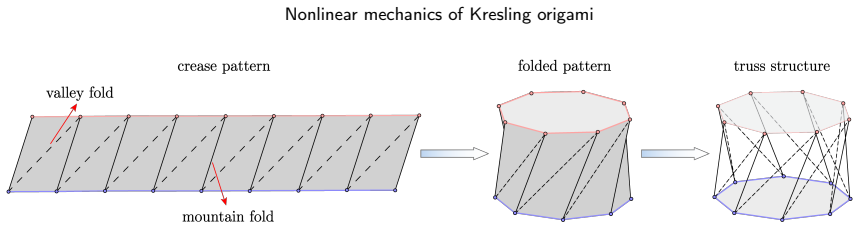
Prescribing critical points allows inverse design of multi-layer origami meta-structures with controlled responses.
· “Nonlinear Mechanics and Predictable Bifurcation of Multi-Cell Kresling Origami Chains”
The antilinear equation produces modes whose coefficients equal each mode's share of radiated power and stay stable near exceptional points.
· “Time-Reversal Characteristic Modes of Lossy Reciprocal Structures”

1% CeO2MnOx/C and 3% CeO2/C catalysts favor the two-electron ORR over full reduction to water.
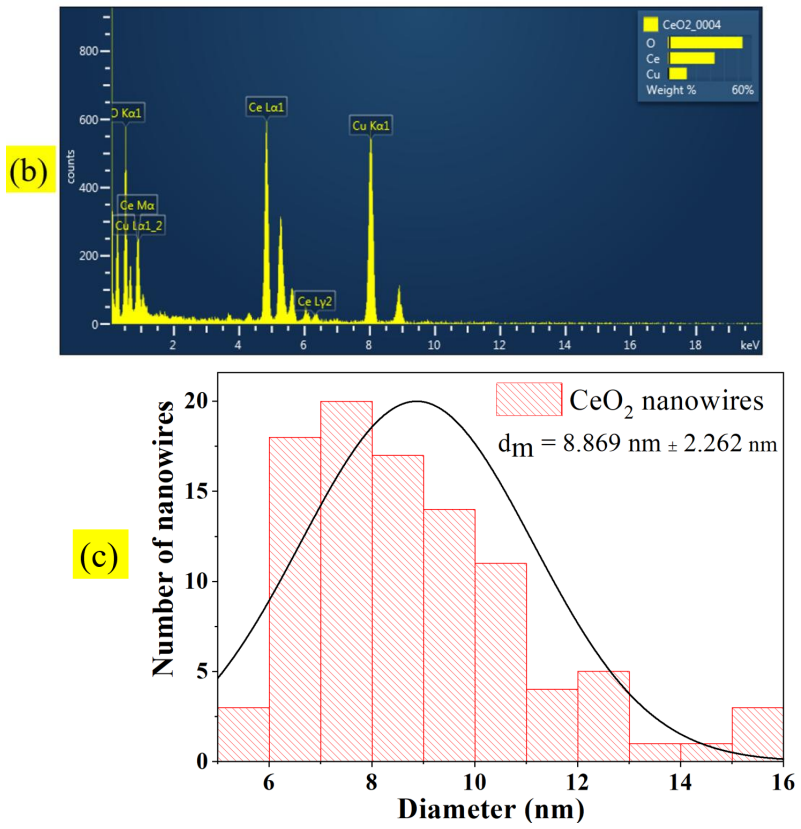
Optimized Fe3O4-NO/C cathodes reach 0.44 g/L peroxide and remove over 70% of two progestins in solar electro-Fenton runs with three-cycle st
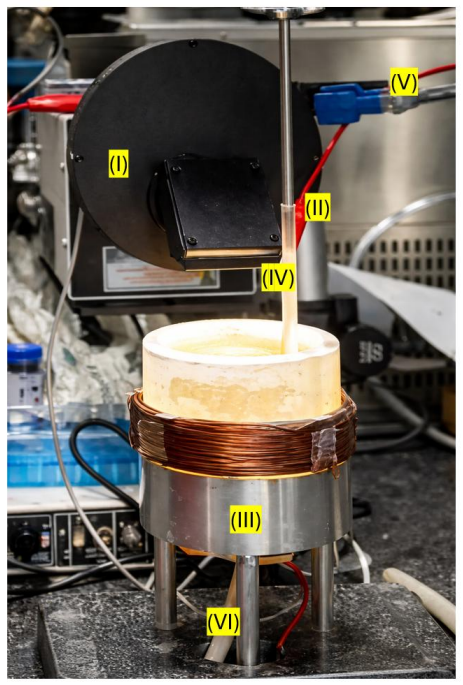
Links between arts and health are extended to propose sound design integration into medicine, shown via Indian music research.
· “The emergence of a new sound research methodology in the field of health: designo-therapy ?”
Double-well energy and overdamped dynamics match Griffith predictions across tensile and shear benchmarks while remaining tractable for body
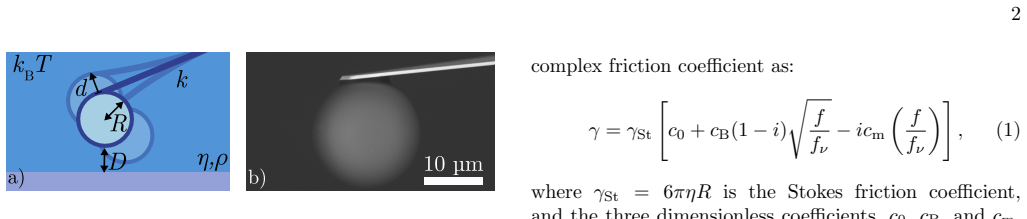
Experiments distinguish added mass from history forces near walls for nanofluidics applications.
· “Quantitative measurement of fluid inertial effects in confined Brownian motion”
Resonance with zero-point radiation allows only integer orientations and excludes m=0, supplying classical accounts of Stern-Gerlach and Zee
Classical equations emerge only when the retained boundary contribution is projected to zero, turning openness into the origin of forcing.
· “Variational Openness: An Open Formulation of Hamilton's Principle”
Method extracts scattering responses from closed-aperture data then reconstructs objects that match original wave behavior exactly

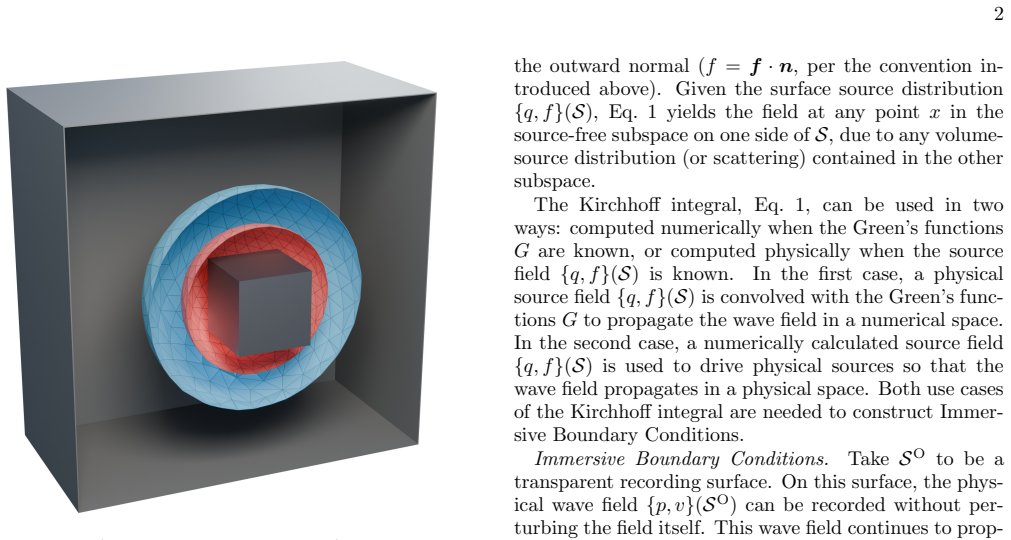
Driving a closed surface with Green's functions hides objects or mimics others for any incoming sound.
· “Acoustic disguising: a unified framework for cloaking and holography”
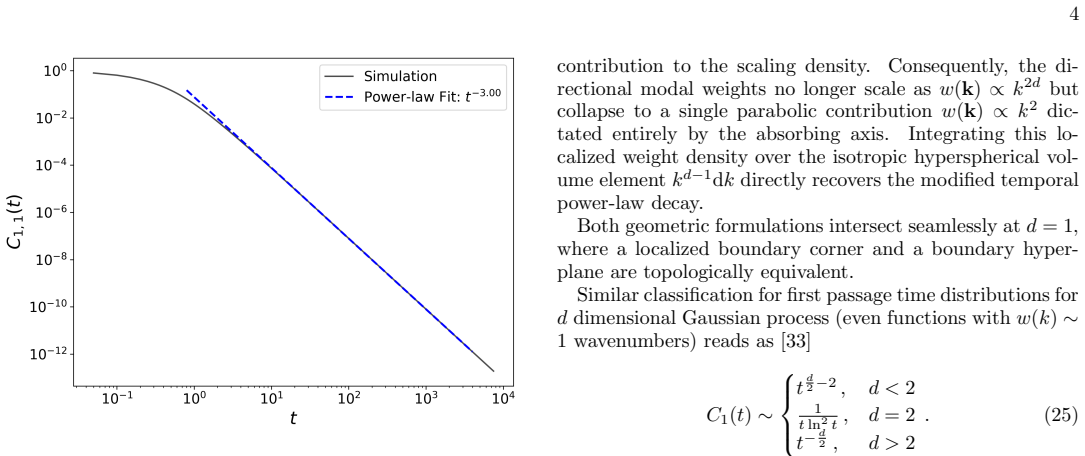
Spectral analysis of layered systems shows asymmetric initial profiles yield nonextensive relaxation invariantly when boundary layer thickne
· “A spectral model of power-law decay in natural and engineered systems”
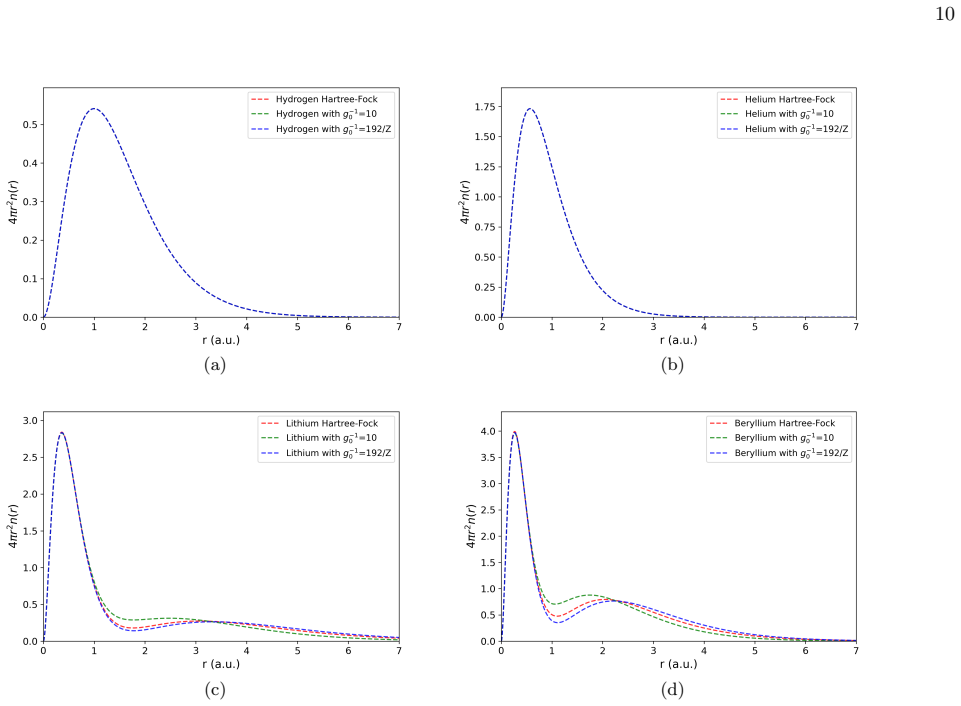
New potential form brings binding energy calculations closer to Hartree-Fock results across the periodic table.
A sudden shift to resonant dispersion produces multiple scattered frequencies plus a spatially fixed decaying mode explained by negative mod
Thermodynamical verification ties the balances together because the relevant fluxes and differentials are not independent
The geometric step then yields explicit first and second normal variations of the area functional without coordinate choices.
· “Minimal surfaces: A Lagrangian derivation of first and second variations”

Closed-form path equations and Lagrange solutions give the heading that reaches the opposite bank fastest under constant, linear, or power-l
· “Discussion on the Physics Problem of a Boat Crossing a River”

Nordtvedt effect and Mercury’s perihelion shift limit the free parameter in this Lagrangian model of Newtonian gravity.
· “Lagrangian Extensions of Newtonian Gravity constrained by Solar System tests”
Review defines 22 gains and areas; 18 remain unchanged after variable swap or lossless port embedding.
· “The Gains, Effective Areas and Equivalent Areas of a Multiport Antenna Array”

Antisymmetry from energy conservation and Liouville property keeps the optimal constant and hypercontractivity rate identical to the linear
· “Logarithmic Sobolev inequality and hypercontractivity for the Navier-Stokes Fokker-Planck operator”
A first-principles electromechanical framework reproduces all observed resonances and shows observability depends on coupled symmetry, not m

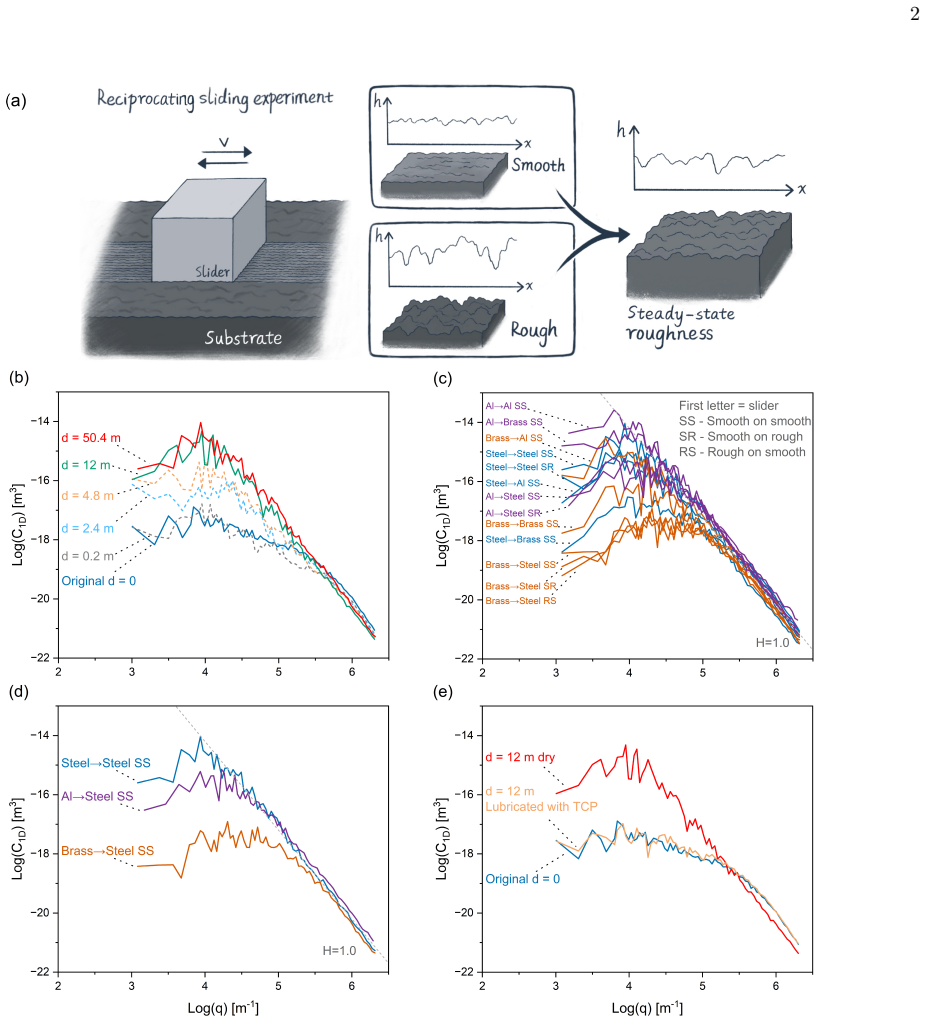
Junction rupture drives material-independent short-scale roughening while larger deformation retains material dependence.
· “Sliding contact creates universal self-affine fractal surfaces”
Calculations for photon, ideal, and electron gases favor observer-dependent Teff over invariant scalar views.
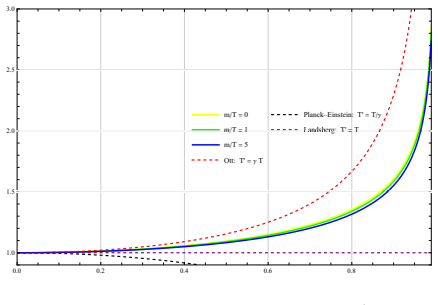
Stopping-time calculations show the quoted values cannot be maintained uniformly over macroscopic distances.
· “Relativistic deceleration vs acceleration, Unruh effect observation, and the Schott energy”
78 percent of simulation groups reached required precision versus 52 percent using physical apparatus by avoiding reaction-time synchronizat
· “Constraints From Simulation Improve Experiential Outcomes in Laboratory Environment”

Analytical model shows dependence only on volume, so literature prototypes could increase power 10-400 times with larger coils
· “Coils in thermomagnetic harvesters -- a comparative study”

Case studies show how examining boundary behaviors supplies intuition and resolves paradoxes beyond standard derivations.
· “Asymptotic Behavior in High School Physics: physics 1 insights and discussions”

High-frequency expansion yields identical transition boundaries for a broad class of nonlinear systems, allowing exact stability analysis.
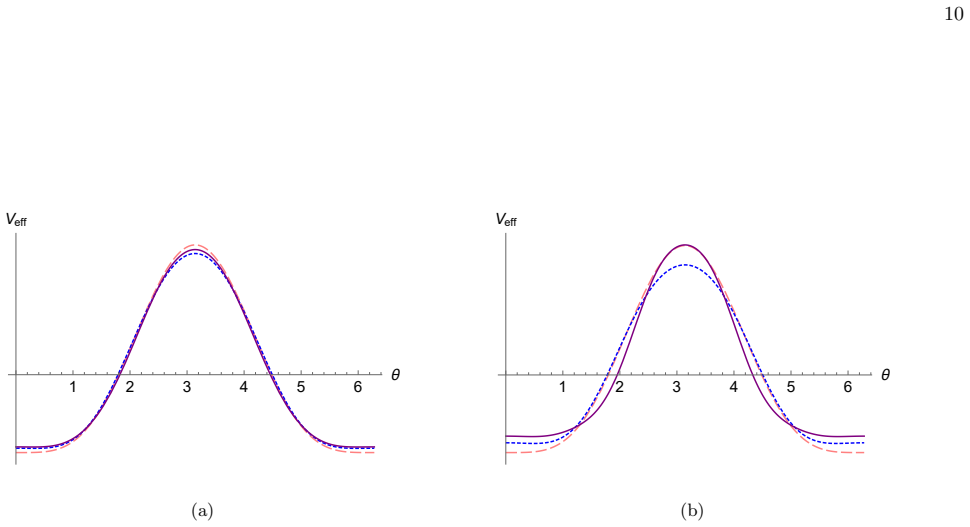
Asymptotic reduction yields V-fold angles and snap-through thresholds for photoresponsive beams under laser light.
· “A nonlinear beam model for photoresponsive thermoelastic solids driven by localised heating”

Shortcut method produces cart motions that end with the pole upright and motionless inside the linear regime.
· “Invariant-based inverse engineering for balanced displacement of a cart-pole system”

The Dirac-Bergmann procedure on a ball rolling down an incline yields the same quantum dynamics as the unconstrained intrinsic description o
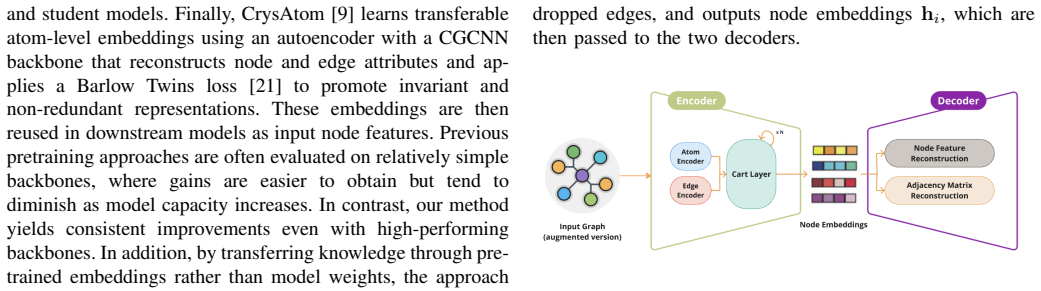
Gains reach 10% when labeled data is cut to one quarter of the full set
· “UNATE: UNsupervised ATomic Embedding for crystal structures property prediction”
Homogeneity, inertia and group structure give a one-parameter family; the invariant speed fixes R = −c².
· “A Symmetry-First Elementary Derivation of the Lorentz Transformation”

Wobbling from off-diagonal inertia changes gives a signature to test whether such collisions explain gamma-ray and fast radio bursts.

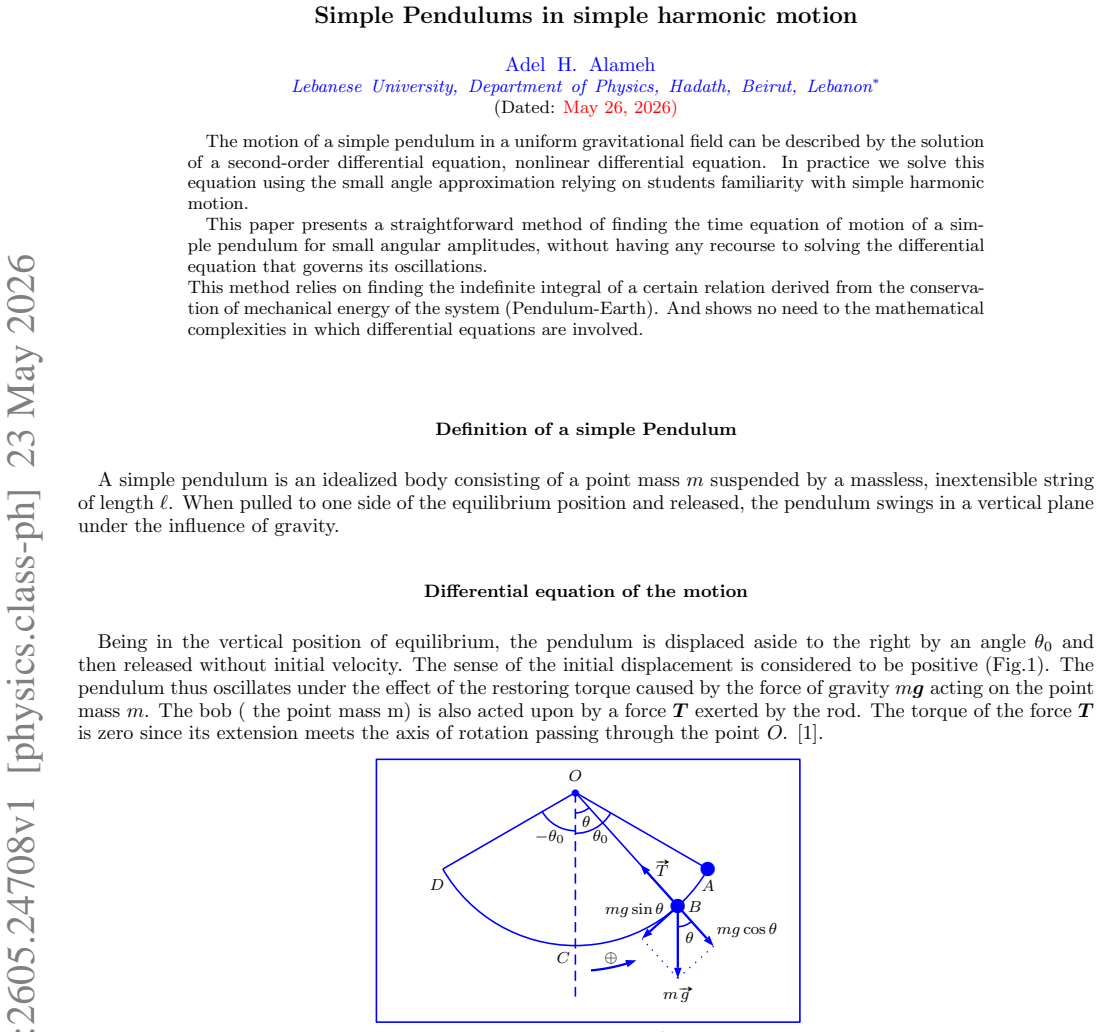
Indefinite integration of a relation from mechanical energy conservation gives the sinusoidal dependence for small amplitudes.
χ depending only on lightfront momentum keeps the quantum-corrected equation integrable, yielding closed-form energy and velocity.
· “Exact solution of the Gaunt-modified Landau-Lifshitz equation in a plane wave”

ChatMOSP retrieves parameters from literature to reproduce Pd nanoparticle shape changes and Pt activity oscillations under CO oxidation con
· “ChatMOSP: A Chemistry-Grounded Mobile Agent for Working-State Catalyst Simulations”
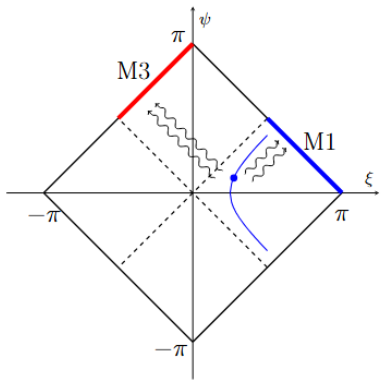
Zero flux through infinity inside the wedge in both Minkowski and Rindler frames despite non-trivial coordinate map at large distances.
Deterministic step rule depending on position creates Lorentz-like stationary state without memory or non-local jumps
· “Emergent heavy-tailed distributions from a Markovian random walk”

Derivations using reciprocity match simulations when the line cross section is much smaller than the wavelength.
· “Dielectric insulated transmission lines in receiving antenna operation”

Reversing surface load sign on a neo-Hookean half-space produces instabilities absent under dead loading.
· “Tensile wrinkling and creasing of an elastic half-space under a suction load”
Immersion apparatus with heat-leak correction gives value within 0.42 mK of adiabatic measurements, enabling practical use with long-stem th
Benchmark against known non-ablating capsule shows common meteor approximation overestimates blast radius by more than factor of three.
· “Benchmarking Cylindrical Blast Wave Theory Against the OSIRIS-REx Sample Return Capsule Reentry”
Higher waviness increases inter-fiber contacts and transverse stiffness, requiring more load for target volume fraction
Higher-order Lagrangian receives a standard Hamiltonian treatment suitable for advanced classical mechanics teaching.
· “Introduction to Higher Order Classical Dynamics: Pais-Uhlenbeck Model and Coupled Oscillators”

Numerical search over asperity designs achieves power-law and bilinear friction responses on demand for dry contacts.
· “Automated Discovery of Metainterfaces with Tailored Friction Laws”
Humphrey-Yin formulation captures exponential response and directional differences in porcine diaphragmatic tissue data.