Towards multiobjective optimization and control of smart grids
Pith reviewed 2026-05-24 22:17 UTC · model grok-4.3
The pith
Pareto optimality resolves the trade-off between load shaping and flexibility in smart grid battery control.
A machine-rendered reading of the paper's core claim, the machinery that carries it, and where it could break.
Core claim
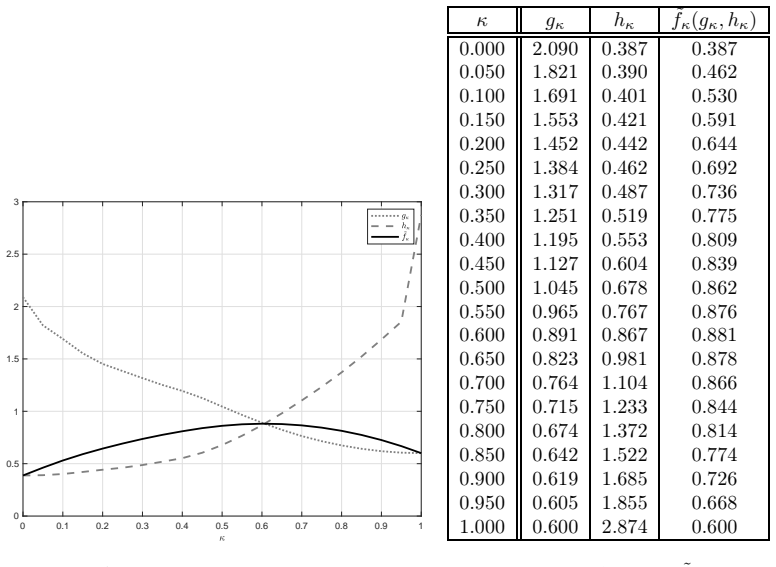
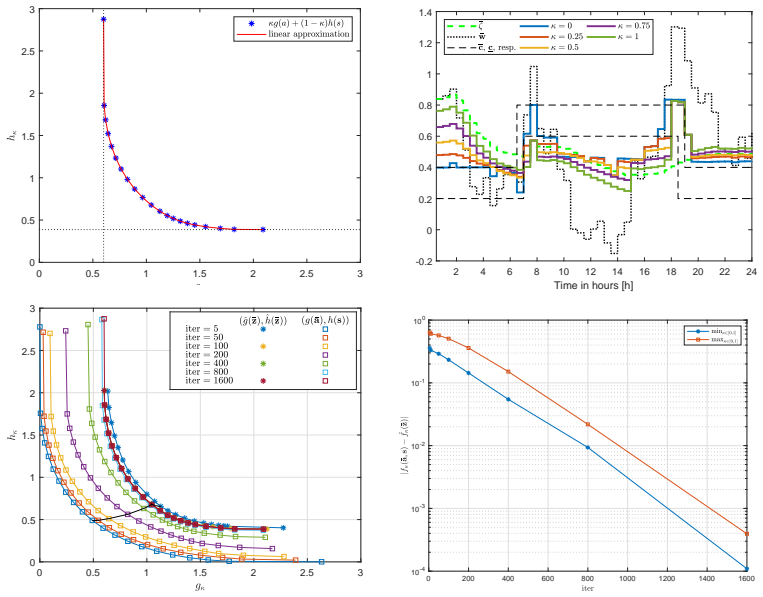
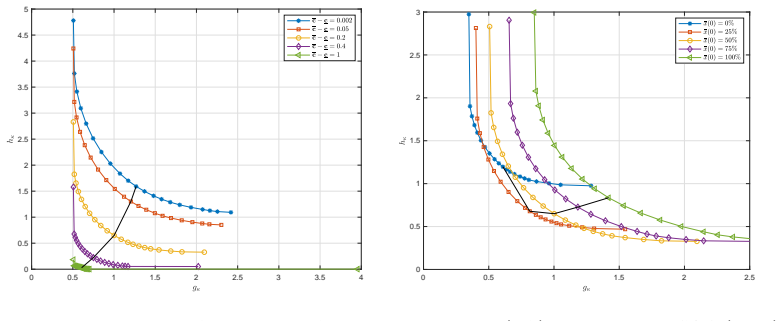
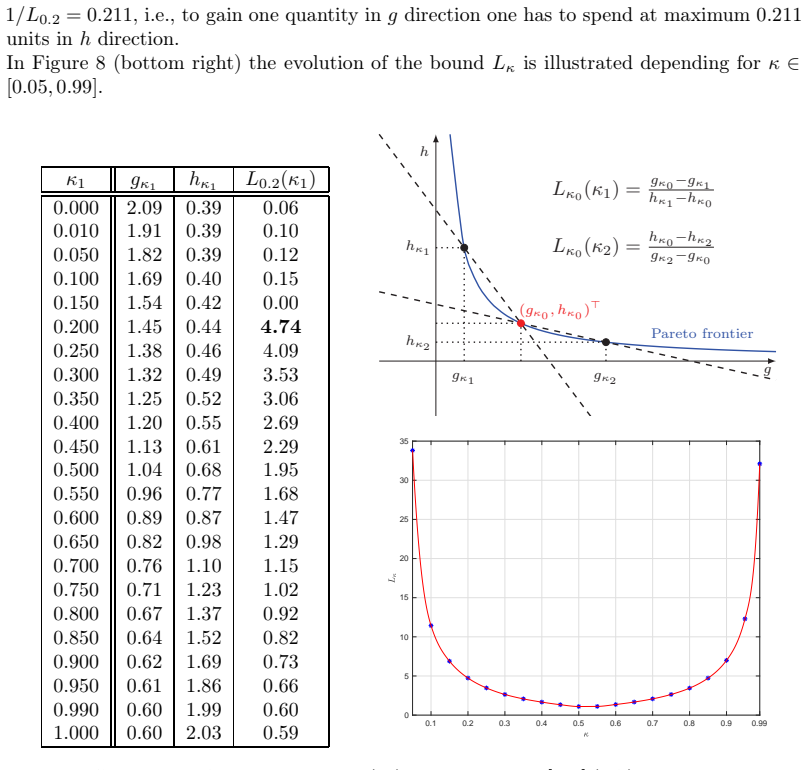
We propose to make use of the concept of Pareto optimality in order to resolve this issue in a multiobjective framework. In particular, we analyse the Pareto frontier and quantify the trade-off between the non-aligned objectives to properly balance them.
What carries the argument
The Pareto frontier of a multiobjective optimization problem that trades off load-shaping performance against retained flexibility in battery storage.
If this is right
- Control policies can be selected from the Pareto frontier to achieve explicit, tunable balances between the two objectives.
- The magnitude of the compromise required between load shaping and flexibility becomes directly measurable.
- Battery dispatch decisions gain a systematic basis instead of ad-hoc weighting of the two goals.
- Grid operators obtain a visual or numerical tool for communicating the cost of prioritizing resilience over daily performance.
Where Pith is reading between the lines
- The same Pareto-frontier analysis could be applied to other pairs of conflicting grid objectives such as minimizing cost versus minimizing emissions.
- If the frontier proves stable under forecast uncertainty, it might support real-time receding-horizon implementations.
- Embedding this framework in existing model-predictive control software would require only the addition of a second objective and a frontier-extraction routine.
Load-bearing premise
The competing objectives of load shaping and flexibility can be meaningfully formulated as a multiobjective optimization problem whose Pareto frontier yields actionable control decisions.
What would settle it
A concrete simulation or field test in which every point on the computed Pareto frontier fails to deliver a usable operating policy that simultaneously meets acceptable thresholds for load deviation and available reserve capacity.
Figures
read the original abstract
The rapid uptake of renewable energy sources in the electricity grid leads to a demand in load shaping and flexibility. Energy storage devices such as batteries are a key element to provide solutions to these tasks. However, typically a trade-off between the performance related goal of load shaping and the objective of having flexibility in store for auxiliary services, which is for example linked to robustness and resilience of the grid, can be observed. We propose to make use of the concept of Pareto optimality in order to resolve this issue in a multiobjective framework. In particular, we analyse the Pareto frontier and quantify the trade-off between the non-aligned objectives to properly balance them.
Editorial analysis
A structured set of objections, weighed in public.
Referee Report
Summary. The manuscript proposes using the concept of Pareto optimality within a multiobjective optimization framework to address the trade-off between load shaping performance and flexibility provision (for robustness and resilience) in smart grids that incorporate energy storage devices such as batteries. It states the intent to analyze the Pareto frontier in order to quantify these trade-offs and balance the non-aligned objectives.
Significance. The high-level suggestion to treat load shaping versus flexibility as competing objectives whose Pareto frontier can inform control decisions is consistent with existing multiobjective methods in power systems. However, because the manuscript supplies no model, no objective functions, no dynamical equations, and no numerical or analytical results, the significance of the contribution as presented is limited to identifying a possible research direction rather than advancing the state of the art.
major comments (1)
- [Abstract] Abstract: The text asserts that 'we analyse the Pareto frontier and quantify the trade-off' between load shaping and flexibility, yet the manuscript contains no mathematical formulation of the objectives, no definition of the decision variables or constraints, and no derivation or computation of any Pareto set. This absence makes the central claim unverifiable.
Simulated Author's Rebuttal
We thank the referee for their review and the editor for the opportunity to respond. We address the major comment below.
read point-by-point responses
-
Referee: [Abstract] Abstract: The text asserts that 'we analyse the Pareto frontier and quantify the trade-off' between load shaping and flexibility, yet the manuscript contains no mathematical formulation of the objectives, no definition of the decision variables or constraints, and no derivation or computation of any Pareto set. This absence makes the central claim unverifiable.
Authors: We agree with the referee that the abstract overstates the manuscript content. The paper is a brief conceptual proposal outlining the potential use of Pareto optimality to address trade-offs between load shaping and flexibility in battery-based smart grids, without supplying models, objective functions, or any analysis. We will revise the abstract to accurately describe the contribution as proposing this multiobjective approach as a research direction, removing the claim that the Pareto frontier has been analysed or the trade-off quantified within the manuscript. revision: yes
Circularity Check
No significant circularity; proposal lacks derivation chain
full rationale
The manuscript is a high-level proposal to formulate load shaping versus flexibility as a multiobjective optimization problem and inspect its Pareto frontier. No equations, fitted parameters, uniqueness theorems, or self-citations appear in the provided abstract or reader's summary that could reduce a claimed result to its own inputs by construction. The central claim is a framework suggestion consistent with standard multiobjective control ideas and does not assert a theorem or empirical prediction that could be circular. This is the expected honest non-finding for a conceptual paper without internal derivations.
Axiom & Free-Parameter Ledger
axioms (1)
- domain assumption Load shaping and flexibility objectives are non-aligned and can be balanced via Pareto optimality in a multiobjective setting.
Reference graph
Works this paper leans on
-
[1]
E. L. Ratnam, S. R. Weller, and C. M. Kellett. An optimizat ion-based approach for assessing the benefits of residential battery storage in con junction with solar PV. Pro- ceedings of the 9th IEEE Symposium on Bulk Power System Dynam ics and Control, Optimization, Security and Control of the Emerging Power Gr id (IREP), pages 1–8, 2013
work page 2013
-
[2]
K. Worthmann, C. M. Kellett, P. Braun, L. Grüne, and S. R. W eller. Distributed and decentralized control of residential energy systems incor porating battery storage. IEEE Transactions on Smart Grid , 6(4):1914–1923, 2015
work page 1914
-
[3]
D. Westermann, S. Nicolai, and P. Bretschneider. Energy management for distribution networks with storage systems — a hierarchical approach. Pr oceedings of the IEEE Power and Energy Society General Meeting - Conversion and De livery of Electrical Energy in the 21st Century, pages 1–6, 2008
work page 2008
-
[4]
D. E. Olivares, A. Mehrizi-Sani, A. H. Etemadi, C. A. Cañi zares, R. Iravani, M. Kaz- erani, A. H. Hajimiragha, O. Gomis-Bellmunt, M. Saeedifard , R. Palma-Behnke, G. A. Jiménez-Estévez, and N. D. Hatziargyriou. Trends in microg rid control. IEEE Trans- actions on Smart Grid , 5(4):1905–1919, 2014
work page 1905
-
[5]
S. Parhizi, H. Lotfi, A. Khodaei, and S. Bahramirad. State of the art in research on microgrids: A review. IEEE Access, 3(1):890–925, 2015
work page 2015
-
[6]
H. Lotfi and A. Khodaei. AC versus DC microgrid planning. IEEE Transactions on Smart Grid , 8(1):296–304, 2017
work page 2017
-
[7]
R. R. Appino, J. Á. G. Ordiano, R. Mikut, T. Faulwasser, an d V. Hagenmeyer. On the use of probabilistic forecasts in scheduling of renewab le energy sources coupled to storages. Applied Energy, 210:1207–1218, 2018
work page 2018
-
[8]
D. W. von der Meer, M. Shepero, A. Svensson, J. Widén, and J . Munkhammar. Prob- abilistic forecasting of electricity consumption, photov oltaic power generation and net demand of an individual building using gaussian processes. Applied Energy , 213:195– 207, 2018
work page 2018
-
[9]
R. Palma-Behnke, C. Benavides, F. Lanas, B. Severino, L. Reyes, J. Llanos, and D. Sáez. A microgrid energy management system based on the rolling ho rizon strategy. IEEE Transactions on Smart Grid , 4(2):996–1006, 2013
work page 2013
-
[10]
A. Parisio, E. Rikos, and L. Glielmo. A model predictive control approach to microgrid operation optimization. IEEE Transcations on Control Systems Technology, 22(5):1813– 1827, 2014
work page 2014
-
[11]
K. Worthmann, C. M. Kellett, L. Grüne, and S. R. Weller. D istributed control of resi- dential energy systems using a market maker. IF AC Proceedings Volumes, 47(3):11641– 11646, 2014
work page 2014
-
[12]
L. Grüne and J. Pannek. Nonlinear Model Predictive Control. Theory and Algorithms . Springer, 2nd edition, 2017
work page 2017
-
[13]
Model Predictive Control: Theory, Computation, and Design
J Rawlings, D Mayne, and M Diehl. Model Predictive Control: Theory, Computation, and Design . Nob Hill Publishing, 2017. 18
work page 2017
-
[14]
D. I. Hidalgo-Rodríguez and J. Myrzik. Optimal operati on of interconnected home- microgrids with flexible thermal loads: A comparison of dece ntralized, centralized, and hierarchical-distributed model predictive control. Proc eedings of the IEEE Power Sys- tems Computation Conference (PSCC), pages 1–7, 2018
work page 2018
- [15]
- [16]
- [17]
-
[18]
A. Majzoobi and A. Khodaei. Application of microgrids i n supporting distribution grid flexibility. IEEE Transactions on Power Systems , 32(5):3660–3669, 2017
work page 2017
-
[19]
E. L. Ratnam, S. R. Weller, C. M. Kellett, and A. T. Murray . Residential load and rooftop PV generation: an Australian distribution network dataset. International Jour- nal of Sustainable Energy , 36(8):787–806, 2017
work page 2017
-
[20]
C. Le Floch, S. Bansal, C. J. Tomlin, S. Moura, and M. N. Ze ilinger. Plug-and-play model predictive control for load shaping and voltage contr ol in smart grids. IEEE Transactions on Smart Grid , 10(3):2334–2344, 2017
work page 2017
-
[21]
A. Baliyan, K. Gaurav, and S. K. Mishra. A review of short term load forecasting using artificial neural network models. Procedia Computer Science, 48:121–125, 2015
work page 2015
-
[22]
A. R. Khan, A. Mahmood, A. Safdar, Z. A. Khan, and N. A. Kha n. Load forecasting, dynamic pricing and dsm in smart grid: A review. Renewable and Sustainable Energy Reviews, 54:1311–1322, 2016
work page 2016
-
[23]
Y. V. Makarov, P. V. Etingov, J. Ma, Z. Huang, and K. Subba rao. Incorporating uncertainty of wind power generation forecast into power sy stem operation, dispatch, and unit commitment procedures. IEEE Transactions on Sustainable Energy , 2(4):433– 442, 2011
work page 2011
-
[24]
C. Wan, Z. Xu, P. Pinson, Z. Y. Dong, and K. P. Wong. Probab ilistic forecasting of wind power generation using extreme learning machine. IEEE Transaction on Power Systems, 29(3):1033–1044, 2014
work page 2014
-
[25]
F. Golestaneh, P. Pinson, and H. B. Gooi. Very short-ter m nonparametric probabilistic forecasting of renewable energy generation—with applicati on to solar energy. IEEE Transactions on Power Systems , 31(5):3850–3863, 2016
work page 2016
-
[26]
J. Antonanzas, N. Osorio, R. Escobar, R. Urraca, F.J. Ma rtinez-de Pison, and F. Antonanzas-Torres. Review of photovoltaic power foreca sting. Solar Energy, 136:78– 111, 2016
work page 2016
-
[27]
J. Jahn. Vector Optimization - Theory, Applications, and Extensions . Springer, 2004
work page 2004
-
[28]
L. Grüne and M. Stieler. Performance guarantees for mul tiobjective model predictive control. Proceedings of the 56th IEEE Annual Conference on D ecision and Control (CDC), pages 5545–5550, 2017
work page 2017
-
[29]
G. Eichfelder. Adaptive scalarization methods in multiobjective optimiza tion. Springer, 2008. 19
work page 2008
-
[30]
P. Braun, P. Sauerteig, and K. Worthmann. Distributed o ptimization based control on the example of microgrids. In M. J. Blondin, P. M. Pardalos, a nd J. S. Sáez, editors, Computational Intelligence and Optimization Methods for Co ntrol Engineering, volume 150 of Springer Optimization and Its Applications . Springer International Publishing,
-
[31]
D. G. Luenberger. Linear and nonlinear programming , volume 2. Springer, 1984
work page 1984
-
[32]
M. Ehrgott. Multicriteria Optimization . Springer, 2005
work page 2005
-
[33]
D. T. Luc. Theory of Vector Optimization . Springer, 1988
work page 1988
-
[34]
H. P. Benson. On a domination property for vector maximi zation with respect to cones. Journal of Optimization Theory and Applications , 39(1):125–132, Jan 1983
work page 1983
-
[35]
Y. Sawaragi, H. Nakayama, and T. Tanino. Theory of Multiobjective Optimization . Academic Press, Inc., 1985
work page 1985
-
[36]
P. Braun, L. Grüne, C. M. Kellett, S. R. Weller, and K. Wor thmann. Model Predictive Control of Residential Energy Systems Using Energy Storage and Controllable Loads. In G. Russo, V. Capasso, G. Nicosia, and V. Romano, editors, Progress in Industrial Mathematics at ECMI 2014 , volume 22 of Mathematics in Industry , pages 617–623. Springer International P...
work page 2014
-
[37]
M. C. Mabel and E. Fernandez. Analysis of wind power gene ration and prediction using ANN: A case study. Renewable Energy, (33):986–992, 2008
work page 2008
-
[38]
S. K. H. Chow, E. W. M. Lee, and D. H. W. Li. Short-term pred iction of photovoltaic energy generation by intelligent approach. Energy and Buildings , pages 660–667, 2012
work page 2012
-
[39]
T. Faulwasser, A. Engelmann, T. Mühlpfordt, and V. Hage nmeyer. Optimal power flow: an introduction to predictive, distributed and stocha stic control challenges. at- Automatisierungstechnik, 66(7):573–589, 2018. 20
work page 2018
discussion (0)
Sign in with ORCID, Apple, or X to comment. Anyone can read and Pith papers without signing in.