Validation of Modulation Transfer Functions and Noise Power Spectra from Natural Scenes
Pith reviewed 2026-05-24 18:35 UTC · model grok-4.3
The pith
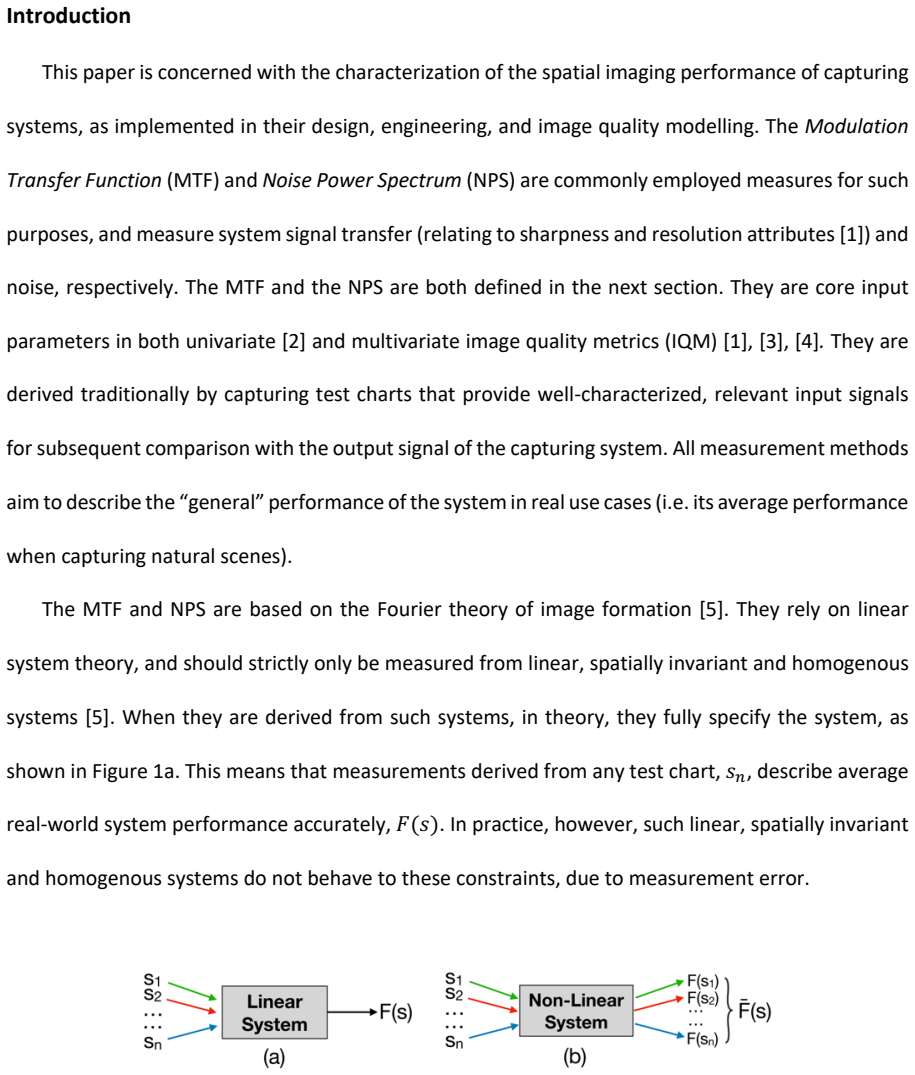
New scene-and-process-dependent MTF and NPS measures better suit non-linear imaging systems than test charts.
A machine-rendered reading of the paper's core claim, the machinery that carries it, and where it could break.
Core claim
SPD-MTF and SPD-NPS measures derived from natural scenes characterize system sharpness and noise either for one scene, averaged over many scenes, or the level of scene-dependency, and all proposed measures are robust and preferable for scene-dependent systems than current measures.
What carries the argument
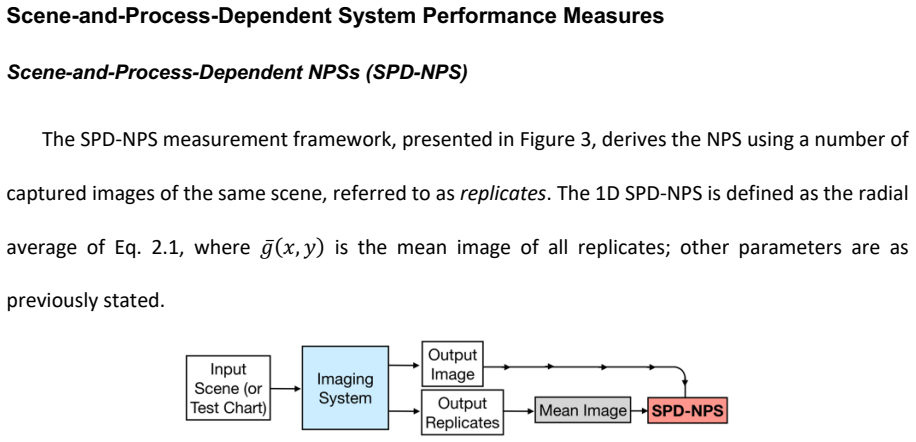
Scene-and-process-dependent modulation transfer function (SPD-MTF) and noise power spectrum (SPD-NPS), which use natural scene signals to isolate performance in non-linear systems.
If this is right
- System performance can be reported for specific individual scenes rather than generic test signals.
- Average real-world performance can be estimated by averaging SPD measures across a set of natural scenes.
- The degree of scene-dependency in a given imaging pipeline can be quantified directly.
- Dead leaves charts can be repurposed to generate SPD-MTF and SPD-NPS without requiring new capture hardware.
Where Pith is reading between the lines
- Camera testing standards could move from fixed charts toward curated natural-scene libraries for more predictive quality assessment.
- Image-processing algorithms might be tuned by minimizing measured scene-dependency rather than optimizing only average metrics.
- The same scene-signal approach could extend to other system properties such as tone mapping or color reproduction.
Load-bearing premise
Natural scene signals provide a more representative and accurate basis for MTF/NPS measurement in non-linear systems than traditional test charts.
What would settle it
If side-by-side tests on held-out natural images show that traditional chart-based MTF/NPS predict actual captured sharpness and noise better than the SPD versions, the preference for the new measures would be refuted.
Figures
read the original abstract
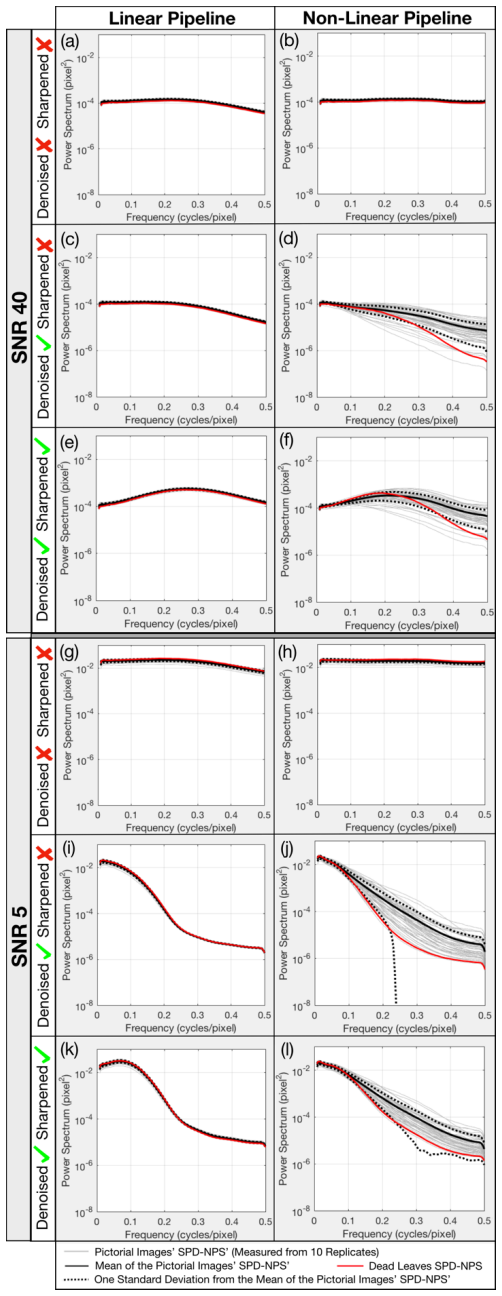
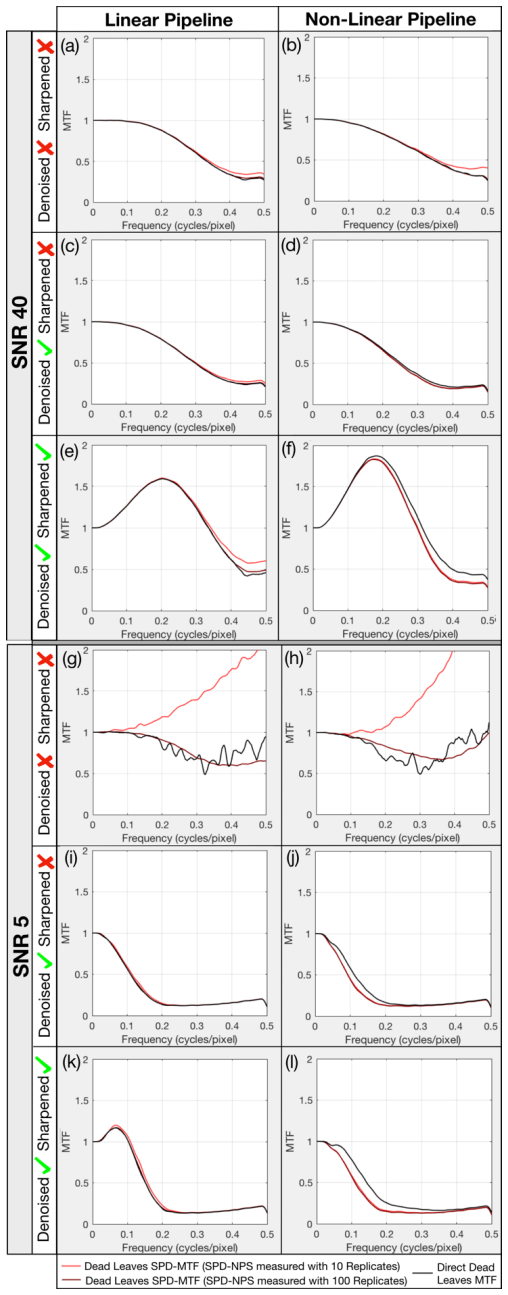
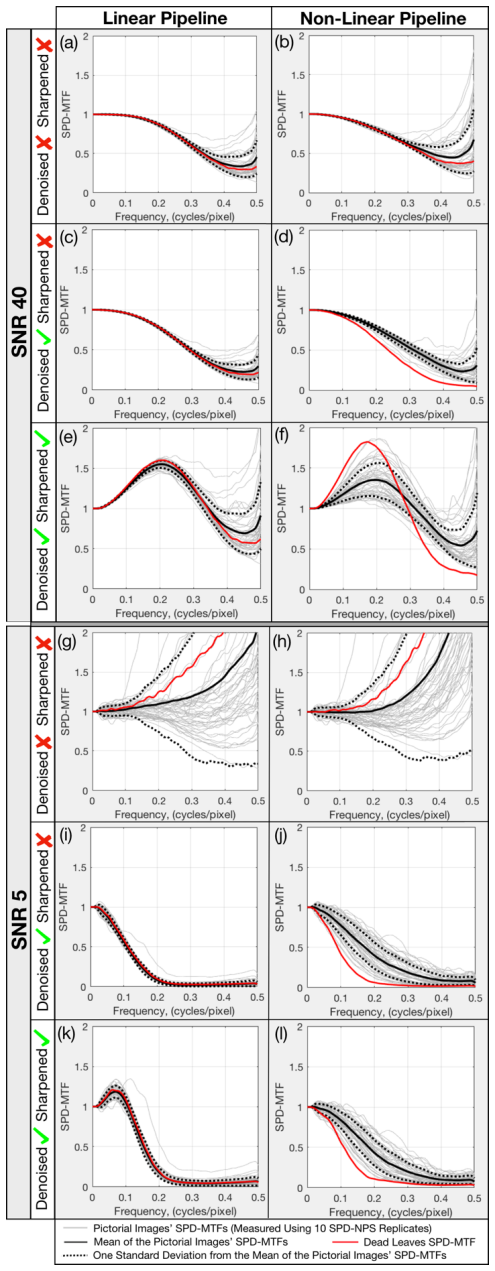
The Modulation Transfer Function (MTF) and the Noise Power Spectrum (NPS) characterize imaging system sharpness/resolution and noise, respectively. Both measures are based on linear system theory but are applied routinely to systems employing non-linear, content-aware image processing. For such systems, MTFs/NPSs are derived inaccurately from traditional test charts containing edges, sinusoids, noise or uniform tone signals, which are unrepresentative of natural scene signals. The dead leaves test chart delivers improved measurements, but still has limitations when describing the performance of scene-dependent systems. In this paper, we validate several novel scene-and-process-dependent MTF (SPD-MTF) and NPS (SPD-NPS) measures that characterize, either: i) system performance concerning one scene, or ii) average real-world performance concerning many scenes, or iii) the level of system scene-dependency. We also derive novel SPD-NPS and SPD-MTF measures using the dead leaves chart. We demonstrate that all the proposed measures are robust and preferable for scene-dependent systems than current measures.
Editorial analysis
A structured set of objections, weighed in public.
Referee Report
Summary. The paper proposes and validates novel scene-and-process-dependent MTF (SPD-MTF) and NPS (SPD-NPS) measures derived from natural scenes (and the dead leaves chart) to characterize imaging system performance. These measures aim to handle non-linear, content-aware processing by quantifying either single-scene performance, average real-world performance across scenes, or the degree of scene-dependency, claiming robustness and superiority over traditional test-chart-based MTF/NPS for scene-dependent systems.
Significance. If the SPD measures are shown to recover classical MTF/NPS on linear systems without residual scene variation or bias while correctly isolating scene-dependency in non-linear cases, the work would meaningfully advance evaluation of modern imaging pipelines beyond linear-system assumptions. The derivation of SPD variants from the dead leaves chart is a constructive addition if empirically supported.
major comments (2)
- [Validation results (likely §4 or §5)] The central claim of robustness and preferability requires that SPD-MTF/SPD-NPS recover traditional MTF/NPS (from edges/sinusoids) on linear, scene-independent systems without introducing scene-to-scene variation or bias. No section or result in the manuscript reports this necessary sanity check; without it the isolation of scene-dependency is not demonstrated to be clean.
- [Methods and results sections] The abstract and methods assert that the proposed measures are 'robust' for non-linear systems, yet the manuscript provides no quantitative error analysis, confidence intervals, or cross-validation against ground-truth linear-system responses to support the robustness claim.
minor comments (2)
- [Introduction or §2] Notation for SPD-MTF and SPD-NPS should be defined explicitly with equations early in the paper to avoid ambiguity when comparing to classical definitions.
- [Figures] Figure captions for any example natural scenes or dead-leaves results should include the exact imaging conditions and processing pipeline used.
Simulated Author's Rebuttal
We thank the referee for their constructive comments on our manuscript. We address each major comment below and indicate where revisions will be made to strengthen the validation of the SPD-MTF and SPD-NPS measures.
read point-by-point responses
-
Referee: [Validation results (likely §4 or §5)] The central claim of robustness and preferability requires that SPD-MTF/SPD-NPS recover traditional MTF/NPS (from edges/sinusoids) on linear, scene-independent systems without introducing scene-to-scene variation or bias. No section or result in the manuscript reports this necessary sanity check; without it the isolation of scene-dependency is not demonstrated to be clean.
Authors: We agree that a direct sanity check demonstrating recovery of classical MTF/NPS values on linear systems, with minimal scene-to-scene variation, is necessary to fully isolate and validate the scene-dependency component. Our current demonstrations focus on non-linear, content-aware processing using natural scenes and the dead leaves chart, where traditional measures are known to be inaccurate. We will add a new subsection in the results (likely §4 or §5) that applies the SPD measures to simulated linear systems (e.g., using edge and sinusoidal inputs) and reports the recovered MTF/NPS values alongside traditional calculations, including any residual variation across scenes. revision: yes
-
Referee: [Methods and results sections] The abstract and methods assert that the proposed measures are 'robust' for non-linear systems, yet the manuscript provides no quantitative error analysis, confidence intervals, or cross-validation against ground-truth linear-system responses to support the robustness claim.
Authors: The manuscript supports the robustness claim through comparative examples and visual/qualitative agreement with expected behavior on non-linear pipelines, but we acknowledge the absence of formal quantitative error metrics, confidence intervals, or explicit cross-validation against ground-truth linear responses. We will revise the methods and results sections to include quantitative error analysis (e.g., mean squared deviation from reference measures where applicable), bootstrap-derived confidence intervals for the SPD estimates, and cross-validation results on both linear and non-linear test cases. revision: yes
Circularity Check
No significant circularity; derivation chain is self-contained
full rationale
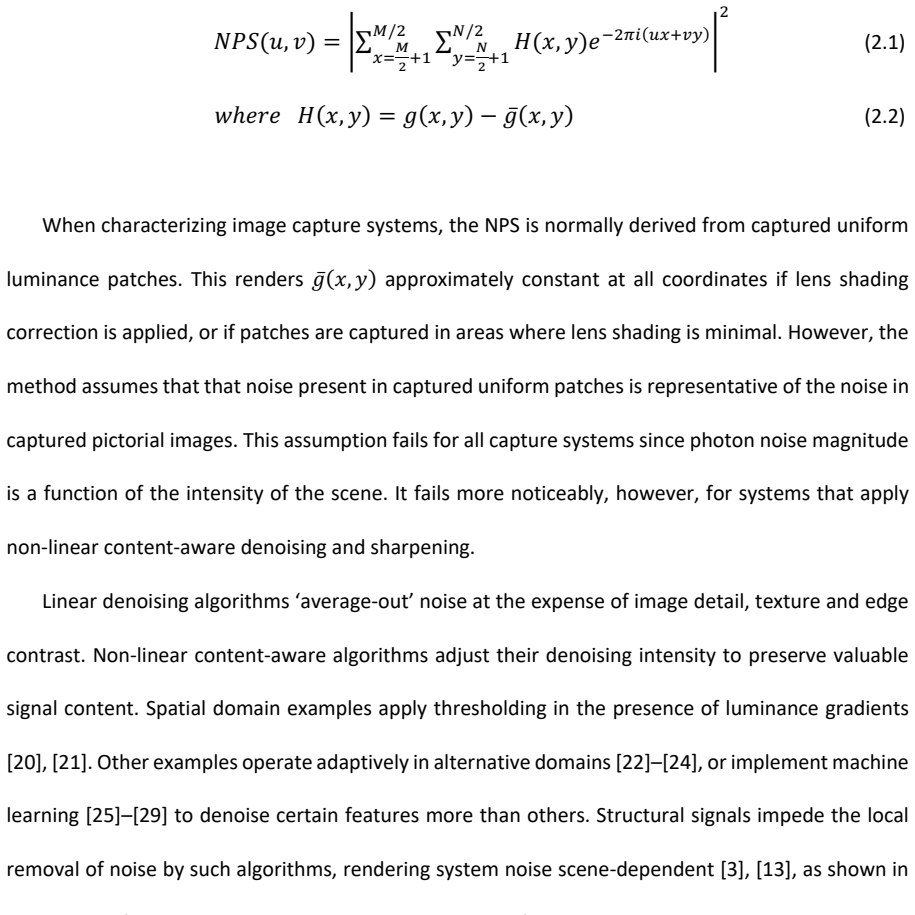
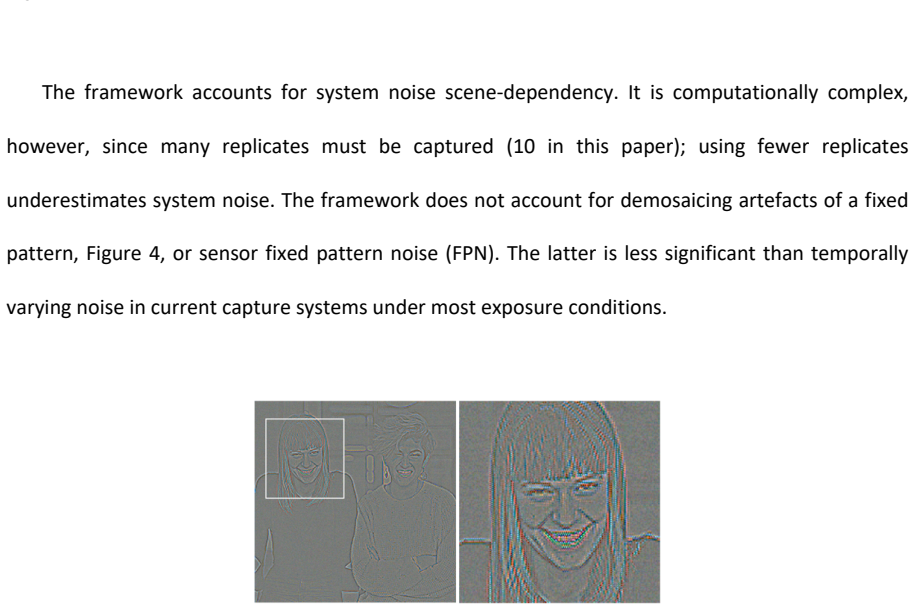
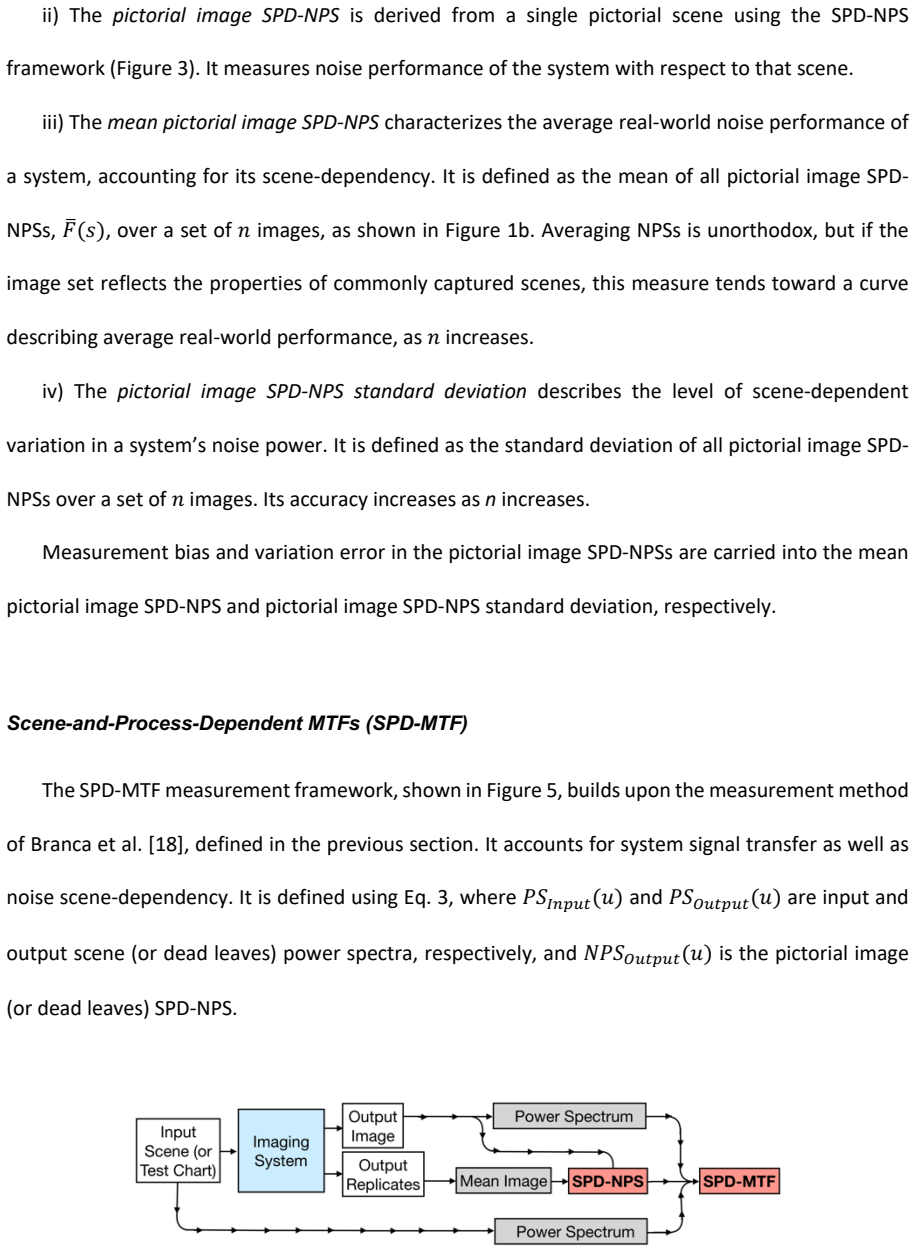
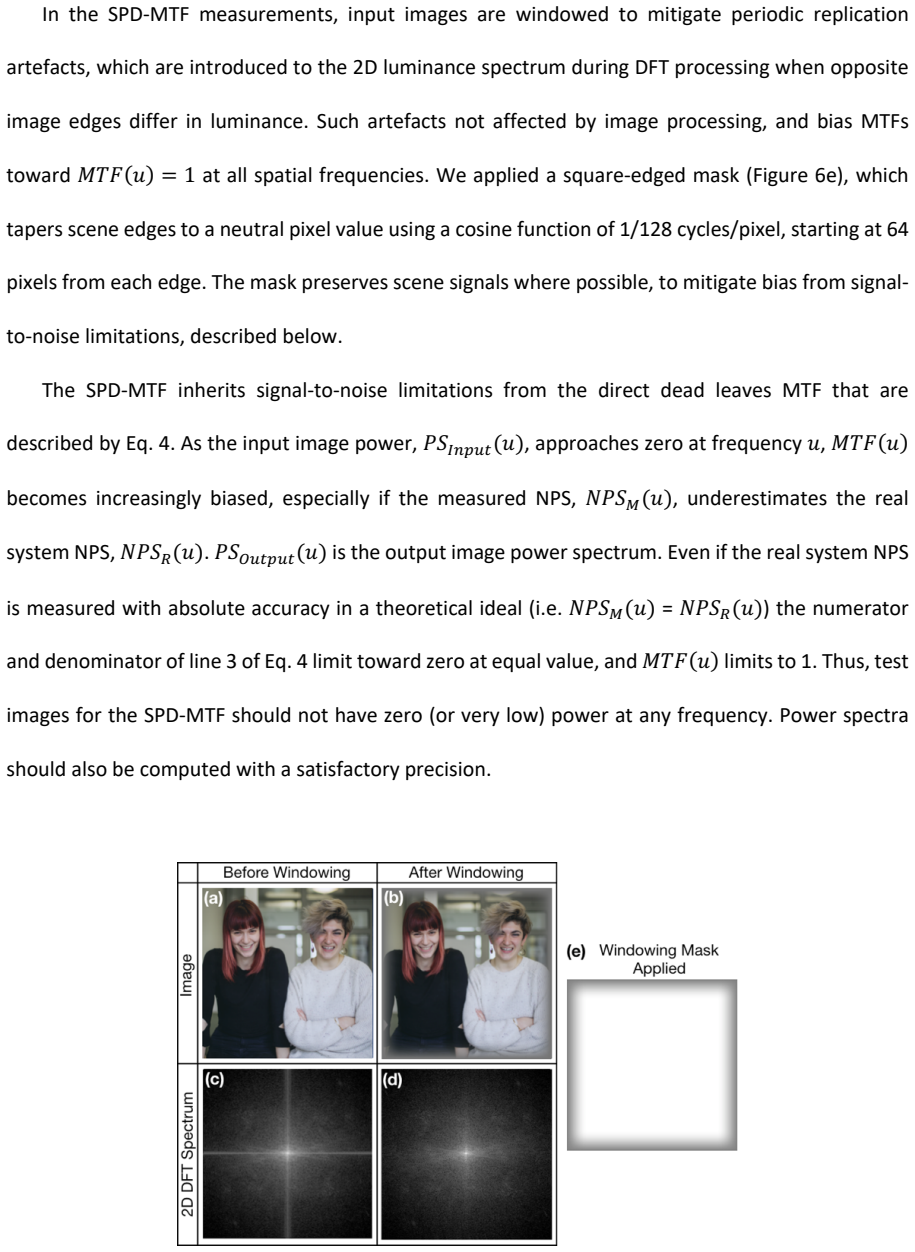
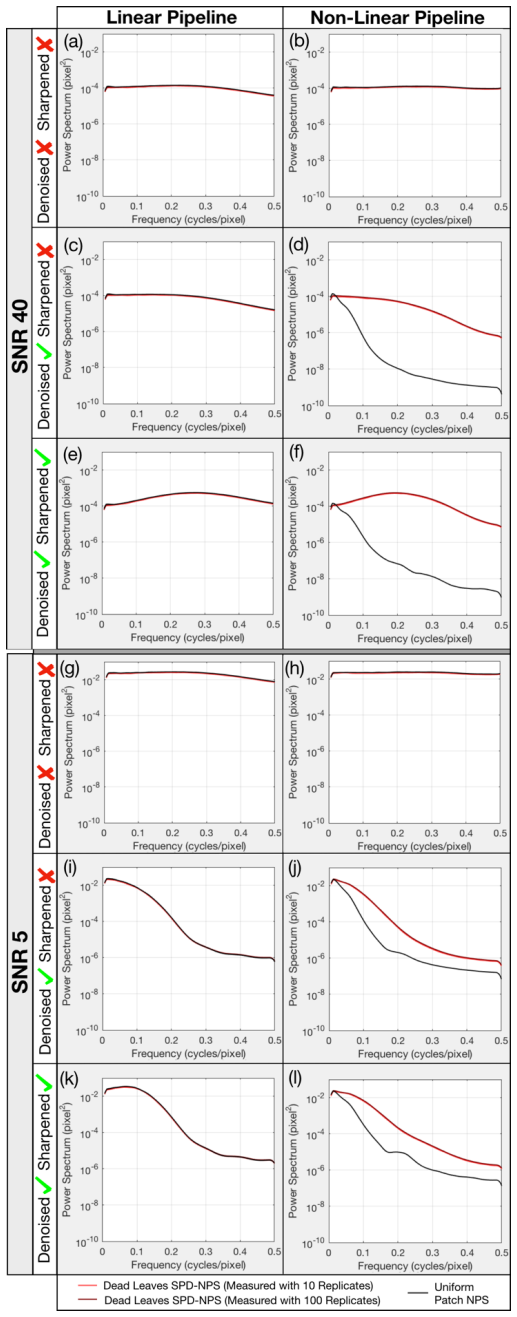
The paper introduces novel SPD-MTF and SPD-NPS measures derived from natural scene statistics and the dead leaves chart to characterize scene-dependent performance in non-linear systems. These are presented as new constructions validated against traditional methods, with no equations or steps shown that define a quantity in terms of itself, fit parameters to a subset and relabel the output as a prediction, or rely on self-citation chains for uniqueness or ansatz smuggling. The abstract and described claims treat the measures as independent outputs from scene data, making the central validation claims externally falsifiable rather than tautological.
Axiom & Free-Parameter Ledger
Lean theorems connected to this paper
-
IndisputableMonolith/Foundation/RealityFromDistinction.leanreality_from_one_distinction unclear?
unclearRelation between the paper passage and the cited Recognition theorem.
We validate several novel scene-and-process-dependent MTF (SPD-MTF) and NPS (SPD-NPS) measures... using the dead leaves chart
-
IndisputableMonolith/Cost/FunctionalEquation.leanwashburn_uniqueness_aczel unclear?
unclearRelation between the paper passage and the cited Recognition theorem.
The dead leaves SPD-NPS... mean pictorial image SPD-NPS... pictorial image SPD-NPS standard deviation
What do these tags mean?
- matches
- The paper's claim is directly supported by a theorem in the formal canon.
- supports
- The theorem supports part of the paper's argument, but the paper may add assumptions or extra steps.
- extends
- The paper goes beyond the formal theorem; the theorem is a base layer rather than the whole result.
- uses
- The paper appears to rely on the theorem as machinery.
- contradicts
- The paper's claim conflicts with a theorem or certificate in the canon.
- unclear
- Pith found a possible connection, but the passage is too broad, indirect, or ambiguous to say the theorem truly supports the claim.
Reference graph
Works this paper leans on
-
[1]
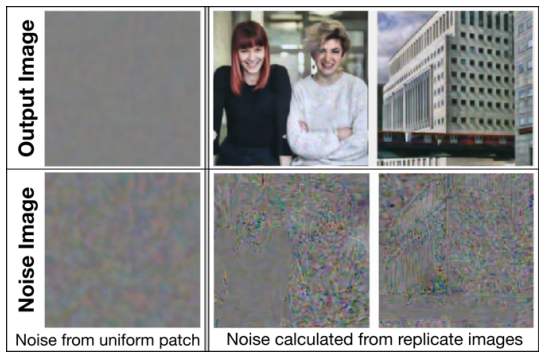
Noise image contrast was increased to emphasize scene-dependent noise variation
‘People’ image (center) and ‘Architecture’ image (right). Noise image contrast was increased to emphasize scene-dependent noise variation. The Modulation Transfer Function (MTF) The MTF, and related Spatial Frequency Response (SFR), characterize the reproduction of modulation (image contrast) versus spatial frequency. The 1D MTF is defined as the modulus ...
work page 2017
-
[2]
slanted-edge method is most common; it has been shown to describe well the subjective sharpness of non-linear systems [12]. However, signals from edge test charts are generally denoised less and sharpened more than natural 8 scene signals by the non-linear, content aware de-noising and sharpening algorithms incorporated in many contemporary capturing syst...
work page 2017
-
[3]
IEEE Standards Association Board of Governors,
IEEE Std 1858TM-2016: IEEE Standard for Camera Phone Image Quality. IEEE Standards Association Board of Governors,
work page 2016
-
[4]
Evaluation of the Effect of Noise on Subjective Image Quality,
P. G. J. Barten, “Evaluation of the Effect of Noise on Subjective Image Quality,” in Proc. SPIE 1453, Human Vision, Visual Processing, and Digital Display II, 1991, vol. 1453, pp. 2–15
work page 1991
-
[5]
International Organization for Standardization (ISO),
International Organisation for Standardization, ISO 12233:2017: Photography — Electronic still picture imaging — resolution and spatial frequency responses. International Organization for Standardization (ISO),
work page 2017
-
[6]
Verification of a Method to Estimate the Wiener Kernel Transforms of a nonlinear system,
P. D. Burns and J. Koplowitz, “Verification of a Method to Estimate the Wiener Kernel Transforms of a nonlinear system,” in Proc. 9th Pittsburgh Conference on Modelling and Simulation, 1978, pp. 1189–1194
work page 1978
-
[7]
J. McElvain, S. P. Campbell, J. Miller, and E. W. Jin, “Texture-based measurement of spatial frequency response using the dead leaves target: extensions, and application to real camera systems,” in Proc. SPIE 7537, Digit. Photog. VI, 2010, pp. 75370D–1
work page 2010
-
[8]
Fields of Experts: a framework for learning image priors,
S. Roth and M. J. Black, “Fields of Experts: a framework for learning image priors,” in IEEE Computer Society Conference on Computer Vision and Pattern Recognition, 2005, p. 10.1109/CVPR.2005.160
-
[9]
From learning models of natural image patches to whole image restoration,
D. Zoran and Y. Weiss, “From learning models of natural image patches to whole image restoration,” 2011 Int. Conf. Comput. Vis., pp. 479–486,
work page 2011
-
[10]
Restoration for weakly blurred and strongly noisy images,
X. Zhu and P. Milanfar, “Restoration for weakly blurred and strongly noisy images,” 2011 IEEE Work. Appl. Comput. Vis., pp. 103–109,
work page 2011
-
[11]
Edge-preserving decompositions for multi-scale tone and detail manipulation,
Z. Farbman, R. Fattal, D. Lischinski, and R. Szeliski, “Edge-preserving decompositions for multi-scale tone and detail manipulation,” Trans. Graph. - Proc. ACM SIGGRAPH 2008, vol. 27, no. 3, p. 1,
work page 2008
-
[12]
Available: https://support.apple.com/kb/sp705?locale=en_GB
[Online]. Available: https://support.apple.com/kb/sp705?locale=en_GB. [Accessed: 03-Dec-2016]
work page 2016
-
[13]
Available: http://uk.mathworks.com/help/images/ref/imnoise.html
[Online]. Available: http://uk.mathworks.com/help/images/ref/imnoise.html. [Accessed: 07-Apr-2018]
work page 2018
-
[14]
Demosaicking by alternating projections: Theory and fast one-step implementation,
Y. M. Lu, M. Karzand, and M. Vetterli, “Demosaicking by alternating projections: Theory and fast one-step implementation,” IEEE Trans. Image Process., vol. 19, no. 8, pp. 2085–2098,
work page 2085
-
[15]
High-quality linear interpolation for demosaicing of Bayer-patterned color images,
H. S. Malvar, L. He, and R. Cutler, “High-quality linear interpolation for demosaicing of Bayer-patterned color images,” 2004 IEEE Int. Conf. Acoust. Speech, Signal Process., vol. 3, pp. 5–8,
work page 2004
-
[16]
World Wide Web Consortium (WC3),
ISO/IEC 15948:2003 (E): Information technology — Computer graphics and image processing — Portable Network Graphics (PNG): Functional specification., Second. World Wide Web Consortium (WC3),
work page 2003
-
[17]
Available: http://live.ece.utexas.edu/research/quality
[Online]. Available: http://live.ece.utexas.edu/research/quality. [Accessed: 13-Jun-2017]
work page 2017
-
[18]
Perceptibility and acceptability of JPEG 2000 compressed images of various scene types,
E. Allen, S. Triantaphillidou, and R. E. Jacobson, “Perceptibility and acceptability of JPEG 2000 compressed images of various scene types,” Proc. SPIE 9016, Image Qual. Syst. Perform. XI,
work page 2000
-
[19]
MTF and NPS Scene-Dependency in Simulated Image Capture Systems,
E. W. S. Fry, S. Triantaphillidou, R. B. Jenkin, R. E. Jacobson, and J. R. Jarvis, “MTF and NPS Scene-Dependency in Simulated Image Capture Systems,” in IS&T International Symposium on Electronic Imaging 2020: Image Quality and System Performance XVII (ready for submission),
work page 2020
discussion (0)
Sign in with ORCID, Apple, or X to comment. Anyone can read and Pith papers without signing in.