REVIEW 4 major objections 5 minor 12 references
Review of the Plan for Integrating Big Data Analytics Program for the Electronic Marketing System and Customer Relationship Management: A Case Study XYZ Institution
T0 review · 4 major / 5 minor · reviewed 2026-08-14 · deepseek-v4-flash
Pith's one-line read Big-data analytics integration will improve a language school's e-marketing and CRM operations, this case study concludes.
desk verdict This is a competent student research plan whose empirical payoff never arrives: the one substantive claim—that all respondents agreed integration would increase effectiveness—is circular and unsupported. read the letter →
The pith
A machine-rendered reading of the paper's core claim, the machinery that carries it, and where it could break.
The reading
What carries the argument
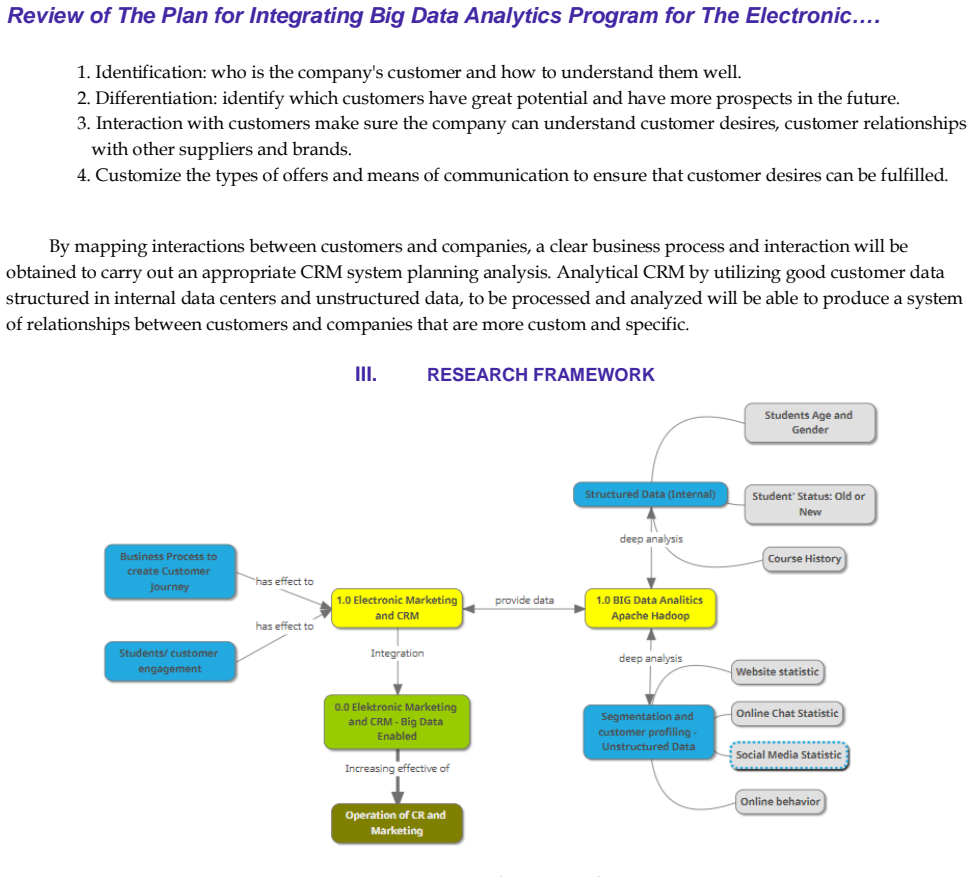
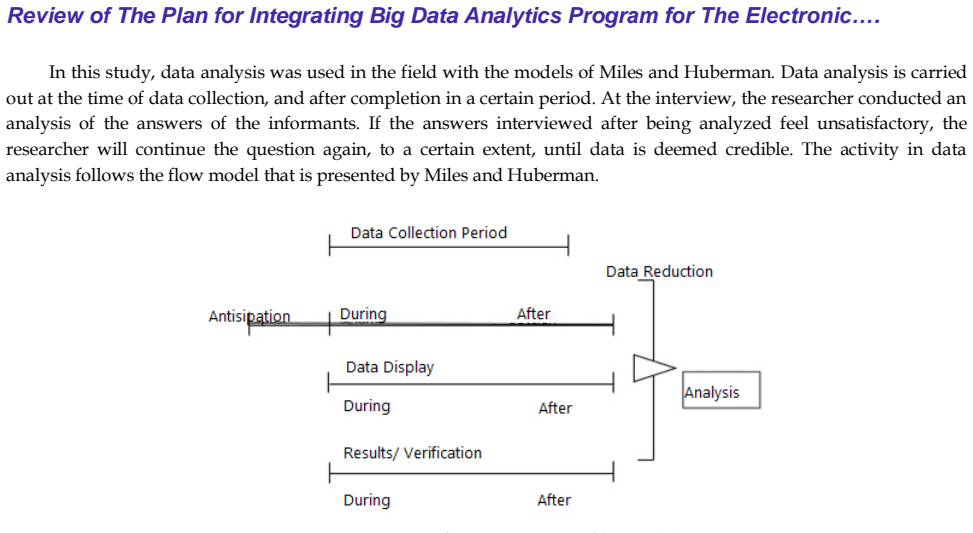
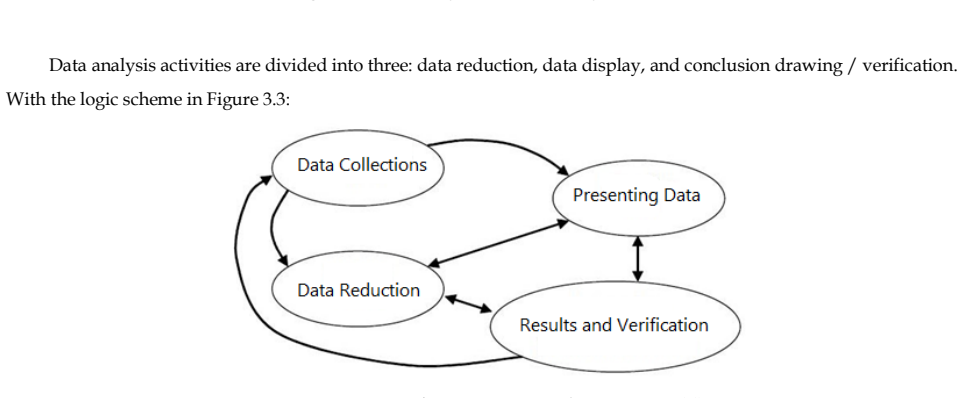
The load-bearing mechanism is the planned Big Data Analytics program built on Apache Hadoop, which ingests structured internal data (registration records, student status, demographics) and unstructured data from social media, web analytics, chat, and e-mail, and outputs trend data and customer profiles. That output feeds an electronic marketing mix of content, channels, and promotions, and an analytical CRM that personalizes communication through e-mail, SMS, and messaging apps. The argument also relies on a qualitative research process using purposive sampling and a data-analysis flow model of data reduction, data display, and conclusion drawing, together with the IDIC model (identify, differentiate, interact, customize) for one-to-one customer relationships.
What would settle it
Run the proposed Hadoop-based integration at XYZ Institution for one or two academic terms and compare inquiry-to-registration conversion, student retention, customer-response times, and staff workload against the same metrics from before the integration; if those measures do not improve, the claim that integration increases operational effectiveness is falsified. A simpler check would be a quantitative survey of students and parents about whether service quality changed after implementation.
Extended reading notes
Core claim
On its own terms, the paper's central discovery is that the effectiveness of electronic marketing and CRM at XYZ Institution depends on integrating a Big Data Analytics layer that analyzes both structured internal data and unstructured digital data, and that the school's staff unanimously support this integration as a way to improve daily marketing and customer-relations operations. The study identifies three groups of findings: quality of big data integration services, electronic marketing and CRM features, and analysis of additional data such as customer engagement and customer journey creation. It concludes that all respondents agreed that an electronic marketing system and CRM enabled by big data can increase the operational effectiveness of the Marketing and CRM department.
Load-bearing premise
The load-bearing premise is that the unanimous agreement of a small, purposively selected group of the school's own staff that the integration will improve operations is enough evidence that it actually will.
Editorial extensions
If this is right
- The case-study school can adopt a lower-cost integration path using open-source tools rather than expensive licensed ERP systems.
- Marketing content can be matched to current trends and customer participation, which the paper links to creating a stronger customer journey.
- CRM communication can become more personalized through customer profiling by age, sex, student status, and course history.
- Staff can expect faster access to data and more responsive systems in their daily marketing and customer-relation tasks.
- Other institutions with similar stagnant-growth problems could use the plan as a starting point for integrating big-data analytics with their own e-marketing and CRM systems.
Reading between the lines
- The paper reports staff agreement, not measured outcomes; a real pilot with before-and-after metrics on conversion, retention, and response times would be the natural next test.
- If the integration is implemented, the assumption that open-source tools are sufficient for this school's data volume and staff skills will itself need checking, since the paper does not size the data or workload.
- The same integration logic could plausibly transfer to other service businesses with comparable customer-journey structures, but that transfer would need its own evidence.
Signed reviews
Editorial analysis
A structured set of objections, weighed in public.
Referee Report
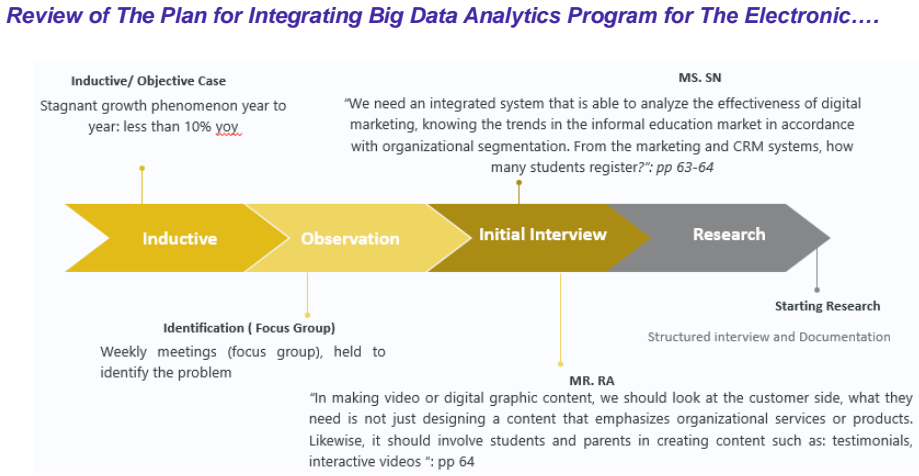
Summary. This paper reports a qualitative case study at an international language education service in Surabaya, with the stated aim of planning an integration of the Apache Hadoop big data analytics program with the institution's electronic marketing and customer relationship management (CRM) systems. The study uses purposive sampling of nine internal staff members, structured interviews, observation, and documentation. Section VI presents research propositions derived from pre-research interviews, Section VII reports three thematic clusters of results, and Section VIII concludes that all respondents agreed that a big-data-enabled electronic marketing and CRM system can improve the operational effectiveness of the Marketing and CRM department. The manuscript also states that further qualitative research is needed to measure the actual effectiveness of such a system.
Significance. If the central effectiveness claim were established, the paper would offer a practically useful, low-cost integration path for small educational institutions considering open-source big data tools. The paper has a clear research framework, explicitly describes triangulation and Miles and Huberman data analysis, and addresses a relevant managerial problem. However, the significance is conditional: the manuscript provides no quotes, counts, coding tables, negative cases, or before/after outcome measures. The evidence actually presented consists of thematic assertions attributed to informants, with the conclusion acknowledging that effectiveness was not measured. As presented, the contribution is a plan with informant expectations rather than an evaluation of effectiveness.
major comments (4)
- [Section VII and Section VIII] The central conclusion that all respondents agreed that the integration 'can increasing effectivity operational of Marketing and CRM department' is not supported by the evidence reported. Section VII lists only three thematic clusters, without any interview quotes, frequency counts, coding table, or negative cases. The reader cannot verify whether the agreement was unanimous, whether dissenting views were discarded, or how the themes were derived from the raw interviews. This is load-bearing because the paper's main claim rests entirely on this unshown agreement.
- [Section IV, Section VI, and Section VIII] The validation is circular. Section VI states that the propositions were formulated in accordance with the results of pre-research interviews, and Section VIII states that the findings 'fully support' those propositions. The same informants who supplied the proposition content are then reported as validating it in Section VII. This is self-confirmation, not independent testing. The manuscript needs either independent data or an explicit argument for why the later interviews go beyond the pre-research interviews rather than simply repeating them.
- [Section IV, Q5.1, and Section VIII] The key interview item is leading: Q5.1 asks 'Do you think that our draft system integration system will help Marketing and Customer Relation in the daily work and operational tasks?' No verbatim responses are shown, and the conclusion converts these expectations into a factual claim about effectiveness. Informant expectations are not a substitute for operational outcome data. Since no Hadoop system was deployed, and no metric such as response time, conversion rate, or retention was measured before and after, the paper cannot support the causal or predictive claim it makes in Section VIII.
- [Section V and Section VII] The data analysis section describes data reduction, display, and conclusion drawing, but Section VII does not show the output of the reduction process. There is no display of codes, themes, or a data matrix, so the reader cannot assess the credibility or trustworthiness of the three reported themes. The manuscript needs to present at least a coding table, representative quotes, and a description of how disagreements or exceptions were handled.
minor comments (5)
- [Section VI] The heading 'PREPOSITION' should read 'Proposition'; the same typo appears in the conclusion in the phrase 'fully supporting the research preposition.'
- [Section II] The text '4S = Product, Price, Promotion, Place' should be '4P', since the four items are the traditional marketing mix; this appears to be a typographical error rather than a substantive claim.
- [Section VIII] The phrase 'with a unix customer segmentation and demography' should be 'with a unique customer segmentation and demography'.
- [References] The reference list contains typographical errors: 'trauss J.' should be 'Strauss J.', and 'alyanam, K.' should be 'Kalyanam, K.'; also several entries lack page numbers.
- [Abstract and Section VIII] The grammar of the key sentence 'can increasing effectivity operational of Marketing and CRM department' needs correction; this appears verbatim in the abstract and conclusion and should be revised for clarity.
Circularity Check
Conclusion rests on circular confirmation: the same purposively selected informants generated the Section VI propositions and are then reported in Section VIII as having validated them, with no independent effectiveness measure.
-
self definitional
[Section VI (PREPOSITION), Section VII (RESULTS), Section VIII (CONCLUSION)]
"In accordance with the results of pre-research interviews, inductive thinking supported by academic studies and journal articles, the following are research propositions: ... The result is fully supporting the research preposition that proposed in this study."
The propositions are constructed from pre-research interviews with the same purposively selected staff (Section IV, Table 1) who later provide the structured-interview data summarized in Section VII. Section VIII then declares the result 'fully supporting' the propositions. The agreement of the same source is an input restated as confirmation, not an independent test. No Hadoop system is deployed and no operational-effectiveness metric (response time, conversion, retention, etc.) is measured before or after, so the 'fully supporting' claim has no content beyond the respondents' own expectations.
-
other
[Section IV (Research Design), Q6; Section V (Data Analysis)]
"Shows the results of the analysis of discussions with informants to other informants who appeared in the previous interview (source informant anonymized / hidden) --- the process of checking peers and snowballing, Triangulation Process (Miles Huberman) begins in the second interview and so on."
The paper's validity check ('source triangulation') is performed by feeding earlier informants' statements back to other informants drawn from the same small organizational pool. This is a closed confirmation network: every 'check' is another opinion from the same group whose pre-research views generated the propositions. The triangulation therefore does not break the circularity; it only propagates the same source's expectations among colleagues.
1 more flagged steps
-
fitted input called prediction
[Section IV (Research Design), Q5.1; Section VIII (CONCLUSION)]
"Q5.1: Do you think that our draft system integration system will help Marketing and Customer Relation in the daily work and operational tasks? ... All respondents agreed that Electronic Marketing System and CRM with big data enabled can increasing effectivity operational of Marketing and CRM department."
The paper's headline effectiveness conclusion is supported only by affirmative answers to a leading question about the 'draft system integration' asked of the same informants. No verbatim responses, counts, negative cases, or outcome data are reported. The predicted operational effectiveness is therefore the respondents' solicited expectation, relabeled as a research result rather than independently observed.
full rationale
The central derivation chain is: pre-research interviews with nine purposively selected staff (Section IV) → research propositions (Section VI) → structured interviews with the same staff (Section VII) → conclusion that all respondents agreed and the result 'fully supports' the propositions (Section VIII). This chain is circular because the confirming data are the same people whose earlier statements defined the propositions, and because the only evidence for 'increasing effectivity' is their agreement to a leading question about the draft system. The theoretical literature sections (Big Data, e-Marketing, CRM) are external and non-circular, but they are not the load-bearing evidence for the effectiveness claim; the paper itself cites the respondents' agreement as the support. The result is not forced by a mathematical identity or a self-citation chain, but it is reduced to the same informants' input by construction, so the circularity score is substantial rather than maximal.
Assumptions & free parameters
assumptions (4)
- domain assumption Purposively sampled internal informants are representative of the organization's marketing and CRM needs.
- domain assumption All respondents' agreement can stand in for actual operational effectiveness.
- domain assumption Miles and Huberman analysis, as applied invisibly here, validates the truth of the themes.
- domain assumption Apache Hadoop is an appropriate and needed tool for the proposed integration.
Cite this review
Pith. "Pith review of Review of the Plan for Integrating Big Data Analytics Program for the Electronic Marketing System and Customer Relationship Management: A Case Study XYZ Institution." pith.science (2026). https://pith.science/paper/LDDHTYLH
@misc{pith2026190802430,
  author       = {Pith},
  title        = {Pith review of: Review of the Plan for Integrating Big Data Analytics Program for the Electronic Marketing System and Customer Relationship Management: A Case Study XYZ Institution},
  year         = {2026},
  howpublished = {\url{https://pith.science/paper/LDDHTYLH}},
  note         = {Machine review of arXiv:1908.02430}
}
read the original abstract
This research aims to explore business processes and what the factors have major influence on electronic marketing and CRM systems? Which data needs to be analyzed and integrated in the system, and how to do that? How effective of integration the electronic marketing and CRM with big data enabled to support Marketing and Customer Relation operations. Research based on case studies at XYZ Organization: International Language Education Service in Surabaya. Research is studying secondary data which is supported by qualitative research methods. Using purposive sampling technique with observation and interviewing several respondents who need the system integration. The documentation of interview is coded to keep confidentiality of the informant. Method of extending participation, triangulation of data sources, discussions and the adequacy of the theory are uses to validate data. Miles and Huberman models is uses to do analysis the data interview. Results of the research are expected to become a holistic approach to fully integrate the Big Data Analytics program with electronic marketing and CRM systems.
Figures
Figures from the paper (1 more)
Reference graph
Works this paper leans on
-
[1]
Sirait, Emyana Ruth Eritha. (2016). ImplementasiTeknologi Big Data Di Lembaga Pemerintahan Indonesia. JurnalPenelitian Pos dan Informatika.6, Vol. 2 No. pp. 113 – 136
work page 2016
-
[2]
Li Weijia. 2016. Digital Media Data and Market Intelligence. ThesisManagement for In ternational Business not published, Erasmus University Rotterdam
work page 2016
-
[3]
Fotaki G., Spruit M., Brinkkemper S., dan Meijer D. 2013. Exploring big data opportunities for Online Customer Segmentation. Technical Report UU-CS2013-021. Utrecht University Netherland
work page 2013
-
[4]
Christopher A. Beloin. 2018.A Study of Customer Relationship Management and Undergraduate Degree Seeking Student Retention, Ed.D. Dissertations not published. Concordia University Portland
work page 2018
-
[5]
Understanding Big Data: The Ecosystem, (online)
McNulty Eileen, 2014. Understanding Big Data: The Ecosystem, (online). https://dataconomy.com/2014/06/understanding-big-data-ecosystem,accessed at 23 September 2018)
work page 2014
-
[6]
trauss J. dan Frost Raymond, 2014. E-Marketing. Seventh Edition. England: Pearson Education Limited
work page 2014
-
[7]
alyanam, K. dan McIntyre, S. 2002. The E -Marketing Mix: A Contribution of the E -Tailing Wars, Journal of the Academy of Marketing Science. 30, Vol. 4. No. pp 483-495
work page 2002
-
[8]
Kotler P. dan Armstrong Gary, 2014. Principles of Marketing. Fifteen Edition. England: Pearson Education Limited
work page 2014
Show all 12 references
-
[9]
Setiyaningrum A., Udaya J., dan Efendi. 2015. Prinsip-PrinsipPemasaran Plus TrenTerkini. Yogyakarta: Andi
2015
-
[10]
dan Maklan Stan, 2015
Buttle, F. dan Maklan Stan, 2015. Customer Relationship Management Concept and Technologies. Third Edition. New York: Routledge
2015
-
[11]
W., 2018
Suwendra I. W., 2018. MetodologiPenelitianKualitatifdalamIlmuSosial, Pendidikan, Kebudayaan dan Keagamaan. Bali: Nilacakra
2018
-
[12]
MetodePenelitianKuantitatifKualitatif dan R&D
Sugiyono, 2016. MetodePenelitianKuantitatifKualitatif dan R&D. Jakarta: Alfabeta
2016
Reviewed August 14, 2026 · model on record in the stance chip above.
Discussion (0). Continue with ORCID to comment.