REVIEW 2 major objections 5 minor 2 references
Venus as a Laboratory for Exoplanetary Science
T0 review · 2 major / 5 minor · reviewed 2026-08-14 · deepseek-v4-flash
Pith's one-line read This paper argues that Venus, Earth's sibling planet, is the best available laboratory for interpreting terrestrial exoplanets and for locating the boundaries of habitability.
desk verdict A well-executed review whose central argument holds up, but the abstract overpromises a demographic update that the text does not deliver. read the letter →
The pith
A machine-rendered reading of the paper's core claim, the machinery that carries it, and where it could break.
The reading
What carries the argument
The load-bearing construct is the Venus Zone (VZ), a band of instellation fluxes, defined by Kane et al. (2014), inside which a terrestrial planet could be pushed into a runaway greenhouse and become Venus-like. It is bounded on the outside by the runaway greenhouse limit from climate models (Kopparapu et al. 2013, 2014; Kane et al. 2014) and on the inside by the 'cosmic shoreline' where strong stellar radiation erodes an atmosphere entirely (Zahnle & Catling 2017). The paper uses this zone, together with the habitable zone (HZ), to select candidate analogs and to compute occurrence rates from Kepler data. A second mechanism doing key work is the isotopic record of hydrogen escape — D/H plus noble gases such as argon, neon, and xenon — which the paper presents as the diagnostic that would discriminate early versus late water-loss histories for Venus.
What would settle it
A future Venus atmospheric probe that measures non-radiogenic argon and neon isotope ratios (for example, whether 36Ar/38Ar and 20Ne/22Ne are fractionated or solar) would directly test the early-versus-late water-loss scenarios on which the Venus-as-analog narrative depends; a solar, unfractionated ratio would mean Venus never experienced the vigorous early hydrogen escape the story assumes. Alternatively, a re-derivation of eta-Venus from Kepler using revised Venus Zone boundaries that substantially changes the 32% and 45% figures would falsify the claim that Venus analogs are common.
Extended reading notes
Core claim
The paper's core claim, stated as a review conclusion, is that Venus provides an ideal and accessible exoplanet laboratory: the only in situ terrestrial planetary data available are from our solar system, and among those bodies Venus best represents the close-in, short-period terrestrial planets to which current detection methods are biased. The authors argue that determining when and how Venus lost its water, whether it ever had a habitable period, and how its atmosphere and interior co-evolved will directly constrain how we interpret transmission spectra, interior models, and habitability claims for rocky exoplanets. They also present a quantitative claim that Venus analogs are common, with occurrence rates of 32% for M dwarfs and 45% for Sun-like stars, and identify K2-3 d and TRAPPIST-1 d as prime candidates for Venus-like worlds.
Load-bearing premise
The central claim rests on the assumption that the Venus Zone boundaries — taken from climate-model calculations of the runaway greenhouse and atmospheric erosion — correctly identify where a planet becomes Venus-like; the paper itself calls these boundaries a testable hypothesis.
Editorial extensions
If this is right
- Improved Venus measurements, especially D/H within and below the clouds, would directly constrain the historical volume of water on Venus and thereby the interpretation of water-related species in exoplanet transmission spectra.
- If Venus analogs are as common as the occurrence rates suggest, many terrestrial planets targeted by JWST and TESS follow-up will be closer to Venus than to Earth in character, so the Venus/Earth model degeneracy must be resolved.
- A confirmed history of temperate conditions on early Venus would expand the set of plausible habitable states and would change how the inner edge of the HZ is interpreted for exoplanets.
- Measuring Venus's moment of inertia and interior composition would anchor models of rocky exoplanet interiors, which currently rely on limited solar-system data.
- Resolving whether Venus ever had oceans would test proposed mechanisms of abiotic oxygen buildup, since massive water loss during a runaway greenhouse has been suggested as a way to produce O2 in exoplanet atmospheres.
Reading between the lines
- If Venus's atmosphere is treated as a proxy transmission spectrum for an exoVenus, existing Earth-based and orbital observations could be converted into a template for the degenerate spectral signatures that separate a runaway greenhouse from a temperate planet; the paper lists this degeneracy as a challenge but does not build such a template.
- The Venus Zone boundaries are presented as testable; one natural extension is to recompute the occurrence rates using a range of alternative runaway-greenhouse limits, since the quoted 32% and 45% figures would shift if the boundary moves.
- The same isotopic diagnostics proposed for Venus (Ar, Ne, Xe fractionation) could be applied to interpret future exoplanet atmospheric isotope measurements, although those will remain far less precise for decades.
- A testable prediction implied by the review is that a sample of small, short-period exoplanets around bright stars should show a bimodal split between Venus-like and airless or eroded worlds near the inner VZ boundary, rather than a smooth continuum.
Signed reviews
Editorial analysis
A structured set of objections, weighed in public.
Referee Report
Summary. The manuscript is a review-style paper arguing that Venus is the key local laboratory for interpreting terrestrial exoplanet observations. It summarizes the current Venus environment, the evidence for and mechanisms of water loss (D/H ratio, noble gases, isotope fractionation), the planet's geological and geodynamic puzzles, and the link to exoplanet science through the Venus Zone concept and candidate analogs such as K2-3 d and TRAPPIST-1 d. The paper also lists outstanding science questions and identifies future measurements that would inform exoplanet atmospheric and interior modeling. It contains no new observations or model calculations; its quantitative demographic content is taken from prior work by Kane et al. (2014).
Significance. If the central thesis is accepted, the paper is a useful and timely synthesis by leading researchers in both Venus and exoplanet science. Its strengths include the explicit cross-connection between in situ Venus measurements (isotopes, noble gases, interior properties, atmospheric waves) and observables for terrestrial exoplanets, and the candid labeling of open questions and model uncertainties, including the caveat that Venus Zone boundaries are a testable hypothesis. The paper's explicit list of measurement priorities (e.g., D/H in and below the clouds, 36Ar/38Ar, 20Ne/22Ne, xenon isotopes, moment of inertia) is valuable for mission planning. The central qualitative message is sound; however, the quantitative demographic claim is not new and is conditional on model-based insolation limits, which the authors themselves acknowledge.
major comments (2)
- [Abstract; Section 5] The abstract promises "an update to exoplanet demographics that can be placed in the potential runaway greenhouse regime," but the manuscript provides no new demographic analysis. The 32% (M dwarf) and 45% (Sun-like) occurrence rates are taken from Kane et al. (2014), and Section 5 only states that those calculations "yielded" the rates. No updated Kepler catalog, completeness correction, false-positive treatment, or error budget is presented. The wording should be changed either to present a genuine update with full methodology or to state explicitly that the rates are quoted from Kane et al. (2014) and are not new results.
- [Section 5] The occurrence-rate and Venus-analog claims depend on Venus Zone boundaries that are model-based insolation limits, as the paper itself acknowledges: "the boundaries of the VZ should be considered a testable hypothesis." The outer edge is a runaway-greenhouse limit for an Earth-like, water-rich atmosphere, and the inner edge is an atmospheric-erosion limit from Zahnle & Catling (2017). A planet inside this insolation band need not be Venus-like, because the outcome also depends on initial water inventory, CO2 budget, mantle degassing history, and escape efficiency; Hamano et al. (2013), cited in the paper, explicitly show two distinct terrestrial-planet outcomes at similar orbital distances. Therefore the 32%/45% rates and the labels "Venus analogs" for K2-3 d and TRAPPIST-1 d overstate what has been established. The paper should describe these as occurrence rates within a potential runaway-greenhouse insolation band and refer to those planets as candidates whose instellation is consistent with Venus-like evolution, with the model dependence stated wherever the numbers appear.
minor comments (5)
- [Throughout] There are numerous typographical errors that should be corrected: "observatuonal" and "Consequencely" in Section 5, "dditional" in Section 2, "conundra" and "braod" in Section 4, and "annd" and "limts" in Section 5.
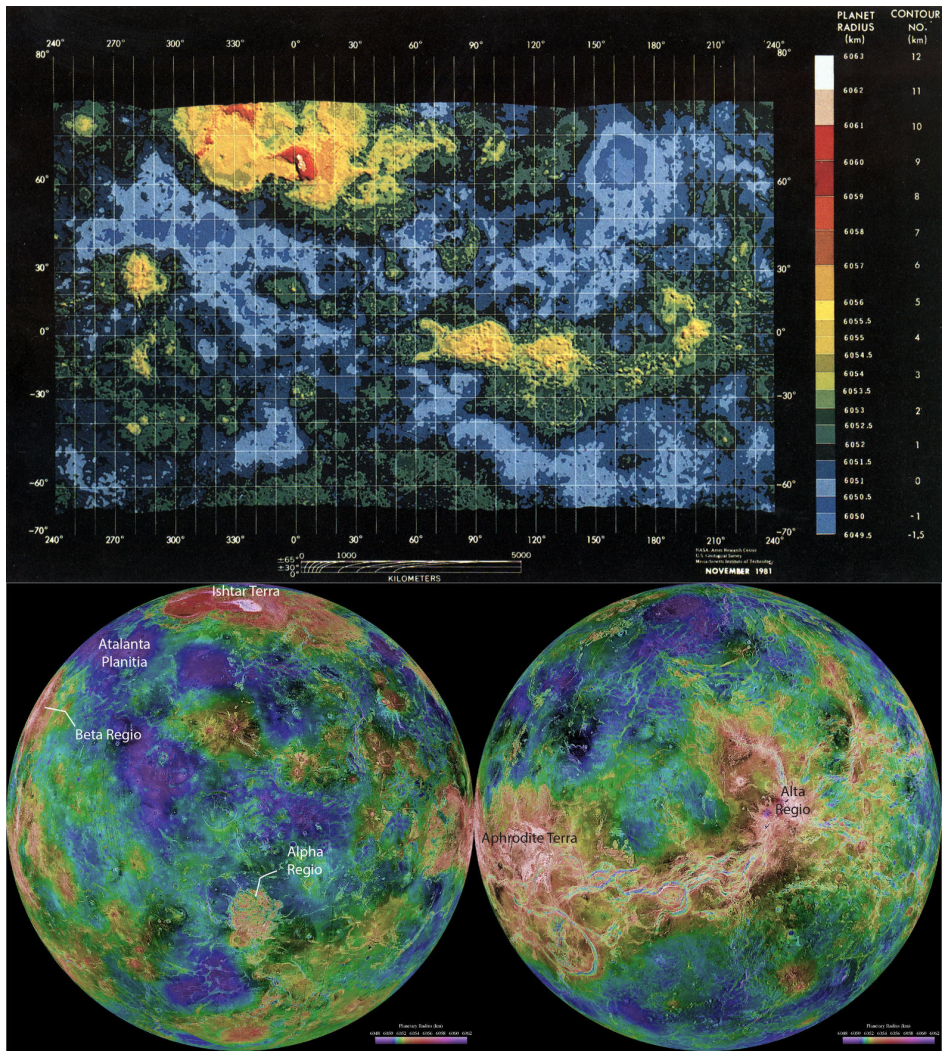
- [Section 5; Figure 3] The text and the Figure 3 caption are inconsistent about the dark green regions: the text describes them as the "optimistic" habitable zone, while the caption labels them as the Venus Zone. Please reconcile the description and the figure so that the HZ, optimistic HZ, and VZ are each clearly and consistently identified.
- [Section 2] The phrase "the extent of scattering radiation from Venus's surface escaping through the cloud deck is about 100 km2" is unclear; please rephrase to indicate the horizontal footprint or effective scattering area that is meant.
- [References] Several reference entries contain apparent author-name or formatting errors, for example "Perigura" in Crossfield et al. (2015), "SchottelKotte" in Kopparapu et al. (2014), and "Svedham" in Taylor et al. (2018); these should be checked against the published literature.
- [Section 5] The Huang et al. (2018) citation is listed as "submitted" with an arXiv identifier; if a published version now exists, the reference should be updated accordingly.
Circularity Check
No significant circularity: the paper is a review whose quantitative claims rest on external, independently published models and are explicitly flagged as testable.
full rationale
This manuscript is a review/synthesis paper rather than a derivation. Its central claims about Venus as an exoplanet laboratory are supported by independent observations (Pioneer Venus, Magellan, Akatsuki, Venus Express) and by previously published climate and escape models. The quantitative demographics claim (32% Venus-analog occurrence for M dwarfs, 45% for Sun-like stars) is adopted from Kane et al. (2014) and not recomputed from any input fitted in this paper, so it is not a fitted input renamed as a prediction. The Venus Zone boundaries are taken from independent model calculations (Kopparapu et al. 2013, 2014; Zahnle & Catling 2017) and are not defined by the occurrence rates that are later quoted. Although Kane et al. (2014) is a prior publication by the first author, the paper does not use that citation as a circular justification: the boundaries are explicitly called a 'testable hypothesis,' and the quoted occurrence rates are counts within an instellation band rather than a derived proof of Venus-like conditions. No equation in the paper reduces to its own inputs, and no self-citation chain is used to forbid alternative interpretations. The paper's own caveat in Section 5 that runaway greenhouse could occur beyond the calculated boundary further demonstrates that the authors do not treat the Venus Zone as a derived certainty. Therefore no circular step meets the evidentiary standard of this review.
Assumptions & free parameters
free parameters (2)
- Venus Zone occurrence rates (eta-Venus) =
32% (M dwarfs), 45% (K/G dwarfs)
- Venus Zone boundary insolation values =
not stated in this paper
assumptions (4)
- domain assumption The runaway greenhouse is the accepted explanation for Venus's water loss and current state.
- domain assumption Venus likely accreted with an Earth-comparable water inventory.
- domain assumption The Venus Zone boundaries calculated from 1D climate models for Earth-like atmospheres apply to exoplanets of different stellar types and compositions.
- domain assumption Remote sensing of exoplanet transmission spectra can be robustly interpreted using solar-system atmospheric models.
Cite this review
Pith. "Pith review of Venus as a Laboratory for Exoplanetary Science." pith.science (2026). https://pith.science/paper/5FLKU4KZ
@misc{pith2026190802783,
  author       = {Pith},
  title        = {Pith review of: Venus as a Laboratory for Exoplanetary Science},
  year         = {2026},
  howpublished = {\url{https://pith.science/paper/5FLKU4KZ}},
  note         = {Machine review of arXiv:1908.02783}
}
read the original abstract
The current goals of the astrobiology community are focused on developing a framework for the detection of biosignatures, or evidence thereof, on objects inside and outside of our solar system. A fundamental aspect of understanding the limits of habitable environments (surface liquid water) and detectable signatures thereof is the study of where the boundaries of such environments can occur. Such studies provide the basis for understanding how a once inhabitable planet might come to be uninhabitable. The archetype of such a planet is arguably Earth's sibling planet, Venus. Given the need to define the conditions that can rule out biorelated signatures of exoplanets, Venus provides a unique opportunity to explore the processes that led to a completely uninhabitable environment by our current definition of the term. Here we review the current state of knowledge regarding Venus, particularly in the context of remote sensing techniques that are being or will be employed in the search for and characterization of exoplanets. We discuss candidate Venus analogs identified by the Kepler and TESS exoplanet missions and provide an update to exoplanet demographics that can be placed in the potential runaway greenhouse regime where Venus analogs are thought to reside. We list several major outstanding questions regarding the Venus environment and the relevance of those questions to understanding the atmospheres and interior structure of exoplanets. Finally, we outline the path towards a deeper analysis of our sibling planet and the synergy to exoplanetary science.
Figures


Figures from the paper (1 more)

Reference graph
Works this paper leans on
-
[1]
Habitable Zone Limits for Dry Planets
Abe, Y., Abe-Ouchi, A., Sleep, N.H., Zahnle, K.J. (2011). “Habitable Zone Limits for Dry Planets”, Astrobiology 11, 443 Armann, M, Tackley, P.J. (2012). “Simulating the thermochemical magmatic and tectonic evolution of Venus’s mantle and lithosphere; Two-dimensional models”, J. Geophys. Res., 117, E12003 Basilevsky, A.T., Head, J.W. (1998). “The geo...
arXiv 2011
-
[44]
Atmospheric and water loss from early Venus
12098 Kulikov, Yu.N., Lammer, H., Lichtenegger, H.I.M., et al. (2006). “Atmospheric and water loss from early Venus”, Planet. Space Sci., 54, 1425 Lammer, H., Zerkle, A.L., Gebauer, S. et al. (2018), “Origin and evolution of the atmospheres of early Venus, Earth and Mars,” Astron Astrophys. Rev 26:2 Limaye, S.S., Mogul, R., Smith, D.J., et al. (2018...
work page 2006
Reviewed August 14, 2026 · model on record in the stance chip above.
Discussion (0). Continue with ORCID to comment.