REVIEW 3 major objections 4 minor 29 references
Decoherence framework for Wigner's friend experiments
T0 review · 3 major / 4 minor · reviewed 2026-08-14 · deepseek-v4-flash
Pith's one-line read This paper claims that in Wigner-friend experiments an external interference measurement rewrites the inner agent's memory in a computable way, and that accounting for this change removes the known contradictions.
desk verdict A serious decoherence-based reply to Wigner's friend no-go theorems with a clean falsifiable prediction (S=1/√2), but the FR resolution rests on a conditioning slip that needs fixing. read the letter →
The pith
A machine-rendered reading of the paper's core claim, the machinery that carries it, and where it could break.
The reading
What carries the argument
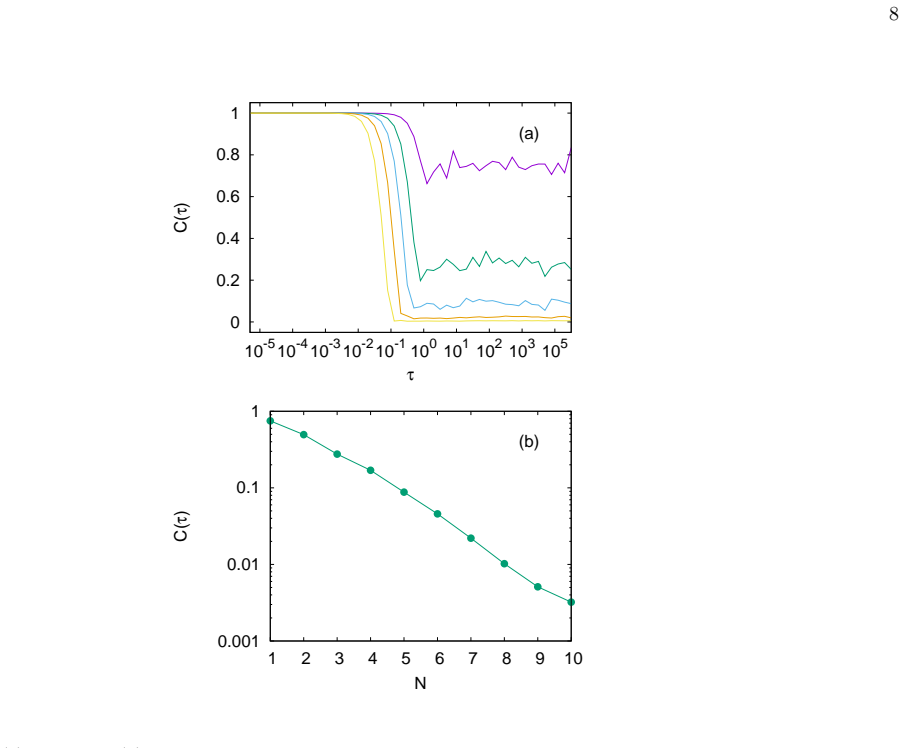
The load-bearing object is the environment: a set of qubits continuously coupled to the measuring apparatus through a chaotic interaction Hamiltonian. Its two pointer-branch states become orthogonal, $|\langle\varepsilon_1(t)|\varepsilon_2(t)\rangle|^2\sim 0$, which fixes the preferred basis and makes the global state's triorthogonal decomposition unique. Tracing out this environment converts the superposition into the mixed state the agent experiences, and tracing it out again after an external interference measurement produces the altered memory record of Eq. (26). The framework also depends on an exactly known apparatus-environment Hamiltonian, a known environmental initial state, and precisely timed external measurements.
What would settle it
Run the paper's three-stage protocol with roughly ten environment qubits per laboratory, an initial 50/50 horizontal/vertical state, and the external pre-measurement at $\theta=\pi/8$, making the external pre-measurement faster than the internal environment's correlation time. If the central claim is right, reading the friend's memory after the external interference over many runs gives horizontal with probability $1/4$ and vertical with $3/4$; finding the pre-interference $1/2$/$1/2$ statistics would falsify the framework.
Extended reading notes
Core claim
The central claim is that the decoherence interpretation supplies a univocal protocol for Wigner-friend experiments: after a measurement the real global state is an entangled superposition of the system, the apparatus, and an environment whose two branch states are orthogonal, and the observer's definite outcome is the mixed state obtained by tracing out that environment. Because the external agent's interference acts on the whole laboratory, it also changes the pointer-state probabilities that constitute the inner agent's memory. Equation (26) gives the new record for the standard one-photon case: tracing out the inner environment and the external apparatus and environment leaves $C_{hh}=(2-\sin 4\theta)/4$ and $C_{vv}=(2+\sin 4\theta)/4$, so at $\theta=\pi/8$ the friend's remembered statistics change from $1/2$/$1/2$ to $1/4$/$3/4$. Applying the same accounting to the extended two-laboratory protocol replaces the certainty of the original 'fact 1' with a probability split of $5/6$ versus $1/6$, thereby blocking the no-go conclusion. In the observer-independent-facts setup, the original version is said not to produce well-defined outcomes under this framework at all, while the modified version yields $S=1/\sqrt{2}<2$, allowing joint truth values for the four agents' memories.
Load-bearing premise
Everything rests on the postulate that a measurement is only complete when an uncontrollable environment, with two exactly orthogonal branch states, monitors the system-apparatus-observer composite; if that postulate fails, the predicted memory changes and the disappearance of the paradoxes do not follow.
Editorial extensions
If this is right
- The friend's memory record is dynamical: an outside interference measurement at angle $\theta$ changes the recorded outcome distribution from $1/2$/$1/2$ to $(2-\sin 4\theta)/4$ versus $(2+\sin 4\theta)/4$, so identical machines in identical runs can honestly report different memories depending on when the memory is read.
- The original extended no-go reasoning fails: conditioned on the internal agent's vertical outcome, the final external measurement yields $+_B$ not with certainty but with probability $5/6$, and $-A$ no longer implies $+_B$, so the joint outcome with probability $1/12$ is not ruled out.
- The original observer-independent-facts test does not engage the decoherence framework because its initial state is only a pre-measurement; no definite outcomes exist until the environments act, so the CHSH violation concerns correlations of laboratory states, not observer facts.
- In the modified four-agent protocol, applying CHSH to the final memory records gives $S=1/\sqrt{2}$, below 2, so joint truth values for all four agents' outcomes are consistent with the framework.
- Wigner-friend interference on large, human-scale laboratories becomes practically impossible: the external pre-measurement must be completed faster than the internal environment's correlation time, so only small quantum machines can implement the experiment.
Reading between the lines
- If this framework is right, the 'measurement problem' shifts partly into engineering: what counts as definite is determined by how many environment qubits each agent carries, so a few-qubit quantum machine with roughly ten environment qubits should already exhibit all Wigner-friend effects without any conscious observer.
- The $1:3$ memory shift is a sharp discriminator: a real-collapse theory would leave the friend's record at $1:1$ after later interference, so an ensemble experiment comparing memory-read statistics before and after the external measurement could distinguish the two approaches.
- A direct experimental next step would be to map the full $\sin 4\theta$ curve of Eq. (26) across many angles; a mismatch would immediately identify where the model's assumptions fail.
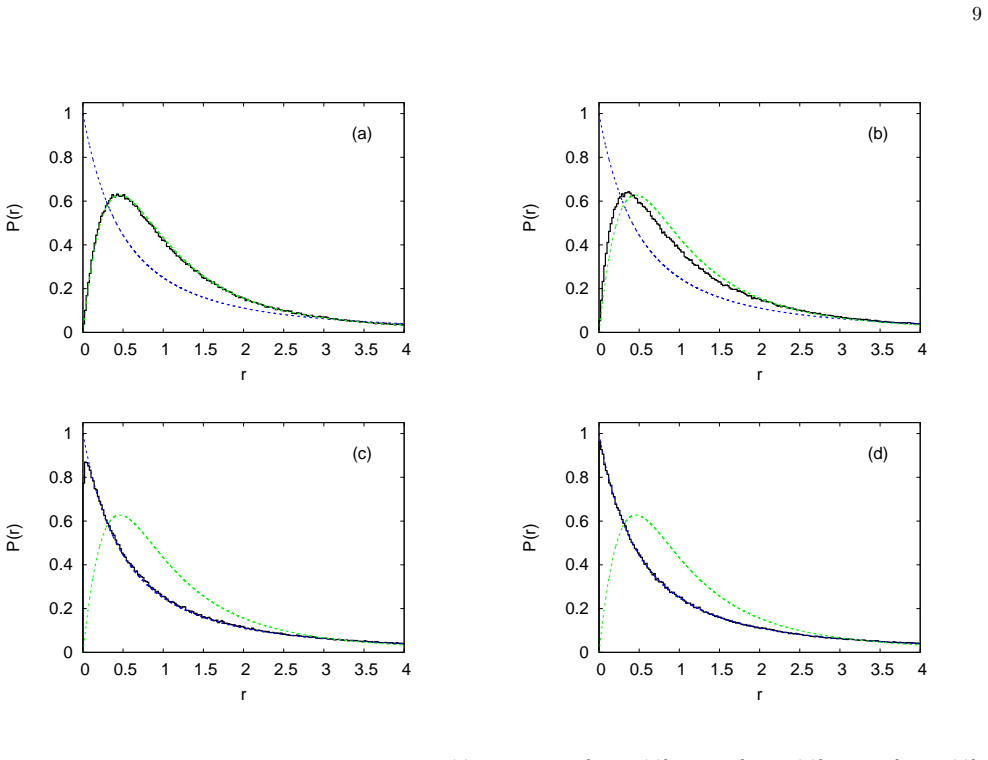
- The requirement of a chaotic apparatus-environment interaction suggests that integrable environmental couplings will not produce definite outcomes; testing this with engineered non-chaotic environments could isolate the role of chaos in measurement.
Signed reviews
Editorial analysis
A structured set of objections, weighed in public.
Referee Report
Summary. The paper develops a decoherence-based framework in which a quantum measurement is not completed until an uncontrolled environment, with exactly orthogonal branch states, monitors the system-apparatus-observer composite. It applies this framework to Wigner's friend experiments, deriving that an external interference measurement changes the internal agent's memory record in a calculable way (Eq. (26)), and it uses this effect to argue that the Frauchiger-Renner and Brukner no-go theorems are no longer valid. The paper also proposes a modified version of Brukner's experiment in which the final four-agent CHSH value becomes S=1/√2, and it supports the decoherence model with numerical simulations of a GOE environment.
Significance. The manuscript contains explicit, largely reproducible calculations: the reduced-state computation leading to Eq. (26), the four-agent state in Eq. (48), and the modified CHSH expectations in Eqs. (69)-(72). The S=1/√2 result is a parameter-free prediction of the modified protocol, and the numerical work on environment size and chaos is a concrete contribution to the decoherence-based modeling of Wigner's friend scenarios. If the framework's central postulate is accepted, the paper offers a coherent way to compute memory changes under external interference and gives predictions that differ from real-collapse models. However, the claimed resolution of the Frauchiger-Renner theorem is not established, because the argument replaces the conditioning event used in the original no-go chain with a different, later-time condition.
major comments (3)
- [Sec. IV B, Eq. (49)] The replacement of 'Fact 1' by 'New fact 1' changes the conditioning variable. In the original Frauchiger-Renner chain, Fact 1 is a statement about the original outcome v_a obtained by IA before EA acts; it says that if IA obtains v_a, then a later measurement of laboratory B in the {|+>,|−>} basis will yield +_B. The calculation leading to Eq. (49) instead conditions on IA's memory record after EA's interference, with EA's outcome and apparatus traced out. These are different events: before EA acts, the original v_a branch has B=|+_B> as shown in Eq. (46), and since the EA unitary acts only on laboratory A, that branch's B component remains |+_B> until EB acts. If one further conditions on the h_B supplied by Fact 3a, the B state is |h_B>, so EB sees + or − with probability 1/2. The 5/6-1/6 split of Eq. (49) arises only after tracing over EA's outcome and apparatus, which mixes the original h_a and v_a branches into the same post-EA pointer state. Thus 'New fact 1' invalidates a different proposition from the one used in the no-go chain; the contradiction P(-A,-B)=1/12 versus P(-B|-A)=0 is not resolved by the calculation given.
- [Sec. V B, Eqs. (69)-(72)] The conclusion that joint truth values can be assigned to all four agents' outcomes is inferred from the single value S=1/√2<2. For two-party, two-setting, two-outcome correlations, existence of a joint distribution for the four observables is guaranteed by Fine's theorem only when all CHSH inequalities (with all sign choices) hold, not by a single CHSH combination being below 2. The four expectation values computed here do satisfy all these inequalities, so the conclusion is likely correct, but the paper should invoke Fine's theorem explicitly; as written, the inference from one CHSH value to joint assignability is incomplete.
- [Sec. II B and Table III] The framework's central postulate—that a measurement is completed only when an uncontrolled environment whose two branch states are exactly orthogonal monitors the system-apparatus-observer composite—is asserted and used as the basis for all later conclusions. The paper is transparent that its conclusions are conditional on this postulate, and it correctly notes that real-collapse theories would give different predictions. This is not an internal inconsistency, but it means the paper does not resolve the Frauchiger-Renner or Brukner paradoxes within quantum theory alone; it shows only that they do not arise under one particular extra postulate. The conclusions section should state this limitation more prominently, since the abstract's phrasing could be read as a stronger claim.
minor comments (4)
- [Abstract and throughout] There are numerous typographical errors, including 'recenly', 'relizations', 'suposse', 'Copenhaguen', 'publised', 'objetivity', and 'diamons'. These should be corrected before publication.
- [Sec. V A] The inequality in Eq. (63) is attributed to 'Claude-Horne-Shimony-Holt'; the correct name is Clauser-Horne-Shimony-Holt.
- [Fig. 5 caption] The caption reads 'The number of qbits of both environment is N=6'; this should be 'both environments are N=6'.
- [Sec. IV B, page 20] In the sentence introducing New Fact 1, 'the results are different is the decoherence framework is not taken into account' should read 'if the decoherence framework is not taken into account'.
Circularity Check
No significant circularity: the paper's claims are conditional consequences of an explicit decoherence postulate, and its quantitative results are analytic computations rather than fitted or self-citation-derived inputs.
full rationale
The paper is transparent that its framework rests on a postulate: a measurement is complete only when an uncontrolled environment with orthogonal branch states monitors the system-apparatus-observer composite (Eq. 8; facts F1/F2 in Table III). From that postulate, all central results are derived by explicit unitary evolution and partial tracing, not by fitting. The key quantitative prediction that external interference changes the internal agent's memory record, Eq. (26) with coefficients (1/4)(2−sin 4θ) and (1/4)(2+sin 4θ), is an analytic consequence of the stated Hamiltonian model, not a parameter fitted to the effect it is said to predict. Similarly, the modified Brukner-style protocol gives S=1/√2 by direct computation from the global state (Eq. 68) and the defined observables (Eqs. 65a–65d); no free parameter is adjusted to produce compatibility with joint truth values. The paper's relation to Frauchiger–Renner is also a computation: 'New fact 1' is obtained from the reduced state ρ3 (Eq. 49) after the external interference, and the paper explicitly warns that its conclusion differs from the standard interpretation. Whether this calculation correctly addresses the original no-go chain is a substantive correctness question about conditioning variables, not a circularity: the derivation does not presuppose the conclusion it draws. The self-citations present in the paper, Refs. [13] and [16] (Gómez et al., and Corps and Relaño), are used for standard random-matrix/chaos characterizations and are not load-bearing for the logical consistency claims; the uniqueness of the pointer basis is imported from the external Elby–Bub triorthogonal uniqueness theorem, not from the authors' own prior work. The paper also repeatedly disclaims that it has not disproved the no-go theorems in general, only that the specific examples fail under the decoherence framework. For all these reasons, no step reduces its predictions to its inputs by construction or by self-citation.
Assumptions & free parameters
free parameters (4)
- GOE coupling matrices Vh and Vv =
not fitted; GOE with σ_diag=1, σ_off=1/√2
- Environment size N (qbits) =
not fitted; N=3 to 10 in figures
- Coupling constant g =
not fitted; g=1, 10, 100 in Fig. 7
- Sparsity exponent α =
not fitted; α=0, 0.5, 1, 2, 4
assumptions (5)
- standard math Standard unitary quantum mechanics and the Born rule applied to reduced density matrices.
- domain assumption A measurement is completed only when an uncontrolled environment becomes correlated with system and apparatus and the environmental branch states become orthogonal (Eq. 8).
- domain assumption Agents are quantum machines with known Hamiltonians, and their memory records are the pointer states of the apparatus.
- domain assumption The apparatus-environment interaction must be chaotic (GOE-like) for decoherence to occur.
- domain assumption External interference experiments can be performed on the complete laboratory including the environment, given requirements R1-R4 in Table II.
Cite this review
Pith. "Pith review of Decoherence framework for Wigner's friend experiments." pith.science (2026). https://pith.science/paper/JAQCAOG6
@misc{pith2026190809737,
  author       = {Pith},
  title        = {Pith review of: Decoherence framework for Wigner's friend experiments},
  year         = {2026},
  howpublished = {\url{https://pith.science/paper/JAQCAOG6}},
  note         = {Machine review of arXiv:1908.09737}
}
read the original abstract
The decoherence interpretation of quantum measurements is applied to Wigner's friend experiments. A framework in which all the experimental outcomes arise from unitary evolutions is proposed. Within it, a measurement is not completed until an uncontrolled environment monitorizes the state composed by the system, the apparatus and the observer. The (apparent) wave-function collapse and the corresponding randomness result from tracing out this environment; it is thus the ultimate responsible for the emergence of definite outcomes. Two main effects arise from this fact. First, external interference measurements, trademark of Wigner's friend experiments, modify the memory records of the internal observers; this framework provides a univocal protocol to calculate all these changes. Second, it can be used to build a consistent scenario for the recenly proposed extended versions of the Wigner's friend experiment. Regarding [D. Frauchiger and R. Renner, {\em Quantum theory cannot consistently describe the use of itself}, Nat. Comm. {\bf 9}, 3711 (2018)], this framework shows that the agents' claims become consistent if the changes in their memories are properly taken into account. Furthermore, the particular setup discussed in [C. Brukner, {\em A no-go theorem for observer-indepdendent facts}, Entropy {\bf 20}, 350 (2018)] cannot be tested against the decoherence framework, because it does not give rise to well-defined outcomes according to this formalism. A variation of this setup, devised to fill this gap, makes it possible to assign joint truth values to the observations made by all the agents. This framework also narrows down the requisites for such experiments, making them virtually impossible to apply to conscious (human) beings. Notwithstanding, it also opens the door to future relizations on quantum machines.
Figures

Figures from the paper (4 more)


Reference graph
Works this paper leans on
-
[1]
E. P. Wigner, Remarks on the mind-body question . In The Scientiest Speculates, Ed. I. J. Good; Heinemann: London, UK (1961)
work page 1961
-
[2]
The first one, A0, can be interpreted as a simple reading of agent’s IA memory, whereas the second one, B0, performs an external interference experiment, and therefore can be linked to agent’sEA memory. Following the same spirit, agent EB chooses between A1 and B1, A1 =|h⟩b|Ah⟩b⟨h|b⟨Ah|b−|v⟩b|Av⟩b⟨v|b⟨Av|b, (61) B1 =|+⟩B|+⟩B−|−⟩B⟨−|B, (62) where|±⟩B = (|h⟩...
-
[3]
(63), applied to |Ψ4⟩ leads to S = 1/ √ 2< 2
(72) Therefore, the CHSH inequality, Eq. (63), applied to |Ψ4⟩ leads to S = 1/ √ 2< 2. Two main conclusions can be gathered from this section. First, the experiment devised in [3], and its experimental realization [4], are incompatible with the decoherence framework, because, according to it, they do not deal with proper outcomes; thus, they cannot be use...
-
[4]
This means that we cannot assign joint truth values to the state of these laboratories, but we can make this assignement to the state of the agents memories. In [3, 4] there is no distinction between the state of the laboratory in which an agent lives, and the state of its memory; the decoherence framework is based precisely on this distinction. Before en...
-
[5]
D. Frauchiger and R. Renner, Quantum theory cannot consistently describe the use of itself , Nat. Comm. 9, 3711 (2018)
work page 2018
-
[6]
Brukner, A No-Go Theorem for Observer-Independent Facts , Entropy 20, 350 (2018)
C. Brukner, A No-Go Theorem for Observer-Independent Facts , Entropy 20, 350 (2018)
work page 2018
-
[7]
M. Proietti, A. Pickston, F. Graffitti, P. Barrow, D. Kundys, C. Branciard, M. Ringbauer, and A. Ferizzi, Experimental rejection of observer-independence in the quantum world , arXiv:1902.05080 (2019)
arXiv 2019
-
[8]
W. H. Zurek, Decoherence, einselection, and the quantum origins of the classical , Rev. Mod. Phys. 75, 715 (2003)
2003
Show all 29 references
-
[9]
W. H. Zurek, Pointer basis of quantum apparatus: Into what mixture does the wave packet collapse? , Phys. Rev. D 24, 1516 (1981)
1981
-
[10]
Bassi, K
A. Bassi, K. Lochan, S. Satin, T. P. Singh, and H. Ulbricht, Models of wave-function collapse, underlying theories, and experimental tests, Rev. Mod. Phys. 85, 471 (2013)
2013
-
[11]
Baumann and S
V. Baumann and S. Wolf, On formalisms and interpretations , Quantum 2, 99 (2018)
2018
-
[12]
W. H. Zurek, Relative states and the environment: einselection, envariance, quantum darwinism, and the existential interpretation, arXiv:0707.2832 (2007)
2007 arXiv
-
[13]
In other words, the environment, and its interaction with the measuring apparatus, is the origin of the classical perception of the reality
One of the trademarks of the decoherence interpretation of quantum mechanics is that the pointer states of any apparati, that is, the states which appear as objective outcomes, are those which survive to the continuous monitorization by a complex environment. In other words, t...
-
[14]
Elby and J
A. Elby and J. Bub, Triorthogonal uniqueness theorem and its relevance to the interpretation of quantum mechanics , Phys. Rev. A 49, 4213 (1994)
1994
-
[15]
Of course, the agent cannot restore the complete state from a single measurement. If its outcome is, say, h, it can just conclude that the global state must be |Ψ2⟩ =α|h⟩|Ah⟩|ϵ1(t)⟩ +β|v⟩|Av⟩|ϵ2(t)⟩, with unknown coefficents α and β such that|α|2 +|β|2 = 1, and|α|> 0. It is very...
-
[16]
J. M. G. G´ omez, K. Kar, V. K. B. Kota, R. A. Molina, A. Rela˜ no, and J. Retamosa, Many-body quantum chaos: Recent developments and applications to nuclei , Phys. Rep. 499, 103 (2011)
2011
-
[17]
Arute et al., Quantum supremacy using a programmable superconducting processor, Nature 574, 505 (2019)
F. Arute et al., Quantum supremacy using a programmable superconducting processor, Nature 574, 505 (2019)
2019
-
[18]
Y. Y. Atas, E. Bogomolny, O. Giraud, and G. Roux, Distribution of the Ratio of Consecutive Level Spacings in Random Matrix Ensembles, Phys. Rev. Lett. 110, 084101 (2013)
2013
-
[19]
A. L. Corps and A. Rela˜ no, Distribution of the Ratio of Consecutive Level Spacings for Any Symmetry and Arbitrary Degree of Chaos, arXiv:1910-01434 (2019)
2019
-
[20]
Baumann and C
V. Baumann and C. Brukner, Wigner’s friend as a rational agent , arXiv:1901.11274 (2019)
2019 arXiv
-
[21]
From this point of view, we can consider that the measurement is done by a small quantum machine, and that an amplification process is done by the environment afterwards. In this way, the pre-measurement can be considered purely quantum, whereas the amplification, required for a...
-
[22]
An interesting question is what happens if the non-diagonal elements, Chv andCvh, are clearly different from zero. In such a case, the interaction between the apparatus and the environment does not determine the pointer states of the apparatus, and therefore the agent cannot se...
-
[23]
M. F. Pusey, An inconsistent friend, Nat. Phys. 14, 973 (2018)
2018
-
[24]
Salom, To the rescue of Copenhaguen interpretation , arXiv:1809.01746 (2018)
I. Salom, To the rescue of Copenhaguen interpretation , arXiv:1809.01746 (2018)
2018 arXiv
-
[25]
Haley, Quantum theory and the limits of objetivity , Found
R. Haley, Quantum theory and the limits of objetivity , Found. Phys. 48, 1568 (2018)
2018
-
[26]
Lazarovici and M
D. Lazarovici and M. Hubert, How quantum mechanics can consistently describe the use of itself , Sci. Rep. 9, 470 (2019)
2019
-
[27]
As a marginal note, it is revealing to notice that the perfect correlation between outcomes hb and va, or, equivalently, between ha and vb, occur without any kind of non-local collapse. The measurement performed on stage 1 does not affect photon b, and hence the fact that agent...
-
[28]
Clauser, M
J. Clauser, M. Horne, A. Shimony, and R. Holt, Proposed Experiment to Test Local Hidden-Variable Theories, Phys. Rev. Lett. 23, 880 (1969)
1969
-
[29]
Zukowksi and C
M. Zukowksi and C. Brukner, Quantum non-locality —it ain’t necessarily so... , J. Phys. A 47, 424009 (2014)
2014
Reviewed August 14, 2026 · model on record in the stance chip above.
Discussion (0). Continue with ORCID to comment.