REVIEW 4 major objections 5 minor 47 references
Multiresolution Transformer Networks: Recurrence is Not Essential for Modeling Hierarchical Structure
T0 review · 4 major / 5 minor · reviewed 2026-08-14 · deepseek-v4-flash
Pith's one-line read The paper proposes Multiresolution Transformer Networks, entirely attention-based models that stack masked session encoders over a query-level Transformer, and presents evidence they outperform hierarchical recurrent models on query…
desk verdict A useful hierarchical self-attention architecture for short-session query suggestion, but the title-level claim about recurrence and hierarchy is not supported by the evidence. read the letter →
The pith
A machine-rendered reading of the paper's core claim, the machinery that carries it, and where it could break.
The reading
What carries the argument
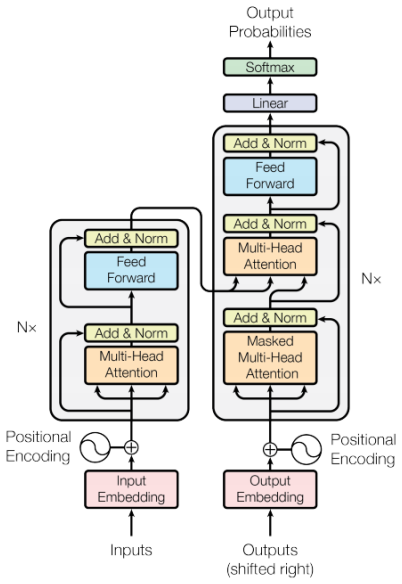
The load-bearing mechanism is the Masked Session Encoder inside a $K$-level MTN. At the bottom level, a standard Transformer encoder represents the tokens of each query; a Query Projection layer turns those token representations into a single vector per query, and positional encodings mark the order of queries in the session. Each higher level then runs self-attention over the query representations under a lower-triangular mask, so query $j$ can attend only to queries $1$ through $j$; after each masked session layer, the session representation for a query is added to its token representations through a skip connection and layer-normalized. This creates a hierarchy in which token-level attention is unrestricted while session-level attention is causal, letting the model capture successive query reformulations. The paper's dynamics propositions (1–4) support the design by expressing an RNN as a masked single-layer network and a Transformer as a layered residual network, and by showing the MTN encoder as a masked composition of these updates.
What would settle it
Run MTN and the hierarchical recurrent baselines on the raw AOL log without the 30-minute timeout, the 3–5 query length filter, duplicate removal, or the 10-token truncation, and compare n-gram precision and BLEU; if the attention-only advantage shrinks or reverses on longer or unfiltered sessions, the title-level claim fails.
Extended reading notes
Core claim
The central claim is that a fully attention-based architecture, the Multiresolution Transformer Network, can model hierarchical structure that had been thought to require recurrence. MTN encodes a session of queries by first running a standard Transformer encoder on the tokens of each query, projecting each query's token representations into a session-level embedding, and then passing those embeddings through one or more masked session encoders whose causal mask lets a query attend only to itself and earlier queries; a skip connection adds the session representation back into the query's token representations before a standard Transformer decoder produces the next query. The authors report that on the AOL and OnlineX query-suggestion tasks, MTN outperforms the hierarchical recurrent baselines H-LSTM and M-NSRF and also outperforms a similarly sized Transformer, with at least 20% higher n-gram precision on each metric and more than 25% higher BLEU than the best recurrent model on AOL. They conclude that recurrence is not essential for modeling hierarchical structure.
Load-bearing premise
The claim that recurrence is not essential for hierarchical structure rests on the paper's filtered session setup—a 30-minute timeout, sessions trimmed to 3–5 queries, duplicate queries removed, and queries capped at 10 tokens—so if hierarchical structure matters most in longer or unfiltered sessions, the title-level conclusion may not hold.
Editorial extensions
If this is right
- Query-suggestion systems can be built without recurrence while improving precision and BLEU scores, since MTN outperforms hierarchical recurrent models on both AOL and OnlineX.
- Session-level context can be modeled as causal self-attention over compressed query representations, rather than as a second recurrent state.
- The advantage of MTN over a Transformer with the same total number of layers indicates that dedicated session layers do work that extra Transformer encoder layers do not.
- If recurrence is not essential for hierarchical structure, hierarchical recurrent encoders in other natural-language tasks may be replaceable by masked multiresolution attention.
- The dynamics analysis implies Transformers are relatively robust to vanishing and exploding gradients because their layers do not share weights and residual connections preserve an ensemble of short gradient paths.
Reading between the lines
- Extension: The paper does not ablate the Query Projection or test more than two levels, so one could test whether a learned projection is necessary or whether mean-pooling and additional session levels change the result.
- Extension: The same masked-multiresolution design could transfer to other nested sequence tasks, such as document summarization, dialogue state tracking, or code generation, whereas the paper demonstrates only query suggestion.
- Extension: Viewing an RNN as a masked single-layer network suggests a continuum between recurrent and attention models, so replacing the fixed lower-triangular mask with learnable or interpolated masks might recover recurrent inductive biases inside an attention stack.
Editorial analysis
A structured set of objections, weighed in public.
Referee Report
Summary. The paper proposes Multiresolution Transformer Networks (MTNs), a self-attention-only architecture with a masked session-level encoder stacked over a query-level Transformer encoder, for query suggestion. The authors state formal propositions comparing RNN and Transformer output dynamics, then evaluate MTNs against Seq2Seq with attention, Hierarchical LSTM, M-NSRF, and Transformer on AOL and a private OnlineX dataset, reporting large gains in n-gram precision and BLEU, especially on AOL. The abstract concludes that recurrence is not essential for modeling hierarchical structure.
Significance. If the reported gains are reproducible, the work is a useful empirical contribution: it demonstrates that a hierarchical attention model can outperform hierarchical recurrent baselines on query suggestion, and it challenges the claim in [38] that recurrence is needed for hierarchical structure. The paper also provides a clear description of a two-level masked attention encoder that could be adopted for other session-based tasks. However, the significance is currently limited by the narrow evaluation setting, the label-smoothing confound, and the lack of uncertainty quantification; the theoretical propositions are definitional rather than predictive.
major comments (4)
- [Section 5.2] The comparison between MTN and Transformer is confounded by label smoothing. The text reports that MTN achieved its best performance with label smoothing 0.05 (or 0.01 after 5 epochs), whereas Transformer performed well with little to no smoothing. Because label smoothing is a known regularizer that can change BLEU substantially, the gains in Table 2 and Figure 2 may be due to this hyperparameter disparity rather than to the MTN architecture. Please report matched-label-smoothing ablations (e.g., 0.0, 0.01, 0.05, and 0.1 for both models) and/or state the exact smoothing values used for each reported model.
- [Sections 5.1 and 6] The title-level claim that recurrence is not essential for modeling hierarchical structure is not supported by the evidence. Section 5.1 restricts sessions to lengths 3-5, removes successive duplicate queries, and truncates queries to 10 tokens, while Section 6 defers logical inference [38] to future work. Thus the evaluated hierarchy is at most five shallow timestamp-clustered queries, not the nested or recursive structure discussed in [38]. The conclusion should be restricted to query suggestion under this preprocessing, or additional experiments on longer and more deeply nested hierarchies are needed.
- [Section 5.4 and Table 2] No error bars or significance tests are reported in Table 2 or Figure 2. Since the abstract and Section 5.4 use the word 'significantly', please report results over multiple random seeds with standard deviations and, ideally, paired significance tests. This is especially important for the OnlineX 1-gram score, where MTN is not the best model (M-NSRF achieves 36.0 versus MTN's 35.1).
- [Section 3 and Supplementary Material] Propositions 1-4 are essentially definitional. In the proof of Proposition 1, the matrix \tilde X is constructed by stacking x_t and h_{t-1}, so equation (2) is an algebraic restatement of the RNN update (1). Likewise, Propositions 2, 3, and 4 introduce \tilde X_l, \tilde D_l, and f that absorb all learned transformations, so the 'dynamics' amount to a notation system rather than a derivation that predicts MTN's advantage. The empirical results stand on their own, but the paper should present this part as a formal description, not as an explanation of why MTN succeeds, or provide falsifiable theoretical predictions.
minor comments (5)
- [Abstract and Introduction] The abstract and introduction refer to 'OnlineX' and 'OnlineX3' inconsistently; please unify the terminology.
- [Table 2] The caption of Table 2 should state the units of the n-gram precision scores (e.g., percentages or fractions), since the table currently lists numbers without units.
- [Section 5.2] Please provide the chosen hyperparameters (learning rate, batch size, number of epochs, and any regularization settings) for all baselines, not only for M-NSRF, to support reproducibility.
- [Section 5.3] The n-gram precision metric ignores word order, which is an unusual choice for query suggestion; please justify this choice or also report an order-sensitive metric.
- [Section 4 and Figure 2] Figure 1 is not referenced in the text of Section 4, and Figure 2 is referenced only implicitly; please add explicit cross-references.
Circularity Check
Empirical result is self-contained on held-out test data; only the dynamics propositions are definitional rewrites, and they are not the source of the reported gains.
-
self definitional
[Section 3, Proposition 1 (proof in Section 7, Supplementary Material)]
"Our first result describes the dynamics in RNNs. Proposition 1. The evolution of outputs of an RNN on input X can be expressed as Y_t = φ_y(M_t φ_h( \tilde{X} W_1)W_2), where \tilde{X} depends on X, W_1, W_2, and encapsulates the recurrent and the input information."
In the proof, \tilde{X} is defined row-wise as \tilde{x}_t = Concat(x_t, h_{t-1}), i.e., it is assembled from the RNN's own previous hidden states. Substituting this definition into Eq. (2) returns the original RNN update (1), so Proposition 1 is a notational repackaging of the RNN as a masked single layer rather than an independent derivation. The paper later claims to 'leverage the dynamics to design' MTNs, making this definitional step part of the theory narrative, but the central empirical comparison on held-out AOL/OnlineX test sessions is self-contained and does not reduce to this proposition.
full rationale
The paper's headline empirical claim, that MTNs outperform recurrent and hierarchical recurrent models on query suggestion, is evaluated on held-out test splits of AOL and OnlineX: sessions are partitioned into training, validation, and test, model selection is done on validation error, and the reported n-gram precision and BLEU numbers are for the test data. That part of the derivation chain is therefore self-contained and not circular. No fitted parameter is renamed as a prediction, no load-bearing argument reduces to a self-citation, and the cited challenge [38] is external. The main circularity-adjacent feature is confined to the theory section: Propositions 1-4 are close to definitional restatements of the RNN and Transformer/MTN update equations (e.g., Proposition 1 holds only because \tilde{X} is defined to include the RNN's own hidden states). These restatements support the explanatory narrative about gradient flow and the masked-session design, but they are not the source of the reported empirical gains. The title-level generalization to all hierarchical structure is an extrapolation from short filtered sessions (3-5 queries, duplicates removed, 10-token truncation), which is a scope/overreach concern rather than a circularity concern.
Assumptions & free parameters
free parameters (4)
- Layer counts (query/session/decoder) =
3/2/3
- Label smoothing =
0.05 (2 epochs) or 0.01 (5 epochs)
- Vocabulary cutoff =
8 occurrences
- Session length filter =
3 to 5 queries
assumptions (4)
- domain assumption The standard Transformer architecture can be written as the layer equations in Propositions 2 and 3.
- ad hoc to paper The RNN output can be expressed as Y_t = phi_y(M_t phi_h(X-tilde W1) W2) with X-tilde defined recursively.
- domain assumption The ensemble gradient-flow argument from residual networks transfers to Transformers.
- domain assumption Session-level masked attention over projected query summaries captures the hierarchical context needed for query suggestion.
Cite this review
Pith. "Pith review of Multiresolution Transformer Networks: Recurrence is Not Essential for Modeling Hierarchical Structure." pith.science (2026). https://pith.science/paper/FSRG62LO
@misc{pith2026190810408,
  author       = {Pith},
  title        = {Pith review of: Multiresolution Transformer Networks: Recurrence is Not Essential for Modeling Hierarchical Structure},
  year         = {2026},
  howpublished = {\url{https://pith.science/paper/FSRG62LO}},
  note         = {Machine review of arXiv:1908.10408}
}
read the original abstract
The architecture of Transformer is based entirely on self-attention, and has been shown to outperform models that employ recurrence on sequence transduction tasks such as machine translation. The superior performance of Transformer has been attributed to propagating signals over shorter distances, between positions in the input and the output, compared to the recurrent architectures. We establish connections between the dynamics in Transformer and recurrent networks to argue that several factors including gradient flow along an ensemble of multiple weakly dependent paths play a paramount role in the success of Transformer. We then leverage the dynamics to introduce {\em Multiresolution Transformer Networks} as the first architecture that exploits hierarchical structure in data via self-attention. Our models significantly outperform state-of-the-art recurrent and hierarchical recurrent models on two real-world datasets for query suggestion, namely, \aol and \amazon. In particular, on AOL data, our model registers at least 20\% improvement on each precision score, and over 25\% improvement on the BLEU score with respect to the best performing recurrent model. We thus provide strong evidence that recurrence is not essential for modeling hierarchical structure.
Figures


Reference graph
Works this paper leans on
-
[38]
K. Tran, A. Bisazza, and C. Monz. The Importance of Being Recurrent for Modeling Hierarchi- cal Structure, Empirical Methods in Natural Language Processing (EMNLP), pp. 4731–4736, 2018
work page 2018
-
[1]
S. Hochreiter and J. Schmidhuber. Long short-term memory, Neural computation, 9(8):1735– 1780, 1997
work page 1997
-
[2]
K. Cho, B. van Merrienboer, C. Gulcehre, D. Bahdanau, F. Bougares, H. Schwenk, and Y . Bengio. Learning Phrase Representations using RNN Encoder–Decoder for Statistical Machine Translation, Empirical Methods in Natural Language Processing (EMNLP), 2014
work page 2014
-
[3]
M. Wolter and A. Yao. Complex Gated Recurrent Neural Networks,Neural Information Process- ing Systems (NeurIPS), 2018
work page 2018
-
[4]
J. Gu, J. Bradbury, C. Xiong, V . O. K. Li, and R. Socher. Non-Autoregressive Neural Machine Translation, International Conference on Learning Representations (ICLR), 2018
work page 2018
-
[5]
I. Sutskever, O. Vinyals, and Q. V . Le. Sequence to sequence learning with neural networks, Neural Information Processing Systems (NIPS), 2014
work page 2014
-
[6]
D. Bahdanau, K. Cho, and Y . Bengio. Neural Machine Translation by Jointly Learning to Align and Translate, International Conference on Learning Representations (ICLR), 2015
work page 2015
- [7]
Show all 47 references
-
[8]
Y . Kim, C. Denton, L. Hoang, and A. M. Rush. Structured attention networks, International Conference on Learning Representations (ICLR), 2017
2017
-
[9]
Zhang, Q
J. Zhang, Q. Lei, and I. S. Dhillon. Stabilizing Gradients for Deep Neural Networks via Efficient SVD Parameterization, International Conference on Machine Learning (ICML), 2018
2018
-
[10]
Zhang, Y
J. Zhang, Y . Lin, Z. Song, and I. S. Dhillon. Learning Long Term Dependencies via Fourier Recurrent Units, International Conference on Machine Learning (ICML), 2018
2018
-
[11]
Hochreiter, Y
S. Hochreiter, Y . Bengio, P. Frasconi, and J. Schmidhuber. Gradient flow in recurrent nets: the difficulty of learning long-term dependencies, Field Guide to Dynamical Recurrent Networks, 2001
2001
-
[12]
Gehring, M
J. Gehring, M. Auli, D. Grangier, D. Yarats, and Y . N. Dauphin. Convolutional sequence to sequence learning, International Conference on Machine Learning (ICML), 2017
2017
-
[13]
Vaswani, N
A. Vaswani, N. Shazeer, N. Parmar, J. Uszkoreit, L. Jones, A. N. Gomez, L. Kaiser, and I. Polosukhin. Attention is all you need, Neural Information Processing Systems (NIPS), 2017
2017
-
[14]
Ahmed, N
K. Ahmed, N. S. Keskar, and R. Socher. Weighted Transformer Networks For Machine Translation, arXiv:1711.02132, 2017
2017 arXiv
-
[15]
Zhang, I
H. Zhang, I. Goodfellow, D. Metaxas, and A. Odena. Self-Attention Generative Adversarial Networks, arXiv:1805.08318, 2018
2018 arXiv
-
[16]
Jaderberg, K
M. Jaderberg, K. Simonyan, A. Zisserman, and K. Kavukcuoglu. Spatial Transformer Networks, Neural Information Processing Systems (NIPS), 2015
2015
-
[17]
Z. Dai, Z. Yang, Y . Yang, J. Carbonell, Q. V . Le, and R. Salakhutdinov. Transformer-XL: Attentive Language Models Beyond a Fixed-Length Context, arXiv:1901.02860v2, 2019
1901 arXiv
-
[18]
Dehghani, S
M. Dehghani, S. Gouws, O. Vinyals, J. Uszkoreit, and L. Kaiser. Universal Transformers, International Conference on Learning Representations (ICLR), 2019
2019
-
[19]
P. Shaw, J. Uszkoreit, and A. Vaswani. Self-Attention with Relative Position Representations, Conference of the North American Chapter of the Association for Computational Linguistics (NAACL), 2018
2018
-
[20]
Girdhar, J
R. Girdhar, J. Carreira, C. Doersch, and A. Zisserman. Video Action Transformer Network, arXiv:1812.02707, 2018
2018 arXiv
-
[21]
Parmar, A
N. Parmar, A. Vaswani, J. Uszkoreit, L. Kaiser, N. Shazeer, A. Ku, and D. Tran. Image Transformer, International Conference on Machine Learning (ICML), 2018
2018
-
[22]
C.-Y . Ma, A. Kadav, I. Melvin, Z. Kira, G. AlRegib, and H. P. Graf. Attend and Interact: Higher- Order Object Interactions for Video Understanding, Computer Vision and Pattern Recognition (CVPR), pp. 6790–6800, 2018
2018
-
[23]
Devlin, M.-W
J. Devlin, M.-W. Chang, K. Lee, and K. Toutanova. BERT: Pre-training of Deep Bidirectional Transformers for Language Understanding, arXiv: 1810.04805, 2018. 10
2018 arXiv
-
[24]
K. He, X. Zhang, S. Ren, and J. Sun. Deep Residual Learning for Image Recognition,Computer Vision and Pattern Recognition (CVPR), 2016
2016
-
[25]
R. K. Srivastava, K. Greff, and J. Schmidhuber. Training very deep networks,Neural Information Processing Systems (NIPS), pp. 2368–2376, 2015
2015
-
[26]
J. G. Zilly, R. K. Srivastava, J. Koutník, and J. Schmidhuber. Recurrent Highway Networks, International Conference on Machine Learning (ICML), 2017
2017
-
[27]
A. Veit, M. Wilber, and S. Belongie. Residual Networks Behave Like Ensembles of Relatively Shallow Networks, Neural Information Processing Systems (NIPS), pp. 550–558, 2016
2016
-
[28]
A. Fan, M. Lewis, and Y . Dauphin. Hierarchical Neural Story Generation, Association for Computational Linguistics (ACL), 2018
2018
-
[29]
Gulordava, P
K. Gulordava, P. Bojanowski, E. Grave, T. Linzen, and M. Baroni. Colorless green recurrent networks dream hierarchically, Conference of the North American Chapter of the Association for Computational Linguistics (NAACL), pp. 1195–1205, 2018
2018
-
[30]
Blevins, O
T. Blevins, O. Levy, and L. Zettlemoyer. Deep RNNs encode soft hierarchical syntax,Associa- tion for Computational Linguistics (ACL), 2018
2018
-
[31]
Z. Yang, D. Yang, C. Dyer, X. He, A. Smola, and E. Hovy. Hierarchical Attention Networks for Document Classification, Conference of the North American Chapter of the Association for Computational Linguistics (NAACL), 2016
2016
-
[32]
Chung, S
J. Chung, S. Ahn, and Y . Bengio. Hierarchical Multiscale Recurrent Neural Networks,Interna- tional Conference on Learning Representations (ICLR), 2017
2017
-
[33]
R. A. Baeza-Yates, C. A. Hurtado, and M. Mendoza. Query recommendation using query logs in search engines, EDBT Conference on Current Trends in Database Technology, 3268: 588–596, 2004
2004
-
[34]
Q. He, D. Jiang, Z. Liao, S. C. Hoi, K. Chang, E.-P. Lim, and H. Li. Web query recommendation via sequential query prediction, International Conference on Data Engineering (ICDE) , pp. 1443–1454, 2009
2009
-
[35]
Jiang, Y .-Y
J.-Y . Jiang, Y .-Y . Ke, P.-Yu Chien, and P.-J. Cheng. Learning user reformulation behavior for query auto-completion, ACM conference on Research and development in information retrieval (SIGIR), pp. 445–454. ACM, 2014
2014
-
[36]
Query auto-completion for rare prefixes, Conference on Information and Knowledge Management (CIKM), pp
Bhaskar Mitra and Nick Craswell. Query auto-completion for rare prefixes, Conference on Information and Knowledge Management (CIKM), pp. 1755–1758, 2015
2015
-
[37]
H. Cao, D. Jiang, J. Pei, Q. He, Z. Liao, E. Chen, and H. Li. Context-aware query suggestion by mining click-through and session data, Knowledge discovery and data mining (KDD) , pp. 875–883, 2008
2008
-
[39]
Sordoni, Y
A. Sordoni, Y . Bengio, H. Vahabi, C. Lioma, J. G. Simonsen, and J.-Y . Nie. A Hierarchical Recurrent Encoder-Decoder for Generative Context-Aware Query Suggestion,Conference on Information and Knowledge Management (CIKM), 2015
2015
-
[40]
W. U. Ahmad, K.-W. Chang, and Hongning Wang. Multi-Task Learning for Document Ranking and Query Suggestion, International Conference on Learning Representations (ICLR), 2018
2018
-
[41]
G. Pass, A. Chowdhury, and C. Torgeson. A Picture of Search, The First International Confer- ence on Scalable Information Systems, 2006
2006
-
[42]
Srivastava, G
N. Srivastava, G. E. Hinton, A. Krizhevsky, I. Sutskever, and R. Salakhutdinov. Dropout: a simple way to prevent neural networks from overfitting. Journal of Machine Learning Research (JMLR), 15(1):1929–1958, 2014
1929
-
[43]
Pascanu, T
R. Pascanu, T. Mikolov, and Y . Bengio. On the difficulty of training Recurrent Neural Networks, International Conference on Machine Learning (ICML), 2013
2013
-
[44]
J. J. Bernard, A. Spink, C. Blakely, and S. Koshman. Defining a session on web search engines, Journal of the American Society for Information Science and Technology, 58(6):862-871, 2007. 11
2007
-
[45]
Papineni, S
K. Papineni, S. Roukos, T. Ward, and W.-J. Zhu. BLEU: a method for automatic evaluation of machine translation, Association for computational linguistics (ACL), pp. 311–318, 2002
2002
-
[46]
Kusupati, M
A. Kusupati, M. Singh, K. Bhatia, A. Kumar, P. Jain, and M. Varma. FastGRNN: A Fast, Accurate, Stable and Tiny Kilobyte Sized Gated Recurrent Neural Network, Neural Information Processing Systems (NeurIPS), 2018
2018
-
[47]
Zhang, X
J. Zhang, X. Wang, D. Li, and Y . Wang. Dynamically Hierarchy Revolution: DirNet for Compressing Recurrent Neural Network on Mobile Devices, International Joint Conference on Artificial Intelligence (IJCAI-18). 12 7 Supplementary Material We now provide proofs for all the resul...
Reviewed August 14, 2026 · model on record in the stance chip above.
Discussion (0). Continue with ORCID to comment.