REVIEW 2 major objections 6 minor 61 references
Analyzing the AI Nudification Application Ecosystem
T0 review · 2 major / 6 minor · reviewed 2026-08-12 · deepseek-v4-flash
Pith's one-line read AI nudification apps form a commercial ecosystem that predominantly targets women and is weakly governed by age and consent checks.
desk verdict A timely, ethically careful first map of the AI nudification ecosystem, with a real but acknowledged sampling limit that makes the headline proportions directional rather than precise. read the letter →
The pith
A machine-rendered reading of the paper's core claim, the machinery that carries it, and where it could break.
The reading
What carries the argument
The central machinery is the application walkthrough method [24], applied to a corpus of 20 websites and organized into entry, everyday-use, and exit stages. The paper adds double coding of the first ten sites, with inter-rater reliability of $\kappa = 0.88$, to standardize judgments about imagery, age gates, consent text, advertised features, and payment methods. The walkthrough treats advertised functionality as the object of study rather than testing the services on real images, on the ethical ground that uploading images of people to potentially adversarial services would create risk; the working assumption is that what a site advertises is what users expect and what future versions will deliver.
What would settle it
A broader sample assembled from non-English searches, app stores, social-media ads, and multiple countries that found most popular nudification sites do not specialize in women, that meaningful age or consent verification is common, or that a substantial share operate without any payment mechanism would refute the paper's central characterization.
Extended reading notes
Core claim
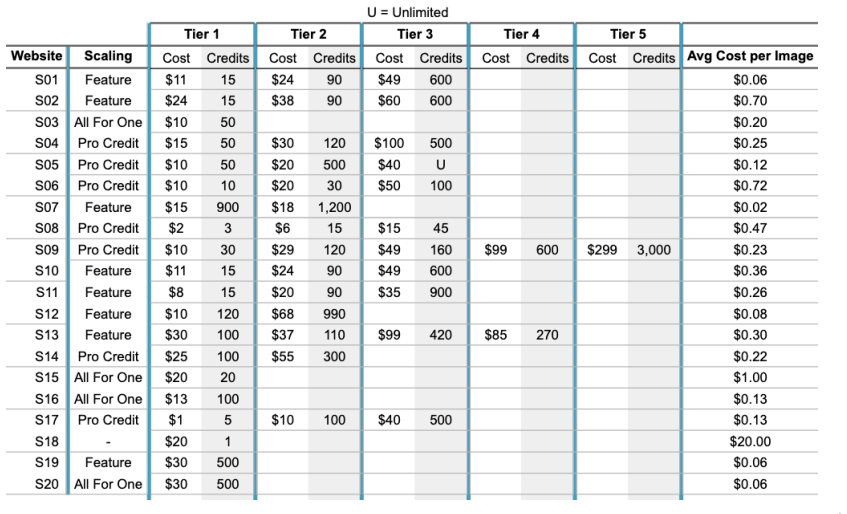
On the paper's own terms, the central discovery is that point-and-click AI nudification has already consolidated into a commercial, women-targeted market. Across the 20 sampled sites, the defining feature, an AI undressing tool that predicts the nude body under clothing, appears on 18 sites, and 19 sites communicate through imagery or text that their product is the nude or sexualized female form. Consent and age safeguards are largely formal: 10 of 20 sites mention in their terms of service that users should have the image subject's consent, fewer actually ask for confirmation, and the age check, where present, is usually a click-through button that can appear after nude content has already been shown. The same sites monetize through tiered subscriptions, affiliate and referral programs, and API resale, with 17 of 20 accepting cryptocurrency and the lowest-cost paid tier averaging $0.31 per generated image. The paper concludes that because every sampled site is commercial, monetization infrastructure is a viable chokepoint for reducing harm, and because the tools are positioned to create non-consensual imagery of women, consent and age verification should be required of the platforms rather than left to users.
Load-bearing premise
The load-bearing premise is that the 20 sites found through NGO lists and three 'Top X' search articles, observed from one US location, are representative enough of the popular and easy-to-find nudification ecosystem that the observed patterns belong to the ecosystem as a whole.
Editorial extensions
If this is right
- Payment rails are a practical intervention point: 17 of 20 sampled sites accept cryptocurrency, and three rely on conventional card and online payment processors, so payment intermediaries sit inside nearly every monetization path.
- Click-through age gates are not protecting minors or subjects: 6 of 20 sites never ask for an age confirmation, and 5 of the remaining sites show nude or sexual content before the confirmation appears.
- Consent requirements are mostly boilerplate: only 10 of 20 sites state in their terms of service that the user needs the depicted person's consent, and only 7 present consent language before image generation.
- API resale means takedown of a single storefront is unlikely to stop the capability: 5 of 20 sites sell model access for between $20 and $299 per month, letting other sites repackage the same model.
- The ecosystem is not designed for user or subject control: of the 17 accounts the researchers created, only 1 could be deleted through the website.
Reading between the lines
- Editorial inference: if the commercial dependency is as strong as the data suggest, a watchlist assembled from payment-processor records would likely find more of the ecosystem than search-based lists, because every sampled site must transact.
- Editorial inference: the API-resale finding implies that interventions aimed only at consumer-facing websites will be bypassed; model hosts and API-key issuers are a more durable target.
- Editorial inference: the paper's ethical choice not to upload images leaves open a measurement gap; testing advertised features using synthetic or fully consenting images could determine whether the sites deliver what they sell.
- Editorial inference: because all observations came from a single US vantage point, a natural extension is to repeat the walkthrough from other regions; persistence of the women-focused, commercial pattern would strengthen the ecosystem-level claim.
Signed reviews
Editorial analysis
A structured set of objections, weighed in public.
Referee Report
Summary. The paper reports a walkthrough study of 20 AI nudification websites, based on the Light et al. application walkthrough method. It asks three questions: how the sites position themselves, what features they advertise, and how they monetize. The authors find that 19 of 20 sites explicitly specialize in the nudification of women, that half mention consent expectations in some form but few ask for affirmation during the normal user flow, that many sites lack meaningful age confirmation, and that all 20 sites are commercial, using a mix of cryptocurrency, PayPal, credit cards, affiliate programs, and API resale. The paper proposes intervention points such as payment processors, single sign-on providers, and model owners. It deliberately does not name the studied sites and uses artistic renderings of interfaces for ethical reasons.
Significance. If the results hold, this is a valuable first systematic characterization of a harmful and understudied ecosystem, with concrete implications for platform accountability and policy. The paper is strong in its ethical design: it discusses researcher safeguarding, includes a content warning and sensitivity read, avoids naming sites to limit traffic, and clearly frames the study as examining advertised features rather than experimentally verified capabilities. The counts are internally consistent and the first half of the sample was double-coded with Cohen's Kappa 0.88. The main value is descriptive: it provides a baseline of the ecosystem's commercial structure, consent and age-verification gaps, and monetization channels. The central limitation is external validity: the sample is a convenience sample from NGO lists and three 'Top X' articles, all from a single US location, and the paper's broader ecosystem-level claims depend on that sample being representative.
major comments (2)
- [Section 3.1 and Section 3.5] The paper describes the sample as 'representative' and generalizes from the 20 studied sites to 'the ecosystem' in Findings #1-#8 and in the Section 8 mitigation discussion. However, the sampling frame is two NGO-provided lists and three 'Top X' search articles, all observed from a single US location, and saturation is only established within those sources. This is a convenience sample: the NGO and search-article sources may systematically over-represent apps that target women and under-represent other entry points such as app stores, social media ads, non-English or geo-specific sites. Because the headline counts (e.g., 19/20 women-focused, 10/20 consent mentions, 17/20 crypto) and the proposed intervention points (payment processors, SSO providers, APIs) depend on the representativeness of those 20 sites, the authors should either add a robustness check based on an independently drawn sample from additional sources and vantage points, or explicitly restrict all ecosystem-level claims to the studied sites.
- [Section 3.2] The authors report Cohen's Kappa of 0.88 on the first 10 sites, but the remaining 10 sites were coded by a single researcher. Since the paper's contributions are exact counts out of 20 (e.g., 19/20, 10/20, 17/20), a single coder's interpretation on the second half directly affects the reported counts and the qualitative labels such as 'about half' or 'most'. I recommend releasing an anonymized codebook and coding matrix, and double-coding at least a subset of the second half to establish reliability across the full dataset, or explicitly stating this as a significant limitation of the count-based claims.
minor comments (6)
- [Section 4] The text says 'seven of the 20 (33%) websites' but 7/20 is 35%; the percentage should be corrected.
- [Section 5.1] Finding #4 says 'Half of applications allow for images to be modified such that the image subject is put into sexual scenes,' but the preceding text reports 9 of 20 applications offering Deepnudes features; 9/20 is 'about half' under the paper's own terminology in Section 4, so the wording should be adjusted for consistency.
- [Section 6] The text refers to 'Appendix 6' for the payment breakdown, but the relevant appendix is labeled C; the cross-reference should be fixed.
- [Throughout] There are several typos and minor usage errors: 'nudificaiton' in Section 3, 'ubiquitious' in Section 8, 'altercations' in Section 8.1, 'Paetreon' and 'cyptocurrency' in Figure 6, and 'notification' for 'nudification' in Section 8.2.
- [Section 3.1] The paper does not specify how many NGO lists were used, what search queries generated the 'Top X' articles, or how many candidate sites were screened before saturation; providing these details (without naming the sites) would improve reproducibility.
- [Section 4] The abstract says 'most sites explicitly target the nudification of women,' but Section 4 reports 19 of 20, which the paper's own terminology would call 'almost all'; the labeling should be consistent.
Circularity Check
No circularity: this is an observational walkthrough study whose findings are direct coded observations, with no fitted parameters, derived predictions, or load-bearing self-citations.
full rationale
The paper is an empirical measurement and qualitative walkthrough study of 20 nudification websites. It makes no formal derivations, fits no parameters, and offers no quantitative predictions that are then compared to data. The headline findings—positioning toward women, consent and age-verification practices, advertised features, and monetization infrastructure—are direct observational codes produced by the researchers using the Light et al. walkthrough method. The one count that is partly a consequence of the sampling design, namely that 18 of 20 applications offer an AI Undressing Tool, is explicitly acknowledged by the authors: they state that this is unsurprising because their application selection process specifically selected for this feature, and they retain two nonconforming applications because users seeking nudification apps might encounter them. This acknowledgment converts a potential circularity into a transparent statement about sampling criteria rather than a hidden derivation. Self-citations in the paper (e.g., references [6], [16], and [56]) are used as background context and methodological precedent; they are not invoked as uniqueness theorems, ansatz justifications, or evidence that the observed pattern must hold. The stated limitation that the sample was drawn from NGO lists and three 'Top X' articles and observed from a single US location is a generalizability and external-validity concern, not a circularity concern, because the findings do not assume the conclusion they report. Overall, the derivation chain is self-contained with respect to the data collection and coding process, and no load-bearing step reduces to its own inputs.
Assumptions & free parameters
assumptions (3)
- domain assumption Advertised features are a valid proxy for the features users will encounter and believe they are purchasing.
- domain assumption The 20-site sample, identified via NGO lists and three 'Top X' articles, is representative of the popular and easy-to-find nudification ecosystem.
- domain assumption Visual presentation (dress and anatomy) allowed researchers to code the gender targeted by each site as 'women'.
Cite this review
Pith. "Pith review of Analyzing the AI Nudification Application Ecosystem." pith.science (2026). https://pith.science/paper/M7FRARSG
@misc{pith2026241109751,
  author       = {Pith},
  title        = {Pith review of: Analyzing the AI Nudification Application Ecosystem},
  year         = {2026},
  howpublished = {\url{https://pith.science/paper/M7FRARSG}},
  note         = {Machine review of arXiv:2411.09751}
}
read the original abstract
Given a source image of a clothed person (an image subject), AI-based nudification applications can produce nude (undressed) images of that person. Moreover, not only do such applications exist, but there is ample evidence of the use of such applications in the real world and without the consent of an image subject. Still, despite the growing awareness of the existence of such applications and their potential to violate the rights of image subjects and cause downstream harms, there has been no systematic study of the nudification application ecosystem across multiple applications. We conduct such a study here, focusing on 20 popular and easy-to-find nudification websites. We study the positioning of these web applications (e.g., finding that most sites explicitly target the nudification of women, not all people), the features that they advertise (e.g., ranging from undressing-in-place to the rendering of image subjects in sexual positions, as well as differing user-privacy options), and their underlying monetization infrastructure (e.g., credit cards and cryptocurrencies). We believe this work will empower future, data-informed conversations -- within the scientific, technical, and policy communities -- on how to better protect individuals' rights and minimize harm in the face of modern (and future) AI-based nudification applications. Content warning: This paper includes descriptions of web applications that can be used to create synthetic non-consensual explicit AI-created imagery (SNEACI). This paper also includes an artistic rendering of a user interface for such an application.
Figures


Figures from the paper (3 more)


Reference graph
Works this paper leans on
-
[1]
https://stopstalkerware.org/, 2023
Coalition Against Stalkerware. https://stopstalkerware.org/, 2023. Accessed: 2023-02-05
work page 2023
-
[2]
Executive Order No. 14110 - Executive Order on the Safe, Secure, and Trustworthy Development and Use of Artificial Intelligence, 2023
work page 2023
- [3]
-
[4]
A. O. B˘alan and M. J. Black. The naked truth: Estimating body shape under clothing. In Computer Vision–ECCV 2008: 10th European Conference on Computer Vision, Marseille, France, October 12-18, 2008, Proceedings, Part II 10, pages 15–29. Springer, 2008
work page 2008
-
[5]
A. R. Brieger. Empowerment or exploitation: A qualitative analysis of online feminist communities’ discussions of deepfake pornography, 2024
work page 2024
-
[6]
N. Brigham, M. Wei, T. Kohno, and E. Redmiles. “Violation of my body:” Perceptions of AI-generated non-consensual (intimate) imagery. In 33rd USENIX Security Symposium (USENIX Security 24), 2024
work page 2024
-
[7]
B. Britton. They appeared in deepfake porn videos without their consent. Few laws protect them. NBC News, Feb. 2023
work page 2023
-
[8]
M. R. Bruce, A. F. Adekoya, S. Boateng, and P. Appiahene. Prevalent user-centered monetization techniques in social media. International Review of Management and Marketing, 13(1):19–28, Jan. 2023
work page 2023
Show all 61 references
-
[9]
Cheong, A
I. Cheong, A. Caliskan, and T. Kohno. Safeguarding human values: Rethinking US law for generative AI’s societal impacts. AI and Ethics, May 2024
2024
-
[10]
D. K. Citron. Sexual privacy. Yale LJ, 128:1870, 2018
2018
-
[11]
Division
C. Division. 18 u.s.c §§ 2257- 2257a certifications
-
[12]
S. Duguay. Dressing up tinderella: Interrogating authenticity claims on the mobile dating app tinder. Information, communication & society, 20(3):351–367, 2017
2017
-
[13]
What you can report to esafety
eSafety Commissioner. What you can report to esafety
-
[14]
G. A. Gabison. White label: The technological illusion of competition. The Antitrust Bulletin, 67(4):642–662, 2022
2022
-
[15]
J. Geary. Judges deciding if cut-and-paste photos equal child porn, Oct. 2010
2010
-
[16]
Gibson, V
C. Gibson, V . Frost, K. Platt, W. Garcia, L. Vargas, S. Rampazzi, V . Bindschaedler, P. Traynor, and K. R. B. Butler. Analyzing the monetization ecosystem of stalkerware. In Privacy Enhancing Technologies Symposium, July 2022
2022
-
[17]
Golmgrein
I. Golmgrein. A comprehensive overview of monetization strategies in creative industries. International Journal of Latest Engineering and Management Research (IJLEMR), 8, April 2023
2023
-
[18]
Henry, C
N. Henry, C. McGlynn, A. Flynn, K. Johnson, A. Powell, and A. J. Scott. Image-based sexual abuse: A study on the causes and consequences of non-consensual nude or sexual imagery. Routledge, 2020
2020
-
[19]
J. Hoggard. Face swap in photoshop leads to child pornography arrest, Mar. 2022
2022
-
[20]
Huang, R
Z. Huang, R. Khan, et al. A review of 3d human body pose estimation and mesh recovery. Digital Signal Processing, 128:103628, 2022
2022
-
[21]
M. H. Jarrahi, W. Sutherland, S. B. Nelson, and S. Sawyer. Platformic management, boundary resources for gig work, and worker autonomy. Computer supported cooperative work (CSCW), 29:153–189, 2020
2020
-
[22]
A. P. Jennifer Klein. A call to action to combat image-based sexual abuse. Technical report, White House, 2024
2024
-
[23]
C. Kraft. Trolls used her face to make fake porn. There was nothing she could do. New York Times, July 2024
2024
-
[24]
Light, J
B. Light, J. Burgess, and S. Duguay. The walkthrough method: An approach to the study of apps. New media & society, 20(3):881–900, 2018
2018
-
[25]
H. Luo, M. Wang, P. K.-Y . Wong, and J. C. Cheng. Full body pose estimation of construction equipment using computer vision and deep learning techniques. Automation in construction, 110:103016, 2020
2020
-
[26]
MacKinnon
R. MacKinnon. Virtual rape. Journal of Computer-Mediated Communication, 2(4):JCMC247, 1997
1997
-
[27]
Maddocks
S. Maddocks. ‘A deepfake porn plot intended to silence me’: Exploring continuities between pornographic and ‘political’ deep fakes. Porn Studies, 7(4):415–423, 2020
2020
-
[28]
dual use
E. Maiberg. Apple’s huge “dual use” face swap app problem is not going away, Aug. 2024. 16
2024
-
[29]
E. Maiberg. Instagram advertises nonconsensual ai nude apps, Apr. 2024
2024
-
[30]
Marchal, R
N. Marchal, R. Xu, R. Elasmar, I. Gabriel, B. Goldberg, and W. Isaac. Generative AI misuse: A taxonomy of tactics and insights from real-world data. arXiv preprint arXiv:2406.13843, 2024
2024 arXiv
-
[31]
Mattinen, J
T. Mattinen, J. Macey, and J. Hamari. A ruse by any other name: Comparing loot boxes and collectible card games using magic arena. Proceedings of the ACM on Human-Computer Interaction, 7(CHI PLAY):721–747, 2023
2023
-
[32]
McGlynn, E
C. McGlynn, E. Rackley, and R. Houghton. Beyond ‘revenge porn’: The continuum of image-based sexual abuse. Feminist legal studies, 25:25–46, 2017
2017
-
[33]
McLean, S
S. McLean, S. Paxton, E. Wertheim, and J. Masters. Photoshopping the selfie: Self photo editing and photo investment are associated with body dissatisfaction in adolescent girls. The International Journal of eating disorders, 48, Aug. 2015
2015
-
[34]
Ethics guidelines
neurips. Ethics guidelines
-
[35]
Nirkin, I
Y . Nirkin, I. Masi, A. Tran Tuan, T. Hassner, and G. Medioni. On face segmentation, face swapping, and face perception. In 2018 13th IEEE International Conference on Automatic Face & Gesture Recognition (FG 2018), page 98–105. IEEE Press, 2018
2018
-
[36]
N. I. Observatory. FAQ | The National Internet Observatory
-
[37]
U. M. of Justice and L. Farris. Government cracks down on ‘deepfakes’ creation. https://www.gov.uk/ government/news/government-cracks-down-on-deepfakes-creation , 2024
2024
-
[38]
of Medicine (US) Committee on Assessing Genetic Risks
I. of Medicine (US) Committee on Assessing Genetic Risks. Social, legal, and ethical implications of genetic testing, Jan. 1994
1994
-
[39]
O’Neill, M
D. O’Neill, M. V . Birk, and R. L. Mandryk. Unpacking norms, narratives, and nourishment: A feminist hci critique on food tracking technologies. In Proceedings of the CHI Conference on Human Factors in Computing Systems, pages 1–20, 2024
2024
-
[40]
Age & identity verification
OnlyFans. Age & identity verification
-
[41]
H. J. Parkinson. Stop calling women ’girls’. it’s either patronising or sexually suggestive. The Guardian, July 2015
2015
-
[42]
Petitcolas, R
F. Petitcolas, R. Anderson, and M. Kuhn. Information hiding: A survey. Proceedings of the IEEE, 87(7):1062– 1078, 1999
1999
-
[43]
Pierri and S
F. Pierri and S. Ceri. False news on social media: A data-driven survey. SIGMOD Rec., 48(2):18–27, Dec. 2019
2019
-
[44]
Model agreement – PornHub help
PornHub. Model agreement – PornHub help
-
[45]
Reime, V
L. Reime, V . Tsaknaki, and M. L. Cohn. Walking through normativities of reproductive bodies: A method for critical analysis of tracking applications. In Proceedings of the 2023 CHI Conference on Human Factors in Computing Systems, pages 1–15, 2023
2023
-
[46]
M. K. Scheuerman, K. Spiel, O. L. Haimson, F. Hamidi, and S. M. Branham. HCI guidelines for gender equity and inclusivity. 2020
2020
-
[47]
C. Senate. Cantwell, Blackburn, Heinrich Introduce Legislation to Increase Transparency, Combat AI Deepfakes & Put Journalists, Artists & Songwriters Back in Control of Their Content, Jul 2024
2024
-
[48]
Stardust, D
Z. Stardust, D. Blunt, G. Garcia, L. Lee, K. D’Adamo, and R. Kuo. High risk hustling: Payment processors, sexual proxies, and discrimination by design. CUNY L. Rev., 26:57, 2023
2023
-
[49]
R. Su. Here’s a map showing which US states have passed laws against revenge porn — and those where it’s still legal. Business Insider, Oct. 2019
2019
-
[50]
Tenbarage
K. Tenbarage. Nude deepfake images of Taylor Swift went viral on X, evading moderation and sparking outrage. NBC News, Jan. 2024
2024
-
[51]
Timmerman, P
B. Timmerman, P. Mehta, P. Deb, K. Gallagher, B. Dolan-Gavitt, S. Garg, and R. Greenstadt. Studying the online deepfake community
-
[52]
X. Tong, L. Wang, X. Pan, and J. Wang. An Overview of Deepfake: The Sword of Damocles in AI. pages 265–273, July 2020
2020
-
[53]
C. A. Uhl, K. J. Rhyner, C. A. Terrance, and N. R. Lugo. An examination of nonconsensual pornography websites. Feminism & Psychology, 28(1):50–68, 2018
2018
-
[54]
Umbach, N
R. Umbach, N. Henry, G. F. Beard, and C. M. Berryessa. Non-consensual synthetic intimate imagery: Prevalence, attitudes, and knowledge in 10 countries. In Proceedings of the CHI Conference on Human Factors in Computing Systems, CHI ’24, New York, NY , USA, 2024. Association fo...
2024
-
[55]
G. Wang, J. Zhao, M. Van Kleek, and N. Shadbolt. Protection or punishment? relating the design space of parental control apps and perceptions about them to support parenting for online safety. Proceedings of the ACM on Human-Computer Interaction, 5(CSCW2):1–26, 2021
2021
-
[56]
M. Wei, S. Consolvo, P. G. Kelley, T. Kohno, T. Matthews, S. Meiklejohn, F. Roesner, R. Shelby, K. Thomas, and R. Umbach. Understanding Help-Seeking and Help-Giving on social media for Image-Based sexual abuse. In 33rd USENIX Security Symposium (USENIX Security 24), pages 4391...
2024
-
[57]
Wharton, J
C. Wharton, J. Rieman, C. Lewis, and P. Polson. The cognitive walkthrough method: A practitioner’s guide. In Usability inspection methods, pages 105–140. 1994
1994
-
[58]
Whitten and J
A. Whitten and J. D. Tygar. Why Johnny can’t encrypt: A usability evaluation of pgp 5.0. In USENIX security symposium, volume 348, pages 169–184, 1999
1999
-
[59]
Y . Wu, Z. Hu, J. Guo, H. Zhang, and H. Huang. A resilient and accessible distribution-preserving watermark for large language models. 2024
2024
-
[60]
Yee and J
N. Yee and J. Bailenson. The proteus effect: The effect of transformed self-representation on behavior. Human Communication Research, 33:271 – 290, July 2007
2007
-
[61]
confirmation
J. Yu, Z. Lin, J. Yang, X. Shen, X. Lu, and T. S. Huang. Generative image inpainting with contextual attention. In Proceedings of the IEEE conference on computer vision and pattern recognition, pages 5505–5514, 2018. A Appendix A: Age Confirmation These applications create sex...
2018
Reviewed August 12, 2026 · model on record in the stance chip above.
Discussion (0). Continue with ORCID to comment.