REVIEW 1 major objections 5 minor 3 cited by
The Rayleigh-Taylor instability in a binary quantum fluid
T0 review · 1 major / 5 minor · reviewed 2026-08-12 · deepseek-v4-flash
Pith's one-line read Rayleigh-Taylor instability observed in a binary quantum fluid, with growth rate matching classical theory.
desk verdict First experimental RTI in a binary superfluid with a convincing core observation; the headline quantitative match at the largest force leans on an extrapolated interfacial tension, but the paper is still worth referee time. read the letter →
The pith
A machine-rendered reading of the paper's core claim, the machinery that carries it, and where it could break.
The reading
What carries the argument
The load-bearing object is the linearized interface dispersion ω² = (F k + σ k³/ρ̄)/(2m), identical in form to classical gravity-capillary waves and Rayleigh-Taylor modes. It ties the experimentally controlled differential force F, set by a magnetic gradient acting on the two spin states, to the measurable growth rate Γ = -Im(ω) of interface undulations, with the interfacial tension σ and average density ρ̄ entering only through the ratio σ/ρ̄. The paper extracts σ/ρ̄ by fitting the stable (F > 0) ripplon spectrum from Bogoliubov-de Gennes calculations and experiments, then uses the threshold wavevector k_c to set the range of unstable modes; matter-wave interferometry serves as a complementary probe by converting the azimuthal phase difference across the interface into a countable vortex chain.
What would settle it
Measure σ/ρ̄ directly in the unstable regime by extracting the threshold wavevector k_c from the power spectral density at several differential forces, including F/h ≈ -7.7 Hz/μm, and check whether that value reproduces the observed growth rate Γ = 88(3) s⁻¹; an appreciable dependence of σ/ρ̄ on F would invalidate the extrapolation and weaken the central agreement.
Extended reading notes
Core claim
In a quasi-two-dimensional two-component BEC of 23Na, with the |F=1,m_F=-1⟩ and |F=2,m_F=-2⟩ states phase-separated by a ferromagnetic interaction, the paper demonstrates that reversing the magnetic-field gradient drives the interface Rayleigh-Taylor unstable. Interface height modulations grow exponentially at a rate consistent with the classical dispersion ω² = (F k + σ k³/ρ̄)/(2m), where F is the differential force per particle, σ the interfacial tension, ρ̄ the average density, and m the atomic mass; the measured Γ = 88(3) s⁻¹ at F/h = -7.7(4) Hz/μm agrees with the computed 80(5) s⁻¹. For positive F, parametric driving excites ripplon standing waves whose dispersion, fit to the same formula, yields the interfacial-tension ratio σ/ρ̄ used to predict the unstable-mode spectrum including the threshold wavevector k_c = √(-F ρ̄/σ). Finally, a microwave π/2-pulse maps the spinor phase difference across the interface into a sinusoidal density modulation, so that the number of vortices in the resulting pattern counts the interfacial counterflow velocity.
Load-bearing premise
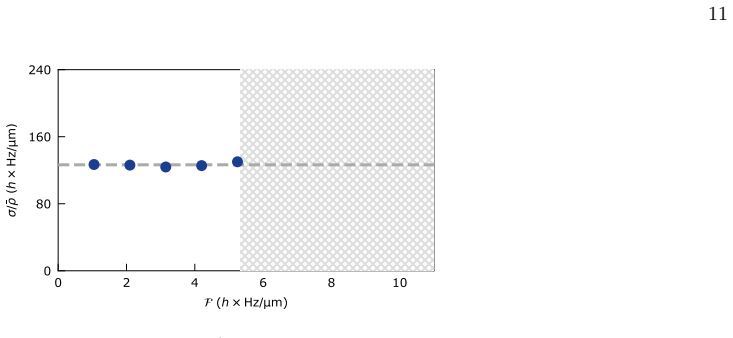
The paper relies on the assumption that the interfacial tension-to-density ratio σ/ρ̄, measured in stable configurations at smaller forces, remains the same at the largest destabilizing force, where numerical relaxation to the metastable state fails and the average value is used to extrapolate the theory curves.
Editorial extensions
If this is right
- The RTI growth rate and mode spectrum in a quantum fluid are quantitatively captured by the classical dispersion, so superfluid interfaces can act as a calibrated diagnostic for interfacial tension and differential forcing.
- Ripplon spectroscopy offers a path to low-temperature thermometry: as F → 0 the ω ∝ k^(3/2) dispersion gives access to ultra-low-energy thermal excitations in a box-trapped BEC.
- Matter-wave interferometry makes superfluid phase (velocity) structure visible as a vortex chain, providing a direct readout of interfacial counterflow during instability growth.
- Parametric excitation of ripplon modes, understood as a Floquet process, suggests that oscillatory forcing could stabilize the RTI, with potential relevance to inertial confinement fusion and other RTI-limited systems.
Reading between the lines
- If σ/ρ̄ varies appreciably with F in the unstable regime, the extrapolated theory curves in Fig. 2C would shift; a direct measurement of k_c from power spectra at intermediate forces could test the assumed constancy.
- The interferometric velocimetry could be extended to extract the full position-dependent counterflow profile along the interface, providing a quantitative check of the linearized eigenmode shapes, not just their growth rates.
- Tuning the inter-species scattering length closer to the phase-separation boundary would change the effective Atwood-number asymmetry and could reveal how quantum interfacial tension modifies the classical RTI scaling.
- The ripplon thermometry proposal implies a possible route to sub-nanokelvin thermometry in uniform BECs, since the ω ∝ k^(3/2) branch remains populated at very low temperatures.
Editorial analysis
A structured set of objections, weighed in public.
Referee Report
Summary. The paper reports the experimental observation of the Rayleigh-Taylor instability (RTI) in an immiscible binary Bose-Einstein condensate of 23Na atoms. A magnetic-field gradient is used to force the two spin components together, and the authors observe exponential growth of interface modulations, mushroom-like nonlinear structures, and eventual turbulent mixing. They measure the linear growth rate at the largest force, Γ = 88(3) s^-1 at F/h = -7.7(4) Hz/µm, and compare it with a computed value of 80(5) s^-1 from a linearized dispersion relation. In stable configurations, they perform ripplon spectroscopy and extract the interfacial-tension-to-density ratio σ/ρ̄. They also use a microwave π/2-pulse to convert interfacial counterflow into a chain of vortices, providing a direct measurement of the superfluid velocity field. The observations are compared with Bogoliubov-de Gennes and Gross-Pitaevskii simulations, which have no adjustable parameters for most of the comparisons.
Significance. If the quantitative agreement holds up, this would be the first controlled observation of the RTI in an immiscible binary quantum fluid, directly connecting classical and quantum fluid instabilities. The ripplon spectroscopy and the matter-wave interferometric vortex-chain velocimetry are valuable additions to the ultracold-atom toolset, offering new ways to probe interface dynamics and superfluid velocity fields. A notable strength is that the central comparisons---exponential growth, mode spectra, and vortex-chain evolution---are checked against parameter-free BdG/GPE simulations, rather than only against the fitted dispersion model. The paper also contains an unusually candid supplementary discussion of the limitations of the numerical methods, which helps the reader assess the robustness of the claims.
major comments (1)
- [Fig. 2C and SM 'Unstable ripplon modes'] The solid and dashed curves in Fig. 2C (threshold and maximum-gain wavevectors) are computed with the same extrapolated σ/ρ̄, so the visual match between the measured PSD and these curves is partly dependent on that extrapolation. Because the PSD directly measures the unstable mode spectrum, the authors should use it to extract an independent value of σ/ρ̄ in the unstable regime, for instance from the high-k cutoff of the amplified band, and compare that value with the averaged BdG result. Such an in-situ check would directly test the force-independence assumption and would strengthen the central quantitative claim.
minor comments (5)
- [SM, 'Unstable ripplon modes'] The text refers to 'Fig. 2(C)' but the supplementary material contains no numbered figure 2; this should be a reference to the main-text figure or to the appropriate SM figure.
- [Main text, Fig. 2B] Please specify the time window over which the exponential fit is performed and how the boundary of the 'linear dynamics' regime is determined, since this affects the fitted value Γ = 88(3) s^-1.
- [Main text, Fig. 3D caption] The description of the green dashed curve as the 'prediction from the naïve model assuming the interface tension stays unchanged across different F' is ambiguous; it may be clearer to state that this curve assumes a constant σ/ρ̄ and uses Eq. (1) without the BdG recalculation.
- [SM, 'Interface dynamics in a classical fluid'] The word 'incompressable' should be 'incompressible'.
- [Main text, last paragraph] The phrase 'the usual Naiver-Stokes equations' contains a typo; it should be 'Navier-Stokes'.
Circularity Check
No significant circularity: the RTI growth-rate and kc comparisons rest on parameter-free BdG/GPE theory, with σ/ρ̄ transferred from stable ripplon/BdG measurements; the large-F extrapolation is a robustness limitation, not a circular step.
full rationale
The claimed derivation chain — the linearized interface dispersion ω² = (F k + σ k³/ρ̄)/(2m), the threshold kc = √(−F ρ̄/σ), and the exponential growth rate Γ = −Im ω — is entered with σ/ρ̄ obtained either from independent ripplon spectroscopy in the stable branch (Fig. 3D points) or from BdG spectra about the metastable state (SM Fig. 3, symbols). The measured Γ = 88(3) s⁻¹ at F/h = −7.7 Hz/µm is not used to determine σ/ρ̄ or any RTI parameter; the computed 80(5) s⁻¹ is therefore a genuine prediction from the model. The BdG dispersions used for comparison are described as computed 'with no adjustable parameters,' and the GPE solver is calibrated only to the fundamental sound mode, not to any RTI observable. The one explicit extrapolation appears in the SM: 'To construct the theory curves in Fig. 2(C), we simply take the average value of σ/ρ̄ ... to extrapolate into the parameter regime where our numerics break down.' That is an honest modeling assumption — σ/ρ̄ approximately independent of F over the accessed range — and the paper presents BdG-based values that are flat over that range; it does not define the RTI prediction in terms of the fitted ripplon data. Similarly, the interferometric vortex-chain comparison uses simulations whose injected noise amplitude is matched to ηmax, but the vortex number is a separate observable and is not forced by that amplitude match. No load-bearing self-citation or imported uniqueness theorem appears; refs. [5–7] are external theoretical predictions, and Eq. (1) is derived from classical fluid mechanics in the SM. The caveat that measured σ/ρ̄ deviates from BdG at the largest stable F (Fig. 3D) affects the accuracy of the parameter transfer, but not its circularity.
Assumptions & free parameters
free parameters (3)
- sigma/rho_bar (interfacial tension to density ratio) =
range shown in Fig. 3D, roughly 80 to 160 h*Hz/um; average used for extrapolation
- GPE initial phase-noise amplitude =
not specified; matched to experimental eta_max amplitude
- upper-k fitting window for sigma/rho_bar =
0.025 to 0.08 um^-1
assumptions (5)
- domain assumption The two spin states |F=1,mF=-1> and |F=2,mF=-2> are immiscible, with scattering lengths satisfying a_up_up * a_down_down < a_up_down^2.
- domain assumption The quasi-2D GPE with effective interaction constants g(2D) describes the dynamics; transverse confinement omega_z/2pi ~ 1.1 kHz exceeds chemical potential.
- domain assumption Linearized Bogoliubov-de Gennes analysis around the metastable state captures the interface modes.
- ad hoc to paper sigma/rho_bar is independent of F, allowing extrapolation beyond the range where imaginary-time relaxation converges.
- ad hoc to paper Localized gradient potential used for unstable-configuration numerics reproduces the experimental gradient near the interface.
Cite this review
Pith. "Pith review of The Rayleigh-Taylor instability in a binary quantum fluid." pith.science (2026). https://pith.science/paper/CKX2DNA5
@misc{pith2026241119807,
  author       = {Pith},
  title        = {Pith review of: The Rayleigh-Taylor instability in a binary quantum fluid},
  year         = {2026},
  howpublished = {\url{https://pith.science/paper/CKX2DNA5}},
  note         = {Machine review of arXiv:2411.19807}
}
read the original abstract
Instabilities, where small fluctuations seed the formation of large-scale structures, govern dynamics in a variety of fluid systems. The Rayleigh-Taylor instability (RTI), present from tabletop to astronomical scales, is an iconic example characterized by mushroom-shaped incursions appearing when immiscible fluids are forced together. Despite its ubiquity, RTI experiments are challenging; here, we report the observation of the RTI in an immiscible binary superfluid consisting of a two-component Bose-Einstein condensate. We force these components together to initiate the instability, and observe the growth of mushroom-like structures. The interface can also be stabilized, allowing us to spectroscopically measure the "ripplon" interface modes. Lastly, we use matter-wave interferometry to transform the superfluid velocity field at the interface into a vortex chain. These results-in agreement with our theory-demonstrate the close connection between the RTI in classical and quantum fluids.
Figures


Figures from the paper (5 more)


Forward citations
Cited by 3 Pith papers
-
Suppression of capillary instability in a confined quantum liquid filament
Transverse harmonic confinement suppresses the Rayleigh-Plateau instability of a quantum liquid filament and stabilizes it beyond a critical trap frequency.
-
Interpretable Neural Network Quantum States for Solving the Steady States of the Nonlinear Schr\"odinger Equation
Compact neural networks compute ground and excited steady states of the 1D nonlinear Schrödinger equation, and superpositions of those states show chaotic dynamics with near-Kolmogorov scaling.
-
Suppression of Quantum Correlations in a Clean-Disordered Atom-Nanophotonic Interface
Increasing the clean region of a clean-disordered atom-nanophotonic array suppresses high-order quantum correlations and raises entanglement entropy, while excitation populations remain localized.
Reference graph
Works this paper leans on
-
[1]
Lord Rayleigh, On the instability of cylindrical fluid sur- faces, Lond. Edinb. Dubl. Phil. Mag. 34, 177 (1892)
-
[2]
G. I. Taylor, The instability of liquid surfaces when accel- erated in a direction perpendicular to their planes, Proc. R. Soc. A 201, 192 (1950)
work page 1950
-
[3]
S. I. Abarzhi, A. K. Bhowmick, A. Naveh, A. Pandian, N. C. Swisher, R. F. Stellingwerf, and W. D. Arnett, Su- pernova, nuclear synthesis, fluid instabilities, and inter- facial mixing, Proc. Natl. Acad. Sci. U.S.A. 116, 18184 (2018)
work page 2018
-
[4]
J. P. Graves, I. T. Chapman, S. Coda, M. Lennholm, M. Albergante, and M. Jucker, Control of magnetohydro- dynamic stability by phase space engineering of energetic ions in tokamak plasmas, Nat. Commun. 3, 1 (2012)
work page 2012
- [5]
-
[6]
D. Kobyakov, V. Bychkov, E. Lundh, A. Bezett, V. Akkerman, and M. Marklund, Interface dynamics of a two-component Bose-Einstein condensate driven by an external force, Phys. Rev. A 83, 043623 (2011)
work page 2011
- [7]
-
[8]
D. M. Stamper-Kurn and M. Ueda, Spinor Bose gases: Symmetries, magnetism, and quantum dynamics, Rev. Mod. Phys. 85, 1191 (2013)
2013
Show all 40 references
-
[9]
D. A. Takahashi, M. Kobayashi, and M. Nitta, Nambu- Goldstone modes propagating along topological defects: Kelvin and ripple modes from small to large systems, Phys. Rev. B 91, 184501 (2015)
2015
-
[10]
Watanabe and H
H. Watanabe and H. Murayama, Nambu-Goldstone bosons with fractional-power dispersion relations, Phys. Rev. D 89, 101701 (2014)
2014
-
[11]
Takeuchi and K
H. Takeuchi and K. Kasamatsu, Nambu-Goldstone modes in segregated Bose-Einstein condensates, Phys. Rev. A 88, 043612 (2013)
2013
-
[12]
J. A. F. Plateau, Statique exp´ erimentale et th´ eorique des liquides soumis aux seules forces mol´ eculaires, Vol. 2 (Gauthier-Villars, 1873)
-
[13]
C. J. Jog and P. M. Solomon, Two-fluid gravitational instabilities in a galactic disk, Ap. J. 276, 114 (1984)
1984
-
[14]
Lord Rayleigh, Investigation of the character of the equi- librium of an incompressible heavy fluid of variable den- sity, Proc. Lond. Math. Soc. s1–14, 170 (1883)
-
[15]
Banerjee, Rayleigh-Taylor instability: A status review of experimental designs and measurement diagnostics, J
A. Banerjee, Rayleigh-Taylor instability: A status review of experimental designs and measurement diagnostics, J. Fluids Eng. 142, 120801 (2020)
2020
-
[16]
A. J. Allen and P. A. Hughes, The Rayleigh–Taylor insta- bility in astrophysical fluids, Mon. Not. R. Astron. Soc. 208, 609 (1984)
1984
-
[17]
J. D. Kilkenny, S. G. Glendinning, S. W. Haan, B. A. Hammel, J. D. Lindl, D. Munro, B. A. Remington, S. V. Weber, J. P. Knauer, and C. P. Verdon, A review of the ablative stabilization of the Rayleigh-Taylor instability in regimes relevant to inertial confinement fusion, Phys....
1994
-
[18]
L. D. Landau and E. M. Lifshitz, Fluid Mechanics: Vol- ume 6 (Butterworth-Heinemann, 1987)
1987
-
[19]
V. N. Goncharov, Analytical model of nonlinear, single- mode, classical Rayleigh-Taylor instability at arbitrary Atwood numbers, Phys. Rev. Lett. 88, 134502 (2002)
2002
-
[20]
I. E. Mazets, Waves on an interface between two phase- separated Bose-Einstein condensates, Phys. Rev. A 65, 033618 (2002)
2002
-
[21]
R. A. Barankov, Boundary of two mixed Bose-Einstein condensates, Phys. Rev. A 66, 013612 (2002)
2002
-
[22]
Van Schaeybroeck, Interface tension of Bose-Einstein condensates, Phys
B. Van Schaeybroeck, Interface tension of Bose-Einstein condensates, Phys. Rev. A 78, 023624 (2008)
2008
-
[23]
Hern´ andez-Rajkov, N
D. Hern´ andez-Rajkov, N. Grani, F. Scazza, G. Del Pace, W. J. Kwon, M. Inguscio, K. Xhani, C. Fort, M. Mod- 6 ugno, F. Marino, and G. Roati, Connecting shear flow and vortex array instabilities in annular atomic superflu- ids, Nat. Phys. 20, 939 (2024)
2024
-
[24]
Mukherjee, A
B. Mukherjee, A. Shaffer, P. B. Patel, Z. Yan, C. C. Wil- son, V. Cr´ epel, R. J. Fletcher, and M. Zwierlein, Crys- tallization of bosonic quantum Hall states in a rotating quantum gas, Nature 601, 58 (2022)
2022
-
[25]
S. Huh, W. Yun, G. Yun, S. Hwang, K. Kwon, J. Hur, S. Lee, H. Takeuchi, S. K. Kim, and J. yoon Choi, Beyond skyrmion spin texture from quantum Kelvin- Helmholtz instability (2024), arXiv:2408.11217 [cond- mat.quant-gas]
2024 arXiv
-
[26]
Fifer, T
Z. Fifer, T. Torres, S. Erne, A. Avgoustidis, R. J. A. Hill, and S. Weinfurtner, Analog cosmology with two- fluid systems in a strong gradient magnetic field, Phys. Rev. E 99, 031101 (2019)
2019
-
[27]
V. S. Barroso, C. R. D. Bunney, and S. Weinfurtner, Non-linear effective field theory simulators in two-fluid interfaces, J. Phys.:Conf. Ser. 2531, 012003 (2023)
2023
-
[28]
Kobyakov, V
D. Kobyakov, V. Bychkov, E. Lundh, A. Bezett, and M. Marklund, Parametric resonance of capillary waves at the interface between two immiscible Bose-Einstein condensates, Phys. Rev. A 86, 023614 (2012)
2012
-
[29]
J. P. Boris, Dynamic stabilization of the imploding shell Rayleigh-Taylor instability, Comments Plasma Phys. Controlled Fusion 3, 1 (1977)
1977
-
[30]
Apffel, F
B. Apffel, F. Novkoski, A. Eddi, and E. Fort, Floating under a levitating liquid, Nature 585, 48 (2020)
2020
-
[31]
Lamporesi, Two-component spin mixtures, arXiv:2304.03711 [cond-mat.quant-gas]
G. Lamporesi, Two-component spin mixtures, arXiv:2304.03711 [cond-mat.quant-gas]
-
[32]
Knoop, T
S. Knoop, T. Schuster, R. Scelle, A. Trautmann, J. App- meier, M. K. Oberthaler, E. Tiesinga, and E. Tiemann, Feshbach spectroscopy and analysis of the interaction po- tentials of ultracold sodium, Phys. Rev. A 83, 042704 (2011)
2011
-
[33]
Samuelis, E
C. Samuelis, E. Tiesinga, T. Laue, M. Elbs, H. Kn¨ ockel, and E. Tiemann, Cold atomic collisions studied by molec- ular spectroscopy, Phys. Rev. A 63, 012710 (2000)
2000
-
[34]
We assumed it has an uncertainty of 0 .4aB, similar to other reported scat- tering length in [32]
This number is first reported in [31]. We assumed it has an uncertainty of 0 .4aB, similar to other reported scat- tering length in [32]
-
[35]
Ao and S
P. Ao and S. T. Chui, Binary Bose-Einstein condensate mixtures in weakly and strongly segregated phases, Phys. Rev. A 58, 4836 (1998)
1998
-
[36]
D. A. Takahashi and M. Nitta, Counting rule of Nambu- Goldstone modes for internal and spacetime symme- tries: Bogoliubov theory approach, Ann. Phys. 354, 101 (2015)
2015
-
[37]
Hadzibabic and J
Z. Hadzibabic and J. Dalibard, Two-dimensional Bose fluids: An atomic physics perspective, Riv. Nuovo Ci- mento. 34, 389 (2011)
2011
-
[38]
J. L. Ville, R. Saint-Jalm, E. Le Cerf, M. Aidelsburger, S. Nascimb` ene, J. Dalibard, and J. Beugnon, Sound prop- agation in a uniform superfluid two-dimensional Bose gas, Phys. Rev. Lett. 121, 145301 (2018)
2018
-
[39]
Lehtovaara, J
L. Lehtovaara, J. Toivanen, and J. Eloranta, Solution of time-independent Schr¨ odinger equation by the imaginary time propagation method, J. Comput. Phys. 221, 148 (2007)
2007
-
[40]
Takeuchi, N
H. Takeuchi, N. Suzuki, K. Kasamatsu, H. Saito, and M. Tsubota, Quantum Kelvin-Helmholtz instability in phase-separated two-component Bose-Einstein conden- sates, Phys. Rev. B 81, 094517 (2010). 7 SUPPLEMENT AR Y INFORMA TION Initial state preparation We prepare quasi-2D 23Na ...
2010
Reviewed August 12, 2026 · model on record in the stance chip above.
Discussion (0). Continue with ORCID to comment.