REVIEW 5 major objections 5 minor 34 references
Residual Attention Single-Head Vision Transformer Network for Rolling Bearing Fault Diagnosis in Noisy Environments
T0 review · 5 major / 5 minor · reviewed 2026-08-12 · deepseek-v4-flash
Pith's one-line read This paper claims a lightweight single-head transformer diagnoses bearing faults with 93.5% average accuracy even at -10 dB noise.
desk verdict A plausible but incremental transformer variant for bearing fault diagnosis whose headline accuracies rest on an unresolved train/test leakage risk from overlapping sliding windows. read the letter →
The pith
A machine-rendered reading of the paper's core claim, the machinery that carries it, and where it could break.
The reading
What carries the argument
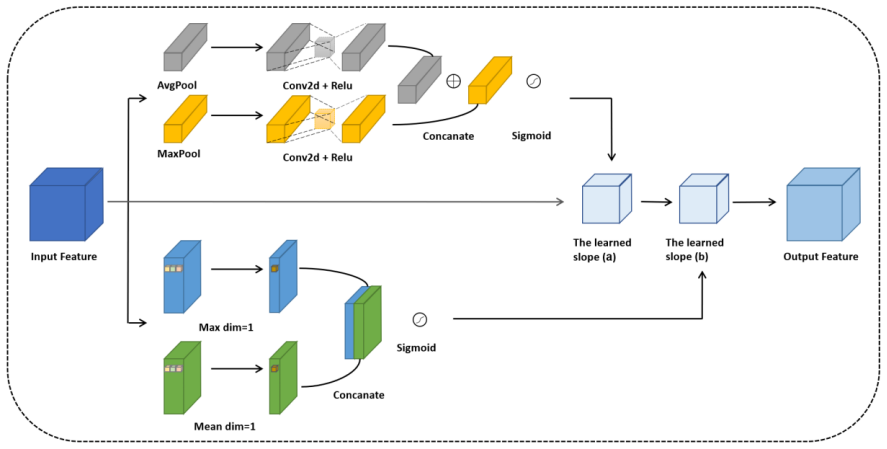
The central object is the Residual Attention Single-Head Vision Transformer Block, made of four parts: a depthwise convolution for local feature aggregation, a Single-Head Self-Attention (SHSA) module that computes attention only on a fraction of channels while leaving the rest unchanged, a Residual Feed-Forward Network (Res-FFN) with skip connections, and an Adaptive Hybrid Attention Block (AHAB) that fuses channel attention and spatial attention with trainable scaling parameters. The input pipeline first applies an FFT to each 2048-point vibration segment and arranges the real and imaginary parts into a 64 by 32 two-channel image, so the network learns from spectral structure rather than raw waveforms. The design goal is to capture both fine-grained local patterns and global context with less memory and compute than multi-head transformers.
What would settle it
Repeat the CWRU evaluation with training and test windows taken from strictly disjoint time intervals and compare the -10 dB accuracy; a large drop would indicate sample leakage rather than noise robustness.
Extended reading notes
Core claim
On its own terms, the paper establishes that RA-SHViT-Net, built on the single-head vision transformer SHViT with an added Adaptive Hybrid Attention Block (AHAB) and residual feed-forward network, outperforms existing diagnosis baselines when Gaussian white noise is added to the vibration signal. Its headline quantitative claims are 93.5% average accuracy on CWRU over SNR values from -10 dB to 10 dB (beating TAR, Transformer, TCN, WDCNN, and GRU by 1.9 to 22.0 percentage points) and 99.1% on PU over -4 dB to 4 dB (beating MARP, VSI-DGGAPN, HMCNN, and SVM). The paper also claims a favorable accuracy-computation trade-off: at 0 dB it reaches 98.2% accuracy with 6.01 MFLOPs and 19.46 million parameters, outperforming both ViT and Swin-T in accuracy while using less computation.
Load-bearing premise
The reported accuracies depend on the assumption that training and test samples came from non-overlapping segments of the raw vibration signals, a condition the paper never explicitly states.
Editorial extensions
If this is right
- Bearing fault classification can remain accurate at signal-to-noise ratios as low as -10 dB, which is relevant for noisy factory-floor monitoring.
- A single-head attention module that acts on only a subset of channels yields a better accuracy-versus-computation balance than multi-head ViT and Swin-T on this diagnosis task.
- The AHAB and Res-FFN components each improve noise robustness; ablations show accuracy drops at low SNR when either is removed, with the gap shrinking as noise weakens.
- Providing the model with FFT spectra rather than raw time-domain samples consistently raises accuracy across the full SNR range tested.
Reading between the lines
- A decisive check the paper leaves implicit is whether the sliding-window sampling produced strictly disjoint train and test segments; if not, the reported accuracies could reflect sample overlap rather than generalization to unseen vibration traces.
- If the architecture's robustness transfers, the same single-head transformer plus hybrid attention recipe could apply to other one-dimensional sensor signals that suffer from noise, such as motor current or gearbox vibration.
- The FFT-to-image conversion is a general way to turn time-series diagnosis into a vision task, but its advantage may diminish for non-stationary signals or faults with very short transients that spread across many frequency bins.
Editorial analysis
A structured set of objections, weighed in public.
Referee Report
Summary. The paper proposes RA-SHViT-Net, a single-head vision transformer variant for rolling bearing fault diagnosis. Vibration signals are converted to the frequency domain via FFT and reshaped into 2D matrices; the network combines depthwise convolution, single-head self-attention, a residual feed-forward network, and an adaptive hybrid attention block (AHAB). The model is evaluated on the CWRU and Paderborn (PU) bearing datasets under additive Gaussian noise at several SNRs, reporting average accuracies of 93.5% (CWRU, -10 to 10 dB) and 99.1% (PU, -4 to 4 dB), along with an efficiency comparison against ViT and Swin-T at 0 dB. Ablation studies examine the contributions of AHAB, the residual FFN, and the FFT preprocessing.
Significance. If the reported evaluation is sound, the paper demonstrates a computationally efficient transformer backbone for bearing fault diagnosis with strong noise robustness, and the ablation studies provide useful evidence for the proposed components. However, the central empirical claims currently rest on an incompletely described evaluation protocol: the sliding-window sampling in Sec. 3.2 may permit train/test leakage, and no variance or repeated-run statistics are reported. These issues must be resolved before the accuracy comparisons can be accepted as evidence of generalization. The architectural ideas are reasonable and the use of two public benchmark datasets is a strength, but the manuscript does not yet substantiate its headline results.
major comments (5)
- [Sec. 3.2] The sliding-window sampling protocol is not described with enough detail to rule out train/test overlap. The text states that data were 'gathered through sliding window sampling' and that a 'sliding overlapping sampling approach' was used for augmentation, but it never states the stride or, crucially, whether training, validation, and test windows are drawn from disjoint time segments of the continuous CWRU/PU signals. With 2048-point windows and 2000 samples per CWRU state, a random split at the window level will place overlapping windows in both training and test sets whenever the stride is smaller than 2048, so the reported accuracies (93.5%, 99.1%, and the Table 3 comparison) may measure overlap memorization rather than generalization. The paper must specify the split strategy at the time-segment level and, if necessary, re-run the experiments with disjoint segments.
- [Secs. 3.4.1 and 3.4.2] No error bars, confidence intervals, or repeated-run statistics are reported for any accuracy figure. The text says 'multiple experiments were conducted independently,' but only point estimates are given for the proposed model and all baselines. Differences such as the -10 dB ablation gap of 69.7% vs. 66.8% (Sec. 3.5.1) or the 1.9% margin over TAR (Sec. 3.4.1) could easily be within run-to-run stochastic variation, especially under additive noise. The authors should report mean and standard deviation (or equivalent) over at least several independent training runs, and ideally over multiple noise realizations.
- [Sec. 3.1.2/3.2] The PU dataset description is internally inconsistent. Sec. 3.1.2 states that the 'N15_M07_F04 dataset was chosen for validation,' but Sec. 3.2 says six states (K001, KA01, KA03, KA07, KI01, KI03) were selected, while Table 2 lists a different set of bearing codes (KA04, KA15, KA16, KA22, KA30, KB23, KB24, KB27, KI14, KI16, KI17, KI18, KI21, KI04). The exact subset, the number of classes, and the per-class sample counts must be clarified; otherwise the 99.1% average accuracy result is not reproducible.
- [Sec. 2.1, Eq. (4)] Equation (4) uses the symbol F' without defining it. The preceding description says the spatial attention branch uses the input vector directly, but the equation multiplies the spatial attention output by F' rather than F. It is therefore unclear whether spatial attention is applied to the original input or to the channel-attended output F_C. This is central to the AHAB architecture and must be corrected for the method to be reproducible.
- [Secs. 3.4.1 and 3.4.2] The manuscript does not state whether the comparison baselines (TAR, Transformer, TCN, WDCNN, GRU, MARP, VSI-DGGAPN, HMCNN, SVM, ViT, Swin-T) were retrained under the same train/validation/test split, data augmentation, noise protocol, and hyperparameter search budget as the proposed model. Without this information, the reported accuracy margins may reflect differences in experimental setup rather than model quality. The authors should specify the baseline training protocol explicitly.
minor comments (5)
- [Table 3] Table 3 is difficult to read: the values for ViT and Swin-T appear to span multiple lines (e.g., '96.3 33.52 / 27.49 / 42.37'), and the accuracy, FLOPs, and parameter columns are not cleanly aligned. Please reformat the table and double-check the numbers.
- [Sec. 2.3] The sentence 'The structure of STL is illustrated in Figure 5' appears to contain a typo; it should likely refer to the SHViT block or the RA-SHViT block.
- [Sec. 2.1] Equation (4) contains the typo 'Spetial Attention' instead of 'Spatial Attention.'
- [Sec. 3.2] The phrase 'Data in this study were gathered through sliding window sampling' is vague; please specify the window length, stride, and how the 2000 samples per CWRU state were generated.
- [Sec. 3.4.3] The claim that the model achieves a 'state-of-the-art balance between computational complexity and predictive accuracy' is supported only by comparison with ViT and Swin-T, not with a broader set of recent lightweight transformer or CNN models; please temper the claim or expand the comparison.
Circularity Check
No significant circularity: the paper's accuracy claims are empirical evaluations of a trained architecture, not self-referential derivations.
full rationale
The paper's central claims are empirical: RA-SHViT-Net is trained on CWRU/PU segments and its test accuracy is reported. The architecture is assembled from cited external components (SHViT, CBAM, ResNet) plus an AHAB module, and the ablation studies compare trained variants. No equation in the paper defines a target quantity in terms of fitted constants or reuses test labels. The only legitimate concern is that Sec. 3.2 says data were gathered via sliding window sampling and an overlapping sampling approach was used to expand the training set, without stating that training and test windows come from disjoint time intervals. If windows overlapped between train and test, the accuracy numbers would be inflated by leakage, but that would be an experimental validity flaw, not a circular derivation: the reported numbers could still be honest measurements of a leaked split, and no step in the text explicitly reduces a prediction to its training data by construction. Because circularity requires exhibiting such a reduction, and none is present here, the score is 0. The reviewer's score of 2 appears to reflect leakage risk; I treat that as a correctness risk outside the circularity definition.
Assumptions & free parameters
free parameters (7)
- AHAB trainable coefficients alpha and beta =
learned, not reported
- SHSA partial ratio r =
1/4.67
- Res-FFN expansion ratio =
2
- Stage embedding dimensions =
(128, 224, 320)
- RA-SHViT block counts L1, L2, L3 =
not stated
- Training hyperparameters =
lr=0.001, batch=16, epochs=750, AdamW
- Noise protocol per SNR =
unspecified
assumptions (5)
- domain assumption Additive Gaussian white noise at -10 to +10 dB is a representative proxy for real industrial noise.
- domain assumption Sliding overlapping windows yield independent training and test samples.
- domain assumption Concatenated real and imaginary FFT components, reshaped to 64x32, preserve label-discriminative information.
- domain assumption CWRU and Paderborn benchmark labels and operating conditions are correct.
- domain assumption Baseline models were implemented and tuned under the same protocol as RA-SHViT-Net.
Cite this review
Pith. "Pith review of Residual Attention Single-Head Vision Transformer Network for Rolling Bearing Fault Diagnosis in Noisy Environments." pith.science (2026). https://pith.science/paper/HFFOFAEN
@misc{pith2026241200085,
  author       = {Pith},
  title        = {Pith review of: Residual Attention Single-Head Vision Transformer Network for Rolling Bearing Fault Diagnosis in Noisy Environments},
  year         = {2026},
  howpublished = {\url{https://pith.science/paper/HFFOFAEN}},
  note         = {Machine review of arXiv:2412.00085}
}
read the original abstract
Rolling bearings play a crucial role in industrial machinery, directly influencing equipment performance, durability, and safety. However, harsh operating conditions, such as high speeds and temperatures, often lead to bearing malfunctions, resulting in downtime, economic losses, and safety hazards. This paper proposes the Residual Attention Single-Head Vision Transformer Network (RA-SHViT-Net) for fault diagnosis in rolling bearings. Vibration signals are transformed from the time to frequency domain using the Fast Fourier Transform (FFT) before being processed by RA-SHViT-Net. The model employs the Single-Head Vision Transformer (SHViT) to capture local and global features, balancing computational efficiency and predictive accuracy. To enhance feature extraction, the Adaptive Hybrid Attention Block (AHAB) integrates channel and spatial attention mechanisms. The network architecture includes Depthwise Convolution, Single-Head Self-Attention, Residual Feed-Forward Networks (Res-FFN), and AHAB modules, ensuring robust feature representation and mitigating gradient vanishing issues. Evaluation on the Case Western Reserve University and Paderborn University datasets demonstrates the RA-SHViT-Net's superior accuracy and robustness in complex, noisy environments. Ablation studies further validate the contributions of individual components, establishing RA-SHViT-Net as an effective tool for early fault detection and classification, promoting efficient maintenance strategies in industrial settings. Keywords: rolling bearings, fault diagnosis, Vision Transformer, attention mechanism, noisy environments, Fast Fourier Transform (FFT)
Figures
Reference graph
Works this paper leans on
-
[1]
Hoang, D. T., & Kang, H. J. (2019). A survey on deep learning based bearing fault diagnosis. Neurocomputing, 335, 327-335
work page 2019
-
[2]
Liu, R., Yang, B., Zio, E., & Chen, X. (2018). Artificial intelligence for fault diagnosis of rotating machinery: A review. Mechanical Systems and Signal Processing, 108, 33-47
work page 2018
-
[3]
Luo, M., Li, C., Zhang, X., Li, R., & An, X. (2016). Compound feature selection and parameter optimization of ELM for fault d iagnosis of rolling element bearings. Isa Transactions, 65, 556-566
work page 2016
-
[4]
Cococcioni, M., Lazzerini, B., & Volpi, S. L. (2012). Robust diagnosis of rolling element bearings based on classification techniques. IEEE Transactions on Industrial Informatics, 9(4), 2256-2263
work page 2012
-
[5]
Miao, Y., Zhang, B., Li, C., Lin, J., & Zhang, D. (2022). Feature mode decomposition: New decomposition theory for rotating m achinery fault diagnosis. IEEE Transactions on Industrial Electronics, 70(2), 1949-1960
work page 2022
-
[6]
Qu, J., Zhang, Z., & Gong, T. (2016). A novel intelligent method for mechanical fault diagnosis based on dual-tree complex wavelet packet transform and multiple classifier fusion. Neurocomputing, 171, 837-853
work page 2016
-
[7]
Liu, S., Ji, Z., Wang, Y., Zhang, Z., Xu, Z., Kan, C., & Jin, K. (2021). Multi -feature fusion for fault diagnosis of rotating machinery based on convolutional neural network. Computer Communications, 173, 160-169
work page 2021
-
[8]
Fault diagnosis of motor bearing using self -organizing maps
Zhong, Fei, Tieiin Shi, and Tao He. "Fault diagnosis of motor bearing using self -organizing maps." 2005 International Conference on Electrical Machines and Systems. Vol. 3. IEEE, 2005
work page 2005
Show all 34 references
-
[9]
Liang, M., & Zhou, K. (2023). A hierarchical deep learning framework for combined rolling bearing fault localization and identification with 24 data fusion. Journal of Vibration and Control, 29(13-14), 3165-3174
2023
-
[10]
Lu, W., Liang, B., Cheng, Y., Meng, D., Yang, J., & Zhang, T. (2016). Deep model based domain adaptation for fault diagnosis. IEEE Transactions on Industrial Electronics, 64(3), 2296-2305
2016
-
[11]
Tang, H., Tang, Y., Su, Y., Feng, W., Wang, B., Chen, P., & Zuo, D. (2024). Feature extraction of multi -sensors for early bearing fault diagnosis using deep learning based on minimum unscented kalman filter. Engineering Applications of Artificial Intelligence, 127, 107138
2024
-
[12]
Yang, R., An, Z., Huang, W., & Wang, R. (2022). Data augmentation in 2D feature space for intelligent weak fault diagnosis of planetary gearbox bearing. Applied Sciences, 12(17), 8414
2022
-
[13]
Liu, H., Zhou, J., Zheng, Y., Jiang, W., & Zhang, Y. (2018). Fault diagnosis of rolling bearings with recurrent neural networ k-based autoencoders. ISA transactions, 77, 167-178
2018
-
[14]
An, Z., Li, S., Wang, J., & Jiang, X. (2020). A novel bearing intelligent fault diagnosis framework under time -varying working conditions using recurrent neural network. ISA transactions, 100, 155-170
2020
-
[15]
T., Prasad, R
Singh, M. T., Prasad, R. K., Michael, G. R., Singh, N. H., & Kaphungkui, N. K. (2024). Spatial -Temporal Bearing Fault Detection Using Graph Attention Networks and LSTM. arXiv preprint arXiv:2410.11923
2024 arXiv
-
[16]
Wang, M., Yu, J., Leng, H., Du, X., & Liu, Y. (2024). Bearing fault detection by using graph autoencoder and ensemble learning. Scientific Reports, 14(1), 5206
2024
-
[17]
Vaswani, A. (2017). Attention is all you need. Advances in Neural Information Processing Systems
2017
-
[18]
Hou, Y., Li, T., Wang, J., Ma, J., & Chen, Z. (2024). A lightweight transformer based on feature fusion and global -local parallel stacked self-activation unit for bearing fault diagnosis. Measurement, 115068
2024
-
[19]
Hou, Y., Wang, J., Chen, Z., Ma, J., & Li, T. (2023). Diagnosisformer: An efficient rolling bearing fault diagnosis method based on improved Transformer. Engineering Applications of Artificial Intelligence, 124, 106507
2023
-
[20]
Lv, J., Xiao, Q., Zhai, X., & Shi, W. (2024). A high -performance rolling bearing fault diagnosis method based on adaptive feature mode decomposition and Transformer. Applied Acoustics, 224, 110156
2024
-
[21]
Yun, S., & Ro, Y. (2024). Shvit: Single -head vision transformer with memory efficient macro design. In Proceedings of the IEEE/CVF Conference on Computer Vision and Pattern Recognition (pp. 5756-5767)
2024
-
[22]
Y., & Kweon, I
Woo, S., Park, J., Lee, J. Y., & Kweon, I. S. (2018). Cbam: Convolutional block attention module. In Proceedings of the European conference on computer vision (ECCV) (pp. 3-19)
2018
-
[23]
He, K., Zhang, X., Ren, S., & Sun, J. (2016). Deep residual learning for image recognition. In Proceedings of the IEEE conference on computer vision and pattern recognition (pp. 770-778)
2016
-
[24]
Hou, S., Lian, A., & Chu, Y. (2023). Bearing fault diagnosis method using the joint feature extraction of Transformer and ResNet. Measurement Science and Technology, 34(7), 075108
2023
-
[25]
Pei, X., Zheng, X., & Wu, J. (2021). Rotating machinery fault diagnosis through a transformer convolution network subjected t o transfer learning. IEEE Transactions on Instrumentation and Measurement , 70, 1-11
2021
-
[26]
Zhang, W., Peng, G., Li, C., Chen, Y., & Zhang, Z. (2017). A new deep learning model for fault diagnosis with good anti-noise and domain adaptation ability on raw vibration signals. Sensors, 17(2), 425
2017
-
[27]
(2015, June)
Chung, J., Gulcehre, C., Cho, K., & Bengio, Y. (2015, June). Gated feedback recurrent neural networks. In International conference on machine learning (pp. 2067-2075). PMLR
2015
-
[28]
Van der Maaten, L., & Hinton, G. (2008). Visualizing data using t -SNE. Journal of machine learning research, 9(11)
2008
-
[29]
Liu, X., Xia, L., Shi, J., Zhang, L., Bai, L., & Wang, S. (2023). A fault diagnosis method of rolling bearing based on improv ed recurrence plot and convolutional neural network. IEEE Sensors Journal, 23(10), 10767-10775
2023
-
[30]
Li, W., Shang, Z., Qian, S., Zhang, B., Zhang, J., & Gao, M. (2022). A novel intelligent fault diagnosis method of rotating machinery based on signal-to-image mapping and deep Gabor convolutional adaptive pooling network. Expert Systems with Applications, 205, 117716
2022
-
[31]
Z., Zou, Y
Liu, Y. Z., Zou, Y. S., Jiang, Y. L., Yu, H., & Ding, G. F. (2020). A novel method for diagnosis of bearing fault using hierarchical multitasks convolutional neural networks. Shock and Vibration, 2020(1), 8846822
2020
-
[32]
Ferná ndez-Francos, D., Martí nez-Rego, D., Fontenla -Romero, O., & Alonso -Betanzos, A. (2013). Automatic bearing fault diagnosis based on one-class ν-SVM. Computers & Industrial Engineering, 64(1), 357-365
2013
-
[33]
An image is worth 16x16 words: Transformers for image recognition at scale
Alexey, Dosovitskiy. "An image is worth 16x16 words: Transformers for image recognition at scale." arXiv preprint arXiv: 2010.11929 (2020)
2020 arXiv
-
[34]
& Guo, B
Liu, Z., Lin, Y., Cao, Y., Hu, H., Wei, Y., Zhang, Z., ... & Guo, B. (2021). Swin transformer: Hierarchical vision transforme r using shifted windows. In Proceedings of the IEEE/CVF international conference on computer vision (pp. 10012-10022)
2021
Reviewed August 12, 2026 · model on record in the stance chip above.
Discussion (0). Continue with ORCID to comment.