REVIEW 3 major objections 5 minor 127 references
Stability of first-order methods in tame optimization
T0 review · 3 major / 5 minor · reviewed 2026-08-12 · deepseek-v4-flash
Pith's one-line read In tame nonsmooth optimization, stable points of first-order methods must be local minima, strict local minima are stable, and coercive objectives draw iterates to their critical set.
desk verdict Solid compilation of previously published stability results for the subgradient method on tame functions; the advertised extension to momentum, reshuffling, and coordinate methods is asserted rather than proved. read the letter →
The pith
A machine-rendered reading of the paper's core claim, the machinery that carries it, and where it could break.
The reading
What carries the argument
The carrying mechanism is the approximation property (Definition 2.1): a method is approximated by subgradient trajectories when, for every compact initialization and finite time horizon, all sufficiently small constant step sizes produce iterates that stay within $\epsilon$ of some absolutely continuous solution of $x'(t)\in -c\,\partial f(x(t))$. This transfers the discrete iteration into the continuous subgradient flow, where the chain rule for tame functions, $(f\circ x)'=-\|x'\|^2$, guarantees monotone decrease until a critical point is reached. Around a local minimum, strictness plus a Łojasiewicz-type inequality creates a connected sublevel-set barrier that keeps the shadowing trajectory inside a small ball; around a spurious critical point, a Chetaev function whose values grow along iterates, together with metric subregularity and the Verdier condition, prevents the distance to the critical manifold from shrinking, forcing escape.
What would settle it
Take a semialgebraic locally Lipschitz function with a strict local minimum $x^*$ and simulate the subgradient method for step sizes $\alpha=2^{-j}$ from initializations in $B(x^*,2^{-j})$; if for some fixed $\epsilon>0$ the iterates leave $B(x^*,\epsilon)$ for arbitrarily small such pairs, the sufficiency direction of the stability theorem would be refuted, while any stable point that is not a local minimum would refute the necessity direction.
Extended reading notes
Core claim
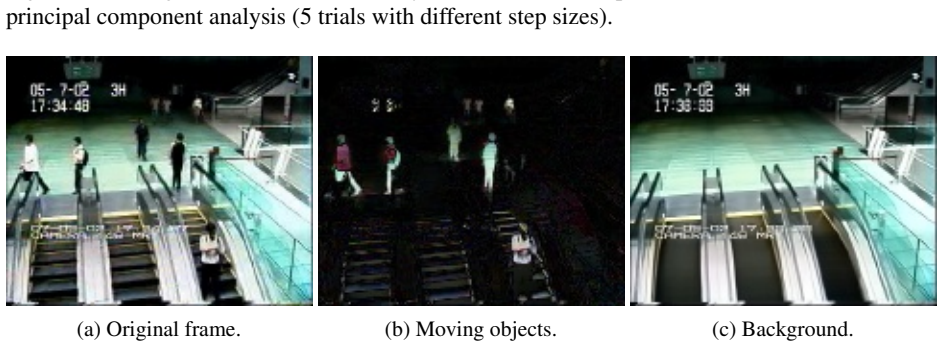
The central claim is that first-order methods that are approximated by subgradient trajectories behave, over finite horizons, like the continuous subgradient flow $x'\in -c\partial f(x)$, and that this approximation turns discrete Lyapunov stability into a local-optimality statement. The paper proves that a stable point of a locally Lipschitz tame function must be a local minimum (Theorem 3.5), that every strict local minimum is stable (Theorem 3.6), and that for coercive tame functions the set of critical points is globally stable (Theorem 4.2): for every $\epsilon>0$ and every bounded set of initial points, a sufficiently small constant step size forces the iterates to eventually lie in $B(\mathrm{crit}(f),\epsilon)$. For the subgradient method, it further proves that a spurious local minimum is strongly unstable when a Chetaev function increases along the iterates and the geometry satisfies metric $\theta_2$-subregularity of $\partial f$ with $\theta_2>1$ together with the Verdier condition along the manifold of critical points. Applications verify these conditions for a ReLU neural-network loss with $\ell^1$ error and for robust principal component analysis with data matrices having zero rows or columns, so the escape is deterministic and almost sure for nearby initializations.
Load-bearing premise
The results rest on the approximation property for each method—the claim that over every finite horizon its iterates, with arbitrarily small constant step size, shadow a subgradient trajectory; for the subgradient method this is proved, whereas for the momentum, random-reshuffling, and coordinate-descent variants it is only asserted to follow from a cited proof.
Editorial extensions
If this is right
- Stable non-minimizing points are impossible for tame objectives: for any method satisfying the approximation property, stability of a point forces it to be a local minimum.
- Every strict local minimum of a locally Lipschitz tame function is stable, so sufficiently close initialization and sufficiently small step size confine all iterates to any prescribed neighborhood.
- For coercive tame functions, the critical set is globally attracting: from any bounded initialization and with small enough constant step size, iterates eventually enter every neighborhood of the critical set.
- Spurious local minima can be left without stochastic noise: under the geometric conditions of Theorem 5.10, the subgradient method escapes from almost every nearby initialization for all but finitely many step sizes.
- Function values along the iterates settle near a critical value, so the global behavior is a value-level stabilization and not merely set-wise convergence.
Reading between the lines
- The approximation framework is likely portable to other first-order schemes, such as proximal or adaptive step methods, because the proof of shadowing uses only upper semicontinuity of the Clarke subdifferential, boundedness of iterates, and the tame chain rule; this extension is not carried out in the paper.
- The instability criteria suggest a preprocessing certificate: on semialgebraic objectives one could algorithmically search stratifications for a Chetaev function and Verdier condition and flag spurious minima before running optimization; the paper does not propose such an algorithm.
- If the approximation property extends to nonsummable diminishing step sizes, as the introduction indicates for most results, the local stability dichotomy would be schedule-independent; this would be a testable strengthening for momentum and reshuffling variants.
- The verified examples hint that noise-free escape from sharp spurious minima may be common in real training objectives; a broader numerical survey across benchmark losses would test how often the Verdier condition holds in practice.
Editorial analysis
A structured set of objections, weighed in public.
Referee Report
Summary. This manuscript studies constant-step-size first-order methods for minimizing locally Lipschitz tame functions. It introduces Definition 2.1, an approximation property requiring that discrete iterates be uniformly close, over finite horizons, to some subgradient trajectory of the objective. Theorem 2.2 proves this property for the vanilla subgradient method. The thesis then defines local M-stability (Definition 3.1) and global stability (Definition 4.1), and proves that stable points are necessarily local minima (Theorem 3.5), that strict local minima are stable for every method satisfying Definition 2.1 (Theorem 3.6), and that the set of critical points of a coercive locally Lipschitz tame function is globally stable (Theorem 4.2). Chapter 5 gives sufficient conditions for strong instability of the subgradient method, using Chetaev functions, metric theta-subregularity, and the Verdier condition, with applications to a ReLU-network loss and robust PCA. The central results are conditional on Definition 2.1; Table 2.1 asserts this property for momentum, random reshuffling with momentum, and random-permutations coordinate descent, but the derivations are delegated to the author's earlier work rather than reproduced.
Significance. If the approximation property is established for all four methods, the paper provides a coherent discrete Lyapunov theory for nonsmooth tame optimization: local stability coincides with local minimality modulo strictness, and the critical set is globally attracting in the coercive case. The proofs of Theorems 3.5, 3.6, and 4.2 use the Kurdyka-Lojasiewicz inequality and the chain rule for subgradient trajectories carefully, and Theorem 2.2 for the subgradient method is fully proved in the text. The instability criteria in Chapter 5 are concrete and are verified on two nontrivial applications, which is a strength. However, the advertised scope over 'common first-order methods' is not supported by the manuscript itself: Definition 2.1 is stronger than the approximation notion used in the cited earlier work, and for Algorithms 2-4 the paper only states that the proof 'can be adapted' without giving the required estimates. The stability theorems are therefore rigorously established only for the subgradient method within this document.
major comments (3)
- [Chapter 2, Table 2.1 and Remark 2.4] Definition 2.1 requires uniform finite-horizon approximation for every pair of compact sets X0, X1 and every starting index k0, and the text explicitly notes that this is stronger than [83, Definition 3]. For Algorithms 2-4 the manuscript only says that 'using the techniques in [83], the same proof can be adapted' and Remark 2.4 delegates the argument to [83, Section 4]. No explicit estimates involving the momentum parameters beta, gamma, the boundedness of iterates, or the O(alpha) momentum state are provided. Since Theorems 3.5, 3.6, and 4.2 are all formulated for an arbitrary method satisfying Definition 2.1, the local and global stability claims for Algorithms 2-4 are not supported by the arguments given in this manuscript.
- [Definitions 2.1 and 3.1 with Algorithm 2] Algorithm 2 is a two-step method whose state includes x_{k-1}, and its initialization requires ||x_{-1}-x0|| <= delta*alpha. Definition 3.1, however, constrains only x0 when testing local stability. Definition 2.1 quantifies over all k0 and over initial segments x0,...,x_{k0} in X1, but the stability condition gives no information about x_{-1}. The manuscript does not show that a uniform approximation property holds when the momentum state is initialized only through the condition ||x_{-1}-x0|| <= delta*alpha, nor does it explain how Definition 2.1's shifted quantifier over k0 is compatible with this state condition. This gap must be resolved before Theorem 3.6 can be applied to Algorithm 2.
- [Definition 2.1 with Algorithms 3 and 4] For the random reshuffling and random-permutations coordinate descent methods, Definition 2.1 is written deterministically: it requires the approximation for every sequence in M(f, alpha, X0, k0). The manuscript does not clarify whether this property is meant to hold for every random permutation realization or only with high probability. If [83, Section 4] provides only a probabilistic or in-expectation approximation, the deterministic statements of Theorems 3.5, 3.6, and 4.2 do not follow from that reference. The author should state the exact mode of approximation and either prove the deterministic version or restrict the scope of the theorems accordingly.
minor comments (5)
- [Introduction, page 2] The sentence 'Examples of such functions are can be found in Chapter 3' is grammatically broken and should be corrected.
- [Theorem 1.6 vs. Theorems 3.5 and 3.6] Theorem 1.6 defines the desingularizing function on [0, infinity), while Theorems 3.5 and 3.6 use it on [0, rho); the notation should be harmonized to avoid a mismatch of domains.
- [Definition 2.1] The roles of X0 and X1 could be stated more explicitly: X0 contains the k0-th term and X1 contains the initial segment, but the condition x(0) in X0 does not require x(0) to equal x_{k0}; this is intentional for shifted trajectories but should be clarified, especially because Theorem 3.6 invokes Definition 2.1 with a new initial compact set.
- [Proof of Theorem 3.6, around Eq. (3.7)] The proof says 'Consider a sequence generated by the subgradient method' even though the theorem is stated for an arbitrary method M satisfying Definition 2.1; this should read 'by M' to avoid a logical mismatch.
- [Lemma 5.9 and Section 5.1] The function sign is defined as a set-valued mapping with sign(0) = [-1,1], but the text repeatedly calls it a function; the set-valued convention should be stated consistently in the proof and in the application to robust PCA.
Circularity Check
Approximation property for Algorithms 2–4 is imported from the authors' own prior weaker result; the universal stability theorems otherwise derive from their inputs without definitional circularity.
-
self citation load bearing
[Chapter 2, paragraph following Table 2.1 (p. 10); see also Remark 2.4]
"Definition 2.1 is different from [83, Definition 3] as it asks the approximation to hold over any given time interval, instead of over a certain one. ... Despite the fact that we need the approximation to hold in a stronger sense, Definition 2.1 continues to be satisfied by the algorithms considered in [83], with the additional assumption that the objective function is tame and lower bounded. In the remainder of this chapter, we prove the subgradient method (Algorithm 1) satisfies Definition 2.1."
Theorems 3.5, 3.6, and 4.2 are universal statements: they take as input any method satisfying Definition 2.1. For Algorithms 2–4, the thesis supplies no derivation of Definition 2.1; it only asserts that the proof in [83] can be adapted. The cited article is co-authored by the thesis author, and the thesis itself notes that Definition 2.1 is stronger than [83, Definition 3]. Thus the exact strengthened approximation property—finite-horizon uniform approximation for every compact set, with the shifted k0 quantifier needed by the local-stability theorems—is not extracted from an independent proof in the thesis.
full rationale
The central stability characterizations are not circular by construction. Theorem 3.5 derives necessity from the Kurdyka-Łojasiewicz inequality and the approximation property; Theorem 3.6 derives sufficiency from the Łojasiewicz and Kurdyka-Łojasiewicz inequalities; Theorem 4.2 is proved from the same approximation property and tame-geometry finiteness arguments. The subgradient-method case is proved in Theorem 2.2. None of these steps defines a conclusion in terms of itself, fits a parameter and renames it a prediction, or imports a uniqueness theorem to forbid alternatives. The instability results of Chapter 5 are likewise verified directly through explicitly checked Chetaev functions, metric subregularity, and Verdier-type estimates. The only circularity-type burden is the delegation of Definition 2.1 for Algorithms 2–4 to the authors' own prior work [83], which the thesis itself describes as proving a weaker approximation notion. Because the stronger property is precisely the input on which the local and global stability theorems hinge, the scope claim for those algorithms is partially supported by self-citation rather than by a self-contained proof. This warrants a score of 4, not higher, since the subgradient-method results and the general stability theory have independent mathematical content.
Assumptions & free parameters
assumptions (6)
- domain assumption The objective is tame in a fixed o-minimal structure on the real field.
- standard math Kurdyka-Lojasiewicz inequality for locally Lipschitz tame functions (Theorem 1.7, citing Bolte et al. 2007).
- standard math Definable Morse-Sard theorem gives finitely many critical values over bounded sets.
- standard math Chain rule for subgradient trajectories of tame functions (Proposition 1.8, citing Davis et al.).
- ad hoc to paper Definition 2.1 approximation holds for Algorithms 2-4 under the assumptions in Table 2.1.
- domain assumption In Theorem 5.10, existence of a Chetaev function C with C(x_{k+1})-C(x_k) >= c1 d(x_k,S)^theta1, metric theta2-subregularity, and the Verdier condition.
Cite this review
Pith. "Pith review of Stability of first-order methods in tame optimization." pith.science (2026). https://pith.science/paper/RDGVOUQV
@misc{pith2026241200640,
  author       = {Pith},
  title        = {Pith review of: Stability of first-order methods in tame optimization},
  year         = {2026},
  howpublished = {\url{https://pith.science/paper/RDGVOUQV}},
  note         = {Machine review of arXiv:2412.00640}
}
read the original abstract
Modern data science applications demand solving large-scale optimization problems. The prevalent approaches are first-order methods, valued for their scalability. These methods are implemented to tackle highly irregular problems where assumptions of convexity and smoothness are untenable. Seeking to deepen the understanding of these methods, we study first-order methods with constant step size for minimizing locally Lipschitz tame functions. To do so, we propose notions of discrete Lyapunov stability for optimization methods. Concerning common first-order methods, we provide necessary and sufficient conditions for stability. We also show that certain local minima can be unstable, without additional noise in the method. Our analysis relies on the connection between the iterates of the first-order methods and continuous-time dynamics.
Figures


Figures from the paper (10 more)


Reference graph
Works this paper leans on
-
[83]
Global stability of first-order methods for coercive tame functions,
C. Josz and L. Lai, “Global stability of first-order methods for coercive tame functions,” Mathematical Programming, pp. 1–26, 2023
work page 2023
-
[1]
Deep residual learning for image recognition,
K. He, X. Zhang, S. Ren, and J. Sun, “Deep residual learning for image recognition,” in Proceedings of the IEEE conference on computer vision and pattern recognition , 2016, pp. 770–778
2016
-
[2]
An image is worth 16x16 words: Transformers for image recogni- tion at scale,
A. Dosovitskiy et al., “An image is worth 16x16 words: Transformers for image recogni- tion at scale,” arXiv preprint arXiv:2010.11929, 2020
arXiv 2010
-
[3]
Attention is all you need,
A. Vaswani et al., “Attention is all you need,” Advances in neural information processing systems, vol. 30, 2017
2017
-
[4]
Bert: Pre-training of deep bidirec- tional transformers for language understanding,
J. Devlin, M.-W. Chang, K. Lee, and K. Toutanova, “Bert: Pre-training of deep bidirec- tional transformers for language understanding,” arXiv preprint arXiv:1810.04805, 2018
arXiv 2018
-
[5]
Language models are few-shot learners,
T. Brown et al., “Language models are few-shot learners,”Advances in neural information processing systems, vol. 33, pp. 1877–1901, 2020
1901
-
[6]
High-resolution image synthesis with latent diffusion models,
R. Rombach, A. Blattmann, D. Lorenz, P. Esser, and B. Ommer, “High-resolution image synthesis with latent diffusion models,” in Proceedings of the IEEE/CVF conference on computer vision and pattern recognition, 2022, pp. 10 684–10 695
2022
-
[7]
A stochastic approximation method,
H. Robbins and S. Monro, “A stochastic approximation method,” The annals of mathemat- ical statistics, pp. 400–407, 1951
1951
Show all 127 references
-
[8]
Adam: A method for stochastic optimization,
D. P. Kingma and J. Ba, “Adam: A method for stochastic optimization,” arXiv preprint arXiv:1412.6980, 2014
2014 arXiv
-
[9]
An overview of gradient descent optimization algorithms,
S. Ruder, “An overview of gradient descent optimization algorithms,” arXiv preprint arXiv:1609.04747, 2016
2016 arXiv
-
[10]
Large scale distributed deep networks,
J. Dean et al., “Large scale distributed deep networks,” Advances in neural information processing systems, vol. 25, 2012
2012
-
[11]
Problème général de la stabilité du mouvement,
A. Liapounoff, “Problème général de la stabilité du mouvement,” in Annales de la Faculté des sciences de Toulouse: Mathématiques, vol. 9, 1907, pp. 203–474
1907
-
[12]
Sastry, Nonlinear systems: analysis, stability, and control
S. Sastry, Nonlinear systems: analysis, stability, and control. Springer Science & Business Media, 2013, vol. 10
2013
-
[13]
van den Dries, Tame topology and o-minimal structures
L. van den Dries, Tame topology and o-minimal structures . Cambridge university press, 1998, vol. 248
1998
-
[14]
An invitation to tame optimization,
A. D. Ioffe, “An invitation to tame optimization,” SIAM Journal on Optimization, vol. 19, no. 4, pp. 1894–1917, 2009
1917
-
[15]
Subdifferentiability of real functions,
X. Wang, “Subdifferentiability of real functions,” Real Analysis Exchange, vol. 30, no. 1, pp. 137–171, 2005
2005
-
[16]
Friedman, T
J. Friedman, T. Hastie, R. Tibshirani, et al., The elements of statistical learning . Springer series in statistics New York, 2001, vol. 1. 46
2001
-
[17]
Generalized gradients and applications,
F. H. Clarke, “Generalized gradients and applications,” Transactions of the American Math- ematical Society, 1975
1975
-
[18]
F. H. Clarke, Optimization and Nonsmooth Analysis . SIAM Classics in Applied Mathe- matics, 1990
1990
-
[19]
Aubin and A
J.-P. Aubin and A. Cellina, Differential inclusions: set-valued maps and viability theory . Springer-Verlag, 1984, vol. 264
1984
-
[20]
O. A. Nielsen, An introduction to integration and measure theory . Wiley-Interscience, 1997, vol. 17
1997
-
[21]
Remarks on Tarski’s problem concerning ( R,+,∗, exp),
L. van den Dries, “Remarks on Tarski’s problem concerning ( R,+,∗, exp),” in Studies in Logic and the Foundations of Mathematics, vol. 112, Elsevier, 1984, pp. 97–121
1984
-
[22]
Definable sets in ordered structures. i,
A. Pillay and C. Steinhorn, “Definable sets in ordered structures. i,” Transactions of the American Mathematical Society, vol. 295, no. 2, pp. 565–592, 1986
1986
-
[23]
Bochnak, M
J. Bochnak, M. Coste, and M.-F. Roy, Real algebraic geometry. Springer Science & Busi- ness Media, 2013, vol. 36
2013
-
[24]
Geometric categories and o-minimal structures,
L. van den Dries and C. Miller, “Geometric categories and o-minimal structures,” Duke Mathematical Journal, vol. 84, no. 2, pp. 497–540, 1996
1996
-
[25]
Division d’une distribution par une fonction analytique de variables réelles,
S. Łojasiewicz, “Division d’une distribution par une fonction analytique de variables réelles,” Comptes rendus hebdomadaires des séances de l’Académie des sciences. Paris , pp. 683– 686, 246 1958
1958
-
[26]
Sur le problème de la division,
S. Łojasiewicz, “Sur le problème de la division,” Studia Mathematica, 87–136, 1959
1959
-
[27]
On the division of distributions by polynomials,
L. Hörmander, “On the division of distributions by polynomials,” Arkiv för matematik , vol. 3, no. 6, pp. 555–568, 1958
1958
-
[28]
On gradients of functions definable in o-minimal structures,
K. Kurdyka, “On gradients of functions definable in o-minimal structures,” in Annales de l’institut Fourier, vol. 48, 1998, pp. 769–783
1998
-
[29]
Clarke subgradients of stratifiable func- tions,
J. Bolte, A. Daniilidis, A. Lewis, and M. Shiota, “Clarke subgradients of stratifiable func- tions,” SIAM Journal on Optimization, vol. 18, no. 2, pp. 556–572, 2007
2007
-
[30]
Proximal alternating minimization and projection methods for nonconvex problems: An approach based on the Kurdyka- Łojasiewicz inequality,
H. Attouch, J. Bolte, P. Redont, and A. Soubeyran, “Proximal alternating minimization and projection methods for nonconvex problems: An approach based on the Kurdyka- Łojasiewicz inequality,”Mathematics of operations research, vol. 35, pp. 438–457, 2010
2010
-
[31]
Global convergence of the gradient method for functions definable in o-minimal structures,
C. Josz, “Global convergence of the gradient method for functions definable in o-minimal structures,” Mathematical Programming, pp. 1–29, 2023
2023
-
[32]
Curves of descent,
D. Drusvyatskiy, A. D. Ioffe, and A. S. Lewis, “Curves of descent,” SIAM Journal on Control and Optimization, vol. 53, no. 1, pp. 114–138, 2015
2015
-
[33]
Stochastic subgradient method converges on tame functions,
D. Davis, D. Drusvyatskiy, S. Kakade, and J. D. Lee, “Stochastic subgradient method converges on tame functions,” Foundations of computational mathematics, vol. 20, no. 1, pp. 119–154, 2020
2020
-
[34]
Optimization methods for large-scale machine learning,
L. Bottou, F. E. Curtis, and J. Nocedal, “Optimization methods for large-scale machine learning,” Siam Review, vol. 60, no. 2, pp. 223–311, 2018. 47
2018
-
[35]
Nonconvex Robust Low-Rank Matrix Recov- ery,
X. Li, Z. Zhu, A. M.-C. So, and R. Vidal, “Nonconvex Robust Low-Rank Matrix Recov- ery,”SIAM Journal on Optimization, 2019
2019
-
[36]
Global convergence of sub-gradient method for robust matrix re- covery: Small initialization, noisy measurements, and over-parameterization,
J. Ma and S. Fattahi, “Global convergence of sub-gradient method for robust matrix re- covery: Small initialization, noisy measurements, and over-parameterization,” Journal of Machine Learning Research, vol. 24, pp. 1–84, 2023
2023
-
[37]
Accelerating SGD for Highly Ill-Conditioned Huge-Scale Online Matrix Completion,
G. Zhang, H.-M. Chiu, and R. Y . Zhang, “Accelerating SGD for Highly Ill-Conditioned Huge-Scale Online Matrix Completion,” Advances in Neural Information Processing Sys- tems, vol. 35, 2022
2022
-
[38]
Deep learning,
Y . LeCun, Y . Bengio, and G. Hinton, “Deep learning,”Nature, vol. 521, no. 7553, pp. 436– 444, 2015
2015
-
[39]
Sur l’Equation à l’Aide de Laquelle on Détermine les Inégalités Sécu- laires,
A. L. Cauchy, “Sur l’Equation à l’Aide de Laquelle on Détermine les Inégalités Sécu- laires,” Oeuvres Complètes, pp. 174–195, 1829
-
[40]
Continuous time analysis of momentum methods,
N. B. Kovachki and A. M. Stuart, “Continuous time analysis of momentum methods,” Journal of Machine Learning Research, vol. 22, no. 17, pp. 1–40, 2021
2021
-
[41]
Some methods of speeding up the convergence of iteration methods,
B. T. Polyak, “Some methods of speeding up the convergence of iteration methods,” USSR Computational Mathematics and Mathematical Physics, vol. 4, no. 5, pp. 1–17, 1964
1964
-
[42]
Nesterov, Lectures on Convex Optimization
Y . Nesterov, Lectures on Convex Optimization. Springer Science & Business Media, 2018, vol. 137
2018
-
[43]
Shor, “Application of the gradient method for the solution of network transportation problems
N. Shor, “Application of the gradient method for the solution of network transportation problems. fjotes, scientific seminar on theory and applications of cybernetics and opera- tions research,” Kiev: Academy of Sciences USSR, 1962
1962
-
[44]
On the structure of algorithms for numerical solution of problems of optimal planning and design,
N. Shor, “On the structure of algorithms for numerical solution of problems of optimal planning and design,” Diss. Doctor Philos. Kiev, 1964
1964
-
[45]
Bertsekas, Convex optimization algorithms
D. Bertsekas, Convex optimization algorithms. Athena Scientific, 2015
2015
-
[46]
A method for solving the convex programming problem with convergence rate𝑂(1/𝑘2),
Y . E. Nesterov, “A method for solving the convex programming problem with convergence rate𝑂(1/𝑘2),” in Dokl. akad. nauk Sssr, vol. 269, 1983, pp. 543–547
1983
-
[47]
Heavy-ball method in nonconvex optimization problems,
S. Zavriev and F. Kostyuk, “Heavy-ball method in nonconvex optimization problems,” Computational Mathematics and Modeling, vol. 4, no. 4, pp. 336–341, 1993
1993
-
[48]
iPiano: Inertial proximal algorithm for nonconvex optimization,
P. Ochs, Y . Chen, T. Brox, and T. Pock, “iPiano: Inertial proximal algorithm for nonconvex optimization,” SIAM Journal on Imaging Sciences, vol. 7, no. 2, pp. 1388–1419, 2014
2014
-
[49]
Adaptive switching circuits,
B. Widrow and M. E. Hoff, “Adaptive switching circuits,” Stanford Univ Ca Stanford Elec- tronics Labs, Tech. Rep., 1960
1960
-
[50]
An adaptive associative memory principle,
T. Kohonen, “An adaptive associative memory principle,” IEEE Transactions on Comput- ers, vol. 100, no. 4, pp. 444–445, 1974
1974
-
[51]
On the convergence of the lms algorithm with adaptive learning rate for linear feedforward networks,
Z.-Q. Luo, “On the convergence of the lms algorithm with adaptive learning rate for linear feedforward networks,” Neural Computation, vol. 3, no. 2, pp. 226–245, 1991
1991
-
[52]
Incremental subgradient methods for nondifferentiable op- timization,
A. Nedic and D. P. Bertsekas, “Incremental subgradient methods for nondifferentiable op- timization,” SIAM Journal on Optimization, vol. 12, no. 1, pp. 109–138, 2001. 48
2001
-
[53]
Incremental gradient, subgradient, and proximal methods for convex optimization: A survey,
D. P. Bertsekas et al., “Incremental gradient, subgradient, and proximal methods for convex optimization: A survey,” Optimization for Machine Learning , vol. 2010, no. 1-38, p. 3, 2011
2010
-
[54]
Why random reshuffling beats stochas- tic gradient descent,
M. Gürbüzbalaban, A. Ozdaglar, and P. A. Parrilo, “Why random reshuffling beats stochas- tic gradient descent,” Mathematical Programming, vol. 186, no. 1, pp. 49–84, 2021
2021
-
[55]
Random reshuffling: Simple analysis with vast improvements,
K. Mishchenko, A. Khaled, and P. Richtárik, “Random reshuffling: Simple analysis with vast improvements,”Advances in Neural Information Processing Systems, vol. 33, pp. 17 309– 17 320, 2020
2020
-
[56]
A unified convergence analysis for shuffling-type gradient methods,
L. M. Nguyen, Q. Tran-Dinh, D. T. Phan, P. H. Nguyen, and M. van Dijk, “A unified convergence analysis for shuffling-type gradient methods,” Journal of Machine Learning Research, vol. 22, no. 207, pp. 1–44, 2021
2021
-
[57]
Incremental without replacement sampling in nonconvex optimization,
E. Pauwels, “Incremental without replacement sampling in nonconvex optimization,” Jour- nal of Optimization Theory and Applications, pp. 1–26, 2021
2021
-
[58]
Convergence of random reshuffling under the kurdyka– łojasiewicz inequality,
X. Li, A. Milzarek, and J. Qiu, “Convergence of random reshuffling under the kurdyka– łojasiewicz inequality,” SIAM Journal on Optimization , vol. 33, no. 2, pp. 1092–1120, 2023
2023
-
[59]
On the importance of initialization and momentum in deep learning,
I. Sutskever, J. Martens, G. Dahl, and G. Hinton, “On the importance of initialization and momentum in deep learning,” in International conference on machine learning , PMLR, 2013, pp. 1139–1147
2013
-
[60]
Smg: A shuffling gradient-based method with momentum,
T. H. Tran, L. M. Nguyen, and Q. Tran-Dinh, “Smg: A shuffling gradient-based method with momentum,” inInternational Conference on Machine Learning, PMLR, 2021, pp. 10 379– 10 389
2021
-
[61]
Nesterov accelerated shuffling gradi- ent method for convex optimization,
T. H. Tran, K. Scheinberg, and L. M. Nguyen, “Nesterov accelerated shuffling gradi- ent method for convex optimization,” in International Conference on Machine Learning , PMLR, 2022, pp. 21 703–21 732
2022
-
[62]
Coordinate descent algorithms,
S. J. Wright, “Coordinate descent algorithms,” Mathematical Programming, vol. 151, no. 1, pp. 3–34, 2015
2015
-
[63]
J. M. Ortega and W. C. Rheinboldt, Iterative solution of nonlinear equations in several variables. Academic Press, New York, 1970
1970
-
[64]
On the convergence of the coordinate descent method for convex differentiable minimization,
Z.-Q. Luo and P. Tseng, “On the convergence of the coordinate descent method for convex differentiable minimization,” Journal of Optimization Theory and Applications , vol. 72, no. 1, pp. 7–35, 1992
1992
-
[65]
Efficiency of coordinate descent methods on huge-scale optimization prob- lems,
Y . Nesterov, “Efficiency of coordinate descent methods on huge-scale optimization prob- lems,” SIAM Journal on Optimization, vol. 22, no. 2, pp. 341–362, 2012
2012
-
[66]
Randomness and per- mutations in coordinate descent methods,
M. Gürbüzbalaban, A. Ozdaglar, N. D. Vanli, and S. J. Wright, “Randomness and per- mutations in coordinate descent methods,” Mathematical Programming, vol. 181, no. 2, pp. 349–376, 2020
2020
-
[67]
On the convergence of block coordinate descent type meth- ods,
A. Beck and L. Tetruashvili, “On the convergence of block coordinate descent type meth- ods,” SIAM journal on Optimization, vol. 23, no. 4, pp. 2037–2060, 2013. 49
2013
-
[68]
Random permutations fix a worst case for cyclic coordinate descent,
C.-P. Lee and S. J. Wright, “Random permutations fix a worst case for cyclic coordinate descent,” IMA Journal of Numerical Analysis, vol. 39, no. 3, pp. 1246–1275, 2019
2019
-
[69]
Euler, Institutiones calculi integralis
L. Euler, Institutiones calculi integralis. impensis Academiae imperialis scientiarum, 1792, vol. 1
-
[70]
Blanton, Foundations of Differential Calculus
J. Blanton, Foundations of Differential Calculus . Springer Science & Business Media, 2006
2006
-
[71]
E. A. Coddington and N. Levinson, Theory of ordinary differential equations. Tata McGraw- Hill Education, 1955
1955
-
[72]
Analysis of recursive stochastic algorithms,
L. Ljung, “Analysis of recursive stochastic algorithms,” IEEE transactions on automatic control, vol. 22, no. 4, pp. 551–575, 1977
1977
-
[73]
General convergence results for stochastic approximations via weak con- vergence theory,
H. J. Kushner, “General convergence results for stochastic approximations via weak con- vergence theory,”Journal of mathematical analysis and applications, vol. 61, no. 2, pp. 490– 503, 1977
1977
-
[74]
Convergence of recursive adaptive and identification procedures via weak convergence theory,
H Kushner, “Convergence of recursive adaptive and identification procedures via weak convergence theory,” IEEE Transactions on Automatic Control , vol. 22, no. 6, pp. 921– 930, 1977
1977
-
[75]
Stochastic approximations and differential inclu- sions,
M. Benaïm, J. Hofbauer, and S. Sorin, “Stochastic approximations and differential inclu- sions,” SIAM Journal on Control and Optimization, vol. 44, no. 1, pp. 328–348, 2005
2005
-
[76]
Stochastic approximations and differential inclu- sions, part ii: Applications,
M. Benaïm, J. Hofbauer, and S. Sorin, “Stochastic approximations and differential inclu- sions, part ii: Applications,” Mathematics of Operations Research, vol. 31, no. 4, pp. 673– 695, 2006
2006
-
[77]
Dynamics of stochastic approximation algorithms,
M. Benaïm, “Dynamics of stochastic approximation algorithms,” in Seminaire de proba- bilites XXXIII, Springer, 2006, pp. 1–68
2006
-
[78]
V . S. Borkar, Stochastic approximation: a dynamical systems viewpoint . Springer, 2009, vol. 48
2009
-
[79]
Stochastic methods for composite and weakly convex optimiza- tion problems,
J. C. Duchi and F. Ruan, “Stochastic methods for composite and weakly convex optimiza- tion problems,” SIAM Journal on Optimization, vol. 28, no. 4, pp. 3229–3259, 2018
2018
-
[80]
Conservative set valued fields, automatic differentiation, stochas- tic gradient methods and deep learning,
J. Bolte and E. Pauwels, “Conservative set valued fields, automatic differentiation, stochas- tic gradient methods and deep learning,” Mathematical Programming, pp. 1–33, 2020
2020
-
[81]
Random monotone operators and application to stochastic optimization,
A. Salim, “Random monotone operators and application to stochastic optimization,” Ph.D. dissertation, Université Paris-Saclay (ComUE), 2018
2018
-
[82]
Adam-family methods for nonsmooth optimiza- tion with convergence guarantees,
N. Xiao, X. Hu, X. Liu, and K.-C. Toh, “Adam-family methods for nonsmooth optimiza- tion with convergence guarantees,”Journal of Machine Learning Research, vol. 25, no. 48, pp. 1–53, 2024
2024
-
[84]
Converging multistep methods for initial value problems involving multival- ued maps,
K. Taubert, “Converging multistep methods for initial value problems involving multival- ued maps,” Computing, vol. 27, no. 2, pp. 123–136, 1981. 50
1981
-
[85]
A. F. Filippov, Differential equations with discontinuous righthand sides: control systems. Springer Science & Business Media, 2013, vol. 18
2013
-
[86]
Difference methods for differential inclusions: A survey,
A. Dontchev and F. Lempio, “Difference methods for differential inclusions: A survey,” SIAM review, vol. 34, no. 2, pp. 263–294, 1992
1992
-
[87]
Subgradient methods for sharp weakly convex functions,
D. Davis, D. Drusvyatskiy, K. J. MacPhee, and C. Paquette, “Subgradient methods for sharp weakly convex functions,”Journal of Optimization Theory and Applications, vol. 179, no. 3, pp. 962–982, 2018
2018
-
[88]
Stochastic algorithms with geometric step decay converge linearly on sharp functions,
D. Davis, D. Drusvyatskiy, and V . Charisopoulos, “Stochastic algorithms with geometric step decay converge linearly on sharp functions,”arXiv preprint arXiv:1907.09547, 2019
1907 arXiv
-
[89]
Low-rank matrix recovery with composite optimization: Good conditioning and rapid convergence,
V . Charisopoulos, Y . Chen, D. Davis, M. Díaz, L. Ding, and D. Drusvyatskiy, “Low-rank matrix recovery with composite optimization: Good conditioning and rapid convergence,” Foundations of Computational Mathematics, pp. 1–89, 2021
2021
-
[90]
On the stable equilibrium points of gradient systems,
P.-A. Absil and K. Kurdyka, “On the stable equilibrium points of gradient systems,” Sys- tems & control letters, vol. 55, no. 7, pp. 573–577, 2006
2006
-
[91]
Favorable classes of lipschitz continuous functions in subgradient opti- mization,
R. T. Rockafellar, “Favorable classes of lipschitz continuous functions in subgradient opti- mization,” WP-81-001, 1981
1981
-
[92]
Generic differentiability of lipschitzian functions,
G. Lebourg, “Generic differentiability of lipschitzian functions,” Transactions of the Amer- ican Mathematical Society, vol. 256, pp. 125–144, 1979
1979
-
[93]
Convergence of the iterates of descent methods for analytic cost functions,
P.-A. Absil, R. Mahony, and B. Andrews, “Convergence of the iterates of descent methods for analytic cost functions,” SIAM Journal on Optimization , vol. 16, no. 2, pp. 531–547, 2005
2005
-
[94]
Abadi et al
M. Abadi et al. , TensorFlow: Large-scale machine learning on heterogeneous systems , Software available from tensorflow.org, 2015
2015
-
[95]
Pytorch: An imperative style, high-performance deep learning library,
A. Paszke et al., “Pytorch: An imperative style, high-performance deep learning library,” Advances in neural information processing systems, vol. 32, 2019
2019
-
[96]
A simple weight decay can improve generalization,
A. Krogh and J. Hertz, “A simple weight decay can improve generalization,” Advances in neural information processing systems, vol. 4, 1991
1991
-
[97]
Regression shrinkage and selection via the lasso,
R. Tibshirani, “Regression shrinkage and selection via the lasso,” Journal of the Royal Statistical Society Series B: Statistical Methodology, vol. 58, no. 1, pp. 267–288, 1996
1996
-
[98]
Matrix Completion has No Spurious Local Minimum,
R. Ge, J. D. Lee, and T. Ma, “Matrix Completion has No Spurious Local Minimum,” NIPS, 2016
2016
-
[99]
Beck, First-order methods in optimization
A. Beck, First-order methods in optimization. SIAM, 2017
2017
-
[100]
N. G. Chetaev, The stability of motion. Pergamon Press, 1961
1961
-
[101]
Holder metric subregularity with applications to proximal point method,
G. Li and B. S. Mordukhovich, “Holder metric subregularity with applications to proximal point method,” SIAM Journal on Optimization, vol. 22, no. 4, pp. 1655–1684, 2012
2012
-
[102]
Higher-order metric subregularity and its applica- tions,
B. S. Mordukhovich and W. Ouyang, “Higher-order metric subregularity and its applica- tions,” Journal of Global Optimization, vol. 63, no. 4, pp. 777–795, 2015. 51
2015
-
[103]
Hölder stable minimizers, tilt stability, and Hölder metric regularity of subdifferentials,
X. Y . Zheng and K. F. Ng, “Hölder stable minimizers, tilt stability, and Hölder metric regularity of subdifferentials,”SIAM Journal on Optimization, vol. 25, no. 1, pp. 416–438, 2015
2015
-
[104]
Stratifications de Whitney et théoreme de Bertini-Sard,
J.-L. Verdier, “Stratifications de Whitney et théoreme de Bertini-Sard,” Inventiones math- ematicae, vol. 36, no. 1, pp. 295–312, 1976
1976
-
[105]
Stochastic subgradient descent escapes active strict saddles on weakly convex functions,
P. Bianchi, W. Hachem, and S. Schechtman, “Stochastic subgradient descent escapes active strict saddles on weakly convex functions,”Mathematics of Operations Research, 2023
2023
-
[106]
Active manifolds, stratifications, and conver- gence to local minima in nonsmooth optimization,
D. Davis, D. Drusvyatskiy, and L. Jiang, “Active manifolds, stratifications, and conver- gence to local minima in nonsmooth optimization,” arXiv preprint arXiv:2108.11832v2 , 2023
2023 arXiv
-
[107]
Nonconvergence to unstable points in urn models and stochastic approxima- tions,
R. Pemantle, “Nonconvergence to unstable points in urn models and stochastic approxima- tions,” The Annals of Probability, vol. 18, no. 2, pp. 698–712, 1990
1990
-
[108]
Gradient Descent Only Converges to Minimizers,
J. D. Lee, M. Simchowitz, M. I. Jordan, and B. Recht, “Gradient Descent Only Converges to Minimizers,” COLT, 2016
2016
-
[109]
Gradient Descent Only Converges to Minimizers: Non- Isolated Critical Points and Invariant Regions,
I. Panageas and G. Piliouras, “Gradient Descent Only Converges to Minimizers: Non- Isolated Critical Points and Invariant Regions,”ITCS, 2017
2017
-
[110]
An alternative view: When does sgd escape local min- ima?
B. Kleinberg, Y . Li, and Y . Yuan, “An alternative view: When does sgd escape local min- ima?” In International Conference on Machine Learning, PMLR, 2018, pp. 2698–2707
2018
-
[111]
On large-batch training for deep learning: Generalization gap and sharp minima,
N. S. Keskar, D. Mudigere, J. Nocedal, M. Smelyanskiy, and P. T. P. Tang, “On large-batch training for deep learning: Generalization gap and sharp minima,” ICRL, 2017
2017
-
[112]
R. T. Rockafellar and R. J.-B. Wets, Variational analysis. Springer Science & Business Media, 2009, vol. 317
2009
-
[113]
Metric subregularity of multifunctions: First and second order infinitesimal characterizations,
H. Van Ngai and P. N. Tinh, “Metric subregularity of multifunctions: First and second order infinitesimal characterizations,” Mathematics of Operations Research, pp. 703–724, 2015
2015
-
[114]
Characterization of metric regularity of subdifferen- tials,
F. A. Artacho and M. H. Geoffroy, “Characterization of metric regularity of subdifferen- tials,” Journal of Convex Analysis, vol. 15, no. 2, p. 365, 2008
2008
-
[115]
Regularity and conditioning of solution mappings in variational analysis,
A. L. Dontchev and R. T. Rockafellar, “Regularity and conditioning of solution mappings in variational analysis,” Set-Valued Analysis, vol. 12, no. 1, pp. 79–109, 2004
2004
-
[116]
Boumal, An introduction to optimization on smooth manifolds
N. Boumal, An introduction to optimization on smooth manifolds . Cambridge University Press, 2023
2023
-
[117]
Tangents to an analytic variety,
H. Whitney, “Tangents to an analytic variety,” Annals of Mathematics , vol. 81, pp. 496– 549, 3 1965
1965
-
[118]
Verdier and strict Thom stratifications in o-minimal structures,
T. Lê Loi, “Verdier and strict Thom stratifications in o-minimal structures,” Illinois Journal of Mathematics, vol. 42, no. 2, pp. 347–356, 1998
1998
-
[119]
A mathematical model for automatic differentiation in machine learning,
J. Bolte and E. Pauwels, “A mathematical model for automatic differentiation in machine learning,” Advances in Neural Information Processing Systems, vol. 33, pp. 10 809–10 819, 2020
2020
-
[120]
Smooth manifolds,
J. M. Lee, “Smooth manifolds,” in Introduction to Smooth Manifolds , Springer, 2013, pp. 1–31. 52
2013
-
[121]
Local differentiability of distance functions,
R. Poliquin, R Rockafellar, and L. Thibault, “Local differentiability of distance functions,” Transactions of the American mathematical Society, vol. 352, no. 11, pp. 5231–5249, 2000
2000
-
[122]
Braun, L
P. Braun, L. Grüne, and C. M. Kellett, (In-)Stability of Differential Inclusions: Notions, Equivalences, and Lyapunov-like Characterizations. Springer Nature, 2021
2021
-
[123]
Uniting control laws: On obstacle avoidance and global stabilization of underactuated linear systems,
P. Braun, C. M. Kellett, and L. Zaccarian, “Uniting control laws: On obstacle avoidance and global stabilization of underactuated linear systems,” in 2019 IEEE 58th Conference on Decision and Control (CDC), IEEE, 2019, pp. 8154–8159
2019
-
[124]
Complete instability of differential inclusions using Lyapunov methods,
P. Braun, L. Grüne, and C. M. Kellett, “Complete instability of differential inclusions using Lyapunov methods,” in 2018 IEEE Conference on Decision and Control (CDC) , IEEE, 2018, pp. 718–724
2018
-
[125]
On the complexity of robust PCA and l1-norm low-rank matrix approximation,
N. Gillis and S. A. Vavasis, “On the complexity of robust PCA and l1-norm low-rank matrix approximation,” Mathematics of Operations Research , vol. 43, no. 4, pp. 1072– 1084, 2018
2018
-
[126]
Non-convex Robust PCA,
P. Netrapalli, N. U. N, S. Sanghavi, A. Anandkumar, and P. Jain, “Non-convex Robust PCA,” NeurIPS, 2014
2014
-
[127]
Robust principal component analysis?
E. J. Candès, X. Li, Y . Ma, and J. Wright, “Robust principal component analysis?” Journal of the ACM (JACM), vol. 58, no. 3, pp. 1–37, 2011. 53
2011
Reviewed August 12, 2026 · model on record in the stance chip above.
Discussion (0). Continue with ORCID to comment.