REVIEW 3 major objections 5 minor 16 references
Sprite Sheet Diffusion: Generate Game Character for Animation
T0 review · 3 major / 5 minor · reviewed 2026-08-11 · deepseek-v4-flash
Pith's one-line read A diffusion model fine-tuned from Animate Anyone can generate a game character's action frames from a single reference image and a pose sequence, with fine-tuned versions far closer to ground truth than image-only baselines.
desk verdict A transparent course-project proof-of-concept for sprite sheet generation; the quantitative claims are large but rest on unvalidated manual pose annotations and a tiny test set. read the letter →
The pith
A machine-rendered reading of the paper's core claim, the machinery that carries it, and where it could break.
The reading
What carries the argument
The load-bearing machinery is the Pose Guider, a stack of four convolutional layers that encodes the pose image at the same resolution as the noise latent and adds it to the noisy latent before denoising, so the network sees pose and noise together from the start. Around it sit ReferenceNet, which encodes the reference image with a UNet to preserve spatial appearance details, and the Motion Module, inserted after attention layers to enforce smoothness across frames. Training is split into Stage 1 (pose-to-image: ReferenceNet, denoising network, and Pose Guider learn to render a single frame from reference plus pose) and Stage 2 (pose-to-sprite: only the Motion Module trains, with Stage 1 weights frozen). The argument is that this decomposition lets appearance and pose alignment be learned before temporal consistency is added.
What would settle it
Retrain the same model on the same data but replace manual pose labels with OpenPose and DW-Pose outputs wherever those detectors run, then compare frame similarity: if the drop in SSIM and LPIPS concentrates exactly in the cases where the automatic labels were judged unreliable, pose-label noise is the culprit. More directly, take the generated frames and have two independent annotators label keypoints on them; if pose accuracy is low even when pixel similarity to ground truth is high, the reported fidelity numbers conflate appearance with pose error.
Extended reading notes
Core claim
The central claim is that the adapted model learns a reliable mapping from a reference sprite image and a pose sequence to a sequence of action frames. The fine-tuned Animate Anyone variant, combining ReferenceNet for appearance, a Pose Guider that injects pose features into the denoising latent, and a Motion Module for temporal consistency, reaches SSIM 0.659 and LPIPS 0.125 on the in-sample test set, versus 0.330 and 0.557 for the vanilla Animate Anyone and 0.294 and 0.412 for the IP-Adapter plus ControlNet baseline; the out-sample results are similar (SSIM 0.655). The authors credit the ReferenceNet's UNet structure rather than a semantic image embedding for preserving fine appearance details, while the Pose Guider is identified in the ablation as the component that makes pose conditioning work. The paper also argues that vanilla Animate Anyone fails on sprites because it was trained on realistic human structures, and that fine-tuning transfers its temporal machinery to sprite anatomy.
Load-bearing premise
The method works only if the pose labels that define each frame's action are accurate; the paper itself says standard detectors fail on exaggerated sprite anatomy, so much of the data was hand-labeled, and systematic hand-label errors would train the model to obey wrong poses.
Editorial extensions
If this is right
- If the central claim is right, a game studio can turn one approved character design into running, jumping, or attacking frames without asking an illustrator to redraw every keyframe.
- The fine-tuned model's out-sample performance implies the mapping is not memorized per character; unseen characters from the same distribution receive the same fidelity gains.
- The ablation results imply the Pose Guider is the ingredient that transfers pose control from human video to sprite anatomy, since fine-tuning it alone already recovers most appearance detail.
- The reported Stage 2 overfitting implies that temporal-consistency training needs its own regularisation, because freezing Stage 1 weights does not prevent detail loss such as disappearing props.
- The IP-Adapter fine-tuned baseline's higher subject-consistency score but lower image-fidelity scores implies appearance identity and pixel-level fidelity are separable goals, and a hybrid might combine both.
Reading between the lines
- An implication the authors leave implicit: because pose detectors already fail on exaggerated anatomy, a practical deployment would likely need a pose-label service or synthetic pose rendering, and the manual-annotation bottleneck is the main thing standing between this demo and a production tool.
- A neighbor problem this setup invites is animation reuse: the same reference image plus a library of pose sequences could produce many actions, and the same pose sequence could drive many character designs, which the paper does not test.
- A testable extension would be to replace pixel metrics with animator judging or downstream use in a game engine; sprite animation quality is ultimately judged in motion, not frame-by-frame, so temporal coherence metrics beyond DINO similarity would be informative.
Signed reviews
Editorial analysis
A structured set of objections, weighed in public.
Referee Report
Summary. This paper defines the task of sprite sheet generation: given a reference character image and a pose sequence, generate an action sequence of that character. The authors curate a dataset of 152 paired action sequences (916 frame sequences) from GameArt2D and SpriteDatabase, manually annotating poses where automatic detectors fail. As baselines they evaluate an SD-v1.5 + ControlNet + IP-Adapter pipeline (vanilla and fine-tuned) and the original Animate Anyone. Their proposed method fine-tunes the Animate Anyone codebase (built on Moore-Animate Anyone/AniPortrait) with a Pose Guider added to the denoising downsampling, training in two stages: pose-to-image then pose-to-sprite with the Motion Module. Quantitative results on 28 in-sample and 12 out-sample action sequences report large gains on SSIM, PSNR, and LPIPS over baselines, but mixed results on subject consistency; a four-way ablation studies the contribution of each trained component. The paper claims that the model 'generates faithful, consistent, and high-quality sprite action sequences' (Section 1, contribution 4).
Significance. If the reported gains are reliable, the paper offers a practical recipe for adapting a human-video animation model to a low-resource, non-photorealistic domain, which is useful for game prototyping and indie development. The definition of the evaluation suite (SSIM/PSNR/LPIPS plus VBench subject consistency) and the construction of a small but realistic sprite dataset are concrete contributions. The inclusion of both in-sample and out-sample splits is a strength, as is the honest reporting of cases where the method fails (finer details, props, Stage 2 overfitting). However, the significance is currently limited by the small test sets, the absence of significance tests, and the unvalidated manual pose annotations that form the conditioning signal for all quantitative results. The paper ships no machine-checked proofs, but it does include a detailed research log and code appendix that support reproducibility.
major comments (3)
- [§7.1, §2, Tables 1–2] The reliability of the manual pose annotations is an unverified precondition for the main quantitative claim. The paper states that OpenPose and DW-Pose perform poorly on sprites with exaggerated proportions, so a large share of the dataset was manually annotated with a custom tkinter tool (Appendix E.1, Figure 16); however, it provides no inter-annotator agreement, no validation of annotation accuracy, and no release of the annotations. Because SSIM, PSNR, and LPIPS in Tables 1 and 2 are computed against ground-truth frames conditioned on these pose labels, systematic annotation error would be indistinguishable from appearance error and could inflate or deflate the reported gains. The authors should validate or release the annotations (e.g., re-annotate a subset and report agreement, or compare manual labels against a trusted automated pose estimator on humanoid sprites) and state how many of the 916 frame sequences were manually annotated.
- [§5.3, Tables 1–2] The statistical basis for the central empirical claim is thin: the out-sample test set has only 12 action sequences, and no significance tests are reported, so the large mean differences on SSIM/PSNR/LPIPS may not be stable. Moreover, the claim of 'consistent' sprite sequences is not supported by the subject-consistency metric: the fine-tuned Animate Anyone model is numerically worse than the fine-tuned SD-IPCN baseline on both test sets (Table 1: 0.901 vs. 0.910; Table 2: 0.893 vs. 0.932). The authors should report paired statistical tests across sequences (e.g., Wilcoxon signed-rank on per-sequence scores) and either soften the consistency claim or provide an explanation for the discrepancy.
- [§5.4, Tables 4–5] The ablation study's interpretation of Stage 2 as 'overfitting' is not supported by evidence. The fully fine-tuned model has lower subject consistency than Stage 1 Only in both test sets (Table 4: 0.901 vs. 0.920; Table 5: 0.893 vs. 0.931), but the paper offers no validation-loss trajectories, no checkpoint diagnostics, and no Stage 2 hyperparameter rationale; Section 7.4 admits that no additional experiments were run to optimize Stage 2. Since the two-stage training protocol is a stated contribution, the authors should either report the training/validation loss curves and justify the 20,000-step choice, or present a small sweep over Stage 2 training steps; otherwise the Stage 2 benefit for pose alignment remains unsubstantiated.
minor comments (5)
- [§4.2 vs §7.3] Section 4.2 states that the method adapts the framework from Wei et al. and enhances Animate Anyone with a Pose Guider, but Section 7.3 says the enhanced Pose Guider comes from AniPortrait and that the authors 'made minimal changes' to Moore-Animate Anyone's code; please state precisely which architectural components are new to this paper and which are inherited.
- [Table 3] The character counts are identical (28) across train, validation, and in-sample test, while sequence counts differ; clarify whether the same characters appear across these splits and how the sequence-level split prevents information leakage.
- [§5.1] Hyperparameters such as image resolution, batch size, learning rate, and evaluation preprocessing are missing; adding them would improve reproducibility.
- [Table 4] The entry '0.920 ± 0.05 1' appears to contain a typo (an extra '1').
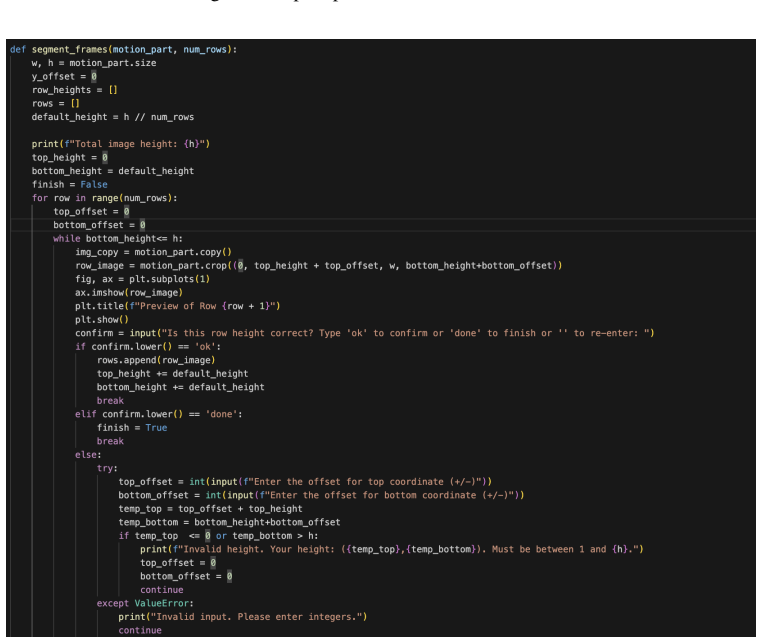
- [Appendix E] The code is presented as screenshots; if the code and dataset are available on the project page, provide a direct URL and license, and state whether the manual pose annotations will be released.
Circularity Check
No circularity found: the paper's claims are empirical fine-tuning results evaluated on held-out test sets, with no derivation that reduces to its own inputs.
full rationale
The paper makes no first-principles derivation and offers no fitted parameter that is later renamed as a prediction. Its central claim is that fine-tuning Animate Anyone with a Pose Guider and two-stage training yields higher SSIM, PSNR, and LPIPS than IP-Adapter-based baselines and vanilla Animate Anyone on in-sample and out-sample test splits (Tables 1 and 2). These are controlled empirical comparisons: the model is trained on a training split, and metrics are computed against ground-truth frames from held-out action sequences. No equation in the paper defines the reported metrics in terms of the trained model's own outputs, and no evaluation quantity is used as a training target. The method is an adaptation of existing published frameworks (Animate Anyone, AniPortrait, IP-Adapter) with cited external sources; no load-bearing premise is justified only by a self-citation, and no uniqueness theorem or ansatz is smuggled in via the authors' own prior work. The skeptical concern about unvalidated manual pose annotations (Section 7.1) is a data-quality and evaluation-validity risk, not a circularity: noisy conditioning signals would degrade the pose-to-image mapping, but the claim is not definitionally equivalent to the annotations. Likewise, the absence of inter-annotator agreement studies affects reliability, not circular structure. The paper is self-contained as an empirical system paper, and the honest finding is no significant circularity.
Assumptions & free parameters
assumptions (3)
- domain assumption The pose annotations (from OpenPose/DW-Pose and manual labeling) accurately represent the intended action poses in the sprite sequences.
- domain assumption SSIM, PSNR, LPIPS, and the VBench subject consistency score are valid proxies for sprite animation quality.
- domain assumption The reference image and pose sequence determine a unique target action sequence.
Cite this review
Pith. "Pith review of Sprite Sheet Diffusion: Generate Game Character for Animation." pith.science (2026). https://pith.science/paper/3MUFYHZQ
@misc{pith2026241203685,
  author       = {Pith},
  title        = {Pith review of: Sprite Sheet Diffusion: Generate Game Character for Animation},
  year         = {2026},
  howpublished = {\url{https://pith.science/paper/3MUFYHZQ}},
  note         = {Machine review of arXiv:2412.03685}
}
read the original abstract
In the game development process, creating character animations is a vital step that involves several stages. Typically for 2D games, illustrators begin by designing the main character image, which serves as the foundation for all subsequent animations. To create a smooth motion sequence, these subsequent animations involve drawing the character in different poses and actions, such as running, jumping, or attacking. This process requires significant manual effort from illustrators, as they must meticulously ensure consistency in design, proportions, and style across multiple motion frames. Each frame is drawn individually, making this a time-consuming and labor-intensive task. Generative models, such as diffusion models, have the potential to revolutionize this process by automating the creation of sprite sheets. Diffusion models, known for their ability to generate diverse images, can be adapted to create character animations. By leveraging the capabilities of diffusion models, we can significantly reduce the manual workload for illustrators, accelerate the animation creation process, and open up new creative possibilities in game development.
Figures


Figures from the paper (26 more)




Reference graph
Works this paper leans on
-
[1]
Realtime multi-person 2d pose estimation using part affinity fields
Zhe Cao, Tomas Simon, Shih-En Wei, and Yaser Sheikh. Realtime multi-person 2d pose estimation using part affinity fields. In Proceedings of the IEEE Conference on Computer Vision and Pattern Recognition (CVPR), pages 7291--7299, 2017
work page 2017
-
[2]
Transfer learning for pose estimation of illustrated characters
Shuhong Chen and Matthias Zwicker. Transfer learning for pose estimation of illustrated characters. In Proceedings of the IEEE/CVF Winter Conference on Applications of Computer Vision, 2022
work page 2022
-
[3]
Diffusion models beat gans on image synthesis
Prafulla Dhariwal and Alexander Nichol. Diffusion models beat gans on image synthesis. Advances in neural information processing systems, 34: 0 8780--8794, 2021
2021
-
[4]
Image quality metrics: Psnr vs
Alain Horé and Djemel Ziou. Image quality metrics: Psnr vs. ssim. In 2010 20th International Conference on Pattern Recognition, pages 2366--2369, 2010. doi:10.1109/ICPR.2010.579
-
[5]
Animate anyone: Consistent and controllable image-to-video synthesis for character animation
Li Hu. Animate anyone: Consistent and controllable image-to-video synthesis for character animation. In Proceedings of the IEEE/CVF Conference on Computer Vision and Pattern Recognition, pages 8153--8163, 2024
work page 2024
-
[6]
Vbench: Comprehensive benchmark suite for video generative models
Ziqi Huang, Yinan He, Jiashuo Yu, Fan Zhang, Chenyang Si, Yuming Jiang, Yuanhan Zhang, Tianxing Wu, Qingyang Jin, Nattapol Chanpaisit, et al. Vbench: Comprehensive benchmark suite for video generative models. In Proceedings of the IEEE/CVF Conference on Computer Vision and Pattern Recognition, pages 21807--21818, 2024
work page 2024
-
[7]
High-resolution image synthesis with latent diffusion models
Robin Rombach, Andreas Blattmann, Dominik Lorenz, Patrick Esser, and Bj \"o rn Ommer. High-resolution image synthesis with latent diffusion models. In Proceedings of the IEEE/CVF conference on computer vision and pattern recognition, pages 10684--10695, 2022
2022
-
[8]
Dw-pose: Deep whole-body pose estimation with dense regression
Yuliang Tian, Xu Li, Weixin Wang, and Lianwen Zhang. Dw-pose: Deep whole-body pose estimation with dense regression. Proceedings of the IEEE/CVF International Conference on Computer Vision (ICCV), pages 11808--11817, 2021
work page 2021
Show all 16 references
-
[9]
Deeppose: Human pose estimation via deep neural networks
Alexander Toshev and Christian Szegedy. Deeppose: Human pose estimation via deep neural networks. In Proceedings of the IEEE Conference on Computer Vision and Pattern Recognition (CVPR), pages 1653--1660, 2014
2014
-
[10]
Bovik, H.R
Zhou Wang, A.C. Bovik, H.R. Sheikh, and E.P. Simoncelli. Image quality assessment: from error visibility to structural similarity. IEEE Transactions on Image Processing, 13 0 (4): 0 600--612, 2004. doi:10.1109/TIP.2003.819861
2004
-
[11]
Aniportrait: Audio-driven synthesis of photorealistic portrait animation
Huawei Wei, Zejun Yang, and Zhisheng Wang. Aniportrait: Audio-driven synthesis of photorealistic portrait animation. arXiv preprint arXiv:2403.17694, 2024
2024 arXiv
-
[12]
Diffusion models: A comprehensive survey of methods and applications
Ling Yang, Zhilong Zhang, Yang Song, Shenda Hong, Runsheng Xu, Yue Zhao, Wentao Zhang, Bin Cui, and Ming-Hsuan Yang. Diffusion models: A comprehensive survey of methods and applications. ACM Computing Surveys, 56 0 (4): 0 1--39, 2023
2023
-
[13]
Ip-adapter: Text compatible image prompt adapter for text-to-image diffusion models
Hu Ye, Jun Zhang, Sibo Liu, Xiao Han, and Wei Yang. Ip-adapter: Text compatible image prompt adapter for text-to-image diffusion models. arXiv preprint arXiv:2308.06721, 2023
2023 arXiv
-
[14]
Adding conditional control to text-to-image diffusion models
Lvmin Zhang, Anyi Rao, and Maneesh Agrawala. Adding conditional control to text-to-image diffusion models. In Proceedings of the IEEE/CVF International Conference on Computer Vision, pages 3836--3847, 2023
2023
-
[15]
The unreasonable effectiveness of deep features as a perceptual metric
Richard Zhang, Phillip Isola, Alexei A Efros, Eli Shechtman, and Oliver Wang. The unreasonable effectiveness of deep features as a perceptual metric. In Proceedings of the IEEE conference on computer vision and pattern recognition, pages 586--595, 2018
2018
-
[16]
Deep learning-based human pose estimation: A survey
Cheng Zheng, Wenbing Wu, Chen Chen, Tong Yang, Siyu Zhu, Jianbing Shen, and Mubarak Shah. Deep learning-based human pose estimation: A survey. ACM Computing Surveys, 56 0 (1): 0 1--37, 2023
2023
Reviewed August 11, 2026 · model on record in the stance chip above.
Discussion (0). Continue with ORCID to comment.