REVIEW 2 major objections 4 minor 44 references
Channel-Aware Optimal Transport: A Theoretical Framework for Generative Communication
T0 review · 2 major / 4 minor · reviewed 2026-08-11 · deepseek-v4-flash
Pith's one-line read The paper proves that source-channel separation is asymptotically optimal for channel-aware optimal transport when unlimited common randomness is available, but generally suboptimal without it, and gives a hybrid coding scheme that…
desk verdict A new and conceptually important result for generative communication, with a repairable proof gap in the equality case of the main achievability theorem. read the letter →
The pith
A machine-rendered reading of the paper's core claim, the machinery that carries it, and where it could break.
The reading
What carries the argument
The load-bearing object is the auxiliary random variable $Z$ together with the condition $\max\{I(X;Z),I(Y;Z)\}\le I(Z;V)$, which balances how much information about the source and the reconstruction must be carried through $Z$ against how much of $Z$ the channel output $V$ can reveal. The hybrid scheme splits the channel input into an uncoded part, whose noise is deliberately used as a generative resource, and a coded part that transmits a digital message derived from $Z$; the decoder combines the recovered $Z$ with the raw channel output and applies a maximal coupling to enforce the prescribed $p_Y$. The proof machinery consists of the likelihood encoder, which stochastically maps $X^n$ to a codeword $Z^n(m)$, the soft-covering lemma, which guarantees the generated output approximately follows $p_Y^n$, and joint typicality decoding, which ensures the digital message survives the channel when the rate $R$ lies between $\max\{I(X;Z),I(Y;Z)\}$ and $I(Z;V)$.
What would settle it
Take a concrete instance of the equality case $\max\{I(X;Z),I(Y;Z)\}=I(Z;V)$, e.g. $X\sim\mathrm{Bernoulli}(1/2)$ and $Z$ the output of a binary symmetric channel from $X$, and compute $I(X^{(k)};Z)$ for the perturbation (157); if any $k$ gives $I(X^{(k)};Z)\ge I(X;Z)$ while $p_{X^{(k)}}=p_X$, the Appendix B argument for the boundary case collapses. A broader refutation would be a finite-alphabet example satisfying the hypotheses of Theorem 2 in which no sequence of augmented distributions with properties 1)-3) exists, showing the $\le$ version requires an extra condition.
Extended reading notes
Core claim
On the paper's own terms, the discovery is a pair of results about the minimum distortion $D_J(\Gamma)$ achievable when transporting $p_X$ to $p_Y$ through a memoryless channel under an input cost constraint. Theorem 1 states that with unlimited common randomness, $D_J(\Gamma)=D_S(\Gamma)$, where $D_S(\Gamma)$ is the distortion achieved by converting the channel into a rate-limited bit pipe at capacity and then performing rate-limited optimal transport; the converse is proved by a time-sharing argument that extracts a single-letter pair $(X_T,Y_T)$ and bounds its mutual information by the channel capacity. Theorem 2 states that without common randomness, $D_J(\Gamma)$ is no larger than $\mathbb{E}[d(X,Y)]$ for any auxiliary $Z$ with $X\leftrightarrow Z\leftrightarrow V$, $Y\leftrightarrow Z\leftrightarrow V$ structure satisfying $\max\{I(X;Z),I(Y;Z)\}\le I(Z;V)$ and $\mathbb{E}[c(U)]\le\Gamma$; the associated hybrid codebook, likelihood encoder, joint typicality decoder, and soft-covering decoder achieve the bound. The binary BSC analysis and the Gaussian AWGN analysis then display parameter regimes where the optimized hybrid scheme beats both the separation benchmark $D_S(\Gamma)$ and the best uncoded scheme, with the optimizer switching modes as the channel degrades.
Load-bearing premise
The theorem's boundary case rests on an unproved assertion that the perturbed source and sink distributions defined in (157)-(158) are indecomposable, so their mutual information with $Z$ strictly decreases; if that assertion fails, only the strict-inequality version of the achievability bound is fully established.
Editorial extensions
If this is right
- In point-to-point generative communication with a prescribed reconstruction distribution and no shared randomness, separation is provably suboptimal even in the infinite-blocklength limit, unlike classical source-channel communication.
- The achievability bound gives a quantitative design rule: allocate channel input between an analog component (left for the channel to randomize) and a digital component (protected by coding), choosing the split so that the digital rate matches the auxiliary mutual information condition (41).
- In the binary BSC case, the optimized hybrid scheme operates in distinct modes—separation for small crossover probability, uncoded for intermediate values, and a hybrid form for large values—with explicit threshold structure.
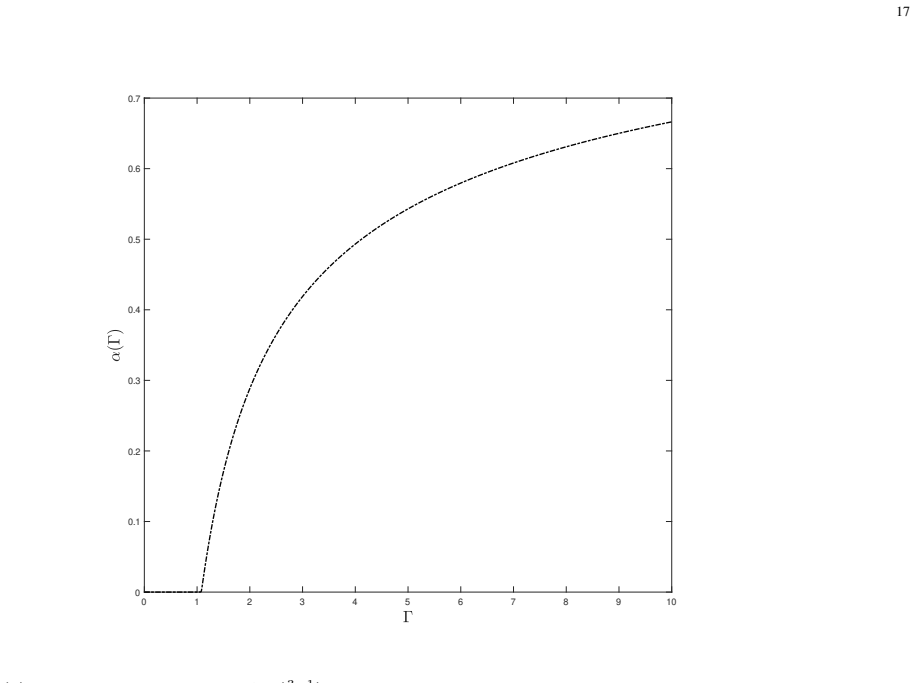
- In the vector Gaussian case, the hybrid scheme dominates both separation and uncoded schemes at every power level, and it reduces to the uncoded scheme below an explicit power threshold $\Gamma^*$.
- If Theorem 2 is correct, deep joint source-channel coding systems that let the channel's randomness shape the reconstruction are not merely finite-blocklength heuristics; they realize a genuine asymptotic advantage.
Reading between the lines
- Beyond the paper's claims, the boundary gap suggests a testable refinement: one could compute $I(X^{(k)};Z)$ explicitly for small-alphabet examples to check whether the asserted strict decrease in Appendix B always holds, and if not, state Theorem 2 with a strict-inequality hypothesis.
- The hybrid principle points to a practical architecture for generative image transmission: reserve a fraction of channel uses for uncoded analog transmission so the channel noise acts as a generative prior, and use the remaining bandwidth for a digital representation, with the fraction tuned by the mutual-information condition.
- A natural extension, not pursued here, is bandwidth mismatch: replacing $I(Z;V)$ by a per-symbol capacity and rebalancing the analog/digital split should yield a generalized curve interpolating between uncoded and separation schemes.
- The authors' one-shot direction could be made quantitative by replacing soft covering with finite-blocklength covering bounds, which would turn the asymptotic theorem into a bound on achievable distortion for generative codecs at practical blocklengths.
Signed reviews
Editorial analysis
A structured set of objections, weighed in public.
Referee Report
Summary. The paper studies channel-aware optimal transport (CAOT), where a block of i.i.d. source variables is transmitted over a memoryless channel to generate a block of i.i.d. output variables with a prescribed marginal distribution, minimizing end-to-end distortion. The main results are: (i) with unlimited common randomness, the source-channel separation architecture is asymptotically optimal (Theorem 1); (ii) without common randomness, separation is generally suboptimal, as shown by binary and Gaussian toy examples; and (iii) a hybrid coding scheme is proposed (Theorem 2) that combines uncoded transmission with digital coding, and it is shown to outperform both separation-based and uncoded schemes in binary and Gaussian settings. The paper provides explicit single-letter expressions and analytic comparisons in Sections IV and V.
Significance. If the main claims are fully established, the paper makes a valuable contribution to generative communication: it shows that the classical point-to-point source-channel separation theorem fails when a perception constraint (exact output marginal) is imposed and common randomness is absent, and it provides a constructive hybrid coding scheme that exploits channel stochasticity. The clean converse in Theorem 1, the explicit toy examples, and the detailed binary/Gaussian analyses are strengths. The proof of the strict-inequality version of Theorem 2 is a careful random-coding argument using the likelihood encoder and soft covering, and the paper gives concrete, checkable formulas for the schemes. However, two load-bearing technical points currently prevent the results from being fully supported: the equality-case argument in Appendix B relies on an unproved strong-data-processing assertion, and an algebraic threshold in the binary comparison appears to be incorrect.
major comments (2)
- [Appendix B, equality case of Theorem 2] The proof that the augmented distributions (157)-(158) satisfy max{I(X^(k);Z), I(Y^(k);Z)} < I(Z;V) rests entirely on the assertion that 'pXX^(k) is indecomposable' and the citation to [36, p. 402, Problem 25]. The paper neither states the strong-data-processing lemma being invoked nor verifies its hypotheses for the specific kernel (157)-(158), and it does not address the fact that (157)-(158) require pmin_X and pmin_Y to be positive, which is not assumed in Theorem 2. This gap is load-bearing because the binary hybrid scheme in Section IV enforces (64) as an equality and the Gaussian hybrid scheme in Section V operates at equality through (106)-(108); thus the ≤ version of (41) is essential for those comparisons. As written, only the strict-inequality version of Theorem 2 is fully proved.
- [Section IV, equation (82)] The algebraic step claiming that (-ρ^2 + (2ρ^2 - 2ρ + 1)θ)θ ≥ 0 for θ ≥ ρ^2/(2ρ^2 - ρ + 1) is incorrect: substituting the stated threshold gives -ρ^3/(2ρ^2 - ρ + 1)θ, not 0. The correct threshold appears to be ρ^2/(2ρ^2 - 2ρ + 1) (note the changed denominator). Consequently, the proof that D'_H < DU over the stated interval [ρ^2/(2ρ^2 - ρ + 1), 1/2) is invalid, and the analytical claim of hybrid superiority over the uncoded scheme in this portion of the binary case is not established. The numerical plots suggest the qualitative conclusion may still hold, but the interval and the proof need to be corrected.
minor comments (4)
- [Section II, Definitions 1 and 2] Both definitions denote the minimum achievable distortion by the same symbol DJ(Γ), which is confusing because the two scenarios have different values; please use distinct notations (e.g., D_J^CR(Γ) and D_J^{no-CR}(Γ)) or introduce a convention after Theorem 1.
- [Appendix C, equations (161)-(163)] The conditional expectation should be E[X|g^T X + N] = s \tilde X (a column vector times a scalar); the superscript T in s^T \tilde X is a typo and makes the expression dimensionally inconsistent. The same notation issue appears in (162)-(163) and (171)-(174).
- [Appendix C, Theorem 3 statement] The statement says Y ~ N(0, Λ), but the proof in (171) uses W_2^2(N(0,Σ), N(0,γ s_1 s_1^T)), which presumes Y has covariance Σ. Either set Λ = Σ in the theorem or adjust the proof to use Λ explicitly.
- [Throughout] There are several typos: 'Combing' should be 'Combining' before (57); 'when when θ is close to' has a duplicated 'when'; 'speration-based scheme' in Section V should be 'separation-based scheme'; 'intially remains at zero' should be 'initially remains at zero'; 'it follows it follows the trajectory' in Section IV has a duplicated phrase; 'supercript' should be 'superscript' in Section V.
Circularity Check
No circularity: central theorems are proved from standard coding lemmas; only issue is an unproved external SDPI step in the equality case.
full rationale
This paper's derivation chain is self-contained in the sense required for circularity. Theorem 1 is proved directly via a time-sharing and mutual-information converse in Appendix A; it does not assume what it proves. Theorem 2 is an achievability result proved by a standard hybrid coding and soft-covering argument in Appendix B, where condition (41) is a sufficient condition, not an equivalent characterization; the binary and Gaussian 'hybrid coding' sections explicitly instantiate the auxiliary variable Z, verify (40)-(41), and then compute the resulting end-to-end distortion. These are design calculations, not predictions forced by fitted inputs. The paper does invoke the authors' own earlier rate-distortion-perception formulas ([17], [21], [22]) to evaluate D'(R), D'(R), and hence the separation benchmarks D_S(Γ) and D_S(Γ); however, these are external, parameter-free single-letter formulas used as building blocks, and the main theorems do not reduce to them. The only substantial gap located is in the equality case of Theorem 2's proof: the assertion that the augmented couplings (157)-(158) are 'indecomposable' and hence satisfy I(X^(k);Z) < I(X;Z) or I(X^(k);Z)=0 via [36, p.402, Problem 25] is not proved in the paper. That is a missing-support and correctness risk for the ≤ version of (41), not a circularity, since the cited strong data-processing statement comes from an external textbook and is not the paper's target conclusion. Overall, no load-bearing step reduces by construction to its own input, so the circularity score is 0.
Assumptions & free parameters
assumptions (7)
- standard math Single-letter formulas for rate-limited optimal transport with and without common randomness from [5] (Eqs. 18-21 of this paper).
- standard math Binary rate-distortion-perception formulas from [17, Example 1] (Eqs. 27-28 and 42-46).
- standard math Scalar Gaussian output-constrained formula from [22, Theorem 2] (Eqs. 33-34) and vector Gaussian common-randomness formula from [21, Corollary 1] (Eqs. 84-86).
- standard math Reverse water-filling formula for the Gaussian distortion-rate function [42, Theorem 13.3.3] (Eqs. 89-90).
- standard math Soft-covering lemma [44, Theorem 1], likelihood encoder properties [43, Lemma 2], and conditional typicality lemmas [35, pp. 26-27].
- ad hoc to paper The equality-case augmentation in Appendix B relies on an 'indecomposable' channel property cited to [36, p. 402, Problem 25], that the constructed p_{X^(k)|X} satisfies I(X^(k);Z) < I(X;Z).
- domain assumption Sources and channel are memoryless with i.i.d. blocks; alphabets are finite except in the Gaussian case.
Cite this review
Pith. "Pith review of Channel-Aware Optimal Transport: A Theoretical Framework for Generative Communication." pith.science (2026). https://pith.science/paper/2UZ63CRM
@misc{pith2026241219025,
  author       = {Pith},
  title        = {Pith review of: Channel-Aware Optimal Transport: A Theoretical Framework for Generative Communication},
  year         = {2026},
  howpublished = {\url{https://pith.science/paper/2UZ63CRM}},
  note         = {Machine review of arXiv:2412.19025}
}
read the original abstract
Optimal transport has numerous applications, particularly in machine learning tasks involving generative models. In practice, the transportation process often encounters an information bottleneck, typically arising from the conversion of a communication channel into a rate-limited bit pipeline using error correction codes. While this conversion enables a channel-oblivious approach to optimal transport, it fails to fully exploit the available degrees of freedom. Motivated by the emerging paradigm of generative communication, this paper examines the problem of channel-aware optimal transport, where a block of i.i.d. random variables is transmitted through a memoryless channel to generate another block of i.i.d. random variables with a prescribed marginal distribution such that the end-to-end distortion is minimized. With unlimited common randomness available to the encoder and decoder, the source-channel separation architecture is shown to be asymptotically optimal as the blocklength approaches infinity. On the other hand, in the absence of common randomness, the source-channel separation architecture is generally suboptimal. For this scenario, a hybrid coding scheme is proposed, which partially retains the generative capabilities of the given channel while enabling reliable transmission of digital information. It is demonstrated that the proposed hybrid coding scheme can outperform both separation-based and uncoded schemes.
Figures


Figures from the paper (3 more)


Reference graph
Works this paper leans on
-
[21]
Rate-Distortion-Perception Tradeoff for Gaussian Vector Sources
J. Qian, S. Salehkalaibar, J. Chen, A. Khisti, W. Y u, W. S hi, Y . Ge, and W. Tong, “Rate-distortion-perception tradeo ff for vector Gaussian sources,” 2024, arXiv:2406.18008. [Online] Available: https://arx iv.org/abs/2406.18008
work page Pith review arXiv 2024
-
[22]
Output-constraine d lossy source coding with application to rate-distortion- perception theory,
L. Xie, L. Li, J. Chen, and Z. Zhang, “Output-constraine d lossy source coding with application to rate-distortion- perception theory,” 2024, arXiv:2403.14849. [Online] Available: https://arxiv.or g/abs/2403.14849
arXiv 2024
-
[1]
Villani, Topics in Optimal Transport
C. Villani, Topics in Optimal Transport . Providence, RI, USA: American Mathematical Society, 2003
work page 2003
-
[2]
Distribution preserv ing quantization with dithering and transformation,
M. Li, J. Klejsa, and W. B. Kleijn, “Distribution preserv ing quantization with dithering and transformation,” IEEE Signal Process. Lett. , vol. 17, no. 12, pp. 1014–1017, Dec. 2010
work page 2010
-
[3]
Multiple des cription distribution preserving quantization,
J. Klejsa, G. Zhang, M. Li, and W. B. Kleijn, “Multiple des cription distribution preserving quantization,” IEEE Trans. Signal Process. , vol. 61, no. 24, pp. 6410–6422, Dec. 2013
work page 2013
-
[4]
Randomized quantiz ation and source coding with constrained output distributi on,
N. Saldi, T. Linder, and S. Y¨ uksel, “Randomized quantiz ation and source coding with constrained output distributi on,” IEEE Trans. Inf. Theory , vol. 61, no. 1, pp. 91–106, Jan. 2015
work page 2015
-
[5]
Output constrained lossy source coding with limited common randomness,
N. Saldi, T. Linder, and S. Y¨ uksel, “Output constrained lossy source coding with limited common randomness,” IEEE Trans. Inf. Theory , vol. 61, no. 9, pp. 4984–4998, Sep. 2015
work page 2015
-
[6]
Lossy compression w ith distribution shift as entropy constrained optimal tran sport,
H. Liu, G. Zhang, J. Chen, A. Khisti, “Lossy compression w ith distribution shift as entropy constrained optimal tran sport,” in Proc. Int. Conf. Learn. Represent. (ICLR) , 2022, pp. 1–34
work page 2022
Show all 44 references
-
[7]
Cross-domain los sy compression as entropy constrained optimal transport,
H. Liu, G. Zhang, J. Chen and A. Khisti, “Cross-domain los sy compression as entropy constrained optimal transport,” IEEE J. Sel. Areas Inf. Theory , vol. 3, no. 3, pp. 513–527, Sep. 2022
2022
-
[8]
H. M. Garmaroudi, S. Sandeep Pradhan and J. Chen, ”Rate-l imited quantum-to-classical optimal transport in finite an d continuous-variable quantum systems,” IEEE Trans. Inf. Theory , vol. 70, no. 11, pp. 7892–7922, Nov. 2024
2024
-
[9]
The perception-distortion tra deoff,
Y . Blau and T. Michaeli, “The perception-distortion tra deoff,” in Proc. IEEE Conf. Comp. Vision and Pattern Recog. (CVPR) , 2018, pp. 6288–6237
2018
-
[10]
Rethinking lossy compression : The rate-distortion-perception tradeoff,
Y . Blau and T. Michaeli, “Rethinking lossy compression : The rate-distortion-perception tradeoff,” in Proc. ACM Int. Conf. Mach. Learn. (ICML) , 2019, pp. 675–685
2019
-
[11]
Introducing the perception-distortio n tradeoff into the rate-distortion theory of general infor mation sources,
R. Matsumoto, “Introducing the perception-distortio n tradeoff into the rate-distortion theory of general infor mation sources,” IEICE Comm. Express , vol. 7, no. 11, pp. 427–431, 2018
2018
-
[12]
Rate-distortion-perception tradeoff of variable-length source coding for general information s ources,
R. Matsumoto, “Rate-distortion-perception tradeoff of variable-length source coding for general information s ources,” IEICE Comm. Express , vol. 8, no. 2, pp. 38–42, 2019
2019
-
[13]
On perceptual l ossy compression: The cost of perceptual reconstruction an d an optimal training framework,
Z. Y an, F. Wen, R. Ying, C. Ma, and P . Liu, “On perceptual l ossy compression: The cost of perceptual reconstruction an d an optimal training framework,” in Proc. ACM Int. Conf. Mach. Learn. (ICML) , 2021, pp. 11682–11692. 23
2021
-
[14]
A coding theorem for the rate- distortion-perception function,
L. Theis and A. B. Wagner, “A coding theorem for the rate- distortion-perception function,” in Proc. Neural Compress. W orkshop Int. Conf. Learn. Represent. (ICLR) , 2021, pp. 1–5
2021
-
[15]
On the advantages of stochas tic encoders,
L. Theis and E. Agustsson, “On the advantages of stochas tic encoders,” in Proc. Neural Compress. W orkshop Int. Conf. Learn. Represen t. (ICLR) , 2021, pp. 1–8
2021
-
[16]
Zhang, J
G. Zhang, J. Qian, J. Chen, and A. Khisti, ”Universal rat e-distortion-perception representations for lossy compr ession,” in Proc. Adv. Neural Inf. Process. Syst. (NeurIPS) , 2021, pp. 11517–11529
2021
-
[17]
On the r ate-distortion-perception function,
J. Chen, L. Y u, J. Wang, W. Shi, Y . Ge, and W. Tong, “On the r ate-distortion-perception function,” IEEE J. Sel. Areas Inf. Theory , vol. 3, no. 4, pp. 664–673, Dec. 2022
2022
-
[18]
The rate-distortion-perception tradeo ff: The role of common randomness,
A. B. Wagner, “The rate-distortion-perception tradeo ff: The role of common randomness,” 2022, arXiv:2202.04147 . [Online] Available: https://arxiv.org/abs/2202.04147
2022 arXiv
-
[19]
On the choice of perception loss function for learned video compression,
S. Salehkalaibar, B. Phan, J. Chen, W. Y u, and A. Khisti, “On the choice of perception loss function for learned video compression,” in Proc. Adv. Neural Inf. Process. Syst. (NeurIPS) , 2023, pp. 1–19
2023
-
[20]
Rate-d istortion-perception tradeoff based on the conditional-d istribution perception measure,
S. Salehkalaibar, J. Chen, A. Khisti, and W. Y u, “Rate-d istortion-perception tradeoff based on the conditional-d istribution perception measure,” IEEE Trans. Inf. Theory , vol. 70, no. 12, pp. 8432–8454, Dec. 2024
2024
-
[23]
Gaussian Rate -Distortion-Perception Coding and Entropy-Constrained S calar Quantization,
L. Xie, L. Li, J. Chen, L. Y u, and Z. Zhang, “Gaussian Rate -Distortion-Perception Coding and Entropy-Constrained S calar Quantization,” 2024, arXiv:2409.02388. [Online] Available: https://arxiv.or g/abs/2409.02388
2024 arXiv
-
[24]
Deep jo int source-channel coding for wireless image transmission ,
E. Bourtsoulatze, D. B. Kurka, and D. G¨ und¨ uz, “Deep jo int source-channel coding for wireless image transmission ,” IEEE Trans. on Cogn. Commun. Netw., vol. 5, no. 3, pp. 567–579, Sep. 2019
2019
-
[25]
DeepJSCC-f: Deep joint sou rce-channel coding of images with feedback,
D. B. Kurka and D. G¨ und¨ uz, “DeepJSCC-f: Deep joint sou rce-channel coding of images with feedback,” IEEE J. Sel. Areas Commun. , vol. 1, no. 1, pp. 178–193, May 2020,
2020
-
[26]
Bandwidth-agile image tra nsmission with deep joint source-channel coding,
D. B. Kurka and D. G¨ und¨ uz, “Bandwidth-agile image tra nsmission with deep joint source-channel coding,” IEEE Trans. Wireless Commun. , vol. 20, no. 12, pp. 8081–8095, Dec. 2021
2021
-
[27]
DeepWiV e: Deep-learning-aided wireless video transmission,
T. -Y . Tung and D. G¨ und¨ uz, “DeepWiV e: Deep-learning-aided wireless video transmission,” IEEE J. Sel. Areas Commun. , vol. 40, no. 9, pp. 2570–2583, Sep. 2022
2022
-
[28]
Generative joint source-channel coding for semantic image transmission,
E. Erdemir, T. -Y . Tung, P . L. Dragotti and D. G¨ und¨ uz, “ Generative joint source-channel coding for semantic image transmission,” IEEE J. Sel. Areas Commun., vol. 41, no. 8, pp. 2645–2657, Aug. 2023
2023
-
[29]
Multiple access ch annels with arbitrarily correlated sources,
T. Cover, A. El Gamal, and M. Salehi, “Multiple access ch annels with arbitrarily correlated sources,” IEEE Trans. Inf. Theory , vol. 26, no. 6, pp. 648–657, Nov. 1980
1980
-
[30]
O ptimality and approximate optimality of source-channel se paration in networks,
C. Tian, J. Chen, S. N. Diggavi, and S. Shamai (Shitz), “O ptimality and approximate optimality of source-channel se paration in networks,” IEEE Trans. Inf. Theory , vol. 60, no. 2, pp. 904–918, Feb. 2014
2014
-
[31]
Broadcasting correlated vector Gaussians,
L. Song, J. Chen, and C. Tian, “Broadcasting correlated vector Gaussians,” IEEE Trans. Inf. Theory , vol. 61, no. 5, pp. 2465–2477, May 2015
2015
-
[32]
Outer Bounds on the admissible s ource region for broadcast channels with correlated source s,
K. Khezeli and J. Chen, “Outer Bounds on the admissible s ource region for broadcast channels with correlated source s,” IEEE Trans. Inf. Theory , vol. 61, no. 9, pp. 4616–4629, Sep. 2015
2015
-
[33]
A source-channel separation th eorem with application to the source broadcast problem,
K. Khezeli and J. Chen, “A source-channel separation th eorem with application to the source broadcast problem,” IEEE Trans. Inf. Theory , vol. 62, no. 4, pp. 1764–1781, Apr. 2016
2016
-
[34]
M atched multiuser Gaussian source channel communications v ia uncoded schemes,
C. Tian, J. Chen, S. N. Diggavi, and S. Shamai (Shitz), “M atched multiuser Gaussian source channel communications v ia uncoded schemes,” IEEE Trans. Inf. Theory , vol. 63, no. 7, pp. 4155–4171, Jul. 2017
2017
-
[35]
El Gamal and Y .-H
A. El Gamal and Y .-H. Kim, Network Information Theory . Cambridge, U.K.: Cambridge Univ. Press, 2011
2011
-
[36]
Csisz´ ar and J
I. Csisz´ ar and J. K¨ orner, Information Theory: Coding Theory for Discrete Memoryless Systems. New Y ork: Academic, 1981
1981
-
[37]
To code, or not to code: Lossy source–channel communication revisited,
M. Gastpar, B. Rimoldi, and M. V etterli, “ To code, or not to code: Lossy source–channel communication revisited,” IEEE Trans. Inf. Theory , vol. 49, no. 5, pp. 1147–1158, May 2023
2023
-
[38]
Jelinek, Probabilistic Information Theory
F. Jelinek, Probabilistic Information Theory . New Y ork: McGraw-Hill, 1968
1968
-
[39]
R. J. McEliece, The Theory of Information and Coding , ser. Encyclopedia of Mathematics and its Applications. Re ading, MA: Addison-Wesley, 1977
1977
-
[40]
Theoretical limitations on the transmi ssion of data from analog sources,
T. J. Goblick, “Theoretical limitations on the transmi ssion of data from analog sources,” IEEE Trans. Inf. Theory , vol. 11, no. 4, pp. 558–567, Oct. 1965
1965
-
[41]
A unified approach to h ybrid coding,
P . Minero, S. H. Lim and Y .-H. Kim, “A unified approach to h ybrid coding,” IEEE Trans. Inf. Theory , vol. 61, no. 4, pp. 1509–1523, Apr. 2015
2015
-
[42]
T. M. Cover and J. A. Thomas, Elements of Information Theory . New Y ork, NY , USA: Wiley, 1991
1991
-
[43]
The likelihood encode r for lossy compression,
E. C. Song, P . Cuff and H. V . Poor, “The likelihood encode r for lossy compression,” IEEE Trans. Inf. Theory , vol. 62, no. 4, pp. 1836–1849, Apr. 2016
2016
-
[44]
Soft covering with high probability,
P . Cuff, “Soft covering with high probability,” in Proc . IEEE Int. Symp. Inf. Theory (ISIT), Jul. 2016, pp. 2963–296 7,
2016
Reviewed August 11, 2026 · model on record in the stance chip above.
Discussion (0). Continue with ORCID to comment.